Indian Folk Art

• Warli paintings

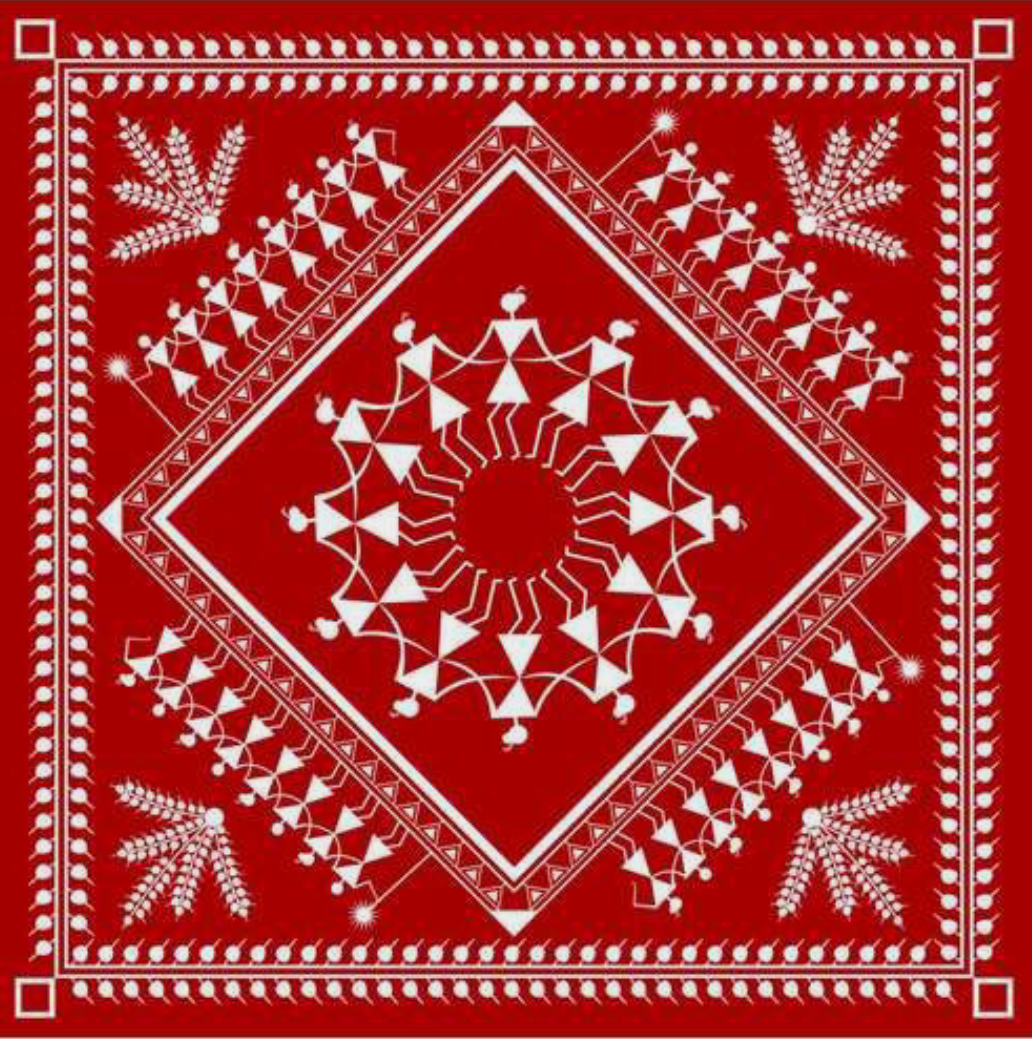
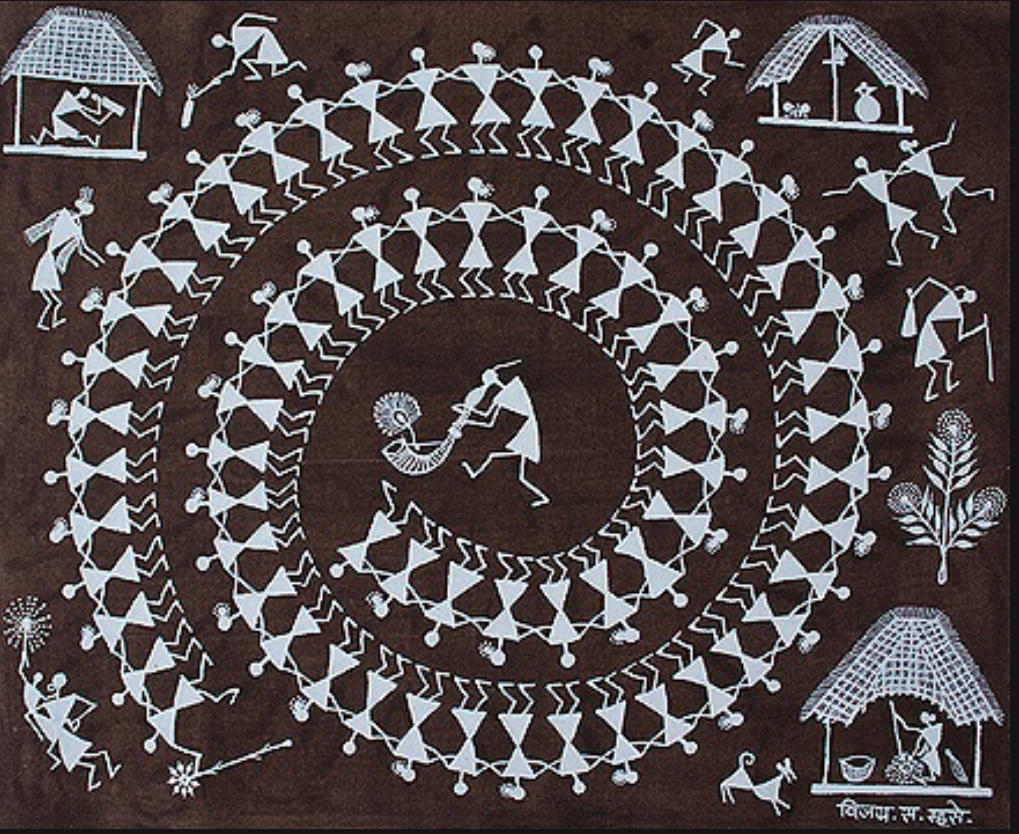
Warlis or Varlis are an indigenous tribes or adivasis living in the mountainous as well as coastal areas on the Maharastra-Gujarat border and surrounding areas. They have their own animistic beliefs, life, customs and traditions. As a result of acculturation, they have adopted many Hindu beliefs. Their extremely rudimentary Wall paintings use a very basic graphic vocabulary a circle, or triangle and a square. Their paintings were monosyllabic. The circle and the triangle come from the observation of nature, the circle representing the sun and the moon, the triangle derived from mountains and pointed trees. Only the square seems to be a different logic and seems to be a human invention, indicating a sacred enclosure or a piece of land.

The ritual paintings are usually done inside their huts. The walls are made of a mixture of branches, earth and cow dung making a red ochre background for wall paintings. Warlis use only white in their paintings. The white pigment used by them is a mixture of rice paste and water with gum as a binding. As the brush, they use a bamboo stick chewed at the end to make it as supple as a paintbrush. The wall paintings are done only on special occasions such as weddings or harvests. Warli art is the cultural intellectual property of the tribal community. Today, there is an urgent need for preserving this traditional knowledge in tribal communities across the globe. Now, Warli painting is registered with a geographical indication under the intellectual property rights act. With the use of technology and the concept of social entrepreneurship, tribals established the Warli Art Foundation, a non-profit company dedicated to Warli art and related activities.

• Cave paintings in India

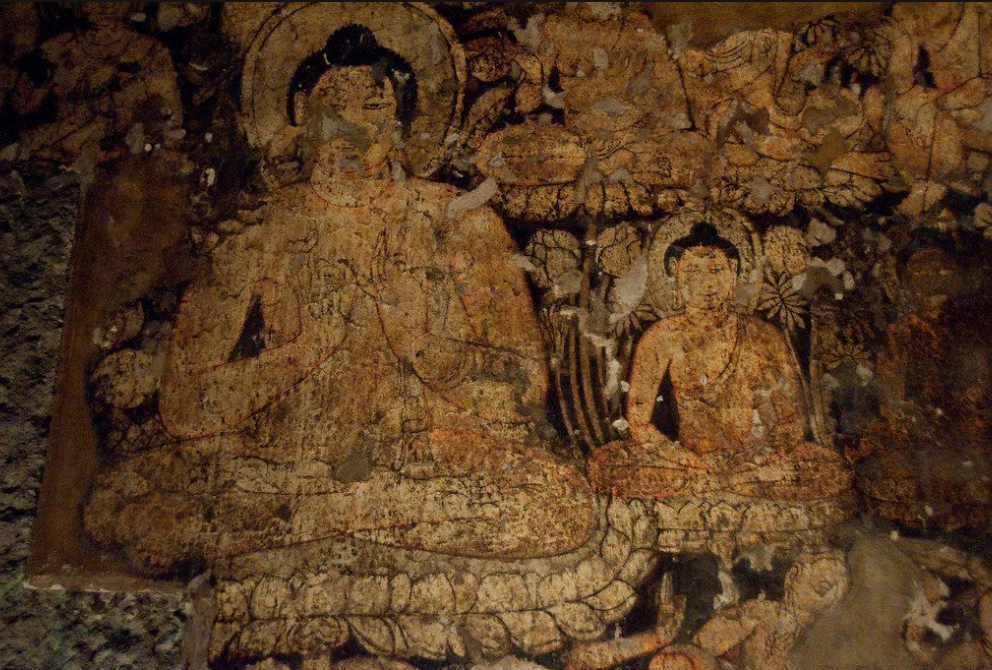
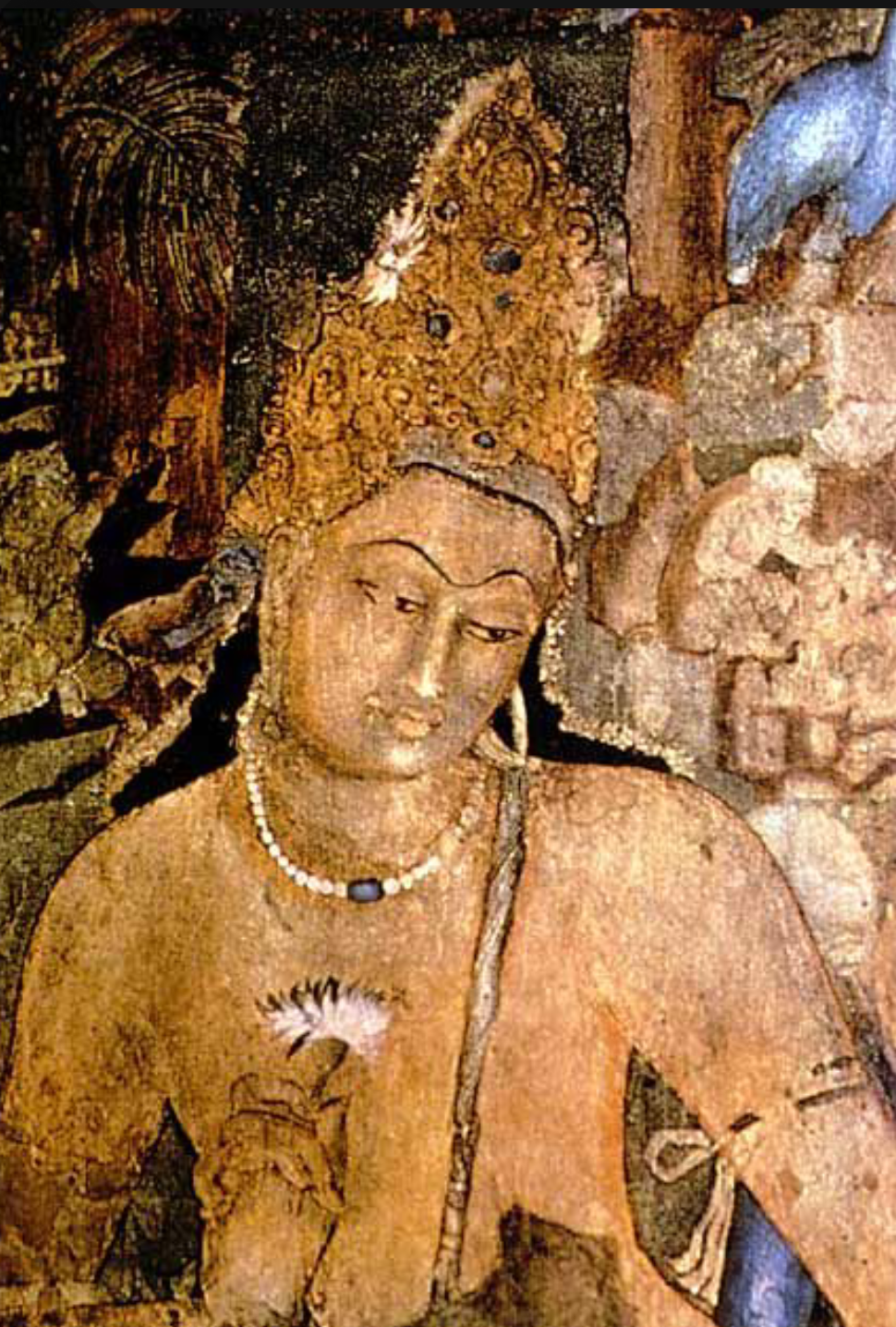
Almost all early painting in India survives in caves, as very few buildings from ancient India survive. The history of cave paintings in India or rock art range from drawings and paintings from prehistoric times – beginning around 30000 BCE in the caves of Central India, typified by those at the Bhimbetka rock shelters – to elaborate frescoes at sites such as the rock cut artificial caves at Ajanta and Ellora, prevalent as late as the 8th – 10th century CE. The frescoes of Ajanta are paintings in the Ajanta caves, which are situated near Aurangabad in Maharashtra. The caves are carved out of large rocks. Inside many of the caves are frescoes. Frescoes are paintings which are done on wet plaster in which colours become fixed on the walls and ceilings at Ajanta.

The paintings reflect different phases of Indian culture from Jain tirthankar Mahaveer’s birth to his Nirvana in the 8th century AD. The frescoes have degraded slightly due to the effect of flash photography. Photography here is not banned. The paintings depict themes of court life, feasting, processions, men and women at work, festivals and various natural scenes including animals and birds and flowers. The artists used shading to give a three-dimensional effect.

Similarly, beautiful frescoes have been found at the Bagh caves, 150 km away to the North of Ajanta. Though the themes in these paintings are both secular and religious, they do depict some aspects of Buddhist life and rituals. One of the most famous paintings show a procession of elephants. Another depicts a dancer and women musicians. These have been influenced by the Ajanta style of painting. These frescoes show a strong resemblance to the frescoes of Sigriya in Sri Lanka.

Thank you for reading. Have a nice day!🌼

Painting techniques

Techniques in watercolour paintings

#Washes

The most basic watercolour technique is the flat wash. It is reduced by first wetting the area of paper to be covered by the wash, then mixing sufficient pigment to easily fill the entire area. The pigment is applied to a sloping surface in slightly overlapping horizontal bands from the top down. Once complete, the wash should be left to dry and even itself out. Don’t be tempted to work back into a drawing wash, the results are usually disastrous! A variation on the basic wash is the graded wash. This technique requires the pigment to be diluted slightly with more water for each horizontal stroke. The result is a wash that fades out gradually and evenly.

#Glazing

Glazing is a similar watercolour technique Do a wash, but uses a thin, transparent pigment applied over dry existing washes. Its purpose is to adjust the colour and tone of the underlying wash. Non-staining, transparent pigments such as Rose Madder (or Permanent Rose), Cobalt Blue and or Auroline are ideal for glazing as they can be applied layer after led to achieve the desired effect. Be sure each layer is thoroughly dry before applying the next.

#Dropping in colour

This technique is simply the process of introducing a colour to a wet region of the painting and allowing it to blend bleed and feather without interruption. The result is sometimes and predictable but yields interesting and vibrant colour gradations That can’t be achieved by mixing the pigment on the palette.

#Wet-on-wet

Wet-on-wet is simply the process of applying pigment to wait paper. The results very from soft undefined shapes to slightly blurred marks, depending on how wet the paper is. The wet-on-wet technique can be applied over existing washes provided they are thoroughly dry. Simply wet the paper with the large brush and paint into the dampness. The soft marks made by painting wet in wet agreed for subtle background regions of your painting.

#Dry brush

Dry brush is almost the opposite watercolour technique to wet in wet. Here a brush loaded with pigment (and not too much water) is dragged over completely dry paper. The marks produced by this technique are very crisp and hard-edged. They will tend to come forward in your painting and so are best applied around the centre of interest.

#Lifting off

Most water colour pigments can be resolved and lifted off after they have dried. Staining colours such as Phthalo or Prussian blue, Alizarin, Windsor red, yellow or blue are difficult to remove and are best avoided for this technique. The process for lifting of his simple – wet the area to be removed with a brush and clean water, then blot the pigment away with attached. Using strips of paper to mask areas of pigment will produce interesting hard-edged lines and shapes.

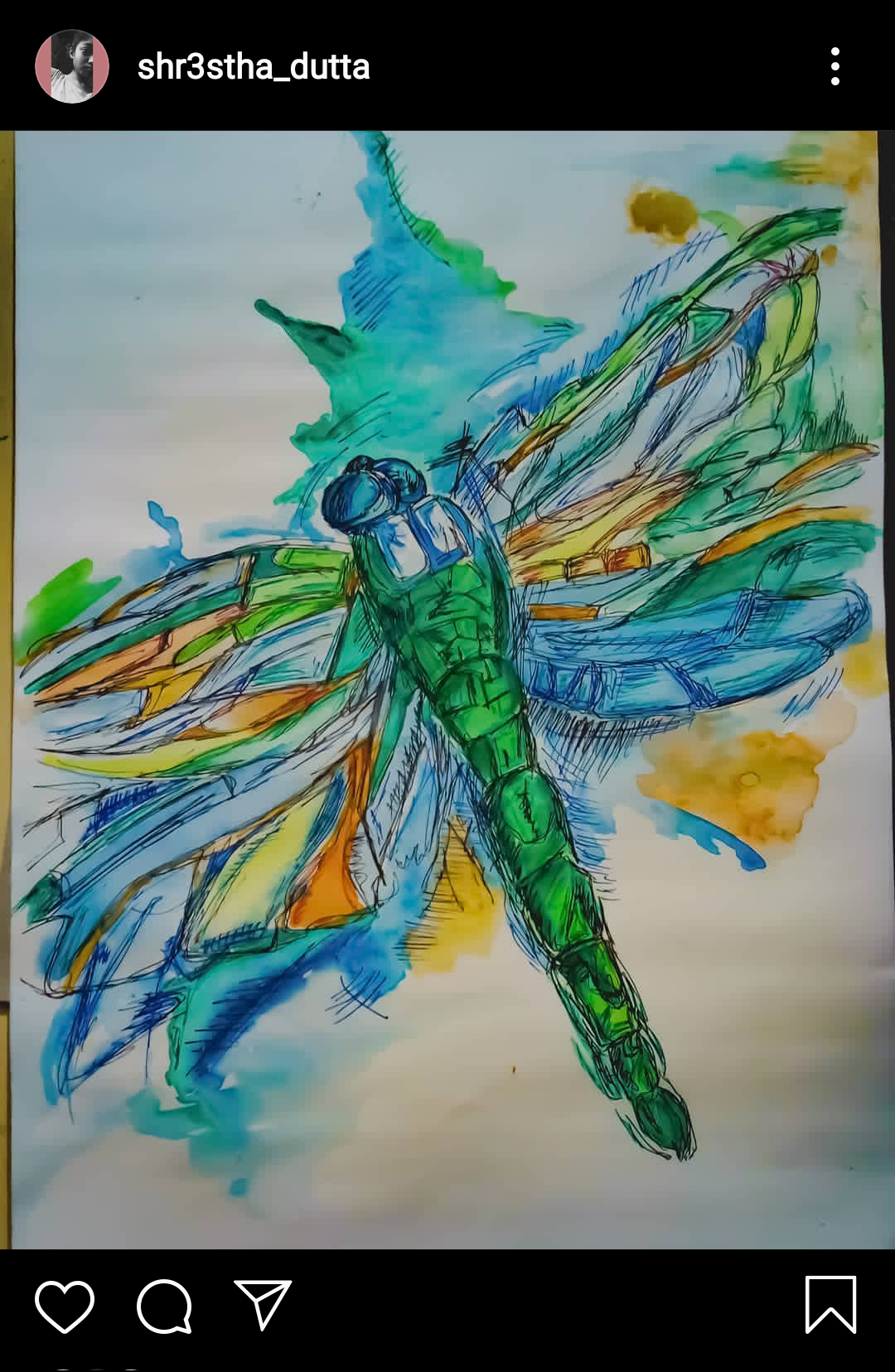
This is one of my watercolour paintings. I love experimenting with the medium.

Techniques in other kinds of painting

paints

As the name implies, pigments are already mixed with oil (usually linseed) in the tube, which makes for slow drying and easier blending. Clean up with turps or preferably and odourless solvent. Can be used straight from the tube (impasto) or thinly for underpainting or glazing. Usually used over canvas or board prepared with an acrylic or gas so undercoat. Retouch varnish may be used to even out the shine when finished. All other vanishes should not be applied until the paint has cured (around 6 months). Oils pretty much maintain their mixed colour once drive for, unlike water based paints which tend to dry darker or lighter than when wet.

#Poster colours

Poster colours contain a binder which remains water soluble when dry. Pigments used are generally of a courser quality than water colours and are therefore more opaque, specially pastel shades which are achieved by mixes that include white. Can be wetted again for further blending. Framing is usually as for water colours.

#Pastels

Here the pigments have been moulded into sticks using distilled water and a minimum of binders. Some are wrapped in waxed paper to prevent breakage. They come in square and round sticks and in pencil form full stock usually used on tinted pestle paper which has a texture (or ‘tooth’) to hold the dry granules of pigment. Spray fixatives prevent rubbing, button to dark in the pestle work. Framing is behind glass with the mat board to prevent the work from touching the glass.

#Acrylic painting

Painting executed in the medium of synthetic acrylic resins. Acrylics dry rapidly, serve as a vehicle for any kind of pigment, and are capable of giving both the transparent brilliance of watercolour and the density of oil paint. They are considered to be less affected by heat and other destructive forces than is oil paint. They found favour among artists who were concerned about the health risks posed by the handling of oil paints and the inhalation of fumes associated with them. Because of all these desirable characteristics, acrylic paints became immediately popular with artists when they were first commercially promoted in the 1960s.

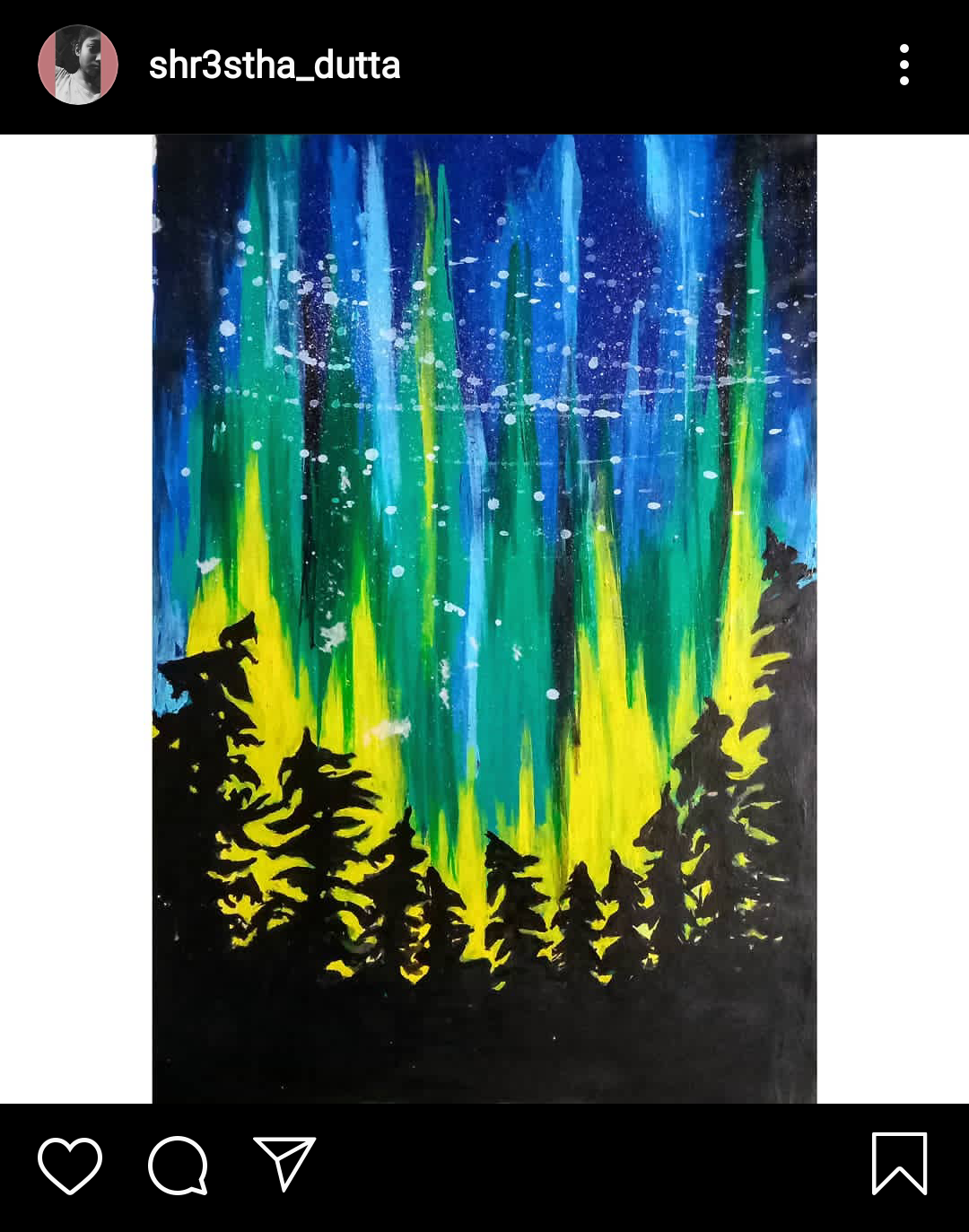
This is one of my acrylic paintings.

#Tempera painting

Painting executed with pigment ground in a water-miscible medium. The word tempera originally came from the word temper, which means ‘to bring to a desired consistency’. Dry pigments are made usable by ‘tempering’ them with a binding and adhesive vehicle. Such painting was distinguished from fresco painting, the colours for which contained no binder.

Thank you for reading. Have a nice day!🌼

Indian Folk Art

India is home to around 2500 tribes and it has always been portrayed as a land of cultural and traditional diversity. Every corner of the country has a distinctive cultural identity which is represented through different art forms. These art forms can be collectively put under the topic of Indian Folk Art. Each region has a different style and pattern of art which is practised by the rural folks living there. These art forms are colourful and simple and reflect the rich cultural heritage of India. The country is home to around 2500 tribes and ethnic groups. So each region has a unique and interesting form of folk art.

Previously these were done using natural dyes and mostly used for decorating walls and houses. These art forms have undergone many changes through all these years including change of medium, colours and pattern. Here are 10 such art forms which give us a peek into the cultural heritage of different regions of the country.

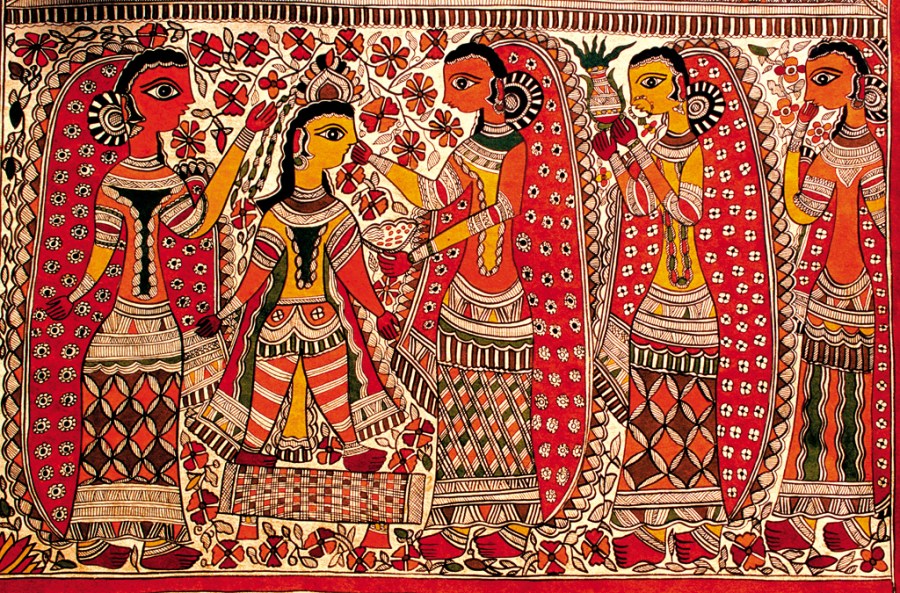
MADHUBANI

Madhubani, also known as Mithila art, was developed by women of Mithila in Northern Bihar. It is characterised by line drawings, colourful patterns and motives. These were practised for hundreds of years but were discovered in 1934 by a British colonial officer during an inspection after an earthquake.

PATACHITRA

The word ‘patachitra’ derives from the Sanskrit words patta, meaning canvas and chitra, meaning picture.  It is one of the oldest art forms of Odisha. It is done on canvas and portrays simple mythological themes through rich colours and motives. Some of the themes include Thia Badhia – depicting the temple of Jagannath, and Panchamukhi – depicting Lord Ganesh as a five-headed deity.

WARLI

Warli is the name of cultivator tribes belonging to Northern Maharashtra and Gujarat. Though discovered in early seventies, the roots of the art form can be traced back to as early as 10th century A.D. Mostly featuring geometrical shapes, they portray daily life, hunting, fishing and festival scenes. They show a common human figure through a circle and two triangles which move in circles resembling the circle of life.

RAJASTHANI MINIATURE PAINTING

The art form was introduced in the country by Mughals who brought in Persian artists for creating the art. The Mughal emperor Akbar built an atelier for them to promote the artwork. They trained Indian artists who produced it in a new style inspired by the royal lives of Mughals. Eventually the paintings made by these Indian artists came to be known as Rajput or Rajasthani miniature. They are characterized by strong lines and bold colours made from minerals, precious stones, even pure gold and silver.

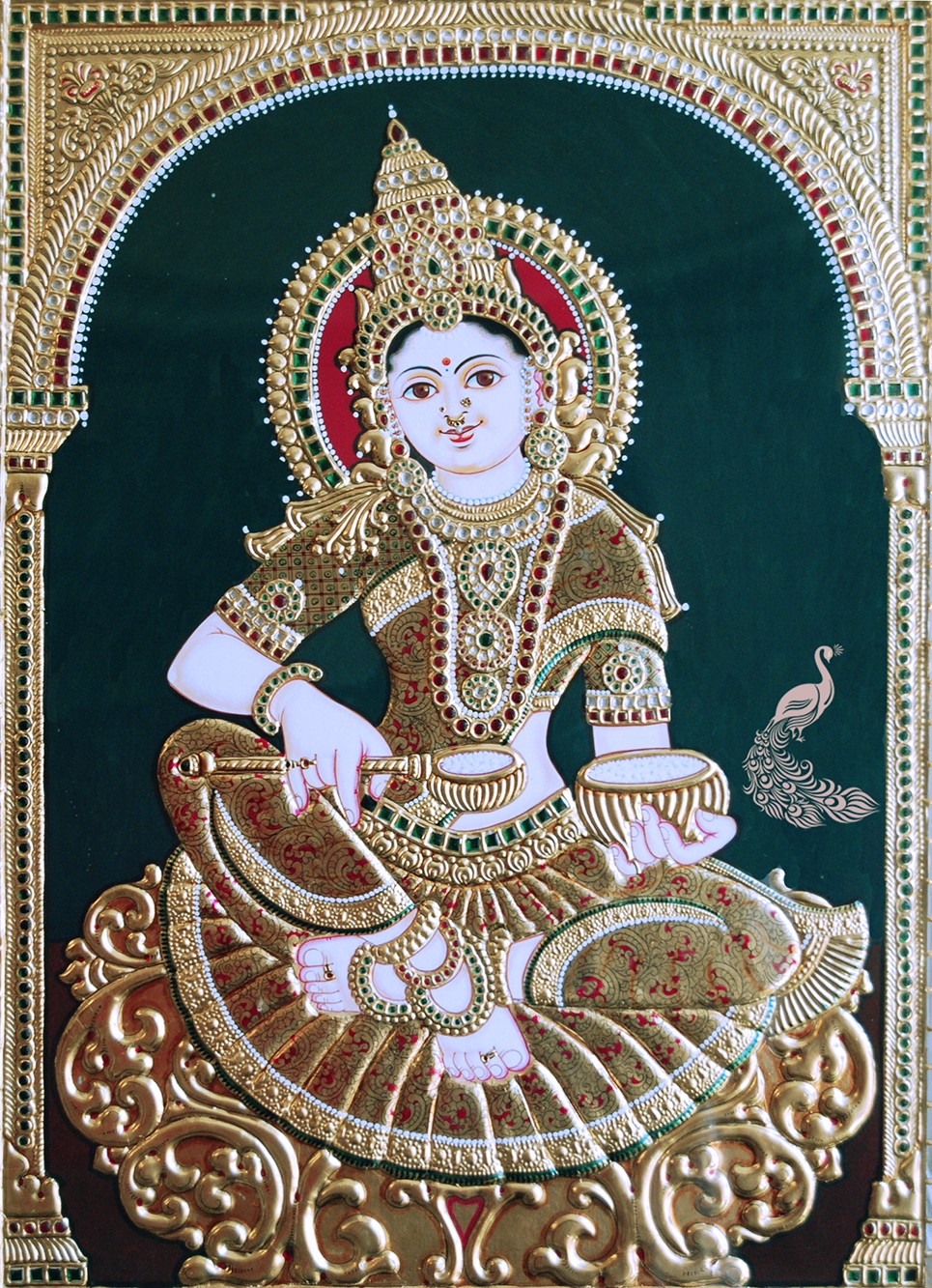
TANJORE ART

Originating in Tanjavore, about 300kms from Chennai, this art form evolved under the rulers of the Chola empire. Characterized by brilliant colour schemes, decorative jewellery with stones and remarkable gold leaf work, these paintings mostly consist themes of gods and goddesses.

KALAMEZUTHU

Similar to Rangoli and Kolam, this art form originated in Kerala. It mostly consists of the representation of deities like Kali and Lord Ayyappa on temple floors. Natural pigments and powders in five colours are used by the makers and the art is done by bare fingers without the use of any tools. The five colour shades are made from natural pigments like – rice powder for white, burnt husk for black, turmeric for yellow, a mixture of lime and turmeric for red and the leaves of certain trees for green.  Lighted oil lamps brighten the colours in the figures which usually feature anger or other emotions.

Can fiction beat reality?

The world itself believe together in the fact that it is indeed good to read. But not everybody has the same perception when it comes about ‘what to read’. often times, people are criticized about reading fiction just because it is far from the reality. Fiction genre has been always stereotyped because of the fantasy it develops. But, it is this fantasy that helps people to think and see things through a different angle.

I bet, at least half of the community of book lovers, who are into fiction stories, may have once in their life encountered the question “what is there in fiction that make you addicted to it?”/ “aren’t you simply wasting your time by reading what does not exist?” It may be true that, fiction stories add nothing new to our brain. But it does add things that we can’t obtain in any other way. Fiction stories have the power to take ourselves to an unknown world and let us experience and explore things that we have never ever been a part of! Now, isn’t it just amazing to have the competence to explore a new world of your own? Fiction drags you from where you are and where you belong, to another world and shows you myriads of other lives and stories. It does make you travel to others life. It is always considered as illegal to intrude into somebody’s personal life in reality. This genre does the exact thing while making it feel completely right. The fantasy world indeed teach you a lot while doing this. Readers get to know about different forms of personalities and believes, which ultimately make them think out of the box.

People often find it hard to admit to others that they are fond of fiction/fantasy novels because of the fear of being stereotyped. Reading things that remain just as stories has its own beauty. You don’t always need logical contents to love a book. A fiction story can be as powerful as a factual themed books.

Are Artworks Subjective?

In my view, it depends on the artist. There are two kinds of artworks – objective and subjective. To begin with, real art is created for the spectators and audience. On the other hand, subjective art is created out of one’s desire. Though every artwork has a touch of oneself, most of them are made for the people to see, to read, and to criticize upon. Not many artworks can be entirely personal, or in other words, subjective.
Subjective art was created to pour one’s heart out without letting other people view it. It is very personal, for example, writing a journal. Objective art is designed to make people feel, make people think, observe, and analyze the deeper meaning of the artwork. To name one artist who had mastered the subjective form of painting is none other than Picasso. His paintings were created only for himself, only to pour out his thoughts, and not to please the spectators or even, make the viewers think.
Not only in painting, but subjective art is also present in poetry. To write poetry, which would include external elements, is known as objective art. But, subjective art is mostly about what is inside the poet’s mind and about the emotions he feels. Subjective poetry is very personal, for example, a ballad or an elegy. This is precisely the opposite form of objective poetry.
Now, there is a very fine line between objective and subjective art. To create the former one, an artist has to keep an object in mind, to have a prior idea regarding the outcome of his work. On the other hand, the latter comes out of the flow. It is mostly out of the artist’s mood, or imagination, or even accidental. Mostly artworks are objective, which is made for the people to comment on. There are very few artists who create individual artworks.
To answer the main question, not all artwork is subjective, though I would love them to be. But, unfortunately, they are not. It would have been so beautiful to read poetry, which got created by accident or to look at a painting, which is just a crazy endeavor of an artist’s whimsical mind. Besides, through subjective art, one can truly understand the essence of an artist’s intention or feel the artist’s emotions.
Here, I would like to mention an epistolary novel, “The Diary of a Young Girl,” written by Anne Frank. This is an extraordinary example of subjective art. The journal, which got published posthumously, was written by Anne to keep records of her experiences of World War II. In the book, she maintains a steady conversation with “Kitty,” the name of her journal, about how her days, her family, love interests, and lifestyles after they went into hiding. An excellent example of subjective art and most epistolary novels are indeed written as to express one’s experiences or thoughts, not keeping in mind about the readers.
To conclude, subjective artworks are very personal, and hence, most artists don’t publish or execute them in public, even if they create it. Most of the artworks are found after the death of the particular artist and get published. Other than that, several of the artworks created are objective.

An interesting case of forgery

Art heists, we see them countless times in movies as well as read about them in newspapers. They can be daring swiping of art works or plain robbing them outright. One such type of thieving is forgery. Forgery is a white-collar crime that generally refers to the false making or material alteration of a legal instrument with the specific intent to defraud anyone. Forgery in itself requires a lot of skill and mental acumen to pull-off. And as all crimes go once caught, one must prove their innocence in court to live freely. However, one case in Holland which included forgery was a little different, here the accuse pleaded guilty and tried to convince the court of his guilt. This was the case of  Han Van Meegeren in 1947.

Photo by u00b6Project Atlas on Pexels.com

Like the cliché which goes with art forgers, Meegeren was an artist whose original works failed to bring him renown so he set put to make fools of those who shut the door to the art world on him. Like it was stated this kind of thievery requires a lot of skill and practice. Meegeren worked for nearly 6 years, studying all about the old masters, their styles, their biographies, their techniques and their materials.  He chose a baroque painter from the 17th century by the name of Johannes Vermeer, a rather difficult choice given that Vermeer is celebrated throughout the art world for his technical brilliance in portraying domestic scenes. He carefully made meticulous practice pieces, going as far as to making his own brushes, and paint from his knowledge of Vermeer’s time. He was partly successful in his forgeries due to the fact that the sophisticated means of testing that are available now weren’t as advanced or widespread then. The other factor was his planning, the originality of the art work being tested depends on the art specialist reviewing them, and their popularity which is subjective. From his research he knew that the leading expert on Vermeer believed that he had an early fixation on religious painting and as there was no proof of this theory, Vermeer decided to provide one. Even thought it had some inconsistencies, as it was considered an early piece, it got the stamp of approval and he sold his fake for an equivalent of $4 million dollars. The success prompted him to make and sell more forgeries.  However, his triumph was to be short lived, soon Nazi Germany occupied holland, and Hitler’s top general Herman Goring wanted a Vermeer painting for his collection. And Van Meegeren was more than happy to sell his fake. However, when the allies won the world war, Meegeren was tried for his “treasonous” act and was to be sentenced to the electric chair for selling a Dutch “masterpiece”. Thus, began Meegeren’s trial and his fight to prove that it wasn’t an original. To prove this, he explained step by step how he had forged it. However, he faced an ironical obstacle, the very man he had used to dupe the world, now came forward to take him down. The very expert who had enabled him to do the scam, now fought to protect his own reputation. Thus, to prove his innocence Meegeren made another fake and submitted to the court and was thus acquitted for collaborating with the Nazis, but sentenced to one-year imprisonment for fraud. Thus, he went from the scum who collaborated with Nazis to the folk hero who managed to swindle them. Due to his notoriety his works became valuable is his own right. Later down the line even his son forged his father’s paintings to gain money.

Thus, his “lack of talent” in his peer’s eyes was actually the fuel that unlocked his real talent in his eye for detail and dealing the art.

Mysteries and Controversies of famous art masterpieces…

Almost every well-known piece of art has a mystery behind it, a unique story that we want to reveal. Even the masterpieces that everyone knows about have their own secrets.Whether a Picasso or Da Vinci, every canvas holds brushstrokes that might conceal something else: a secondary painting, perhaps, or a mystery. Every art tries to deliver a message though some can create big controversies too.

Lets look at some of the paintings by these great artists of all times and unfolding the mysteries and controversies attached to these paintings.

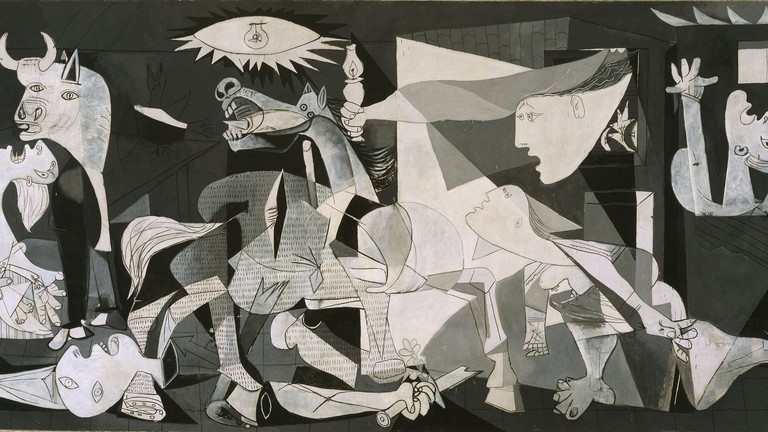
1. Guernica by Pablo Picasso, 1937

Pablo Picasso’s huge 1937 mural Guernica, which depicts the massacre of a Basque village in 1937, has since become a representation of every city ever bombed. It is one of the most powerful artistic decries against fascism, and has been a point of contention throughout the years due to its strong, critical message. Picasso refused to have it on display in Spain until justice had been restored there, and when it was on display at the MoMa in 1967, artists petitioned for it to be removed as a protest against the Vietnam War. In 2003, a tapestry version of Guernica was covered up at the United Nations. Probably Picasso’s most famous work, Guernica is certainly the his most powerful political statement, painted as an immediate reaction to the Nazi’s devastating casual bombing practice on the Basque town of Guernica during Spanish Civil War.Guernica shows the tragedies of war and the suffering it inflicts upon individuals, particularly innocent civilians.

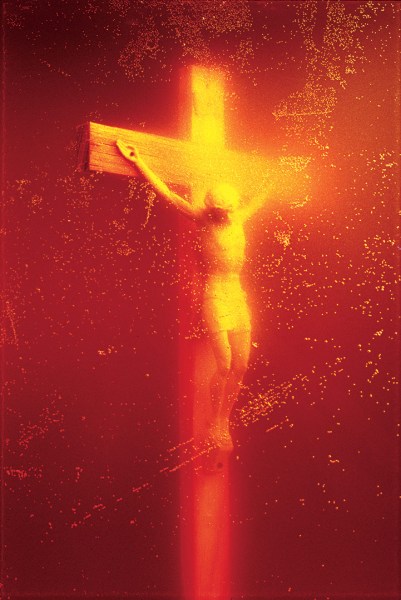
2.Piss Christ by Andres Serrano, 1987

Piss Christ is a 1987 photograph by Andres Serrano, depicting a small plastic crucifix submerged in a glass tank of Serrano’s urine. The piece caused a huge scandal and outrage from senators because Serrano had received taxpayer-funded support from the National Endowment for the Arts, and because many found the piece to be unholy. In this period, Serrano received death threats and hate mail. In 2011, a print of the piece was vandalized during an exhibition in Avignon, France.

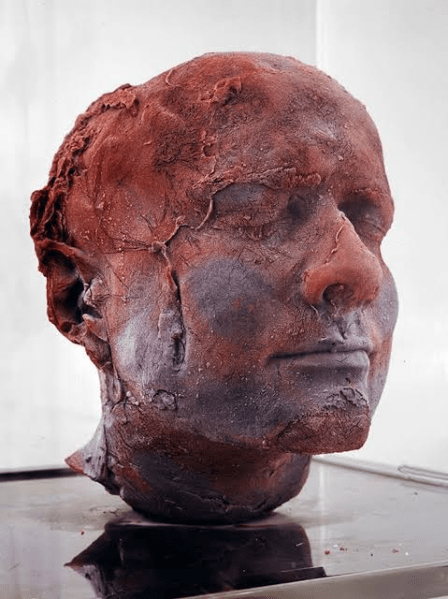
3.Self by Marc Quinn, 1991

Self is a self-portrait of Marc Quinn. However, it is one created by using the artist’s own blood in a cast of his head. Every five years, over the course of five months, Quinn pours five litres of his own blood into the cast. As such, he created an ongoing self-portrait that takes into account change and the passing of time. Many people consider this work to be hair-raising and gruesome. Others herald it for its bold contribution to the self-portrait genre.

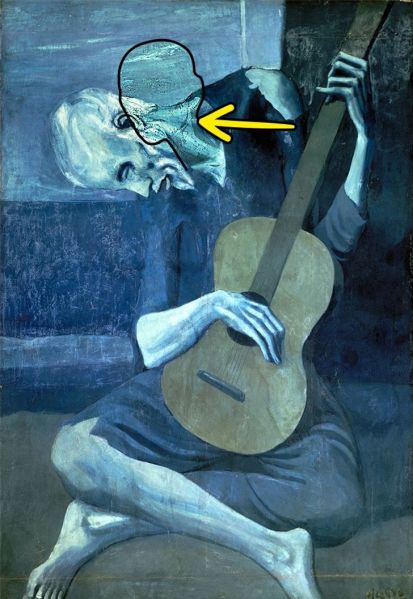
4.The old guitarist by Pablo Picasso

If you look closely at The Old Guitarist by Pablo Picasso, you can see a dim female silhouette behind the man’s head. After taking infrared and X-ray images of the painting, researchers from the Art Institute of Chicago discovered a few other shapes hidden underneath. Most likely, the artist didn’t have enough money to buy new canvases and had to paint over old ones.

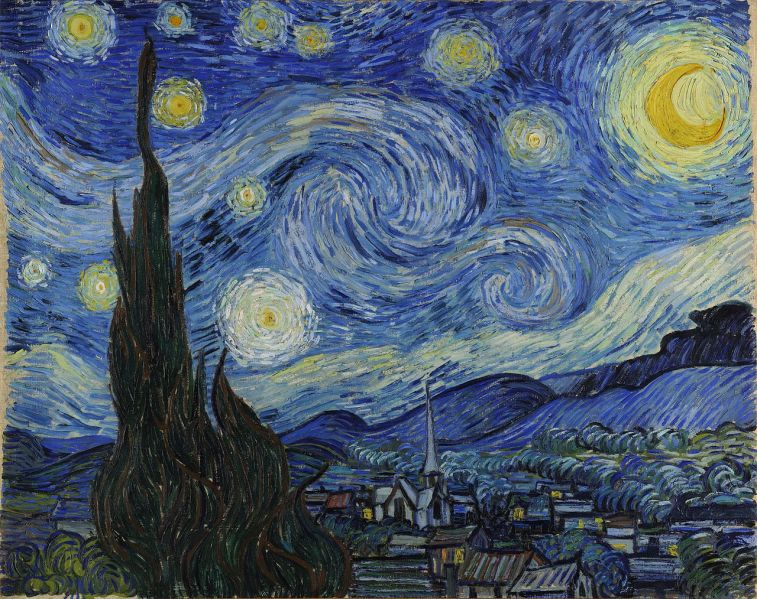
5. The starry Night by Vincent Van Gogh

The famous Dutch painter Van Gogh painted The Starry Night while in an asylum in Saint-Rémy, is believed to be, not only one of the best works from the artist, but also one of the most significant pieces of western art. But it was only recently that experts found out that Van Gogh didn’t just draw a beautiful sky.

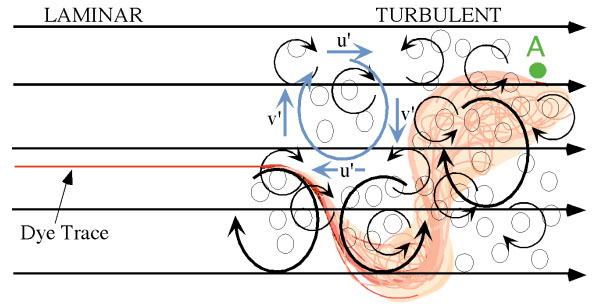
Scientists found a distinct stormy structure amazingly close to a math equation hidden in many of Van Gogh’s works. Somehow, he was able to perceive and portray one of the most complicated concepts nature has ever created (the turbulence concept). In fluid dynamics, turbulence, or turbulent flow, is fluid motion when a powerful vortex appears which leads to the appearance of smaller vortexes and so on. It is hard to express this phenomenon in math but it can be drawn, which is what we see in the painting.

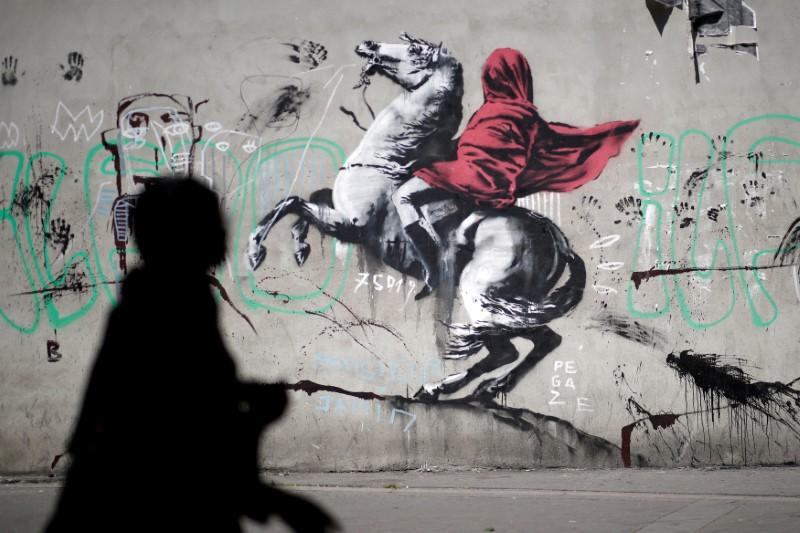
6.Who is Banksy?

Banksy is an anonymous England-based street artist .The artist, Banksy, has been around since the early 1990s, creating striking and highly recognizable street art in public places His satirical street art and subversive epigrams combine dark humor with graffiti executed in a distinctive stenciling technique. His works of political and social commentary have been featured Yet their identity remains a mystery. Who is Banksy? “Over the years several different people have attempted to ‘unmask’ Banksy,”.

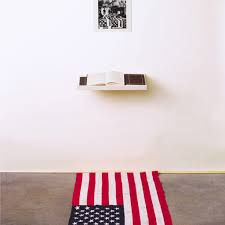
7.Scott Tyler, Dread, 1989

In 1989, Scott Tyler was just a high school student at the Art Institute of Chicago. There, he presented his first artwork titled what is the appropriate way to display the American flag? The US flag was displayed lying flat on the floor. It was placed in a strategic way so that patrons wanting to read the hanging manual would have to step on the flag.

Several visitors were arrested for outrage and, of course, the artist himself. He was violating the Flag Desecration Amendment. Even President Bush criticized the artwork as shameful, as did many others. However, there were opinions of all kinds. With this work, Scott Tyler wanted to demonstrate the weakness of one important human right: The freedom of expression.

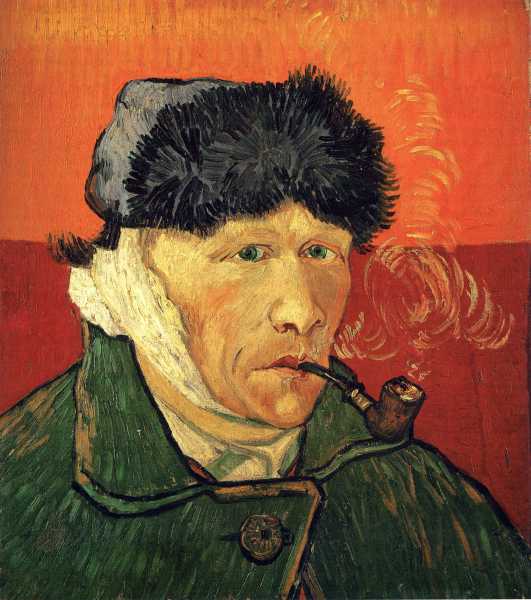
8. Self portrait of Bandaged ear by Vincent Van Gogh

Vincent van Gogh’s Self-Portrait with Bandaged Ear depicts the artist with an injured right ear. In reality, he cut off his left ear. The discrepancy is explained by the fact that van Gogh used a mirror to create the picture of himself.

Pride Month 2020: #21daysallychallenge

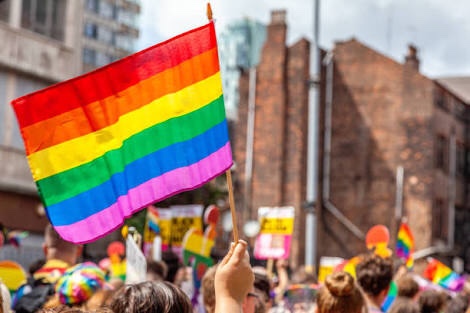
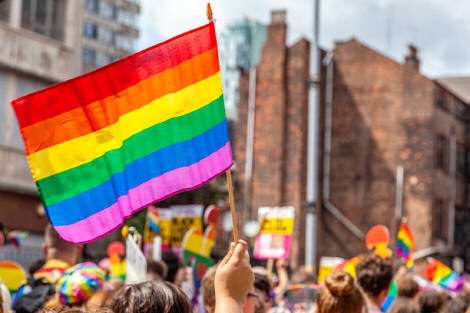
Pride march

Every year, in the month of June, the LGBTQ community hosts pride celebration in various ways. It is a month long celebration of diversity, love, acceptance, inclusion and unabashed self-pride. Various events are held across the globe during this commemorative month as a way of recognising the LGBTQ community and their influence around the world.

Why the month of June?

The month of June was chosen for LGBTQ pride month to memorialise the riots held by LGBTQ community members against a police raid that occured at the Stonewall Inn, a gay club, in New York City on June 28, 1969.

The message was clear; to peacefully protest and raise political and social awareness of the issues facing by the community. The queer community wanted to be open about their sexual orientation and be free to go anywhere without the fear of being arrested.

Pride Month 2020: #21daysallychallenge

This year, because of the social distancing norms across the world, many pride parades and events are on hold. But still we would not be restricted to celebrate all forms of love. Due to the global pandemic concerns, this year a different approach have been taken by the Pride Circle to take aware and conscious steps to acknowledge and redress stereotypes and biases about the LGBTQ community and bring about social change.

The aim of the challenge is to bring together individuals and influencers from over 28 countries and 70 organisations to establish a global community of LGBTQ allies. It started on June 1, there will be 21 mini-challenges extended over a period of 21 days in the month of June. As per the Pride Circle’s Statement, “this is based on science that it takes 21 days to form a new habit. Anyone can participate free-of-cost and sign up for it by clicking on the link – https://thepridecircle.com/21daysallychallenge/

Some of the challenges of the initiative include building awareness about the existence and journey of an LGTBQ person, for instance, read or watch or find out about the coming out story of an LGTBQ person, laws associated with the community; show your allyship, test your biasness- have you ever made fun of or discriminated an LGBTQ. Wear something symbolic or just shout out, let the world know that you’re an ally. Build your knowledge about the community. Learn about the art and literature by them and go all out. Don’t hold back, talk about the stigma and bias against LGBTQ persons.

In our country, decriminalisation of homosexuality is yet to complete 2 years, this initiative which has sprouted in India could become our leap of faith to ignite a global movement to look out for equal rights and fair treatment for the people belonging to that community. Allies would be able to contribute in creating a safe space where people of every sexual orientation is welcome and respected. It will help bridge the gap and let people understand the importance of treating others, who may be different from them, with equality, fairness, acceptance and mutual respect. The #21daysallychallenge could be a favourable step in the direction of building and inclusive and conscientious society with support and trust.

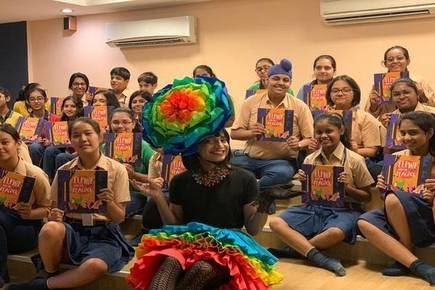
The movement is supported by various organisations, along with eminent academic institutions such as IIMs, IITs, NMIMS, MICA and the only school in India participating in Pride month celebrations, Tagore International School, Vasant vihar. This is a great achievement towards creating safer schools, workplaces and society for the coming generation. Such support from organisations like these is the need of the hour as it plays a vital role in the bigger fight to advance the community and promote inclusion in all spheres of life.

Pic credit: The Hindu

https://www.google.co.in/amp/s/www.thehindu.com/society/celebrating-pride-month-in-june-with-the-21daysallychallenge/article31720256.ece

Now, more than ever, we, the people of India, should encourage everyone who believes in LGTBQ equality to come out and be an ally or support in the best possible way. It’s time we move towards being a more accepting society and initiatives like these is the fundamental step towards that larger goal of “vasudhaiva kutumbakam”, i.e. “the world is one family”.

What I know for sure

What I know for sure

No matter what challenge you may be facing, you must remember that while the canvas of your life is painted with daily experiences behavior reaction and emotions, you are the one controlling the brush.

Before reading this book I knew Oprah Winfrey as the Anchor of popular TV show.  A lady with her common looks and uncommon way of hosting a show made it matchless worldwide. I remember, I first heard about her in my class room where my English teacher asked us to say few lines on her. Being on the first bench I was the first to answer.   I don’t remember any of us would have spoken any words about her leaving, me even more curious about the lady.  I goggled to know her whereabouts; she is the anchor or Oprah Winfrey show and is visiting India for the very first time. My quest ended up there.  But little did I know that she is good author and has published many of her write ups.  One of her book ‘I KNOW FOR SURE’ was suggested by a friend stating it as mood up lifter.  Winfrey has written a book –this info was enough to get me excited and it is motivational as well, WOW.  Soon, I had the book in my hand. The title only appeared thought-provoking to me and I know for sure, I will like it.

It took me three days to finish this book written without acknowledgement letter and praise words.  I know for sure she must not need them as her moral purpose is to enlighten the society and people around the globe.  So she does well. Every line and story in this book is thought provoking, leaving you to understand your purpose of being alive.  WHY I AM HERE? WHAT IS MY PURPOSE OF BEING ALIVE? WHAT ALL I HAVE ACHIEVED? WHAT STONE IS LEFT UNTURNED IN MY LIFE? And many more! I feel, each book is written with a purpose, some to motivate, some to educate, some to make laugh, fall in love and some to make you think of you being alive.  Every page I turned has something vivid in it be it a story of a 13 year old boy who happily died or a person who survived defeating death. it has a kind of story telling that will lingers for a long time in my mind and  inspired me to keep moving no matter what.

You are here for a purpose and you just living if it’s not fulfilled.  Doesn’t stop keep learning, and if you think you know enough than you have lived your life. Your purpose of being on this planet is over.  These lines make sense to me.

I knew Opera Winfrey only as successful host of a show before I read this book.  But knowing her past life gave me adrenaline rush. Life has been a roller coaster ride to this lady and she has overcome all the problems, shining. I owe her my respect.

 All I learnt is ‘we shouldn’t make opinion about other unless we know their story of fight and struggle to win.  

‘Urgent need to end gender discrimination’ – Vice President

The Vice President of India, Shri M. Venkaiah Naidu today called for ending the gender discrimination and ensuring safety security, and dignity of the women.

Speaking at the Silver Jubilee Celebrations of Indian Women Press Corps,  he said that it was the collective responsibility of the governments, media and civil society to ensure that women were made equal partners in the developmental process of the nation.

Referring to various reports on the Gender and pay gaps in the media sector, the Vice President called for collective efforts of news organizations, associations such as Press Council of India, IWPC and the National Broadcasters Association to work together and find out a way to address disparities based on gender within the journalistic profession.

Stating that the menace of fake or doctored stories that find a way to masses via news, internet, and messaging services have often led to chaos, confusion, and panic, Shri Naidu stressed that media has the onerous responsibility to not only provide accurate information but also educate the people on their rights and responsibilities as well.

The Vice President urged the media not color news with views and stressed the need to maintain objectivity, fairness, and accuracy in decimating information to the reader and viewer without assuming the role of the gatekeepers.

He called for collective efforts of the Press Council of India, NBA to establish a mechanism to curb the menace of fake news, propaganda and paid news.

Describing journalists as catalysts for change and media as an instrument to bring in a positive change in society, the Vice President asserted that Media professionals must strengthen democracy through their observations, suggestions, and writings.

The Vice President asked the regional and vernacular Media organizations to promote Indian languages, culture, and traditions of different states and regions through special programs along with the news. He stressed that media must lay special emphasis on matters relating to farmers, women, youth, entrepreneurs and rural India.

On the occasion, Shri Naidu also released Indian Women’s Press Corps Souvenir.

Smt. Jyoti Malhotra, President Indian Women’s Press Corps, Ms. Vinita Pandey, General Secretary Indian Women’s Press Corps and eminent journalists from several organizations were present at the event.

Following is the full text of the speech –

“Namaskar,

Let me first begin by congratulating the Indian Women’s Press

Corps (IWPC), a reputed association of women journalists on completing 25 successful years. It was set up in 1994 to support women journalists in their professional work, in enhancing their knowledge and skills and to provide a forum for networking.

I am glad that the organization has been playing a key role in creating a conducive working environment for women journalists and also working towards safeguarding their rights. This non-profit, nonpartisan, progressive, professional organization has been focusing on creating a positive change for women journalists.

With reporters, editors, producers, anchors, and cameraperson from across the print, TV and new media as its members, the organization has become an important institution and has been organizing press meets and interactions with eminent personalities from various fields.

It is commendable that women have come forward in such large numbers to join this noble profession to play their rightful role as the fourth pillar of the state.

I was informed that IWPC has been providing essential infrastructure support to women journalists by supporting them in performing their duties both on the field and at the desk.

The press and the media played a pioneering and stellar role in inspiring the masses to fight against the British during the freedom struggle and in strengthening the democratic foundations in the country since Independence.

Journalism provides citizens with the information they need to make the best possible decisions about their lives, their communities, their societies, and their governments.

The purpose of journalism is to give people the information they need to make better decisions. In other words, journalism is supposed to empower.

The media has the onerous responsibility to not only provide accurate information but also educate the people on their rights and responsibilities as well.

As we all are aware, the media landscape has transformed dramatically over the years and so have the values and ethics of journalism.

Professions such as Politics, Medicine, and journalism were considered as a mission and those who were in the job used to commit to ethics. Unfortunately, there is a decline in such commitment due to various factors including business and politics. Unfortunately, stories or reports are being mixed with views according to the management’s line of thinking.

Adding to this is the menace of fake or doctored stories that find a way to masses via news, internet, and messaging services. Such instances have often led to chaos, confusion, and panic.

I have been urging the media not color news with views and have been stressing the need to maintain objectivity, fairness, and accuracy.

The cardinal principle of journalism is to present fair, objective, accurate and balanced information to the reader and viewer without journalists assuming the role of the gatekeepers.

I am glad that many journalists follow these principles ensuring that Indian media is by and large credible.

Journalists are catalysts for change and media acts as an instrument to bring in a positive change in society. Media professionals are the watchdogs of society and strengthen democracy through their observations, suggestions, and writings.

It is unfortunate that we still come across instances of harassment of women, gender discrimination and domestic violence.  The glass ceiling limited women’s opportunities for growth is, unfortunately, still a reality in contemporary society.

According to the Global Media Monitoring Project (GMMP), as per the latest data of 2015, globally, women as news reporters were most present on radio at 41% and least in print news at 35%. (TV and Internet constituted the remaining 24%).

The report said that the global share of women reporters dropped on radio and television by four percentage points in both mediums between 2010 and 2015.

The report pointed out that between 1995 and 2015, the percentage of women media professionals rose from 17% in (Newspaper, Television, Radio) to 24%, which is a 7% rise. Men still dominate the industry with 76%.

Findings of another study, “Inside the News: Challenges and Aspirations of Women Journalists in Asia and the Pacific”, launched by UNESCO, and the UN Women and the International Federation of Journalists (IFJ) suggested that the presence of women in media has more than doubled in two decades but they constitute only 28.6 percent of the media workforce in Asia and the Pacific and men outnumber women in 4:1 ratio in India.

It pointed out that “on average across Asia and the Pacific, women make up 28.6 percent of the media workforce. The proportions are lower in decision-making roles in media organizations where women make up 17.9 percent of executive roles, 19.5 percent of senior editorial and 22.6 percent of mid-level editorial positions.”

Another recent report released by UN Women, female journalists in India “continue to be denied their fair share” at major media organizations in India. The report, “Gender Inequality in Indian Media”, pointed out that women were better represented online than in newspapers and TV.

Keeping these things in mind, collective efforts must be made by the managers of News organizations, Associations such as yours and the Press Council of India and the NBA must work together and find out a way to address disparities based on gender within the profession.

A systematic, structured approach must be put in place by the media and the government to address all the crucial matters relating to women’s safety, security, and dignity. There is an urgent need to end gender discrimination and neglect of women.

I am happy to know that the organization has been organizing regular workshops, and training sessions for its members to achieve its important goal of advancing the impact of women in the media by being a resource to members and the industry.

As you all are aware, women’s participation is extremely crucial to ensure the overall development of the nation. It is the responsibility of the governments, institutions, media and civil society to see that women are made equal partners in the developmental process of the nation.

The media must highlight the success stories of women achievers to inspire others.

As we celebrate the 25 years journey of IWPC, we must strive to set higher benchmarks and achieve excellence in the field of media.

I would like all of you to inform and educate people with well documented, research-based reports based on facts. Fearless adherence to truth should be your creed.

The rise of social media has increased competition among entities, organizations. It is important our newsrooms and professionals are trained and sensitized on flashing news and updates by exercising greater caution.

Collective efforts need to arrest sensationalism, end biased coverage and paid news. Entire Media, as a responsible institution, must contribute to strengthening democratic foundations of the country.

Here, the Press Council and Media Organizations including yours should take lead in training professionals to be more responsible in disseminating information.

You must empower the audience or readers to make informed choices.

I urge the media, especially regional and vernacular Media organizations to promote Indian languages, culture, and traditions of different states and regions through special programs along with the news.

In the end, I urge the media to focus on rural India. We must lay special emphasis on matters relating to farmers, women, youth, entrepreneurs.

I am happy to learn that IWPC has been providing important professional resources to women journalists like library, computers and enabling its members to meet newsmakers from all walks of life on a regular basis.

I am sure such support helps all the journalists, especially the young journalists to learn from their seniors during their interactions and upgrade their professional skills.

I once again convey my wishes to the Indian Women’s Press Corps (IWPC) and all its members on their contribution to the profession and the nation.

Jai Hind!”

*****