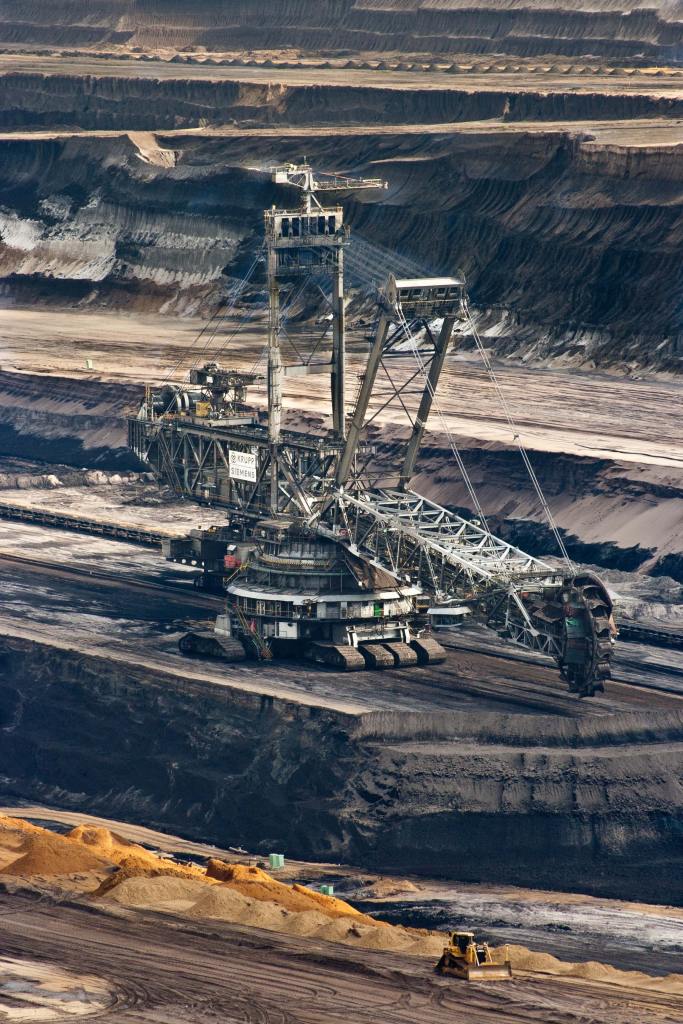
Top 5 deadliest sharks on the planet

Sharks their name is enough to scare any one. Yes that’s for sure. They have some fearsome reputation for attacking humans but more humans are killed by lightning strike than by shark attacks in the world.

They are most ancient animal with low reproductive rates. Their skeleton is made up of cartilage, they are not able to see but their smelling power is more than enough to survive in the great oceans. They are deadly animals and even voilent to. Here, are some of the deadliest shark species for humans.

1) The Great White Shark
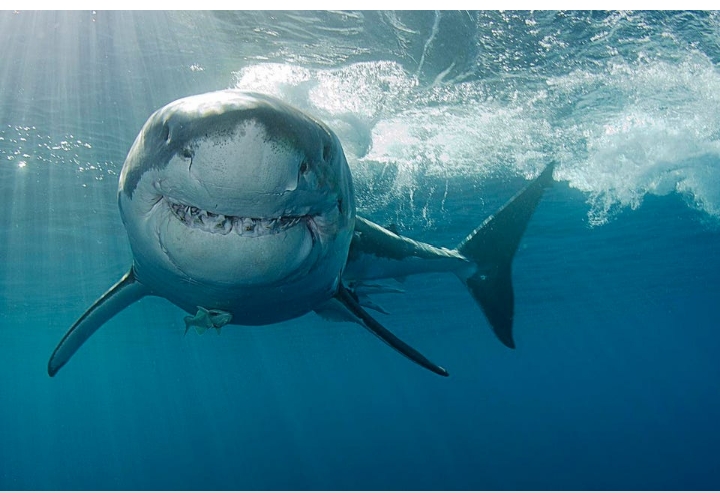
The Great White Shark ( Carcharodon carcharias) also known as white shark or great white are one of the deadliest animal. They are huge oceanic creature with 4.5m to 6.4m adult female and 3.4m to 4.1m adult male witha a weight of 520 to 1,100 kg adult. Their relationship with human is not so good. There is estimated to be unprovoked shark bite incident in 2012 to be 272 which is the largest as compared to different other species. Gradually the rates are lower in 2020 as compared to 2019, there is a drastic fall of 19.5% as in 2020.

2) The Tiger Shark
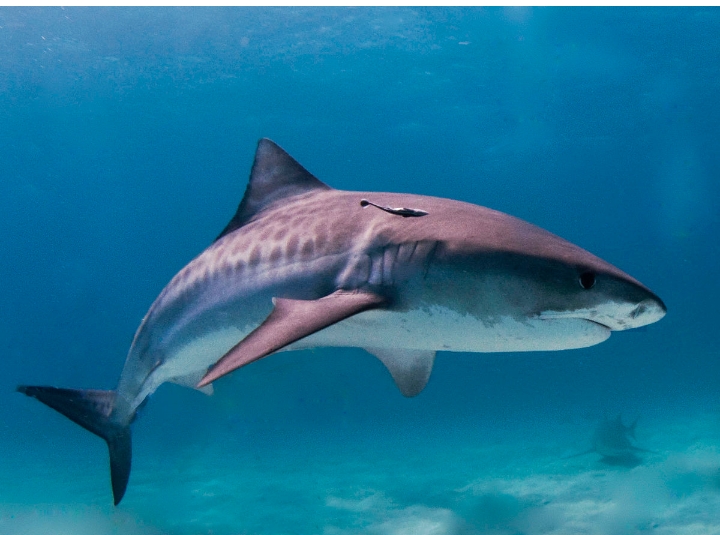
The tiger shark ( Galeocerdo cuvier). It has a length of 5m (16 ft 5 inch). Due to its dark stripes down it’s body which resembles the tiger pattern is called as tiger shark but these stripes fade away as the shark matures. They are found in temperate and tropical waters, and are mainly seen in central Pacific ocean. It comes second after the great white for fatal attacks on humans.

3) The Bull shark
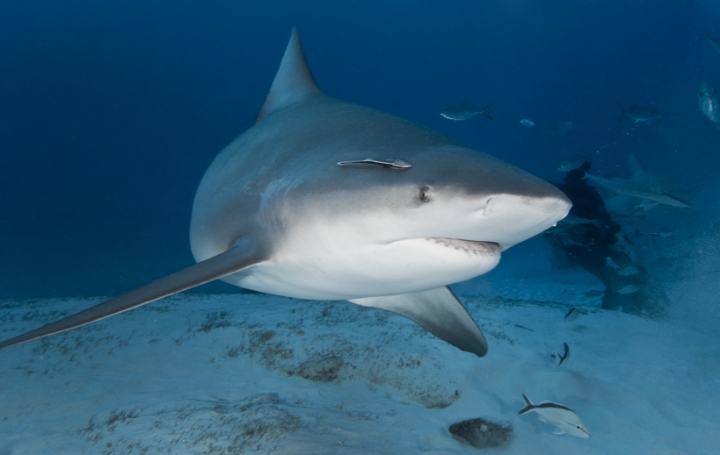
The Bull shark ( Carcharhinus leucas) is also known as Zambezi shark. They are found worldwide along warm, shallow and coast of rivers. They are very well known for its aggressive nature and are found in both salt and fresh water. Make Bull shark grow upto 7 feet and females grow upto 11 feet. Their weight goes upto 91 to 227 kg. Human attacks are mainly found in freshwater and moreover less attacks are found and not every attack is fatal.

4) The Oceanic Whitetip shark
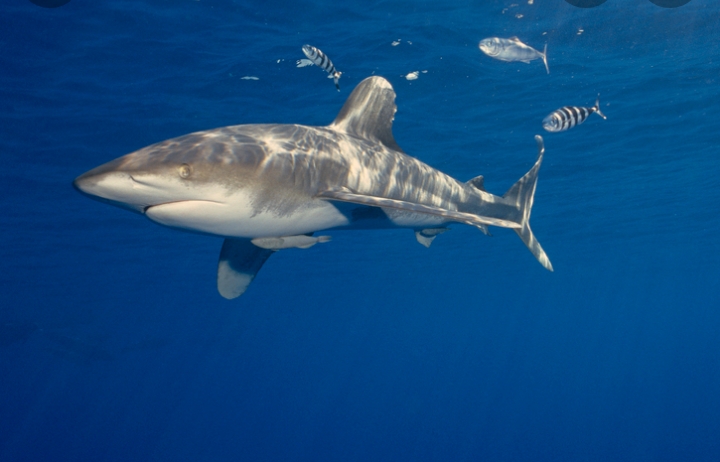
The oceanic whitetip shark ( Carcharhinus longimanus) also known as brown shark, lesser white shark. Its length ranges from 3.4m to 5m or 11ft to 13ft and its weight goes upto 167kg. It is aggressive towards humans. They are known to have attacked many survivor of ships.

5) The shortfin mako shark
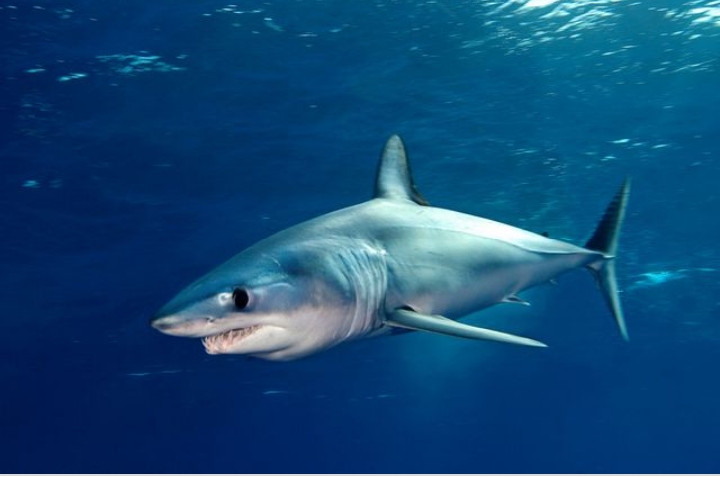
The shortfin mako shark (Isurus oxyrinxhus) also known as blue pointer or bonito shark. Its size can reach upto 4m (13ft in length). This shark species is classified as endangered species by IUCN. This species is sexually dimorphic with female exceeding a length of 12ft and weight of 570kg. It only shows 9 attacks out of which only one was fatal on human between 1580 to 2017. But after 2017 they are regularly blamed for attack on humans, which are mainly due to harrasment for catching or killing of the fish.

There are many more deadliest species of sharks which cause damage to humans.
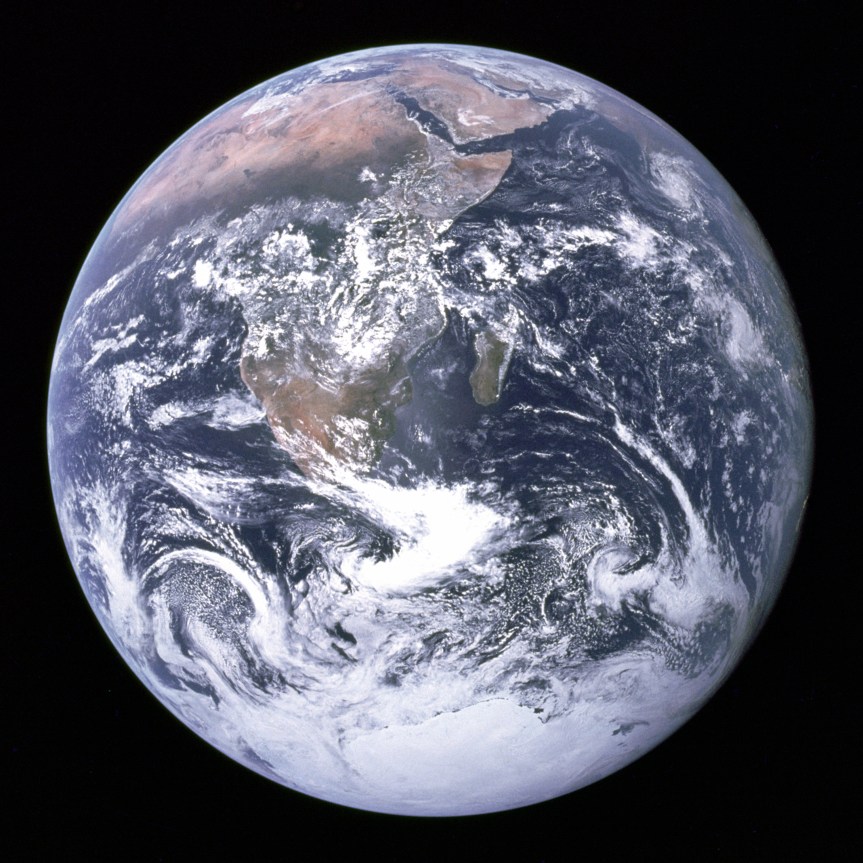
Interesting facts about our Planet Earth

Our planet Earth, which is also known as the Blue planet because 75% of this planet is covered in the ocean and also it has pleasant humanity surviving on this planet. As we know this is the only planet where we are aware of life existence since the very beginning and is currently the only place where we can live in this Universe. There are interesting facts about our mother earth that we dint know about, and that is:- 

Moon is probably a part of the Earth

According to the scientist, approximately 4 billion years ago earth dint has a moon at that point until a big space rock probably the size of Mars collided with our planet which resulted in a big part of the earth broke away and later formed into Moon which we see today in the night time.  

Our planet’s days are increasing 

When our planet was formed approximately 4.6 billion years ago, the day was roughly about 6 hours long buy by 620 million years ago it had increased to 21.9 hours long. Today, the average period of a day is 24 hours long but the time is increasing by 1.7 milliseconds every century. The reason may be the moon is slowing down the earth’s rotation through the tides. The spin of our planet results in a position of tidal ocean bulges to be pulled a little ahead of the Moon and earth axis, which makes a twisting force that slows down the Earth’s rotation.

Exploding lakes

Well on the border of the Democratic Republic of the Congo and Rwanda as well as in Cameroon there are three deadly explosive lakes Nyos, Lake Monoun and Lake Kivu are crater Lakes that are located over volcanic Earth this means that magma lurking below the surface emits carbon dioxide into the waters of the lake this carbon dioxide builds up in a thick layer at the bottom of the lakes until pressure gives way and it’s released in an explosion. It doesn’t happen often but if anyone is unlucky enough to be passing by at that moment they’ll be asphyxiated with the gas.

The Earth’s changing magnetic field 

Our planet has a very strong magnetic field because of two reasons first is Nickel – Iron core and a pretty fast axial rotation, the magnetic field is significant for earth since it protects the planet from the solar winds. We think about our plant’s magnetic field as something constant and stable but the fact is it’s changing. According to some researches, they say that since the 19th century the northern magnetic pole has shifted approximately 685 miles moving towards North West across the Canadian arctic. The southern magnetic pole is also continuously roaming, scientists have known about the migration of the poles for a long time. James Ross an explorer and British naval officer pinpointed the northern magnetic pole for the first time in 1831 he discovered it during his exhausting voyage to the Arctic where his ship got trapped in the ice forcing the crew to spend a harsh 4 years after that nobody went back to that place until the next century in 1904 Roald Amundsen a polar regions Explorer from Norway reached the North Magnetic Pole again and was surprised to find that it had shifted 31 miles since Ross’s discovery. 

Gravity is not the same everywhere

Despite our common belief, our planet isn’t perfectly round it’s more like a sphere, for example how a human head is shaped. So its mass is irregular and differs in various places which causes wobbles of gravity in different areas of the planet one of these gravitational anomalies is found in Canada’s Hudson Bay where the gravity is much weaker than anywhere else on the planet. A 2007 study found the reason for such a phenomenon is melted glaciers that area was once covered with a thick layer of ice when that ice later melted the imprint of this glacier partially pushed aside some of the Earth’s mass in that region is exactly this slight deformation of the crust that can explain the 25 to 45 per cent weaker gravity. Perhaps it’s somehow connected with the movement of magma in the planets mantle, what researchers have predicted in a science journal.

Earth may have a second moon

According to some scientists, they believe that our planet used to have an additional satellite. According to their research, a smaller celestial body about 750 miles wide orbited the earth just like a second moon it most likely crashed into our main satellite later on such a collision could explain why the two sides of the moon look so different from each other one being heavily cratered in ruff scientists also don’t rule out the probability that one day earth will get another satellite. Even today there are tons of celestial bodies that follow the planet they’re mostly temporary companions though but scientists believe that the gravitational field of our planet occasionally captures even quite big asteroids that spin around the earth for several months or about three rotations after that they move on in their journey across the expanses of the cosmos.

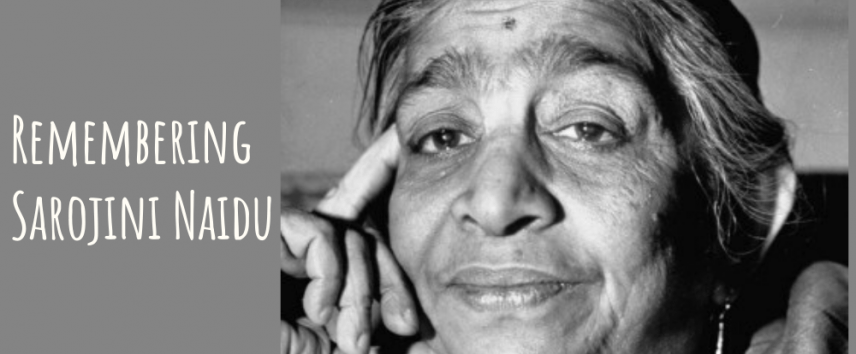
The Nightingale Of India

“As long as I have life, as long as blood flows through this arm of mine, I shall not leave the cause of freedom…I am only a woman, only a poet. But as a woman, I give to you the weapons of faith and courage and the shield of fortitude. And as a poet, I fling out the banner of song and sound, the bugle call to battle. How shall I kindle the flame which shall waken you men from slavery…”

Introduction

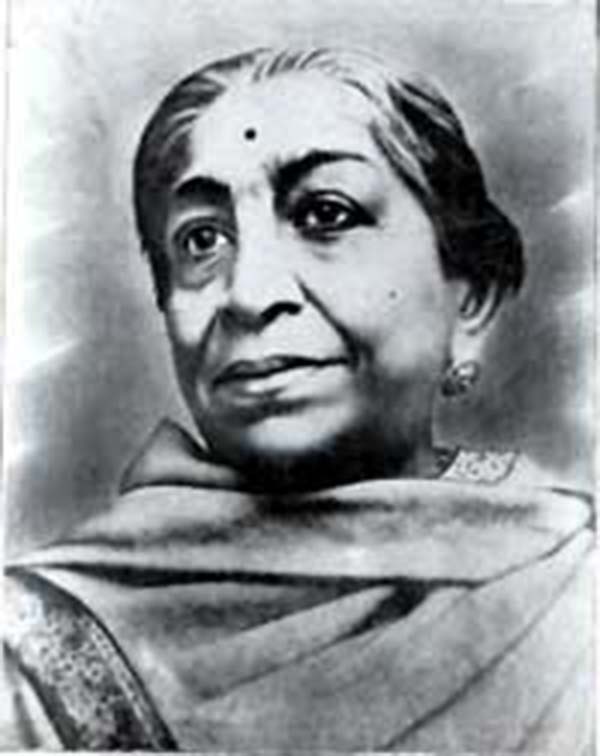
She was an Indian political activist and poet. A proponent of civil rights, women’s emancipation, and anti-imperialistic ideas, she was an important figure in India’s struggle for independence from colonial rule. Naidu’s work as a poetess earned her the sobriquet ‘the Nightingale of India’, or ‘Bharat Kokila’ by Mahatma Gandhi because of colour, imagery and lyrical quality of her poetry.

Birth and death

Born in a Bengali family in Hyderabad, Naidu was educated in Madras, London and Cambridge. Following her time in England, where she worked as a suffragist, she was drawn to Indian National Congress’ movement for India’s independence from British rule. She became a part of the Indian nationalist movement and became a follower of Mahatma Gandhi and his idea of swaraj. She was appointed as the President of the Indian National Congress in 1925 and later became the Governor of the United Provinces in 1947, becoming the first woman to hold the office of Governor in the Dominion of India.

Naidu’s poetry includes both children’s poems and others written on more serious themes including patriotism, romance, and tragedy. Published in 1912, “In the Bazaars of Hyderabad” remains one of her most popular poems. She married Govindarajulu Naidu, a general physician, and had five children with him. She died of a cardiac arrest on 2 March 1949.

Work

“Tell me no more of thy love, papeeha,
Wouldst thou recall to my heart, papeeha,
Dreams of delight that are gone,
When swift to my side came the feet of my lover…”

– A Love Song From The North by Sarojini
Naidu

1905: The Golden Threshold, published in the United Kingdom.
1912: The Bird of Time: Songs of Life, Death & the Spring, published in London.
1917: The Broken Wing: Songs of Love, Death and the Spring, including “The Gift of India” (first read in public in 1915) .
1919: Muhammad Jinnah: An Ambassador of Unity.
1943: The Sceptred Flute: Songs of India, Allahabad: Kitabistan, posthumously published.
1961: The Feather of the Dawn, posthumously published, edited by her daughter, Padmaja Naidu.
1971:The Indian Weavers.

After India attained independence, she became the first woman Governor of an Indian state, Uttar Pradesh. She served as governor till she passed away in March 1949, when she was working late in office.

As a Feminist

“Sarojini Naidu inspired the Indian Renaissance Movement and had a mission to improve the life of Indian woman.”

Bappaditya Bandopadhyay

Sarojini Naidu played an important role in women’s rights struggle in India. She helped in shaping Women’s Indian Association in 1917 with Annie Besant and others. The Association sought equal rights including the right to vote and represent. She presented the need to include more women in the Congress and in the freedom struggle. During 1918, British and Indian feminists including Naidu set up a magazine called “Stri Dharma” to present international news from a feminist perspective.

Link

Know asteroids better on World asteroid day

June 30 is the world asteroid day and it is held on the anniversary of Siberian Tunguska event which is known as one of the most dangerous asteroid related event on earth. This day is designed by United Nations general assembly to raise awareness about the harmful effects of asteroids and measures to be taken to avoid these effects. On this day lets know more about the asteroids.

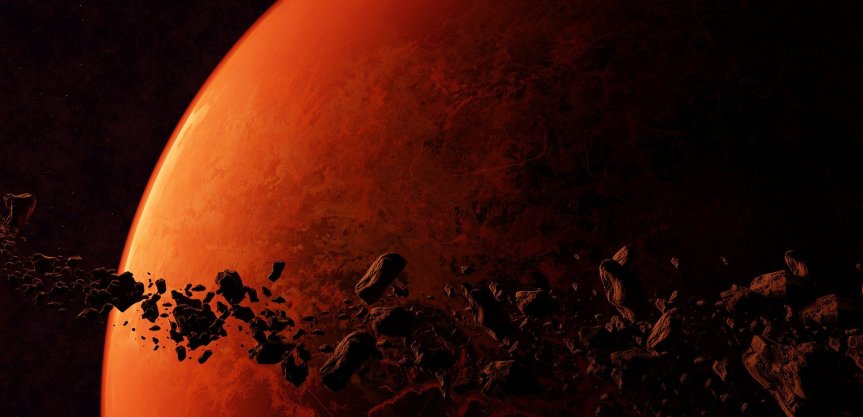
After the formation of the solar system, some of the rocky remains which failed to form a planet started to revolve around the sun around 4.6 billion years ago and these are called asteroids. Asteroids are made of same starting materials as earth and the other planets. But they are not big enough to be called a planet. Currently 1,097,065 is the known asteroid count and there is an asteroid belt between Jupiter and Mars which contains more than 200 asteroids of size larger than 60 miles in diameter. And many asteroids are present outside the belt also.

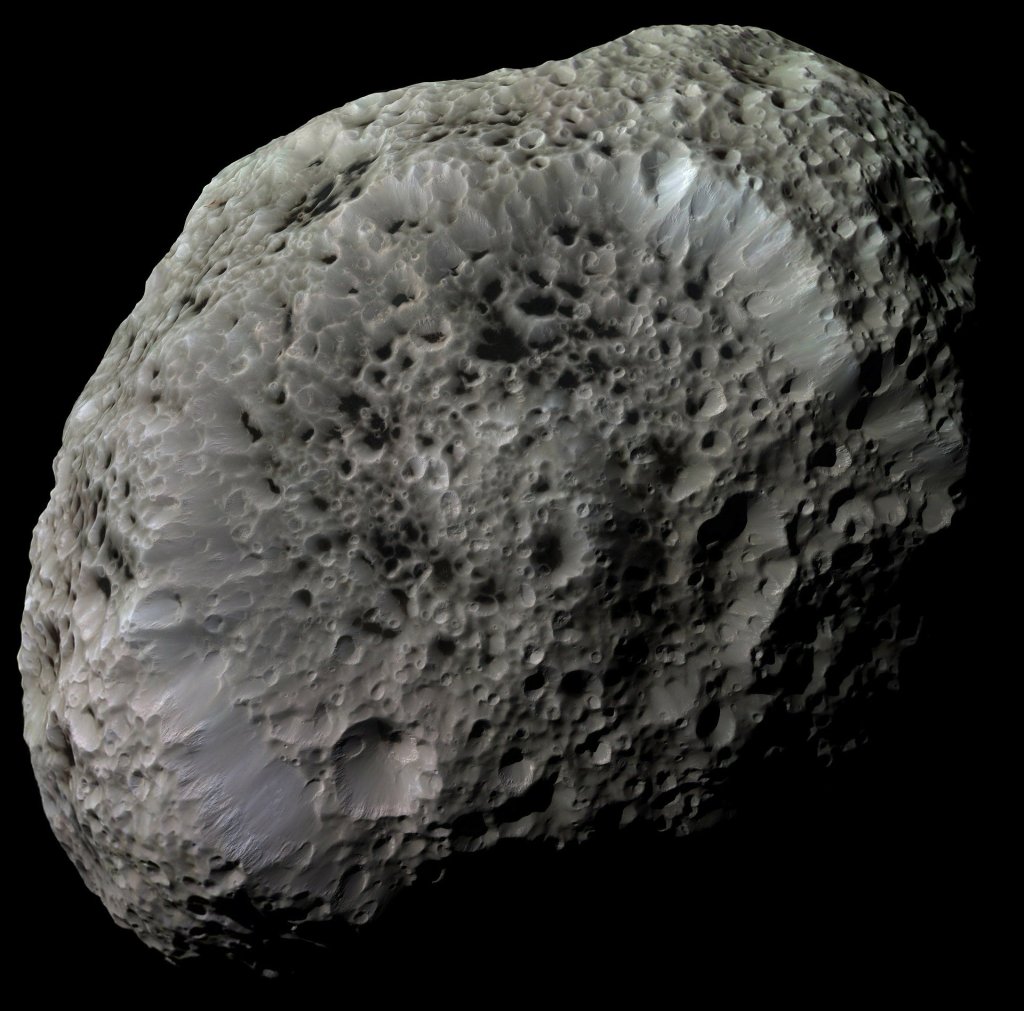
asteroids can be very big of 940km and can be very small of 6-foot-wide. They are irregularly shaped although some are nearly spherical. Their surface is pitted as moon`s surface. Some of the asteroids also have their own moon. There are binary asteroids also present which revolve around the sun in pair and revolve around each other too. The average temperature on their surface is minus 73 degree Celsius.

THERE IS A CLASSIFICATION FOR ASTEROIDS BASED ON THEIR COMPOSITION
asteroid

C-type asteroids: They are also called as carbonaceous asteroids. This is the most common type of the asteroid making 75% of the population. They are mostly grey in color. They have large amount of carbon with rocks and minerals. They inhabit the main belt`s outer region.

M-type asteroids: They are also called as metallic asteroids. They are mostly made of nickel and iron and small amount of stone. They are moderately bright and red in color. They are in the middle region of the main belt.

S-type asteroids: They are also called as siliceous asteroids. They are of 17% of the total asteroids present at inner region of the asteroid belt. They are mostly made of silicate materials. Their composition is similar to meteorites.

CAN ASTEROIDS BE A SPACE COLONY FOR HUMANITY?

The desperation of the humanity for survival is the main driving force to think about colonizing the asteroids. But this has many obstacles. The main challenge is the transportation. Asteroid belt is 204.43 million miles away from the earth & journey to them may take more than 18 months. And size of the asteroids is not enough to produce gravity. This makes landing on them difficult. Another problem is the temperature which is very less. Scientist are studying to remove all these obstacles and possibility of habiting on the asteroids is quite at the far end of the future.

MINING ON ASTEROIDS
mining

Mineral depletion is becoming a major thing on the earth. It is predicted that earth will run out of the minerals in coming 50-60 years. So extraction of minerals from the space that too asteroids sounds interesting and hopeful. Asteroids also contain water which can be used as fuel for the spacecrafts used. Its been said that the world`s first trillionaire will be a person who owns asteroid mining. Asteroid mining will bring the essential economic progress.

Mining on asteroids requires a  lot amount of resources. Some of may include mining robots and haulers. Construction and maintenance of infrastructure is important. In-space manufacturing should be enabled to do mining effectively. Bringing the mined materials back to earth is also a challenge.

The technology for asteroid mining is being constructed by a company called Deep space industries. They are developing 3 types of spacecrafts. They are: Fireflies to examine the asteroids, Dragonflies to bring back samples to the earth and Harvesters to voyage to the asteroids and gather tons of minerals and return back to the earth. TransAstra is another company which is developing technologies for the same. If all these companies succeed then the dream of mining on asteroids will come true and will benefit the earth`s economy.