
CHARLIE CHAPLIN- The silent master and less known facts.

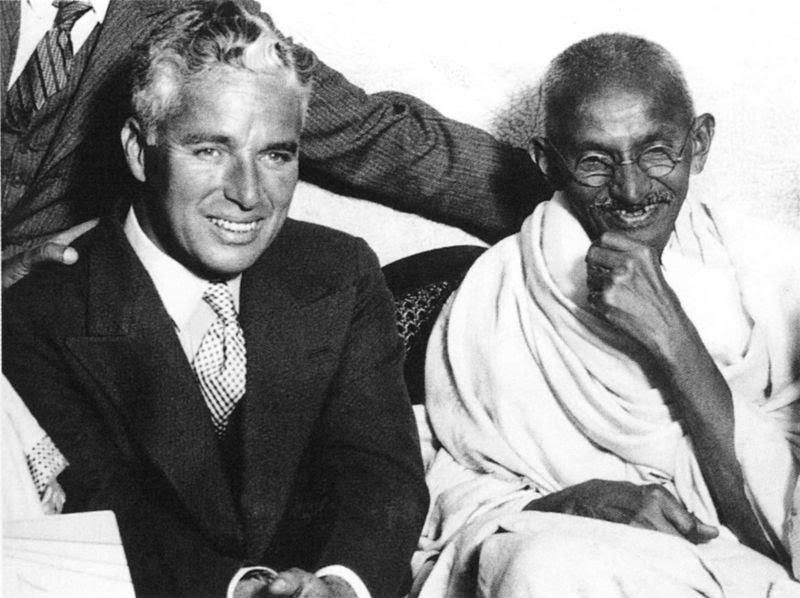
Chaplin with Gandhi Ji.

Popularly known as the English comedy King. His parents Hannah and Charles Sr. we’re both hall actors though they just had a penny of income. Chaplin didn’t have decent relations with his father and that’s why he and his half- brother Sydney had to face poverty in childhood. People usually had a misconception about his eye color, they were blue but they looked like Brown due to black and white screen.

Charles Spencer Chaplin

Born on 16 April 1889{England} – and died on 25 December 1977{Switzerland}). He was a perfectionist and a multi-tasker (composer, actor, director, screenwriter, producer, and editor). In 1898 Hannah was sent to an asylum and during this tenure, Chaplin and Sydney were sent to live with their father whom they barely knew. He was an alcoholic and later died due to liver disease. Chaplin had his mother’s encouragement which always pointed out that Chaplin always had a spark and talent. When he was 13 he withdrew education while he was a part of the dance troupe. He later turned his career from a dancer to a comedic performer and drama. He got recognition in the theater after he acted in “Inebriate Swell”. A contract was finalized with Mutual amounting $670,000 a year ($15.7 million today), which Robinson says made Chaplin – at 26 of age and was one of the highest-paid actors. This huge amount of salary was everywhere in the press and on news headlines. John R. Freuler, the studio president, illustrated: “We can afford to pay Mr. Chaplin this large sum annually because the public wants Chaplin and will pay for him.” Later in life, Chaplin referred to his Mutual years as the happiest period of his career. Chaplin passed away in 1977 at the age of eighty-eight years old.
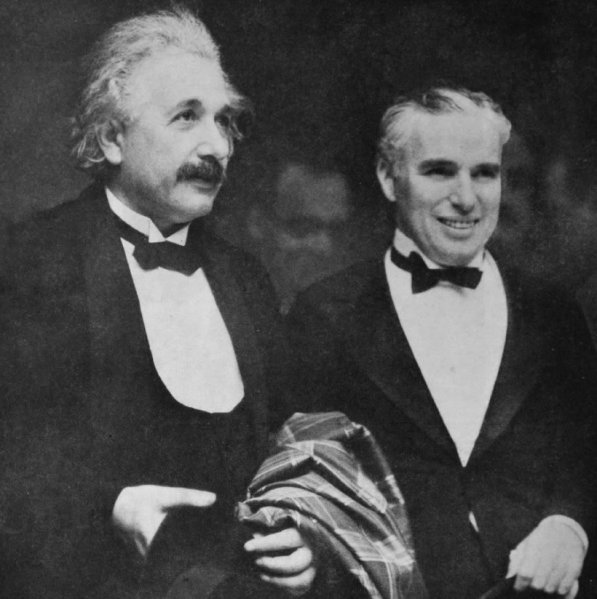
Charlie with Einstein.

“An American Obsession”– British media once attacked him as he didn’t participate in the First World War. Though he upheld himself fighting for Britain, he wasn’t summoned by either country. The most appreciated character of Tramp was everywhere including the costume parties.

Less known facts.

  • He was banned from the US because of his alleged Communist politics.
  • The Academy of Motion Picture Arts and Sciences honored the 82-year-old Chaplin with an honorary Oscar. He attended the ceremony and obtained an energetic standing ovation. When he finally spoke, he said, “Thank you for the honor of inviting me here. You’re all wonderful, sweet people.” He returned to the US after 20 years.
  • After Chaplin died, some thieves asked his widow Oona Chaplin for ransom. Even after his death, he created controversy. The thieves demanded $600,000 to return the body. Oona tapped the phone lines, which led authorities to the two men, Roman Wardas and Gantscho Ganev.
  • He married thrice. He had an interest in teenagers. When Chaplin was 54 years old he married for the last time with 18-year-old Oona O’Neill and gave birth to 8 kids.
  • He was the first actor to appear in Time Magazine and at that time he was paid much more than the President of the US.

He was so dedicated to his work and got so much applause. Also, he received a 12-minute standing ovation in the Oscars of 1972 which is historic.

Bama’s Karukku: A Book Review

One of the most popular Dalit woman writers, Bama Faustina Soosairaj is a teacher by profession. Many of her works got translated into English, German, French, Telugu, and Malayalam. Karukku is based on her own life, which focuses on caste structures in the Catholic Community. In her autobiography, Bama pens down her struggles with the oppression of the society, and how she comes out stronger and mightier than ever.

Karukku became a turning point in Bama’s life. She received immense applause and support for bringing up the pain she had experienced in her life. The autobiography spoke to the Dalit community in a way, no other book did. It was read by innumerable numbers of people and it paved the way to a new genre in Tamil Literature. Karukku was first published in the Tamil language by Mini Krishnan, who was then the editor of Macmillan India. After the publication of Karukku in Tamil, it was translated by Lakshmi Holmström into English. The autobiography has won the Crossword Award, which brought the book into the limelight. Now, it has been read by several numbers of students worldwide. Karukku has been translated into languages other than English and Tamil. It is published in Kannada, Telugu, and Malayalam. It has gone on to become a part of the University curriculum for many disciplines likes Feminist Literature, Dalit Literature, Subaltern Literature, and others. After the success of Karukku, many Dalit woman writers came out of their cocoons and published excellent pieces of literature.

Karukku has proved to be a timeless autobiographical novel. It has worked as medicine for all those victims who have suffered due to caste discrimination, oppression, poverty, and such. Karukku brings out not only the real struggles of the Dalit community but also, the pain that every Dalit women go through in their lives. It has provided strength to the readers to speak up, protest, fight back, and not remain as the oppressed class of the society. Bama’s honest words have healed many wounds that were left unnoticed for years. Karukku becomes the pathway to the movement of the oppressed classes.

Karukku is a tale of the brave-hearted, of the courageous soul and has been very open and direct from the very first line of the book. The book shows not only the struggles of a Tamil Dalit Christian woman, but also how she fights back, how she survives, and how she rises from the ashes. Bama has asked innumerable questions which have shaken the pillars of the society. She questions the oppression and the pain she has faced in her life. She questions about the caste oppression she has faced all her life, and the struggles she had to go through just because she was born a Dalit. She questions her identity as a woman, as a Christian and as a Dalit.

Bama focuses on the experiences she has faced because of being a Catholic. She brings to light the rules and regulations that the Catholic community has to follow, as ordered by the Church. She talks about her day to day life of being both a Catholic and a Dalit. She brings forth the workings of the Catholic Church and how her days were dictated by the Church. From the very beginning of her life, she has faced the oppression of the Catholic Church. Her entire childhood was directed by the orders of the Church. There was no escape for her, as she was born in the Catholic community and her struggle for equality, for love, for justice has been emphasized throughout the autobiography. Karukku tells about the pain she has faced in her daily life, even after she becomes a nun. She wanted to work for the people of her oppressed community, to bring equality, to bring justice for the people who have struggled all their lives. But, only she couldn’t. She was not supported by the Church and also, the convent she was a part of. She couldn’t fulfill her wish to liberate her community from the clutches of oppression. She couldn’t liberate her soul from the pain of daily oppression.

Karukku is the struggle between her self and the community she belongs from. It is the constant struggle of escaping the Catholic community, to free herself from oppression. It is the constant struggle of being a part of the Dalit community, only. It is the struggle to leave her life of oppression and pain behind, to achieve her freedom, to achieve her identity. The use of language, used by Bama, is simple and it is written for the people of Dalit community to understand and feel her pain, to be a part of her struggle. Her use of language is not at all complex, and that’s why it has spoken on deeper levels to the readers across the world.

To conclude, Bama has written her heart and soul into her autobiography. She has successfully shown the true colors of the Catholic community and how she has struggled to come out of the oppression. To read Karukku, you have to open up your mind and feel the pain that Bama has experienced. You have to wear her shoes and be a witness to her life, to her quest to find the self free of oppression, to her protest to not be a part of the community she was born into. Karukku opens up the bitter truth of the experiences and lives of the people of the Catholic community. It is a must-read, and it has the potentiality to change your perception towards the political scenario of their lives. The novel would urge you to consider the importance of equality, love, and respect for each other. It doesn’t matter if you belong to another community or caste. It doesn’t matter where you are born. The only thing that matters is one’s own identity, one’s own aspirations, and every individual has the right to live free of oppression. Every individual has the right to act the way they want to act.