

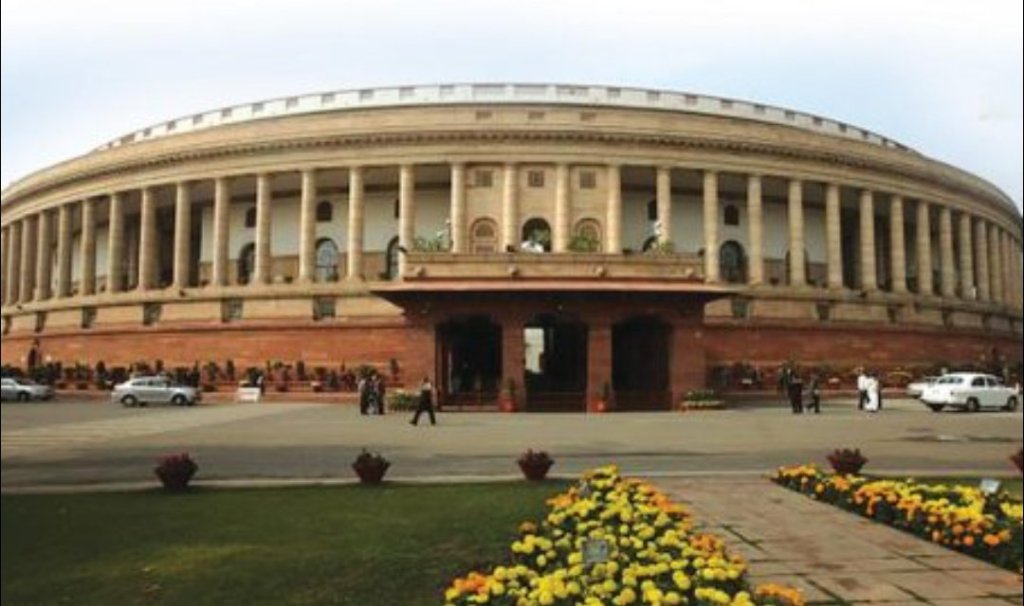
Parliamentary Committees are established to effectively control the governmental regular and constant activities. Parliamentary Committee is appointed by the house or nominated by the speaker or Chairman, shows its report to the house, work has been completed under the direction of speaker or Chairman. The Parliamentary system grants various ministries that are allotted without the elected Representatives of ministries.
The Constitution of India has mentioned these committees at different places but without making any specific provision regarding structure, tenure and functions.
Types of Parliamentary Committee
Parliamentary Committees are of two types :
Standing Committee
The Standing Committee considers annual reports of ministries/departments. Examine bills pertaining to the concerned ministries. Overlook national basic long term policy documents presented to the houses. It considers the demands for grants of the concerned ministries departments before they are discussed and voted in the Lok Sabha. Report should not suggest anything of the nature of cut motions. It ensure economy and efficiency in Public expenditure for ministries and would be more careful in formulating their demands.
These committees are permanent and work on a continuous basis. These committees are classified into the six categories:
1) Financial committees
• Public accounts committee
• Estimates committee
• Committee on public undertaking
2) Departmental standing committees
3) Committees to inquire
4) Committees to scrutinize and control
5) Committees relating to the day to day business of the house
6) Housekeeping Committees or service committees
Financial Committees
Public Account Committee
This Committee was set up first in 1921 under the provisions of the government of India Act 1919, which consists of 22 members (15 from Lok Sabha and 7 from Rajya Sabha). The members are elected by the parliament every year. The chairman of PAC is appointed by the speaker from its members.
The Committee examines Public expenditure not only from a legal and formal perspective of economy, prudence, wisdom and brings out the cases of corruption, inefficiency and expenses.
Some important functions of PAC are as under:
• To examine the appropriation accounts and the finance account of the Union Government and any other account laid before the Lok Sabha.
• To examine the accounts of stale corporation, trading concerns and manufacturing projects and audit report of CAG.
• To identify the money spent on any service during a financial year in excess of the amount granted by the Lok Sabha.
• To formulate the account of autonomous and semi autonomous bodies, the audit which was conducted by the CAG.
Estimate Committee
To suggest alternative policies in order to bring alternative policies in order to bring about efficiency and economy in administration. To report what economies need to improve in organization, efficiency and administrative reforms consistent with the Policy underlying the estimates can be affected. To look how much money is spending out limits of the policy implied in the estimates.
The committee does not exercise its functions in relation to Public undertakings as are allotted to the committee on Public undertakings. It shall not be incumbent on the committee to examine the entire estimates for the year.
Committee on Public undertakings
This Committee report of the CAG on Public undertakings. To exercise such other functions vested in the public accounts Committee and the estimates Committee in relation to the public undertaking . To examine the reports and accounts of PU and identify the affairs of the PU that are being managed in sound manner.
Departmental Standing Committee
The standing Committee is to secure more accountability of the executive to the parliament in the sphere of financial accountability. The term of office of each standing Committee, 8 work under the Rajya Sabha and 16 under the Lok Sabha.
Committees to Inquire
The main objective of this Committee is to identify petitions on bills and on general public importance. Matters associated with Union subjects. It is a semi-judicial system; examine the cases of breach of privileges of the house and its members and recommend action. The committee imposes the code of conduct of members of parliament. Also, look over the cases of misconduct and recommend action.
Committee to scrutinize and Control
It is a committee that assures, promises and undertakings given by ministers from time to time on the time of house. It was established in 1953. It has the powers to make regulations or conferred by the Constitution. Its functions are to consider the reports of the National Commission for the STs to examine all the matters relating to welfare of SCs and STs like Implementation of constitutional and statutory safeguard.
Committee Related to the day to day Business of the house
Committee regulates the programme and time table of the house. It allocated transactions of legislative and other business that came into the house or were introduced by the Government. The committee considers the matters of procedure and management in house and recommends necessary amendments. Classifies bills and allocates time for the discussion on bills and resolutions introduced by private members.
Housekeeping Committees
The committee considers and advises on matters of the house that do not fall within the jurisdiction of any other parliamentary Committee. It deals with residential accommodation of members and other amenities like food, medical aid etc,. Conduct meetings related to the library of parliament and assist members in utilizing the library services. Committee also structure the salary, allowances and pension of members of Parliament Act 1954.


 Eduindex
You must be logged in to post a comment.