
The success story of Space X – from Falcon 1 to Starship

The Falcon super heavy launch vehicle was designed to transport people, spaceships, and various cargos into space. Such a powerful unit wasn’t created instantly and it also had its predecessors. The history of the Falcon family of vehicles began with the creation of the Falcon 1- a lightweight launch vehicle with a length of 21.3 meters and a diameter of 1.7 meters and a launch mass of 27.6 tones; the rocket could carry 420 kilograms or 926 pounds of payload on board. It became the first private device that was able to bring cargo into low earth orbit. Construction of the Falcon 1 of only two stages, the first of them consisted of a supporting element with fuel tanks, an engine and a parachute system. They chose kerosene as the fuel and liquid oxygen became its oxidizing agent.

The second stage also contains fuel tanks and an engine; though the latter had less thrust compared to the one in the first stage despite the huge launch cost $7.9 million. Totally five attempts were made to send the Falcon 1 beyond the of our planet nut not all of them were successful. During the debut launch of the rocket, a fire started in the first stage engine; this led to a loss of pressure which caused the engine to shut down in the 34th second of flight. The second attempt to start the Falcon 1 incurred a problem with the fuel system of the second stage fuels stopped flowing into its engine at 474 second of flight it shut down as well. The third time of the Falcon 1 went on a flight, it wasn’t alone of the serious cargo the rocket carried onboard the trailblazer satellites and to NASA microsatellites. In phase one with the first stage he flight went normally but when the time came to separate the stages, the first hit the second when it started engine, so the second stage couldn’t continue its flight.

 The fourth and fifth launches shoed good results but that wasn’t enough. The main problem with Falcon 1 was low demand due to its low payload abilities. For this reason, they designed Falcon 9; this device can carry on onboard 23 tons of cargo. It’s also a two stage launch vehicle and uses kerosene and l liquid oxygen as fuel. The device is currently in operation and the cost of its launch is equal to $62 million. The first stage of the rocket is reusable; it can return to earth and can be used again. The Falcon 9 is designed to not only launch commercial communication satieties but also to deliver dragon 1 to the ISS. Dragon 1 can carry a six ton payload from the earth, this drone supplies the ISS with everything they needs and it also takes goods back.

The dragon 2 is designed to deliver a crew of four people to the ISS and back to earth. Now there is an ultra heavy launch vehicle with a payload capacity of almost 64 tones. It is the most powerful and heavier device called the Falcon heavy. This rocket was first launched on February 6th 2018 and the test was successful. The rocket sent Elon Musk’s car into space- a red Tesla Roadster. After this debut subsequent launches were also conducted without problem. The launch cost is estimated to $150 million.

The first stage of the Falcon heavy consists f three parts. There are three blocks contain 27 incredibly powerful engines in nine each one. The thrust created when takeoff is comparable to 18 Boeing 747s at full power. The second stage is equipped with a single engine. It is planned that the device would be used for missions to the moon and mars. Currently, SpaceX working on the starship manned spacecraft.  According to its creators, this device will be much larger and heavier than all of the company’s existing rockets. This device will able to deliver cargo into space weighing more than a hundred tons. The launch of starship into pace is planned for 2022 to mars with a payload. Who knows, one of the mankind’s largest dreams may come true within the next year.
Should more money be spent on space exploration?

Poverty still rising all over the world, COVID-19 pandemic made it even worse. About 1.89 billion people, or nearly 36% of the world’s population, lived in extreme poverty. Nearly half the population in developing countries lived on less than $1.25 a day. Why should we spend money on space exploration when we already have so many problems here on Earth? Is it really that important? It’s like What if our ancestors thought that it would be a waste of time to figure out agriculture while we can do hunting? Or why should we spend so much time on exploring new lands while we have so many problems in our land? Each year, space exploration contributes to a lot of innovations on earth. It gave answers to many fundamental questions about our existence, and a lot of questions there to be answered if only we could increase our investment on space exploration. NASA’s annual budget is 23 billion dollars but, its only 0.1% of the total revenue. even if we were to increase the international budget 20 times it would only be a small fraction of GDP. isn’t our future worth a quarter of a percent?

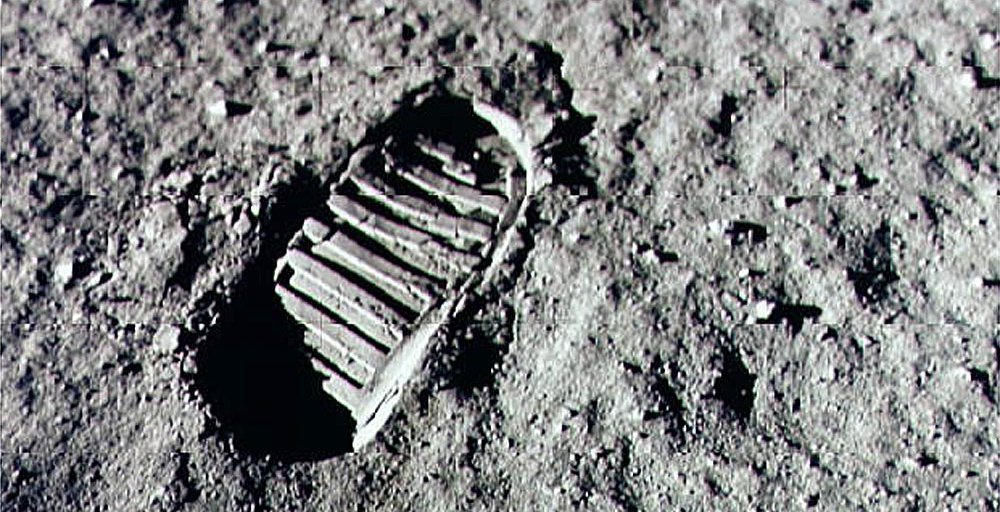
“That’s one small step for man, one giant leap for mankind”.

Benefits of space exploration:

    Improves our day to day life

       Since 1969, Neil Armstrong became the first human to ever set foot on moon, our interest in science and technology has improved a lot. In 22nd February 1978, US space agency launched the first satellite for its program of global positioning system (GPS). Currently there are 31 global positioning system (GPS) satellites orbiting the earth.Space exploration helped us to create many inventions like television, camera phones, internet, laptops, LED’s, wireless gadgets, purifying system of water and many more that we are using in our day to day life. There are nearly 3,372 active satellites providing information on navigation, business & finance, weather, climate and environmental monitoring, communication and safety.

   Improving health care

       The international space station plays a vital role in health and medical advancements. The Astronauts who works on the ISS able to do experiments that aren’t possible on earth due to the difference in the gravity. The project of Exomedicine – the study of medicine and micro-gravity, gravity has an effect on a molecular level so working in an environment where it can be eliminated from the equation allows discoveries that would otherwise be impossible. Medical advancements due to space exploration include,

  • Diagnosis, treatment, and prevention of cardiovascular diseases
  • Treatment of chronic metabolic disorders
  • Better understanding of osteoporosis
  • Improvements in Breast cancer detection
  • Programmable pacemakers
  • Laser angioplasty
  • NASA’s device with Space technology for Asthma
  • ISS plays vital role in vaccine development
  • Early detection of immune changes prevents shingles
  • Development of MRI s and CT or CAT Scans
  • And invention of ear thermometers
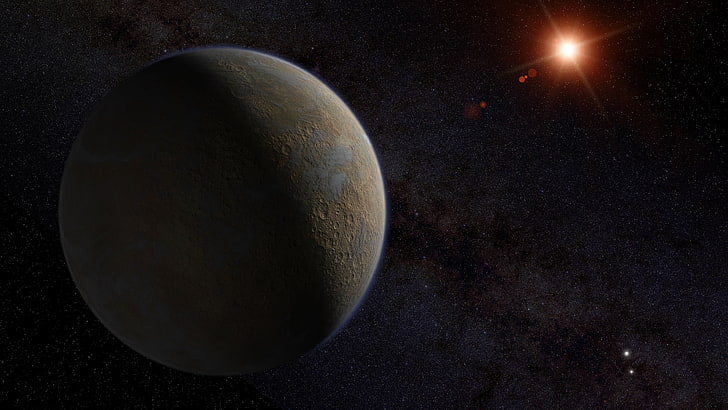
Proxima Centauri b is an exoplanet orbiting the red dwarf star Proxima Centauri

Need for space colonization

       Overpopulation is one of the major crises in our planet. Currently we have 7.8 billion people alive on earth. Experts predict that there will be 9.7 billion people by 2050 and 11 billion by 2100, our earth can carry only 9 billion to 12 billion people with the limited food and freshwater resources. That means we have to find an exoplanet with suitable conditions soon. We already went to moon 6 times, we already sent a rover to Mars. Robotic missions are cost efficient, but if one is considering the future of human race we have to go there ourselves. Elon Musk announced that SpaceX is going to send people to Mars I 2022. NASA planned to make a colony on Mars by 2030. These missions are not something we need at this moment. But it may play an important role on our future. Proxima Centauri b is an exoplanet which is 4.24 light years away from us. With our current technology, it is impossible to reach it in our lifetime. But we should make it as an aim for interstellar travel over the next 200 to 500 years. Stephen hawking said that the human race has existed as a separate species for about 2 million years. Civilization began about 10,000 years ago, and the rate of development has been steadily increasing. If the human race is to continue for another million years, we will have to boldly go where no one has gone before.

The day we stop exploring is the day we commit ourselves to live in a stagnant world, devoid of curiosity, empty of dreams. –Neil deGrasse Tyson