Fairy Queen is a famous epic of Edmund Spenser published in 1590 during the sixteenth century. The poet craftily impersonates The Renaissance and Reformation elements. The poet also presents different types of allegory. Faerie Land” is signified to hold a figurative significance in the real world. Each character in Spenser’s epic can be referenced somehow back to the church, political climate, or disputes and spirituality of his era. Though she never appears in the poem, the poem Faerie Queene represents Queen Elizabeth and her castle is the ultimate goal or destination of many of the poem’s characters. The poem is written in what began to be identified as the Spenserian stanza: eight lines of 10 syllables followed by one 12-syllable line, rhyming ababbcbcc. One of the most prominent symbolic episodes in The Faerie Queene is Redcrosse’s fight with the Error. Redcrosse represents the knight of Holiness in the story and this protagonist gets his name from the blood-red cross emblazoned on his shield. Error, the Red Cross Knight’s first adversary, a monster that lives in the wandering woods is portrayed as a frightful creature with the features of a woman and the hind part of a serpent resembles to be a biblical reference back to the tale of Adam and Eve. Eve, having erred by having an apple from the tree of knowledge of good and evil, was coaxed to do so by Satan in the appearance of a serpent.
Error hates the light and the stanza “Ay wont in desert darkness to remaine” makes it evident. Redcrosse makes the light enter the cave because it ricochets off his armor but he is also metamorphically the light. Error has no interest in the light he has to offer and only wants to remain evil or lack of faith. The clash among the Knight and the beast proved to be the most intense one. At one point in the course of his clash, the Knight discovered himself in the choking grasp of the monster’s huge tail. At this point, Lady Una shouted to the Knight to prove his courage. She urged him to have faith in himself and Jesus Christ and to battle valiantly. Motivated by the lady’s words, the Knight attacked with strengthened power and bravery. He was able to rescue himself from the hold of the monster’s tail. He then clasped the monster’s throat with such restraint that she threw out a lot of filth from her mouth. Black poison and big lumps of flesh and raw meat came out from her gut. The beast had many young ones that had all sought safety inside her mouth when the Knight had entered the cave and these little offsprings had now emerged from the monster’s mouth. Finally, the Knight succeeded in splitting off the monster’s head and killing her. Her offspring then began to drink the blood which was oozing from her with it, and their bellies burst open which resulted in their death. This was the prime venture of the Red Cross Knight and Lady Una felicitated him on his achievement.
Behind these simple facts, there are spiritual and ethical interpretations that combine and merge in each other. The Redcross Knight stands for Holiness. Lady Una stands for Truth and her parents symbolize Humanity. The foul Dragon is a symbol of the Devil or Satan. The purpose of holiness is to champion the belief of motivation of honesty and retrieve the virtue of the human race, held in bondage by the powerful force of darkness. To conclude we can say that Spenser has impersonated The Redcrosse Knight’s clash with the Monster Error with exceptional talent. He describes the blunders and risks that plagued humanity in the world and explains how they may be overcome in the course of life and endures the popularity and universality of Spenser’s The Faerie Queene.
Humans have a macabre fascination with the end of the world — will humankind go out with a bang or disappear with a whimper? Are we the architects of our own demise or cosmic pawns in a game we can’t control?
Apocalypticism is the religious belief that there will be an apocalypse, a term which originally referred to a revelation, The original word in Greek — apokalypsis means an unveiling, a revelation i.e. to disclose , but now it is usually referred to the belief that the end of the world is impending, This credence is usually accompanied by the idea that civilization will soon come to a tumultuous end due to some sort of catastrophic global event.
ORIGIN
The notion of apocalypse originated from The Book of Revelation (often called the Revelation to John, Apocalypse of John, the Revelation from Jesus Christ ,which is the final book of the New Testament which is the final book of the Christian bible. Revelation is an apocalyptic prediction and is the only book of the New Testament classified as apocalyptic literature with extensive use of visions, symbols etc. especially in connection with future events. The Book of Revelation was written probably in around the year 96, right at the end of the first century.
The book spans three literary genres: the epistolary, the apocalyptic, and the prophetic. The Revelation of John, the Apocalypse, also must be looked at from the perspective that it’s not the only such piece of apocalyptic writing that we have. In fact there are lots of writings from the ancient world that we know by name and we can actually read today also. So when the author of the Book of Revelation sat down to write, there was a very strong paradigm of what revelation literature should look like and sound like.
But the story of apocalypse is an old one, one of the oldest humans tell. In ancient religious traditions beyond Christianity — including Judaism, Islam and Buddhism — it is a common narrative that arises in moments of social and political crisis, as people try to process unusual or shocking events.
HERE ARE SOME APOCALYPTIC BELIEFS OF VARIOUS FAITHS:
Christianity: Some Christians believe that the New Testament’s book of Revelation(the second part of the Christian Bible), isn’t just metaphorical, but a literal description of a final battle on Earth between God and the forces of Satan. Before that happens, there is a series of horrific events—including an earthquake, lightning, and a fiery hailstorm that burns up a third of the trees on Earth etc.it is also believed by the idea that Christ will return.
Islam: Prophet Muhammad—describes the events that lead to the end of the world. Natural disasters increase, and society undergoes a moral decline that leads to a surge in violence, bloodshed, anarchy, and sexual immorality. In the Islamic tradition, the Quran tells stories of plagues and of a final earthquake that will tear the earth apart. Amir Hussain, professor of theology at Loyola Marymount University, said, “Apocalypse also includes what happens when one’s eyes are opened”.
Hinduism: Hindus apocalyptic beliefs are different from other religions, because they believe that the universe goes through endless cycles of creation and destruction. In that cycle, three gods—Brahma, Vishnu and Shiva—all play a role. Brahma is the creator of the universe, while Vishnu preserves it during its existence. Shiva’s job is destroying the universe, so that it can be recreated.
Buddhism: In Buddhism, time is cyclical, not linear, making apocalypse both an end and a beginning. “Apocalypse happens and then a new order starts, a new social order, new moral order,” said Vesna Wallace, professor of Buddhism at the University of California, Santa Barbara. “The story repeats itself.”
Modern, secular American life is filled with its own apocalyptic visions. Movies and television shows depict civilization on the brink of extinction. “The Walking Dead” explores life amid the zombie apocalypse. “The Hunger Games” presents a dystopian future after conflict and ecological disasters have destroyed much of the world.
WHY DO PEOPLE BELIEVE IT ?
I think history will tell you that end time predictions increase when people are being ill-treated or feel oppressed and this increases when despair hits – in terms of how the world is experiencing economic and political turmoil. The people who are most likely to believe in doomsday predictions are those who are religious, because there are many religious texts that indicates end of days. Even today, people continue to make predictions about dates in the future in which the world will inevitably end. It is an extraordinary belief because there is little proof to back these claims, and they are often the result of someone trying to interpret ambiguous information that is in religious or other ancient texts.
Very popular source of doomsday predictions is the Mayan Calendar. One of the most famous end of world predictions was for December 21st, 2012. People took this prediction seriously, and they stocked up on food and read up on survival skills. The reason that the Mayan Calendar was proof of this end was because the most popular Mayan calendar abruptly ended on December 21st, 2012. Whether one believes in doomsday predictions or not, it is hard to deny that it is a very common belief that has scared all of us at one point or another.
According to psychologists, possible explanations for why people believe in modern apocalyptic predictions include an innate human fascination with fear, personality traits of paranoia and powerlessness and a modern romanticism involved with end-times due to its portrayal in contemporary fiction.
HOW TRUE ARE THESE PREDICTIONS ?
Predictions of apocalyptic events that would result in the extinction of humanity or the destruction of the planet have been made since at least the beginning of the Common Era. The 2012 phenomenon predicted the world would end by Earth getting destroyed by an asteroid,or an alien invasion; or a supernova. Scientists from NASA, along with expert archaeologists, stated that none of those events were possible.
Every year, new apocalyptic predictions waft through the the internet and the tabloid media. In 2019, for example, the world was predicted to end in a nuclear war, an asteroid impact, and a new ice age, Modern doomsayers have been predicting climate and environmental disaster since the 1960s. They continue to do so today. None of the apocalyptic predictions with due dates as of today have come true. More than merely spotlighting the failed predictions, this collection shows that the makers of failed apocalyptic predictions often are individuals holding respected positions in government ,science or hold strong religious beliefs . While such predictions have been and continue to be enthusiastically reported by a media eager for sensational headlines, the failures are typically not revisited.
APOCLYPSE 2020
Nostradamus, the world’s most famous 16th-century prophet and mystic, is believed to have prophesied the year 2020 and has called for both disasters and revelations. A year marked with both favorable and dangerous results. Pandemics are surrounded by a sense of impending apocalypse. Throughout history, they have been understood as final tribulations, a sign of the end time, It is also quite extraordinary to believe that you can pinpoint, to the exact day, when the entire world will end.
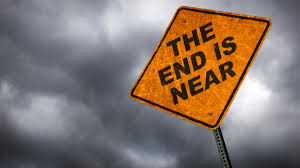
The end of the world is near—again! For centuries, doomsdayers have prophesied the apocalypse. But there’s a tiny catch: None of the end-of-world predictions ever come true.
We’ve all seen those memes on Facebook and other places where the letters of each word are scrambled, but the first and last letters are kept unchanged. Sometimes these memes are accompanied by statements such as, “Only intelligent people are able to understand this message.” Actually, most adept readers are able to read them; as we learned to read, our brains developed shortcuts that recognize words even when the internal parts of the words have been changed.
But, by the same token, sometimes we mistake one word for another. The slip-up can be amusing, such as confusing “immorality” and “immortality.” Usually a second glance fixes the misreading. But this morning in my Bible reading, I faced a misreading that indicates just how overwhelming our current virus crisis has become.
I was reading Deuteronomy chapter four. I got to verse nine, which says, “Only take care, and keep your soul diligently, lest you forget the things that your eyes have seen, and lest they depart from your hearts all the days of your life. Make them known to your children and to your children’s children.” This is a trustworthy saying. But when my eyes first scanned the verse, my brain changed the beginning to, “Only take care, and keep your social distancing.”
Of course a second glance fixed the misreading. I suppose the words “take care” only added to the tendency to expect s…l d……..y to be “social distancing.” But my mildly amusing experience only shows how overwhelming this virus crisis has become, that I even expect the holy Word of God to command social distancing.
My experiences with the virus crisis are like those of most people. As an introvert, I don’t mind keeping my distance from other people. Three times a week I take a two-mile walk through the neighborhood. I do what I was taught as a child: I walk on the left-hand side of the road, facing the traffic. But now, with social distancing, if someone is coming toward me on the same side of the road, I cross to the other side to avoid that person. I’ve always wanted to do that. Now, not is it not rude to cross the road to avoid people—it’s recommended.
I’m very much blessed to have three jobs that all paid me my regular salary while I worked from home. Every week I write a sermon, and every Saturday I email it to the members of the congregation. Our church musician presents a concert of church music on Facebook every Sunday. We mail in our offerings, and my check comes in the mail. My history class was changed from classroom to online. Some students dropped out, and a couple have fallen behind on the work, but several are faithfully taking their quizzes (open book, since we don’t have the classroom discussion before the quiz) and—I expect—writing their essays that are due next week. But my full time job at the library raised the biggest concerns. How can a library function when the doors are locked and the workers are told to stay home?
The first week the library was closed, we were told that it was like snow days—we would stay home and be paid. The second week, they began encouraging us to do tasks at home that were somehow job related. Since I am an archivist, I began sorting and arranging the family pictures I brought from my father’s house several years ago. After they were arranged, I even started putting them on Facebook and tagging family members. I also explored the family genealogy. More than half the people who visit our research room in the library are doing genealogy—some in great depth, others just getting started. I’ve always been able to guide people to resources, but now I have much more experience in genealogical research and will be more helpful.
By the third week, we had a process of reporting how we were spending our time “on the clock.” But after that, the library decided that 75% of our hours had to be of direct benefit to the library system; the other 25% could be for learning and wellness activities. Some library branches began experimenting with curb-side services. Four branches are providing free meals to neighborhood children who usually get fed at school. My department remains locked up; but we are taking turns being in the building to answer the phone and help patrons.
Last week, with the phone-answering system in place, I was invited to return to my desk and continue processing archival materials. I must wear a mask everywhere in the building except at my desk; I must wash my hands frequently and wipe down surfaces often. This procedure might last for the rest of the summer.
Since it is losing some money—parking and meeting room fees, and overdue fines—the library director decided that he would reduce or eliminate some positions temporarily to save the library money. All positions will be restored when the crisis is over. People in eliminated positions retain their health insurance and other benefits but must apply for unemployment. Those who are reduced will—if the state government allows—work only part-time and receive unemployment money for the hours lost. I have been placed in the second category.
I do not feel comfortable with the likelihood that I will be receiving unemployment compensation for ten weeks or so. It’s not that I don’t need the money. It’s that every person thrown into the unemployment system is added to the financial burden that taxpayers like me and my children will be reimbursing for years to come. I disagree with the library’s decision to lower its costs by putting its workers temporarily into unemployment. In fact, I cannot help but view this as a cynical political ploy to deepen the crisis (and the feeling of crisis) at the expense of the current administration.
We will all get through this together. Stress and anxiety are high right now. (I spend little time on social media precisely because I rapidly tire of all the talk of virus and quarantine. It makes me shaky and queasy.) Meanwhile it’s important for each of us to take care, and keep our social distancing… I mean, keep our souls diligently. J.



 Eduindex
You must be logged in to post a comment.