
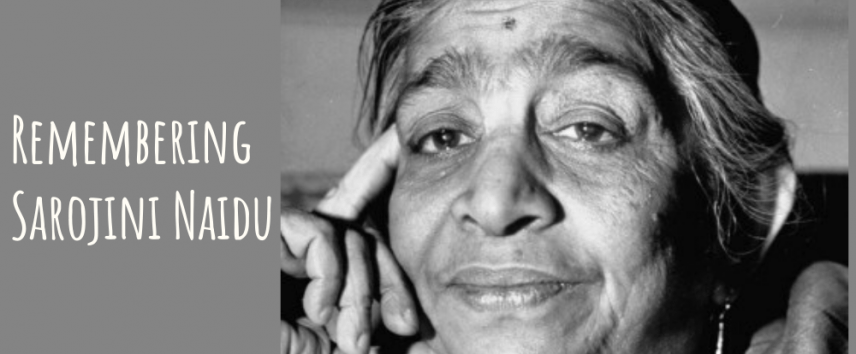
The Nightingale Of India

“As long as I have life, as long as blood flows through this arm of mine, I shall not leave the cause of freedom…I am only a woman, only a poet. But as a woman, I give to you the weapons of faith and courage and the shield of fortitude. And as a poet, I fling out the banner of song and sound, the bugle call to battle. How shall I kindle the flame which shall waken you men from slavery…”

Introduction

She was an Indian political activist and poet. A proponent of civil rights, women’s emancipation, and anti-imperialistic ideas, she was an important figure in India’s struggle for independence from colonial rule. Naidu’s work as a poetess earned her the sobriquet ‘the Nightingale of India’, or ‘Bharat Kokila’ by Mahatma Gandhi because of colour, imagery and lyrical quality of her poetry.

Birth and death
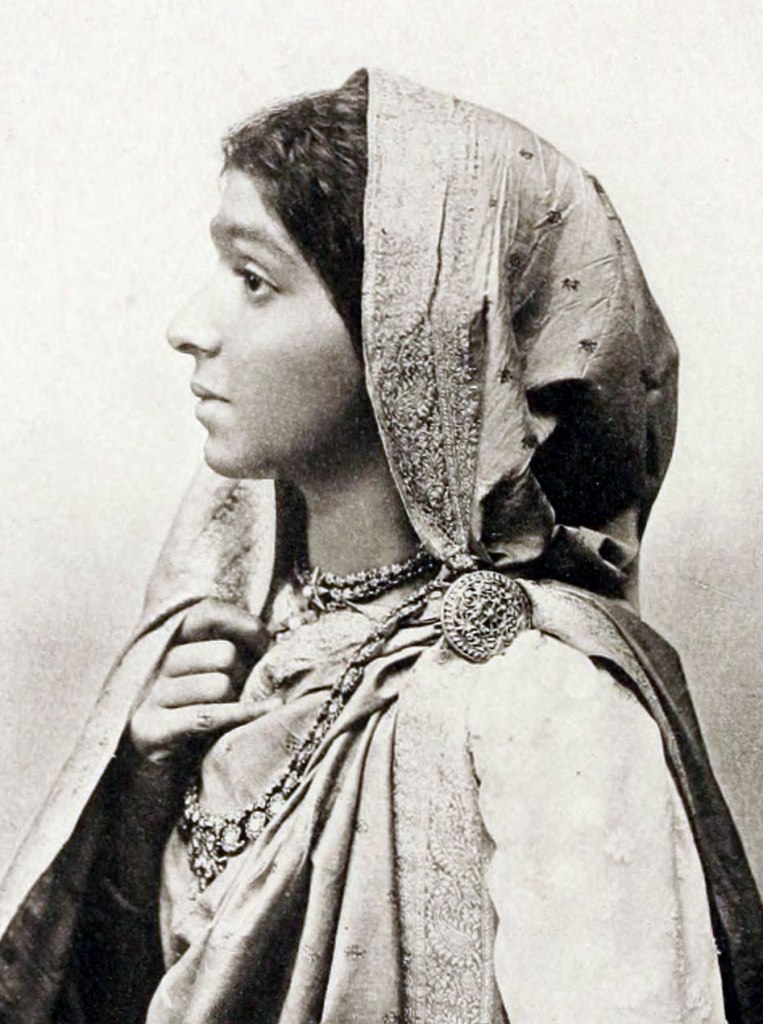
Born in a Bengali family in Hyderabad, Naidu was educated in Madras, London and Cambridge. Following her time in England, where she worked as a suffragist, she was drawn to Indian National Congress’ movement for India’s independence from British rule. She became a part of the Indian nationalist movement and became a follower of Mahatma Gandhi and his idea of swaraj. She was appointed as the President of the Indian National Congress in 1925 and later became the Governor of the United Provinces in 1947, becoming the first woman to hold the office of Governor in the Dominion of India.

Naidu’s poetry includes both children’s poems and others written on more serious themes including patriotism, romance, and tragedy. Published in 1912, “In the Bazaars of Hyderabad” remains one of her most popular poems. She married Govindarajulu Naidu, a general physician, and had five children with him. She died of a cardiac arrest on 2 March 1949.

Work
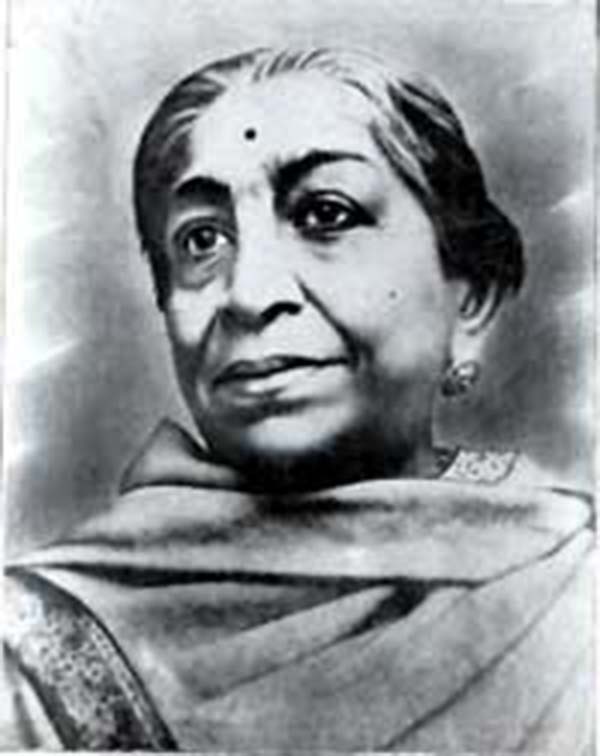
“Tell me no more of thy love, papeeha,
Wouldst thou recall to my heart, papeeha,
Dreams of delight that are gone,
When swift to my side came the feet of my lover…”

– A Love Song From The North by Sarojini
Naidu

1905: The Golden Threshold, published in the United Kingdom.
1912: The Bird of Time: Songs of Life, Death & the Spring, published in London.
1917: The Broken Wing: Songs of Love, Death and the Spring, including “The Gift of India” (first read in public in 1915) .
1919: Muhammad Jinnah: An Ambassador of Unity.
1943: The Sceptred Flute: Songs of India, Allahabad: Kitabistan, posthumously published.
1961: The Feather of the Dawn, posthumously published, edited by her daughter, Padmaja Naidu.
1971:The Indian Weavers.

After India attained independence, she became the first woman Governor of an Indian state, Uttar Pradesh. She served as governor till she passed away in March 1949, when she was working late in office.

As a Feminist

“Sarojini Naidu inspired the Indian Renaissance Movement and had a mission to improve the life of Indian woman.”

Bappaditya Bandopadhyay

Sarojini Naidu played an important role in women’s rights struggle in India. She helped in shaping Women’s Indian Association in 1917 with Annie Besant and others. The Association sought equal rights including the right to vote and represent. She presented the need to include more women in the Congress and in the freedom struggle. During 1918, British and Indian feminists including Naidu set up a magazine called “Stri Dharma” to present international news from a feminist perspective.
Link

HATE CRIMES

When faced with a crisis, individuals typically revert to a terrible human trait: protecting their own while looking for a scapegoat to blame for the problem. The pandemic increased interpersonal and individual-level prejudice in a variety of circumstances, from discriminatory views toward racial, ethnic, and religious minority groups to verbal threats and physical assaults directed against them. Physical attacks and verbal abuse against LGBT community, Asian-Americans, Muslims who are frequently blamed as carriers, are now commonplace.

Hate crimes are crimes often motivated by prejudice or hatred towards specific groups of people. To be classified as a hate crime, the act must meet two criteria: first, it must be a criminal offense, and second, it must be motivated by bias. Hate crimes are acts of violence committed with the intent of injuring or intimidating someone based on their race, ethnicity, national origin, religion or sexual orientation. Hate crimes may also target people with disabilities. Hate crimes also appear to be more common in societies that are undergoing rapid social change and emerging groups, which may be culturally dissimilar, are seen as a threat to the status quo. Threats, property damage, assault, murder, and any other criminal offense motivated by prejudice are examples of hate crimes. Individuals from specific groups are not the only ones who are victims of hate crimes. Hate crimes can target people or property that are just affiliated with – or even considered to be a member of – a group that shares a recognized characteristic, such as human rights defenders, community centers, or houses of worship.

Hate crimes, unlike other sorts of crimes, have a far-reaching impact on both the immediate victim and others like them. They not only take lives and wreak havoc on families, but they also traumatize the communities where they occur. These activities create distrust and terror among communities, prohibiting them from participating in community life or cooperating with local law enforcement in investigating and preventing crimes. So, it’s extremely important for the authorities to find a way to stop these hate crimes.

Combating Hate Crimes

  • Recognize and condemn all instances of violent hate crimes. Government officials and public figures should send clear and consistent reminders that violent offenses motivated by bias and intolerance will be fully investigated and prosecuted to the full extent of the law.
  • Acknowledging the particular damage caused by hate crimes, authorities should introduce laws that create specific offenses or increases punishments for violent crimes committed on the basis of the victim’s race, religion, ethnicity, sexual orientation, gender, gender identity, mental or physical disabilities, or other similar status.
  • Governments should make sure that people who commit hate crimes face legal consequences of their action.
  • Official monitoring and public reporting systems should be maintained by governments to give reliable data for informed policy decisions to address violent hate crimes.
  • Official anti-discrimination and human rights organizations should have the responsibility to supervise, report, and help victims of hate crimes.
  • Governments should support and strengthen international bodies with anti-discrimination objectives.
  • To minimize fear and support victims, governments should conduct outreach and education activities to communities and civil society groups.

BLACK LIVES MATTER OR DO ALL LIVES MATTER?

BY: VAIBHAVI MENON

“I learned that courage was not the absence of fear, but the triumph over it. The brave man is not he who does not feel afraid, but he who conquers that fear.”- Nelson Mandela

Racism has always existed and still is an ongoing struggle for a lot of us. Discrimination on the basis of color is very frequently experienced where the “whites” are considered on the higher scale of an hierarchy and the “colored” and “blacks” are considered on the lower scales. The black lives matter moment began after the acquittal of George Zimmerman in the shooting death of African-American teen Trayvon Martin 17 months earlier in February 2012.The overall Black Lives Matter movement is a decentralized network of activists with no formal hierarchy. he movement returned to national headlines and gained further international attention during the global George Floyd protests in 2020 following the murder of George Floyd by Minneapolis police officer Derek Chauvin. An estimated 15 million to 26 million people participated in the 2020 Black Lives Matter protests in the United States, making it one of the largest movements in the country’s history. The movement comprises many views and a broad array of demands but they center on criminal justice reform. The popularity of Black Lives Matter has rapidly shifted over time. Whereas public opinion on Black Lives Matter was net negative in 2018, it grew increasingly popular through 2019 and 2020. A later poll conducted in September 2020 showed that support among American adults had dropped to 55%, with notable declines among whites and Hispanics, while support remained widespread among black adults.

The phrase “Black Lives Matter” can refer to a Twitter hashtag, a slogan, a social movement, a political action committee, or a loose confederation of groups advocating for racial justice. Activist DeRay McKesson has commented that the movement “encompasses all who publicly declare that black lives matter and devote their time and energy accordingly.” BLM generally engages in direct action tactics that make people uncomfortable enough that they must address the issue. BLM has been known to build power through protest and rallies. BLM has also staged die-ins and held one during the 2015 Twin Cities Marathon. Black Lives Matter demonstration in Oakland, California, December 2014. Political slogans used during demonstrations include the eponymous “Black Lives Matter”, “Hands up, don’t shoot” (a later discredited reference attributed to Michael Brown), “I can’t breathe” (referring to Eric Garner and later George Floyd), “White silence is violence”, “No justice, no peace”, and “Is my son next?”, among others. According to a 2018 study, “Black Lives Matter protests are more likely to occur in localities where more black people have previously been killed by police.” The phrase “All Lives Matter” sprang up as response to the Black Lives Matter movement, shortly after the movement gained national attention. Several notable individuals have supported All Lives Matter. Its proponents include Senator Tim Scott. NFL cornerback Richard Sherman supports the All Lives Matter message, saying “I stand by what I said that All Lives Matter and that we are human beings.” According to an August 2015 telephone poll, 78% of likely American voters said that the statement “all lives matter” was closest to their own personal views when compared to “black lives matter” or neither. Only 11% said that the statement “black lives matter” was closest. Nine percent said that neither statement reflected their own personal point of view. According to professor David Theo Goldberg, “All Lives Matter” reflects a view of “racial dismissal, ignoring, and denial”. Professor Charles “Chip” Linscott said that “All Lives Matter” promotes the “erasure of structural anti-black racism and black social death in the name of formal and ideological equality and post-racial colorblindness”. Founders have responded to criticism of the movement’s exclusivity, saying, “#BlackLivesMatter doesn’t mean your life isn’t important – it means that Black lives, which are seen without value within White supremacy, are important to your liberation.” President Barack Obama spoke to the debate between Black Lives Matter and All Lives Matter. Obama said, “I think that the reason that the organizers used the phrase Black Lives Matter was not because they were suggesting that no one else’s lives matter rather what they were suggesting was there is a specific problem that is happening in the African American community that’s not happening in other communities.” He also said “that is a legitimate issue that we’ve got to address.”

To conclude this, the Black lives matter movement was never a way to discriminate the others(whites). The whites were always placed on a superior level and it was the colored who were continuously bashed because of their color. they were killed because of this difference and because of this they definitely deserve to have the title that ” Blacks lives matter.”