Emerging career options among Indian youth.

Empirical research by various trade organizations, media houses, and the Indian government clearly point towards a single fact: Youth can’t find jobs because they opt for traditionally favourite courses such as medicine, engineering and management. Rather than breaking away from the flock, study emerging trends and finding new generation careers, Indian youth pursue careers they wrongly believe would secure an excellent future.

Blogging

Blogging isn’t something that quirks with a flair for writing engage in. Instead, it’s a top class new generation career for youth. Blogging can help you get high-paying jobs with top companies or make money from home with minimal investment. All you require is passion or in-depth knowledge about a topic or field with creative writing and presentation skills.

Instagram Influencer

Almost every popular brand in the world is on Instagram. And for a reason too: this photo and video sharing website has over 800 million users worldwide. No business worth its name can afford to neglect Instagram as an effective marketing too. Nor can it overlook the importance of influencer marketing through Instagram.

Mobile Applications Developer

As cheaper smartphones and inexpensive mobile data packages flood the Indian market, there’s a correspondingly high demand for Android and IOS –based apps. India’s emergence as a digital economy is imminent. And the country’s moving rapidly towards digitization in various important spheres such as governance, law & order as well as healthcare. In coming years, most Indians will depend heavily on mobile apps for various activities. And organizations are already under pressure to provide apps that ease various processes such as application for services and jobs.

Digital Marketing

By using digital marketing strategies businesses can create their online presence in the form of a website, increasing more traffic to their website, attracting the target customers, interacting with the end customers in real time, collaborating with other businesses for more promotions, all this in an extremely cost efficient way. Digital marketing has helped businesses create their brand value thereby increasing trust and confidence of their customers. This has led to tremendous increase in the demand for many skilled digital marketing professionals for every business, big or small.

Virtual Gaming

The gaming landscape, especially PC and console gaming in India, has changed over the last few years. The major credit for this can be given to the nationwide availability of high-speed internet connectivity. Not only has this contributed to the increasing number of online gamers but gaming is now being considered a viable career option in the country.


Online Platforms for Learning.

An online learning platform is a webspace or portal for educational content and resources that offers a student everything they need in one place: lectures, resources, opportunities to meet and chat with other students, and more. It is also an excellent way for the student and the teacher to monitor student progress. Whether you want to learn a new language or obtain career-advancing certifications, signing up for an online course could be just the perfect solution. The online class is typically provided through online learning platforms. 

Online learning has numerous advantages over traditional learning methods. Some of these include the possibility for students to make use of self-paced learning and to choose their own learning environments. Additionally, e-learning is both cost-effective and cost-efficient, as it removes the geographical obstacles often associated with traditional classrooms and education. The benefits of an online course platform are that both students and teachers can track the students’ progress through the course material, and everything is neatly organized in one place. Additionally, students may also have an option of interacting with each other on the platform.

Some of the popular Online learning (e-learning) platforms.

Coursera.

Coursera isn’t just a place to take classes that are like college courses—it actually offers real academic courses from real professors and universities at a fraction of the cost of getting an online degree. The platform partners with over 200 universities and companies to provide real learning experiences that can connect to real-world benefits. In some cases, you can even earn certifications or degrees entirely through Coursera, which can then potentially lead to professional benefits like raises, promotions, and more. 

Course Hero.

Course Hero is home to study resources, 24/7 homework help and textbook guides to provide students across top institutions with tailored reinforcement of the courses in which they are enrolled. The library of materials uploaded to Course Hero’s platform can be searched by either school or textbook to find the exact resource a student needs, with tutors available to provide total support.

Edx.

Generally, this online learning platform has a high-end pedigree. edX was established by graduates from both MIT and Harvard University. Real college courses that are generated and taught by real college tutors are available in a vast array of topics and fields. They have a slight leaning toward the Science, Technology, Mathematics, and Engineering fields. Nonetheless, there are plenty of topics in the humanities, arts, and languages as well. By partnering with the universities, this course provides professional degree certificates as well as the “micro” degree programs at both the bachelor’s and the master’s levels. In this sense, they largely serve as tools for professional development. 

Skill Share.

Whereas many online class platforms do confer college-style classes, Skillshare is not formal and is mainly targeted at boosting creative skills. Some business and marketing classes exist on this online education platform. Most of the courses though tend to have a focus on the creative fields and are administered by practicing experts in various fields. Common examples of these fields are interior design, visual arts, animations, films, and photography. 

LinkedIn Learning.

Formerly called Lynda.com, LinkedIn Learning is an educational platform that confers professional course training in the fields of technology, business, creative fields, and technology-related areas mainly in the form of videos. The online learning marketplace is largely available as a premium service for the users of LinkedIn and has so far provided well over 16,000 courses in a whopping 7 languages. Its focus is mainly to aid individuals in investing in their professional development. 

Udemy.

If you want to learn something, it’s probably on Udemy. The site is less of a unified platform and more of a portal or repository where students can access well over 100,000 courses on every topic imaginable. There’s not one standard format for a Udemy course—the platform allows instructors to design multimedia lectures with audio, video, and text elements, plus readings, quizzes, and other activities. Udemy allows students to preview classes they’re interested in and does offer a 30-day refund if you’re dissatisfied.

FutureLearn.

FutureLearn lets you learn online from universities and companies all over the world, including Anglia Ruskin University, King’s College London, Monash University, and the University of Wollongong. On top of their university partnerships, they also partner with specialist organizations such as Accenture, Amnesty International, the British Library, and UNESCO. From personal development video lessons to employment-related course content, FutureLearn definitely deserves its place near the top of our best online learning platforms list.

Career options after 10th class

Career is one of most important aspect in our life. Choosing a right career is hard and confusing. Sometimes student often chooses wrong, due to lack of knowledge about streams. Only a few students are clear about what they want in there life. Sometimes a wrong decision can change our life completely. This blog is for them who are confused about there career, choose the stream which suits you the most because rest of your career is in that field only. In this blog, you can see all career options available after 10th class.

Career options after 10th class

  1. Science, PCM(Physics, Chemistry, and Mathematics)

This is one of the most famous and popular stream every year lakhs of student join this stream. Students who are interested in engineering, architecture, bachelor of science, pharmacy, commercial pilot, banking, defense, mathematics can go with this stream. This stream includes Physics, Chemistry, and Mathematics. With this stream you can write top entrance examinations like JEE Main & Advance, Bit Sat, NDA, KVPY, etc. With this exams you can get admission into top institutions like IIT’s(Indian Institute of Technology), Bits(Birla Institute of Technology & Science), IISc Bangalore, NIT’s(National Institute of Technology). There are many career options after this stream.

2. Science, PCB(Physics, Chemistry, and Biology)

This is also one of the most popular stream. Students who are interested in medical profession can go up with this stream. This stream includes Physics, Chemistry, and Biology. With this stream you can write top entrance examinations like NEET, AIIMS, NEST, JIPMER, EAMCET, etc. With these exams you can get admission in top institutions like AIIMS, Madras medical college, Grant medical college, Stanley medical college, Christian medical college, etc. The career options after this stream are MBBS, BDS pharmacy, Bachelor of Science, agriculture, biotechnology, etc.

3. Commerce

It is the second popular course after science, If you are interested in economics, civics, finance, and mathematics then you should go with commerce. In commerce you have two options, commerce with maths and commerce without math’s. Commerce with maths is known MEC(Mathematics, Economics, and Commerce) and Commerce without maths is known as CEC(Commerce, Economics, and Civics). With commerce steam you can write top entrance examinations like CSEET, CMA, SET, Xavier’s Entrance exam, etc. The career options after commerce are Bachelor of Commerce, Chartered Accountant, Bachelor of Law, Business Administration, Bachelor of Economics, etc.

4. Arts/humanities

If you are interested in history, arts, designs then you should go with arts/humanities. Nowadays arts /humanities are in high demand and more students are opting it now. With this stream you can write entrance examinations like SAT, CLAT, MRNAT, NIFT, etc. The career options after arts are bachelor of arts, bachelor of journalism, bachelor of fine arts, business administration, bachelor of fashion design. Students who take up art stream develop critical thinking. It also helps you increase your leadership qualities.

5. Diploma

If you are interested in engineering then you can go with diploma. Diploma is a professional course that provides you the practical knowledge in a field of technology. Diploma generally large for 3 years. After the completion of diploma course, student can directly join second year in engineering course. After diploma you can write entrance exams like TS POLYCET, AP POLYCET, RRB, MP PPT, APJEE, etc.

That’s all from my side. I hope you like it.

Entrepreneurship Development

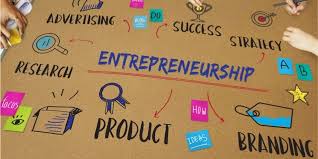
Entrepreneurship is the ability to develop, organize and run a business enterprise, along with any of its uncertainties in order to make a profit. Entrepreneurship is basically the act of creating a business or businesses while building and scaling it to generate a profit. It’s about building a life on your own terms. No bosses. No restricting schedules. And no one holding you back.
Entrepreneurship development is a process of developing certain skills in an individual which are required to make him/her a successful entrepreneur. The success of an entrepreneur can be judged by success of his project or business. Finding a way to sell oneself before anyone believes in one or ones business, being able to explain and prove why their product or service is worth the price or investment, knowing when something is valuable, even if no one else does etc. are some of the features a successful entrepreneur possess.
Big successful companies like Microsoft, Google, Apple etc. have all attained the status they have now because of their respective entrepreneurs. Success of such start-ups not only benefits the people associated with it but also the economy as a whole. It slowly changes the world. Off course not every start up is a massive hit, some might be pretty mediocre and some might even do more losses than gains but nevertheless in the contemporary world, the need and urge for entrepreneurship development has drastically increased.
There are certain characteristics which are observed in entrepreneurs who write big success stories. These characteristics are a prerequisite for becoming a successful entrepreneur. The first and foremost skill is creativity. It means thinking out of the box. Coming up with new ideas, being open to new methodologies, creating something new etc. are some examples of being creative. Creativity gives birth to Originality. Risk taking is another characteristic of a successful entrepreneur. Without the will to explore the unknown, one cannot discover something unique. Risk-taking involves a lot of things. Using unorthodox methods is also a risk. Investing in ideas, nobody else believes in but you is a risk too. Good entrepreneurs are always ready to invest their time and money. But, they always have a backup for every risk they take.
Planning is another characteristic and probably the most important one. They say “If you fail to plan, you plan to fail.” Planning is strategizing the whole thing ahead of time. It basically sums up all the resources at hand and enables one to come up with a structure and a thought process for how to reach ones goal. It involves how to make optimum use of these resources. Facing a situation or a crisis with a plan is always better. It provides guidelines with minimum to no damage incurred to a business.
Other characteristics include passion for the work or business one choose to do, professionalism in the way the work is done, knowledge of the field of work or business, social skills including relationship building. An entrepreneur must be open minded towards learning, people and even failures.

https://www.jbcnschool.edu.in/blog/characteristics-of-an-entrepreneur/

https://www.entrepreneur.com/article/250564

Career options after 12th class

One time will come we have choose our career. The decision is very important because whole life we will in that career only. So, we have to think carefully and take decision. In this blog, I am going to tell you the career option available after 12th class.

CAREER OPTIONS AFTER 12TH CLASS

Bachelor of Commerce(B.com)

 If a student is interested in commerce, then he should take b.com. Commerce is a popular course in India, many students take commerce in their high school only. There are many opportunities in commerce. The duration of this course is 3 years. The b.com degree is divided into 6 semesters including economics, corporate tax, company law, auditing, business management, etc. The average salary of a b.com graduate is 4 lakhs per annum.

Eligibility criteria

  1. Student should have passed class 12 with any stream.
  2. Student must secure at least 50 percent of the marks in 12 class.

               Top colleges for b.com

  1. Chandigarh University
  2. Loyola college
  3. Shri Ram college of commerce

Bachelor of Technology( B.tech )

If a student is interested in engineering, then he should go with b.tech. B.tech is also a popular course in India. The duration of this course is 4 years. The average salary of a b.tech graduate depends on your branch. There are many streams in b.tech like

  1. Computer science engineering.
  2. Electrical and Electronics engineering.
  3. Aeronautical engineering.
  4. Mechanical engineering.
  5. Civil engineering
  6. Electrical and communication engineering and many more.

        Eligibility criteria

  1. Students must have passed class 12 with physics, chemistry and mathematics(PCM) only.
  2. Student must have secured at least 60 percent of the marks in 12 class.

        Top colleges for b.tech

  1. Indian Institute of Technology, Bombay.
  2. Indian Institute of Technology, Delhi.
  3. National Institute of technology, Trichy.
  4. Indian Institute of Technology Madras
  5. Birla Institute of Technology, Pilani.

National Defense Academy(NDA)

Students who are interested in Defense and army side, should go with NDA. NDA imparts training to young cadets, who choose the Armed Forces as their career. The training equips the cadets with mental, moral and physical attributes required to cope with the challenges of the future battlefield. To join NDA student must write NDA entrance exam.

       Eligibility criteria for NDA entrance exam

  1. For Army wing, student should have passed or appearing in 12th class from a recognized board.
  2. For Navy or Airforce wing student should have passed or appearing class 12th with physics, chemistry, and mathematics.
  3. Only unmarried male candidates are eligible.
  4. Students appearing in class 11 are not eligible.
  5. Candidate’s nationality should be Indian.

Chartered Accountant (CA)

If you are interested in accounting and financial audits then you should go with CA. A Chartered Accountant is a professional practice of accounting, auditing, taxation, financial assessment for organization. The duration of the course is 5 years. The average salary of a charted accountant is 7 lakhs per annum. To join CA, you have to write a entrance exam called Common Proficiency Test (CPT). The exam is conducted twice in a year.

Eligibility criteria for CPT

  1. Students must have passed class 12 with a recognized board

Top colleges for CA

  1. Arihant Institute of Commerce and Management.
  2. Indian Institute of Finance and Management.
  3. Indian Institute of Cost Accountants of India

That’s all from my side. Hope you like it.

Jobs and career related topics

INTRODUCTION:-

* Gender – Are there male jobs & female jobs? – A useful debate which can get heated. The statutory guidance states that you must promote equality of opportunity so care must be taken when guiding this debate.
* Jobs of the future – What jobs will exist in 5, 10, 20 years that don’t exist now?
* What effects are robotic workers having on the job market? Will robots be able to do jobs like journalism & legal work (yes they will, computerised copy writing and contract checking are already a reality) or will automation only affect ‘physical’ jobs?
* Transferable skills – what are they and why do we need them? – Useful question to elicit knowledge of transferable skills – you may find this definition useful in order to help your students decide which skills are transferable “Transferable skills are general skills you can use in many jobs. You gain these skills from previous jobs, projects, voluntary work, sport, your home life, hobbies, and interests. They enable you to be adaptable and flexible in case you need to change your job”
* What skills & qualities do employers want when they employ a person straight out of school/college/university?
* Employers are frequently reported as saying school leavers are not workplace ready. A discussion around what skills are needed and what they are can be structured using the following frequently cited skills:-Understanding of business world; Teamwork; Communication; Negotiation skills; Problem Solving; Leadership; Organisation; Perseverance/motivation; Ability to work under pressure; Confidence
* Why do some people try and dissuade people from taking certain jobs? – An ideal opportunity to explore the motivation behind advice from various sources. E.g. university & school leaver recruitment staff. Teachers who have been instructed to recruit for the school 6th  Parents who would like to see their children achieve their parent’s dream etc.
* Can you turn a hobby into a career? – Students may wish to pursue a hobby such as photography or sport as a careers. What considerations might they need to have when doing this? E.g. need to be self-employed; the effect of training 7 days a week on enjoyment of the sport etc.
* Can work be fun? What makes work fun? Can it always be fun? What is fun?
* How many types of job can I expect to do over my lifetime? – A discussion about career paths. Not just changing jobs but changing types of job and progression.  The role of lifelong learning, retraining, transferable skills.  Using a story about somebody’s career journey is a good prompt for this discussion.
* What’s the difference between a job and a career?
* Is a job just to pay the bills and a career something you’re interested in?

Jobs:-

INTRODUCTION:-

God rebukes Job’s three friends and orders them to make a sacrifice. Job prays for God’s forgiveness of them and God accepts his prayer. At the end of the book, God gives Job twice as much wealth as he had before, along with seven sons and three daughters. After that, Job lived 140 more years.
An Introduction to the Book of Job | Speaking the Truth in Love
A job, employment, work or occupation, is a person’s role in society. More specifically, a job is an activity, often regular and often performed in exchange for payment (“for a living”). Many people have multiple jobs (e.g., parent, homemaker, and employee). A person can begin a job by becoming an employee, volunteering, starting a business, or becoming a parent. The duration of a job may range from temporary (e.g., hourly odd jobs) to a lifetime (e.g., judges).
An activity that requires a person’s mental or physical effort is work (as in “a day’s work”). If a person is trained for a certain type of job, they may have a profession. Typically, a job would be a subset of someone’s career. The two may differ in that one usually retires from their career, versus resignation or termination from a job.

Jobs for people:-

Most people spend up to forty or more hours each week in paid employment. Some exceptions are children, retirees, and people with disabilities; however, within these groups, many will work part-time, volunteer, or work as a homemaker. From the age of 5 or so, many children’s primary role in society (and therefore their “job”) is to learn and study as a student.

Types of jobs:-

Jobs can be categorized by intensity (hours per week), by payment status, or by the level of experience required. The types of job stemming from intensity are categorized as full-time or part-time. They can also be classified into temporary, odd jobs, seasonal, self-employment, consulting, or contract employment. Regarding payment status, jobs are categorized as paid or unpaid. Examples of unpaid jobs include volunteer, homemaker, mentor, student, and sometimes intern. Finally, according to the level of experience required, jobs are usually grouped as entry level, intern, and co-op.
Some jobs require specific training or an academic degree.
Those without paid full-time employment may be categorized as unemployed or underemployed if they are seeking a full-time paid job.
A side job, also called a side hustle, side gig or moonlighting, is an additional job or jobs to supplement one’s income. A person with a side job may have little time left for sleep or leisure activities.
The Office for National Statistics in the United Kingdom lists 27,966 different job titles, within a website published 2015.

Day job:-

The expression day job is often used for a job one works in order to make ends meet rather than working in their preferred vocation. Archetypal examples of this are the actor who works as a waiter (the day job) while looking for roles, and the professional athlete who works as a laborer in the offseason because the athlete’s professional or semi-professional team does not pay a full living. The term is also applied to those who maintain a steady occupation while working as a day trader.
While many people do hold a full-time occupation, “day job” specifically refers to those who hold the position solely to pay living expenses so they can pursue the job they really want (which may also be during the day). The phrase strongly implies that the day job would be quit, if only the real vocation paid a living wage.
The phrase “don’t quit your day job” is a humorous response to a poor or mediocre performance not up to professional caliber. The phrase implies that the performer is not talented enough in that activity to be able to make a career out of it.

Getting a job:-

Further information: Job hunting and Employment
Getting a first job is an important rite of passage in many cultures. The youth may start by doing household work, odd jobs, or working for a family business. In many countries, school children get summer jobs during the longer summer vacation. Students enrolled in higher education can apply for internships or coops to further enhance the probability of securing an entry level job upon graduation.
Résumés summarize a person’s education and job experience for potential employers. Employers read job candidate résumés to decide whom to interview for an open position.

Use of the word:-

Workers often talk of “getting a job”, or “having a job”. This conceptual metaphor of a “job” as a possession has led to its use in slogans such as “money for jobs, not bombs”. Similar conceptions are that of “land” as a possession (real estate) or intellectual rights as a possession (intellectual property).

Occupation and life expectancy:-

Historically, manual work has seemed to contribute to shortening one’s lifespan.High rank(a higher position at the pecking order) has a positive effect. Professions that cause anxiety have a direct negative impact on health and lifespan.Some data is more complex to interpret due to the various reasons of long life expectancy; thus skilled professionals, employees with secure jobs and low anxiety occupants may live a long life for variant reasons.The more positive characteristics one’s job is, the more likely he or she will have a longer lifespan.Gender, country, and statistically confirmed danger are also notable parameters.

See also:-

  • Career and Life Planning Education
  • International Standard Classification of Occupations
  • Job analysis
  • Job guarantee
  • Job interview
  • Job performance
  • Job satisfaction
  • Job stress
  • Labour economics
  • Refusal of work
  • Unemployment
  • Wage labor

References:-

Citations:-

  1. “FOI Request: List of all the occupations noted in the UK”. Office for National Statistics. The Crown. 2015. Retrieved December 6, 2015.
  2. Newberry, Jon (October 2000). “Night Moves: Be a day trader after hours and keep your day job, too”. ABA Journal86 (10): 86. Retrieved 19 September 2020.
  3. Womack, Sarah (24 October 2007). “Why accountants live longer than builders”. The Telegraph. Archived from the original on 29 August 2018. Retrieved 4 April 2018.
  4. “Living Longer, Working Longer: The Changing Landscape of the Aging Workforce – A MetLife Study” (PDF). MetLife Mature Market Institute. April 2006. Archived from the original (PDF) on 2015-10-02.
  5. “The Most Stressful Jobs of 2014”. CareerCast.com. Archived from the original on 2016-02-20. Retrieved 2016-02-12.
  6. Lyte, Brittany (18 March 2015). “5 Jobs Proven to Make You Live Longer”. Wise Bread. Archived from the original on 16 February 2016. Retrieved 12 February 2016.
  7. Lees, John (11 November 2014). “Personality test: what job would make you happiest?”. the Guardian. Archived from the original on 9 December 2016. Retrieved 11 December 2016.
  8. “Whistling While You Work: The 10 Most Satisfying Careers”. CareerCast.com. Archived from the original on 2016-02-04. Retrieved 2016-02-12.
  9. “Find out how your gender and job may affect your life expectancy”. the Guardian. 21 October 2015. Archived from the original on 2 February 2017. Retrieved 11 December 2016.

Sources:-

  • Davis, Steven; Haltiwanger, John; Schuh, Scott (1998), Job Creation and Destruction, MIT Press, ISBN 978-0-262-54093-3
  • Graeber, David (2018). Bullshit Jobs: A Theory. Simon & Schuster. ISBN 978-1501143311.
  • Granovetter, Mark (1995), Getting a Job: A Study of Contacts and Careers, University of Chicago Press, ISBN 978-0-226-30581-3
  • Joshel, Sandra (1992), Work, Identity, and Legal Status at Rome: A Study of the Occupational Inscriptions, University of Oklahoma Press, ISBN 978-0-8061-2444-5
  • Kranzberg, Melvin; Gies, Joseph (1986), By the Sweat of Thy Brow: Work in the Western World, Greenwood Press, ISBN 978-0-313-25323-2
  • Miller, Ann Ratner; Treiman, Donald; Cain, Pamela; Roos, Pamela (1980), Work, Jobs, and Occupations: a critical review of the Dictionary of Occupational Titles, National Academy Press
  • Orr, Julian Edgerton (1996), Talking about Machines: An Ethnography of a Modern Job, Cornell University Press, ISBN 978-0-8014-8390-5
  • Robinson, Tony; Willcock, David (2005), The Worst Jobs in History: Two Thousand Years of Miserable Employment, Pan Macmillan, ISBN 978-0-330-43857-5
  • Roebuck, Carl (1969), The Muses at Work: arts, crafts, and professions in ancient Greece and Rome, MIT Press
  • Morse, Nancy; Weiss, Robert (1955). “The Function and Meaning of Work and the Job”. American Sociological Review20 (2): 191–198. doi:10.2307/2088325. JSTOR 2088325.

career:-

INTRODUCTION:-

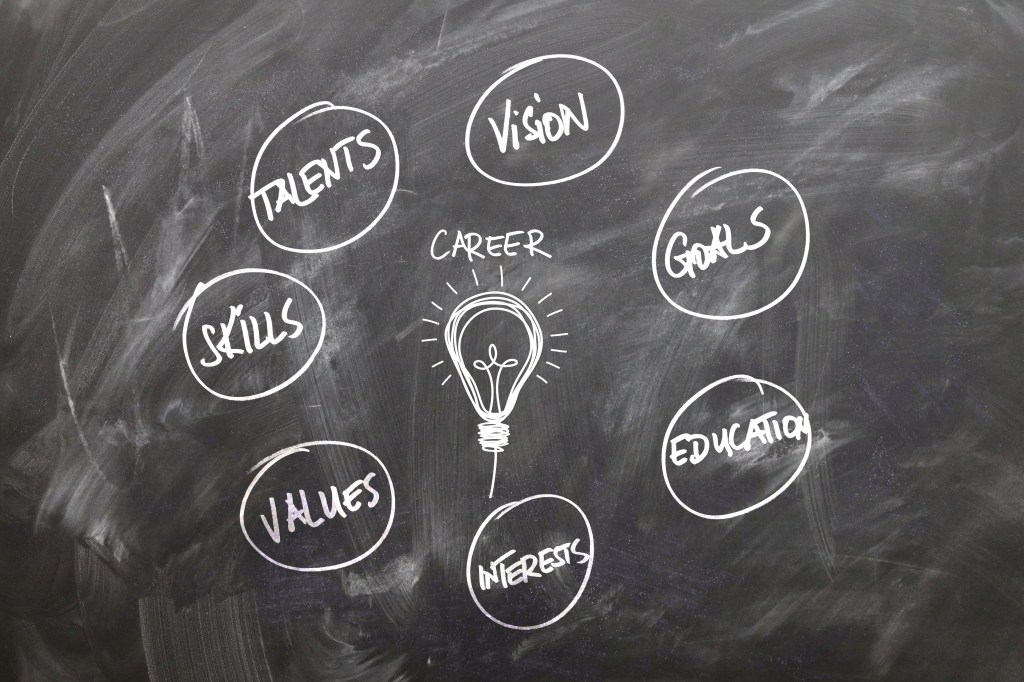
Career development is now a lifelong process, rather than a lifelong job, and involves moving laterally or upwards within an organisation or between organisations. It is the combination of your life experience, learning, and all work experience.
Career Management Introduction | Human Resource Management

What is a career?

The past, the present and the future

The past:-

A typical career path in the past involved almost guaranteed job security. You obtained a “job for life” and you could expect steady progression up an organisation’s structure.

The present:-

Factors such as technological growth and consumer demand have changed the world of work. Career development is now a lifelong process, rather than a lifelong job, and involves moving laterally or upwards within an organisation or between organisations. It is the combination of your life experience, learning, and all work experience. These days, you are responsible for your own career and you have to continuously reflect on where you are, where you want to be and how you will prepare for further career opportunities.

The future:-

Change is everywhere. The world of work is constantly changing and we must rely on ourselves much more for stability and direction. In order to do this, we need to be aware of the changes that are occurring in the current world of work.

What is the world of work like?

Have I got the right information?

It’s important to make sure that your career decisions are informed by a realistic assessment of the information available rather than relying on assumptions that you or others may have.
Some of these assumptions may have gained credibility over time, especially if they have been reinforced by the media and people whose opinion you value.
The exercise below will give you the opportunity to test your own career assumptions.

Myths and realities quiz

This mini quiz gives you the opportunity to become aware of any career myths you may have accepted as realities and to possibly challenge these assumptions. Being aware of career myths that have influenced your career planning so far may open up new possibilities for exploration that you may not have considered.

Unmistakeable trends

Change is everywhere. There are no longer short periods of change followed by long periods of stability. We have to learn to live and prosper in a world of constantly changing demands and possibilities. Some of these changes include technological change, globally competitive markets, new patterns of work and higher educational requirements.
Whatever the reason, there has been a series of unmistakable trends, particularly in the world of work. These trends include:
  • changing social contracts between employers and labourers;
  • increasing contract work;
  • globalisation;
  • an increased competition for employment;
  • technology and its impact on all industries;
  • the creation of new industries;
  • an ageing population.
In South Africa, we are still grappling with high youth unemployment, unequal access to further education opportunities, and a widening income gap.
The results of these changes and trends are now having a major impact on our lives and we must rely on ourselves much more for stability and direction. We are constantly being reminded that we need to operate as a “company of one” and be flexible enough to respond quickly in this ever-changing environment.

Reference Links:

https://en.wikipedia.org/wiki/Job
https://www.unisa.ac.za/sites/myunisa/default/Learner-support-&-regions/Counselling-and-career-development/Plan-your-career/Introduction-to-careers