
Seven principles for building better cities – Betterment for cities

Hello Friends So, let me add to the complexity of the situation we find ourselves in. At the same time that we’re solving for climate change, we’re going to be building cities for three billion people. That’s a doubling of the urban environment. If we don’t get that right, I’m not sure all the climate solutions in the world will save mankind, because so much depends on how we shape our cities: not just environmental impacts, but our social well-being, our economic vitality, our sense of community and connectedness. Fundamentally, the way we shape cities is a manifestation of the kind of humanity we bring to bear. And so getting it right is, I think, the order of the day. And to a certain degree, getting it right can help us solve climate change, because in the end, it’s our behavior that seems to be driving the problem. The problem isn’t free-floating, and it isn’t just ExxonMobil and oil companies. 

It’s us; how we live. How we live. There’s a villain in this story. It’s called sprawl, and I’ll be upfront about that. But it’s not just the kind of sprawl you think of, or many people think of, as low-density development out at the periphery of the metropolitan area. Actually, I think sprawl can happen anywhere, at any density. The key attribute is that it isolates people. It segregates people into economic enclaves and land-use enclaves. It separates them from nature. It doesn’t allow the cross-fertilization, the interaction, that make cities great places and that make society thrive. So the antidote to sprawl is really what we all need to be thinking about, especially when we’re taking on this massive construction project. So let me take you through one exercise. We developed the model for the state of California so they could get on with reducing carbon emissions. We did a whole series of scenarios for how the state could grow, and this is just one overly simplified one. We mixed different development prototypes and said they’re going to carry us through the year 2050, 10 million new crew in our state of California. And one was sprawl. It’s just more of the same: shopping malls, subdivisions, office parks.

 The other one was dominated by, not everybody moving to the city, but just compact development, what we used to think of as streetcar suburbs, walkable neighborhoods, low-rise, but integrated, mixed-used environments. And the results are astounding. They’re astounding not just for the scale of the difference of this one shift in our city-making habit but also because each one represents a special interest group, a special interest group that used to advocate for their concerns one at a time. They did not see the, what I call, “co-benefits” of urban form that allows them to join with others. So, land consumption: environmentalists are really concerned about this, so are farmers; there’s a whole range of people, and, of course, neighborhood groups that want open space nearby. 

The sprawl version of California almost doubles the urban physical footprint. Greenhouse gas: tremendous savings, because in California, our biggest carbon emission comes from cars, and cities that don’t depend on cars as much obviously create huge savings. Vehicle miles traveled: that’s what I was just talking about. Just reducing the average 10,000 miles per household per year, from somewhere in the mid-26,000 per household, has a huge impact not just on air quality and carbon but also on the household pocketbook. It’s very expensive to drive that much, and as we’ve seen, the middle class is struggling to hold on. Health care: we were talking about how do you fix it once we broke it
— clean the air. Why not just stop polluting? Why not just use our feet and bikes more? And that’s a function of the kinds of cities that we shape. Household costs: 2008 was a mark in time, not of just the financial industry running amok. It was that we were trying to sell too many of the wrong kind of housing: large lot, single family, distant, too expensive for the average middle-class family to afford and, quite frankly, not a good fit to their lifestyle anymore. But in order to move inventory, you can discount the financing and get it sold. I think that’s a lot of what happened. Reducing cost by 10,000 dollars

— remember, in California the median is 50,000

— this is a big element. That’s just cars and utility costs. So the affordable housing advocates, who often sit off in their silos separate from the environmentalists, separate from the politicians, everybody fighting with everyone, now begin to see common cause, and I think the common cause is what really brings about the change. Los Angeles, as a result of these efforts, has now decided to transform itself into a more transit-oriented environment. As a matter of fact, since ’08, they’ve voted in 400 billion dollars of bonds for transit and zero dollars for new highways. What a transformation: LA becomes a city of walkers and transit, not a city of cars. (Applause) How does it happen?

 You take the least desirable land, the strip, you add where there’s space, transit and then you infill mixed-use development, you satisfy new housing demands and you make the existing neighborhoods all around it more complex, more interesting, more walkable. Here’s another kind of sprawl: China, high-density sprawl, what you think of as an oxymoron, but the same problems, everything isolated in superblocks, and of course this amazing smog that was just spoken to. Twelve percent of GDP in China now is spent on the health impacts of that. The history, of course, of Chinese cities is robust. It’s like any other place. Community was all about small, local shops and local services and walking, interacting with your neighbors. It may sound utopian, but it’s not. It’s actually what people really want. The new superblocks

— these are blocks that would have 5,000 units in them, and they’re gated as well, because nobody knows anybody else. And of course, there isn’t even a sidewalk, no ground floor shops

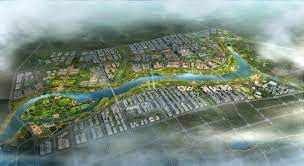
— a very sterile environment. I found this one case here in one of the superblocks where people had illicitly set up shops in their garages so that they could have that kind of local service economy. The desire of people to get it right is there. We just have to get the planners on board and the politicians. All right. Some technical planning stuff. Chongqing is a city of 30 million people. It’s almost as big as California. This is a small growth area. They wanted us to test the alternative to sprawl in several cities across China. This is for four-and-a-half million people. What the takeaway from this image is, every one of those circles is a walking radius around a transit station

— massive investment in metro and BRT, and a distribution that allows everybody to work within walking distance of that. The red area, this is a blow-up. All of a sudden, our principles called for green space preserving the important ecological features. And then those other streets in there are auto-free streets. So instead of bulldozing, leveling the site and building right up to the river, this green edge was something that really wasn’t normative in China until these set of practices began experimentation there. The urban fabric, small blocks, maybe 500 families per block. They know each other. The street perimeter has shops so there’s local destinations. And the streets themselves become smaller, because there are more of them. Very simple, straightforward urban design. Now, here you have something I dearly love. Think of the logic. If only a third of the people have cars, why do we give 100 percent of our streets to cars? What if we gave 70 percent of the streets to car-free, to everybody else, so that the transit could move well for them, so that they could walk, so they could bike? Why not have

— (Applause) geographic equity in our circulation system? And quite frankly, cities would function better. No matter what they do, no matter how many ring roads they build in Beijing, they just can’t overcome complete gridlock. So this is an auto-free street, mixed use along the edge. It has transit running down the middle. I’m happy to make that transit autonomous vehicles, but maybe I’ll have a chance to talk about that later. So there are seven principles that have now been adopted by the highest levels in the Chinese government, and they’re moving to implement them. And they’re simple, and they are globally, I think, universal principles. One is to preserve the natural environment, the history and the critical agriculture. Second is mix. Mixed use is popular, but when I say mixed, I mean mixed incomes, mixed age groups as well as mixed-land use. Walk. 

There’s no great city that you don’t enjoy walking in. You don’t go there. The places you go on vacation are places you can walk. Why not make it everywhere? Bike is the most efficient means of transportation we know. China has now adopted policies that put six meters of bike lane on every street. They’re serious about getting back to their biking history. (Applause) Complicated planner-ese here: connect. It’s a street network that allows many routes instead of singular routes and provides many kinds of streets instead of just one. Ride. We have to invest more in transit. There’s no silver bullet. Autonomous vehicles are not going to solve this for us. As a matter of fact, they’re going to generate more traffic, more VMT, than the alternative. And focus. We have a hierarchy of the city based on transit rather than the old armature of freeways. It’s a big paradigm shift, but those two things have to get reconnected in ways that really shape the structure of the city. So I’m very hopeful. In California, the United States, China

— these changes are well accepted. I’m hopeful for two reasons. One is, most people get it. They understand intrinsically what a great city can and should be. The second is that the kind of analysis we can bring to bear now allows people to connect the dots, allows people to shape political coalitions that didn’t exist in the past. That allows them to bring into being the kinds of communities we all need. Thank you. (Applause) Chris Anderson: So, OK: autonomous driving, self-driving cars. A lot of people here are very excited about them. What are your concerns or issues about them? Peter Calthorpe: Well, I think there’s almost too much hype here. First is, everybody says we’re going to get rid of a lot of cars. What they don’t say is you’re going to get a lot more vehicle miles. You’re going to get a lot more cars moving on streets. There will be more congestion.
Color Psychology , How Colour of Logo of Brand Benfit

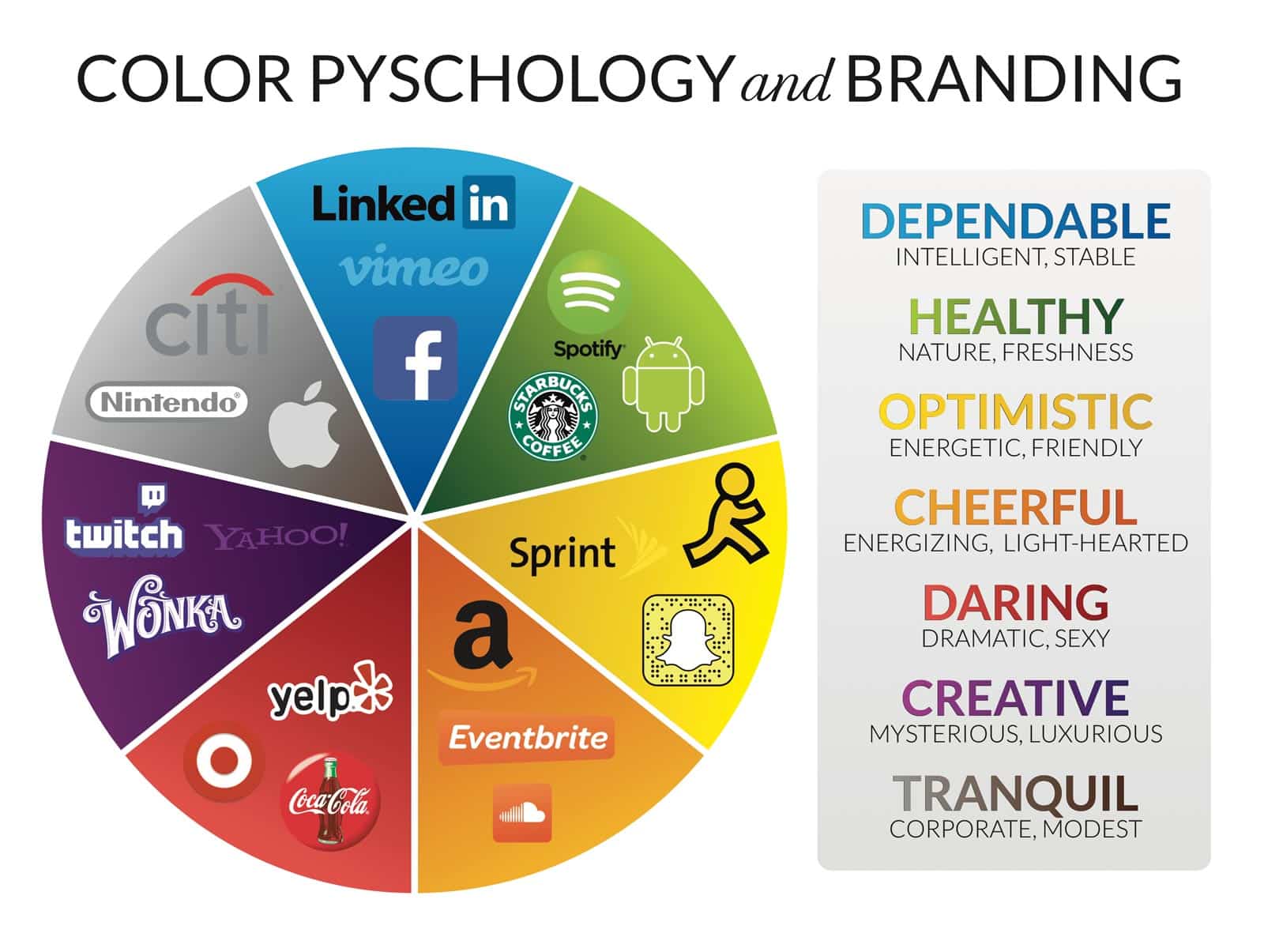
Hello Friends , we will talk about color psychology color psychology means any color that we see in this world in some ways it affects our mind it makes some sense and has a meaning that our mind is able to anaylze if we see red color we assume it as a danger because we see red color at traffic signal green color whenever we see green color on the red light , it means GO GO… but there is a hidden secret behind these colors we will talk about this in details and how it can help a businessman if you are making your logo or anything related to your brand either your office color or house interior or for house also basically we look at this from business point of view you can put that theory in the users mind you make your website and if you understand the color science then you can trigger your consumer mind any way you want your users to perform a particular task which is this is the most important thing and which is not so this is called color psychology.

Lets start with primary colors red color. red means dangerous danger . fear red is basically used in heart(love)heart color, blood color mata ka tikka so red color is a very vibrant color red color has the largest wavelength and because of that it can be seen from long distance if it is visible from a long distance means if it use the red color in a place where we want it to seen from a long distance. there we can use red color this is scientific but according to psychology red color is a physical color so where we want to put physical things there we should use red color if we want to show love, affection here also we can use red color if we want to show anger then also we can red color basically it is a masculine color if your brand is representing a masculine thing.

we use our mind more we can live our life in 2 ways one is chilled other is all about learning about new things so all the learner brands use blue if you want to show that you are targeting people who comes into the category of learner whether they are businessman or anyone else this is why blue also symbolizes trust so if you use blue color in your brand you can show your consumer that you can trust us so in India mostly all the business logos that are made made by some common people they didn’t have much knowledge of color science that’s why they made it blue because blue is for trust for business just use it. so mostly small proprietorship businesses they have blue in common also blue means blue means coolness coolness means yo bro! not that coolness ,

 coolness means cold if you want to showcase your brand as cold, you can blue color is a good choice then WHY BECAUSE in sunlight, there’s some yellowish tint in absence of sunlight there’s a bluish tint you may have seen that in movies this is all according to psychology it was practically experimented also where basically you were given two juice box both were of same flavor and both were of strawberry flavor one set of audience were given juice box A other set of audience were given juice box B but here , as flavor has no color juice box A was a transparent color liquid with a strawberry color group. 

A tasted it but the juice that was given to set B with a little color of strawberry so the positive reviews received were of set B i.e which has a strawberry color public liked the taste of set B so this was the experiment. also they retested this experiment they took an another set of audience and they offered them both the juices set a and set b and asked them to judge which one is better so in majority people liked the set B with artificial color of strawberry so why this was happening? because we were judging the juice by its color we try to perceive that this thing is like this that is why color psychology works on a deep level> so intellectual is blue means bro i am intellectual, smart busy and money man, I don’t have time so this creates a negative phase also if i want to show I don’t have time for people like this or that , then I can show my brand that way another color is yellow yellow means emotional if you use yellow color you may have seen many logos they all symbolize emotions so if you want to trigger emotions anywhere then use yellow color in your room in logo or in your house anywhere here comes optimism.

Optimism means positivity so some brand shows optimism use yellow color if you want to show creativity, confidence , friendliness then use yellow color now talking about its opposite like anxiety, depression they all are connected to yellow so see every coin has its two face positive and negative how we want our consumer to see us it depends on us later I will tell you in deep that grey color you see behind me there is a reason behind this grey color too what is this reason? every nature thing that is green and it is not green we assume it is green so according to psychology , if you show any brand green it kind of represent nature now nature mean refreshment for peace now talking about its negative side we get easily bored there too so considering the negative side of green color, its boring here you can use green color but for peace also green color every coin has its two faces, now you have to think how you want to present it talking about the shortest wavelength in the spectrum is violet , also known as purple.

If you have seen purple color all the kings used to wear purple it was a luxury color for kings it is a extremely lavish color so if you want to showcase your brand as luxurious then you can use purple color now here one more thing come along with purple that is spiritual because earlier pop used to be spiritual if you want to showcase your brand spiritual then you can use purple color if you want to show you are of high priest then use purple in violet comes truth now it has one negative thing also now these high priest people with these people in old age there used to exist caste system lower caste and upper caste so here comes inferiority complex also if you showcase your brand as luxurious then it’s not for poor people so here you can showing them as if they are inferior that depends where you are using this color I am talking about brand about walls, interior about clothes.


If you mix red and yellow color physical and emotion will mix together so the result is orange foodpanda is of orange color orange is related to food and drinks it also means fun and orange defines passion also now talking about negative immature :/ so the brand I told you earlier ;p is immature also by representing orange color it’s all about portrayal right if I want to I can portray that orange color as fun also right also i can portray that brand as immature now it depends on what prospectus I want to portray my brand to consumer here there are many corelating with each other we don’t use just one color but we use multiple color if all those colors when mixed together they all compliment each other it to a theory now you need to think that if .
I use orange with black then what does it signify by the end of this video , you’ll get my point which color you can mix with others and what it will portray now lets talk about pink pink is a feminine color girls color if you are wearing a pink shirt, you are a girl ;p in real, pink is a feminine color also this color is that something that’s non masculine here comes all the non masculine features boys are told that they have strength okay girls are not that strong so it is a color which signifies lack of strength so if you have seen any girls brand they all are of pink color so pink means feminine let’s talk about its negative face feminine means weak so pink color is for weak.

If you want to portray pink as weak you can use pink color that this is weak. if you wear pink color then you may look like them ;p think in deep about what I just said ;0 if you are wise, you may have got my point ; because grey color is a neutral color psychologically  neutral means by seeing this grey color, you don’t interpret anything there is no impact of grey color on you your focus will be on me not on the background so that that’s why i use grey color it has its negative side too grey is a boring color lack of energy if you want to showcase something as boring then use grey but what I do I am standing here what i was telling you about the negative and positive and how you can play with them here I am using grey in the background i am showing you its positive side and why am I not showing its negative side because grey signifies lack of energy and I don’t want to show lack of energy so if I show lack of energy then this grey color will symbolize lack of energy but I am speaking with energy censored.

 BLACK because it is amazing of all the things that I have done it’s always based on some psychology what do I want portray and just because people don’t know about this, they are unable to understand it now whatever I am telling you about the color science , from now all the logos you see in your daily life, make sure you think about what they are trying to portray whether its a wall or anything think what that particular color signifies whether it was done randomly or there was a hidden message behind it always be curious to know this old age kings palace see what they are trying to portray look at their paintings, its colors try to think of the reason behind the colors the painting of bloody marry it was used to be made with a specific color and why now black represents one more thing i.e security that’s why security guard wears black color uniform it represents security its negative face is that it is heavy weights of a weighing machine those weights are of which color.

Why is Biodiversity so important ?

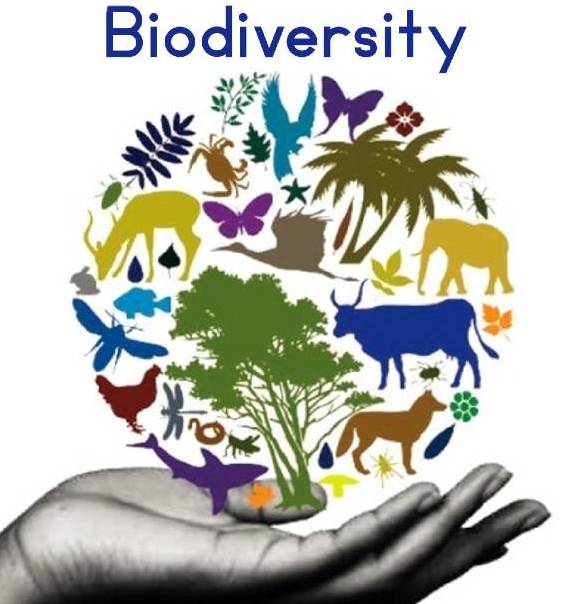
Hello Friends ……Our planet’s diverse thriving ecosystems may seem like permanent fixtures, but they’re actually vulnerable to collapse. Jungles can become deserts, and reefs can become lifeless rocks, even without cataclysmic events, like volcanoes and asteroids. What makes one ecosystem strong and another weak in the face of change? The answer, to a large extent, is biodiversity. Biodiversity is built out of three intertwined features: ecosystem diversity, species diversity, and genetic diversity. The more intertwining there is between these features, the denser and more resilient the weave becomes. 

Take the Amazon rainforest, one of the most biodiverse regions on Earth due to its complex ecosystems, huge mix of species, and the genetic variety within those species. Here are tangled liana vines, which crawl up from the forest floor to the canopy, intertwining with treetops and growing thick wooden stems that support these towering trees. Helped along by the vines, trees provide the seeds, fruits and leaves to herbivores, such as the tapir and the agouti, which disperse their seeds throughout the forest so they can grow. 

Leftovers are consumed by the millions of insects that decompose and recycle nutrients to create rich soil. The rainforest is a huge system filled with many smaller systems, like this, each packed with interconnected species. Every link provides stability to the next, strengthening biodiversity’s weave. That weave is further reinforced by the genetic diversity within individual species, which allows them to cope with changes. Species that lack genetic diversity due to isolation or low population numbers, are much more vulnerable to fluctuations caused by climate change, disease or habitat fragmentation. 

Whenever a species disappears because of its weakened gene pool, a knot is untied and parts of the net disintegrate. So, what if we were to remove one species from the rainforest? Would the system fall apart? Probably not. The volume of species, their genetic diversity, and the complexity of the ecosystems form such rich biodiversity in this forest that one species gap in the weave won’t cause it to unravel. The forest can stay resilient and recover from change. But that’s not true in every case. In some environments, taking away just one important component can undermine the entire system. 

Take coral reefs, for instance. Many organisms in a reef are dependent on the coral. It provides key microhabitats, shelter and breeding grounds for thousand of species of fish, crustaceans and mollusks. Corals also form interdependent relationships with fungi and bacteria. The coral itself is a loom that allows the tangled net of biodiversity to be woven. That makes coral a keystone organism, one that many others depend on for their suvival. So what happens when destructive fishing practices, pollution and ocean acidification weaken coral or even kill it altogether? Exactly what you might think. 

The loss of this keystone species leaves its dependents at a loss, too, threatening the entire fabric of the reef. Ecosystem, species and genetic diversity together form the complex tangled weave of biodiversity that is vital for the survival of organisms on Earth. We humans are woven into this biodiversity, too. When just a few strands are lost, our own well-being is threatened. Cut too many links, and we risk unraveling it all. What the future brings is unpredictable, but biodiversity can give us an insurance policy, Earth’s own safety net to safeguard our survival.