CRED's Master Plan – CRED Business Study

Hello everybody, CRED is one of the most fascinating business case studies in the Indian start-up ecosystem. In just 2 years, CRED went from 0 to hitting a $2B valuation and became one of the youngest Indian startups to reach this milestone. Now, the peculiarity of CRED is that in 2020 alone CRED incurred a massive loss of ₹360 crores which is a massive increase of 492% from 2019. And for every rupee of revenue that CRED generated they spent ₹727 which is a massive cashburn. 

We all have seen the result of massive expenditure into creative marketing. beating noises So now the question is, even with such massive losses how is it that CRED is getting so much funding ? And what exactly is Kunal Shah’s strategy ? Well, the beauty of this case study is the that if you only understand what CRED is doing you will more or less understand a large chunk of the Indian startup ecosystem because most of the giant companies like Jio, Ola, PharmEasy also operate in a similar fashion. and the most important factor that is common in all of them is that they extensively work on altering the behavioural design of the society. And the anticipation of that behavioural design, is what makes them billion dollar companies. 
This golden strategy works out in 4 discrete steps The first phase is what we call cash burn and here’s where The company, first identifies a major problem in the society, Number two, it designs a system to fix that problem Number three, it raises a million dollars in funding and lastly it entices the customers to use the product by giving out unbelievable offers which are almost too good to be true.

 A very simple example of the same is Jio. First of all, Jio identified internet accessibility as a major problem in the Indian society and then Reliance spent about ₹1.5 lakh crores into building the infrastructure required for Jio. And then in 2016 when Jio got launched, they gave out offers that almost looked impossible. -free sim cards, free calls and free internet. And the moment this announcement happened, millions of people rushed to buy Jio sims. And Jio did everything in it’s capacity to maximise it’s number of it’s users without even bothering about profits. Which is why, on top of the heavy investment that they made they further incurred a loss of Rs. 31 crores in 2016.

 Just like this, when CRED rolled out in 2018 they identified 3 of the biggest pains of a credit card holder which are; number one, hidden charges Number two, late fees due to forgetfulness and number three is the extra interest. And they rolled out massive cashbacks and offers to incentivise the act of on-time payment. And these offers were as amazing as free flight tickets extremely lucrative discounts and ₹1000 cashbacks also Fast foward to 2021, CRED today, has over 30 lakh users and today, CRED is already processing 20% of all the premium credit card transactions. 

So this is how within a short span of time, in Phase 1, companies present incentives in order to get customers to use their product, eventually, to increase their user base. And this is what brings us to Phase 2. Phase 2 is all about habituation. Once you bought a Jio sim, you never bothered about talktime, you never bothered about data. And we all recklessly got habituated to this newfound luxury of Internet Similarly, in case of CRED, the people who have 2-3 credit cards found it so simple to use CRED that they stopped using their conventional method wherein they had to go through this long list of their statements or putting in effort to dig in and find out whether there are hidden charges, on each credit card As a CRED user myself, I can’t even tell you how amazing it feels as compared to having this terrible feeling wherein you have no idea where the hell your money is going. 

In fact, there was a time when I thought that some hacker is stealing my money, alright ? and I’m not even kidding about this. So, this is how in Phase 2, using their super efficient system companies seemlessly get us habituated to new normal wherein we are no longer used to adjusting to the ‘hurdles of the system’. Here’s where we enter the most crucial phase of all, that is, Phase 3 and Phase 3 is what we can call as Irreversibility. 

A classy example of the same is Google Maps Now you might have observed that most of the people of our generation never even bother to remember the name of a landmark, street or chowk In fact, I’ve got so used to Google Maps that in my own city, if you leave me in some street I will start wandering as if I am in some strange jungle. That is how much I have got habituated to Google Maps And by the way, this does not include those superhumans who have this amazing memory to remember any route, even if they have visited that place only once and you know which friend am I talking about… So the point is, 

Google Maps has made our lives so easy that finding a way to a place no longer occupies our headspace and in case of CRED, users no longer have to remember to pay their credit card bills, they no longer have to remember when exactly is their due dates or bother about late fees. Similarly in case of Ola, we are no longer used to finding taxi on the streets In case of Jio, when there is no Internet you all know how you feel So you see, once these companies came in there has been an irreversible change in our behaviour wherein the small acts of booking a cab or paying a credit card bill has changed to such a large extent that we will never ever go back to our past system. 

Now CRED is yet to complete this phase which is why all the numbers that you see about CRED is in the negatives now because CRED is yet to change a significant part of the consumer behaviour. After this we come to Phase 4. Now, this is the goldmine that every investor waits for wherein the company starts making profits and if you look at the numbers, it literally looks like a goldmine. For that matter look at the numbers of Jio. In just 1.5 years, Jio became profitable that is in the 3rd quarter of 2017 with a profit of ₹504 Crores From there onwards it has been on a magnificent run wherein in 2020, Jio has posted a net profit of ₹5,562 crore and the reason why CRED is also sitting on a similar goldmine is because the customers of CRED are by default the richest 1% of the country.

 These people are literally the dream customers of any company. Their incomes are high, so they make expensive purchases on a regular basis which results into massive profit margins for every company And my sense is that in the 4th phase, CRED could leverage it’s golden customer base in three very very powerful ways. 

Number one, CRED could become this must have expense management app which will also allow it’s users to file their income tax and just like it cured the headaches of the credit card users by saving their money from hidden charges. CRED might also might start saving it’s customers a ton of money through their income tax rebate filings by turning the entire process of income tax filing into a very simple and efficient process and if this happens, I don’t think any of us will ever leave the CRED club.

So, Kunal sir if you’re watching this please help us out over here. Number two, CRED has one of the most valuable customer data in terms of purchase preferences For example, CRED clearly knows that Parsh loves to spend ₹20,000 into sports. Ganesh loves to spend ₹10,000 in education and books. So CRED could use this data to show relevant advertisements with exclusive coupons to get people to spend heavily on the things they absolutely love eventually, to make a comission out of it. 
Lastly, CRED could also became a bank for the top 1% of India and the reason why I think so is because there are two important factors that are very very crucial for any bank’s existence.

 Number one, every bank wants customers who have a lot of money deposited in their bank account after all their investment and expenses. And this money is what the bank uses to lend to businesses and customers in the form of home loans, car loans etc. 

Number two, every bank needs borrowers who pay back their loans judiciously. So that they can charge an interest on top of it eventually to make money out of the lending business. And guess what ? CRED literally has these exact people in it’s customer base which is why my sense is, CRED could literally extend itself to become a full fledged bank or maybe even become a full fledged portfolio management system for the top 1%.

 Eventually to become the most revolutionary fintech start-up of India So to put that straight, for ordinary people like you and me CRED might look like a weird idea but in reality it is a revolutionary idea coming from one of the most amazing entrepreneurs in the Indian start-up space. 

And we must consider ourselves to be extremely fortunate that we are getting to witness their processes and we must learn from these revolutionary start-ups that are going to redefine 21st century India forever.  
7 Mumbai-Based Women Entrepreneurs Made a 1600 Cr empire from 80Rs – Lijjat Papad Case Study

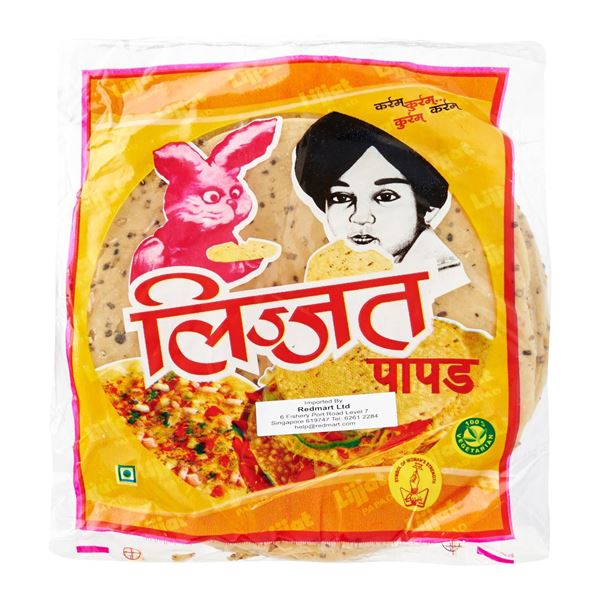
 Hi everybody, This is a story of 7 ordinary women who had no background in business, no significant educational qualification And with just 80 rupees in capital they were able to build a business empire worth 1600 crores which is spread across 69 branches and more than 42,000 employees. This home-grown brand that I’m talking about is none other than Shri Mahila Griha Udyog Lijjat Papad.

 Now, what’s more fascinating about this company is not the growth of the company but the fact that the business philosophies of this home-grown company somehow seems to have very close resemblance to extraordinary companies like Starbucks and Apple also. The question is- What is so special about this papad company and how has it lasted for more than 62 years ? And how did these 7 women manage to build a business empire out of just ₹80 in capital ? The answer to this question lies in the incredible history of the Lijjat papad. 

This is a story that dates back to the late 1950s India when India was a fairly underdeveloped country. And back then let alone education, even literacy was considered to be a luxury. And even in terms of literacy during those times woman’s literacy was not even considered important because of which only 8% of women in India could read and write while 92% of women in India were illiterates. On top of that, women were not even allowed to go out and work and the earning capacity of the families was not enough to afford a decent standard of living. That is when in 1959, Mumbai. 

A group of 7 amazing women from very ordinary background came together to discuss a business idea which wouldn’t need them to step out of the house, wouldn’t need education and yet could produce a competitive product in the market. Ladies and gentlemen, that is how the idea of Lijjat Papad was born with just ₹80 of capital that was given to them by a social worker. They first started selling their papads at a local store and soon enough due to the superb quality and taste of the papad even other shops started buying their papads. And that’s when they started scaling up. 

Now, when they started scaling they had the opportunity to hire women at a dearth cheap cost because they were one of the rarest avenues of income for women which allowed them to work from home. But you know what ? When these women had their first board meeting they established the fact that the primary goal of their business wouldn’t be to make money but to empower women from the smallest households of the country and to provide them with the livelihood to nurture their family. And mor importantly they also established the fact that money would only be used as a fuel to scale their impact on the women of India and not be the sole purpose of their existence. 

So instead of hiring women they started to give out ownership to every woman who joined their business and called them Lijjat Sisters rather than employees. This is what you call as collective ownership, wherein every employee owns a small part of the company such that the profits and losses, both are shared by every single person in the organisation. So regardless of your age, caste, religion even if you were at the lowest hierarchy of the Lijjat Papad organisation you’d still own a part of the business.

 Now, most of us might think that this is just another business move but I gotta tell you guys that this attribute of collective ownership is one of the foundational principles that make Starbucks an extraordinary company. Because you know what ? Just like the sisters of Lijjat papad own a small part of the company regardless of their position in the organisation, every employee at starbucks is considered as a partner in the business rather than an employee. Everyone starting from the baristas who serve coffee to the customers all the way upto the senior management officers, each one of them are offered stock options of the company. 

So this way, just like the Lijjat sisters every employee in Starbucks could be a small owner of the company And this move develops a deep sense of ownership which cultivates a culture of greatness wherein every employee is motivated to go out of the way and to contribute diligently towards the growth of the organisation. But the only difference between both these companies is that while Starbucks ideated this with MBA masterminds and with a million dollar capital backing the 7 sisters of Lijjat did it way before Starbucks, in 1959 without even knowing what an MBA degree is. 

Such was the business acumen of these incredible women. The second phase of Lijjat was building a robust supply chain that would be cost effective, would ensure quality production and would fit the lifestyle of the women who work for the company. So instead of having huge office spaces they used the houses of the sisters as their small centres of papad making. And this is what their supply chain looked like The flour would first arrive from the mills to the respective central location wherein the dough is made. And after the dough is made the sisters will be brought by a bus facility provided by the company. 

Over here they would collect the doughs and then go home, make papads dry them on the veranda and then deliver the papads the next day. And lastly, after the delivery of the papads they would collect their money and the dough for the next cycle. This would be followed by surprise visits by the supervisors to check the quality of oil they use, the hygiene check of the house and most importantly the process of making papads. Now the sisters are also given aluminium papad makers to ensure that the papad is produced in a standardised manner. This happens at all the branches. If one of these branches does very well the profits are distributed among the sisters. And if not, the losses are borne by the branch members together. And after all of this comes the most challenging part of all and that is sticking to the vision and mission statement of the company. 

Now people, for most of us mission and vision statements are just stupid formalities and they have no real significance for us.  At the same time in case of colleges also even your principle wouldn’t remember the vision and mission statement of your college and if he did it would only be because he mugged it up because some committee was visiting to give your college some stupid certification or some accreditation. And this is the reason why most of us do not understand the importance of mission and vision statements. 

But here’s a thing guys Mission and vision statements form the very foundations of every single organisation. And when designed and followed the right way it can help the organisation sustain for a century. At the same time, if not done right they can even bring down a million dollar business. A classy example of the same is Apple. Now people, when Steve Jobs got fired from Apple in 1984, Apple was a million dollar company. Until he was there at the company, the company stuck to it’s value. And it was a formidable player in the industry. But after he left, they started to derail from their values. And within just 10 years they were almost about to go bankrupt. 

That’s when Steve Jobs got called back to Apple to fix things and get the company back on track. And you know what ? After he took over the company, the first question he asked to every single engineer to every single deisgner and every single manager was What does Apple stand for ? And what are the values that we believe in as a company. Because the biggest mistake that Apple made was while he was not around they started to loose their identity and started to deviate from their values because of which they started making products with no sense of purpose. 

Eventually, the brand lost it’s unique identity and customer loyalty just faded away. So Steve baba comes back asks this question and within some time the entire team is absolutely clear as to what exactly they were supposed to do. And this is what got them the ‘Think Different’ campaign that told the world what Apple truly stood for. And that is “Think Different”. And within just 2 years the same company with the same engineers and the exact same resources then went on to create history to become a legendary company that made products that changed the world forever. And again as soon as Steve baba left we all know what’s happening with Apple.

This is the importance of mission and vision statements. And here’s the most mind-blowing fact of all. In it’s 62 years of existence, not a single time Lijjat Papad has ever deviated from it’s core values. And even today After expanding to 67 branches and scaling up to 42,000 employees and after exporting their products to 15 different countries. They still abide by the core philosophy of their business, that is, Sarvodaya, which means Progress for all. 

While we live in a world where billion dollar corporates, even with the slightest change in the policies wouldn’t think twice before firing thousands of employees and putting each one of their family’s life at stake. On the other side we have got Lijjat Papad wherein with every single machinery they bring in for automation, they make sure that not a single woman is asked to leave the organisation. Because they are 100% clear that their ultimate purpose of business is not to make money but the empowerment of women so that they can give their family and children a better quality of life. 

On one side where we have got these evil companies who would put the health of their frontline workers at stake just to maximize their profits. On the other hand we have got Lijjat Papad wherein even if they have a great year, they make use of the extra profits to sponsor the education of the children of their frontline workers regardless of their age, caste, religion or even the position in the organisation. 

And they do all of this just so that the next generation of these frontline workers can be given the opportunities that they truly deserve. And last and most importantly while inspite of being at the pinnacle of the technological revolution there are people like you and me who often keep doubting our capabiities. And here we see a standing example of 7 incredible women who had no educational qualification. no background in business and no fancy investor. And yet, they were able to build a business empire that is now empowering generations of women all across the country. 

And that too during a time when women had no scope of opportunities. If this isn’t an epitome of greatness I don’t know what is…. bye bye.

Business War – Apple Music vs Spotify vs YouTube Music

 Hi everybody. We all know that Spotify is by far the most successful audio streaming platform in the world. In fact, even during the pandemic itself, the stock price of Spotify went up by 70%. Now, on the outside if you look at the numbers while Apple Music has only 72 million users Spotify has more than 345 million users and the rest of the competition is not even close. On top of that, its recommendation and playlist have been so amazing that you’ll agree that it has given you an incredible experience every single time. But you know what guys? Fortunately or unfortunately, in 2021, Spotify is in deep-deep trouble. 

While on one side the losses of the company have been stacking up rapidly On the other side with the giants entering the streaming market Spotify is officially in a business war. And what we are witnessing right now is perhaps one of the most interesting Internet business wars in history. And if you pay very close attention you’ll be able to learn some incredible business lessons that you can apply to your startup and most importantly, as an investor, if you’re investing into US stocks this streaming war is going to be very very crucial. The question is- What is this business war and most importantly as an entrepreneur, what are the business lessons that you can learn from this iconic case study. 

People, the music streaming revolution of the world started way back in the 1990s. Now, back then from 1984 to 1999 CDs were the ultimate instrument of the music industry. The distribution channels of the music CDs made the record labels and musicians billions of dollars every single year. But in the 1990s the Internet and the computer revolution began to pick up resulting into massive penetration of both, computers and web, into the American household. Now, people if you see this is a fine culmination of technology and connectivity and if you observe closely every time this golden combination happens, it gives rise to a new generation of startups. In the music industry, it was the company called Napster which was started way back in 1999 by Shawn Fanning and Sean Parker. 

In simple words Napster was nothing but a music torrent instead of buying a CD for 20 dollars you can download an MP3 file for free and share it with your friends And you know what guys? This invention was a disruption in the making because what followed next was the first wave of music streaming. And this wave did not just change the way people listen to music it literally changed the entire music industry. Within a few months it had 4 million song downloads and in less than a year, Napster had 20 million users. Now, initially, people thought that it’s no big deal. But in sometime, the numbers of Napster exploded further, to 60 millions users by 2001. And this is when the record labels began to realize that their stores are incurring losses and when they actually computed it shocked them to see that they were incurring more than $100 million in losses due to Napster.

 And that’s when hell broke loose for Napster. They got slapped with a lot of lawsuits and what followed next was the historic suit that led Napster to pay millions of dollars to artists, creators and record label companies eventually they had to shut down their operation in sometime. Now, while most people thought that piracy will be gone and that CDs will be back as it turns out, Napster left the market but the behavioural design of the society had been so strongly altered that people just didn’t go back to CDs at all. 

The CD stores were still closing down and other piracy websites took the place of Napster. Companies were still incurring millions of dollars of losses because people just wouldn’t pay $20 for an album. And this is where record labels were desparately looking out for an alternative to actually get their distribution channel back on track. And while all of this drama was going on, there was one man who noticed this and decided to become an opportunist during the times of chaos. And this man was none other than the legendary Steve Jobs himself and the solution that he brough to the table was to give people ultra cheap music and to give record labels a non-piratable distribution channel for their music. And this solution was none other than the iconic iPod and the rest is history. 

The record labels again started to make billions of dollars customers fell in love with the iPod as it brough along the second wave of music streaming revolution.  There were two major problems over here. Number one, not everyone owned an iPod or a Macbook and number two, not everyone could pay for each album. but everyone had the computers and the Internet. So, guess what? This culmination of technology and connectivity, again, gave rise to another generation of startups and the most successful player in this segment turned out to be none other than Spotify which started way back in 2006. 

Spotify learnt from the pains of the customers and decided to build a music streaming platform that could be used by everyone and could be used by everyone for free and this is where Spotify deploys its freemium model with an option to subscribe but this time it wasn’t easy because they knew what happened to Napster and the subscription model was way more complex than the discreet model of iTunes. Because when it comes to CDs or iTunes, it was pretty straightfoward if you buy a $1 album from iTunes 80% of that goes to record labels and 20% of that is mediator fees and that’s it. 

Whereas in case of subscription, it’s quite difficult because you are giving unlimited access to everyone for a defined fees. So, the revenue distribution itself becomes very very complex. But fortunately the Spotify guys got through it and they spent about $9.8 billion dollars between 2006 to 2018 just to get the music rights without legal issues and they built the freemium model to make music accessible to everyone. And what followed next was the third wave of music streaming that is, unlimited legal music which could be listened for free. As a result of which, again, Spotify exploded and today it is a market leader with the highest number of paid subscribers. But again there were 3 problems.

 Number one, ad revenue was not enough to pay the artists well and because the music is free, very few people actually opted in for a subscription. Number two, there was no profit for Spotify, in fact the company suffered massive losses during its rise. And last and most importantly things got really ugly with the artists. Taylor Swift and Adele broke up with Spotify over low pay. And again it led to a series of troubles for them from the creators’ side. Now, the company was badly cornered. With massive losses on one side annoyed artists on the other and on top of that they’ve now got freebie loving customers. And this gave them no option but to run a lot of ads to push their customers to buy Spotify Premium and hence a lot of interruptions. And this is when ladies and gentlemen 2 more giants decided to step into the game.

 In 2015, Apple introduced that it’s going to kill iTunes and launch the subscription model which was Apple Music as direct competition to Spotify. And in just 5 months, in November 2015, YouTube entered the streaming wars with YouTube Music. Now, if you observe this streaming war very very closely guys, you’ll see that both these services, that is, Apple Music and YouTube Music are built over the weaknesses of Spotify. And with just a few moves here and there Spotify could be killed and there could be another wave of social media revolution on YouTube. The question is- How is that even possible? If you look at this table, Apple Music deploys a premium model and its only for Apple users while Spotify and YouTube Music is for everyone and they use the freemium model which gives them a wider audience. 

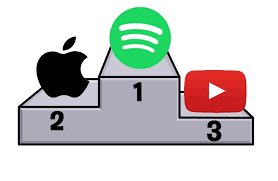
Now, if you look at the user base, Apple has 1.65 billion users Spotify has 345 million users and YouTube, well it’s got 2.1 billion users. But when it comes to paid subscription Spotify is way ahead of Apple because of its accessibility through both Android and Apple. While Apple Music has only 72 million users but all of them are paid Spotify has 345 million users out of which 155 million of them pay. Now, the X factor for Spotify over here is its amazing playlists and podcasts that is integrated into the app. And this is where we saw Spotify coming out with Spotify Originals like 22 Yarns and signing up creators like Joe Rogan to become Spotify exclusive. But Apple and YouTube both also have their podcast but separately. YouTube has Google Podcasts and Apple has Apple Podcasts. And now, guys here comes the big difference. 

While Apple Music generates a revenue of $4.1 billion with very less profits because it’s just an ecosystem product Spotify being a standalone incurred a loss of $698 million inspite of generating a revenue of $9.2 billion. And YouTube? Well it’s way ahead of the game with $19.7 billion dollars in revenue and this is mainly because of it’s video service. Fun fact: YouTube is one of the most popular platforms to discover musicians and artists. Now, guys, if you take a step back (I don’t know if you see this) but YouTube can literally accommodate every single X factor of Spotify and Apple Music in the YouTube app itself. Number one You kind of already search for songs through lyrics from Google and YouTube which is the USP of Apple Music. 

Number two, you can ask Google which song is playing and it will find that out for you which is nothing but a Shazam feature. And most importantly Google has Google Podcasts and a huge base of creators who are already making podcast on YouTube. Now, every single creator knows that YouTube is by far the best platform for creating content. And users know very well how well YouTube understands them and their preferences. Now, if YouTube rolls out an update tomorrow saying that Google Podcasts is now integrated into YouTube as YouTube podcasts. 

Do you realize what’s going to happen? It is going to lead to another huge wave of creators who will flock to upload their audio content on YouTube because there are already a ton of audio creators who are desperately wanting to be on YouTube. And if given a chance with YouTube algorithm, it’s going to be a game changer for them. And the best part is, because it’s available on both Android and iOS the user base is insanely huge. So, basically YouTube literally has the best of both Spotify and Apple. And when integrated together, it will become unbeatable in the content space just like Instagram is right now for social media networks. And my sense is, one day there will be a grand announcement that’s going to change everything for Spotify. This is what, ladies and gentlemen is happening in the streaming wars. Now let’s move on to the most important part of the video and that is what are the lessons that we can learn from this iconic case study. 

 Now, let’s talk about the lesson from the case study. Lesson number one. People, always remember that being the first mover can sometimes be a terrible thing and as far as my observation goes it’s almost every time a terrible thing. And it’s always better to be a second mover so that you can build upon the mistakes made by the first mover. In this case if you see, iTunes built over Napster Spotify built over iTunes and Apple Music and YouTube music built over Spotify. So, if you’re the first mover, you’ve got to be very very careful and if you’re the second mover you’ve got to be very very happy, at the same time, very very sharp about the mistakes that have been made by the first mover. 

Lesson number two companies might come and go but the behavioral design they leave behind will stay forever. In this case, it was the paradigm shift from CDs to streaming. So, while most people will neglect it and try to reverse it you as an entrepreneur can be an opportunist and can bring about a solution which is forward looking rather than backward looking. In this case the opportunist was none other than the legendary Steve Jobs himself who built upon the behavioral design left behind by Napster. 

And most importantly, always remember guys the culmination of technology and connectivity is always the sweet spot for innovation and it will give rise to the most revolutionary startups. In this case, it was the computers and the Internet but in the next 3 years it’s going to be the green tech and the Internet, blockchain and the Internet and most importantly Artificial intelligence and the Internet.  Bye-Bye.