Caste: the historical facet peculiar to India

The caste system, the joint family system and the village system of life are often regarded as the three basic pillars of the historical Indian social system. The caste system as a form of stratification is peculiar to India. The caste system is an inseparable aspect of the Indian society. It is peculiarly Indian in origin and development. Caste is closely connected to Hindu philosophy and religion, customs and traditions, marriage and family, morals and manners, food and dress habits, occupations and hobbies. The caste system is believed to have divine origin and sanctions. The caste stratification of the Indian society has had its origin in the Chaturvarna system. According to the Chaturvana doctrine, the Hindu society was divided into four main varnas namely: the Brahmins, the Kshatriyas, the Vaishyas and the Shudras. The caste system owes its origin to the varna system.

Definition of Caste as given by some prominent sociologists:

MacIver and Page: “When status is wholly predetermined so that men are born to their lot without any hope of changing it, then the class takes the extreme form of caste.”

C. H. Cooley: “When a class is somewhat strictly hereditary, we may call it caste.”

D. N. Majumdar and T. N. Madan have said that caste is a ‘closed group’.

Perspectives on caste system in India:

The perspectives on the study of caste system include Indological or ideological, social anthropological and sociological perspectives. The Indological or ideological perspective takes its cue from the scriptures about the origin, purpose and future of the caste system, whereas the cultural perspective of the social anthropologist looks the origin and growth of caste system, its development, and the process of change in its structure or social structural arrangements as well as in the cultural system also view caste system not only as unique phenomenon found in India, but also in ancient Egypt, medieval Europe, etc. But the sociological perspective views caste system as a phenomenon of social inequality. Society, especially, Hindu social system has certain structural aspects, which distribute members in different social positions. It shows concerns with growth of the caste system. Many sociologists put forward their theory of caste with respect to Indian society. Some prominent sociologists in this regard are, G. H. Ghurye, Louis Dumont and M. N. Srinivas.

G. H. Ghurye theory of caste:

G. H. Ghurye is regarded as the father of Indian sociology. His understanding of caste in India can be considered historical, Indological as well as comparative. In his book, “Caste and race in India” he agrees with Sir Herbert Risley that “Caste is a product of race that came to India along with the Aryans”. According to him caste originated from race and occupation stabilized it. Ghurye explains caste system in India based on six distinctive characteristics:

1. Segmental division of society: Under caste system, society is divided into several small social groups called castes. Additionally, there are multiple divisions and subdivisions of caste system.

2. Hierarchy: According to Ghurye, caste is hierarchical. Theoretically, Brahmins occupy the top position ad Shudras occupy the bottom. The castes can be graded and arranged into a hierarchy on the basis of their social precedence.

3. Civil and religious disabilities and privileges: This reflects the rigidity of the caste system. In a caste system, there is an unequal distribution of disabilities and privileges among its members. While the higher castes enjoy all the privileges, the lower castes suffer from various types of disabilities.

4. Lack of unrestricted choice of occupation: The occupations in caste system are fixed by heredity and generally members are not allowed to change their traditional occupations. The higher caste members maintain their supremacy in their jobs and do not allow other caste group to join in the same occupation.

5. Restriction on food, drinks and social intercourse: Restriction on feeding and social intercourse are still prevalent in Indian society. There are two types of food I.e., Kacha (cooked) food and Pakka (raw) food upon which certain restrictions are imposed with regard to sharing.

6. Endogamy: Every caste insists that its members should marry within their own caste group.

Louis Dumont theory of caste:

Louis Dumont was a French Sociologist and Indologist. His understanding of caste lays emphasis on attributes of caste that is why; he is put in the category of those following the attributional approach to the caste system. Dumont says that caste is not a form of stratification but a special form of inequality, whose essence has to be deciphered by sociologists. Dumont identifies hierarchy as the essence of caste system. According to Dumont, Caste divides the whole Indian society into a larger number of hereditary groups, distinguished from each other and connected through three characteristics:

1. Separation on the basis of rules of caste and marriage,

2. Division of labor, and

3. Gradation of status.

He also put forward the concept of ‘pure’ and ‘impure’ which was widely seen in the Caste ridden society. The Brahmins were assigned with priestly functions, occupied the top rank in the social hierarchy and were considered “pure” as compared to other castes. The untouchables being “impure”, were segregated outside the village and were not allowed to drink water from the same wells from which the Brahmins did so. Besides this, they did not have any access to Hindu temples and suffered from various disabilities.

M. N. Srinivas theory of caste:

M. N. Srinivas was one of the first-generation Indian sociologists in post-Independence period. Srinivas approach to study of caste is attributional I.e., analyses caste through its attributes. He assigned certain attributes to the caste system. These are:

1. Hierarchy

2. Occupational differentiation

3. Pollution and Purity

4. Caste Panchayats and assemblies

5. Endogamy

Besides caste, Srinivas looks for yet another source or manifestation of tradition. He found it in the notion of ‘dominant caste’. He had defined dominant caste in terms of six attributes placed in conjunction:

Sizeable amount of arable land,

Strength of numbers,

High place in the local hierarchy,

Western education,

Urban sources of income and

Jobs in the administration

Of the above attributes of the dominant caste, the following two are important:

Numerical strength, and

Economic power through ownership of land

He also introduced the concept of “Brahmanisation” wherein the lower caste people imitate the lifestyle and habits of the Brahmins. This concept was further changed to “Sanskritisation”.

These are a few theories of caste system that prevailed before the rise of modern India owing to the revolutions undergone during the British rule.


How Caste Continues To Affect Our Education System

The caste system has always been ubiquitous. Whether it’s politics, economics, the law, religion, the media, or even education, the seemingly immutable caste system affects all spheres of our society. Schisms along caste lines are ingrained into public discourse and cause discrimination, hatred, and violence. The caste system divided society into the Brahmins (priests and scholars), the Kshatriyas (rulers and warriors), Vaishyas (merchants and traders), Shudras (artisans, labourers, and servants), and the Untouchables. While untouchability was abolished by the Constitution, it is still prevalent in Modern India. Despite valiant efforts, most notably by B.R Ambedkar, to eradicate the caste system post independence, the over 3000 years old system continues to divide Indian society. As we’ll see, the caste system has significant effects on modern-day education; it is as extensive as it is pernicious, leaving its victims helpless. 

The caste system meant that every aspect of one’s life was controlled by “the accident of birth”. Therefore, every caste had specific jobs assigned to them. This meant that children were only taught skills that helped them do jobs that their caste did, even if they could do other work. The strictures of the caste system meant that one is confined to the social status associated with one’s caste. This is discordant with the modern notion that education is the “great equaliser” and it gives everyone and anyone the “ability to rise” because of their hardwork and not their social status and uncontrollable factors such as gender, religion, caste, etc. 

While the Right to Education Act guarantees education for students aged 6 to 14, the quality of that education is usually determined by caste. Students that belong to lower castes receive poor quality and inadequate education in schools that lack basic facilities. This makes it difficult for them to cope at higher levels of education. Ostensibly fair systems such as entrance tests don’t take into account existing disparities that prevent poor lower-caste students from attending coaching classes, studying without frequent interruptions, and preparing adequately for these tests.  

Students belonging to lower castes, especially Dalits, are often ostracized from the education system as they are deemed to be unworthy of education. Their education is hampered as they are more likely to be forced into child labour than other students. They have lower attendance rates and higher dropout rates too. When in school, they face discrimination, not only from other students but also from teachers. They are forced to sit separately, eat separately, and clean classrooms and toilets. They are physically and verbally abused. 

This constant discrimination leads to psychological problems, such as low-self esteem and depression, leading to further exclusion from the education system. This countervails any attempt to make our education system equitable and inclusive. Lower caste families are disproportionately affected by poverty as their members are less likely to get a good job even after receiving an education. This fuels a vicious cycle of poverty and caste-based discrimination. 

In an attempt to alleviate caste-based discrimination through affirmative action, the concept of reservation was introduced. A certain number of seats are reserved for the marginalised castes in public education institutes. The Constitution [Article 16(4)], as well as the Constituent Assembly debates, emphasize that reservation was intended to prevent the formation of caste monopolies in the public sector. However, critiques of reservation call it excessively subservient to lower castes. They suggest that once members of a particular caste become affluent, they no longer deserve reservation. They say that students should earn their place in an educational institution based on merit. 

This meritocratic approach is unfair and flawed as it does not consider centuries of discrimination and underrepresentation that lower castes have had to suffer through. Inherent in any meritocratic system is the premise that all participants start from the same starting line and play on an even playing field. According to the meritocratic approach, everyone has an equal chance to climb the ladder of success. But it would be foolish if we didn’t ask ourselves the question – is the distance between the rungs of everyone’s ladder the same? As we have seen, caste-based discrimination occludes students of lower castes from competing on an even playing field and the distance between the rungs of their ladders of success is miles longer than those of the other students. 

Undoubtedly, the potency of caste-based discrimination has been reduced in urban India. Intermingling between castes, at school, office, public spaces, and even through marriage are common. However, in rural areas and small towns, the caste system’s pervasive nature foments unscrupulous discrimination. The fact that we still have caste-based discrimination, even after it has been outlawed, shows that it is an entrenched and institutional form of discrimination, not an anomaly that can be brushed aside. Along with reservation, we need comprehensive social and economic changes to debilitate this atavistic system. 

We have taken a few steps towards a more egalitarian society. 

Millions have benefitted from our education system and have ended the cycle of poverty and exclusion. The possibility of India ever having a Dalit Chief Justice and two Dalit Presidents would have been ludicrous pre-Independence. However, it is a far cry to say our country is free from discrimination at all levels. The values that students learn from their education determine the character and behaviour that they espouse in the future. Educational institutions cannot continue to remain passive during incidents of caste-based discrimination, so that we can work towards a more inclusive society.  

We must remember that equity is not limited to equality of opportunity. It involves enabling marginalised groups to live in conditions that allow them to access these opportunities. Completely erasing centuries of disadvantage and discrimination, while desirable, may not be possible in the immediate future. But, creating an inclusive education system is something we can start doing right now.  

Caste Discrimination

Caste discrimination is one of the most exceedingly awful denials of basic freedoms on the planet today. It is minimal perceived and infrequently recognized, and influences in excess of 260 million individuals around the world. Through a hierarchical situation, the task of essential rights among different castes is profoundly inconsistent, with those at the top getting a charge out of most rights combined with least obligations and those at the base performing most obligations combined with no rights. The situation is kept up with through the inflexible implementation of social segregation (an arrangement of social and financial punishments).

Caste discrimination includes enormous infringement of common, political, financial, social and social rights. It is normal banned in nations influenced by it, yet an absence of execution of enactment and caste-inclination inside the equity frameworks to a great extent leave casualties without security.

The rejection of supposed ‘lower caste networks’ by different gatherings in the public eye and the intrinsic underlying disparity in these social connections lead to significant degrees of neediness among influenced populace gatherings. There is little admittance to advantages and improvement measures, and their position by and large blocks contribution in dynamic and significant investment openly and common life.India’s caste framework is maybe the world’s longest enduring social progressive system. A characterizing highlight of Hinduism, caste includes an unpredictable requesting of gatherings of people based on custom immaculateness. An individual is viewed as an individual from the caste into which the person in question is conceived and stays inside that caste til’ the very end, albeit the specific positioning of that caste might differ among areas and over the long run. Contrasts in status are generally advocated by the strict regulation of karma, a conviction that one’s place in life is controlled by one’s deeds in past lifetimes.

Conventional grant has portrayed this over 2,000-year-old framework inside the setting of the four head varnas, or enormous caste classes. Arranged by priority these are the Brahmins (ministers and educators), the Ksyatriyas (rulers and officers), the Vaisyas (dealers and merchants), and the Shudras (workers and craftsmans). A fifth classification falls outside the varna framework and comprises of those known as “untouchables” or Dalits; they are regularly appointed undertakings also customarily dirtying to justify incorporation inside the customary varna system.7 Almost indistinguishable designs are likewise noticeable in Nepal.

Regardless of its established abrogation in 1950, the act of “distance”- the inconvenience of social incapacities on people by reason of birth into a specific caste-stays a lot of a piece of rustic India. Addressing more than one-6th of India’s populace or exactly 160 million individuals Dalits suffer close to finish social segregation. “Untouchables” may not go too far isolating their piece of the town from that involved by higher castes. They may not utilize similar wells, visit similar sanctuaries, or drink from similar cups in tea slows down. Dalit youngsters are regularly made to sit at the rear of study halls. In what has been called India’s “covered up politically-sanctioned racial segregation,” whole towns in numerous Indian states remain totally isolated by caste.

“Distance” is supported by state portion of assets and offices; separate offices are accommodated separate caste-based areas. Dalits frequently get the less fortunate of the two, in the event that they get any whatsoever. In numerous towns, the state organization introduces power, disinfection offices, and water siphons in the upper-caste segment, however fails to do likewise in the adjoining, isolated Dalit region. Fundamental conveniences, for example, water taps and wells are additionally isolated, and clinical offices and the better, covered rooftop houses exist solely in the upper-caste province. As uncovered by the contextual analysis underneath on the tremor in Gujarat, these equivalent practices remain constant even in the midst of extraordinary cataclysmic event.

Caste System in India

Indian society is split into several sects and classes. This is due to the existing caste structure in the nation. The origins of the caste system may be traced back to the ancient Vedas, which divided individuals based on varna, or vocation. It has brought about a slew of calamities in society. The government is continuously working to address the system’s flaws and achieve real equality among the people. The caste system is the bane for the Indian society. It divides the Indian society into sectarian groups and classes. Even today, it plays a predominant role in our society despite the growth of culture and civilization.

The official words used in government papers to designate erstwhile untouchables and tribes are ‘Scheduled Castes and Scheduled Tribes’ (SC/ST). However, after noticing that the term ‘Dalit’ was being used interchangeably with the official term ‘Scheduled Castes,’ the National Commission for Scheduled Castes asked state governments to stop using the term ‘Dalit’ in official documents, calling it ‘unconstitutional,’ and to replace it with the term ‘Scheduled Caste’ instead.

The caste system’s origins may be traced back to prehistoric times. While one school of thought distinguishes castes as higher and lower castes based on their origin, another school of thought links the origins of castes to varnas, which classify the caste system based on their roles. Since then, it has been discovered that those with an advantage and a say in the community have taken unfair advantage, resulting in discrimination and exploitation of the group’s weaker members.
People from Scheduled Castes and Scheduled Tribes, sometimes known as “untouchables,” account for one-sixth of India’s population, approximately 160 million people; they face prejudice and segregation.

Evil faces of this system:-

Untouchability:- Many communities are divided by caste, and they are not permitted to cross the line separating them from the upper castes. They may also not drink from the same wells or visit the same tea shops as higher castes.

Discrimination:- In lower caste neighbourhoods, they frequently lack access to power, sanitation, and water pumps. Higher castes are denied access to better education, housing, and medical services.

Division of labour:- They are restricted to certain occupations like sanitation work, plantation work, leather works, cleaning streets, etc.

Slavery:- They are subjected to exploitation in the name of debt, tradition, etc., to work as labourers or perform menial tasks for generations together.

Government Initiatives

The Indian government has passed legislation to abolish untouchability and has implemented several reforms to enhance the quality of life for the poorer parts of society. Among them are the following:

  • Fundamental human rights are guaranteed by the constitution.
  • In 1950, the term “untouchability” was abolished.
  • Act to Prevent Atrocities Against Scheduled Castes and Tribes, 1989.
  • Reservations in locations such as educational institutions, career possibilities, and so forth.
  • Creating social welfare ministries and national committees to look after the interests of scheduled castes and tribes.

The government’s initiatives have provided some assistance to the weakest sectors of society. The metropolitan regions have had a significant influence and have showed some progress. People in rural areas and villages, on the other hand, continue to experience severe prejudice. We still have a long way to go in terms of eradicating and abolishing prejudice based on caste and creed. It now rests on our efforts, and a shift in our attitude will almost certainly result in a permanent shift, bringing equality to all.

Right to Equality

The fundamental fights are guaranteed to protect the basic human rights of all citizens of India and are put into effect by the courts, subject to some limitations. One of such fundamental rights is the Right to Equality. Right to Equality refers to the equality in the eyes of law, discarding any unfairness on grounds of caste, race, religion, place of birth sex. It also includes equality of prospects in matters of employment, abolition of untouchability and abolition of titles. Articles 14, 15, 16, 17 and 18 of the Constitution of India highlight the Right to Equality in detail. This fundamental right is the major foundation of all other rights and privileges granted to Indian citizens. It is one of the chief guarantees of the Constitution of India. Thus, it is imperative that every citizen of India has easy access to the courts to exercise his/her Right to Equality.

Various articles under the Right to Equality are explained as follows:

Equality Before Law :- Article 14 of the Constitution clearly defines equality before the law, ensuring that all citizens are equally protected by the country’s laws. It means that the state would not discriminate against any Indian person based on their gender, caste, creed, religion, or even location of birth. The state cannot deny equality before the law and equal legal defence to any individual on Indian territory. In other words, no one or group of individuals may expect preferential treatment. This privilege pertains not only to Indian nationals, but to all individuals living on Indian territory. The right to social equality and equal access to public areas is explicitly stated in Article 15 of the Indian Constitution, which states that no one should be treated favourably on the basis of colour, caste, creed, language, or other characteristics. Everyone must have equitable access to public sites such as public wells, bathing ghats, museums, and temples. The State, on the other hand, has the authority to make special provisions for women and children, as well as for the development of any socially or educationally disadvantaged class, scheduled castes, or scheduled tribes. This article solely pertains to Indian nationals.

Equality in Matters of Public Employment:- Article 16 of the Indian Constitution states unequivocally that the state must treat all citizens equally in job concerns. In any occupation or position under the State, no citizen must be discriminated against on the grounds of race, caste, religion, creed, descent, or place of birth. Every Indian citizen is eligible to apply for government employment. There are, however, certain restrictions to this right. The Parliament may adopt legislation stating that certain positions can only be filled by individuals who live in a specified area. This qualification is mostly for positions that demand knowledge of the location and language.

Abolition of Untouchability:- Article 17 of the Constitution of India abolishes the practice of untouchability in India. Practice of untouchability is declared as a crime and anyone doing so is punishable by law. The Untouchability Offences Act of 1955 (and now Protection of Civil Rights Act in 1976) states punishments for not allowing a person to enter a place of worship or from taking water from a well or tank.

Abolition of Titles:- Article 18 of the Indian Constitution forbids the state from bestowing any titles. Citizens of India are not permitted to accept titles from other countries. The British administration also eliminated titles such as Rai Bahadurs and Khan Bahadurs. Nonetheless, academic and military awards can be bestowed to Indian nationals. The awards of ‘Bharat Ratna’ and ‘Padma Vibhushan’ cannot be used as a title by the recipient and are not forbidden under the Indian Constitution. Since December 15, 1995, the Supreme Court has upheld the legality of such rewards.

To conclude, the ‘Right to Equality’ should not only remain on papers. This right should be properly exercised; otherwise it will lose its essence if all the citizens of India, especially the weaker and backward classes do not have equal rights and equality before law.

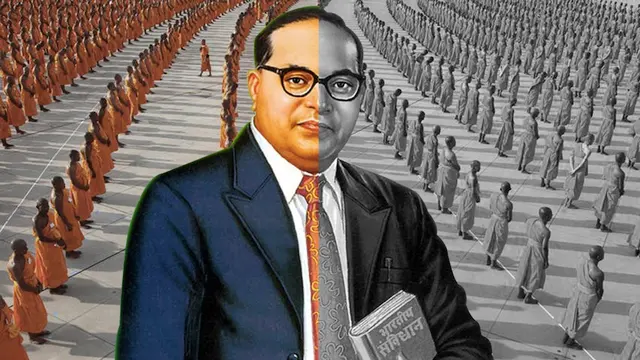
B. R. Ambedkar

Bhimrao Ramji Ambedkar was an Indian economist, politician and social reformer. He was also known as Babasaheb Ambedkar. He campaigned against social discrimination against the lower castes or Dalits of the country. Completing his doctorate from Columbia University and The London School of Economics, he gained reputation as a scholar for his research in economics, law and political science. 

In the early phases of his career, he was an economist, professor and lawyer. Towards the later phases, he was actively involved in campaigns for India’s independence. He published journals and advocated for political and social rights for Dalits. He made a significant contribution to the establishment of the state of India. He was the first Minister of Law and Justice of India and the chief architect of the Constitution of India. 

He had a Marathi family background and was from the town of Ambadawe in Ratnagiri district of modern-day Maharashtra. Ambedkar was born into a poor Mahar (Dalit caste), who were treated as untouchables and faced a lot of socio-economic discrimination. Although he attended school, Ambedkar and other untouchable children were segregated from the rest of the children and given little attention by teachers. They were not even allowed to sit inside the class. He had to sit on a gunny sack which he took home after school. When they needed to drink water, someone from a higher caste had to pour that water from a height as they were not allowed to touch the water vessel. It was usually the peon who did this for him and on days when the peon was not available, he had to go without water. He had later described this as “No peon, No water” in one of his writings.  

During British rule, Ambedkar’s effort for the political representation of the oppressed untouchables of India bore fruit in the 1920s. The colonial state was forced to include two members from among the Dalits in the Round Table Conference in 1930. This eventually led to the framing of the Government of India Act, 1935.   

From 1927, Ambedkar launched active movements against untouchability. He began public movements and marches to open up public drinking water resources for all. He led a satyagraha in Mahad to fight for the right of the untouchable community to draw water from the main water tank of the town. He also began a struggle for the right of Dalits to enter Hindu temples. In a conference in1927, Ambedkar publicly condemned the Hindu text Manusmriti (Laws of Manu), for ideologically justifying caste discrimination and “untouchability”. He ceremonially burned copies of the ancient text. On 25th December 1927, he led thousands of followers to burn copies of Manusmrti. Since then 25 December is celebrated as Manusmriti Dahan Din (Manusmriti Burning Day) by Ambedkarites and Dalits.  

In 1956, he converted to Buddhism, initiating mass conversions of Dalits which eventually led to the Dalit-Buddhist movement. 

A few days after completing his final manuscript ‘The Buddha and His Dhamma’, he died in his sleep on 6 December 1956 at his home in Delhi.  

The Casteless Collective

The Casteless Collective is a Chennai based Tamil indie band.   

The band currently consists of 19 members including Tenma (leader and music producer), singers Muthu, Bala Chandar, Isaivani, Arivu and Chellamuthu, Dharani (Dholak), Sarath (Satti), Gautham (Katta molam), Nandan (Parai and Tavil), Manu Krishnan (drums) and Sahib Singh (guitar).  

Formed in the year 2017, the band was started by Pa. Ranjith and Tamil Indie Musician and Composer, Tenma, founder of Madras Records. The band’s name originated from the phrase ‘Jaathi Illadha Tamizhargal’ which was coined by the 19th century anti caste activist C. Iyothee Thass. He was a social activist who urged Dalits across Tamil Nadu to register themselves as Tamils without caste in the first census in 1871. The band makes music to protest and rebel against the age-old caste-based discrimination and violence. Their songs are political which speaks against the inequalities of the caste system and oppression of women and minorities in Tamil Nadu.  

The leader and music producer of the band, Tenma was preparing to put together a group of indie musical artists for the Madras Indie Collective in 2017 when he got the idea from Pa. Ranjith, of training Gaana musicians for it. They prepared auditions for over 150 applicants and looked for artists who had a socio-political motivation in their lives as well as musical strengths. A mixture of Gaana, hip hop, rap and folk musicians were brought together. About 19 singers were selected for the initial ensemble.  

Jai Bhim Anthem (2018), Quota (2018), Magizhchi (2018), Vada Chennai (2018), Thalaiva (2019), Dabba Dabba (2019) are popular singles of the band.  

It has broken caste boundaries by engaging with the current social and political issue in the state. Instead of making music for entertainment alone the band has tried to eradicate discrimination through its music. Their main intention is “to create political awareness through music and art” because “art which makes us question discomfort is beautiful”. The band is a collective without caste which aims to eradicate caste based and religious discrimination through music.  

The Casteless Collective had their very first concert on January 2018 in Chennai. It was their first performance in front of more than 4000 people. The 19 members including one female artist, all dressed in identical grey suits gave a wonderful performance. Their cries of “Jai Bhim!” would be greeted with thunderous applause. They did not expect such a big entusiastic crowd and it was a very emotional experience for all of them. This was also because most of the artists came from small backgrounds and they had mostly performed in one or two funeral processions. The instumentalists who played katte and chatti were really overwhelmed as these instuments were restricted to only funeral events. 

It was not a concert that had people head-banging or jumping to the beat of drums. Instead, the audience listened to the songs with rapt attention. They broke into applause and shouts of agreement whenever the lyrics hit home. The Bhim Rap, a song on BR Ambedkar’s life and work, was met with a very enthusiastic reception. So was the rap song that condemned honour killings in the name of caste pride which was a major social evil in Tamil Nadu. Another popular track, Madrasin Magizhchi, spoke about the small joys of living in Madras, despite being poor.  

They say that people often ask them about the song lyrics and the stories about their experiences, so a discussion has begun. The band believes that social problems cannot be solved unless it is spoken about. Without discussions around caste-based discrimination one cannot attempt to eradicate the social evil. Their songs have already fulfilled their aim and created a stir among people. We hope that the band achieves greater heights and reaches out to everyone out there who has been a victim of caste discrimination and that it becomes successful in eradicating the malpractices of the system.  

India’s Caste Based Reservation, is it actually helping Indians?

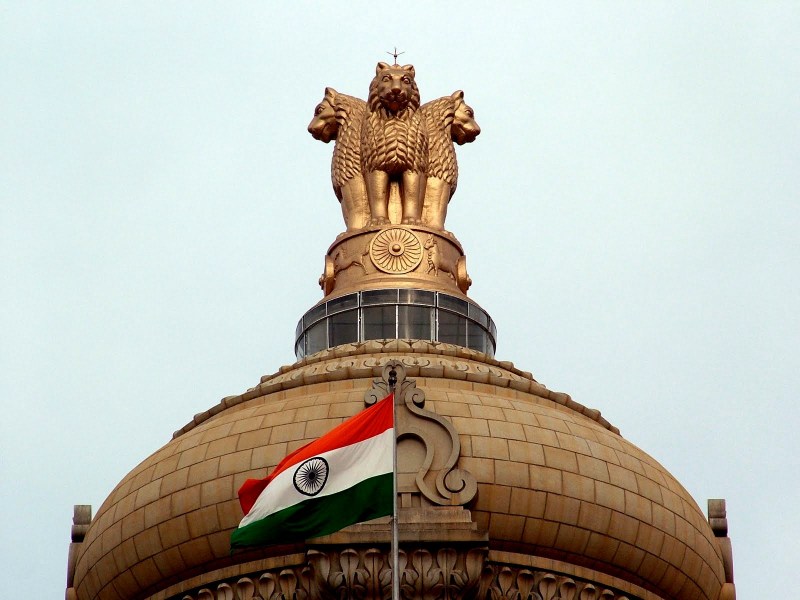
The national emblem of the Republic of India

Does caste based reservation in India violates the constitutional and fundamental right of equality?

This is an obvious question that arises whenever we think of caste based reservation in India. Whether we agree or disagree, truth cannot be denied that reservations had slowed the progress of India and its people. Obviously the implementation of reservation act in the early 1950’s was to uplift the suppressed castes of India and it was indeed for a Nobel cause, in the end India’s citizens should be called as just Indians. This is what constitution refers to when it starts with ‘we the people of India’, isn’t it?

Was it just India having caste based discrimination among people of society? Actually it’s not the case. There have been so many countries facing this issue among its society, where people terribly discriminate towards a certain group of community.

Discrimination is in the genes of Humans, specifically on the grounds of superior and inferior. In today’s modernization this isn’t required when already there have been a class of rich and poor, we need no more classes of people. With distinctive efforts worldwide, many countries could stop it, close to zero. But India as nation couldn’t stop it, people tend to discriminate and when certain group or family of people are classified as lower class, the things start getting difficult. The plan India took to solve this issue, doesn’t seem to be helping. In the past seven decades of Independent India all it did was increasing the gap between general caste (termed as upper) and the reserved castes of Dalits, SC,ST and OBCs. With certain strict implementation of reservations in schools, government colleges, Jobs and promotions too and all this with no economic status consideration leads to divided society of India. The poor dalits who sincerely need these reservations would rarely get these benefits when rich and already uplifted dalits/SCs/STs get them. The Honourable supreme court of India had time to time stated and also ruled the decision to implement creamy layer concept in the reservations for the SCs and ST (acronym for Scheduled castes and scheduled tribes of India). The creamy layer in relation to reservations means if certain community who enjoys the benefit of reservations would not get these benefits, if crossed a certain limit of annual income. Reserved communities falling below that specified annual income fall into non-creamy layer. This concept is already implemented for OBC (other backward castes) reservations in India.

Discrimination in other countries

United States of America (USA)

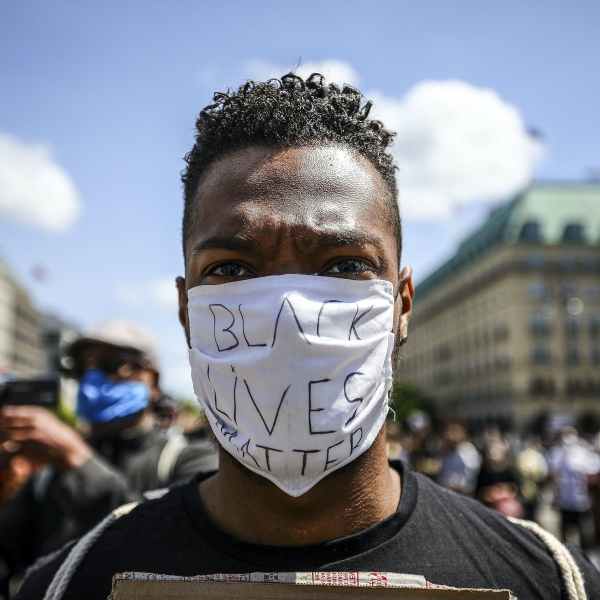
Protester during the protest for George Floyd’s Murder by US Police

Discrimination of race among:

  • Black & White
  • Native Americans (Tribal Americans) and Modern Americans (British descended)

Racism in the United States has existed since the colonial era, and involved laws, practices and action that discriminated or otherwise adversely impacted various groups based on their race or ethnicity, while most white Americans enjoyed legally or socially sanctioned privileges and rights which were denied to other races and communities of African Americans.

The recent killing of Black American namely George Floyd by the US state police is a pure example of still existing racial discrimination in USA.

Japan

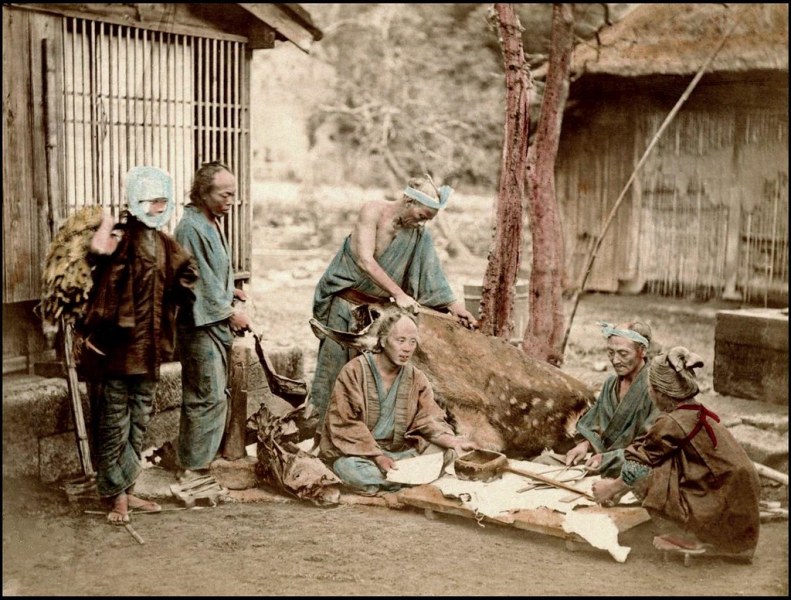
The untouchable of Japan, Burakumin caste

The Burakumin caste in japan faces huge amount of discrimination, even in today’s extremely modernised Japan. The Burakumin (from the words buraku, meaning community or hamlet and min, meaning people) are not an ethnic minority, but rather a caste- or descent-based group. They therefore share with other Japanese the same language, religion, customs and physical appearances.

Burakumin caste originates from a now-defunct caste system that existed in the Edo Period (1603-1867). At the bottom of the hierarchy was a cohort of outcasts consigned to jobs stigmatized by death, such as executions or animal slaughter. Hence their derogatory class categories, including eta (filthy mass) or hinin (nonhuman). The burakumin are the modern-day descendants of these feudal age pariahs.

The caste system came to an end in tandem with Japan’s breakneck shift to modernization at the outset of the Meiji Era (1868-1912), with the government ostensibly declaring the outcasts “emancipated” in 1871.

But the burakumin remained largely segregated from society and stuck in ghettos. Even today, discrimination against people from these hamlets, or buraku, runs deep, activists say, despite efforts by the government in the late 1990s to encourage their assimilation into mainstream society.

What could be the possible solution?

Providing special reservations and status above than the general segment of the society could work for uplifting the supressed communities but it’s definitely not an ideal solution. This would never help in bridging the gaps among different segments of society. This is how caste based reservation in India was initially implemented and the founder of Indian constitution B.R. Ambedkar himself said that this reservation system should be abrogated in few years. Unfortunately, this could never happen due to deeply engraved caste and religion based politics of India. Governments one after another could not dare to upset certain parts of society and used them as their vote banks. In return to continuous renewing of reservation duration (set for 10 years in the Indian constitution), governments in India formed NO effective policies which could actually solve India’s poverty crisis and kept on getting votes just by luring people of India by reservations. In reality, reservations are hollowing India’s strength and calibre, reducing technological advancements and increasing India’s dependency over rest of the world.

In many developed nations reservations were implemented in a manner that it expired on its own. One such example is by providing reservations only on the basis of financial income and if provided towards a certain community, it should be for only one generation because it is obvious and natural to understand that if one generation is uplifted then their next generation would get all the benefits of early education and other privileges to sustain an earnings or to get a job on their own.