Surprising Arrival of UFO’s : Super Exclusive >>>>>>>>>>

YouTube has become a video repository for UFO videos, collections of images edited as videos showing inexplicable discoveries on both the Moon, Mars and other places in the solar system.

The video-uploading Social Network has quickly lost control of what is posted on the site as hundreds of thousands of people record and upload videos of strange events they say are proof of aliens and UFOS.

Regrettably, while there may be quite a few videos which are actually the real deal and offer proof of the existence of UFOs, there is a huge amount of fake videos posted on YouTube, most of them being the product of Computer Generated images (CGI).
Credit : Third Party Reference

Now a new video uploaded to YouTube has made headlines around the world after a man from Mexico called Diego Alves uploaded a very peculiar clip on his YouTube channel. Since then, it has gained much popularity and has been reposted to several other YouTube accounts.

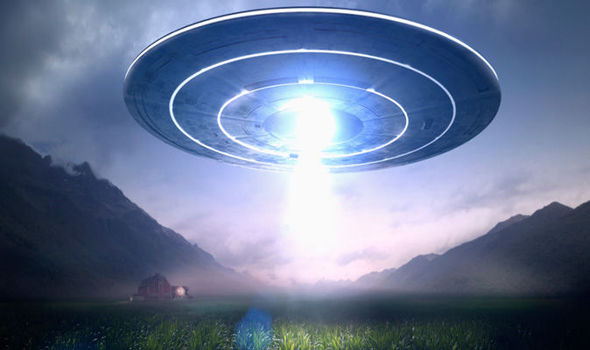
The ‘controversial video’ seems to show what everyone wants to see: A UFO taking off from the Moon, and shooting into space.

It must be the real deal, right?

Users rushed to comment on the video: “That UFO looks like it’s coming from a hole out of the moon. This is a great video.”

And another added: “Something is Coming, I can feel it.”

A third comment claimed: “That is the best UFO footage I have ever seen.

But hold your horses, not all is as it appears.

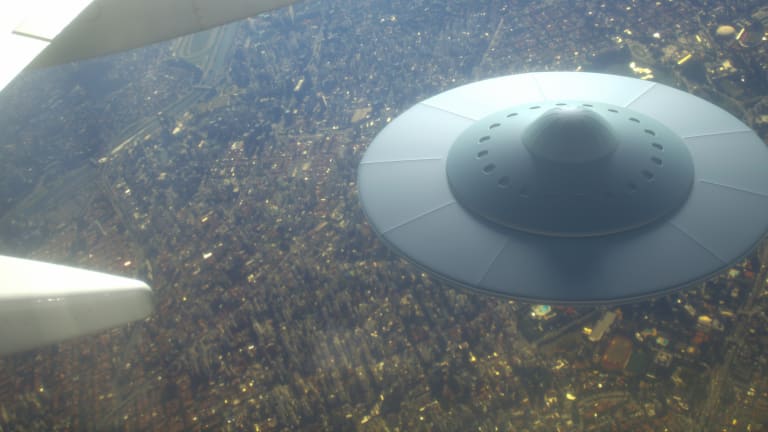
UFO debunkers quickly spotted that Mr. Aviles’ Facebook page was filled with CGI content (very talented he is) and that he was a graphic artist who has made a host of stunning CGI videos.

While the video may be undoubtedly awesome, and while it appears to clearly show a mystery object shooting off from the surface of the moon at great speed, the truth is that the man who uploaded the Video, Diego Aviles is a graphic artist who has made a host of stunning CGI videos.
Credit : Third Party Reference

The video is a product of two parts: the moon filmed from a telescope and a small object that was added afterward making it appear as if it was taking off from the moon, and shooting into outer space.

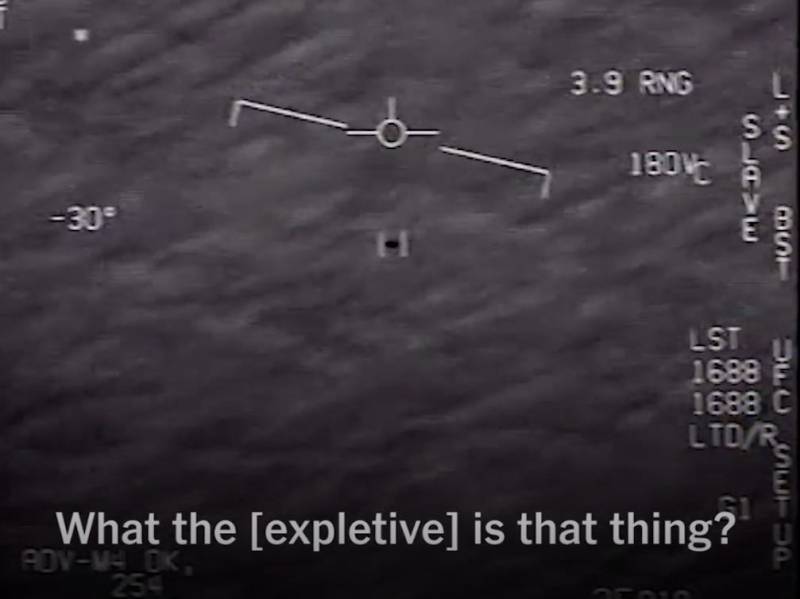
Earth’s moon is a mysterious place. Yes, and there are many things on the surface which are hard to explain. Dr. Robert Jastrow, the first president of NASA’s Commission of Lunar Exploration called the moon “the Rosetta Stone of the planets.” And yes, there are several theories that suggest the moon is both a massive alien base or has numerous bases on its surface whose origin remains a mystery.
Credit : Third Party Reference

In July of 1970, two Russian scientists, Mikhail Vasin and Alexander Shcherbakov, published an article in the Soviet journal Sputnik called “Is the Moon the Creation of Alien Intelligence?” The theory proposed by the two experts offers arguments that would explain the countless e

The Russian scientific duo proposed the theory that Earth’s Moon is not a natural satellite, but a planetoid that was literally hollowed out eons ago in the far reaches of the universe by super advanced intelligent beings possessing a technology far superior to ours, even today.

Anyhow, while there are numerous interesting theories worth pursuing in terms of Aliens and UFO’s, videos like the one uploaded to Mr. Avila’s YouTube channel damage serious UFO investigations.

Reference- https://divyanshspacetech.wordpress.com

Finding of 100 Earth Like Exoplanet : Kepler K2 Mission Super Exclusive

The largest haul of confirmed planets obtained since the space observatory transitioned to a different mode of observing includes a planetary system comprising four promising planets that could be rocky.

UNIVERSITY OF ARIZONA

An international team of astronomers led by the University of Arizona has discovered and confirmed a treasure trove of new worlds using NASA’s Kepler spacecraft on its K2 mission. Among the findings tallying 197 initial planet candidates, scientists have confirmed 104 planets outside our solar system. Among the confirmed is a planetary system comprising four promising planets that could be rocky.

The planets, all between 20 and 50 percent larger than Earth by diameter, are orbiting the M dwarf star K2-72, found 181 light years away in the direction of the Aquarius constellation. The star is less than half the size of the sun and less bright. The planets’ orbital periods range from five and a half to 24 days, and two of them may experience irradiation levels from their star comparable to those on Earth.

Credit : Third Party Reference

Despite their tight orbits — closer than Mercury’s orbit around the sun — the possibility that life could arise on a planet around such a star cannot be ruled out, according to lead author Ian Crossfield, a Sagan Fellow at the University of Arizona’s Lunar and Planetary Laboratory.

The researchers achieved this extraordinary “roundup” of exoplanets by combining data with follow-up observations by earth-based telescopes including the North Gemini telescope and the W. M. Keck Observatory in Hawaii, the Automated Planet Finder of the University of California Observatories, and the Large Binocular Telescope operated by the University of Arizona. The discoveries are published online in the Astrophysical Journal Supplement Series.

Both Kepler and its K2 mission discover new planets by measuring the subtle dip in a star’s brightness caused by a planet passing in front of its star. In its initial mission, Kepler surveyed just one patch of sky in the northern hemisphere, measuring the frequency of planets whose size and temperature might be similar to Earth orbiting stars similar to our sun. In the spacecraft’s extended mission in 2013, it lost its ability to precisely stare at its original target area, but a brilliant fix created a second life for the telescope that is proving scientifically fruitful.

After the fix, Kepler started its K2 mission, which has provided an ecliptic field of view with greater opportunities for Earth-based observatories in both the northern and southern hemispheres. Additionally, the K2 mission is entirely community-driven with all targets proposed for by the scientific community.

Credit : Third Party Reference

Because it covers more of the sky, the K2 mission is capable of observing a larger fraction of cooler, smaller, red-dwarf type stars, and because such stars are much more common in the Milky Way than sun-like stars, nearby stars will predominantly be red dwarfs.

“An analogy would be to say that Kepler performed a demographic study, while the K2 mission focuses on the bright and nearby stars with different types of planets,” said Ian Crossfield. “The K2 mission allows us to increase the number of small, red stars by a factor of 20, significantly increasing the number of astronomical ‘movie stars’ that make the best systems for further study.”

To validate candidate planets identified by K2, the researchers obtained high-resolution images of the planet-hosting stars as well as high-resolution optical spectroscopy data. By dispersing the starlight as through a prism, the spectrographs allowed the researchers to infer the physical properties of a star — such as mass, radius and temperature — from which the properties of any planets orbiting it can be inferred.

Credit : Third Party Reference

These observations represent a natural stepping stone from the K2 mission to NASA’s other upcoming exoplanet missions such as the Transiting Exoplanet Survey Satellite and James Webb Space Telescope.

“This bountiful list of validated exoplanets from the K2 mission highlights the fact that the targeted examination of bright stars and nearby stars along the ecliptic is providing many interesting new planets,” said Steve Howell, project scientist for Kepler and K2 at NASA’s Ames Research Center in Moffett Field, California.

“This allows the astronomical community ease of follow-up and characterization, and picks out a few gems for first study by the James Webb Space Telescope, which could perhaps provide information about their atmospheres.”

Reference – https://divyanshspacetech.wordpress.com

Big Surprising News: Planet Nine does exist in our Solar System …///

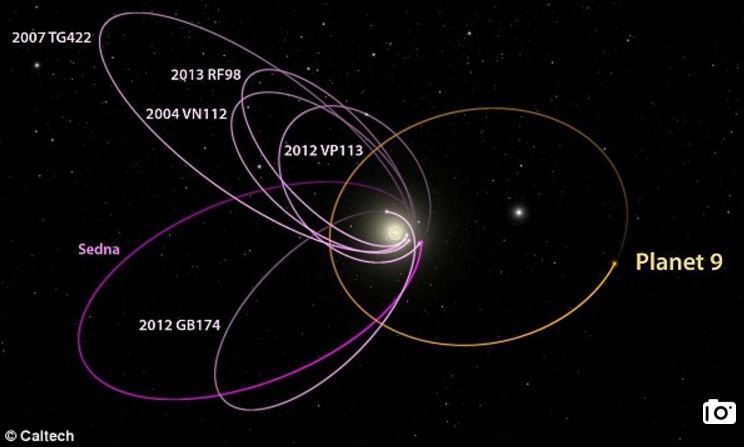
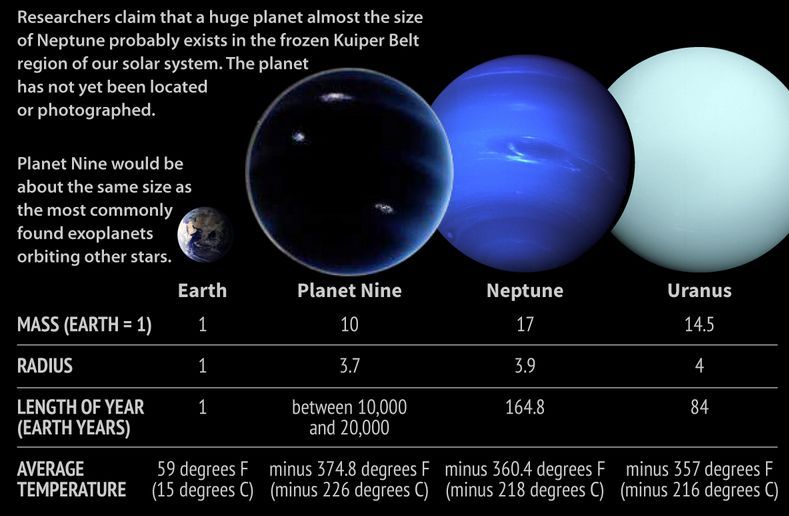
Two recent studies have shown that the existence of a mysterious, hypothetical Planet Nine could explain why the planets in our Solar System don’t fully line up with the Sun. Researchers have been speculating about a ninth planet since January this year, and these latest studies add more weight to the hypothesis that, at some point in time at least, there was an extra planet orbiting our Sun.

In fact, if Planet Nine does exist (or did), it would help to explain something that scientists have puzzled over for decades – why the Solar System is tilted.

Credit : Third Party Reference

What does that mean? 

Well, basically, all of the prime 8 planets that orbit our Sun do so on the same plane, making the Solar System look like a disc. The problem is that the Sun spins at a different angle, with its axis roughly 6 degrees off from the rest of the planets.

In the past, researchers have attempted to explain this slant by blaming the temporal tug of passing star or interactions between the Sun’s magnetic field and the disc of the dust that formed an our planets. But none of these hypotheses have fully accounted for the misalignment.

“Using an analytic model for secular interactions between Planet Nine and the remaining giant planets, here we show that a planet with similar parameters can naturally generate the observed obliquity as well as the specific pole position of the sun’s spin axis, from a nearly aligned initial state,” the team states.

“Thus, Planet Nine offers a testable explanation for the otherwise mysterious spin-orbit misalignment of the solar system.”

Credit: Third Party Reference

In the French study, conducted by astronomers at the Côte d’Azur Observatory in Nice, the team suggests that Planet Nine’s tilt is likely to blame for this misalignment, rather than its mass.

According to the researchers, while mass is often used to explain why objects in space influence one another – and that’s what the Caltech team looked into – in this case, it would mean that Jupiter – the juggernaut of our Solar System – could have caused the tilt, which it didn’t.

Instead, their models showed that Planet Nine’s tilt could have skewed everything else – coming to the same conclusion as the Caltech researchers. Combined, the results of both the studies add a significant amount of evidence that Planet Nine exists, though not enough to actually prove it.

Instead, the studies seem to say that something influenced the early Solar System and made the mysterious 6-degree tilt – and Planet Nine fits the profile.

Credit: Third Party Reference

While Planet Nine will stay hypothetical until researchers manage to actually find it in the night sky, it’s not stopping researchers from piling up evidence of its existence. For example, revert in April, a team started devising a way to spot the planet using black-body radiation, which basically scans the sky for hotspots that could be planets cooling down.

These latest results haven’t been peer-reviewed as yet, so we need to take them with a grain of salt for now. While the debate over Planet Nine will likely continue well into the future, it’s exciting to see that it fits into models explaining why our Solar System is the way it is.

Reference- divyanshspacetech.wordpress.com

We are not lonely in the Universe : CETI World Exclusive Report >>>>>>

We are alone in the Universe ! It’s one of the biggest questions that haunts our imaginations. Astrobiologist Adam Frank argues in his new book “Light of the Stars” that we have never been in a better position to answer that question, thanks to a revolution in our knowledge gained by powerful telescopes like Hubble and space probes like Voyager. Indeed, the chances that there has never been another civilization in the universe are as low as one in ten billion trillion. But whether there is still one out there today is a more complicated question.

Your book centers on a relatively new field of study known as Astrobiology, which you call revolutionary. Explain what it means and why it is giving us new insights into our place in the universe.

Astrobiology is the study of life in its planetary or astronomical context. People will say we have only one example of life—here on Earth. But, if you take that position, you miss three revolutions that have happened in the last 30 years.

The first revolution is that we have been visiting other planets in our solar system. We have now sent probes to pretty much every kind of object in our solar system, including Mars. And from this we’ve learned about climate and how planets work in a generic sense. There’s an app you can pull up that will give you the weather on the Mars. We have climate models for Mars, Venus, and Saturn, and we know a huge amount about climate as a generic planetary phenomenon, not just on Earth.

Credit: Third Party Reference

The second revolution is studying the Earth’s history going back 4.5 billion years. We have been able to unspool in some detail the long history of the Earth and its life co-evolving over that time. We see that Earth has been many different kinds of planets, sometimes a snowball world, sometimes a hothouse world without ice. In the beginning there were no continents; it was pretty much a water world.

The last big revolution is the  revolution. When I was a school student in 2006, I did not know whether there were any stars in the universe with planets around them. Now we know that the universe has ten billion trillion planets that are in the right place for life to form. Those three revolutions completely changed not only how we think about life and planets, but also leads us to think very differently about exo-civilizations.

There are two possibilities, we are either alone in the universe or we are not. Both of these are equally terrifying.” Arthur C Clarke.

Workers in the search for extraterrestrial intelligence (SETI) would have needed more than a little luck in the first 45 years of the modern hunt for like-minded colleagues out there. Radio astronomer Frank Drake’s landmark Project Ozma was certainly a triumph of hope over daunting odds. In 1960, Drake pointed a 26-meter radio telescope dish in Green Bank, West Virginia, at two stars for a few days each. Given the vacuum-tube technology of the time, he could scan across 0.4 megahertz of the microwave spectrum one channel at a time.

Credit: Third Party Reference

Almost 45 years later, the SETI Institute in Mountain View, California, completed its 10-year-long Project Phoenix. Often using the 350-meter antenna at Arecibo, Puerto Rico, Phoenix researchers searched 710 star systems at 28 million channels simultaneously across an 1800-megahertz range. All in all, the Phoenix search was 100 trillion times more effective than Ozma was.

If Other beings live out there, if we’re to find them, we must do so before one or either of us is expired by the universe.” ~ Simon Farnell

Time as I have said before is such a relative thing, based on what we can perceive and measure with our minds. If we imagine the universe as a giant entity existing in its place we can maybe imagine that our existence is a fleeting and insignificant thing, a moment of time too short to measure and other races that may or may not exist will also be a similar fleeting moment.

Reference- divyanspacetech.wordpress.com and nationalgeographic.com