THE TOP 6 COMPANIES WITH THE BEST CSR REPUTATION

By: Moksha Grover

Image credit: Relocation Africa Group

WHAT IS CORPORATE SOCIAL RESPONSIBILITY (CSR)?

Its been six years of the advent of the Companies Act, of 2013 that obligated companies to contribute over a specific size and profitability, a portion of their profits or benefits towards societal development, discourses about corporate social responsibility, or CSR, is all over the place. There have been workshops, seminars, meetings, newspaper articles, and award distribution ceremonies galore on the matter.  Today, CSR has become an important aspect for all companies in contributing towards both, society as well as increasing the brand value reputation of the companies. As corporate social responsibility (CSR) is not compulsory, many companies might not prioritize it or engage in it. However, there are many companies ranging from middle-class companies to highly valued companies who have contributed a lot to CSR and continue to contribute, knowing its importance. The top 6 companies with the best CSR reputation are:

INFOSYS LIMITED

Image credit: Alamy

Infosys Limited is ranked as the top company in India, contributing the most towards CSR. Being an early adopter of corporate social responsibility (CSR) initiatives, its contributions to the environment and society have been key factors in the holistic growth of its business.

The company spent nearly Rs. 360 crores on various CSR schemes in the financial year 2019-20[1]. It has contributed to many covid relief works and among its main CSR initiatives in the financial year, 2019-20 were a 100-bed quarantine set up in Bengaluru in partnership with Narayana Health City, and another one which had 182 beds for COVID-19 patients for Bowring and Lady Curzon Medical College & Research Institute[2]. This company has also established the Infosys foundation— a nonprofit nodal body aimed at contributing toward community and society development and betterment and also fulfilling its CSR commitments. Infosys Foundation has worked with many non-government organizations for implementing its projects. Highlights of the Foundation’s interventions in the past include the introduction of Aarohan Social Innovation Awards, restoration of water bodies in Karnataka, enabling the pursuit of access and excellence in sports through the GoSports Foundation, and disaster relief efforts in Tamil Nadu, Karnataka, and Kerala[3].
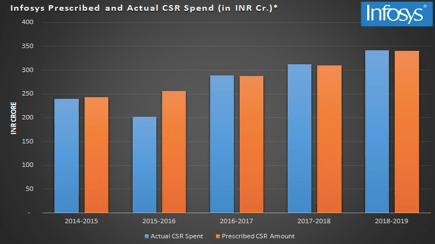
Image credit: The CSR journal

The above graph shows CSR spending of Infosys Ltd. in the last 5 years[4]

ROLEX WATCH CO. LTD.

Image credit: prezi.com

Rolex has been on the top 10 list of the most reputable companies in the world for four consecutive years. Rolex’s success is attributed to the authenticity and longevity of its charity work. By investing in and committing to long-term social enterprise projects, Rolex has an impressive record of over forty years of philanthropic work[5]. The Rolex Awards for Enterprise which were established to commemorate the 50th anniversary of the Oyster Chronometer is a great example of CSR activity carried out by the company. All the individuals who demonstrate leadership and entrepreneurialism in the areas of technology, applied sciences, and the environment are presented with these awards. Since the inception of the Awards, 33,000 people from over 190 countries have applied, and 140 laureates have been selected[6]. These laureates have worked on projects benefitting millions of people in 60 countries across the globe[7]. Several initiatives under the Rolex Perpetual Planet have been taken up for upgrading our environment. These include watching over the Earth’s blue heart, Heroes of the Oceans, and Paula Kahumbu: defending rights for elephants.

MAHINDRA AND MAHINDRA LTD.

Image credit: Avinash Chandra

Mahindra and Mahindra ltd. is known for its contributions to climate change and sustainable business practices. The company spent INR 93.50 crores on CSR initiatives during the financial year 2018-19[8]. The biggest CSR project for educating girls in India known as Nanhi Kali was conducted by Mr. Mahindra. This project provides free education to girls, who belong to low-income backgrounds and also empowers their families. The group works closely with non-profits like Naandi Foundation, which feeds over 1.3 million government school children every[9]. This project also encourages environment-friendly farming practices by working with many small farmers. Mahindra and Mahindra Ltd. has also won the award for India’s best CSR project in the Environment and Sustainability category for its green initiative of project Hariyali, which aims at planting 1 million trees on India’s green cover every year. In the financial year 2019-20, Mahindra & Mahindra planted 1.32 million trees, taking the total tally to 17.93 million trees[10]. Of these, 10.78 million trees have been planted in the Araku Valley, which besides greening the environment, also provides livelihood support to tribal farmers growing coffee in the region[11]. The company’s other CSR projects include Mahindra Pride schools: a unique 90-day livelihood training program for youths from socially and financially disadvantaged communities, Integrated Watershed Management Programme, saving a life with safer roads, employee social options, and covid-19 releif[12].
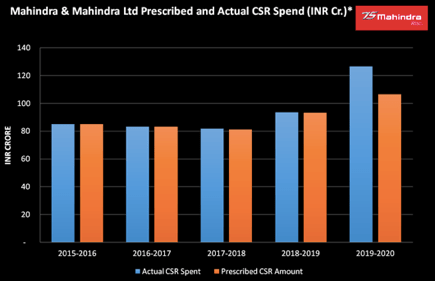
Image credit: The CSR Journal

The above graph shows the CSR Spends of Mahindra and Mahindra Limited for the last five years.

WALT DISNEY COMPANY

Image credit: Money Inc

Considering the Walt Disney company CSR report, it can be said that it is well organized, and consistent, and is in connection with the global reporting initiative (GRI) too.  The company has contributed a lot towards renewable energy, workforce investment, community engagement, charitable giving, and diversity and inclusion. In the financial year of 2019-20, Disney brought online a massive 270-acre, 50+-megawatt solar facility onsite in Orlando, in collaboration with the Reedy Creek Improvement District and Origis Energy USA[13]. The facility generates enough power from the sun to operate two of the four theme parks at Walt Disney World annually[14]. This, along with other initiatives, helped to reduce the net emissions by 47% in FY19 from 2012 levels[15].

Disney has also donated a lot towards workforce investment, supporting the long-term career goals of its employees through education.

The company is investing $150 million over the first five years to cover 100% of employee tuition, books, and education fees[16].

Disney also gave $338.2 million in cash and in-kind donations to non-profit organizations that bring comfort, inspiration, and opportunity to kids, families, and communities around the world[17].
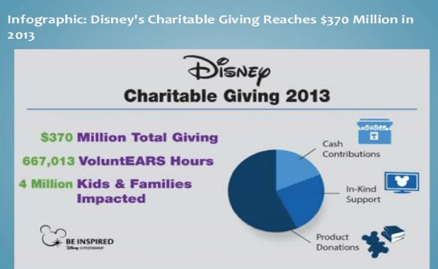
Image credit: Slideshare

COCA- COLA COMPANY

Image credit: India Frontline

Coca-Cola aims to create a sustainable and better future. For this, they follow various activities like Focusing on a World Without Waste, Maximising water conservation, reducing carbon footprint, etc.

In addition to this, all the countries where coca-cola has its market, have increased employment and helped to raise the standard of living which has, in turn, helped to strengthen the national economy.

The company has also launched its project known as the last mile, which aims to expand access to HIV and malaria medicines across Africa. The Coca-Cola Foundation recently awarded a $2 million grant to Project Last Mile—$1 million for South Africa and $1 million for additional countries across the continent—as part of the foundation’s $20 million “Stop the Spread” fund[18]. An additional $500,000 grant from The Coca-Cola Foundation has supported COVAX, a program co-led by the World Health Organization (WHO) to ensure equitable global access to COVID-19 vaccine tests and treatments in the world’s poorest countries[19].

The company also aims at making all its packaging 100% recyclable and also reduce its carbon emissions 25% by 2030 from a 2015 base year[20]
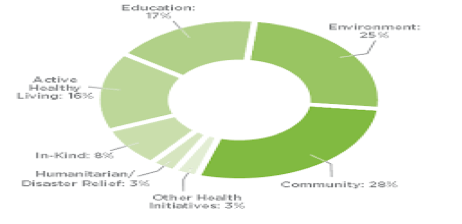
Image credit: research-methodology.net

TATA CHEMICALS LTD.

Image credit: csrbox.org

The CSR model of Tata chemicals limited is very unique. Although the prescribed CSR for 2019-2020 was 21.39 Crores, the company went on to spend 37.81 crores on community development projects[21]. Tata Chemicals spends INR 12 crores on CSR annually, and wildlife conservation accounts for 30% of the budget of the TCSRD[22]. The company has also established the Tata Chemicals society for rural development. The company’s CSR agenda also focuses on empowerment, inclusion—especially of women and socially backward communities, volunteering, technology, innovation, etc. At Okhai, the company provides sustainable livelihood to 900 rural women artisans by applying their traditional handicraft-making skills to create marketable products[23].

Blossom: Promotion and development of native handicrafts •Enhance: Overall enhancing the quality of life, Aspire: Education and vocational skill development, Conserve: Investment in Bio-diversity, natural resource, and climate change management leading to increase in environmental sustainability, Nurture: Health care, sanitary solutions, and safe drinking water are some of the other projects taken up by Tata chemicals ltd[24].
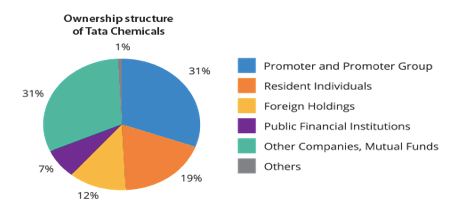
Image credit: Tata Chemicals

[1]  Kasmin Fernandes and Hency Thacker, ‘Top 100 companies in India for CSR in 2020’, The CSR Journal (November 3,2020) < https://thecsrjournal.in/top-indian-companies-for-csr-in-2020/> accessed 18th October,2021

[2] Ibid.

[3] Ibid.

[4]  Hency Thacker, ‘The Ultimate Report on CSR of Infosys Limited’, The CSR Journal (May 18,2021) < https://thecsrjournal.in/infosys-csr-report-india-2020/> accessed 18th October,2021.

[5]  GivingForce Team, ‘Rolex: CSR Business Model Analysis’, GivingForce (July 18, 2018) <https://www.givingforce.com/rolex-csr-business-model-analysis/ > accessed 18th October,2021

[6] Felix Scholz, ‘LIST: 5 times Rolex helped to make the world a better place (for more than just your wrist)’, Time Tide (September 26,2016) < https://timeandtidewatches.com/list-5-ways-rolex-helped-change-the-world/> accessed 18th October,2021.

[7] Ibid.

[8] Kasmin Fernandes and Hency Thacker (n 1)

[9] Ibid.

[10]  Hency Thacker, ‘The Complete CSR Report of Mahindra and Mahindra Limited’, The CSR Journal (January 27, 2021)< https://thecsrjournal.in/mahindra-csr-corporate-social-responsibility-activities-report/ > accessed 18th October,2021.

[11] Ibid.

[12] Ibid.

[13] ‘Disney Publishes its 2019 Corporate Responsibility Report’, The Walt Disney Company (March 12,2020)< https://thewaltdisneycompany.com/disney-publishes-its-2019-corporate-responsibility-report/ > accessed 18th October,2021.

[14] Ibid.

[15] Ibid.

[16] Ibid.

[17] Ibid.

[18] ‘Iteration, for Good: How Project Last Mile is Supporting Covid-19 vaccine distribution in Africa and Beyond’, The CocaCola Company (September 20,2021)< https://www.coca-colacompany.com/news/project-last-mile-covid-19-vaccine-distribution > accessed 18th October,2021.

[19] Ibid.

[20] ‘Sustainable Business’, The CocaCola Company <https://www.coca-colacompany.com/sustainable-business > accessed 18th October 2021

[21] Kasmin Fernandes and Hency Thacker (n 1)

[22] Ibid.

[23] Alka Talwar, ‘Championing CSR’, Tata (March,2018) < https://www.tata.com/newsroom/alka-talwar-championingcsrtatagroup#:~:text=Tata%20Chemicals%20works%20closely%20with,technology%20and%20innovation%2C%20and%20volunteering.> accessed 18th October,2021

[24] Amit Khurana, ‘India’s Top 10 Companies for CSR Initiatives in 2018’, Cross Barriers (November 8,2018)< https://crossbarriers.org/indias-top-companies-for-csr-initiatives-in-2018/ > accessed 18th October,2021.


Global Citizen Live 2021

Global Citizen Live is a charity concert organized by the Global Citizen Organization founded in 2008. It hosts an annual music festival, one of the main objectives of the event is to raise awareness of global poverty and climate change.

Broadcasting from sites on six continents, including New York’s Central Park and in front of the Eiffel Tower in Paris, Global Citizen also secured pledges from France for 60 million COVID-19 vaccine doses for developing countries and corporate pledges for planting 157 million trees around the world.

This year’s festival held across six continents, was the largest, part of global citizen’s 2021 Recovery Plan For The World Program. Added to the festival mission was an aim to help bring an end to the COVID-19 pandemic. The main focus was on equity.


Artists and politicians alike from around the world had converged for the cause of the festival. International artists like Shawn and Camilla Mendes, Ed Sheeran, Doja Cat, Billie Eilish, BTS, Metallika, Coldplay, Lizzo, One Republic, Jennifer Lopez, Paul Simon, Demi Lovato, H.E.R., among many others.

Personalities from India included Priyanka Chopra as the host. Others like Amitabh Bacchan, Anil Kapoor, Amit Trivedi, Farhan Akhtar, Badshah, Tanishk Bagchi, Ayushmann Khuranna, Dia Mirza, Hritik Roshan, Sonakshi Sinha also played their considerable part in the event.

Vaccine pledges, which also came from the governments of Croatia and Ireland, followed numerous pleas, including from Prince Harry and Meghan, the Duke and Duchess of Sussex, onstage at Central Park on Saturday afternoon.

“This year, the world is expected to produce enough doses to meet the target of vaccinating 70per cent of people in every single country,” Meghan, the Duchess of Sussex, said to cheers from the Central Park crowd. “But it is wrong that so much of the vaccine supply has only gone to just 10 wealthy nations so far, and not everyone else.”

Written by : Ananya Kaushal

CHARITY


The word ‘charity’ means generosity in giving some­thing to the needy out of loving kindness towards them; and a charitable organization is an institution with funds to help the needy.

There is a proverb: ‘Charity begins at home.’ A per­son, who is kind at heart and possesses compassion from his early days towards the weak and the needy in the society, is generally found to help and make gifts to the poor. He finds joy and satisfaction in giving alms to a beggar, or renders some financial relief to the needy persons who are near at hand.

Thus charity begins at home. In other words, it begins in the near neighborhoods of a person. One first comes forward to help his neighbors, relatives and friends in the very beginning. Afterwards, he extends his, same helping hand to the distant places, where thousands of the needy and the weak people await his help and sympathy.

There are instances in India, of great men, who gave their all to the cause of charity. One such man was Deshbandhu Chittaranjan Das, the great political leader and a renowned barrister. He donated his house, wealth and all that he had in his possession to his countrymen. In his name, hos­pitals and similar other charitable institutions are still func­tioning successfully.

The Birla’s, in India, have donated and built many chari­table institutions in India for the benefit of the common peo­ple. The dharmasalas (a guest-house where pilgrims and travelers are accommodated temporarily free of cost), the hos­pitals, the educational institutions and numerous scholar­ships for the poor but meritorious students are their generous contributions towards their countrymen.

Charity, a noble quality in man, brings welfare in the society. It enlarges human hearts and spreads the message of brotherhood and innocent love among the people.

The prac­tice of charity was adored in ancient days. The saints and the sages lived on alms offered by the affluent people. It was then an accepted practice to give whatever was possible in charity for the welfare of the people and the society.

In a family, the parents should teach their children to be compassionate towards the poor and the distressed. They themselves should practice the noble act, citing bright exam­ples before their off springs, because charity makes one glori­ous and pure at heart. Selfishness and narrow-mindedness disappear from his character. And that can make him one day really great in his life.

“Poverty is the worst form of violence”. – Mahatma Gandhi.

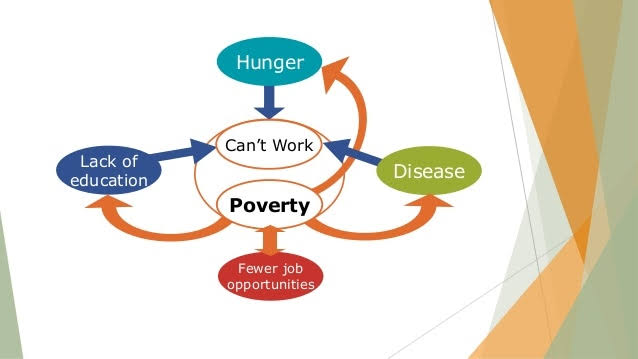
We can define poverty as the condition where the basic needs of a family, like food, shelter, clothing, and education are not fulfilled. It can lead to other problems like poor literacy, unemployment, malnutrition, etc. A poor person is not able to get education due to lack of money and therefore remains unemployed. An unemployed person is not able to buy enough & nutritious food for his family and their health decline. A weak person lacks the energy required for the job. A jobless person remains poor only. Thus we can say that poverty is the root cause of other problems.

How Poverty is Measured?

For measuring poverty United nations have devised two measures of poverty – Absolute & relative poverty. Absolute poverty is used to measure poverty in developing countries like India. Relative poverty is used to measure poverty in developed countries like the USA. In absolute poverty, a line based on the minimum level of income has been created & is called a poverty line. If per day income of a family is below this level, then it is poor or below the poverty line. If per day income of a family is above this level, then it is non-poor or above the poverty line. In India, the new poverty line is Rs 32 in rural areas and Rs 47 in urban areas.

Causes of Poverty

According to the Noble prize winner South African leader, Nelson Mandela – “Poverty is not natural, it is manmade”. The above statement is true as the causes of poverty are generally man-made. There are various causes of poverty but the most important is population. Rising population is putting the burden on the resources & budget of countries. Governments are finding difficult to provide food, shelter & employment to the rising population.

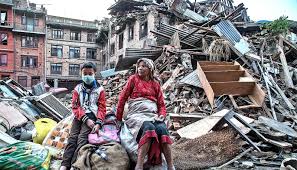
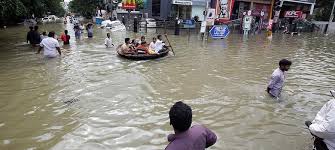
The other causes are- lack of education, war, natural disaster, lack of employment, lack of infrastructure, political instability, etc. For instance- lack of employment opportunities makes a person jobless & he is not able to earn enough to fulfill the basic necessities of his family & becomes poor. Lack of education compels a person for less paying jobs & it makes him poorer. Lack of infrastructure means there are no industries, banks, etc. in a country resulting in lack of employment opportunities. Natural disasters like flood, earthquake also contribute to poverty.

In some countries, especially African countries like Somalia, a long period of civil war has made poverty widespread. This is because all the resources & money is being spent in war instead of public welfare. Countries like India, Pakistan, Bangladesh, etc. are prone to natural disasters like cyclone, etc. These disasters occur every year causing poverty to rise.

Ill Effects of Poverty

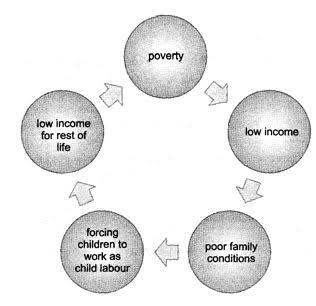
Poverty affects the life of a poor family. A poor person is not able to take proper food & nutrition &his capacity to work reduces. Reduced capacity to work further reduces his income, making him poorer. Children from poor family never get proper schooling & proper nutrition. They have to work to support their family & this destroys their childhood. Some of them may also involve in crimes like theft, murder, robbery, etc. A poor person remains uneducated & is forced to live under unhygienic conditions in slums. There are no proper sanitation & drinking water facility in slums & he falls ill often & his health deteriorates. A poor person generally dies an early death. So, all social evils are related to poverty.

Government Schemes to Remove Poverty

The government of India also took several measures to eradicate poverty from India. Some of them are – creating employment opportunities, controlling population, etc. In India, about 60% of the population is still dependent on agriculture for its livelihood. Government has taken certain measures to promote agriculture in India. The government constructed certain dams & canals in our country to provide easy availability of water for irrigation. Government has also taken steps for the cheap availability of seeds & farming equipment to promote agriculture. Government is also promoting farming of cash crops like cotton, instead of food crops. In cities, the government is promoting industrialization to create more jobs. Government has also opened ‘Ration shops’. Other measures include providing free & compulsory education for children up to 14 years of age, scholarship to deserving students from a poor background, providing subsidized houses to poor people, etc.

Poverty is a social evil, we can also contribute to control it. For example- we can simply donate old clothes to poor people, we can also sponsor the education of a poor child or we can utilize our free time by teaching poor students. Remember before wasting food, somebody is still sleeping hungry.

Overcoming poverty is not a gesture of charity. It is an act of justice.

—nelsen mandela

Charity: When It Changes From Help to Haplessness

Covid and lockdown are two major hits that the country has taken in the last half a year. And needless to say, it left the country wobbly on its knees. Everyone was affected, some more than others. Somewhere affected because of their financial status, some because of their ethnicity, some because of their profession, and some… because of their luck. Now you might ask me, why would I say so? But I have my reasons. 

I’m not someone who is on many social media platforms. Just enough to be in touch with the important people in my life. But one doesn’t have to be on all across the social web to have come across at least one picture of charity or donation. Now, many people might have this question, what’s the problem with that? Someone is doing good, so they share with the people. Cool, fair enough. But the point is not about the ones on the giving end. It’s about those  on the receiving one.

When the lockdown first started, the lives inside many houses went into mayhem. With almost no hand in cash, many people were at a loss what to do. With a lion’s share of population depending on the conventional bank and physical withdrawal system, they were stuck at a bad place when it came to financial matters. So for many people, taking the help they were extended was the only viable option. And so they did. But we as a society have a lot many flaws. One of them is looking down at those who we believe are below us. And knowing someone taking external help is a sure indicator. I remember watching a video where a middle aged man was bemoaning how just taking some ration in a donation camp, due to lack of sufficient funds at hand, left him and his family as the laughing and gossip talk of the neighbourhood. His children were asked if the man they saw on Facebook was their father. It was a very distraught experience for everyone.

No one has any rights to comment against anyone posting pictures on social media about anything they did. But people must understand, when they help someone and then post pictures with the other person, that other person gets involved, even if he/she doesn’t like to. And we don’t know what they have to face once they go back to their lives. No one should have to choose between hunger and self respect. Because nobody chooses to be in that position in the first place. Help and charity is an act for self, self satisfaction and self happiness. Not a response to prove oneself to the world. 

Problems should be known, talked about and shared. But for the sake of problems. Not for the sake of self. Not when the problem has been taken care of. If so, we need to move to the next one. We need to remember that our primary instincts have always been to help. And in the times of crisis, we need to follow that.