


Hello Reader.
Today we look back at one of the worst man made disasters of our civilization. The Chernobyl Nuclear Accident. Late 20th century, times of nuclear expansion. Soviet Union, under the leadership of General Secretary Mikhail Gorbachev, was steaming forward with their nuclear policy. Several nuclear plants were setup to harness clean energy. But several policy decisions and human elements came back to haunt mankind after the reactor 4 of the Vladimir Ilyich Lenin Nuclear Power Plant, Chernobyl, Ukraine, exploded early in the night of April 26, 1986, giving out huge quantities of radiation in the surrounding areas.
Town of Pripyat
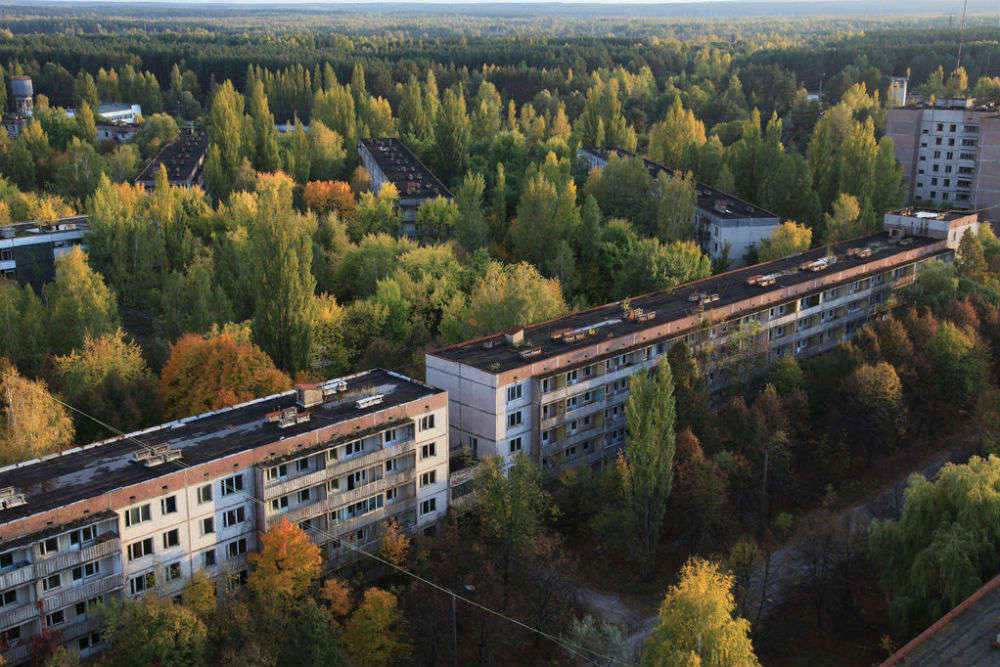
The plant was located 130 km North of Ukraine capital Kiev, near the Belarusian border. To accommodate the families of people working at the plant, a new town was built about 3 km away in 1970. They called it Pripyat. During the accident it was host to nearly 49,000 souls. The town was surrounded by woodland and was a pleasant place. There were several schools, parks, theaters, hospital. Everything a town can ask for. This was the worst affected human settlement in the accident. Everyone was forced to evacuate within three days of the accident. People were told it would be for a couple of weeks. But they never returned. Radiation level to this day remains too high for this place to be inhabited. Today this town stands covered by the woods, infested by wild animals and everything it’s inhabitants left behind, a true ghost town.
April 26, 1986
What went wrong on that fateful night? Some human error coupled with some huge design flaws of the reactor put a question mark in global nuclear safety for decades to come. Chernobyl, like most Soviet nuclear power plants back in the day, used Soviet made RBMK-1000 reactors with Uranium as it’s chief fuel. This fuel when starts reacting through fission generates huge amount of energy in form of heat. That heat is used to convert water into pressurized steam and then steam is channeled on to turbines to generate electricity. Simple. But there’s a catch. The energy rising from fission is too high if remained unchecked and this energy release is continuous as Uranium neutrons doesn’t stop reacting. So to control this high rate they had something called Control rods. These are columns made of Boron which enters the reactor and reduces this huge energy surge. So when there was too much output, you simply push the control rods in and reduce reactivity.
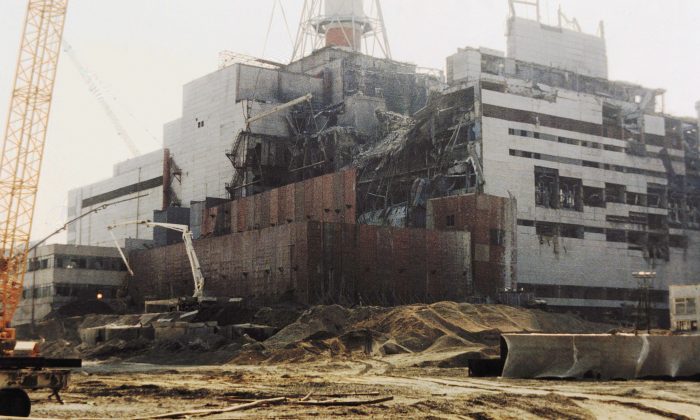
But this system had a design flaw. For a fraction of second control rods increased reactivity, instead of reducing it. They were lined with graphite as a measure to cut costs. This was not known to the operators. And on the day of accident, a test was going on to reduce the output of the reactor to see if it can still support the water pumps through turbine. The output went too low, but the management still went ahead with the test and the result was a huge surge. Seeing this, the operator decided to push the control rods to kill the reactor function, unaware of the hidden consequence. Just as he pushed the button, the reactivity skyrocketed, converting every bit of water into steam and under high pressure there was an explosion. Hydrogen was produced from the fuels reaction with the steam and another explosion blew the roof off. Oxygen from outside rushed in and several fires started. Reactor with a capacity of 3200 MW output showed a last recorded output of 12000 MW before going off. Open roof carried the radioactive vapor into the atmosphere and wind distributed it all over Europe. It was felt in far away places like Sweden and England.
Consequences

2 operators died due to the explosion. 28 others died due to radiation related causes within few weeks. Thousands were exposed to radiation. There was an instant spike in cancer rates in the areas of Ukraine and Belarus after this accident. A 30 km Chernobyl exclusion zone was declared by Soviets. Thousands had to leave never to return. State did their best to hide the actual causes and consequences. Eventually had to give in and review the safety norms. The world scientific community blamed the Soviet isolation policy of the cold war era as a catalyst for this disaster. Maybe they were right. 34 years have passed since. Life has moved on. A steel structure, called New Safe Confinement, has recently been mounted over the old sarcophagus of Reactor 4 to keep the radiation in check. But Chernobyl still stays one of the most costly and haunting tragedies of the era.
Until next time…
 Eduindex