Child Labor

Not every work done by children ought to be named child labor that will be focused on for disposal. Children’s or alternately teenagers’ investment in work that doesn’t influence their wellbeing and self-awareness or meddle with their tutoring, is by and large viewed as being a positive thing. This incorporates exercises like aiding their folks around the home, aiding a privately-owned company or bringing in pocket cash outside school hours and during school occasions. These sorts of exercises add to children’s turn of events and to the government assistance of their families; they furnish them with abilities and experience, and help to set them up to be useful citizenry during their grown-up life.

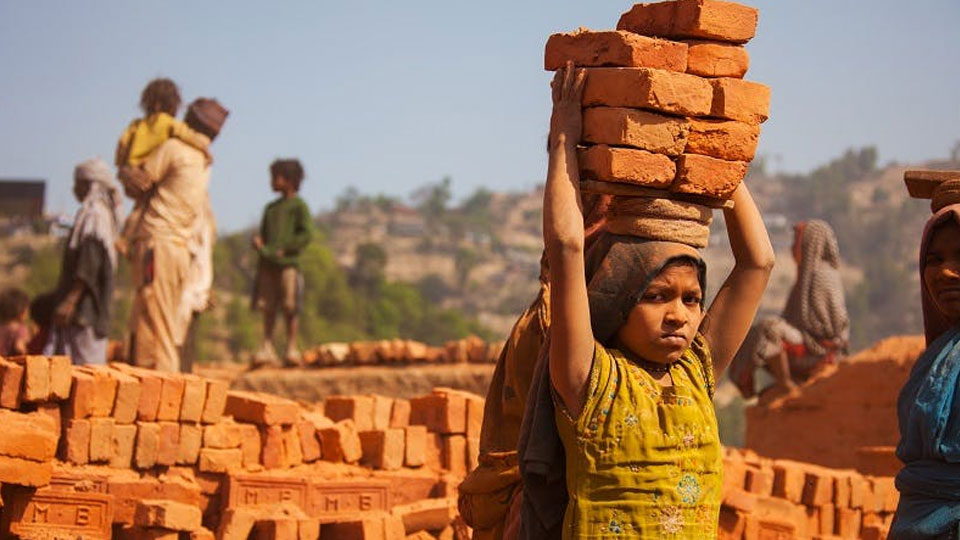
The expression “child labor” is frequently characterized as work that denies children of their childhood, their latent capacity and their pride, and that is hurtful to physical and mental turn of events. It alludes to work that is intellectually, genuinely, socially or ethically hazardous and hurtful to children; and additionally meddles with their tutoring by: denying them of the chance to go to class; obliging them to leave school rashly; or expecting them to endeavor to consolidate school participation with unnecessarily long and substantial work.

Regardless of whether specific types of “work” can be designated “child labor” relies upon the child’s age, the sort and long periods of work played out, the conditions under which it is performed and the targets sought after by singular nations. The appropriate response differs from one country to another, just as among areas inside nations.

The most recent worldwide evaluations show that the quantity of children in child labor has ascended to 160 million around the world – an increment of 8.4 million children over the most recent four years. 63 million young ladies and 97 million young men were in child labor universally toward the start of 2020, representing very nearly 1 out of 10 of all children around the world.

This report cautions that worldwide advancement to end child labor has slowed down without precedent for a very long time. The quantity of children matured 5 to 17 years in dangerous work – characterized as work that is probably going to hurt their wellbeing, security or ethics – has ascended by 6.5 million to 79 million since 2016. In sub-Saharan Africa, populace development, outrageous destitution, and insufficient social assurance measures have prompted an extra 16.6 million children in child labor in the course of recent years.

Extra financial shocks and school terminations brought about by COVID-19 imply that children effectively in child labor might be working longer hours or under deteriorating conditions, while a lot more might be constrained into the most noticeably terrible types of child labor because of work and pay misfortunes among weak families. The report cautions that universally 9 million extra children are in danger of being driven into child labor before the finish of 2022 because of the pandemic.

Children in child labor are in danger of physical and mental damage. Child labor undermines children’s schooling, confining their rights and restricting their future chances, and prompts horrendous between generational patterns of destitution and child labor.
Covid-19 Pandemic and Child Labor

There is no reason. There is no excuse. Child labor is Child abuse.-The FreshQuotes

Child labor and poverty are inevitably bound together and if you continue to use the labor of children as the treatment for the social disease of poverty, you will have both poverty and child labor to the end of time.-Grace Abbott

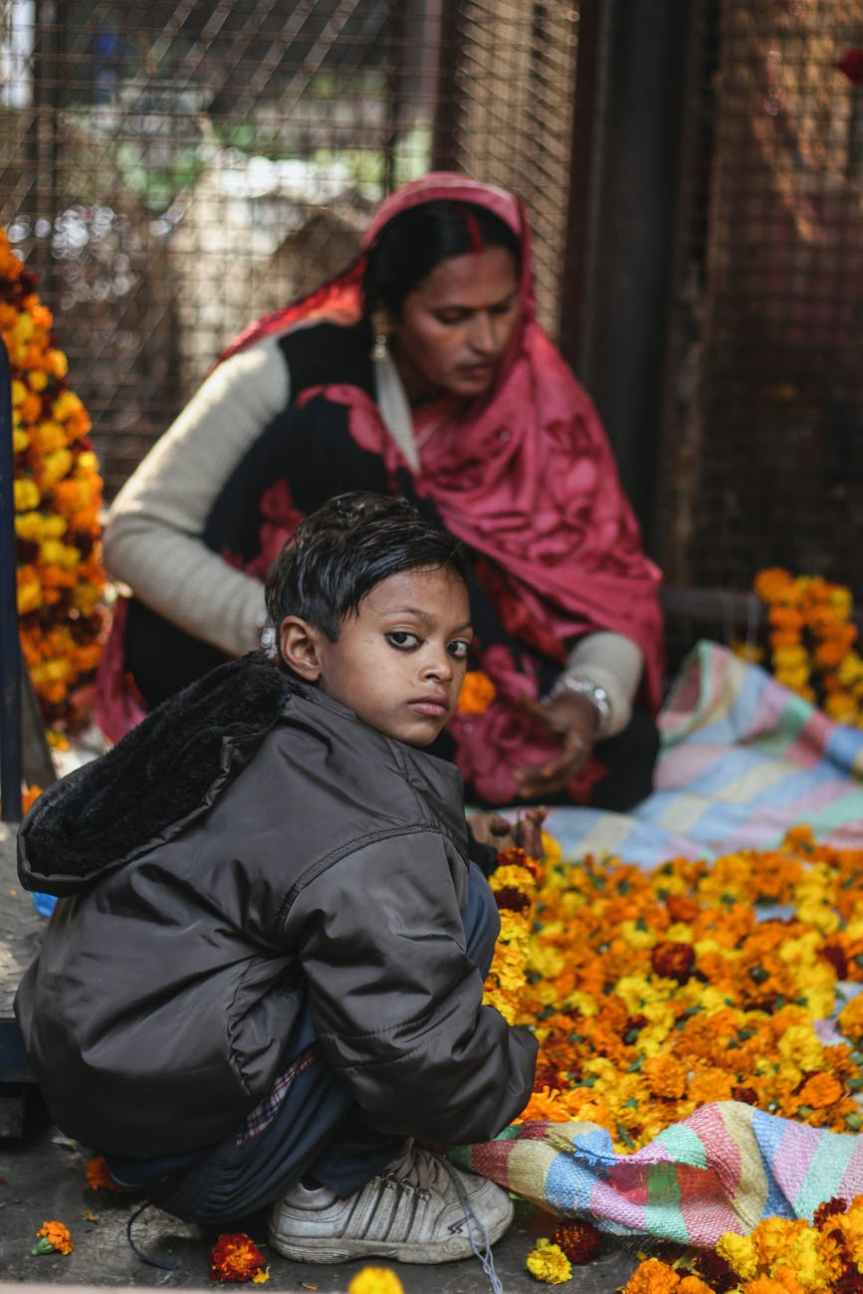
We have observed many times that at tea shops there are some children are serving tea to the customer or at different shops attending the customers. Some of you may have been served by these “workers”. This is how child labor looks like. The concern is not that children should not work at dangerous places like mines or factories but the concern is that children should not work at any places.
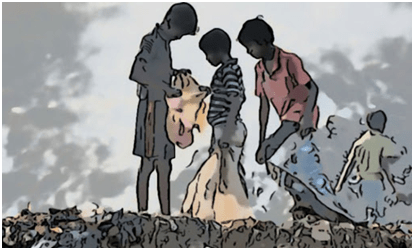
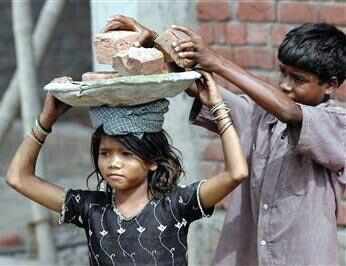
The Covid-19 pandemic led the world to economic and social crises. The most affected by these crises in society are vulnerable. As in the situation of the economic crisis in poor communities, children are at particular risk. The pandemic is forcing the children out of school and into the farms and factories to work.
Child labor has always been a matter of concern globally and the Covid-19 pandemic has worsened the situation. According to a report released by UNICEF and ILO, the progress to end the child labor has stalled for the first time in 20 years, reversing the previous downward trend that saw child labor fall by 94 million between 2000 and 2016. According to a new report by ILO and UNICEF, the number of children in child labor has risen to 160 million worldwide- an increase of 8.4 million children in the last four years- with millions more at risk due to the impacts of Covid-19.
Consequently, two waves of Covid-19 are affecting each stratum of society. The pandemic led to lockdown because of the risk to the life of people, they had to restrict their movement. Due to this many people lost their jobs especially daily wagers and laborers and this led to the economic crisis in their families. They fell into deep poverty. In a situation like this question arises to their survival and as a solution for themselves some family unwillingly sent their children to work which helps them to survive.
The risk of child labor also increased during Covid-19 because schools are closed for an indefinite period of time and it is not sure that when the schools will run offline. Due to the closing of schools children from poor communities are not able to continue their education. Lack of access to the internet and technology many children are unable to participate in self-guided learning during school closures. In India over three-fourths of children did not have access to online learning and over one-third of children did not have access to any learning material. Due to loss of learning some students may have decided to drop out of school permanently. It is always seen that children and youth not enrolled in schools are at a much bigger risk of child labor. After the reopening of schools, parents without jobs may not be able to pay for school fees, supplies, and uniforms.
According to UNICEF, more than 1.5 billion children missed their schooling due to Covid-19 restrictions, which has compelled the children to work to support their families.
In countries like India, it is very crucial to deal with child labor because “children belong to classes not workplaces”. The government needs to come with more effective programs to eradicate child labor. Coming from families with no financial resources, in this pandemic the children and their families are not left with choices. It is to be ensured that at least the affected families are provided with basic needs which will prevent their children from working. NGOs like CRY is providing children with learning material. According to the CEO of CRY in 2020, close to 4000 cases of child labor were prevented or referred to rescue and support. Organizations like these are coming forward but how many can they help? There is a need for large action to protect children from child labor. One most important thing is that mindset of people should be changed as there is a saying that “Garib ka baccha kamaega nahin to khaayega kya”. These kinds of things demotivate children and their families to stand against wrongs and accept things as their fate.
Also, the UN is planning to eradicate child labor by 2025, but the pandemic is impacting every positive step towards change.

Child Labor

The human beings between the age of 0 to 14 years are classified as children. It is the age of innocence which forms the basic foundation of a person’s character. It is in this age where the basic physical and mental structure of an individual develops and also morals like integrity, perseverance, honesty and hard work are cultivated. This age can be compared to that of a blooming bud which needs proper nourishment in the form of water , sunlight and nutrients to bloom into a beautiful big flower. Any kind of extra interference in the normal building of a human body tampers the growth and cause serious consequences for the future that is the adulthood which in turn affects the nation as a whole.

The term child labor refers to the exploitation of children by making them do any type of work that deprives them of their innocence, cause damage to their physical health, mental trauma, affects their dignity and causes any kind of moral or social harm. If in the age of learning an individual will be force to work and will be exposed to physically and morally dangerous situations or any kind of violence it will make that child to grow into an adult full of social loathe, low learning, may also make him/her abusive as the absence of proper learning and tremendous pressure tampers the brain to a great extent and that individual may not even be able to live a basic life maybe adopting the way of crime. They will have this mentality that no matter the amount of hard work which is put , the people who are born to just serve (work) can never succeed by the hook.

The United Nations Children’s Fund(UNICEF) has revealed in its report that India with its larger population has the highest number of labors under 14 years of age i.e. it has the highest number of child labors. This blog will tell you the reasons for these high numbers and the measures taken by government to prevent the exploitation of children.

Why is India leading in Child labor

According to the statistics, over 68.8% of the total Indian population is in poverty with an income of less than $2 per day (i.e. 150 rupees) per family where the number of family members can extend more than 10 too with minimum earning members. In a situation where hand to mouth existence becomes difficult, it is very obvious that people tends to increase the number of heir earning members and thus the children in the age of learning becomes the earning members. Education becomes a very high graded luxury in such cases though the government schools provide free education for children upto 14 years of age. Parents believe that the money child will earn in 8 hours which would have been spent in school will at least gather them one meal.

This is the reason the children of 7- 8 years of age are sent far away from their homes on the pretext of getting good jobs when they are in reality being pushed into trafficking. While in some cases tired of poverty, parents themselves sell their children for a small portion amount of money. The trafficked children are then brought into the “child begging industry” where one of their body part is removed and they are forced to beg money as such children evokes the emotion of pity. Organ trafficking is also a part of this big racket which leads to the early deaths in children.

Few children mostly girls are introduced into sex trafficking and as domestic maids where they encounter not only physical and sexual violence but also are starved for days with maximum labor. This is a complete violation of their innocence and dignity.

Child soldiers are another category where these children are sent to serve for money and are trained to rebel against a group of individuals or a government since their childhood days. The best example of child soldiers is the incorporation of children in the terrorist groups which inculcates the strong emotion of hate in them at such a tender age.

Further, the children are naive and can work for longer hours in a relatively low income which makes them a perfect employee for the illegal small scale industries like firecrackers, bidi making etc. It has been reported more than once of many children getting injured in the blast accidents which happens in such industries.

The illegal employment of children working in Brick kilns, minning areas , stone quarries have led to several health problems such as severe respiratory ailments, weakness, hair loss, vision loss and premature aging.

Steps taken to cease this violation

According to data from Census 2011, India was recorded to have 10.1 million (nearly 1 crore) children working as child labors out of which 5.6 million were boys and 4.4 million girls. Whereas, 152 million children works as child labors worldwide with 88 million being boys and rest 64 million being girls. This statistic shows that 1 out of every 10 children works as a child labor worldwide.

The Indian Constitution has labelled Child Labor as a criminal offence with many acts offering a minimum of 3 years of jail if a person is found guilty of child labor. Also, section 372 of IPC(1860) declares the selling of a minor for the purpose of prostitution as a non bailable offence with over 10 years of imprisonment and fine.

Further several non profit organisations are also working to rescue the children from bondages and grant them their fundamental right of Right To Education. Kailash Satyarthi, a receiver of the Nobel Peace Prize in 2014 has worked since years for the upliftment of suppressed children and to terminate child labor. His foundation The Kailash Satyarthi Children’s Foundation has rescued many children from the exploitation and continues to do so till date.

Child labor is a plague which robs the innocence and the growth from the children who are not privileged, which if not stopped from the common effort will continue to affect the future of the nation.