

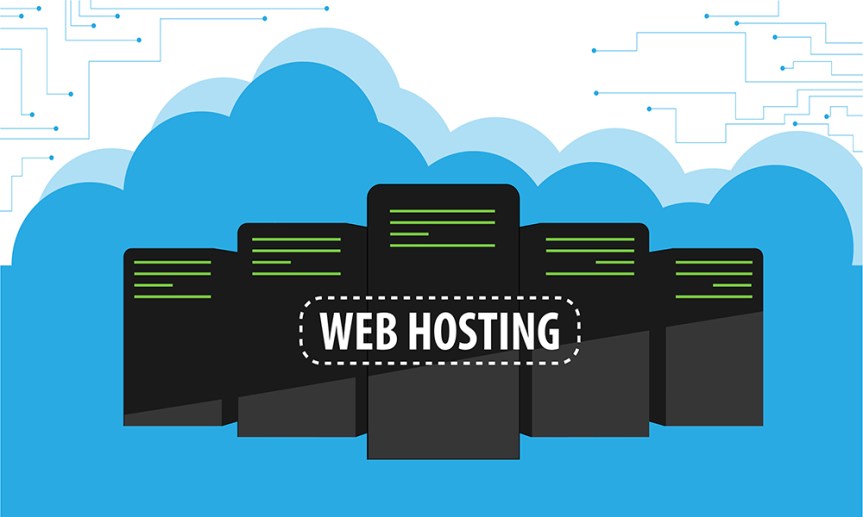
Web hosting is an
online service that makes your website’s content available to internet users.
When you purchase a hosting service, you are renting space on a real server to
store all of the website’s files and information.
Web servers provide
the tools and technology required for your website to operate efficiently and
safely. They are in charge of keeping the server operational, implementing
security measures, and ensuring that information such as text, images, and
other files are correctly transmitted to visitors’ browsers.
You will discover what
web hosting is, how it functions, and the various kinds that are offered in
this post.

How does web hosting work?
An actual computer
called a server houses your website and runs continually so that users can
access it at all times. Purchasing web hosting servers will enable you to keep
all of your website’s data on the servers of your service provider.
All the files required
to load your website will be transferred by the web host’s server once a user
types your domain name into their browser’s address bar.
You can host a website
on your own, but it takes a lot of technical know-how. Building a web server
from the bottom up, including the infrastructure, hardware, and software, is
what self-hosting entails. You will also be responsible for all ongoing
maintenance.
Your website will operate
properly and follow superior security measures thanks to a web hosting service
provider. Furthermore, it simplifies some complicated aspects of website
hosting, such as technical support and software installation.
Types of web hosting services
There are a lot of
different types of web hosting services that offer a wide variety of packages for
their customers to choose from. Depending on your requirements there is no one-stop
solution to all types of web hosting service requirements. So, carefully choosing
the best type of web hosting service to cater to your business needs is necessary
for the future growth of your business. Some of these types are:-
1) Shared Hosting:-
Shared hosting allows
multiple users to share the same server resources such as memory, processing
power, and storage space.
Because of its
simplicity and low cost, shared web hosting is an excellent choice for small
businesses and personal websites that do not require elaborate settings or
extra bandwidth. As a result, shared hosting is an excellent choice for
newcomers who seek low-cost hosting to get started.
2) Virtual Private Server (VPS) Hosting:-
This type of web
hosting involves your website sharing a physical server with other users, but
the web host divides the server into virtual partitions for each user. As a
result, each website hosted by a virtual private server receives resources.
VPS web hosting is an
ideal solution for major blogs, eCommerce stores, and medium-sized websites
that receive a high volume of visits.
3) Cloud Hosting:-
This web hosting
system hosts websites on several virtual servers. As a result, if one server
experiences heavy traffic or has a problem, the other servers will take over
and keep the website operational.
Businesses with
multiple websites and large-scale sites such as eCommerce shops may benefit the
most from cloud hosting because it relies on a cluster of web servers to
function.
4) Word Press Hosting:-
This type of CMS web
hosting service provides a server environment tailored for WordPress in order
to speed up site loading and prevent potential issues. However, websites
produced with this popular content management system can still employ a variety
of web hosting services (CMS).
The best WordPress
hosting packages often include pre-installed themes, plugins for critical
features like security and caching, and more tools.
5) Dedicated Hosting:-
Each dedicated hosting
website is assigned its own physical server. Choosing dedicated hosting allows
you to customize the server, choose your preferred software and operating
system, and tailor the entire hosting environment to your needs.
Having your own
on-site server is advantageous, but renting a dedicated server provides
experienced support from your web host. As a result, dedicated hosting is ideal
for large online firms with heavy traffic.
How to choose the best web hosting
services
There are many
different Web hosting options available from service providers, all with
different features and pricing. When purchasing, be sure to watch out for the
following:
- Any restrictions on bandwidth and traffic;
once you reach a particular volume, some web servers start charging more. - WordPress installations with one click or
a built-in website builder that make it simple for you to launch your
website rapidly. - Ample storage, especially since the large
media files occupy a lot of space. - Your website hosting plan includes email
hosting. For email hosting in general or for each individual account, many
companies charge extra. - It is a one-stop shop due to the range of
domain registration services offered. It is a headache to register your
domain with one supplier and host it with another. - Excellent customer service that is
accessible when you require it.

 Eduindex
You must be logged in to post a comment.