Northwest Technical Institute (NWTI)


History and Organizational History

Northwest Vocational Technical School (NVTS) which was established in 1975 by the General Assembly and became Northwest Technical Institute (NWTI) through legislation enacted in 1991. During the 1999 legislative session, NWTI was authorized its own individual budget status providing more local control and flexibility in the budget process. Up until this time the Arkansas Department of Education and then Career Education allocated funds to the various vocational schools statewide. Originally the level of funding was determined by achievement and performance reports submitted to the State on an annual basis and distributed to all vocational schools.

NWTI offers training and education in 9 diploma programs: Ammonia Refrigeration Maintenance Technology, Automotive Service Technology, Electronics Technology, Information Systems, Medium / Heavy Truck Technology Diesel, Industrial Maintenance Technology, Practical Nursing, Surgical Technology and Welding Technology. With certificate programs of Heating, Ventilation and Air Conditioning (HVAC), Certified Nursing Assistant (CNA) Program and Phlebotomy.  Math and Communication courses are also embedded into the required courses of each diploma program. NWTI offers several different Adult Basic Education classes and GED preparation courses through the Adult Education Center.

Plant and Location

Northwest Technical Institute is located in Springdale in Washington County, on Highway 265 in the Industrial Park area. The site consists of 38.5 acres of choice land dedicated by the Springdale Industrial Commission and gifted to the State of Arkansas to be used for a vocational-technical school. The original building of 25,000 square feet was completed in 1975. Two additional expansions to the main building of 3,000 square feet and 8,147 square feet followed. Separate expansions followed including the Adult Education/GED building of 3,100 square feet, the Diesel building of 5,600 square feet, the Automotive Service Technology building of 6,200 square feet and the Collegiate Center of 18,585 square feet. Ammonia Refrigeration Maintenance Technology has a building located on a ten-acre site that adds 9,332 square feet to the facilities. The buildings and contents have a total insured value of $16,720,779.00 and consists of 86,176 square feet of floor space, including maintenance shops, storage facilities, and mobile classrooms.

Mission Statement

“Changing lives through education, training, and skill development.”

Role

Northwest Technical Institute has developed courses and programs intended to strengthen basic, occupational, and technical skills necessary for adults to become economically self-sufficient and provide agriculture, business, health services, industry, and government with skilled employees to support their respective ventures. Most importantly, NWTI exists so individuals may attain advancement or create a better life for themselves, and in turn their families.  NWTI additionally serves the local secondary schools by offering Automotive Service Technology and Welding Technology at the main NWTI campus, Welding Technology and Automotive Service Technology at the Gravette campus, Medical Professions and Medium/Heavy Truck Technology at the Springdale School of Innovation, and Medical Professions, Certified Nursing Assistant and Dental Assisting at the Farmington campus in cooperation with NorthWest Arkansas College.

Governance

Northwest Technical Institute is a post-secondary educational institution operating under the governance of the Arkansas Department of Career Education. A five-member Board of Directors, appointed by the Governor, provides local control for the institute. In addition, an Advisory Council consisting of approximately 200 business and industry leaders from various occupational fields and levels of specialization and expertise provide curriculum oversight, needs analysis, and recommendations for modification and improvement for the diploma programs offered at NWTI. In addition, an “All School Advisory Council” required by the school’s accrediting agency brings the various program recommendations to the administration and Board of Directors for official implementation. Northwest Technical Institute is nationally accredited by the Council on Occupational Education (COE).

Central Baptist College

 About CBC


Thank you for taking a few minutes to learn more about Central Baptist College. To go deeper we invite you to explore all the pages in the menu to find out why CBC is a great college choice. If you’d like more information about attending Central Baptist College, explore CBC Admissions for more information and we will be happy to assist you. We also invite you to explore our Campus & City Guide to see how we fit into our great city of Conway, AR.

Enrollment

Central Baptist College posted a student population of 674 for the Fall of 2019. CBC’s PACE Program serves adult students with in-class, Online & Hybrid degree options.

Ownership

Central Baptist College is owned and operated by the Baptist Missionary Association of Arkansas.

Non-Discrimination Statement

Central Baptist College does not discriminate on the basis of race, color, national origin, sex, disability, or age in its programs, activities, or hiring process. Inquires regarding the non-discrimination policy should be directed to: Mechelle Cargile, Director of Human Resources, Human Resources Department, Watkins Academic Building, 1501 College Ave., Conway, AR 72034; (501) 205-8813

Location

Central Baptist College is located in Conway, Arkansas. The city of Conway lies in the center of the state and has a population of 63,000, and Faulkner County has a population of 118,000. We are fortunate to be located in one of the most progressive and fastest growing cities in the state.

Conway is centrally located in the state and situated only thirty miles from Little Rock, the capital of Arkansas, which brings metropolitan advantages. However, despite the closeness to a large, urban city, Conway still maintains the friendliness and security of a small town.

Conway is home to two colleges and a university, a thriving business community, scenic lakes and parks, and a vibrant community with endless opportunites for culture, recreation and shopping. Conway has the energy of a big city while maintaining its small-town quality of life that is simply second to none. You will love it here!


College and University Admissions 2020

Students are very worried about their careers as all admission procedures have been delayed due to the Coronavirus pandemic. Many have expressed concerns over the delay and cancellation of exams for they might lose an academic year. Final year students are suffering the worst. Many students of intermediate years in have started their classes in online mode for now.  

Photo by Pixabay on Pexels.com

Delhi University has scheduled its entrance tests for admission to 10 undergraduate and 86 masters and MPhil/PhD programmes from the 6th of September. The exams will be computer based and will be conducted by the National Testing Agency. They will take place from September 6th to 11th in three slots from 8 am. There will be 24 centers across the country. 1.47 lakh students have applied to the masters courses, and 21,699 students have applied for MPhil and PhD programmes. The undergraduate course entrance tests will be held for 3 management courses, journalism, education and a few specialised disciplines. 

Students are also worried about sitting for exams in this condition. There is the issue of social distancing and also wearing a mask, gloves and shield the entire time while appearing for an exam is quite taxing. The centres are located in specific cities so there is also an issue about travel restrictions and hotel accomodation. Some exam dates have also coincided with others as DU’s joint admission test for management courses and Common Law Admission Test (CLAT) is supposed to take place on the same day that is September 7. There is another problem about the masters aspirants as most of them have still not finished with their final year exams and yet to receive the degree. Students are waiting for the University to make an announcement and provide some clarification regarding the issue. JNUSU president Aishee Ghosh has expressed concern over the issue of students who are badly affected by floods and the pandemic. Many of them might not be in a position to appear for these exams in a specific centre.  

Jamia Milia Islamia has extended the dates of application for admission. The last date to fill the online application form has been extended to September 14. Students seeking admissions in any undergraduate course at the university can apply at the official website of the university. The applications for admissions under the sports category will end on September 16. This is applicable for students who play sports at the national, state, regional or university levels. Under the sports quota, students will be enrolled in both undergraduate and postgraduate courses. Sports including boxing, badminton, athletics, cricket, hockey, shooting, football, tennis, table tennis, volleyball, and wrestling will be accepted for the courses. 

The Jamia Milia Islamia University has been ranked first among the top central universities across India. Over 21,000 students are enrolled across 270 programmes in Jamia. This year, it has introduced several new courses including two MTech programmes, two MSc, and one MLib course. Among the undergraduate courses there are – BSc aeronautics, four BVov courses, diploma in hospitality management, and three postgraduate diploma courses including entrepreneurship, innovation and design thinking.  

New sessions across colleges and universities have all been postponed due to the Covid 19 pandemic. The application deadline has been extended for almost all courses including free UPSC tutoring classes that are conducted to support candidates belonging to minorities, SC, ST community, and women as well as NRI admissions.  

Arkansas Northeastern College

 We are very proud of Arkansas Northeastern College\’s reputation for both personal attention and excellence in teaching; however, we are especially proud of the individual achievements and successes of the thousands of students who comprise our history.  We look forward to greeting you and visiting with you about Arkansas Northeastern College and how the College can help you to accomplish your goals.


Students at ANC are as diversified as its locations.  Some enroll for a single course, others complete a certificate or degree, and still others enter in just knowing that they are ready for growth.  Many students extend their learning beyond the classroom through internships and service learning, as well as involvement in one of the many student organizations on campus.


As a comprehensive, two-year institution of higher education, Arkansas Northeastern College offers a flexible schedule and courses at each of its locations in Blytheville, Leachville, and Osceola.  Arkansas Northeastern College is a non-residential college, with a primary focus on learning.  Classes are small and highly interactive.  Classrooms are wired with the latest multimedia internet technology.


At Arkansas Northeastern College, people can join others like themselves in creating the futures they want.  ANC offers access to higher education and the opportunity to prepare for a variety of career fields.  ANC graduates go on to become doctors and lawyers, business owners and industry managers.  Technical certificates and job training programs provide relevant skills for entering the workplace with better earning potential – in one year or less, in many cases.  ANC students train to become nurses while others pursue careers in steel industry, law enforcement or dental assisting technology.  The list of opportunities is endless.  ANC can provide training for career advancement or skills for a whole new career.  Arkansas Northeastern College is a great place to start!


– Dr. James Shemwell

ANC President


ANC at a Glance

  • ANC has the lowest tuition cost in the state of Arkansas.

  • A student profile reveals that female students outnumber male students and account for over 70% of the enrollment. 

  • Minority enrollment is approximately 30%.

  • Over 200 high school students each semester are taking classes on one of the ANC campuses.

  • The average age of students at ANC is 28.

  • Approximately 55% of the College\’s enrollment is full-time.

  • Of current ANC students, approximately 30% are utilizing off-campus centers.

  • Students living in the Missouri Bootheel account for approximately 15% of the College\’s enrollment.


Accreditation

Arkansas Northeastern College is accredited by the Higher Learning Commission and a member of the North Central Association.  The Nursing Programs (RN & LPN) at the College are approved by the Arkansas State Board of Nursing.  ANC\’s Aviation Maintenance Program is approved by the Federal Aviation Administration and students are eligible to take the FAA certification examination for Airframe & Powerplant Mechanics.  Arkansas Northeastern is officially approved by the U.S. Department of Education, the State Department of Higher Education, and the Veterans Administration.  The Paramedic Program is accredited by the Commission on Accreditation of Allied Health Education Programs and the Dental Assisting Program is accredited by the Commission on Dental Accreditation.  In addition, the College holds memberships in various professional organizations, including the American Association of Community Colleges, and is listed among the Service Members Opportunity Colleges.  Students may request, from each respective division head, copies of all documents describing the institution\’s accreditation, approval, or licensing.


Accredited by the Higher Learning Commission and a Member of the North Central Association

230 South LaSalle Street, Suite 7-500

Chicago, IL 60604

(800) 621-7440

HLC Statement of Accreditation Status (SAS)

HistoryOld MCCC Location - Sudbury Building

On December 17, 1974, the voters of Mississippi County approved the establishment of a community college district and the levying of a three mill tax to finance construction of the new campus. The State Board of Higher Education and the State Legislature had previously approved establishment of the institution. Governor Dale Bumpers appointed a nine member Board of Trustees who began a search for a President for the institution. Dr. Harry V. Smith, selected as the first President of the College, began service in February 1975, and served until October 1, 1983, when he was succeeded by Dr. John P. Sullins. An administrative team and faculty were assembled, and on August 25, 1975, classes began for the first time in renovated, temporary facilities located in the former Sudbury Elementary School at 200 South Lake Street in Blytheville. Approximately 800 students enrolled for credit the first term. Non-credit community service courses began with an additional 500 students in the spring term. In February 1976, the Board of Trustees purchased 80 acres of land for construction of the campus on South Highway 61.

On April 29, 1977, United States Vice President Walter F. Mondale announced that the College had been awarded a $6.3 million federal grant to build the nation’s first solar photovoltaic prototype facility. An additional $500,000 was received and combined with the $6.3 million grant and a $2.5 million county bond issue. The campus on South Highway 61 was occupied in August of 1980. In May 1980, the College was notified that it had been accredited and had attained membership in the North Central Association of Colleges and Schools.

MCCC Solar Panel FieldCotton Boll Technical Institute first opened its doors on November 14, 1966. At that time approximately fifty students enrolled. The school was housed in a single 26,462 square foot building surrounded by cotton fields off Interstate 55 at Burdette.

With more than 60 years of history between them, Cotton Boll Technical Institute merged with Mississippi County Community College on July 1, 2003, to become Arkansas Northeastern College.  This merger expanded the technical opportunities offered by the College as well as created the expansion of physical facilities.


Today, ANC enrolls students at the main campus in Blytheville, as well as the Leachville Center and the Osceola Center.  Additionally, hundreds of students are served each semester through the College\’s non-credit and adult education programs.


Following the construction of the initial Main Campus building in 1980, the College later added the B and C Wings, the D Building which houses the Sunshine Grille and Sun Room, the Adams/Vines Library Building, Statehouse Hall, and the NIBCO Children\’s Care Center, the Briggs/Sebaugh Wellness Center, the Angela Wren Allied Health Center, and the College\’s newest facility, the ANC Center for Allied Technologies which moved the operations of the Harry L. Crisp Center, the Burdette Center, and the ACME Center to the Main Campus.


Since its inception, five individuals have led the institution.  Dr. Smith, the first president, left the College in 1983, and was succeeded by Dr. John P. Sullins who served in that capacity for 22 years.  Dr. Robert Myers became the College\’s third president on January 1, 2005, and served until July 2012, at which time June Walters was named Interim President.  On January 1, 2013, Dr. James Shemwell assumed the position of President of Arkansas Northeastern College.

Snead State Community College

 Snead State Community College began its tradition of educational excellence in 1898. It is the mission of Snead State to provide educational opportunities and enhance the quality of life for the community – a mission that has carried the College through over a hundred years of success. No matter what educational or career path you choose, Snead State is the place to set the foundation for your college career. Snead State Community College offers the complete college experience with quality instruction and an active campus life.

Located in the heart of Sand Mountain, the Boaz campus of Snead State Community College is within driving distance of Birmingham and Huntsville. The 43-acre campus contains instructional facilities, athletic facilities, a dormitory, Learning Resource Center, and cafeteria, all designed to meet the needs of students. 

Within its academic transfer and career technical programs, Snead State serves students within the Marshall, DeKalb, Blount, and Etowah counties and the surrounding area. With one of the largest distance education programs in the State, the College reaches out to students beyond its service area. The convenience of flexible scheduling and online classes allow students to pursue their education while balancing their hectic lifestyle.

Snead State Community College is the oldest community college in Alabama to award the two-year Associate’s Degree. The affordable tuition, challenging curriculum, cutting-edge technology, and knowledgeable and experienced faculty and staff tie together to prepare students for their future

Mission Statement

Snead State Community College, a member of the Alabama Community College System, is dedicated to excellence in meeting the educational needs of those we serve through the completion of degree and certificate programs, workforce development, and community engagement.

Vision

Snead State Community College is recognized as an outstanding comprehensive college of distinction where caring faculty and staff serve to awaken students’ passion for learning. The College is a destination of choice known for its historical and state of the art facilities, excellence in education, civic engagement, and citizenship development. Snead State is responsive to community needs by offering high quality, relevant educational programs and fosters educational innovation through cutting edge teaching-learning strategies and platforms. Through immersion in a welcoming learning environment that values diversity, experiential learning, and leadership development our graduates become productive and engaged citizens who make a positive difference in their community.

College Departments

At Snead State Community College, your success matters to us, and we are here to help guide and direct you to your ultimate educational and career goals. We provide an array of services which will help you succeed in achieving success. The faculty and staff is committed and eager to provide you with quality programs, services, and opportunities to reach your personal, academic, and professional goals. We are confident that you will find the variety of resources and available to you supportive and beneficial.

Northwest-Shoals Community College (NW-SCC)

 Welcome to the online and distance education experience at Northwest-Shoals Community College (NW-SCC).  NW-SCC is proud to offer a variety of educational opportunities through online education. Our courses teach the very same objectives and outcomes as courses offered on campus; the difference is in the delivery. Instead of attending a class where an instructor provides a lecture and leads a classroom discussion, distance courses are delivered over the Internet and/or through video capture. Most courses require approximately 9-12 hours per week during the semester to complete the assigned work. These courses require as much commitment as any traditional on-campus class. They require dedicated, ongoing, and regular participation.

While the requirements and commitment are the same for online and distance courses versus on-campus courses, online and distance education offers definite advantages. Students may complete their coursework at any point during the day, instead of a set class time. Online classes fit within students\’ work schedules or family commitments. Concerns such as lining up transportation to and from class or arranging for childcare while in class aren\’t an issue with online classes; the classes may be attended from any place where you have a working computer.

NW-SCC will be working on improving Distance Education programs and support over the next five years through the college\’s Quality Enhancement Plan (QEP) titled In-Sync: Improving Distance Learning, Support, and Success.  To learn more about this project, visit our QEP Website.

Earn an Associate\’s Degree 100% Online

NW-SCC offers students the ability to earn an Associate in Science or Associate in Arts degree completely online. These degrees prepare students to transfer to another institution to pursue a four-year degree. Based on Spring 2019 tuition and fee rates, approximate total cost for courses in this program is $9,360 plus books and possible test proctoring charges if students choose to take exams off-campus.

Academic Plan (Fall Admit)
Academic Plan (Spring Admit)

Getting Started

A variety of online and distance course options are available each semester at NW-SCC. To view this semester’s class offerings, click here to view the current course schedule.

To get started:

  • View Steps for New Distance Students

  • ​Complete the Distance Education Orientation (Operation: Early Launch)

  • To access the orientation:

    • Log into Moodle

    • Username:  NW-SCC \’N\’ Number (student number)

    • Password:  Six-Digit (mmddyy) Birthdate

  • With the exception of possible test proctoring fees, tuition & fees for Distance Education courses are the same as for on-campus courses.  Please see current tuition and fee listing for updated cost information.

  • Registration is the same as for on-campus courses.  All students may register online, but new students should talk with an advisor in our campus advising center before registering (advising@nwscc.edu or 256-331-5221).

  • ​View current class schedule

  • Review the Distance Education Student Handbook for policies and services related to Distance Education.

  • Visit the Technology Resources site for information on Computer and Personal Skills needed to be successful as well as information on tools used in our courses.

NC-SARA Logo

State Authorization

To protect students located outside the state of Alabama who may take distance education courses, NW-SCC has joined the National Council for State Authorization Reciprocity Agreements (NC-SARA).  This enables students to take distance courses with us who are located in other states, with the exception of California.  Students located in the state of California or outside of the U.S. should contact the Distance Education Office before enrolling.

Note to Students Located Outside the State of Alabama:   If you are located outside the state of Alabama and are seeking certification or licensure, must pass an exam administered by a particular state, or are required to complete some type of internship such as cosmetology or nursing, you should verify that credit will be accepted in the state where you are located before enrolling in classes.

Students enrolling in the blended NAS100 (CNA) course must complete clinical requirements in the state of Alabama; this program prepares students to take both the written and skills examinations required by the Alabama Department of Health (ADPH) to be a Certified Nurse Assistant (CNA) in the state of Alabama.  It is not intended to prepare students for certification in states other than Alabama.  However, we are contacting other states to determine if course credit / certification earned at NW-SCC may apply in those states.  Those determinations will be posted to the chart linked here.

NW-SCC must provide enrolled and prospective distance education students with information on filing complaints or grievances with the college, with its accrediting agency, and with the appropriate state agency for handling complaints in the student\’s state of residence/location.  Please review the information linked below from our Distance Education Student Handbook for details.

Northeast Alabama Community College

 Whatever your education needs, Northeast Alabama Community College (NACC) will provide you with an opportunity to set the foundation for your future. As a comprehensive community college, NACC provides educational programs in academic transfer, career and job training, cultural activities, the fine arts, and adult basic education. College personnel strive for excellence and the result is a community college that is one of the best in the South.

Know that when you enroll in one of our academic transfer programs and follow the appropriate guidelines that your courses are guaranteed by state law to be accepted at any public college in Alabama. For more information on this visit the STARS website at http://www.nacc.edu/STARS.htm. Know, also, that our career programs are among the best in the state. Our nursing students, for example, consistently pass National Council Licensure Examination (NCLEX) for registered nurses at a rate much higher than state and national averages. Take part, or simply enjoy our outstanding cultural arts programs at Northeast, such as those in theatre, music, art, and the humanities. NACC has steadily built a reputation as a major center for the arts in North Alabama. Perhaps you need job skills training and refresher courses in developmental studies; these opportunities are available at NACC as well.

As you read through this catalog, know also that financially there is a way for you to attend NACC. Our tuition is very affordable — only fifty to sixty percent of that at a four-year school. Additionally, NACC operates an outstanding financial aid and scholarship program. Our student loan program, in fact, provides anyone with the opportunity to attend Northeast. Loans are made with little or no interest in the repayment schedule. The college has never been so accessible.

While at Northeast, students may take part in a diverse range of activities, such as intramural sports, physical activities, academic honoraries, professional and career groups, student government, clubs, and organizations. We want our students to enjoy their experiences here at Northeast and our campus is lined with courtyards, flower gardens, sidewalk tables, and benches. The college has a walking/nature trail around a four-acre lake on the north end of campus. We know that at a college much learning takes place in the interaction of fellow students, faculty, and staff. Our college is designed toward providing that interaction.

We at Northeast are proud of the national recognition that we have received in recent years. The prestigious Aspen Institute, for example, has named NACC is one of the top community colleges in America. Also, CNNMoney ranked the college the fifteenth best among the approximately 1,200 American community colleges, and BestSchools.org named Northeast the twentieth best in the nation. The college has doubled its enrollment over the past decade and added new programs and buildings. Our state-of-the-art Mathematics, Science, and Engineering Technology Center was recently opened. As one of the first completely Wi-Fi access locations in Alabama, we take special pride in the educational technology that we have on campus. This technology includes twenty-two computer labs that serve students. Attend Northeast and find out why our Instructors are so often described as the “best teachers I ever had” by so many people who attend the college. Come join us at Northeast and feel the energy and pride of an institution that is on the move. You will forever be a part of the Northeast family! Begin your future here!

Dr. David Campbell, President

Northeast Alabama Community College

Douglas MacArthur State Technical College


History of the College

Douglas MacArthur State Technical College

Douglas MacArthur State Technical CollegeOn May 3, 1963, Governor George C. Wallace announced that Opp would be the site of a postsecondary technical institution that would serve five South Alabama counties.  A local committee, chaired by Opp City Schools Superintendent Vernon L. St. John, directed plans for the construction of the school one mile north of downtown Opp on a 100 acre campus provided by the City of Opp and the Covington County Board of Revenue.  Mr. E. C. Nevin, then principal of Kinston High School, was appointed President.

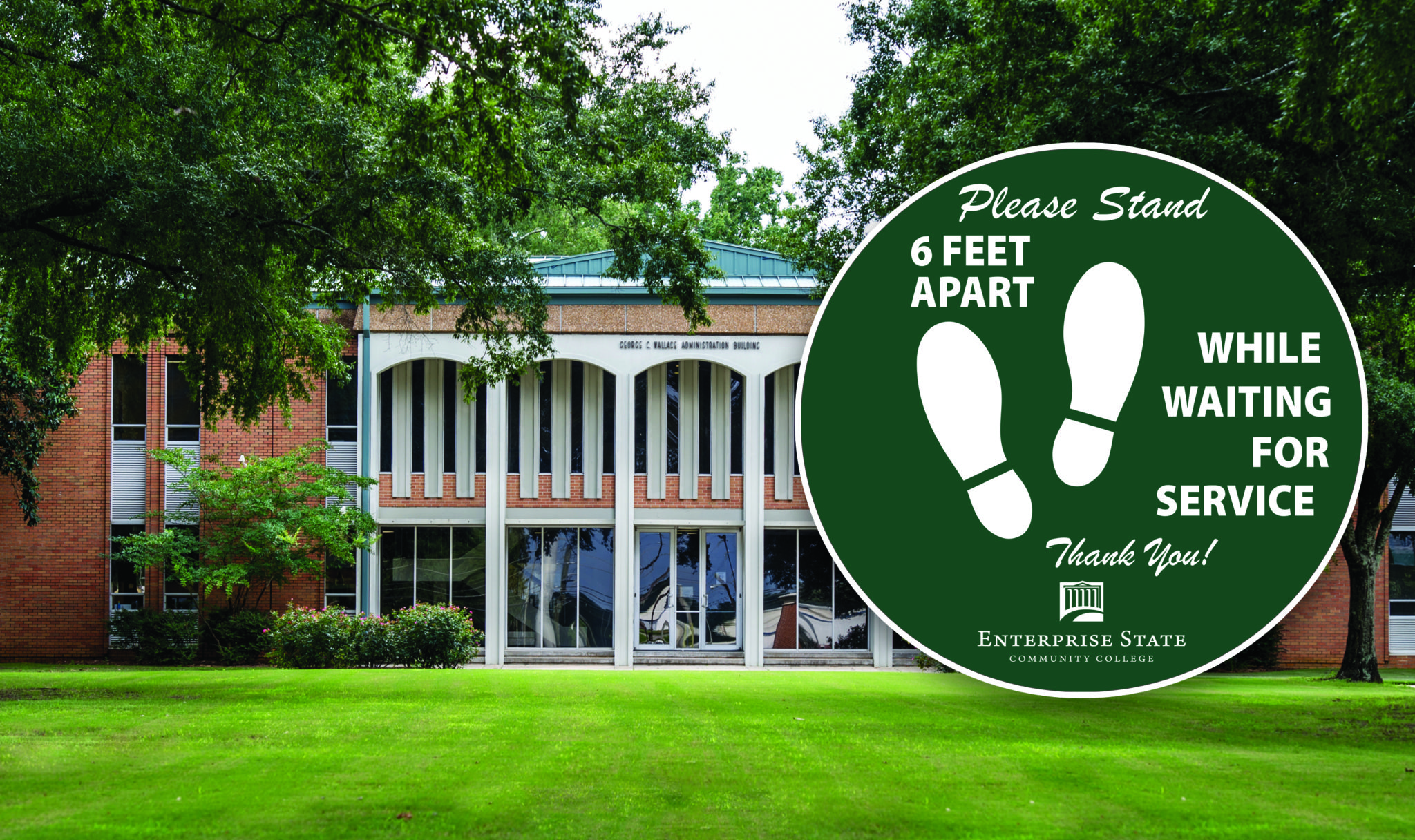
On November 22, 1965, Douglas MacArthur State Technical College opened its doors, admitting 116 students in twelve departments.  The campus consisted of four buildings, the George C. Wallace Administration Building and three shop buildings. 

In the next several years, six additional buildings were added to the campus.  These were the Gaines Ray Jeffcoat Building, the Vernon L. St. John Building, the Henry R. Donaldson-Bennie Foreman Building, the E. Claude Nevin Building, an electronics building and the Student Center.

Mr. E. Claude Nevin retired in December of 1982, and Dr. Raymond V. Chisum was appointed President in January of 1983.  The Raymond V. Chisum Health Sciences Building was added in 1996. 

After Dr. Chisum’s retirement in August of 1996, Mr. L. Wayne Bennett was named Interim President and served until the merger with Lurleen B. Wallace Junior College in January of 2003.

Lurleen B. Wallace Junior College

Lurleen B. Wallace Junior CollegeOn December 14, 1967, the Alabama State Board of Education authorized the development of a junior college to be located in Andalusia, Alabama.  On August 15, 1968, the State Board of Education named the College the Lurleen Burns Wallace State Junior College in honor of the former governor.  Dr. William H. McWhorter was appointed the first president.  In September of 1969, the College opened in the Bethune School, a temporary location leased from the Covington County Board of Education.  In May of 1970, the College moved to its new campus consisting of 112 acres, an administration/classroom building and physical education dressing rooms.

The 160 acre Andalusia campus consists of nine buildings, six lighted tennis courts, a lighted baseball field, a lighted softball field, a two-mile scenic trail, a nine-hole golf course and driving range, and expansive parking.  Dr. and Mrs. Solon Dixon of Andalusia, Alabama, through the Solon and Martha Dixon Foundation, have provided more than $3 million through the years for facility development, such as the Solon and Martha Dixon Center for the Performing Arts and the Dixon Conference Center.

On August 31, 1990, Dr. McWhorter retired and Dr. James D. Krudop was named Interim President until February 1, 1991, when Mr. Seth M. Hammett was selected as the new President.

Extensive renovation, remodeling, and refurbishing of the infrastructure of the College took place with twenty-six major projects undertaken.

On October 6, 1992, groundbreaking ceremonies took place for construction of a new 11,300 square foot facility on seventeen acres of property in Greenville, Alabama.  This facility opened for classes in the fall of 1993.

President Hammett retired in June of 2002 and Dr. James D. Krudop served as Interim President until the merger with Douglas MacArthur State Technical College in January of 2003.

Lurleen B. Wallace Community College

Lurleen B. Wallace Community College in AlabamaOn January 23, 2003 the Alabama State Board of Education took official action to merge Lurleen B. Wallace Junior College and MacArthur State Technical College.  Dr. Edward Meadows was appointed President on that date, with the responsibility of providing leadership to bring about the consolidation of the two colleges to create Lurleen B. Wallace Community College.  The Commission on Colleges of the Southern Association of Colleges and Schools recognized the two institutions as a singly accredited community college in December, 2003.  The Alabama State Board of Education took final action regarding the merger in December, 2003, and the U.S. Department of Education recognized the two colleges as a single institution in January, 2004.  The successful consolidation resulted in a multi-campus, comprehensive community college with campuses in Andalusia, Greenville, and Opp, Alabama, serving the counties of Butler, Crenshaw, Coffee, Covington, and Geneva. 

In 2004, a ten-year Facilities Master Plan was developed to facilitate the programmatic growth of the College as a result of the consolidation and expanded mission of the College.  Major renovations and new construction were undertaken at the Andalusia and MacArthur campuses to accommodate new programs and courses.  In 2005, construction of a 30,000 square foot technology center was initiated on the Greenville campus to facilitate the expanded comprehensive mission of that campus.

In January 2006, the College established a center in Luverne with the primary function of offering adult education and training for business and industry.  Classes were held in the former National Guard Armory which was leased from the Armory Commission.  The State Board of Education approved the purchase of the Luverne facility in July 2007.  In February 2015, SACSCOC gave its approval to offer complete programs of the College at this center.

In October, 2006, the Vermelle Evers Donaldson Cosmetic Arts Center was dedicated on the MacArthur Campus.  In November, 2007, the College celebrated the completion of two new buildings:  the Child Development Center on the Andalusia Campus and the Technology Building on the Greenville Campus.

Dr. Meadows retired as President in August, 2008 and Mr. L. Wayne Bennett served as Interim President of the College until December 31, 2008.  On January 1, 2009, Dr. Herbert H. J. Riedel began his service as President of Lurleen B. Wallace Community College.

The Wendell Mitchell Conference Center on the Greenville Campus was completed in August, 2009.  Renovations to the Luverne Center were completed in 2009 as well.   This year also saw completion and implementation of the college’s five-year strategic plan.

Renovation to the Martha and Solon Dixon Center for the Performing Arts entrance was completed in 2010 and a landscape enhancement plan for the Andalusia Campus was developed. The first phase was completed in 2012, and included a drop-off area in front of the performing arts center, an enhanced streetscape along Dannelly Boulevard with improved drainage, new curbs, angled parking, more than 40 new trees, and additional attractive street lighting.  A concrete patio with picnic tables and benches was also added in front of the Jeff Bishop Student Center as a place for students to sit and relax outdoors.

A collaborative effort between LBWCC, the LBWCC Foundation, and local, state, and national government entities resulted in the creation of Saints Hall in 2013, a Foundation-owned student housing apartment complex adjacent to the Andalusia campus. This collaboration resulted in the College being named a 2014 Bellwether Award Finalist by the Community College Futures Assembly.

In 2015, following the passage of Alabama Act No. 2015-125, LBWCC was placed under the governance control of the newly created Alabama Community College System Board of Trustees.  That same year, LBWCC celebrated the 50th anniversary of providing higher education in South Alabama. 

In 2016, LBWCC received a five-year, $2.25 million grant under the U.S. Department of Education’s Title III “Strengthening Institutions” program.  This grant is designed to improve academic and student services and includes online advising and early intervention tools, success coaches, and resources for starting a new Physical Therapist Assistant program.

In 2017, the College’s federally funded Upward Bound program was not refunded and ceased operation.  However, a grassroots community effort secured sufficient local funds to start a new program, called Apex, that serves the same population of high school students to prepare them for college success.

As a result of several initiatives contained in the 2014-2019 Strategic Plan, LBWCC won national recognition in 2018 as an AACC Awards of Excellence finalist in Student Success, based on exceptional increases in fall to fall retention, graduation rates, and other measures.

The members of the Douglas MacArthur State Technical College Foundation (DMSTCF) and the Lurleen B. Wallace Community College Foundation (LBWCCF) voted in May 2019 to merge the DMSTCF into the LBWCCF.  The combined Foundation will administer endowed scholarship funds from both prior foundations and raise money to support students at all locations of LBWCC.

On June 12, 2019, the ACCS Board of Trustees authorized LBWCC to enter into an agreement with the LBWCC Foundation for the lease, operation, and management of the Foundation’s student residential property known as Saints Hall.  Under the terms of this agreement, the College has the option to purchase the housing complex for a nominal amount at the end of the United States Department of Agriculture loan, on January 8, 2044.

Following the retirement of Dr. Herbert H. J. Riedel, the Alabama Community College System appointed Mr. Bryan Helms as Acting President of Lurleen B. Wallace Community College on September 3, 2019.  Mr. Helms served in this role until December 31, 2019.  Effective January 2, 2020, The Alabama Community College System appointed Dr. Chris Cox as Interim President of Lurleen B. Wallace Community College. 

LBWCC’s 2020-2025 Strategic Plan was approved by the College’s Executive Council on February 11, 2020.  The goals and objectives in this document will serve as a roadmap to guide the College over the next several years.


HUNTINGDON COLLEGE

A Tradition of Faith, Wisdom, and Service

Tradition. Huntingdon’s longest traditions are its hallmarks: faith, wisdom, and service.

Do you love to learn? Do you yearn to serve others? For more than 160 years, Huntingdon has provided an outstanding liberal arts education that touches not only the mind and heart, but also the spirit.

A college of the United Methodist Church, we are led by our motto, “Enter to grow in wisdom, go forth to apply wisdom in service.”

QUICK FACTS

An Introduction

Founded: 1854 in Tuskegee, Alabama; moved to Montgomery, Alabama, in 1909.

Motto: “Enter to grow in wisdom; go forth to apply wisdom in service.”

Hallmarks: Faith, Wisdom, and Service; The Huntingdon College Honor Code

Location: 70-acre campus in a safe and beautiful residential neighborhood of Montgomery, Alabama, state capital; just three hours from the Gulf Coast.

Gadsden State Community College


History

Present-day Gadsden State Community College began with the merger of Alabama Technical College, Gadsden State Technical Institute, Gadsden State Junior College and Harry M. Ayers State Technical College.

One of the initial founding institutions of Gadsden State is Alabama Technical College. Established in 1925 as the Alabama School of Trades, it was the first state-operated trade school in the south and is the oldest of Gadsden State’s campuses. Now, it is the home to a number of Gadsden State’s technical programs, the One Stop Center, the Joe Ford Center and the Alabama Technology Network. It is known as the East Broad Campus.

Gadsden State Technical Institute began in 1960 as the Gadsden Vocational Trade School, a private vocational training school for African Americans. It was founded by Eugene N. Prater, director of the Veterans Continuation Program for Negroes, in response to discontent expressed by black veterans of Etowah County for being denied admission to the all-white Alabama School of Trades. Currently, it is known as the Valley Street Campus and houses the Construction Technology Program, HVACR Program, Certified Nursing Assistant Program, Diagnostic Medical Sonography Program, Therapeutic Massage Program and several academic courses. The U.S. Department of Education designated this institution as a Historically Black College or University (HBCU) in 1997.

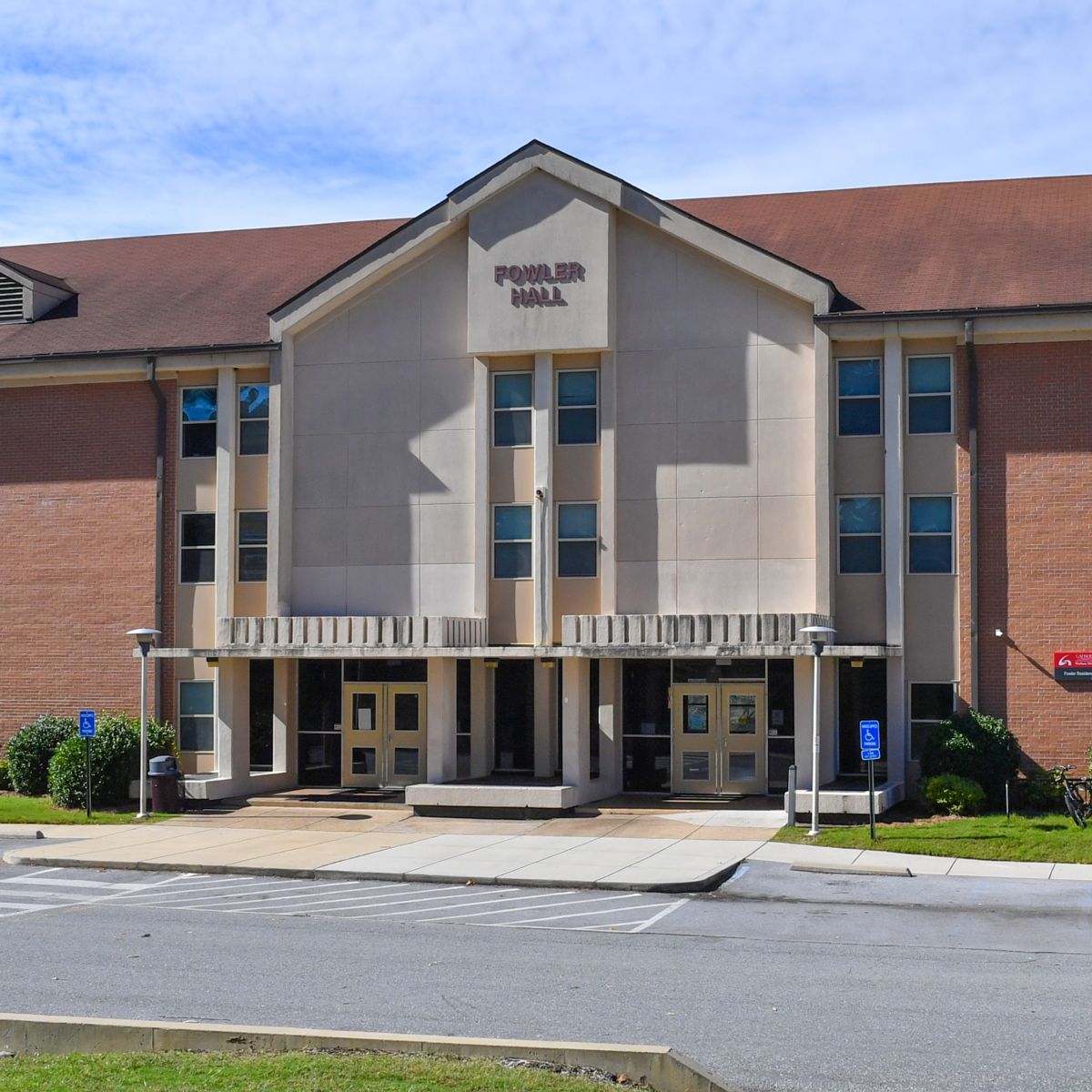
Gadsden State Junior College was established in 1965 by an act of the Alabama State Legislature during the administration of Gov. George C. Wallace. The course offerings included professional programs, such as architecture, dentistry, journalism, law, medicine and teacher education, as well as technical programs in management, nursing, secretarial science and data processing. It is currently identified as the Wallace Drive Campus of Gadsden State and is home to academic courses, the Inzer Student Center, Fowler Residence Hall, Wallace Hall Fine Arts Center and Beck Field House and Conference Center.

Harry M. Ayers State Technical College was founded as a trade school by an act of the Alabama State Legislature on May 3, 1963. In 1972, the institution was designated as a technical college offering associate degrees and certificate programs in such fields as accounting, automotive body repair, carpentry and cosmetology, among others. To eliminate duplication of courses, the consolidation of Gadsden State and Ayers State was completed on July 8, 2003. It is now known as the Ayers Campus of Gadsden State Community College.

In August 2002, Gadsden State Cherokee was opened as an instructional site in response to community and governmental efforts to meet the growing educational needs in the region. A new multi-level complex was opened in August 2008, where Gadsden State Cherokee now offers an expanded list of courses for students wishing to earn an associate degree or transfer to a four-year institution. Gadsden State Cherokee also houses an Economic Development Center, the Cherokee County Chamber of Commerce and a multi-purpose 2,500-seat arena.

Mission

Gadsden State Community College prepares students from all backgrounds for success through quality education, innovative workforce development, and inclusive community and global engagement.


Institutional Goals

Values


Enterprise State Community College

About ESCC

The public junior college system of Alabama was established in 1963 through the efforts of Governor George C. Wallace and the Alabama Legislature. Enterprise was selected as the site for one of the original twelve state junior colleges. Area citizens and civic groups raised money for the purchase of a 100-acre campus site, donated library materials, and provided a number of scholarships— thus beginning a history of college and community cooperation for which Enterprise State Community College is noted.

On September 27, 1965, the first freshman class, numbering 256 students, was registered at the College which was originally named Enterprise State Junior College. These students attended classes in rented rooms in downtown Enterprise and in the educational building of the First Methodist Church. Fortunately these makeshift arrangements lasted during the first year, for in the fall of 1966 the present campus was occupied. This campus has grown and now consists of seven modern buildings situated on a beautifully landscaped site. An addition to the Learning Resources Center in Snuggs Hall, an addition to Lolley Hall, and a new building— Talmadge Hall—were occupied spring quarter of 1990. In 1983, the College began offering credit courses and non-credit short courses at the Fort Rucker site. Recently, in 2018, the site was closed.

Upon the retirement in 1981 of the College’s first president, B.A. Forrester, Dr. Joseph D. Talmadge was appointed President of the College. Dr. Talmadge had served as Dean of the College since its establishment and provided dynamic leadership for the development of the College’s academic program. He retired in September 1994. When Dr. Talmadge retired, Vice Chancellor for the Alabama Department of Postsecondary Education, Dr. Stafford L. Thompson, was appointed Interim President. Dr. Thompson was appointed President of the College on March 28, 1996. He led the College through the reorganization to include the state’s aviation maintenance training programs. He obtained funding to build the Aviation Technical Training Center on the Ozark Campus. Dr. Thompson retired July 1, 2008. At that time, Dr. Nancy W. Chandler was appointed Interim President. Dr. Chandler came to ESCC from Faulkner State Community College where she served as Vice President of Instruction, Institutional Advancement and Effectiveness. She was appointed President of the College on May 28, 2009 and worked diligently to expand the availability of Aviation training for students in Alabama. On March 5, 2014 Dr. Chandler resigned and on March 24, 2014 Dr. Cynthia Anthony was selected as interim president. Dr. Anthony moved to Shelton State Community College in September, 2015 and Dr. Vicky Ohlson was appointed interim president on October 1, 2015.

In February 2003, the Alabama State Board of Education approved the reorganization of Enterprise State Junior College with the Alabama Aviation College at Ozark and the Aviation Center at Mobile of George C. Wallace Community College—Dothan. This created a new comprehensive community college that was named Enterprise-Ozark Community College. The Alabama Aviation College in Andalusia opened fall semester of 2006, and the Alabama Aviation College at Albertville opened spring semester 2009. Aviation maintenance courses are taught at both of these sites. In November 2009, the Alabama State Board of Education approved a name change to Enterprise State Community College and approved a marketing name for the aviation programs as the Alabama Aviation College, a unit of Enterprise State Community College.

The Alabama Aviation College at Ozark originated in 1960 as a part of the educational program administered by the Ozark City Board of Education. In 1962, the institution’s aviation maintenance program was certified by the Federal Aviation Administration. By act of the State Legislature in 1963, the institution, which was then known as the Alabama Institute of Aviation Technology, was brought under the Alabama State Board of Education as a state vocational trade school. In 1970, the institution was accredited by the Commission on Occupational Education Institutions of the Southern Association of Colleges and Schools. In 1973, the Alabama State Board of Education changed the name to Alabama Aviation and Technical College, and in 1976, the Board authorized the establishment of an off- campus center in Mobile, Alabama. In 1991, the College was accredited by the Commission on Colleges of the Southern Association of Colleges and Schools to award the associate in applied science degree, and the College’s accreditation was reaffirmed in 1997. In 1996, the College and its Mobile center were merged with George C. Wallace Community College, and the names of the locations were changed to the Alabama Aviation College in Ozark and the Aviation Center at Mobile. In 2008, under EOCC, the new Aviation Technical Training Center on the Alabama Aviation College in Ozark opened its doors for classes. Additional sites have been added for aviation programs, including the Alabama Aviation College at Andalusia. For a time Enterprise controlled all aviation sites in the state, however in the Alabama Community College System decided that each site should be governed by an institution in the same geographic region.

The College received state and national recognition for a variety of student activities. For more than 30 years, the Enterprise Campus chapter of Phi Theta Kappa, the national honor society of American two-year colleges, was recognized as one of the top chapters in the nation. In 1984 and 1992, the chapter was named The Most Distinguished Chapter in the Nation. In 1986-87, 2001-02, and again in 2010 the sponsors were named Most Distinguished Sponsor, and the Enterprise Chapter continues to be placed in the top ten percent internationally. The chapter is also active at the Alabama Aviation College at Ozark. The First Impressions Team (FIT), now the Ambassadors. leads the orientation programs for new students, has been recognized by the Southern Regional Orientation Workshop of the National Orientation Directors Association (NODA) for outstanding leadership. Former FIT sponsor, Dr. Betty Cully, was designated as an Outstanding Orientation Director in 1995 and 2003. The College’s show choir, the Entertainers, has been consistently rated Superior in competitions and the group continues to receive “Best in Class” awards.

Athletics have been an important part of the ESCC collegiate experience as well. The baseball team won the Alabama State Junior College Championship in 1982 and the Southern Division Championship in 1986. In 1985, the College’s Weevil Women earned the runner-up trophy in the state championship tournament in women’s basketball and were fourth in the state championship tournament in 2003. Also in 2003, the men’s basketball team was runner-up in the Alabama Junior College Division I Conference. The men’s team won that conference in 2004. Former head coaches David James, Dr. Chelita DuBois, and Jimmy Messer were named 2003 Coaches of the Year by the Alabama Community College Athletic Division, and Coach Messer received this honor again in 2004. At one time the College had a women’s tennis team which won second place in state competition for Division II in 1997 and 1998. The College’s golf team won second place in state competition for Division II in 1998.

Throughout its history, Enterprise State Community College has been successful in attracting federal and private funds that have enabled the College to develop innovative programs and services. The College received four major five-year development grants and three endowment grants totaling approximately $9 million from the U.S. Department of Education’s Title III Strengthening Institutions Program. In addition to comprehensive faculty development and curriculum improvement projects, these grants have financed the purchase of state-of-the-art computer equipment throughout the campus and other projects focused on student retention. Other federal and foundation grants enabled the College to establish the Tutorial Assistance Program for Students—now Student Support Services—the Adult Basic Education Program, the Workplace Literacy Program, Student Academic Support Services Laboratory, and the National Science Foundation scholarship program. In 2000 and 2001, National Science Foundation Grants provided scholarships to students majoring in science, engineering, or computer information science. In 2005, a Community-Based Job Training Grant was awarded by the Department of Labor to build the capacity of the College to train technicians for the skills required to succeed in high-growth, high-demand aviation industries. In 2010, a 3-Dimensional Simulation and Modeling short-term certificate program began, funded by a grant from the Alabama Governor’s Office of Workforce Development.

The ESCC Foundation was established in 1982 to enhance the College’s ability to seek private funding. Administered by a Board of Directors composed of business and civic leaders, the Foundation has developed an endowment program that funds student scholarships as well as faculty development, curriculum improvement, and continuing education projects.

Before his untimely death in 1993, Enterprise native and nationally renowned theatre director and producer, James Hatcher, made arrangements for his valuable collection of theatre memorabilia and literature to be displayed at ESCC. The James Hatcher Collection is housed in Forrester Hall.

On August 9, 2017, Matt Rodgers was named the fifth permanent president of the College. During his first year, the College received approval to offer two new career and technical programs: the Medical Assistant Program and the Commercial Truck Driving License program. The College continues its rich tradition of serving the needs of the community. Mr. Rodgers, the faculty, and staff are continuing the College’s legacy of excellence in education at all locations of the College and in the surrounding communities. Dynamic leadership, dedication to the teaching-learning process, and superior support services achieve the College’s mission.

MISSION

The mission of Enterprise State Community College, including the Alabama Aviation College, is to improve our communities by providing students with excellent opportunities to further their education and enter the workforce.

VISION

To prepare our students to learn, to work, and to create a better community as a leading community college.

VALUES

Enterprise State Community College respects the diversity of its student body and recognizes the worth and potential of each student. Therefore, the College affirms the following values:

  • EXCELLENCE
  • COMMUNITY
  • INNOVATION
  • COMMITMENT

INSTITUTIONAL GOALS

  • To prepare students for transfer
  • To prepare students for immediate employment and career advancement
  • To assist students in developing and achieving their educational goals
  • To support students in improving learning skills, overcoming educational deficiencies, and adapting to technological changes
  • To improve the social, economic, and cultural/recreational life in our communities

Enterprise State Community College is accredited by the Southern Association of Colleges and Schools Commission on Colleges to award Associate’s degrees and certificates. Contact the Commission on Colleges at 1866 Southern Lane, Decatur, Georgia 30033-4097 or call 404-679-4500 for questions about the accreditation of Enterprise State Community College. Specific questions regarding ESCC’s educational programs, admission requirements, financial aid, and other matters related specifically to the College should be forwarded directly to the College.

Calhoun Community College

 As one of Alabama’s leading institutions of higher education, we are committed to student success. By providing quality, accessible educational opportunities, encouraging community involvement, and promoting economic development, we seek to improve the quality of life for our students and the communities we serve.

On this website, you will find information on such topics as admissions policies and procedures, financial aid, academic programs, student support services, and business and industry training programs. We encourage you to contact us at any time you may have questions or need additional information about Calhoun.

Mission

Calhoun Community College provides opportunities in education by offering quality, innovative instruction through a collaborative learning environment while promoting cultural enrichment and community development.

Values

  • Accountability
  • Collaboration
  • Diversity
  • Equity
  • Innovation
  • Integrity

Vision

Success for every student, the community, and the College.

Birmingham-Southern College

We have a shared mission here on the Hilltop: to prepare men and women for lives of significance. Everything the college does is designed to help our students—and everyone in the community—develop, learn, and engage in the wider world. No matter who you are or where you want to go, our faculty and staff are committed to helping you rise to your potential.

Our mission

Birmingham-Southern College prepares men and women for lives of significance. The College fosters intellectual and personal development through excellence in teaching and scholarship and by challenging students to engage their community and the greater world, to examine diverse perspectives, and to live with integrity. A residential, baccalaureate liberal arts institution, Birmingham-Southern honors its Methodist heritage of informed inquiry and meaningful service.

Alaska Christian College

about us

Our vision is to be the premier college of choice for Alaska Native students so that our graduates follow and serve Christ within the Church and larger society.

our mission and vision

The mission of Alaska Christian College is to empower Alaska Natives through biblically-based education and Christian formation to pursue excellence in character, learning, and service as followers of Christ. Our vision is to be the premier college of choice for Alaska Native students so that our graduates follow and serve Christ within the Church and larger society.


University of Alaska

How to apply

Going to college in Alaska is only a few steps away

APPLY FOR ADMISSION
Apply to your university of choice. Each institution has an admissions application to complete and submit online. You will need to setup a new user account if you don’t already have one. There is usually an application fee, so be ready to make payment when you apply. Applications, information and contacts for help can be accessed through the admissions links below.

GET ACADEMIC ADVISING
An academic advisor is your guide to college, connecting you with a program and helping you find the tools you need to succeed. You should meet with an advisor as soon as possible after acceptance to the university to help plan your academic journey.

INVESTIGATE FINANCIAL AID
Unless you’re a millionaire you probably need help paying for classes, books and fees. Your college costs will depend on what school you select, how many classes you want to take, and for how much aid you qualify. The Free Application for Federal Student Aid, or FAFSA, is required for federal, state and privately funded student loans and scholarships in Alaska. Fill it out at fafsa.gov early to take advantage of the most funding opportunities. There are hundreds of scholarship opportunities for University of Alaska students. Explore them online viaAcademicWorks.

REGISTER FOR CLASSES
Class registration begins in early April for the the fall semester, early November for the spring semester and early February for summer semester.

JUST WANT TO TAKE A CLASS?
If you are not intending to seek a degree you can register for a class through UAOnline.

MORE APPLICATION/TRANSFER ASSISTANCE:
The new My Future Alaska gateway provides prospective students transfer checks, guided transfer pathways and campus profiles (which include information on general education requirements, admission guidelines, and more) and a cost calculator for financial planning.
Admission Requirements

Admission requirements vary depending upon the course of study and university of choice. There may not be any requirements to just take a class, but admission into certificate, bachelor, or graduate programs does require meeting institutional requirements.

For the best information and to submit an application, please visit the admissions websites for the university you wish to attend.

For the best information and to submit an application, please visit the admissions websites for the university you wish to attend.