Masks: The Kid-Item in Consumer Town

Even the worst crisis ever has its silver lining. If one has to choose items which have gained the status of the most sought-after consumer goods mask would occupy the front rank. In the pre-pandemic times mask had a very limited use. The doctors, nurses and to some degree community health workers would use medical masks for safety reasons. Wearing mask in public was very unusual except for patients prone to infection. Another group to use mask for a specific purpose would be snatchers and robbers. But even masks have their day. COVID-19 has made masks ‘popular’ beyond imagination. After initial hesitation, with day-to-day increase in incidents of infection and relentless warnings masks have become omnipresent. Not wearing a mask in public places lands us up in lot of trouble. In course of time, it has become a status symbol too.

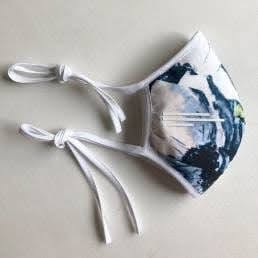
Indian cities have now visible shops and kiosks selling variety of masks. The markets look so colourful with fabric masks hanging prominently. The demand is not short lived. It is here to stay. One reason is that masks have a limited lifecycle because they are mainly made from cloth. The market for masks is further bolstered by advice by doctors and epidemiologists that old masks are to be discarded after a reasonable period of use. Gauging the market mask manufacturers are resorting to some creative actions. Kerala has been a pioneer in designing masks with 3D printers. These masks have the exact impression of one’s face under the nose to make oneself easily recognizable. Now such masks are found in different parts of India. Some mask producers are also putting up social messages like ‘Combat COVID’ on masks. Some have even gone further in making what they call fun masks with messages like ‘I am a Virus Myself!”.

Several textile industry representatives predict that in near future festivities and celebrations requiring new garments would simultaneously unleash major demand for masks. In Kolkata, for instance, with Durga puja few months away there is a rush for production of designer masks. Already marriage ceremonies are taking place in which bride, groom and relatives are seen wearing attractive masks, matching with their dress. Several top-end textile and fashion industries are producing expensive masks, including those made with expensive silk and Benarasi. The Hindu on 24 May reported that leading textile and fashion brands such as Shoppers Stop, Fabindia, VIP Clothing, Zodiac, and Aditya Birla Fashion and Retail brands such as Peter England, Allen Solly, Louis Phillipe and Van Heusen are all piling up their respective mask collections. Some fashion shows have already taken place with prominent models doing the catwalk wearing masks. Online shopping websites for trendy t-shirts and mobile covers are also attracting customers with masks covering catchy and funny phrases. They also have certain discount offers with t-shirts and mask combo packs.

The emergence and expansion of the mask market has also done an important economic service to some small businessmen who incurred heavy loss during the lockdown. They have started selling masks and are earning enough to survive. A number of NGOs are training people to make masks for a living. Though this cannot be a lasting solution it is at least for the time being providing some relief to those who are otherwise in severe distress from loss of livelihood thanks to the pandemic. In a gendered angle many rural girls and women are now utilising their sewing skill in creating masks for the market. In an indirect manner their cause has been promoted by constant official warnings about the need to wear masks to resist coronavirus. The celebrities, who are also publicizing masks in social advertisements and ‘lockdown’ period- plays and short films are indirectly boosting the mask market.

In a sudden, unexpected but interesting development masks are thus becoming a new source of sustenance to some at the bottom of the economic ladder on the one hand and becoming part of fashion statement to upper middle class and elite sections of our society. On both counts economy is benefitted. One can hardly think of any other consumer good having played such dual role in the past. Let there be masks as long as the pandemic lasts. In the post-pandemic era, if it ever happens, they would remain part of our history!
Is Wearing a Face Mask All Summer Bad for Your Skin?

Look, no one wants to wear a face mask. But even as states open back up and the urge to forget COVID-19 ever happened becomes almost irresistible, it’s good to remember that wearing a mask in public places is not about you, it’s about keeping other people safe from a disease that has killed more than 115,000 people in the U.S. alone.

That said, if wearing a face mask has proved problematic in late winter and spring, it’s going to get much worse when the sweat, sunscreen and sweltering temperatures of summer come into play. You may have already dealt with an unfortunate bout of maskne (that’s mask acne, for people who aren’t keeping up on the new COVID lingo), but when you’re essentially creating a hot box around half your face, strange skin issues will follow.

To help you save face this summer, literally, we got in touch with Dr. Jaime Davis, Board Certified Dermatologist and Medical Director and CEO of Minnesota’s Uptown Dermatology and SkinSpa, who has already been dealing with these conditions among patients.

What sunscreen pairs best with a face mask? What materials should you avoid when buying one? And what issues should men, a generally dermatologically naive bunch, be aware of? Dr. Davis answered all these questions and more.

What kind of face mask should I wear in summer?

Before even talking about the type of mask, Dr. Davis pointed out that many issues are cropping up due to overuse. “Wear the mask when necessary, but remove it as soon as it is not necessary,” she said. “Try to avoid prolonged stretches of mask wearing.” This falls in line with current CDC guidelines that recommend “wearing cloth face coverings in public settings where other social distancing measures are difficult to maintain.” Also, if you have severe breathing issues, it’s important to note that the CDC exempts you from that recommendation.

In terms of materials, Dr. Davis recommends masks with moisture-venting features, which it should be said does not mean cutting a hole in it. While she says that medical-grade options are the most protective, they’re also the most occlusive (in other words, they provide the tightest seal, which is good for stopping virus transmission but potentially bad for your skin); instead, she recommends homemade alternatives “made from tightly woven soft cotton fabric that has been washed in unscented soap, rinsed well of any residual detergent, and dried without fabric softener.”

I’ve developed a rash from my mask. What is it?

While you shouldn’t self-diagnose a rash or other skin irritation, one issue Dr. Davis has dealt with at her practice that people should be aware of is allergic reactions to face-mask materials. She points specifically to “the metal nose bridge (if nickel is in the alloy) or elastic (rubber allergy) or any textile-specific coatings on the fabric.” The nickel issue will be familiar to people who wear earrings or other jewelry, and may be more of a concern for people wearing medical or medical-style coverings.

If you think you’re experiencing an allergic skin reaction, be sure to seek out professional help from a dermatologist. Even if you’re nervous about venturing out to a doctor’s office, Dr. Davis notes that her Minneapolis practice has been offering e-visits which have been, in her words, “freaking fantastic!” She notes that insurance is covering the online sessions, care can be delivered quickly and there’s always the potential for an in-person follow-up, so check with your local dermatologist.

How do I avoid and treat maskne?

Not all acne is the same and it should not be treated the same; the same goes for maskne. Dr. Davis says she’s dealt with both acne rosacea (“inflammatory acne exacerbated by heat and humidity of occlusive masks”) and acne vulgaris (“pimples and plugs from excess oil”) in the current mask-wearing age, but notes people should seek a professional opinion if their acne doesn’t go away. If face wash isn’t part of your regular grooming arsenal, she says to use a mild cleanser like Cetaphil twice a day, which may solve your problem.

What sunscreens go well with masks?

The biggest conversation around sunscreen in recent years has been mineral versus chemical. Basically, chemical sunscreens are the most popular products you’ll find on shelves, available from companies like Banana Boat and Coppertone, but some of them are being banned because they’re unsafe for marine life. Mineral sunscreens are generally considered to be friendlier to oceans and the environment, but in terms of protecting you from skin cancer while wearing a mask, Dr. Davis says you’ll be better off with chemical versions.

“Mineral-based sunscreens sit on top of the skin and could be rubbed off by the mask. Chemical-based sunscreens absorb into the skin and generally provide longer-lasting protection,” she says. “Brands that are generally well tolerated by sensitive skin include Vanicream and Cetaphil.” If you have a favorite brand already, she suggests using SPF 30 or higher for normal daily use. And yes, you should be applying sunscreen on your face every day. However, Dr. Davis also notes that if you’re wearing a snug-fitting or tightly sealed mask, you could develop a sensitivity to the sunscreen.

If you do end up with an unfortunate mask-shaped sunburn, the dermatologist-recommended salve is a cool, moist compress on the burn over a thin layer of 1% Hydrocortisone cream, which is available over the counter at local drugstores.

What other skin issues should I be aware of?

If you’ve got facial hair, you may be having problems with beard folliculitis, which is basically inflammation or infection in the hair follicles, similar to razor bumps. Dr. Davis says men have been experiencing this issue when short whiskers get caught in masks as their facial hair grows out. To avoid it, she advocates for beard commitment: either let it grow out or keep a close shave. “It’s that five o’clock shadow or weekend of not shaving that is the stuff which gets caught and causes folliculitis,” she says.

In a similar vein, the last issue she’s noticed is seborrheic dermatitis, which is a condition that generally leads to dandruff on the scalp but can also manifest in dandruff of the face (yes, 2020 is only getting worse). Thankfully, the solution is generally simple. “People are skipping showers during the pandemic and we’re seeing a lot more dandruff,” Dr. Davis says. So to keep face dandruff at bay just do what she already recommended and wash your face at least once a day.

Copyright © 2020 InsideHook. All rights reserved.

Designer masks: the new fashion statement

If we have to live with a face mask in the foreseeable future, let it be a designer one. Luxury brands to corporate fashion, artisanal communities to even turban designers are redefining the face mask into a fashion accessory, albeit one that follows all the norms of WHO safety protocols.

The bizarre situation arising out of the COVID-19 pandemic has sparked an amazing amount of creativity among designers and artisans. Glamorous to the artistic, the range of masks flooding the market is exhilarating.

While the initial intention of designers and brands was to create masks for a more altruistic purpose — to rush supplies to frontline workers as a contribution to the fight against the pandemic, it is turning into another vertical of their business. For artisans, on the other hand, it is a means to survive the financial constraints imposed by the lockdown and tide over these uncertain times.

Globally, fashion brands such as Dior, Prada, Gucci and Louis Vuitton recalibrated their manufacturing units to make masks, protective gear and sanitizers. Their masks initiative has moved from public-spirited to a fashion offering. Indian designers and savvy artisans are fast catching up. Face masks are a canvas for self-expression and a means of survival at a time when most business has come to a halt. According to the book History of Surgical Face Masks by John L. Spooner, masks first made an appearance as protective gear for medical practitioners in the 19th century. They were adapted in China in 1910 to prevent spread of pneumonic plague.

Fashion in Asian countries such as China, Korea and Japan included designer face masks as a shield to deal with rising pollution. The rest of the world is waking up to the fact that your mask does not have to be boring or surgical if you aren’t a frontline healthcare worker or afflicted by COVID-19.

The Savile Row mask

huntsman

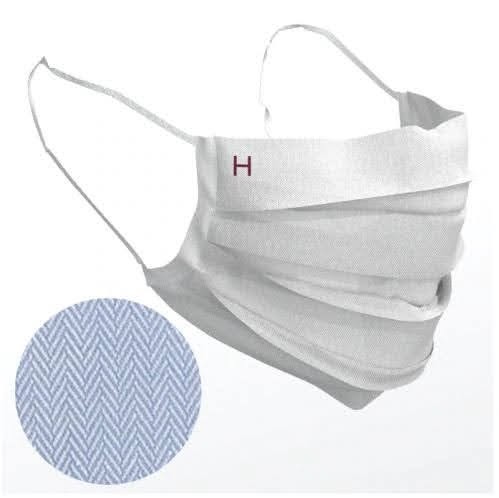
Established tailors on this iconic London street are handcrafting and retailing face masks, which is now an essential accessory in our fight against the coronavirus. Huntsman, a big name on Savile Row, handcrafts soft masks made using 100 percent Egyptian cotton. The double-layered masks are embroidered with their signature alphabet ‘H’ and are sold in a classic box pleat design with elasticated straps.

The luxury monogrammed masks

lv-mask

LVMH, owner of brands such as Louis Vuitton, Dior, Givenchy and Fendi, has employed 300 additional artisans to make non-surgical face masks. The LV masks feature the classic brown monogram pattern in tan suede with gold rivets reinforcement and costs up to $1800. Pretty much like LV, Fendi has put out a logo-monogrammed mask in deep tan/brown shade that has been designed and hand-stitched by artisans in their Paris atelier.

The signature pattern face masks

ampm-amhale-safari-edit-face-mask-1-286x258-1

Most designers have signature prints that they are known for. Priyanka Modi, creative Director of AMPM, an edgy fashion brand has dovetailed their prints with some colour “added keeping in mind the universal dreariness, to lift up the spirits of the people who end up wearing them”. The result is a collection of snug textured, patterned masks with contemporary aesthetics and angular lines. Functional to the tee, these masks can be bought online as well as at AMPM stores, and retail between Rs 4,000 to Rs 5,000.

The quilted ones

hemant-258x258-1

Leconet Hemant’s dreamy signature patterns and prints make way on to their 3-and-5 ply face masks. “We have used cotton poplin with polyester interlining, which feature prints and light quilting with fabric. Each mask undergoes UV-ray sterilisation before being packed in a fabric pouch made from the off cuts,” says designer and co-founder Hemant Sagar. The prices of the masks range from Rs 999 and Rs 1499 and they are being sold via the brand’s stores.

The Rajput-style masks

1

Rajputs are famous for their swag and their style, on display even in the most stressful of situations. Udaipur-based safa and turban designer Harendra Jodha, who studied the Rajput lifestyle at Chopasin School (they teach you how to live a life of leisure like a Rajput!) created a range of beautiful handloom cotton 3-ply masks to match the safas that the men wear, particularly at weddings or important ceremonies.


COVID19: CAN SURGICAL MASKS OR RESPIRATORS PREVENT CORONA VIRUS?

COVID19:
 CAN SURGICAL MASKS OR RESPIRATORS PREVENT CORONA VIRUS ?

The world is suffering from the deadly infection of Coronavirus. The World Health Organization (WHO) has declared the infection as ‘pandemic’. The early symptoms of this deadly infection are high fever, shortness of breath, tiredness and dry cough. So, the entire world is under lockdown to break the chain of COVID-19 with certain precautionary steps is to be ensured. The contemporary ways to sanitize oneself is the 20 seconds formulae of hand wash or using disinfectant containing at least 60% alcohol, avoid touching surfaces and handshakes and no unnecessary contacts. The use of mask and covering face using napkin or elbow while coughing and disposing the napkin would add an added advantage.
We all know that sanitizer containing good quality alcohol can kill most of the germs, bacteria and viruses including fatal Coronavirus . In a research, it was found that the Coronavirus can survive for 3 days (72 hours approx.) on surfaces like steel or plastic.
Now , the question arises whether any face masks or covering mouth with any cloth helps to prevent Coronavirus from invading our body ?
Firstly, I want to let you know that no mask can provide 100% safety from Corona Virus. There are different types of masks available in market and most common of them are Surgical masks and Respirators.
They act as a barrier to prevent the foreign body from entering our body, but the main difference between them is that Surgical masks are used only to prevent dust particles or large particle droplets that enter through our nose or mouth while Respirators can prevent vapours, airborne microorganisms, fumes or particulate matter that enter through nose or mouth . But as we know that the virus can enter our body through eyes so the person wearing a spectacles or googles can help prevent Covid19 to enter body to some extent . As spectacles or googles are left open from its sides so virus can reach our eyes easily. Hence, it is advised to stay at home and take precautionary steps while stepping out of home. The frontline workers including police, media persons, essential service and sweepers wear face shield along with N95 masks to safeguard themselves.
Surgical masks are mostly used by people who are not into any essential services as these are not designed to protect the wearer from breathing in airborne bacteria or viruses. Coronavirus is smaller than the PM 2.5 cutoff but bigger than some regular dust particles and gases. These masks can be used by a person with weak immune system or suffering from chronic health diseases. Persons dealing with severe respiratory or breathing issues are more prone to get infected from coronavirus, hence it is advisable for the infected person to use face mask as well in order to protect others from getting infected. The use of masks is also recommended to healthy person from getting infected. Surgical masks are of three types-: 2-layered surgical mask , 3-layered surgical mask and 6-layered surgical mask
The protection also depends on the number of layer, more number of layers contribute more protection. A 3-layered mask is better than 2-layered masks, the cost of 3-layered mask is also higher than 2-layered mask. While the 6-layered masks are best till now as it can protect us from some of the viruses but cannot protect from SARS CoV-2 to enter the body This type of mask is loose-fitting and virus can easily enter through the opening sides. And one more drawback is that it is not having any particular side from which a person have to wear it. So as a human it’s common to make mistake and use different side to wear while reusing, keeping it anywhere after using can spread risk of virus at that particular place and without knowledge of its proper way of wearing help the virus to enter the body. Also, the outer layer of the mask consists of virus and accidental touching can lead to the novel coronavirus.
As mostly surgical masks tend to be disposable, it get wet due to water vapours generated during respiration, that means they need to be replaced with new mask or washable 6-layered mask, washing it with 60°C hot water with a disinfectant to kill the germs can help in reusing them.
Respirators are used by health professionals as they are having contact with infected person quite often. These are at a risk of getting contaminated by infected person that’s why they use it along with face shield to be more secure from the Coronavirus. N95 mask is most common respirator consisting of filters that can prevent 95% i.e 0.3 micron airborne particles. It is a type of mechanical filter respirator and is better than any type of surgical mask. Respirator is tight fitting and have no opening , it protects in a better way. It protects us from most of the viruses which enter from mouth or nose openings but still protects against SARS CoV-2 to small extent. When someone around us coughs or sneezes then the germs or droplets exhaled can stick on a person’s clothes or long hair especially in women, so the hair must be covered with a cloth while going out and changing clothes after coming back to home is recommended. For men too keeping a long bushy beard and facial hair are also prone to Corona virus so best way is to avoid going out or to keep short or no beard on face or clean it after every outside tour. It contains valve which releases unfiltered air when the wearer breathes out, hence the spread cannot be stopped just by using respirator.
So along with respirator, using a sanitizer is must, to clean our hands from time to time. A respirator cannot be reused and after a particular time period of usage it becomes difficult for us to breath through it and it indicates the time to replace or dispose after use. Most of the doctors and nurses who are curing the Corona patients use surgical masks, face shield, Personal Protective Equipments (PPE) kits and respirator to get best protection. No doubt, for full day wearing casuse skin irritation and problems especially in the summer season, discomfort due to sweat on the human body, but still to save life and to contribute the nation, the Corona Warriors are doing their best work to keep us safe during this crucial period.
Therefore, for the common people, the best way is isolation and social distancing. Mask is better than no mask. A common man must keep physical distance from everyone and use sanitizers to kill the microorganisms on hands and wrist. Infact if we apply some sanitizer over the mask before using then the germs which stick will be killed at the moment and the mask will be more risk free. And if a person is having any symptoms of COVID-19, then he much contact the health care team or can go to a hospital for checkup. As prevention is better than cure, all things must be kept in mind to fight this virus. If tested positive than he can get cured. Either the person has good immunity or should intake healthy foods for boosting immune system, for example, Citrus fruits, broccoli, garlic, ginger, spinach, curd and almonds are best immunity boosters, drinking plenty of normal water everyday also help in keeping our body fit. Immunity system helps in recovery.
If we, common people maintain social distancing and use just any cloth mask or scarf or just simple 3-layered or 6-layered, it is enough with respect to follow all precautionary measures then there will be no problem as such balefully.
That’s why Stay Home, Stay Safe, Stay Healthy & Stay Fit and the world will soon defeat this Coronavirus.

  • Sahaj Sabharwal 
  • Jammu city, Jammu and Kashmir, India

Pincode -: 180001

©️All Rights Reserved 

Contact-: 

Email-: sahajsabharwal12345@gmail.com

Phone -: +917780977469

 https://www.sahajsabharwal.blogspot.com

Comfortable face mask by CeNS for public to use it for long hours

A team of researchers at Centre for Nano and Soft Matter Sciences (CeNS), Bangalore, an autonomous institute of the Department of Science and Technology, have developed a cup-shaped design (patent filed) of the mask that helps to create enough space in front of the mouth while speaking. It has been transferred to a Bangalore based company for mass production.

This snug fit mask causes no speech distortion, no fogging on glasses, and indeed, packs well all around, leaving practically no room for leakage while breathing. Another important advantage is its high breathability allowing one to wear it without any discomfort. Further, the researchers have chosen the fabric layers such that there is a possibility of deactivating pathogens sheerly by the electric charges that may prevail under mild friction due to the triboelectric nature of the fabric. These advanced-level tests are being carried out.

“While an ergonomic design for COVID-19 protection mask is essential for its ease of use for long hours, it is often not paid much attention beyond a few standard designs. A good design should minimize the feeling of intrusion and leakage around the edges, but maximize the ease of breathing and talking while holding its place,” said Prof Ashutosh Sharma, Secretary, DST.

With the increase of active COVID cases in India and other countries, usage of face masks has been advised for the general public. While the healthcare professionals can use the special and high technical quality medical masks, for the general public, a mask with moderate filtering efficiency should suffice. It should be comfortable to wear to encourage public to wear it for long hours. 

CeNS has transferred this technology to Camellia Clothing Ltd., a Bangalore based garment company, established a couple of decades ago. The company wishes to produce and sell around one lakh mask per day through different distribution channels throughout India.

*****