PRODUCTIVITY SIMPLIFIED.

If you take a look around, you’ll notice very few people actually go “all in” on a single skill or goal for an extended period of time.

Rather than researching carefully and pouring themselves into a goal for a year or two, most people “dip their toes in the water” and chase a new diet, a new college major, a new exercise routine, a new side business idea, or a new career path for a few weeks or months before jumping onto the next new thing.

In my experience, so few people display the persistence to practice one thing for an extended period of time that you can actually become very good in many areas—maybe even world-class—with just one year of focused work. If you view your life as a 20-slot punchcard and each slot is a period of focused work for a year or two, then you can see how you can enjoy significant returns on your invested time simply by going all in on a few things.

My point here is that everyone is holding a “life punchcard” and, if we are considering how many things we can master in a lifetime, there aren’t many slots on that card. You only get so many punches during your time on this little planet. Unlike financial investments, your 20 “life slots” are going to get punched whether you like it or not. The time will pass either way.

Don’t waste your next slot. Think carefully, make a decision, and go all in. Don’t just kind of go for it. Go all in. Your final results are merely a reflection of your prior commitment. 

Productivity, Simplified

No need to draw this out. This productivity tip is straightforward: Do the most important thing first each day.

Sounds simple. No one does it.

Why It Works

We often assume that productivity means getting more things done each day. Wrong. Productivity is getting important things done consistently. And no matter what you are working on, there are only a few things that are truly important.

Being productive is about maintaining a steady, average speed on a few things, not maximum speed on everything.

That’s why this strategy is effective. If you do the most important thing first each day, then you’ll always get something important done. I don’t know about you, but this is a big deal for me. There are many days when I waste hours crossing off the 4th, 5th, or 6th most important tasks on my to-do list and never get around to doing the most important thing.

As you’ll see below, there is no reason you have to apply this strategy in the morning, but I think starting your day with the most important task does offer some additional benefits over other times.

First, willpower tends to be higher earlier in the day. That means you’ll be able to provide your best energy and effort to your most important task.

Second, in my experience, the deeper I get into the day, the more likely it is that unexpected tasks will creep into my schedule and the less likely it is that I’ll spend my time as I had planned. Doing the most important thing first each day helps avoid that.

Finally, the human mind seems to dislike unfinished projects. They create an unresolved tension and internal stress. When we start something, we want to finish it. You are more likely to finish a task after starting it, so start the important tasks as soon as possible.

Why We Don’t Do It

Most people spend most of their time responding to someone else’s agenda than their own.

I think this is partially a result of how we are raised by society. In school, we are given assignments and told when to take our tests. At work, we are assigned due dates and given expectations from our superiors. At home, we have tasks or chores to perform to care for our kids and our partners. After a few decades of this, it can become very easy to spend your day reacting to the stimuli that surround you. We learn to take action as a reaction to the expectations, orders, or needs of someone else.

So naturally, when it comes time to start our day, it doesn’t seem strange to open our email inbox, check our phone, and look for our latest marching orders.

I think this is a mistake. The tasks assigned to us by others might seem urgent, but what is urgent is seldom important. The important tasks in our lives are the ones that move our hopes, our dreams, our creations, and our businesses forward.

Does that mean that we should ignore our responsibilities as parents or employees or citizens? Of course not. But we all need a time and space in our days to respond to our own agenda, not someone else’s.

Not a Morning Person?

Does the word morning make you mourn?  Can you think of nothing worse than rays of golden sunshine streaming softly onto your pillow?

No worries, night owls. I noticed an important trend: There was no trend.

There is no one way to be successful. There are just as many night owls producing fabulous work as there are early birds. But no matter what their particular routine looked like, every productive artist embraced the idea of protecting a sacred time each day when they could work on their own agenda.

I find morning to work best. Your mileage may vary.

The phrase “Do the most important thing first each day” is just a simple way of saying, “Give yourself a time and space to work on what is important to you each day.”

RECRUITMENT

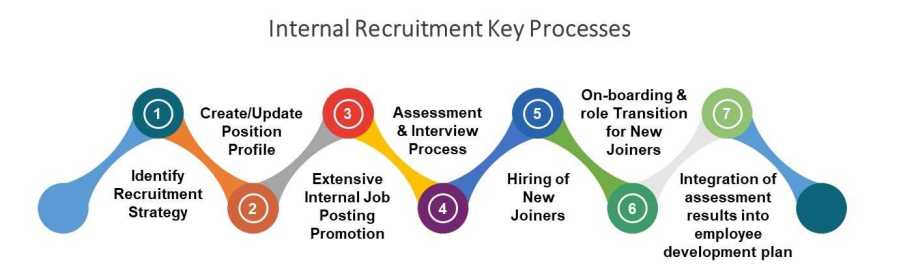
The term Recruitment denoted that process by which the management locates the source of supply of manpower and then traps that source and it encourages outside manpower to apply for the jobs in the organization and search for the proper person for the right type of job at the right time is the basic function of the personnel department. The selection of wrong persons for the right job can ruin the process of work. A well-planned recruitment policy ensures increased productivity, decreased costs, increased employee morale and goodwill of the organization and thus recruitment is the process of searching for prospective employees and encouraging them to apply for the jobs in an organization and it aims at securing as many qualified applicants for the jobs as possible so as to decrease the hiring ratio and before searching for applicants, an organization should consider the most likely sources of the type of employees it needs. According to Edwin Flippo “Recruitment is the process of searching for prospective employees and stimulating and encouraging them to apply for jobs in an organization”. Recruitment also includes seeking and attracting a pool of people from which qualified candidates for job vacancies can be chosen. There are various sources of recruitment of workers and the personnel manager will select a source of recruitment, keeping in view the requirements of the departments concerned, the type of persons needed and the advantages of a source of recruitment and different sources of recruitment can be tapped on different occasions for different types of persons.

INTERNAL RECRUITMENT

One important source of recruitment is a promotion from within and it is the best method for recruitment of high and the medium cadre of managers and many companies feel that the best practice is to fill jobs from within the organization and they feel that inside employees already know the company and its policies and presumably have proved their ability and loyalty. This keeps the employees happy contented and in good morale and they know that they will earn promotion to a higher position. A performance test is the best test to determine a person’s suitability for a job. Filling of a vacancy from an internal source is very economical and no time and money are required to spend on a new candidate and a person who is selected for a job from within an organization knowns the organizational relationships.

EXTERNAL RECRUITMENT

By the external sources of recruitment, a vast mass of skilled, semi-skilled, and unskilled people is recruited from outside the organization. By using external sources of recruitment the organization can expect to get talented candidates from outside and the selection process is characterized by competition and the prospects that the organization can pick up the best candidates and fresh talents for the job are high. External candidates are expected to be trained and be efficient in work as they join the organization they work with great vigor and put in their best efforts to achieve the objectives and this creates healthy competition and congenial work environment in the organization.

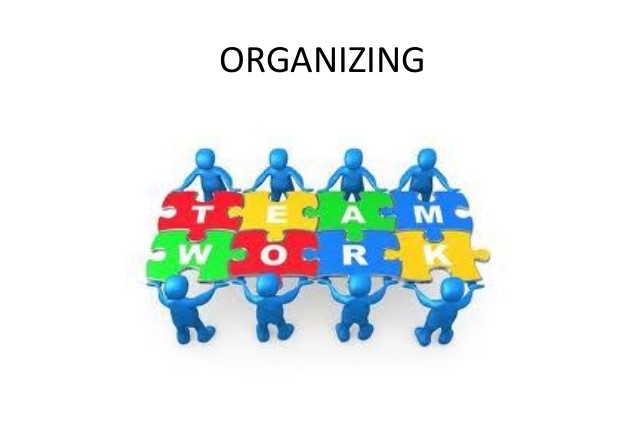
ORGANISING


The organisation provides a framework where duties are identified, define tasks are allotted to suitable persons, and interrelationships of personal are made certain and the joint efforts made by different persons become more productive, effective and economical if a well-knit organization is provided by the management and the purpose of establishing an organization, this is to enable its personnel to work more effectively as a unit and no wonder organisation serves as the backbone of management and it is very foundation of most of the steps of operating management.

Organising can be defined as “Organisation is a harmonious adjustment of specialised parts or the accomplishment of common purpose or purposes” by Haney. The organisation is the process of identifying and grouping the work performed, defining and delegating responsibility and authority and establishing a relationship to enable people to work together in accomplishing common objectives.

NATURE OF ORGANISING

1. Division of work

The setting of an organisation involves division of the total work into various activities and functions and assigning the tasks to different persons according to their skill, ability and experience.

2. Chain of command

The superior-subordinate relationship established in an organisation is based on the authority which flows from the higher levels of management to the immediately lower of management and thereby forming a hierarchical chain and is known as the chain of command.

3. Plurality of Persons

The organisation is a group of many persons who assemble to fulfil a common purpose and a single individual cannot create an organisation.

4. Common Objectives

There are various parts of an organisation with different functions to perform but all move in the direction of achieving a general objective.

5. Group of people

An organisation comes into existence when a group of people combine their efforts for some common purpose and willingly contribute towards their common endeavour.

6. Common Purpose

Every organisation comes into existence based on goals of the enterprise which are separate from the personal goals of the people employed and it is the common purpose of the organisation which provides the basis of cooperation among its members.

7. Vertical and Horizontal Relationships

An Organisation creates cooperative relationships between different departments and divisions as well as between superiors and subordinates. The duties and responsibility of superiors and subordinates in each department or division are also unified to serve the purpose of their joint efforts.

8. Organising is a universal process

Organising is needed both in business and also in non-business organisations and nor only this, an organisation will be needed where two or more than two people work jointly. Therefore, an organisation has the quality of universality.

9. Dynamics of organisation

Besides the structural relationships among people which are based on their activities and functions, there exists an organising interaction based on sentiments, attitudes and behaviour of individuals and groups and they are subject to change from time to time.

According to Chester Bernard, Communication, Cooperation and Spirit of service and common objectives are the main elements of the organisation.

MANAGEMENT

Management has become an important Economic organ of the present industrial society. Every person in the world from the family head to the prime minister of the country or from the worker to the Managing director of a Joint-stock company is busy in managing different types of affairs that he has to perform in discharging his/her entrusted duties. Management is the coordination of human and physical resources towards the attainment of objectives. By managing different activities, we can best utilize our available scarce resources. As the mind of a person controls his activities, similarly management controls the business organization, men, machines, and materials in getting the work accomplished.

TRADITIONAL AND MODERN CONCEPT OF MANAGEMENT

Management is related to the dynamic process of establishing objectives of the organization, harnessing and coordinating its human as well as other resources, and ultimately to the attainment of goals. It is a process of creating a creating conducive environment for humanitarian efforts, to reach the organization’s goals effectively and efficiently. According to  C.S George who describes management as “Management is a distinct process consisting of planning, organizing, actuating and controlling, performed to determine and accomplish the objectives by the use of people and resources” Traditional concept of management restricted management to getting things done.

According to the modern view, management covers a wide range of business-related activities. According to modern thinkers, “Management is a process of an activity a discipline and an effort to coordinate, control and direct individuals and group efforts towards attaining the cherished goal of the business”. Another aspect of management is presented by Harold Koontz and O’ Donnell, “Management is the art of getting things done through and with the help of a formally organized group”. To be more specific, to manage is to forecast and to plan, to organize, to command, and to control.

CONCEPT OF MANAGEMENT

Management is a set of functions directed at the efficient utilization of the resources in the pursuit of organizational goals. To be more specific, to manage is to forecast and to plan, to organize, to command, to coordinate, and to control. To foresee means examining the future and drawing up the plan of action. To organize means building up the dual structure, material, and human of the undertaking. To command means maintaining activity among the personal. To coordinate means binding together, unifying, and harnessing all activities and efforts. To control means seeing that everything occurs in conformity with the established rules and expressed command. By efficient utilization of resources using resources wisely and in a cost-efficient manner. By effectiveness, we mean making the right decisions and successfully implementing them. Efficiency and Effectiveness are interrelated, for instance, it is easier to be effective if one ignores efficiency. The effect of good management is nothing short of remarkable. Take an under-performing-even chaotic-organization and install a skilled manager and him/she soon can have the enterprise humming like a well-tuned machine. Studies have shown that 90 percent of the business fail generally due to poor management.