



By Shashikant Nishant Sharma
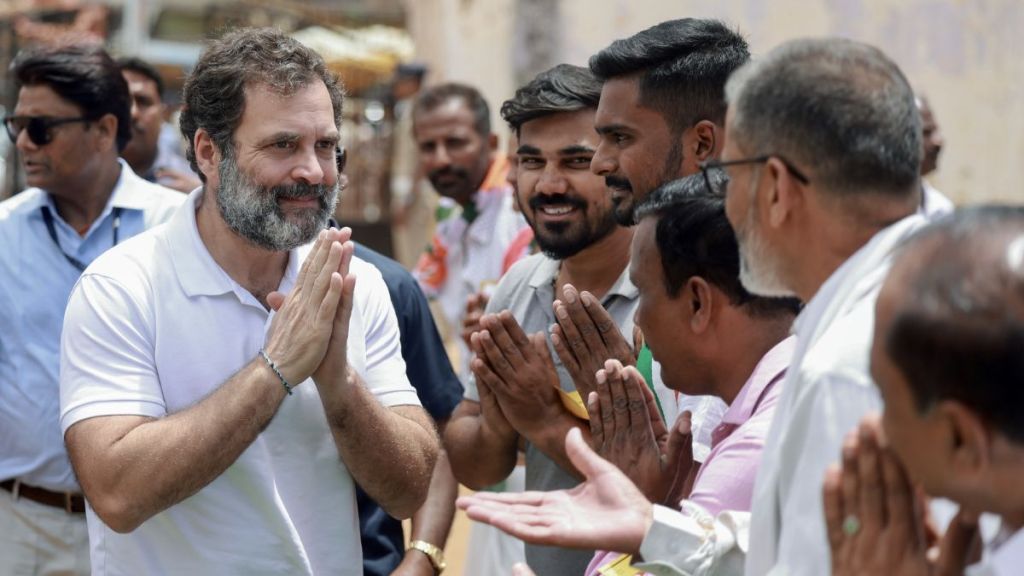
Demography, encompassing factors like age, caste, and religion, influences voting patterns in Karnataka state elections. Understanding the composition of the electorate helps analyze alliances and voting behavior. Rahul Gandhi, a prominent politician from the Indian National Congress, has campaigned in Karnataka and sought to mobilize support for his party. His effectiveness in connecting with voters and influencing the election outcome varies, as it depends on multiple factors beyond an individual’s influence. Other dynamics, such as party strategies, local issues, and the performance of rival parties, also play crucial roles in determining the results of Karnataka state elections.
Demography plays a significant role in elections as it involves the study of population characteristics and their influence on political outcomes. In the context of the Karnataka state election results, demography can provide insights into the composition of the electorate, such as age, gender, caste, and religion, which can shape voting patterns and alliances. Rahul Gandhi is a prominent Indian politician and a member of the Indian National Congress party. His role in the Karnataka state election results would depend on various factors, including his party’s performance, his campaign efforts, and his ability to connect with voters. While he may have campaigned in the state and tried to mobilize support for his party, the overall outcome of the election would depend on multiple factors beyond any individual’s influence.
Changing Demography of Karnataka
Karnataka has experienced significant demographic changes in recent years. The state’s population has been growing steadily, primarily due to natural increase and in-migration from other parts of India. According to the 2011 census, Karnataka had a population of approximately 61 million. Urbanization has been a prominent trend in the state, with cities like Bengaluru, Mysore, and Mangalore witnessing rapid growth. Bengaluru, in particular, has emerged as a major IT and technology hub, attracting professionals from different parts of the country. This influx of migrants has contributed to the cosmopolitan nature of the city. Karnataka is linguistically diverse, with Kannada being the primary language spoken by a majority of the population. However, there are also significant populations that speak other languages such as Tamil, Telugu, Urdu, and Konkani, among others. In terms of religious composition, Hinduism is the predominant religion in Karnataka, followed by Islam, Christianity, and Jainism. The state is also home to various religious sects and communities, contributing to its religious diversity. Caste continues to be a factor influencing Karnataka’s demography and politics. Historically influential communities, such as the Lingayats and Vokkaligas, have played significant roles in the state’s social and political landscape. However, other communities, including Scheduled Castes (Dalits) and Scheduled Tribes, have also gained political representation and influence.
It’s important to note that the demographic landscape of Karnataka may have evolved since my last update. For the most up-to-date and precise information, referring to recent studies and official data sources is recommended.
Emergence of Rahul Gandhi
Rahul Gandhi is a prominent Indian politician and a member of the Indian National Congress party. He is the son of former Indian Prime Minister Rajiv Gandhi and the grandson of former Prime Minister Indira Gandhi. Rahul Gandhi’s emergence as a political figure in India began with his active involvement in the Indian National Congress party and his eventual entry into electoral politics. Rahul Gandhi initially served as a general secretary of the Indian National Congress, working behind the scenes to strengthen the party’s organization and support its electoral campaigns. Over time, he took on a more prominent role within the party, becoming the vice president in 2013 and eventually the president of the Indian National Congress in 2017. Rahul Gandhi’s emergence as a political leader has been characterized by efforts to connect with the youth, marginalized communities, and rural populations. He has advocated for issues such as social justice, inclusivity, and economic development. Rahul Gandhi has campaigned extensively in various state elections, including Karnataka, and has sought to rally support for his party’s candidates. While Rahul Gandhi has garnered a considerable following and support within the Indian National Congress party, his political journey has seen ups and downs. He has faced criticism and scrutiny from political opponents and has been actively involved in debates and discussions on various national and regional issues. It is worth noting that political dynamics and individual influence can vary over time, and the specific impact and future trajectory of Rahul Gandhi’s emergence in Indian politics will continue to evolve as political landscapes change.
History of Karnataka Elections
The history of Karnataka elections dates back to the formation of the state in 1956. Since then, Karnataka has witnessed numerous state assembly elections as well as Lok Sabha (parliamentary) elections. Here is a brief overview of the history of Karnataka elections: Early Years: The first general elections in Karnataka took place in 1957. The Indian National Congress (INC) dominated the political landscape in the early years, winning the majority of seats in the state assembly. Coalition Politics: In the 1980s and 1990s, Karnataka witnessed the rise of coalition politics. The Janata Party, a coalition of various anti-Congress parties, came to power in 1983, marking a shift from single-party dominance. This period saw multiple governments being formed by different alliances, including the Janata Dal and Bharatiya Janata Party (BJP). Rise of the BJP: The Bharatiya Janata Party (BJP) gained prominence in Karnataka during the late 1990s and early 2000s. In 2004, the BJP formed its first government in the state, led by Chief Minister B.S. Yeddyurappa. However, the government faced internal issues, leading to its collapse. Congress Revival: The Indian National Congress made a comeback in Karnataka politics, winning the state assembly elections in 2013. Siddaramaiah became the Chief Minister, leading a Congress government. However, in the 2018 elections, the Congress was unable to secure a majority, leading to a coalition government with the Janata Dal (Secular) party.
Recent Elections: In the most recent state assembly elections held in 2018, the BJP emerged as the single largest party. After a period of political uncertainty, the BJP formed the government with B.S. Yeddyurappa as the Chief Minister. However, in subsequent by-elections, the BJP lost a few seats, resulting in a change of Chief Minister with B.S. Yediyurappa resigning and Basavaraj Bommai taking office in 2021. It’s important to note that the political landscape in Karnataka has been dynamic, with various parties and alliances vying for power. State elections in Karnataka have seen the emergence of regional parties, coalition governments, and shifts in power between the Indian National Congress and the Bharatiya Janata Party. The outcome of elections in Karnataka has had implications for state governance as well as national politics.
New Challenges for Congress Party
The Congress Party in India has faced several challenges in recent years. Here are some of the key challenges it has encountered:
Electoral Performance: The Congress Party has witnessed a decline in its electoral performance, especially in national elections. In the 2014 and 2019 Lok Sabha elections, the party faced significant setbacks, winning only a limited number of seats. This decline has impacted its overall political influence and ability to form a government at the national level.
Leadership Crisis: The party has grappled with a leadership crisis, with a lack of clear and dynamic leadership. This has resulted in a leadership vacuum and internal factionalism, which have weakened the party’s ability to present a united front and effectively communicate its message to the electorate.
Ideological Positioning: The Congress Party has faced challenges in clearly articulating its ideological positioning. In recent years, there has been a growing trend of political parties aligning themselves with specific ideologies or issues, while the Congress Party has struggled to define and communicate its distinct ideological stance.
Regional Strongholds: The Congress Party has lost ground in many states where it previously had strongholds. Regional parties have gained prominence and appeal, leading to a fragmentation of the political landscape. This has reduced the Congress Party’s ability to form alliances and consolidate its support base.
Youth Appeal: The Congress Party has faced difficulties in appealing to the aspirations and concerns of the younger generation. It has struggled to connect with the youth, who are increasingly looking for dynamic and transformative leadership and policies.
Communication Strategy: The Congress Party has faced challenges in effectively communicating its policies and achievements to the electorate. It has struggled to counter the narrative of its political opponents and has often been perceived as lacking a robust communication strategy.
Organizational Strength: The Congress Party has faced issues with its organizational strength and grassroots presence. It has struggled to rejuvenate its party structure and mobilize workers effectively, particularly at the local level.
To overcome these challenges, the Congress Party needs to undertake significant introspection, revitalize its leadership, redefine its ideological positioning, and strengthen its organizational structure. It must also focus on engaging with the aspirations of the youth and effectively communicate its policies and vision to regain public trust and support.
Concluding Remarks
The Congress Party’s performance in Karnataka elections has been subject to critical appraisal due to a mix of successes and failures. While the party has experienced some notable achievements, it has also encountered significant setbacks. Here is a critical appraisal of the Congress Party’s performance in Karnataka elections:
Mixed Electoral Performance: The Congress Party has had mixed electoral performances in Karnataka. It won the state assembly elections in 2013, forming the government under the leadership of Siddaramaiah. However, in the subsequent 2018 elections, the party failed to secure a majority and had to form a coalition government with the Janata Dal (Secular) party. This highlighted a lack of sustained popularity and the inability to secure a clear mandate.
Leadership Challenges: The Congress Party has struggled with leadership challenges in Karnataka. While Siddaramaiah played a significant role in the party’s victory in 2013, his tenure as Chief Minister was marked by controversies and internal rifts. Additionally, the absence of a strong and decisive leader at the state level has affected the party’s ability to effectively mobilize support and present a cohesive image.
Intra-party Factionalism: The Congress Party in Karnataka has been plagued by factionalism and infighting. Internal divisions and power struggles have hindered the party’s unity and cohesion, leading to weakened electoral campaigns and suboptimal coordination among party members.
Failure to Capitalize on Governance: The Congress Party’s tenure in Karnataka witnessed a mixed record in governance. While some initiatives were undertaken, such as social welfare programs and measures to address agrarian issues, the party failed to effectively communicate and capitalize on these achievements. Inadequate implementation and a lack of clear messaging hindered their ability to connect with voters and secure their trust.
Inability to Counter BJP’s Rise: The Congress Party has struggled to counter the Bharatiya Janata Party’s (BJP) rise in Karnataka. The BJP’s strong organizational structure, effective campaign strategies, and appeal to Hindutva ideology have posed significant challenges for the Congress Party. The party has been unable to effectively counter the BJP’s messaging and address the concerns of a changing electorate.
Failure to Strengthen Party Organization: The Congress Party has faced challenges in strengthening its party organization at the grassroots level in Karnataka. The absence of a robust and well-connected organizational structure has hindered their ability to mobilize support and build a strong voter base.
To improve their performance in national elections, the Congress Party needs to address these critical issues. They should focus on nurturing strong and decisive leadership, resolving internal factionalism, communicating their achievements effectively, countering the BJP’s rise, and revitalizing the party organization at all levels. Additionally, connecting with voters on issues that resonate with them and presenting a clear vision for the state’s development will be crucial in rebuilding public trust and support.
References
Antil, A., & Verma, H. V. (2021). Rahul Gandhi on Twitter: An analysis of brand building through Twitter by the leader of the main opposition party in India. Global Business Review, 22(5), 1258-1275.
Devi, B. U. (2013). Rahul Gandhi’s Immaturity. Economic and Political Weekly, 48(43), 5-5.
Gould, H. A. (1997). General Elections, 1996: Karnataka: Decline and Fall of the Congress Machine. Economic and Political Weekly, 2335-2349.
Manor, J. (2008). Letting a winnable election slip away: Congress in Karnataka. Economic and Political Weekly, 23-28.
Mahapatra, S., & Plagemann, J. (2019). Polarisation and politicisation: the social media strategies of Indian political parties.
Manor, J. (2013). Lucky in Its Adversaries: A Slipshod Congress Gains a Majority in the Karnataka Election. Economic and Political Weekly, 51-59.
Palshikar, S., & Suri, K. C. (2014). India’s 2014 Lok Sabha elections: Critical shifts in the long term, caution in the short term. Economic and Political Weekly, 39-49.
Pinto, A. (1994). Karnataka Assembly Elections: An Overview. Economic and Political Weekly, 3309-3311.
Shastri, S. (2009). Leadership at the state level mattered. Economic and Political Weekly, 88-91.
Shastri, S. (2013). The 2013 Karnataka Assembly Outcome: Government Performance and Party Organization Matters. Studies in Indian Politics, 1(2), 135-152.Simmons, C. (2019). Dynastic Continuity and Election in Contemporary Karnataka Politics. In South Asian Sovereignty (pp. 136-149). Routledge India.

 Eduindex
You must be logged in to post a comment.