DARK HUMOR

BY: VAIBHAVI MENON

Black comedy, also known as black humor, dark humor, dark comedy, morbid humor, edgy humor, or gallows humor, is a style of comedy that makes light of subject matter that is generally considered taboo, particularly subjects that are normally considered serious or painful to discuss. Writers and comedians often use it as a tool for exploring vulgar issues by provoking discomfort, serious thought, and amusement for their audience. Thus, in fiction, for example, the term black comedy can also refer to a genre in which dark humor is a core component. Popular themes of the genre include death, violence, slavery, genocide, discrimination, disease, and human sexuality.

Black comedy differs from both blue comedy—which focuses more on crude topics such as nudity, sex, and bodily fluids and from straightforward obscenity. Whereas the term black comedy is a relatively broad term covering humor relating to many serious subjects, gallows humor tends to be used more specifically in relation to death, or situations that are reminiscent of dying. Black humor can occasionally be related to the grotesque genre. Literary critics have associated black comedy and black humor with authors as early as the ancient Greeks with Aristophanes. Does dark humor make you laugh? You know, all those jokes about painful or taboo subjects such as death, disease, deformity, or sexuality? Well, researchers say that if you appreciate or indulge in dark humor, also known as morbid humor, black comedy or gallows humor, you are probably not just a genius, but also show lesser aggression and are less negative. Not everyone has the nerves or intelligence for morbid humor. You need the nerves because you are making fun of taboo subjects, and getting others to laugh along with you. And intelligence, because understanding dark humor demands astuteness since it is not as easy to understand as your regular everyday jokes. It requires unraveling intelligent word play, and also demands better emotional control so that you can distance yourself from the content and enjoy the joke! When you try to unravel a single word’s multiple meanings, you are pitting your brain’s left and right hemispheres against each other. Top that with trying to disentangle complex emotions about taboo subjects, as well as laugh at them – and you are right out of your emotional comfort zone! From high profile comedians to teens on TikTok, dark humor is a form of comedy utilized across all media platforms. It can bring people together to make light of an unfortunate situation and it can isolate those at the brunt end of the joke. The idea of dark humor is controversial at its core, especially considering that its subjects are often disputed. The harsh and edgy jokes are meant to poke fun at otherwise not humorous situations. 

One of the biggest components of dark humor is the ability of the user to draw on personal experiences, especially difficult ones, to bring levity to it and connect with others that have similar experiences. Race- or gender-based jokes can be funny when made by a person within the demographic of which they are making fun.  When a joke is made at the expense of others, it crosses the line and becomes offensive. This includes using slurs to describe marginalized groups. When the use of a slur is the only punchline, it is best to rethink the joke.  A good way to judge whether a joke relies solely on insulting a group is whether or not the person would make the same comment in front of those they are describing. If there is any hesitance in whether one would want another to hear or see it, then the joke should not be made in the first place. When making edgy commentary about a friend or family member, it is important to check with them first. Losing relationships is not worth a few laughs at the expense of a loved one.
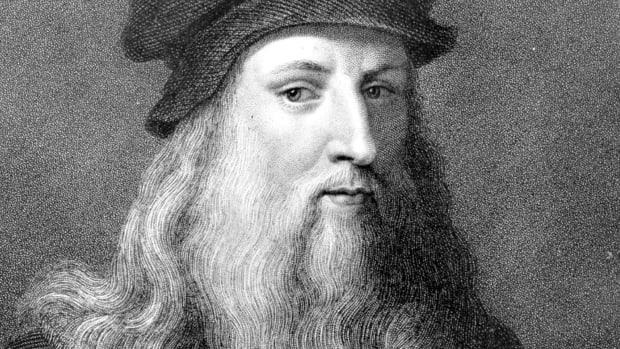
An orb and Leonardo da Vinci: The Salvator Mundi Painting Solved

Leonardo da Vinci, the artist of the famous Mona Lisa and Salvator Mundi painting, is a man of mysteries. He was more than a painter. He was an avid engineer, scientist, sculptor and an architect with deep knowledge about science and astronomy. The alien theories, the striking symbolism theories and more out-of-the world speculations about his work are being debated up till now. One such puzzle is the Salvator Mundi painting

The Salvator Mundi Painting

Salvator Mundi
The Salvator Mundi painting

The Salvator Mundi painting was created by da Vinci somewhere between 1490-1500. It is the world’s most expensive painting, priced at 450 million US dollars. No, Mona Lisa isn’t the most expensive one. Deep search can tell you that. The image depicts a man, presumably Jesus Christ, holding in his hand a spherical ball like structure. Nothing mysterious about the painting as of now. Okay. So what was solved?

To understand how scientists solved the puzzle, we have to look up the problem. As I had already stated, da Vinci was a man of science and had genuine knowledge about it. It can be proved by looking at his works which deceivingly represent scientific facts. Salvator Mundi means ‘savior of the earth’. So it can be interpreted that the glass orb that Jesus is holding symbolizes the earth.

The problem behind

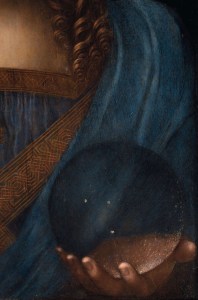
What is wrong about this painting is that, any 10th grader would know that a convex lens would provide an inverted, magnified, reversed image of an object placed behind it. The glass orb must act like a convex lens and thus do the same. But if you observe carefully, you can see that it appears as if those properties are defied and a clear, non-reversed image of Jesus’ hand and clothing is visible behind the glass orb.

You may argue that any painter would be ignorant of the science behind a convex lens. But Leonardo da Vinci was not ‘any painter’. He was a polymath of the High Renaissance! He has portrayed much more complex scientific principles in his work than that of a convex lens. There is no plausible way that da Vinci couldn’t have known the laws of optical physics. So why did he do that?

Solved

The puzzle was solved by computer scientists from the University of California, Irvine. The painting was 3d virtualized to study about how the various material orbs would appear under different refractive conditions. Many materials with which orbs could be designed were taken into consideration. At last it was concluded that the spherical orb was not a solid mass, instead a hollow orb. Hollow orb does not behave like a convex lens. It displays the image as it is, thus adhering with the painting. They predicted that the glass of the orb in Salvator Mundi was a fraction of an inch thick thus accounting for the quality.

Did Leonardo da Vinci actually paint it?

Many critics claim that the painting is not actually da Vinci’s. They point that da Vinci is more of a scientist to commit such trivial errors and thus proving that he did not paint it at all and that it was painted by a ‘lesser’ painter. But many say that, such a clever installation of the orb itself is a proof of authenticity. In order to think about hollow orbs and paint it during the 1500s would take immense intellect, which can only be done by the polymath himself.

Leo constellation?


three dots
The three dots in the glass orb

Orange iris
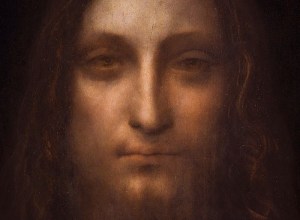
The orange iris of Jesus in the painting

As if the Salvator Mundi has not enough controversies, one more intriguing detail is the three dots painted in the glass orb giving it a mystical appearance. The three dots are said to represent the constellation of the sign Leo. What does it have to do anything with this painting? Well, if you observe the iris of Jesus, a faint orange glow emanates from within. The orange iris imitates Lion’s eyes. And thus the constellation, many say. Some also relate to the fact that his name Leonardo is the reason behind. However there is no concrete explanation behind.

Hope I kindled some curiosity within you today. I leave you with one of my favorite da Vinci’s quote:

To develop a complete mind:

Study the science of art;

Study the art of science.

Learn how to see. Realize that everything connects to everything else.

-Leonardo da Vinci


Sagrada de Familia: The controversial church

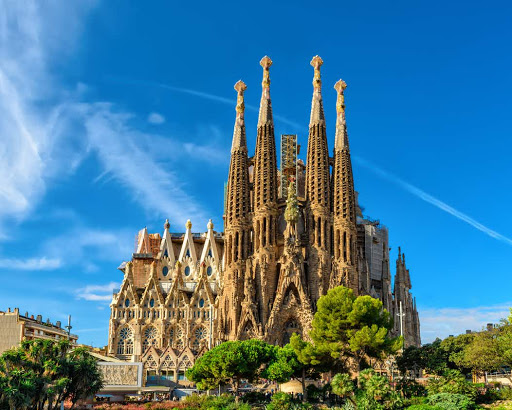
We humans always have an impeccable liking for controversies. They give us something to put the gray cells of our brain to work. Let’s exercise them today by taking a look into the world’s tallest church(basilica), Sagrada de Familia, constructed by the famous architect Antoni Gaudi(1852-1926). The God’s architect, started the construction of Sagrada de Familia in the year 1882. Be prepared for this statement. The basilica is still under construction and will not be completed until 2026! That’s a whooping 135 years of construction! If it is a famous church, which can be funded abundantly, why is it still under construction after over a century?

Sagrada de Familia and its private funding

The construction of the basilica has been carried out with the help of private funding and donations and is not funded by any government or church. Now you may ask why a church has shortage of funds. The answer to this is the beginning of the controversy. Before divulging into it, it is important to note that it isn’t a church, but rather a basilica. It was originally designated as a cathedral but then in 2010, Pope Benedict XVI declared it a basilica. What’s the difference between a basilica and a church?

Antoni Gaudi drew inspiration from nature

Before answering the question of why it is considered controversial, let me give you a brief tour of the basilica. The basilica is to have eighteen spires out of which only eight has been constructed as of now. These spires symbolize the Twelve Apostles, Virgin Mary, Four Evangelists, and Jesus Christ. They also differ in their heights accordingly to denote the hierarchy, with Jesus Christ’s spire the tallest of all at an astounding 560 feet.

Antoni Gaudi was an admirer of nature. He often finds inspiration for his works from mother nature herself.

The great book, always open and which we should make an effort to read, is that of Nature.

-Antoni Gaudi

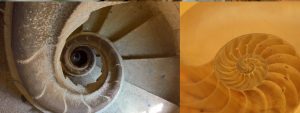
This can be reflected in his basilica too. To showcase it to you, let me show you a staircase inside the Sagrada Familia. You will notice that the staircase spirals, not ordinarily, but rather ‘scientifically’. The spirals represent the famous Fibonacci spiral. The Fibonacci spiral is a logarithmic spiral whose growth factor is φ, the golden ratio 1.69, which is the ratio which is found almost everywhere. In flowers, sea shells and even the human body. You may now understand Gaudi’s love for nature.

Spiral Staircase
Spiral staircase(Left), a sea shell on the right.

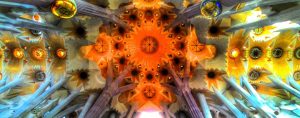
Also, the basilica incorporates curved lines rather than straight ones. This can be observed in the pillars of the basilica, curved and giving the illusion of many trees huddled together to form a forest. According to Gaudi, nature did not give us straight lines. So it is to do justice to nature by incorporating curved lines in his temple.

The straight line belongs to men. The curved one to God.

-Antoni Gaudi

Not only in this basilica, Gaudi’s work reflects nature in many of his other art works and buildings.

Ceiling of Sagrada Familia
Ceiling of Sagrada Familia, resembling trees in a forest

Freemasonist?

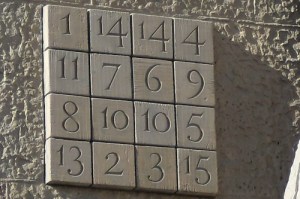
magic square
The magic square in the passion façade.

His fascination for nature is co-walked by his fascination for something strange too. Interesting right? Next to the passion façade, near his tomb(yes, Gaudi is buried inside the basilica)there lies a 4×4 magic square with 15 numbers inscribed on it. Even bizarre. These numbers are positioned in such a way that when you add the numbers horizontally, vertically or diagonally, they add up to the number 33!

Now, 33 is not any number. There is symbology in play here. 33 is said to be the highest rank that a freemasonist can go. There exists a controversy that Gaudi was a masonist and that he achieved the 33rd rank. But 33 maybe a coincidence, you may think. But note that his other work Parque Guëll, has staircase whose steps sum to 33 too. Now this is far too real to be ignored as a mere coincidence. One more thing, Gaudi’s friend Eduard was a freemasonist and his patron Guëll was also a freemasonist. These facts make it difficult to ignore ’33’.

Addressing the elephant of the room

So what does all this have to do with the controversy. Gaudi’s nature inspired works were frowned upon during his days. The basilica had undergone many attacks, also a reason for its delayed construction. George Owens, in his novel Homage to Catalonia, wrote:

I went to have a look at the cathedral—a modern cathedral and one of the most hideous buildings in the world. Unlike most of the churches in Barcelona it was not damaged during the revolution—it was spared because of its ‘artistic value,’ people said. I think the Anarchists showed bad taste in not blowing it up when they had the chance.

Alongside this, there was the freemasonist theory. Christianism and freemasonry were not exactly the friendly combo. In 1983, the Church issued a new code of canon law, which stated: ‘A person who joins an association which plots against the Church is to be punished with a just penalty; one who promotes or takes office in such an association is to be punished with an interdict‘.

Such was the heat between these two groups. And having said that Gaudi may have been a masonist, poses no doubt in churches denying funding to Sagrada de Familia. Even though it is addressed a basilica, by now you can be sure that it isn’t seen as one by many Catholics. This can be contradicting and confusing. Like an oxymoron, propagating absolutely different ideas: Science and Religion. These two have always been like oil and water. No matter how hard you try to mix, they will stand separated.

Thus, I leave you all with questions lingering in your minds. May your quest begin!

Note: More information regarding the intertwining of science and religion symbolism can be read in the book ‘Origin’ by Dan Brown. Meanwhile, you can check another article which revolves around the ideas of the book here.


Chaloung Sukapha in the light of a recent controversy

Chaolung Sukapha, the founder of Ahom kingdom, was recently referred to as a “Chinese invader”. The name-calling broke media as it showed the illiteracy of knowing his/her own history and culture. To know of Chaolung Sukapha is the least we can do to pay a tribute.

This 13th-century ruler founded the Ahom kingdom that went on to reign over Assam for six centuries.

The contemporary scholars have traced his roots which evidentially belong to Myanmar. He is also widely referred to as the architect of Assam that is recalled as “Bor Asom” or “Greater Assam”. This shows the gratitude given by the indigenous people towards his successful efforts to assimilate so many different communities and tribes that make today a dignified society.

As the state today is fighting with floods, it is the best time to commemorate Sukapha and his rule, which Assam celebrates as “Asom Divas” on the 2nd of December every year.

The Ahom Kingdom ruled from 1228 to 1824. In the 13th century, the Ahoms migrated from the regions of present-day Myanmar to the Brahmaputra valley.

In 1253, this tributary ruler established his capital at Charaidau, Assam. They recognized new states by suppressing the older political systems of the landlords locally called as Bhuiyas. The same was done in 1523 by conquering one of the powerful kingdoms of those times, the Chhutiyas and in 1581 the Koch-Hajo. By the 16th century, Sukapha had subjugated different tribes into their community.

These unpopular kingdoms faced many invasions from the south-western areas of the Indian subcontinent on a repetitive basis and remained under as shackles as they were finally defeated by the Mughals in 1662.

The Burmese invasion of Assam ended the dynasty of this kingdom and later the subsequent annexation was done by the British East India Company which followed the Treaty of Yandaboo in 1826.

The Administration of Ahom society was then divided into clans or khels.  A khel in turn was often in control of several villages. A census was done and the people were transferred from the more populated to the less populated areas.

By the beginning of the 17th century, the administration transformed into almost a centralised version.

The administration involved labourers called ‘paiks’, system of forced labour prevalent in the Ahom kingdoms, who in the name of economic structure were sent and received from each village by rotation.

The Men of the kingdoms were mostly involved in agriculture, construction of dams and other similar public works. During the times of wars, the men also served in the armies. There were also employed in different home manufacturers and cottage industries.

Inclusive of this, the State impressively saw flourishment as the agriculture thrived. It saw many new methods of rice cultivation which were developed by the Ahoms.

The Culture of the Ahoms was originally the worshipping of their tribal gods. But gradually with other developments, Hinduism became a predominant religion during the mid-eighteenth century due to the rule of Hindu kings. However, the entire community of the Ahoms did not adopt Hinduism completely.

Various arts and literature also had a separate culture in the Ahom kingdoms. The Poets and Scholars were specifically given land grants on their valuable performances. Theatre was encouraged thoroughly as well.

The translation works carried out from Sanskrit into the local languages with time. It involved the historical works, known as Buranjis, to be written and converted into first the Ahom language and then in Assamese language.

The technology in the Ahom Kingdoms as the usages of firearms suggest even in the 1530s reflect advancement. The kingdom began to make gunpowder and cannons by 1660s.

The kingdom may not be highlighted by bright colors but their reflection is very well noticed in the developments of the State and importantly, the country as a whole. To be giving them terms without proper knowledge only reflects signs of disrespect towards our own country.