Exploring Prop Trading Platforms: Learning Opportunities in Forex and Crypto Markets

 Exploring prop trading platforms will reveal numerous
learning opportunities in Forex and Crypto markets. You’ll benefit from higher
profit potential and sophisticated tools. The Forex market has a daily trading
volume exceeding $6 trillion, requiring you to understand currency pair
dynamics and session influences. In the Crypto market, grasp the significance
of blockchain technology and market capitalization. Choosing the right firm
involves evaluating risk management strategies and profit sharing models. Effective
risk management, essential trading tools like MetaTrader 4, and rigorous
strategy development will enhance your trading acumen. Dig deeper to uncover
detailed insights for maximizing your potential.

What Is Prop Trading?

Prop trading, or proprietary trading, involves firms
investing their own capital in financial markets to directly generate profit,
rather than earning from client commissions. Originating in the 1980s, prop
trading has evolved significantly with technological advancements enabling
high-frequency trading and algorithmic strategies. Understanding the regulatory
landscape is crucial as rules vary by jurisdiction but generally focus on
ensuring market stability and transparency. For instance, the Volcker Rule under
the Dodd-Frank Act restricted prop trading by banks in the U.S. after the 2008
financial crisis, aiming to reduce risk and prevent conflicts of interest. In
Europe, the Markets in Financial Instruments Directive (MiFID II) imposes
stringent reporting and transparency standards on trading activities,
influencing how Prop Trading Platforms operate by emphasizing
compliance and robust risk management practices.

Benefits of Prop Trading

Prop trading offers significant advantages:

     
Higher
Profit Potential:
By leveraging the firm’s capital, prop traders can
achieve returns up to 20% higher than typical retail traders.

     
Enhanced
Control Over Strategies:
Prop traders enjoy autonomy to tailor trading
strategies, fostering deeper market understanding and sharpening
decision-making skills.

     
Access to
Advanced Tools:
Prop trading firms provide access to sophisticated
analytics platforms, real-time data feeds, and risk management software,
enhancing trading efficiency.

     
Psychological
Resilience:
The high-stakes environment cultivates resilience, teaching
traders to manage stress, adapt quickly to market changes, and maintain focus—a
critical skillset for long-term success.

Forex Market Basics

The forex market, boasting a daily trading volume
exceeding $6 trillion globally, revolves around currency pairs and distinct
trading sessions across major financial hubs.

Currency Pair Dynamics

Currency pairs like EUR/USD or GBP/JPY reflect the
relative value between two currencies, denoted by exchange rates. Fluctuations
in these rates are influenced by economic indicators, geopolitical events, and
market sentiment. Traders track these changes using tools such as moving
averages, Bollinger Bands, and the Relative Strength Index (RSI) to inform
their strategies.

Market Trading Sessions

The forex market operates continuously, segmented into
four primary trading sessions: Sydney, Tokyo, London, and New York. Each
session’s unique timing impacts market liquidity and volatility, with peak
activity during overlapping periods like the London-New York session overlap
from 1 PM to 4 PM GMT. Understanding these sessions helps traders optimize
trading strategies and manage risk effectively.

Mastering these fundamentals equips traders to navigate
the dynamic forex market with precision and confidence.

Crypto Market Fundamentals

Understanding the crypto market involves key
principles: blockchain technology, market capitalization, and trading volumes.

Blockchain Technology

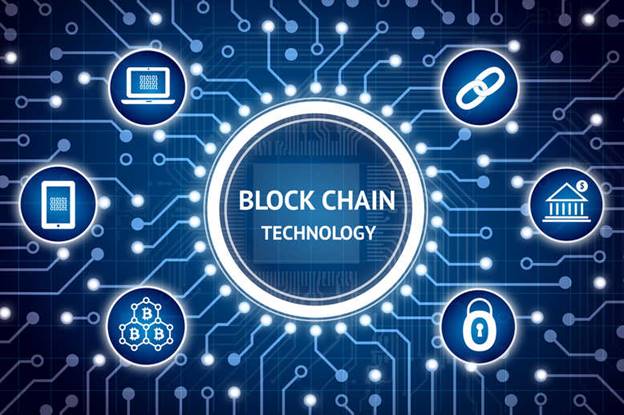
Blockchain serves as the secure, decentralized ledger
for cryptocurrencies, ensuring transparent transactions across a network of
computers. This structure minimizes fraud risks and enhances trust among users.
Digital wallets are essential for storing and managing cryptocurrencies
securely.

Market Capitalization

Market cap measures the scale and maturity of
cryptocurrencies, calculated by multiplying total supply by current price. High
market cap coins like Bitcoin and Ethereum tend to offer stability, while lower
cap alternatives may be riskier but potentially more rewarding.

Trading Volumes

Trading volumes reflect liquidity and interest in a
cryptocurrency. High volumes indicate active market participation and
contribute to accurate price discovery. Conversely, low volumes can lead to
higher volatility and less predictable price movements.

These fundamentals provide insights into navigating the
dynamic crypto market landscape effectively.

Choosing a Prop Trading Firm

Choosing a prop trading firm involves careful
evaluation of funding and capital allocation policies, risk management
strategies, and profit sharing models.

When assessing funding, consider the origin of
funds—whether internal, from external investors, or a combination.
Understanding equity allocation policies is crucial to foresee how much of your
earnings you can retain versus what the firm takes. Evaluate whether capital
allocations are fixed or performance-based, and ascertain if the firm offers
scalability options as your trading performance improves.

In terms of risk management, focus on the firm’s
position sizing guidelines and stop loss policies. Look for clear protocols
that limit your exposure per trade and enforce disciplined exit strategies to
mitigate potential losses. Assess whether the firm provides robust tools and
resources for real-time risk assessment and analytics, and seek out educational
support on effective risk management strategies.

Regarding profit sharing, examine the equity
distribution model—whether it’s a fixed percentage or tiered structure.
Understand the timing of profit allocations—whether they occur monthly,
quarterly, or upon reaching specific performance thresholds. Additionally,
clarify how the firm handles losses—whether they deduct losses from your equity
share or absorb initial losses up to a predefined limit.

Choosing the right prop trading firm involves weighing
these factors carefully to align with your trading objectives and maximize your
potential earnings in the Forex and crypto markets.

Risk Management Techniques

Effective risk management in prop trading involves
several key techniques to minimize losses and sustain profitability. Position
sizing is crucial, determining how much capital to allocate per trade based on
your risk tolerance. For example, risking 1% of your trading capital per trade
involves calculating the position size by dividing the dollar amount at risk by
the distance between your entry and stop loss points.

Stop losses are essential tools that automatically exit
positions when the market moves against you by a predefined amount. This
strategy helps mitigate emotional decision-making and limits potential losses,
aligning with data showing improved risk-adjusted returns with their consistent
use.

Diversification across asset classes, such as Forex and
crypto, is another vital technique. Analyzing historical volatility and
correlations between assets informs portfolio optimization, spreading risk more
effectively.

By implementing these disciplined risk management
techniques, prop traders can enhance their risk-adjusted returns, bolster
trading strategies, and sustain profitability over the long term.

Essential Trading Tools

Mastering risk management techniques is crucial, but
equipping yourself with essential trading tools further enhances
decision-making and execution efficiency. Charting software, like TradingView
and MetaTrader 4, offers real-time data visualization to pinpoint trends, price
movements, and entry/exit points in volatile Forex and crypto markets. These
platforms also provide customizable charts and extensive indicators.

Integrating backtesting tools into your toolkit is
equally essential. Platforms such as Amibroker and Forex Tester enable you to
test trading strategies against historical data without risking capital. This
process refines strategies, enhances predictive accuracy, and identifies
strengths and weaknesses, ensuring informed decision-making.

Both charting software and backtesting tools are
indispensable for maximizing efficiency and profitability in trading. They
establish the analytical foundation and practical insights necessary for
success in dynamic Forex and crypto markets. Mastering these tools
significantly enhances your trading experience and performance.

Strategy Development

Developing a strong trading strategy relies on
analyzing historical data, identifying patterns, and adapting to market
conditions with precision. Begin by gathering comprehensive historical data
relevant to your chosen Forex or crypto markets. This data serves as the basis
for backtesting, a crucial step in validating your strategy before live
trading.

Utilize software tools to simulate trades using
historical data, ensuring your strategy can handle diverse market scenarios.
Carefully select indicators that align with your trading objectives, such as
moving averages for trend analysis or the Relative Strength Index (RSI) for
identifying overbought or oversold conditions.

While combining multiple indicators can provide deeper
insights into market trends, avoid overfitting, which may yield unreliable
outcomes. Continuously refine your strategy by analyzing key performance
metrics like win rate, average return, and maximum drawdown. This data-driven
approach enables informed adjustments that strengthen your strategy over time.

Real-World Trading Experience

Once you’ve refined your strategy through rigorous
backtesting, gaining real-world trading experience is essential to validate its
effectiveness under live market conditions. Real-world trading introduces
variables like slippage, transaction costs, and emotional pressure, which
aren’t replicated in backtesting.

Mentorship programs can be invaluable at this stage,
offering insights from experienced traders to help navigate market nuances and
refine your strategy further. Developing psychological resilience is crucial in
real-world trading; studies show that managing emotions significantly improves
performance. Skills like stress management, discipline, and avoiding impulsive
decisions are essential for maintaining a consistent trading plan.

Additionally, prop trading platforms often provide
real-time analytics and performance reviews, allowing you to objectively assess
the effectiveness of your trades. Detailed reports can highlight areas for
improvement, such as timing of entries/exits and risk management strategies.

Conclusion

By delving into prop trading platforms, you’ll gain
invaluable experience in both forex and crypto markets. You’ll benefit from
thorough risk management techniques, essential trading tools, and strategic
development insights.

Evaluating prop trading firms carefully guarantees you
pick the right one to maximize your learning opportunities. Your analytical
approach will be honed through real-world trading experiences, enabling you to
make data-driven decisions.

Ultimately, this hands-on exposure will sharpen your
trading acumen, paving the way for future success.

Bitcoin The Future?

 N kavya

Bitcoin is a type of digital currency that enables instant payments to anyone. Bitcoin was introduced in 2009. Bitcoin is based on an open-source protocol and is not issued by any central authority. It is an electronic currency created back in January 2009. It is known to be decentralized electronic cash that does not rely on banks. It is possible to send from one user to another on the bitcoin blockchain network without the necessity for mediators. It is primarily used for sending or receiving cash through the internet even to strangers. Bitcoin is also known to be a new type of cash. It is predicted to grow at a rapid pace over the years, along with its value. It is typically purchased as an investment by numerous industries and people.


The central government typically handles bitcoins without specific rules, unlike dollars and euros. It is not owned by a country, individual, or group. Therefore, it reduces the chances of corruption and inflation.

History -:

The origin of Bitcoin is unclear, as is who founded it. A person, or a group of people, who went by the identity of Satoshi Nakamoto are said to have conceptualized an accounting system in the aftermath of the 2008 financial crisis.

Uses -:

1. Originally, Bitcoin was intended to provide an alternative to fiat money and become a universally accepted medium of exchange directly between two involved parties.
2. Fiat money is a government-issued currency that is not backed by a commodity such as gold.
3. It gives central banks greater control over the economy because they can control how much money is printed.
4. Most modern paper currencies, such as the US dollar and Indian Rupee are fiat currencies

Acquiring Bitcoins -:

1. One can either mine a new Bitcoin if they have the computing capacity, purchase them via exchanges, or acquire them in over-the-counter, person-to-person transactions.
2. Miners are the people who validate a Bitcoin transaction and secure the network with their hardware.
3. The Bitcoin protocol is designed in such a way that new Bitcoins are created at a fixed rate.
4. No developer has the power to manipulate the system to increase its profits.
5. One unique aspect of Bitcoin is that only 21 million units will ever be created.
6. A Bitcoin exchange functions like a bank where a person buys and sells Bitcoins with traditional currency. Depending on the demand and supply, the price of a Bitcoin keeps fluctuating.

Bitcoin Regulation -:

The supply of bitcoins is regulated by software and the agreement of users of the system and cannot be manipulated by any government, bank, organization, or individual.Bitcoin was intended to come across as a global decentralised currency, any central authority regulating it would effectively defeat that purpose.It needs to be noted that multiple governments across the world are investing in developing Central Bank Digital Currencies (CBDCs), which are digital versions of national currencies.
The legitimacy of Bitcoins (or cryptocurrencies)

In India -:
In the 2018-19 budget speech, the Finance Minister announced that the government does not consider cryptocurrencies as legal tender and will take all measures to eliminate their use in financing illegitimate activities or as a part of the payment system.
In April 2018, the Reserve Bank of India (RBI) notified that entities regulated by it should not deal in virtual currencies or provide services for facilitating any person or entity in dealing with or settling virtual currencies.
However, the Supreme Court struck down the ban on the trading of virtual currencies (VC) in India, which was imposed by the RBI.
The Supreme Court has held that cryptocurrencies are like commodities and hence they can not be banned.

Possible Reasons for the Rise in the Value of the Bitcoin -:

1. Increased acceptance during the pandemic.
2. Global legitimacy from large players like payments firm PayPal, and Indian lenders like State Bank of India, ICICI Bank, HDFC Bank, and Yes Bank.
3. Some pension funds and insurance funds are investing in Bitcoins.

Bitcoin Transaction -:

Bitcoin address is built from the public key. It is very similar as compared to an email address, anyone can check up and provide bitcoins. The private key is known to be identical to that of an email password since it is possible to send bitcoins with the help of remote access only. That’s why it is essential to keep the private key confidential or hidden. To send bitcoins, it is required to verify to the network that you acquire the private key of that particular address without the private key being revealed. It can be done with a specific mathematics branch referred to as public-key cryptography. The identification of the user possessing bitcoins is known as a public key. The public access and the ID number are very alike. For an individual to send you bitcoins, they require your bitcoin address. It is known to be another version of the public key that can be typed and read effortlessly.

However, the security concern of bitcoin is increasing day by day across the world. Since digital wallets are used to store bitcoins, they might be targeted by hackers as their value increases.

The Evolution of Blockchain Technology


Introduction

Blockchain—a peer-to-peer network that sits on top of the internet—was introduced in October 2008 as part of a proposal for bitcoin, a virtual currency system that eschewed a central authority for issuing currency, transferring ownership, and confirming transactions. Bitcoin is the first application of blockchain technology. Much of the initial private blockchain-based development is taking place in the financial services sector, often within small networks of firms, so the coordination requirements are relatively modest. 

What is Blockchain Technology?

Blockchain is a distributed or decentralized ledger technology which was first introduced in the design and development of cryptocurrency, Bitcoin in 2009 by Satoshi Nakamoto. Blockchain technology is an amalgamation of various technologies such as distributed systems, cryptography, etc. Blockchain is a series of blocks, where each block contains details of transactions executed over the network, hash(address) of the previous block, timestamp etc.
Data and transactions stored in blocks are secured against tampering using cryptographic hash algorithms and are
validated and verified through consensus (consensus protocols) across nodes of the Blockchain network.

Significance of the Blockchain

Blockchain technology provides efficient distributed ledger storage mechanism with appropriate authentication and
authorization thereby eliminating the need for a third party to validate the transactions. Any tangible or intangible asset of value can be represented and tracked on a Blockchain network, which brings transparency, increases processing speed and reduces cost. A system that is based on data stored in a number of places is immune to hackers. It is not that easy to get access to it, and if so, any piece of information can be easily recovered. Features like transparency, efficiency, security and accountability fosters trust in digital arena.

Benefits of Blockchain

Transactions on the blockchain network are approved by a network of thousands of computers. This removes almost all human involvement in the verification process, resulting in less human error and an accurate record of information. Typically, consumers pay a bank to verify a transaction, a notary to sign a document, or a minister to perform a marriage. Blockchain eliminates the need for third-party verification—and, with it, their associated costs. Blockchain does not store any of its information in a central location. Instead, the blockchain is copied and spread across a network of computers. Whenever a new block is added to the blockchain, every computer on the network updates its blockchain to reflect the change. 

Drawbacks of Blockchain

Bitcoin is a perfect case study for the possible inefficiencies of blockchain. Bitcoin’s Pow system takes about 10 minutes to add a new block to the blockchain. While confidentiality on the blockchain network protects users from hacks and preserves privacy, it also allows for illegal trading and activity on the blockchain network. Many in the crypto space have expressed concerns about government regulation over cryptocurrencies. While it is getting increasingly difficult and near impossible to end something like Bitcoin as its decentralized network grows, governments could theoretically make it illegal to own cryptocurrencies or participate in their networks. 

Conclusion

With many practical applications for the technology already being implemented and explored, blockchain is finally making a name for itself in no small part because of bitcoin and cryptocurrency. As a buzzword on the tongue of every investor in the nation, blockchain stands to make business and government operations more accurate, efficient, secure, and cheap, with fewer middlemen. As we prepare to head into the third decade of blockchain, it’s no longer a question of if legacy companies will catch on to the technology—it’s a question of when. Today, we see a proliferation of NFTs and the tokenization of assets. The next decades will prove to be an important period of growth for blockchain.

References

Lesson101: Beginners guide to understanding Blockchain

 Blockchain is the buzz word of the decade. Millennials all over the world are hyped about investing in cryptocurrencies and are head over heels for it. If you haven’t joined that race yet, maybe you aren’t sure you want to or you aren’t aware of it . If you belong to the latter part, then this post is for you. This post is curated to the needs of an absolute beginner in regards to Blockchain, no matter your educational background. But if you know what Blockchain means and are looking on how to invest.

What is Blockchain?

In very simple terms, blockchain is nothing but a log of transactions(yes, like a bank transaction). It records transactions(like a ledger) in the form of blocks. Each block is linked to its previous block containing another set of transactions and the chain of blocks continues. Hence the name Blockchain. This definition is provided in a highly abstracted manner, but is enough to understand rest of this post.

A database is a repository of data related to each other. Distributed means that many parties hold the same data. Blockchain is a distributed database which can be centralized or decentralized.

A straightforward example

Assume your friend is in need of money and asks you for say Rs.500. What would you do? Obviously, you can either transfer the specified amount to his bank account via online methods or by physically handing a cheque to your friend. Here, you are invloving the participation of a third party, the bank. Let us assume that you decide to do online transfer. What happens?

If your account has Rs.2000, then after the transfer, it has to be changed to Rs.1500 and this has to change has to be updated in both your account as well as in the logs the bank maintains. Now considering the recipient’s end(your friend), his previous balance, say Rs.100, is now to be updated to Rs.600. The same procedure of updating your friend’s account, their bank ledgers is to be done. If the banks are different, then updating has to be done in both the banks. This process is cumbersome. A lot of updating of ledgers is to be done. This is not only a long process, but also involves a lot of resources, maintenance of bank, manpower, bank’s servers and more.

Now what if we can entirely eliminate the intermediary(bank) and directly transfer funds to your friend? This is where blockchain comes into picture. As I already mentioned, blocks are used to store a record of transactions. So when you send money to your friend, this transaction:

From: You

To: Friend

Value: Rs.500

information is stored in the block. Hence we need to update only once and it eliminates the need to trust an intermediary. Hence this is called a peer-to-peer transaction.

What about security?

Okay, Blockchain is a peer-to-peer technology. But what if one of the parties changes the transaction? So instead of,

From: You

To: Friend

Value: Rs.500

your friend changed it to

From: You

To: Friend

Value: Rs.5000

This leads to major lose of money. So how can we trust the other person? Here is where blockchain proves its worth and is hence the giant of the decade. It provides security at various levels that it is literally impossible to hack into it. In fact, no major hacking has ever been performed on blockchain up till now! Explaining the security measures in detail would require some knowledge on cryptography, but I will explain it in simple terms.

We know that each block contains a set of transactions. Before storing the transaction into the block, 2 steps are to be performed on it. First, the data (from ,to, value information) is hashed. Hashing is when data is given as input into an algorithm which transforms into something entirely different and is meaningless. This would mean that even when hackers get access to blocks, they won’t understand the transactions. Every data has its own unique hash value. Hence if someone tries to change the data, it would result in a different hash value and can be immediately spotted that some tampering has been done.

Next step is that, this hashed data is then encrypted using a private key of the sender. That is, a second layer of protection is provided by encrypting the data that is illegible and can be decrypted only using another key provided by the sender. This is called as digital signature and is used to authenticate data. Thus Blockchain is immutable, is neutral, is decentralized and is non-manipulative, making it very secure and trustable.

Is Blockchain and Bitcoin the same?

Many people confuse both these terms and conclude that both are same. But actually

Photo by David McBee on Pexels.com

Worldwide Digital Currency


According to Oxford Dictionary, “Cryptocurrency is a digital currency in which encryption techniques are used to regulate the generation of units of currency and verify the transfer of funds, operating independently of a central bank.”

Crypto means various encryption algorithms. Cryptocurrency is encrypted data of currency. It is a digital currency. We can also call it virtual currency. It is secured by cryptography. Cryptocurrency is the secured transfer and exchange of digital tokens in a decentralized manner. Cryptocurrency is a medium of exchange like USD but designed for the purpose of exchanging digital information through the process of cryptography.

There are various ways to use cryptocurrency. It is used for fundraising, store of wealth, gaming, hedge against inflation, utility tokens, healthcare CBDCs, trading as well as financial inclusion. It is also used as a means for businesses to stay alive.

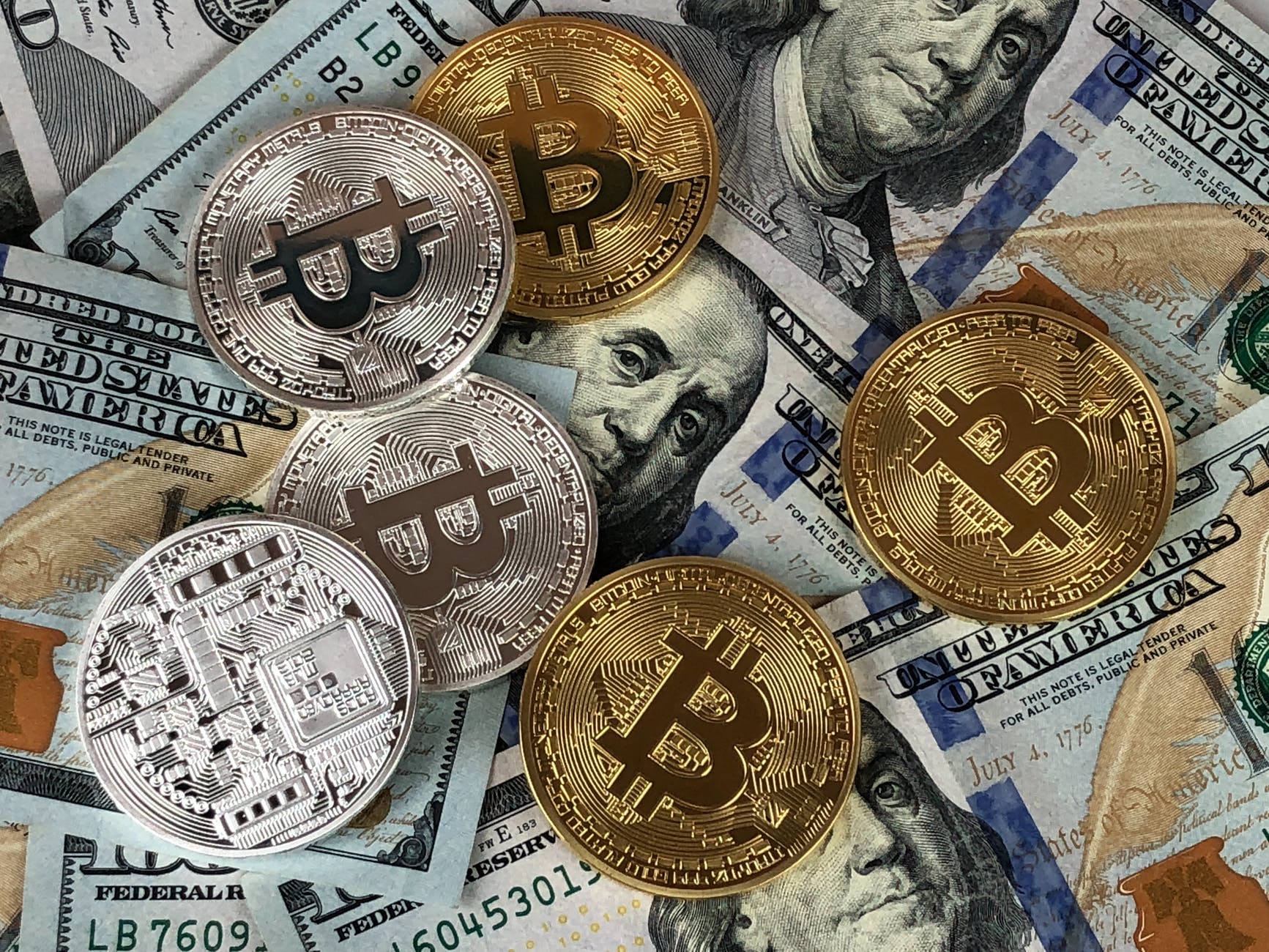
Bitcoin is the first cryptocurrency started in 2009. The current total value of Bitcoin is $826 billion. Ethereum is the secondly built cryptocurrency, developed in 2015. Its market value is $390 billion. Litecoin, Dogecoin, Cardano, Binance coin, Polkadot are some examples of cryptocurrency. Coinbase, Binance, block folio, e Toro, cash app are some apps of cryptocurrency.

The USA’s cryptocurrency market is currently one of the biggest globally which is used to buy, sell, and spend cryptocurrency in the US. India is the second country to use the cryptocurrency market. In 2021, the Indian cryptocurrency market is worth an estimated $5.39 billion. The third country e to make more use of cryptocurrency is Japan. Around 6.29 million people use the cryptocurrency market in Japan.

Non-Fungible Tokens (NFTs)


What are Non-Fungible Tokens?

NFTs (Non-Fungible Tokens) are units of data that are stored on a blockchain.  They are non-fungible, which means they cannot be replaced by another identical item, which means they are unique.

 For example, if an artist wishes to sell digital art online, he or she can convert it to NFT and then sell it. People can buy this artwork using cryptocurrency.  They will be the official owners of digital artworks if they buy them as NFTs. They can resell it to someone else for a higher price. So, there will be only one official owner for NFT at a time.

Any digital work/art can be converted into NFTs. Music, video clips, photos, URLs, tickets, and metaverse virtual lands are just a few examples of the things that are being converted into NFTs.

Ethereum was the first blockchain to support NFTs. That’s why the Ethereum blockchain is mostly used for NFTs. Because of their growing popularity, several other blockchains are now adding support for NFTs.

The present situation

People are buying and selling NFTs through NFT marketplaces.Currently, the majority of NFTs are digital arts.

Bitcoin and Ethereum are cryptocurrencies that cannot be used for regular purchases. Only a few platforms, such as Xbox games and Overstock, accept cryptocurrency as a payment method. At present, cryptocurrencies are mostly used for trading.  So, people who own cryptocurrencies now have something to invest in: NFTs. So, some NFTs were sold for millions of dollars.  In February 2021, a Nyan cat gif that had been converted to NFT was sold for $58000. Another example is Jack Dorsey, the co-founder of Twitter, who sold his first tweet for $2.9 million. In August 2021, clip art of rock was sold for 400 ether  ($1.3 million).

They are digital assets, according to some. Several people who have bought NFTs have stated that they bought these as an investment in the hope that their value will increase in the coming days.

Benefits of Non-Fungible Tokens

  • NFTs enable artists to sell their paintings, music, and other works for a high price, which may not be possible before NFTs.
  • Even though at present NFTs are mostly used to sell digital artworks and video clips, they can also be used for a variety of other reasons such as preserving important documents.

Problems with Non-Fungible Tokens

  • The transaction of selling or buying an NFT consumes a lot of electricity. Because we are already fighting against climate change, this massive energy consumption is a serious problem.
  • The copies of digital artworks that were sold as NFTs are now available online and can be seen for free by anyone.
  • In the hope of becoming rich, many people are burning money to buy these overhyped digital artworks. Many will lose money when people lose interest in buying these NFTs. According to some, NFTs are a bubble that is going to burst.
  • The non-financial-transactions sector is mostly unregulated.
  • Hackers are stealing NFTs. They’re also sending malicious NFTs to steal cryptocurrencies. Recently, hackers stole $150k worth of crypto from Twitch co-founder’s Fractal NFT project.

The future of Non-Fungible Tokens

The technology offers a wide range of applications for storing and transferring digital assets. NFTs are still new and the technology is still in its early phases. So, with the new developments, the energy consumption of NFT transactions may also be reduced.  Furthermore, the use of NFTs may increase.

Conclusion

Non-fungible tokens are unique pieces of data that are stored on a blockchain. Digital art, music, video clips, and tickets are just a few examples of the digital assets that are being transformed into NFTs. Some believe that this is a bubble  that will burst, while others believe that NFTs will drive the digital economy. The technology is still in its early phases, so we must wait and see how it evolves.

BITCOIN

 Bitcoin is basically a computer file which is stored in a digital wallet app on a smartphone or computer. People can send Bitcoins or part of one to your digital wallet, and you can send Bitcoins to other people.You can buy Bitcoins using real money. You can sell things and let people pay you with Bitcoins.The money you put into Bitcoin is not safe from value fluctuations. Bitcoin is a volatile investment. If you’re looking for a “safe” investment with guaranteed returns, then don’t invest in Bitcoin

Bitcoin is the oldest cryptocurrency in the world. It is a digital currency that is often used to exchange value for goods and services. Bitcoins work on the principle of blockchain technology. Bitcoins can also be mined or produced using a massive computing system, complex technical process, and an active internet connection.People have traded in Bitcoin for over a decade now. Many companies have even started accepting Bitcoins as a payment method. The price of the coins has gone up substantially over the years.

In April 2018, the RBI had effectively banned cryptocurrency transactions via banks and e-wallets in the country. It was initially supported by the Supreme Court, though the top court later quashed the ban in March last year.Earlier this week, the government listed a bill titled The Cryptocurrency and Regulation of Official Digital Currency Bill, 2021 that is aimed to provide a framework for creation of an official digital currency to be issued by the RBI and prohibit all existing private cryptocurrencies. Experts, however, believe that it would take some time for the country to bring any changes.

Bitcoin held at exchanges are vulnerable to theft through phishing, scamming, and hacking. As of December 2017, around 980,000 bitcoins have been stolen from cryptocurrency exchanges.The use of bitcoin by criminals has attracted the attention of financial regulators, legislative bodies, law enforcement, and the media.Bitcoin gained early notoriety for its use on the Silk Road. 

Elon musk says Bitcoin is not ‘real economy’

 Elon Musk says Bitcoin is not ‘real economy’.

Oshil chawada

SpaceX owner and Tesla CEO Elon Musk

Here’s what Tesla CEO thinks it is.

20.09.2020

Weekends have not been welcoming for cryptocurrencies for past some time, and to add to the growing woes, Tesla CEO Elon Musk has again rattled the digital coins through his social media posts.

On Sunday, Musk tweeted that “Goods & Services are the real economy, any form of money is simply the accounting thereof.

Elon Musk

Tweet

Goods & services are the real economy, any form of money is simply the accounting thereof

Bitcoin’s average swing on Saturdays and Sundays this year comes in at 5.35%. The world’s largest digital coin slipped to trade around $35,541 as of 5:30 am in New Delhi, down 4.12% in the past 24 hours.

After a assault of brickbats from crypto investors, Musk sought to defend his position on Bitcoin in his own way, “Don’t kill what you hate, Save what you love”.

The move extends its downtrend for a second day after a cryptic tweet from Elon Musk that hinted at a potential split with the cryptocurrency.

Weibo, a Chinese social-media service, appears to have blocked some crypto influencer accounts on Saturday, citing violation of unspecified laws and Weibo community rules.

While Weibo has cracked down on various crytocurrency-related accounts in the past years, the news came on top of recent harsh Chinese regulatory rhetoric that have already led to a plunge in prices for many digital coins.

However, as Bitcoin continues to fluctuate in a narrow range, a retest of the $30,000 level could also be in play until more positive catalysts emerge.

What Is Inflation – The Truth behind Inflation | Real Burglar Of Money

 Hello friends! If I gave you a hundred rupee note in the year 1958 and you kept it hidden under your bed for 60 years And if you took out that note today and used it in the market, then the value of that note would have reduced to a mere 1 rupee 20 paise in comparison to 1958 Let me explain it to you from another angle, if you did not understand If you buy something worth 100 rupees today, it would have cost 1 Rupee 20 paise back in 1958 That is 100 rupees of today is equal to 1 rupee 20 paise of 1958 This is because of inflation Inflation means dearness of things that makes things costlier for all of us every year Why does inflation occur and what are the reasons behind this? Is it really a bad thing? And how is inflation related to unemployment and other economic factors? We will talk about all of this in today’s video where I will explain this “ghastly” inflation to you Come, let us see First of all, a very important question- Why does inflation happen and who is causing it to happen? Are some government officials increasing the prices of things arbitrarily? It is not so .

There are several reasons for inflation but I’d like to discuss 4 main reasons for inflation in this article The first reason is very simple- An economic boom That is, a good economic growth When the economic growth is good, then there’s more money in the hands of the people who can spend it on different items When there’s more money in the hands of the people, they can spend it on different items That is, the demand for everything would go up in the economy When demand goes up, the businesses and companies that manufacture these products seek to increase the prices in a bid to earn more profit since so many people are willing to buy So they increase the price of the goods which will then lead to inflation Explaining this with an example- Imagine an aeroplane with 100 seats and 100 passengers have to board that plane But there are only 10 first class seats and 90 economy class seats Now if the passengers are given more money If they’re all given enough money to be able to afford a first class seat, they’ll all want to book a first class seat. But the number of seats are only 10 Not all of them can have a first class seat So what would happen as a response? In response, the airline would hike the prices of its first class seats so that only those who have more money can afford to book a first class seat So basically there is an inflation This type of inflation is called a “demand pull inflation”.

 A demand pull inflation is when the inflation rises with the rise in demand The second reason is the increase in the prices of the raw materials due to different reasons For example, if the prices of wheat and rice rise due to a bad monsoon season, the prices of oil rise or a new tax imposed by the government lead to a rise in the price of one of the raw materials then the companies that manufacture products using these raw materials they’d have to hike the prices of the products to make profits since manufacturing them would become costlier which would ultimately lead to inflation This inflation is called “cost push inflation” The third reason is increase in the salaries No, I’m not joking: When the companies or governments raise the salaries of their employees, then they have to increase the price of their products as well to be able to still make profits .This inflation is called “wage push inflation”.

 There could be other reasons for this as well If unemployment levels are at very low levels in a country, then it is extremely difficult for the companies to replace their employees and if they aren’t replaced, their salaries would have to be raised and this again, triggers inflation And finally, the fourth reason is currency depreciation This can happen due to several different reasons, out of which one of the most important reasons is printing of more notes by the government which leads to the currency losing its value And this is a very dicey reason This could also potentially trigger hyper inflation which is happening in Venezuela today and happened in Zimbabwe in 2008 If the inflation rate touches even 10% in our country, then it would cause the people to comment that things are becoming extremely dear very fast But in Venezuela, between 2016- 2019, the inflation rate was more than 5 crore percent!

 Taking the example of Zimbabwe, Around 2008, the currency of Zimbabwe was losing its value at such a rapid pace that the government began printing 1 million dollar and 1 billion dollar notes! And there existed even a 1 trillion dollar note in Zimbabwean dollars And do you know what the value of that 1 trillion Zimbabwean dollar note was? Just 1 US dollar! This is the extent to which money can lose its value in a case of hyper inflation But this is a very long topic on its own and I will make a video on it in the future because there are several political reasons behind it, apart from the economic ones Talking about the present, the inflation rate in most of the countries today is going down Think about why this is happening It is because of the shrinking demand in the wake of the lockdowns that have been imposed around the world People are buying fewer things and travelling less .

The people do not have money to spend because their businesses have shut down And so, there has been a decline in overall demand And the opposite of the “demand pull”(which I told you about as the first reason) is happening Since the demand is going down, so is the inflation As a response to this, some countries have decided to transfer cash to the people- distribute it for free Now, some people state that doing this would cause the inflation to increase What do you think will happen? I discussed the same logic in this video on Universal Basic Income that the biggest criticism of the Universal Basic Income and the free distribution of money is that it will cause the inflation to spike What do you think? Write down your explanations in the comments below And I will give the answer to this question later in the video I’d like to pose another interesting question before you Is inflation necessary? 

What if there was 0% inflation? Observing superficially, you could think that this would be great as things would stop becoming costlier and that it is good for you as you will be able to afford it for cheap You would be able to save up more and overtime, the value of money would not depreciate either So this would be another great thing! Analyzing deeply upon the reasons that lead to inflation then you would understand that 0% inflation is actually not a good thing This would mean that companies would not raise your salaries Your salary would remain constant And since salaries never go down, therefore, in general, inflation always stays in the positive .

And there is a third reason as well If there is deflation, that is, the prices of things keep decreasing every year, then the people would not want to spend money. They would want to save up First of all, the value of money is increasing, If deflation continues to happen, then five years on, the item that one wishes to buy would come for cheaper So they would want to buy it five years later instead of buying it now This would cut down the overall public expenditure Lesser expenditure would mean that the businesses would start incurring losses The businesses incurring losses would translate to people losing their jobs which would then cause the unemployment to rise I’ve told you about a very long and convoluted connection- You might wonder if it actually happens so Yes it does There is a very interesting relation between unemployment and inflation .

This shows us the inverse relation between unemployment and inflation If there’s economic growth, there will be an increase in inflation and unemployment would go down and unemployment will rise if inflation goes down And this is a very interesting explanation because one would not expect this to happen, but it does in reality But as obvious, there are some extreme limits where this graph is not valid For example, in the case of hyperinflation It isn’t that Venezuela today has 100% employment and 0% unemployment Some other factors come into play there. For instance, political factors which cause inflation to spike But generally, this graph is valid A question arises- Excessive inflation is bad because it would cause hyperinflation and increase dearness Nominal inflation is also bad because it would cause unemployment to rise So, what is the optimum level of inflation that a country should maintain? What could it be? This figure is 2% for the developed countries .

The central banks and the governments of the developed nations have decided that they should maintain an inflation rate of about 2% If it is more, then they would try and reduce it And if it is less, they would try and increase it For India, this rate is 4% with a margin of ±2% So the ideal inflation rate in India should be around 2-6% This keeps the prices stable and keeps the levels of unemployment at their lowest It ensures maximum employment So, if a government wants to control inflation, how can it do that? There can be several ways to do this Generally, the central bank of a country is responsible for controlling the inflation rate and normally, the central bank- RBI, in the case of India- controls the inflation rates by increasing/decreasing its interest rates If RBI increases it interest rates (which are called repo rates) which is charged on loans given to other banks.

 Then fewer banks would want to take loans And these banks in turn, would increase their interest rates as well which would reduce the number of people wanting to take loans This would result in lesser money being circulated in the economy And if this happens so, then inflation would go down And if RBI slashes its interest rates, then indirectly, through other banks, more people would want to take loans and this would push the inflation up So inflation rate can mainly be controlled by increasing or decreasing the interest rates But there are other ways as well- Inflation can also be controlled by printing of more notes Printing of more notes would obviously cause inflation to rise.

 The government can control inflation by imposing more taxes as I had explained in the reasons earlier in this video The government can also control inflation by spending more or by spending less, if there is a recession in a country and there’s no economic growth, then inflation would also decline This happens on a general basis, but not always Sometimes, it also happens that a country’s economic growth is going down and the country is going into recession but inflation is going up This situation is called “Stagflation”. This is a disastrous thing indeed. 

Why does this happen? The reason for this is- Assume that there is a recession within a country, but the cost push factors- the second reason for the rise of inflation that we talked about- The cost of the raw materials is rising For example, the rise of oil prices all across the world so the oil imported would then cost more so the inflation would rise because of cost push factors but there is recession within the country There is another exception from the other side- If there is deflation in a country, but simultaneously, there is economic growth in the country This happened in the USA between 1870-1890 This period is referred to as “The Great Deflation”.

 The cost of the goods were falling by around 2% every year and there was deflation, but there was also an economic boom Both the people and the businesses were making more money and employment was on the rise The reason behind this attributed to the rise in productivity This was a time when there was technological progress at such a rapid pace and new technologies were being developed that it compensated for the deflation Reverting to our original question- if people are given money for free in today’s times during this recession then would it lead to a rise in inflation? In my opinion, the answer of this is no. Inflation would not rise because handing out money wouldn’t amount to such a huge increase in wealth that people become capable to buy things that are not being supplied It would not be so. Because it would push up the demand very slightly.

And demand has fallen so low that giving out paltry sums of money would not alter the demand drastically So I do not think that the distribution of money for free would trigger any sort of inflation No matter how much importance inflation holds for the entire economy, but if we come down to personal consequences and how it personally affects you, then you could say that it has a negative consequence The money that you save up would lose value over time the prices of the things keep going up and dearness would always be on the rise .

This is why people invest their money in different things rather than stashing it under their bed For example, they buy gold with it. Because the price of gold rises overtime The value of money keeps diminishing due to inflation but the value of gold keeps rising Similarly, some people buy real estate/ Property to avoid this And some people invest in cryptocurrencies like Bitcoin , Ethereum ,etc.

A GLANCE AT THE RISE OF BLOCKCHAIN TECHNOLOGY


INTRODUCTION

Blockchain’s most notable use (and perhaps generally disputable) is in digital currencies. Cryptographic forms of money are computerized monetary standards (or tokens), like Bitcoin, Ethereum or Litecoin, that can be utilized to purchase labor and products. Very much like a computerized type of money, crypto can be utilized to purchase everything from your lunch to your next home. In contrast to cash, crypto utilizes blockchain to go about as both a public record and an improved cryptographic security framework, so online exchanges are constantly recorded and gotten.

WORKING OF CRYPTOCURRENCY

Cryptographic forms of money are computerized monetary standards that utilization blockchain innovation to record and get each exchange. A cryptographic money (for instance, Bitcoin) can be utilized as an advanced type of money to pay for everything from ordinary things to bigger buys like vehicles and homes. It tends to be purchased utilizing one of a few computerized wallets or exchanging stages, then, at that point carefully endless supply of a thing, with the blockchain recording the exchange and the new proprietor. The allure of digital forms of money is that everything is recorded in a public record and got utilizing cryptography, making a certain, timestamped and secure record of each installment.

Until this point in time, there are approximately 6,700 digital currencies on the planet that have an absolute market cap around $1.6 trillion, with Bitcoin holding a greater part of the worth. These tokens have gotten unquestionably famous throughout the most recent couple of years, with one Bitcoin rising to $60,000. Here are a portion of the principle reasons why everybody is abruptly considering digital forms of money: Blockchain’s security makes robbery a lot harder since every cryptographic money has its own undeniable recognizable number that is joined to one proprietor.

Crypto lessens the requirement for individualized monetary standards and national manages an account with blockchain, crypto can be shipped off anyplace and anybody on the planet without the requirement for money trading or without obstruction from national banks. Cryptographic forms of money can make a few group rich-Speculators have been driving up the cost of crypto, particularly Bitcoin, assisting some early adopters with becoming tycoons. Regardless of whether this is really a positive presently can’t seem to be seen, as certain retractors accept that examiners don’t have the drawn out advantages of crypto as a top priority.

An ever increasing number of huge enterprises are coming around to the possibility of a blockchain-based computerized money for installments. In February 2021, Tesla broadly reported that it would put $1.5 billion into Bitcoin and acknowledge it as installment for their vehicles.Obviously, there are many authentic contentions against blockchain-based computerized monetary standards. In the first place, crypto is certainly not an extremely controlled market. Numerous administrations rushed to bounce into crypto, however few have a firm arrangement of classified laws in regards to it. Furthermore, crypto is unbelievably unpredictable because of those previously mentioned theorists. In 2016, Bitcoin was valued around $450 per token. It then, at that point leaped to about $16,000 a token in 2018, plunged to around $3,100, then, at that point has since expanded to more than $60,000. Absence of soundness has made a few group get exceptionally rich, while a larger part have still lost thousands.

Regardless of whether computerized monetary standards are the future remaining parts not yet clear. For the present, maybe blockchain’s fleeting ascent is more beginning to flourish actually than unadulterated publicity. However it’s actually gaining ground in this altogether new, profoundly exploratory field, blockchain is likewise showing guarantee past Bitcoin.

Using Tokens

Ethereum software engineers can make tokens to address any sort of advanced resource, track its possession and execute its usefulness as indicated by a bunch of programming directions. Tokens can be music documents, contracts, show passes or even a patient’s clinical records. Most as of late, Non-Fungible Tokens (NFTs) have become extremely popular. NFTs are special blockchain-based tokens that store advanced media (like a video, music or workmanship). Each NFT can confirm legitimacy, previous history and sole responsibility for piece of computerized media. NFTs have become fiercely famous in light of the fact that they offer another flood of computerized makers the capacity to purchase and sell their creation, while getting appropriate credit and a decent amount of benefits.

Newly discovered utilizations for blockchain have widened the capability of the record innovation to pervade different areas like media, government and personality security. A large number of organizations are presently exploring and creating items and environments that run completely on the blossoming innovation. Blockchain is testing the current business as usual of development by allowing organizations to explore different avenues regarding notable innovation like shared energy dispersion or decentralized structures for news media. Similar as the meaning of blockchain, the utilizations for the record framework will just develop as innovation advances.

BITCOIN MINING


What Is Bitcoin Mining?

Bitcoin mining is the interaction by which new bitcoins are gone into course, yet it is likewise a basic part of the support and advancement of the blockchain record. It is performed utilizing exceptionally modern PCs that tackle very mind boggling computational numerical statements.

Cryptographic money mining is careful, expensive, and just irregularly fulfilling. In any case, mining has an attractive interest for some, financial backers inspired by digital money on account of the way that excavators are compensated for their work with crypto tokens. This might be on the grounds that innovative sorts consider mining to be pennies from paradise, similar to California gold miners in 1849. Furthermore, in case you are mechanically disposed, why not do it?

Notwithstanding, before you contribute the time and gear, read this explainer to see whether digging is truly for you. We will zero in essentially on Bitcoin (all through, we’ll use “Bitcoin” when alluding to the organization or the digital currency as an idea, and “bitcoin” when we’re alluding to an amount of individual tokens).

A New Gold Rush

The essential draw for some, mining is the possibility of being remunerated with Bitcoin. All things considered, you positively don’t need to be an excavator to possess digital money tokens. You can likewise purchase digital forms of money utilizing fiat cash; you can exchange it on a trade like Bitstamp utilizing another crypto (for instance, utilizing Ethereum or NEO to purchase Bitcoin); you even can procure it by shopping, distributing blog entries on stages that pay clients in digital money, or even set up revenue acquiring crypto accounts.

An illustration of a crypto blog stage is Steemit, which is similar to Medium with the exception of that clients can remunerate bloggers by paying them in a restrictive digital money called STEEM. STEEM would then be able to be exchanged somewhere else for Bitcoin.

The Bitcoin reward that excavators get is a motivator that inspires individuals to aid the basic role of mining: to legitimize and screen Bitcoin exchanges, guaranteeing their legitimacy. Since these obligations are spread among numerous clients from one side of the planet to the other, Bitcoin is a “decentralized” digital money, or one that doesn’t depend on any focal power like a national bank or government to manage its guideline.

Step by step instructions to Mine Bitcoins

Diggers are getting paid for their work as reviewers. They are accomplishing crafted by checking the authenticity of Bitcoin exchanges. This show is intended to keep Bitcoin clients fair and was brought about by Bitcoin’s originator, Satoshi Nakamoto. By checking exchanges, diggers are assisting with forestalling the “twofold spending issue.”

Twofold spending is a situation where a Bitcoin proprietor unlawfully spends the equivalent bitcoin twice. With actual cash, this isn’t an issue: when you hand somebody a $20 note to purchase a jug of vodka, you presently don’t have it, so there’s no risk you could utilize that equivalent $20 note to purchase lotto tickets nearby. While there is the chance of fake money being made, it isn’t actually equivalent to in a real sense spending a similar dollar twice. With advanced money, notwithstanding, as the Investopedia word reference clarifies, “there is a danger that the holder could make a duplicate of the computerized token and send it to a trader or another gathering while at the same time holding the first.”

Suppose you had one authentic $20 greenback and one fake of that equivalent $20. If you somehow managed to attempt to spend both the genuine bill and the phony one, somebody that took the difficulty of taking a gander at both of the bills’ chronic numbers would see that they were a similar number, and along these lines one of them must be bogus. What a Bitcoin digger does is closely resembling that—they check exchanges to ensure that clients have not misguidedly attempted to spend the equivalent bitcoin twice. This is definitely not an ideal similarity—we’ll clarify in more detail underneath.

Whenever diggers have checked 1 MB (megabyte) worth of Bitcoin exchanges, known as a “block,” those excavators are qualified to be remunerated with an amount of bitcoins (more about the bitcoin compensation underneath too). The 1 MB limit was set by Satoshi Nakamoto, and involves discussion, as certain diggers accept the square size ought to be expanded to oblige more information, which would viably imply that the bitcoin organization could measure and check exchanges all the more rapidly.

Note that checking 1 MB worth of exchanges makes a coin digger qualified to procure bitcoin—not every person who confirms exchanges will get paid out.

1MB of exchanges can hypothetically be pretty much as little as one exchange (however this isn’t at all normal) or a few thousand. It relies upon how much information the exchanges take up.

How Much a Miner Earns

The awards for Bitcoin mining are decreased considerably at regular intervals. When bitcoin was first mined in 2009, mining one square would procure you 50 BTC. In 2012, this was split to 25 BTC. By 2016, this was split again to 12.5 BTC. On May 11, 2020, the prize divided again to 6.25 BTC. In November of 2020, the cost of Bitcoin was about $17,900 per bitcoin, which means you’d procure $111,875 (6.25 x 17,900) for finishing a block.3 Not an awful impetus to tackle that intricate hash issue definite above, it may appear.

Bit-coining Effect on GPUs

The hype of mining etharium created a diverse and adverse effect in the computer world as most of the Computers work on graphic cards (GPUs) and etharium mining requires lots of GPUs to be arranged in a grid form connected to motherboards to supply enough energy for its mining . This heavy demand of GPUs created an effect of sky rocketing of their prices , the prices almost got tripled and due to which other Computer components also inflated , but everything has an end so China banned bitcoing mining due to which Chinese markets were flooded with GPUs with collapsed prices even below half the MRP . Talking about India the deflation rate is really slow because of hunger of money but is now its reducing .  

Bitcoin Symbol

 Bitcoin () is a decentralized digital currency, without a central bank or single administrator, that can be sent from user to user on the peer-to-peer bitcoin network without the need for intermediaries. Transactions are verified by network nodes through cryptography and recorded in a public distributed ledger called a blockchain. The cryptocurrency was invented in 2008 by an unknown person or group of people using the name Satoshi Nakamoto. The currency began use in 2009 when its implementation was released as open-source software.

Bitcoins are created as a reward for a process known as mining. They can be exchanged for other currencies, products, and services, but the real-world value of the coins is extremely volatile. Research produced by the University of Cambridge estimated that in 2017, there were 2.9 to 5.8 million unique users using a cryptocurrency wallet, most of them using bitcoin. Users choose to participate in the digital currency for a number of reasons: ideologies such as commitment to anarchism, decentralization and libertarianism; convenience; using the currency as an investment; and pseudonymity of transactions. Increased use has led to a desire among governments for regulation in order to tax, facilitate legal use in trade and for other reasons (such as investigations for money laundering and price manipulation).

Bitcoin has been criticized for its use in illegal transactions, the large amount of electricity (and thus carbon footprint) used by mining, price volatility, and thefts from exchanges. Some economists and commentators have characterized it as a speculative bubble at various times. Bitcoin has also been used as an investment, although several regulatory agencies have issued investor alerts about bitcoin.

The word bitcoin was defined in a white paper published on 31 October 2008. It is a compound of the words bit and coin. No uniform convention for bitcoin capitalization exists; some sources use Bitcoin, capitalized, to refer to the technology and network and bitcoin, lowercase, for the unit of account.The Wall Street Journal,The Chronicle of Higher Education, and the Oxford English Dictionary advocate the use of lowercase bitcoin in all cases.

Design

Bitcoin is based on an elliptic curve called “secp256k1” and encrypted with the ECDSA algorithm. The equation for the Bitcoin secp256k1 curve is {\displaystyle y}y2={\displaystyle x}x3+7. Bitcoin has a proposed Bitcoin Improvement Proposal (BIP) that would add support for Schnorr signatures

Units and divisibility

The unit of account of the bitcoin system is a bitcoin. Currency codes used to represent bitcoin are BTC and XBT.Its Unicode character is ₿. Small amounts of bitcoin used as alternative units are millibitcoin (mBTC), and satoshi (sat). Named in homage to bitcoin’s creator, a satoshi is the smallest amount within bitcoin representing 1100000000 bitcoins, one hundred millionth of a bitcoin. A millibitcoin equals 11000 bitcoins; one thousandth of a bitcoin or 100,000 satoshis.

What is Dogecoin? – Bitcoin vs Dogecoin (Meme Coins)

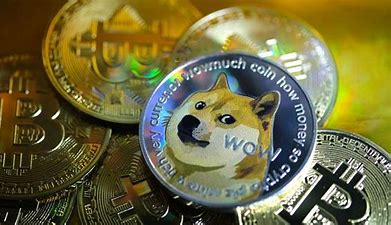
 Hello, friends! You already know about the rupee coin and Bitcoin But there’s a new coin that’s globally famous now. It’s called the Dogecoin. The value of our rupee is based on our currency. And Bitcoin is based on Blockchain that promises to revolutionize the monetary systems around the world. 

But this Dogecoin is based on a meme. Literally! This coin was made in jest. Someone took the Doge meme, this meme of the dog was quite famous at some point and made a coin out of it. It’s like someone taking the “Pawri ho rahi hai” meme and turning it into a “Pawri coin”. Or this meme of Akshay Kumar being made into “Akki coin”. It’s quite possible.

 Someone may very well make these Pawri coin and Akki coin. Because cryptocurrency is so decentralised that any person can develop their own coin. They’d need basic coding knowledge to do that. But the thing is that this Dogecoin became so famous that people like Elon Musk started buying it and promoting it. Why did it happen? Come let’s find out in today’s video on Dogecoin.

 After the popularity of Bitcoin, several people brought up its disadvantages. Like, the long transaction time of Bitcoin. Or that the whole process of Bitcoin consumes a lot of energy. And that’s not good for the environment. That’s why some people considered making their own coins. These coins are known as Alt-Coins. i.e. Alternative Coins. Because they’re the alternative to Bitcoin.

 And they try to counter the disadvantages of Bitcoin. By some method or the other. Like Ethereum, Litecoin, I talked about them in the Alt-Coins video. You can watch them as well. The link will be in the description below. But after Alt-Coins had been developed, people realized that anyone can create their own coins. So some people started creating their own coins for fun.

 There were no advantages in their coins as compared to Bitcoins. They simply changed the name and created a new coin. Some scammers made their own coins as well. And fooled people to invest in their coins to drive the value of the coin After which the scammer would take back his investment and the people will suffer heavy losses while the scammer would walk away with a significant profit.

 This is known as a Pump and Dump scheme. So many people created their coins for fun. Some for scamming people others for absolutely no reason. It was only meant as a joke. These coins which were created for no reason they are often known as Shitcoins. Because they do not add any value to the world. They aren’t bringing about any improvement in the process. So they’re Shitcoins. 

Some people believe that Dogecoin is also a Shitcoin. The only difference is that the purpose of creating Dogecoin wasn’t to scam people it was only to prank people. It was only a joke. This Doge meme was at the peak of its popularity in 2013. Jackson Palmer, an Australian marketer and Billy Markus, a software developer at IBM developed this Dogecoin then. Palmer says that he thought up this idea as a joke. to combine the two most popular trending topics on the internet. Cryptocurrency and the Doge meme. 

The code of Dogecoin is based on Litecoin. Litecoin is an Alt-Coin that does have a few advantages over Bitcoin. Like lesser processing time and lower transaction fees. But it is truly surprising that the market valuation of Dogecoin has already surpassed that of Litecoin. If you look at the largest cryptocurrencies of the world Dogecoin coin has become the fourth-largest cryptocurrency. 

After Bitcoin, Ethereum and Binance. The biggest question here is how is it possible? How did a coin made as a joke gain such popularity? Why are people buying it? The first reason is the Reddit website. People on Reddit started using it as a joke initially. Whenever someone liked a post or comment on Reddit, people would award some Dogecoins to the OP as a tip. It was known as the DogeBot tip.

 Usually, this was a tip of 5 Dogecoins. And at the time the value of Dogecoin was 0.0002¢. It was a very small amount. But using Dogecoin as a tip started gaining popularity on Reddit. And this expanded over the years. Dogecoins were used so much and exchanged so many times that their value started increasing rapidly. 

In September 2018, the CEO of Tesla, Elon Musk noticed it. Elon Musk met Jackson Palmer on the issue of Twitter scambots. The fake Twitter accounts that scam people using the guise of cryptocurrency. Elon Musk wanted to take them down because his name was being used to run these scams.

 So he asked for Jackson Palmer’s help on this. That was when Elon Musk came to know about Dogecoin. After 7 months he tweeted “Dogecoin might be my fav(ourite) cryptocurrency.” In March 2020 he tweeted “Dogs rock. They are the best coins.” So in the coming months and years he tweeted about Dogecoin several times which were indirectly or directly promoting Dogecoin. 

And because Elon Musk is so famous, perhaps the most renowned and liked billionaire in the world, every time he tweeted, it sent up the value of Dogecoin by 25% – 50%. Eventually, 2021 followed 2020. And now the value of Dogecoin has exceeded 50¢. At its peak, Dogecoin had almost touched the valuation of $80 billion. 

Though its price has fallen a bit in the last couple of days, but the supporters of Dogecoin aim to drive its value up to $1. It means that the value of 1 Dogecoin would be equal to $1. Currently, it is around 50-60¢. 

Talking about the real-life use of Dogecoin, the community of Dogecoin have donated to several charitable causes. Their first donation was to a Jamaican Bobsleigh team of $30,000 in Dogecoins so that the team could participate in the 2014 Russian Winter Olympics. After this, for some water conversation projects in Kenya and for helping some special needs children, the community of Dogecoin donated money. 

And who are the community of Dogecoin? What do I mean by this? Basically, there is a subreddit on Dogecoin where the users who buy and promote Dogecoins come together and make such donations. But overall, friends, I’d say that Dogecoin has become a cultural trend now. It does not have a value of its own. 

It isn’t bringing in any significant technological advancement neither is it unique. Only because of its circumstances Dogecoin has become so popular now. And this is needed to be understood by those people that think that if they invest in Dogecoin now and they would get 10x, 100x, 1000x returns. That Dogecoin is a good investment. 

You need to understand the cultural trends grow exponentially. And die down after their peak. There is a very high possibility that this may happen. I’m not giving you any investment advice here. You can buy Dogecoin if you want to. I’m just saying that be cautious of the huge risk. 

But higher the risk in investment, there are more chances of high returns as well. It is possible that after a few years, Dogecoin may be valued at $100 instead of a paltry $1. But it is equally possible that its value may become 0 instead of the 0.50¢ now. 

All your investment may vanish. Because predicting cultural trends on the internet is next to impossible. You’d basically be trying to predict how the world would think collectively. I believe that the same thing applies to Bitcoin as well. You should invest only that much in Bitcoin that you can afford to lose. 

If Bitcoin crashes to 0 tomorrow, you would not suffer much even after all your investment vanishes. And Dogecoin is even riskier than Bitcoin. So this is even more valid for Dogecoin than it is for Bitcoin. At least Bitcoin has some value of its own. Because it presents a revolutionary technology. I

t presents an alternative monetary system. But it is not so with Dogecoin. But at the same time, also remember this, friends, that only those things have any value in the society, in which people believe. If people think that a thing should have value, it does. 

You can see this with so many things. If people think that branded clothes have value, then their value exists and people buy them at exorbitant prices. The same thing applies to Dogecoin as well. If every one of us starts believing that Dogecoin does indeed have a value even if there really isn’t any, people would want to buy it which would drive up its value.

 And what can be the reason behind it? Absolutely any reason. If someone claims that Elon Musk’s brand is attached to Dogecoin and it has a high value the same reason as with clothes. If a cloth is marked by a brand it has a high value. For the same reason, someone may say that Dogecoin’s value should be higher. 

If society starts believing this its value will grow. And if society doesn’t, its value will fall.

WHAT IS BIT COIN CASH?

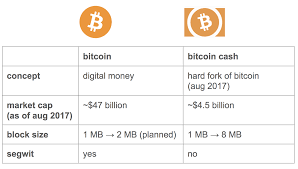
 Bit coin cash is a crypto currency, from a fork of Bit coin that was created in August 2017. Bit coin cash was created to accommodate a larger block size compared to Bit coin, allowing more transactions into a single block.

Later in November 2017 it split into 2 crypto currency

  • Bit coin Cash ABC and
  • Bit coin Cash SV (Satoshi Vision)

Despite their philosophical differences, both Bit coin and Bit coin cash share several similarities.

 1 BITCOIN CASH = 36683.18 INDIAN RUPEE

HISTORY OF BIT COIN TO BIT COIN CASH:

Bit coin was meant to be a peer-to-peer crypto currency that was used for daily transactions. But over the years it became an investment vehicle instead of a currency. Its block chain witnessed scalability issues because it could not handle the increased number of transactions. The confirmation time and fees for a transaction was urged. It’s due to 1MB block size limitation for bit coin which results in queued transactions.

As a remedy to this situation Bit coin cash was proposed by increasing the size of blocks to between 8 MB and 32 MB, thereby enabling more transactions per block. “Bitcoin cash is the version of bitcoin that implemented an increase in the transaction capacity,”

DIFFERENCE IN BIT COIN AND BIT COIN CASH:

  • Unlike bit coin, bit coin cash uses a separate hash algorithm which eliminates the possibility of a replay between the two block chains.
  • Bit coin is difficult to beat in terms of price when compared to bit coin cash.
  • Bit coin cash is well ahead of bit coin in terms of transaction speed.
  • Bit coin cash has lower transaction cost than Bit coin.

BIT COIN CASH IN INDIA:

Binance is one of the world’s largest and best known crypto currency exchanges. As an Indian trader, one can buy Bit coin cash on binance.

As per reports, Bit coin cash worth will rise to $2000 by the year 2025.Supply of Bit coin is limited to 21 million.

IS IT A GOOD INVESTMENT?

Investing in bit coin is like a roller coaster ride. Bit coin Cash offers the potential for otherworldly profit but at the same time it has high risks and crazy price swings.

CRYPTO CRASH:

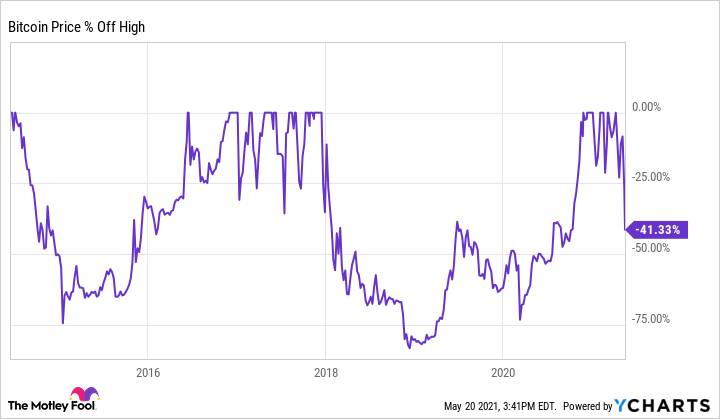
According to Visual Capitalist, Bit coin has crashed 80% or more three different times since 2012. Therefore today’s crypto crash is nothing new. No one knows the future, so no one can say whether Bit coin is going up or down in the near term. However, it is good to say the odds are high that the price of Bit coin will be higher following the next halving event, which is expected in 2024.

TRADING OVERVIEW:

ExchangePairPrice
BinanceBCH/TUSD$ 447.04
KucoinBCH/USDC$ 445.73
Huobi GlobalBCH/USDT$ 448.22
UPbitBCH/KRW$ 462.65

BIT COIN CASH PRICE CHART:

24 Hour High24 Hour High                Market Capitalization
476.98 USD 444.80 USD  8,632,223,279.93 USD

CONCLUSION:

If Bitcoin’s history teaches us anything, it’s to expect the unexpected. If Bit coin’s history teaches us anything, it’s to expect the unexpected. If you’re willing to hold a small position for the long term, then it is recommended to buy some Bit coin. But one mustn’t buy today hoping to get rich tomorrow.

Dogecoin


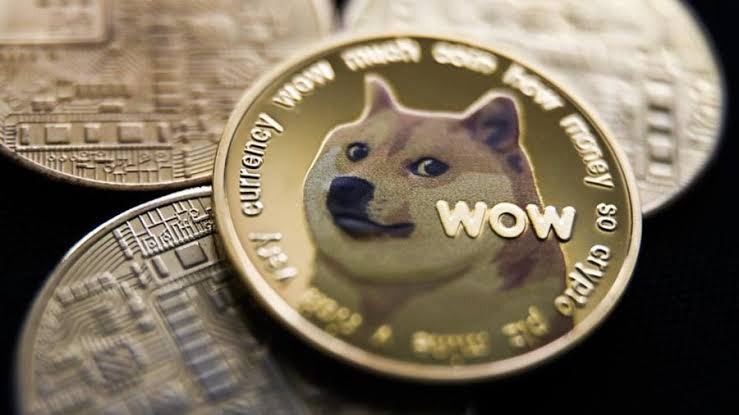
A cryptocurrency is a form of digital asset based on a network that is distributed across a large number of computers. This decentralized structure allows them to exist outside the control of governments and central authorities. Dogecoin is a type of  cryptocurrency created by software engineers Billy Markus and Jackson Palmer, who decided to create a payment system as a joke, making fun of the wild speculation in cryptocurrencies at the time. It was initially released on December 6, 2013, and quickly developed its own online community, reaching a market capitalization of US$85,314,347,523 on May 5, 2021.

Dogecoin.com promotes the currency as the “fun and friendly internet currency”, referencing its origins as a joke. It further gained major popularity when  founder, CEO, and Chief Engineer at SpaceX and one of the richest person of the world – Elon Musk talked about it. Billy Markus was a IBM software engineer and Jackson Palmer was a Adobe Software engineer.

Palmer had purchased the domain Dogecoin.com and added a splash screen, which featured the coin’s logo and scattered Comic SanMarkus reached out to Palmer after seeing the site, and started efforts to develop the currency. Markus designed Dogecoin prototype based on other cryptocurrencies such as litecoin and Lucky coin using the scrypt technology in their proof-of-work algorithm.

On December 19, 2013, Dogecoin jumped nearly 300 percent in value in 72 hours, rising from US$0.00026 to $0.00095,with a volume of billions of Dogecoins per day. This growth occurred during a time when bitcoin and many other cryptocurrencies were reeling from China’s decision to forbid Chinese banks from investing into the bitcoin economy. But three days later its value dropped by 80%.