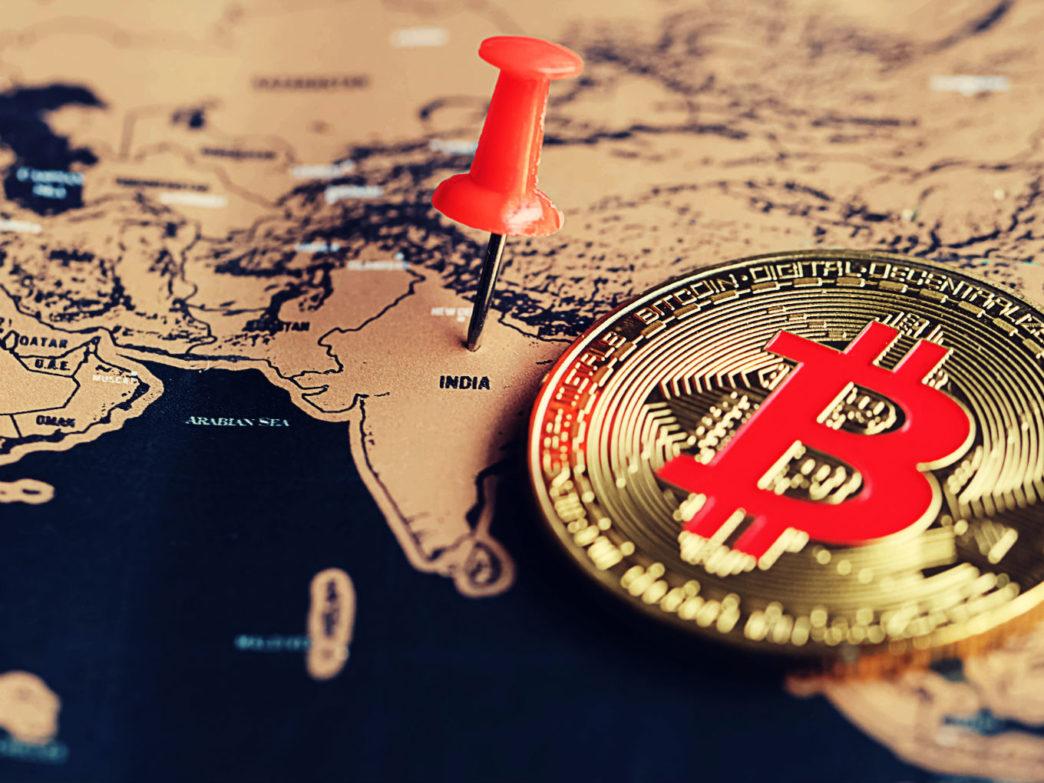
Exploring Bitcoin: The Quintessential Cryptocurrency


Bitcoin, the name synonymous with cryptocurrency, has become the default thought for most people when they hear about digital currencies. It is the pioneering cryptocurrency that brought the concept of decentralized, digital money into the mainstream, offering a medium of exchange that exists entirely in the digital realm. Invisible and intangible, cryptocurrencies like Bitcoin have altered our perceptions of what money can be.

The Origins of Bitcoin

Bitcoin was introduced to the world in a 2008 white paper by an individual or group of individuals using the pseudonym Satoshi Nakamoto. The true identity of Satoshi Nakamoto remains one of the digital age’s most intriguing mysteries, with theories about their identity ranging from a Finnish sociologist to an Irish mathematician. Despite numerous investigations and speculation, Nakamoto’s identity remains undisclosed, adding an element of mystique to Bitcoin’s origin.

The Mechanics of Bitcoin

Bitcoin operates on a technology known as blockchain, which is essentially a public ledger that records all transactions across a network of computers. Blockchain technology ensures that every transaction is securely encrypted and virtually impossible to tamper with, providing a high level of security and transparency.

Bitcoin is created through a process known as mining. Contrary to what the term might suggest, this mining is purely digital and involves solving complex mathematical puzzles using powerful computers. Successful miners are rewarded with new bitcoins, contributing to the gradual increase in the total supply.

Decentralized Nature

One of the core features of Bitcoin is its decentralized nature. Unlike traditional currencies, Bitcoin operates independently of a central authority. This decentralization means that no single entity, including governments, has control over it. The decentralized structure not only enhances security but also eliminates the need for intermediaries such as banks in financial transactions.

Transaction Speed and Efficiency

Bitcoin transactions are known for their efficiency. A typical transaction can be confirmed within about 10 minutes, regardless of the geographical locations of the parties involved. This speed, coupled with the absence of intermediaries, makes Bitcoin an attractive option for many users worldwide, especially in regions where access to traditional banking is limited or non-existent.

The Impact of Bitcoin

Bitcoin has paved the way for thousands of other cryptocurrencies, each with unique functionalities and purposes. As the progenitor of this revolutionary technology, Bitcoin remains the most well-known and widely used cryptocurrency. Its introduction has spurred debates about the future of money, privacy, and the role of sovereign currencies in an increasingly digital world.

In conclusion, Bitcoin is not just a currency but a groundbreaking technology that has challenged the traditional financial systems and introduced a new era of decentralized digital assets. Its ongoing development and the dynamic ecosystem it has inspired continue to influence various sectors, including finance, law, and technology.

Cryptocurrency: 21st-Century Unicorn – Or The Money Of The Future?


  1. Cryptocurrency is an internet-based medium of exchange which uses cryptographical functions to conduct financial transactions. Cryptocurrencies leverage blockchain technology to gain decentralization, transparency, and immutability.
  2. The most important feature of a cryptocurrency is that it is not controlled by any central authority: the decentralized nature of the blockchain makes cryptocurrencies theoretically immune to the old ways of government control and interference
  3. Cryptocurrencies can be sent directly between two parties via the use of private and public keys.  These transfers can be done with minimal processing fees, allowing users to avoid the steep fees charged by traditional financial institutions.

The Ledger: Who Owns It

A cryptocurrency has a ledger, where all transactions are made public so that total visibility is provided. Having a ledger forces everyone to “play fair” and takes away the risk of double spending.

The ledger is a list of entries in a database that nobody can change without fulfilling specific conditions. Nobody owns the ledger or the cryptocurrency blockchain; instead, it’s decentralized meaning self-run and self-governed without the interference of outside parties.

How cryptocurrency works?

Few people know, but cryptocurrencies emerged as a side product of another invention. Satoshi Nakamoto, the unknown inventor of Bitcoin, the first and still most important cryptocurrency, never intended to invent a currency. In his announcement of Bitcoin in late 2008, Satoshi said he developed “A Peer-to-Peer Electronic Cash System”.His goal was to invent something; many people failed to create before digital cash.

Top 10 cryptocurrencies by market

Bitcoin ($156.52 Billion)

Bitcoin became the first cryptocurrency after launching in 2009, and has since remained at the forefront of the market. Bitcoin essentially removed the “middleman” who controlled currency and replaced it with advanced blockchain technology. About three-fourths of all Bitcoin has already been mined – meaning its value should become more predictable moving forward.

Ethereum ($17.50 Billion)

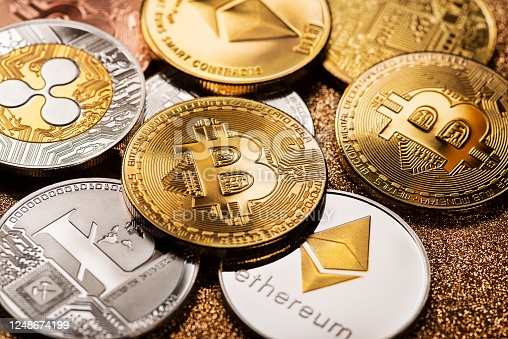
Launching much later than top dog, Bitcoin, Ethereum joined the cryptocurrency market in 2015. While Bitcoin offers peer-to-peer digital currency, Ethereum offers smart-contract applications (a user can set specific conditions to trigger a transaction). Ethereum has a wide range of use cases that are attractive to consumers looking to do more than financial transactions.

Ripple’s XRP ($9.80 Billion)

Ripple is a cryptocurrency that was never actually intended to be a cash alternative and is mostly used by corporate institutions rather than individuals. Sending Ripple coins from one wallet to another only takes a few seconds; however, it’s a much more centralized process compared to competitors, since Ripple Labs controls the supply of XRP.

Tether ($4.11 Billion)

Tether differs from Bitcoin in that it’s a stablecoin – meaning that it is backed by a reserve assert and designed to offer price stability worth $1. It launched in 2014 to facilitate the use of fiat currencies (Canadian Dollar, Indian Rupee, European Union Euro) in digitally, and is the first blockchain-enabled platform to facilitate the digital use of traditional currencies. 

Litecoin ($3.57 Billion)

In 2011 a hard fork caused Bitcoin to split in two: creating Bitcoin and Litecoin. Key factors that differentiate Litecoin from Bitcoin are transaction speed and block reward per block. Litecoin’s transaction time  is about four times faster than Bitcoin’s, and has 25 block rewards per block compared to Bitcoin’s 12.5. 

Cryptocurrency and India

In March 2020, things took a positive turn, and Bitcoin was declared completely legal in India. This is finally a big win for the Indian crypto enthusiasts and will be part of the Bitcoin country list. The question of whether Bitcoin is legal or illegal in India is now settled, and things take a positive turn in March 2020. The decision, which the entire crypto community has been waiting for, has finally prevailed and is a big win for the Indian crypto enthusiasts.

The crypto sector in India is showing significant growth with several crypto exchanges reporting a 10X increase in trading volumes and a substantial increase in new users. Despite the global corona virus pandemic and the nationwide lock down, new cryptocurrency trading platforms are launching in India.

Moving Into the Future

Cryptocurrency is a growing mega-trend, which is being recognized worldwide, adopted by major corporations, and  woven into everyday transactions. Bitcoin, above all, has the fintech ecosystem and the resources to compete, whereas its counterparts are still trying to stay on top and fight other cryptocurrencies in the market space.

Top Cryptocurrencies will play an important role in the future, with the use steadily increasing over the past several years. Bitcoin is currently used in 96 countries and growing, with 12,000 transactions occur every hour. Understanding more about cryptocurrency is the first step, and the second is to try it.

Purchase a small amount of cryptocurrency through an exchange, test it out, and complete a few transactions. After you get a feel for the process, you may decide to try mining. But whatever your path, know that the future of cryptocurrency is bright, and the list of cryptocurrencies is only expanding.

The wave of Cryptocurrency


Cryptocurrency is the talk of the hour. From business tycoons to the general public, everyone has a divided opinion about the future of cryptocurrency. While Bill gates might call it “better than currency” or Warren Buffett may term it as “a mirage”, its worthwhile to know what exactly is cryptocurrency. A cryptocurrency is a digital or virtual currency that is secured by cryptography. Many cryptocurrencies are decentralized networks based on blockchain technology. In simple terms a blockchain is a type of database. A database is a collection of information that is stored electronically on a computer system. 

Bitcoin is one of the widely recognized cryptocurrencies. It is digital currency which was invented in 2008 by an unknown person or group of people using the name Satoshi Nakamoto whose identity still remains a mystery. The currency began use in 2009. Bitcoin offers the promise of lower transaction fees than traditional online payment mechanisms and, unlike government-issued currencies, it is operated by a decentralized authority.

There is no physical bitcoin, only balances kept on a public ledger that everyone has transparent access to. All bitcoin transactions are verified by a massive amount of computing power. Bitcoin is not issued or backed by any banks or governments, nor is an individual bitcoin valuable as a commodity. Despite it not being legal tender or legally recognized money within a given political jurisdiction, in most parts of the world, bitcoin is very popular and has triggered the launch of hundreds of other cryptocurrencies, collectively referred to as altcoins, like Ethereum, Binance Coin, Tether, etc.

Many bitcoin supporters believe that digital currency is the future. Many individuals who endorse bitcoin believe it facilitates a much faster, low-fee payment system for transactions across the globe. Although it is not backed by any government or central bank, bitcoin can be exchanged for traditional currencies; in fact, its exchange rate against the dollar attracts potential investors and traders interested in currency plays. Indeed, one of the primary reasons for the growth of digital currencies like bitcoin is that they can act as an alternative to national fiat money and traditional commodities like gold. But many people purchase bitcoin for its investment value rather than its ability to act as a measure of exchange as the lack of guaranteed value and its digital nature means the purchase and use of bitcoin carries several inherent risks.

Thus, No one knows what will become of bitcoin. It is mostly unregulated, but some countries like Japan, China and Australia have begun weighing regulations. Governments are concerned about taxation and their lack of control over the currency.

Is cryptocurrency legal in India?

 With India’s rapid technological progress and extraordinary breakthroughs, particularly with the introduction of COVID-19, the fintech sector has been on a steady upward trajectory. With the increasing popularity and understanding of cryptocurrencies such as Bitcoin, Ripple, Dogecoin, and others among Indians, many people have begun to invest the majority of their time and money in virtual currencies in the hopes of profiting from the current worldwide wave.

The Reserve Bank of India, India’s ultimate financial body, has defined cryptocurrency as a type of digital/virtual currency issued using a sequence of written computer codes that rely on cryptography, or encryption, and is thus independent of any central issuing authority per se. It has emerged as a person-to-person issuance and transaction system that employs private and public keys to enable authentication and encryption for safe transactions, supported by blockchain technology.
Despite the fact that the Inter-Ministerial Committee’s report was still pending, the RBI issued a circular in early April 2018 prohibiting all commercial and cooperative banks, small finance banks, payment banks, and non-bank financial companies (NBFCs) from not only dealing in virtual currencies but also from providing services to all entities dealing in virtual currencies. This effectively brought the crypto sector to a halt, as exchanges required banking services to transmit and receive money in order to turn it into cryptocurrency and pay workers, vendors, and office space, among other things. The situation surrounding cryptocurrencies and their use, however, drastically changed on March 4, 2020, when India’s highest court, the Hon’ble Supreme Court of India, issued a well-considered judgment quashing the RBI’s previous ban. The subject was primarily addressed by the Hon’ble Supreme Court of India in light of Article 19(1)(g) of the Indian Constitution, which provides the right to practice any profession or carry on any occupation, trade, or business, as well as the idea of proportionality.
The Reserve Bank of India has issued a warning to the general public about the potential misuse of private cryptocurrencies in a variety of ways. If the New Bill imposes a complete prohibition on private cryptocurrencies, however, cryptocurrency investors will be forced to invest and trade in unregulated marketplaces. Furthermore, the goal of enacting a virtual currency/cryptocurrency law is to make the process of dealing with and holding virtual currency/cryptocurrency easier in a safer technological environment. Even with the introduction of state-owned cryptocurrency that will be regulated by the RBI, the risk factor associated with cryptocurrency investment and holding will remain the same.
Furthermore, according to the most recent modifications to Schedule III of the Corporations Act, 2013, the Government of India has mandated that companies must disclose their investments in cryptocurrencies beginning with the next financial year. That is to say, businesses must now declare profit or loss on cryptocurrency/virtual currency transactions, the value of their holdings, and details of any deposits or advances received for the purpose of trading or investing in cryptocurrency or Virtual currency. People working in the crypto business have greeted this move with open arms since it is understood that it will allow all Indian enterprises to carry cryptocurrency on their balance sheets.
Conclusion:
Based on the inferences that can be derived from the aforementioned facts and the current state of affairs in the cryptocurrency sector, it is clear that there is a lack of clarity in India when it comes to cryptocurrency legislation. Well-structured cryptocurrency legislation that covers crypto trading exchanges, blockchain technology, investors, and those who work in the sector is urgently needed, and such regulation requires more attention.

Conclusion:

Based on the inferences that can be derived from the aforementioned facts and the current state of affairs in the cryptocurrency sector, it is clear that there is a lack of clarity in India when it comes to cryptocurrency legislation. A well-structured cryptocurrency legislation that covers crypto trading exchanges, blockchain technology, investors, and those who work in the sector is urgently needed, and such regulation requires more attention.

[1] Reserve Bank of India, Prohibition on dealing in Virtual Currencies (VCs), (April 6th 2018), http://www.rbi.org.in/Scripts/NotificationUser.aspx?Id=11243&Mode=0

[2] Internet and Mobile Association of India V. Reserve Bank of India, Writ Petition (Civil) No.528 of 2018

[3] http://www.mca.gov.in/Ministry/pdf/ScheduleIIIAmendmentNotification_24032021.pdf

CRYPTOCURRENCY

 CRYPTOCURRENCY – HOW IT WORKS

Cryptocurrency is a form of payment that can be exchanged online for goods and services. Many companies have issued their own currencies, often called tokens, and these can be traded specifically for the good or service that the company provides. Think of them as you would arcade tokens or casino chips. You’ll need to exchange real currency for the cryptocurrency to access the good or service.

Cryptocurrencies work using a technology called blockchain. Blockchain is a decentralized technology spread across many computers that manages and records transactions. Part of the appeal of this technology is its security.

Cryptocurrencies may go up in value, but many investors see them as mere speculations, not real investments. The reason? Just like real currencies, cryptocurrencies generate no cash flow, so for you to profit, someone has to pay more for the currency than you did.

That’s what’s called “the greater fool” theory of investment. Contrast that to a well-managed business, which increases its value over time by growing the profitability and cash flow of the operation.

As NerdWallet writers have noted, cryptocurrencies such as Bitcoin may not be that safe, and some notable voices in the investment community have advised would-be investors to steer clear of them. Of particular note, legendary investor Warren Buffett compared Bitcoin to paper checks: “It’s a very effective way of transmitting money and you can do it anonymously and all that. A check is a way of transmitting money too. Are checks worth a whole lot of money? Just because they can transmit money?”

For those who see cryptocurrencies such as Bitcoin as the currency of the future, it should be noted that a currency needs stability so that merchants and consumers can determine what a fair price is for goods. Bitcoin and other cryptocurrencies have been anything but stable through much of their history. For example, while Bitcoin traded at close to $20,000 in December 2017, its value then dropped to as low as about $3,200 a year later. By December 2020, it was trading at record levels again.

This price volatility creates a conundrum. If bitcoins might be worth a lot more in the future, people are less likely to spend and circulate them today, making them less viable as a currency. Why spend a bitcoin when it could be worth three times the value next year?

All about Cryptocurrency

 People’s working habits, communication styles, shopping habits, and even how they pay for items have all altered as a result of technological advancements. Companies and customers no longer prefer cash, and contactless payments such as Apple Pay are gaining traction.

Consumers may pay for things at computerized registers with a quick wave of their smartphone. Now, a new type of payment mechanism is gaining traction: cryptocurrencies.

Photo by RODNAE Productions on Pexels.com

By now, almost everyone has heard of Bitcoin. It was the first cryptocurrency to gain mainstream acceptance, but others are gaining traction.

There are almost 2,000 different types of cryptocurrencies, with new ones being created every day. According to research, the majority of individuals have heard of cryptocurrencies but do not fully comprehend what it is.

WHAT IS CRYPTOCURRENCY

Cryptocurrency is a digital payment mechanism that does not rely on banks for transaction verification. It’s a peer-to-peer system that allows anyone to make and receive payments from anywhere. Cryptocurrency payments are digital additions to an online database that specify specific transactions, rather than actual money that is carried around and exchanged in the real world.

The transactions that you make with cryptocurrency funds are recorded in a public ledger. A digital wallet is where you keep your cryptocurrency.

The name cryptocurrency comes from the fact that it uses encryption to verify transactions. This means that storing and sending cryptocurrency data between wallets and to public ledgers requires complex coding. The encryption’s goal is to give security and privacy.

THE SECURITY OF CRYPTOCURRENCY

Blockchain technology is commonly used to create cryptocurrencies. The method transactions are recorded in “blocks” and time stamped is described by blockchain. It’s a lengthy, complicated procedure, but the end result is a secure digital ledger of cryptocurrency transactions that hackers can’t alter.

Transactions also necessitate a two-factor authentication process. To begin a transaction, you might be requested to enter a login and password. Then you may be required to input an authentication code sent to your personal cell phone through text message. While security measures are in place, this does not mean that cryptocurrencies are impenetrable to hackers.

In fact, some high-profile thefts have wreaked havoc on bitcoin businesses. In 2018, hackers stole $534 million from Coincheck and $195 million from BitGrail. According to Investopedia, this makes them two of the biggest cryptocurrency hacks of 2018.

TIPS FOR INVESTING IN CRYPTOCURRENCY

Investments are always dangerous, but according to Consumer Reports, some experts believe bitcoin is one of the riskier investment options available. Digital currencies, on the other hand, are among the hottest commodities. CNBC predicted earlier this year that the cryptocurrency market would hit $1 trillion in value by the end of 2018. If you’re thinking about investing in cryptocurrencies, there are a few things you should know.

Research Collaborations
Learn about bitcoin exchanges before you invest a single dollar. These platforms let users to purchase and sell digital currencies, but according to Bitcoin.com, there are 500 different exchanges to select from. Before making a decision, do your homework, study reviews, and speak with more experienced investors.

Know How to Safely Store Your Cryptocurrency
You must store cryptocurrency if you purchase it. You can keep it on an exchange or in a digital “wallet,” such as one of the crypto wallets listed in our blog post Which cryptocurrency wallet should I use? While there are numerous types of wallets, each has its own set of advantages, technological needs, and security features. You should invest in the same way as you would on exchanges.

Invest in a variety of things.
Diversification is an important part of any effective investment strategy, and it’s no different when it comes to cryptocurrency. Don’t put all of your money in Bitcoin just because it’s the term you’re familiar with. There are thousands of possibilities, and it’s ideal to diversify your portfolio by investing in other currencies.

Be ready for the unexpected.
Be aware that the cryptocurrency market is quite volatile, so expect ups and downs. Prices will fluctuate dramatically. Cryptocurrency may not be a good fit for you if your investment portfolio or mental health can’t manage it.

Cryptocurrency is currently all the rage, but keep in mind that it is still in its infancy. Investing in something new comes with its own set of obstacles, so be prepared.

Cryptocurrencies are generally utilized outside of traditional banking and government institutions and are traded over the Internet.

The rewards given to miners increase the cryptocurrency’s supply.

As long as benevolent nodes possess a majority of computer power, the network’s integrity may be preserved by ensuring that confirming transactions is a costly business. To make verification costly enough to accurately confirm p, the verification algorithm necessitates a lot of processing power, and consequently electricity.

Photo by Worldspectrum on Pexels.com

The price of a coin is multiplied by the number of coins in circulation to determine its “market cap.”

Bitcoin has historically dominated the whole cryptocurrency market cap, accounting for at least 50% of the market cap value, with altcoins increasing and decreasing in market cap value in relation to Bitcoin.

Bitcoin’s value is mostly controlled by speculation, as well as other technological limiting considerations like block chain incentives, which are coded into Bitcoin’s architecture technology.

The cryptocurrency market cap follows a pattern known as “halving,” which occurs when the block rewards obtained from Bitcoin are halved owing to technologically enforced restricted variables infused into Bitcoin, which in turn causes the cryptocurrency market value to decrease.

The bitcoin market has been extremely turbulent in the last 24 hours. The volume of trades increased, confirming the panic selling. Many alternative tokens, on the other hand, exhibited only a minor rebound.

According to a study by Fidelity’s cryptocurrency company, seven out of ten institutional investors plan to invest in or buy digital assets in the future, despite price volatility being the biggest hurdle for new entrants.

CRYPTOCURRENCY :The future money

 Block chain , IA , biometrics technologies qui Revolutionate la finance . Ethereum is on track to overtake Bitcoin’s market cap A Wallet to freedom Deutsche Bank the Current money system is fragile. Deutsche bank sees that by 2030 digital currencies will rise to over 200 million users. In the “In the Imagine 2030 ” report , it suggests the digital currency could eventually replace cash one day , as demand for anonymity and amore decentralized means of payment grows.

Illias Louis Hatzis is the founder at Mercato Blockchain Corporation AG and a weekly columnist at DailyFintech.com Usually this time of year , we start to read price predictions about Bitcoin going to a million bucks a coin. I’ve never been a big fan of price predictions . Some get them right, and most get them wrong. Price predictions are about short term gains, that are usually very fickle. But a week ago I read an interesting prediction in the news. Deutsche bank made a very bold statement . The German Bank published a research report called Imagine 2030. In this report the bank says that cryptocurrencies are currently just additions to the current money payment system . However , in the next decade they could be replacements .This bank is spot on with its prediction .But , prediction is are always tricky. Hindsight is 20/20 , Rightnow , everyone wants to believe . We can taste the decentralized future . Cryptocurrencies have become more popular . Crypo can be both unique solution and good, evil like everything else in life.

CRYPTOCURRENCY: the invisible asset


CRYPTOCURRENCIES ARE THE NEW ASSET! CRYPTOCURRENCIES ARE ON PEAK ! CRYPTO-BILL! CRYPTO IN INDIA! AND WHAT NOT.

A LOT OF US MIGHT WONDER , WHY HAS THE CRYPTOCURRENCY BECOME A BIG HIT and WHAT IS IT ??

CRYPTOCURRENCIES ARE DIGITALISED AND DECENTRALISED ASSETS. THE TRANSACTIONS THAT ARE MADE ARE HIGHLY SECURED. THEY WORK ON BLOCKCHAIN TECHNOLOGY. THAT IS A PUBLIC LEDGER. ALL THE TRANSACTIONS ARE STORED IN CHRONOLOGICAL ORDER. THE GOVERNMENT HAS NO CONTROL OVER THE TRANSACTIONS, THUS A LOT OF COUNTRIES HAVE BANNED CRYPTOCURRENCIES OR THEIR STATUS IS LEFT UNCLEARED.

BITCOIN THE THE MOST SYNONYMOUS CRYPTOCURRENCY BUT SINCE LAST 6 MONTHS EVEN ETHEREUM AND DOGECOIN HAVE GAINED POPULARITY.

IT WORKS JUST LIKE TEH STOCK MARKET, THE PRICES RISE AND FALL. STOCK MARKETS HAVE BANKS IN BETWEEN FOR TRANSATION BUT CRYPTOCURRENCIES HAVE THEIR OWN BASE.

INVESTMENT IN CRYPTOCURRENCY IS ADOPTED BY A LOT OF PEOPLE. BUT DUE TO UNCERTAINITY OF DROP IN PRICE SOME RESIST INVESTING IN IT.

THE CRYPTOCURRENCY BILL


In order to understand the merits and demerits of the CryptoCurrency Bill, also called Crypto Bill, one has to delve into the sphere and understand what cryptocurrency is. This is required for a clearer understanding of the bill. Not only this, but the knowledge of cryptocurrency will also aid one in forming their own opinions of the same.

What is cryptocurrency? – It is a digital form of money and is decentralized. This means that unlike the US Dollar or the Euro, there is no centralized body to regulate and manage its value. It can also be termed as a deregulated form of money. Cryptocurrency is monitored by peer-to-peer internet protocol and is an encrypted string of data encoded to signify one unit of currency.

In a nutshell, cryptocurrency is just like paper money and can be used to carry out day-to-day transactions and buy regular goods and services although many people invest in cryptocurrencies as they would in other assets, such as stocks or precious metals such as gold.

Why is cryptocurrency gaining traction? –   Albeit the fame of cryptocurrency in other countries is commendable with instances like Elon Musk investing a handsome amount of money on Bitcoin( a form of cryptocurrency), people in India too are showing interest. Understanding this phenomenon is important to understand the aftermath of the bill (if implemented).

  1. Failing government policies –   It is no secret that many government policies have failed miserably having an impact on the economy of the country. Plus, in the last two years, the business has slowed down due to the ongoing pandemic and no one knows what’s in store for the future. Also, nothing appreciable has been done by the government for the revival of the economy. With all these phenomena going on, crypto has been a savior and hence the inclination of people towards it. This has been possible because of the decentralized and the deregulated nature of the currency.
  2. Progressive Taxation – Taxes are no doubt a necessity. An individual who earns more has to pay a higher tax and a person who earns less, has to contribute less. But in the case of crypto, no such system exists. It is a good escape from the taxation system and nevertheless the less digital knowledge of the currency and its working, it is gaining fame.
  3. Type of digital gold – People invest in a lot of things. Precious artifacts, stocks, and precious, high-value metals. One metal that all people invest in is Gold. Prices of gold usually increase providing people with a good deal of benefits and it seldom disappoints. Somewhat similar is the case with cryptocurrency. The meteoric rise that people witness in it is a key factor of people getting more interested.

But is crypto full of advantages and no negatives? That is not the case. Understanding its disadvantages is equally important to weigh the consequences of the bill better.

Perils of cryptocurrency –  

  1. Deregulated –  Deregulated nature of the crypto can be advantageous not just to genuine users but also to hackers and spoofing. Digital theft is a possibility since no one is present to oversee the activities.
  2. Stability-  The graph does not always go high. There have been times when downfall has been witnessed. The volatility of crypto is another aspect that needs to be kept in mind.
  3. Scalability-  While security and decentralization are what the main focus of crypto is, speed remains an issue.

THE CRYPTOCURRENCY BILL –  In the year 2018, a circular by the RBI was issued barring banks and other financial institutions from facilitating transactions using crypto. SC however quashed the circular on grounds of ‘disproportionality’ and business using crypto resumed. In the Budget Session held from January 29, 2021-April 18,2021, the Cryptocurrency and Regulation of Official Digital Currency Bill, 2021 was to be introduced. This proposed creation of a facilitative framework for the creation of ‘official digital currency’ and prohibit all private crypto in India. This however was presented neither in the Budget nor the Monsoon session. The reason given was more introspection on the matter.

What if the bill is implemented in India? Will it be useful for the masses as a whole or will the rich become richer? Is it a good deal to exit the crypto bus?

The fact that corruption will be controlled because of the digital signature mechanism of the currency cannot be neglected. FDIs will be attracted. Technological development will be promoted for sure. India will be able to compete with the developed nations across the globe.

A host of advantages exist but the next question arises –Given the digital literacy divide and money in hands of a few, is India ready?

I leave the choice to you.

The Future of Cryptocurrency

 Introduction

Cryptocurrency has seen an enormous rise in the market recently. It is a form of online payment which can be exchanged for goods and services. There are many companies who issued their own coins or tokens which can only be traded in that particular company which released them. Cryptocurrency works using a technology which is known as blockchain. Blockchain is a technology which is spread across computers and maintains records of transactions. The main appeal of this technology is its security.

Bitcoin, the first blockchain based cryptocurrency, was created in 2009 by Satoshi Nakamoto. From then it has been the most popular and most valued cryptocurrency. Currently there are more than 10,000 different coins which are being traded publicly. Nowadays people are racing to buy crypto because they think coins like Bitcoin, Ethereum and Dogecoin are the currencies of future. But for this to happen, they need to be stable, for the traders and merchants to determine a fair price for their goods and services. Bitcoin, the face of cryptocurrency holds almost 50% of the total value of cryptocurrency. Bitcoin is also the most traded coin in this world.

Photo by Pixabay on Pexels.com

People can trade different types of cryptocurrencies with the help of online brokers like Coinbase, Robinhood, Webull, TradeStation, etc. Cryptocurrency has hit its all time high of 2.2 trillion dollars in April and currently has a value of more than 1.4 trillion dollars with Bitcoin holding a value of more than 630 trillion dollars. Many of the big name investors see cryptocurrency as the future but also tell that it is highly profitable and also highly risky because of its instability.

Advantages of Cryptocurrency

Cryptos hold the promise for making the transaction of funds easier between two people directly without the need of a third person such as banks, etc. They are also very secure because of the technology used in it. The transfers are completed with minimal processing fee unlike the banks. It allows the users to avoid the high processing fees charged by the banks.

Disadvantages of Cryptocurrency

Cryptocurrencies are very private and anonymous which make them a host for many illegal activities such as money laundering and tax evasion. Coins like Bitcoin whose forensic analysis have helped the government track and prosecute criminals. But there are many coins like Dash, Zcash which are very private and very difficult to trace.

Investment in Cryptocurrency

Cryptos can be used as a source for either as quick income or for long term holdings, as it is very unstable. Cryptocurrencies offer high risk but high reward. People with experience and people who can read the markets clearly can reap huge amounts of profits from this. There are many coins or tokens like Tether which are suitable for long term holdings and coins like Bitcoin and Ethereum are suitable for making quick profits. 

Cryptocurrency in India


Cryptocurrency introduced by Satoshi Nakamoto in 2008. Since then it has gained much significance and grew from $1 in 2010 to $65,000 in 2021. More than 2000 cryptocurrencies are there and still many more are developing everyday. Some of the famous cryptocurrencies are Bitcoin, Ethereum etc. There can be many reasons for its increasing popularity like easy transactions without third party involvement, transparent, decentralized, and one can make huge profits depending upon its value with minimum regulations.


So what is the Cryptocurrency?

Cryptocurrency like Bitcoin and Ethereum is a digital currency working as a medium of transaction between its user within a network. It doesn’t involve banks in its transactions. It uses a technology called ‘Blockchain technology’ which is a decentralized technology. Blockchain means a chain of block that manages and record every transaction between the users in public ledger. This is an intangible currency and you can keep your cryptocurrency in your digital wallet.

The data is available publicly and is not control by a single entity. One can easily access his wallet by entering the private key into his account.

How to get a cryptocurrency?

There are few possible ways to get this digital currency and the major one is ‘Mining’. Mining is the process to introduce and add new coins to blockchain public ledger by solving computational puzzles. There are total 21 million bitcoins and 2.5 million are still left to mine.
Trading is the another method to own a cryptocurrency in which one can trade cryptocurrency in exchange of dollars, euros and any other currency.
Hodling refers to buy and hold strategy with respect to cryptocurrency. Buying a cryptocurrency when its price is low and don’t plan to sell it in future is what hodlers do.
Some other methods are ICO investing and Master nodes. But the above mentioned methods are the most followed.

How secure are these digital currencies?

Every transaction in blockchain technology requires a two-factor authentication process. E.g. While entering your username or password, you need to enter the authentication code that has sent to your phone. The digital ledger of cryptocurrency is almost impossible for hackers to deal with.


What is the situation of cryptocurrency in India?


Cryptocurrencies are not illegitimate in India. But in a Budget speech of 2018-19, Finance minister Nirmala Sitharaman made it clear that government in India does not consider cryptocurrency as a legal tender. Government is even trying to introduce Cryptocurrency and Regulation of official Digital Currency Bill, 2021 to create its own digital currency and banning the existing one. However, no official ban yet because Indian investors are already holding 10,000 crore in digital currency. Perhaps, it is not possible to completely ban crypto from India. Crypto transactions are already taxable in India.


What is the RBI’s position on Cryptocurrency?

Back then in 2018, RBI hold a more restrictive position. It had warned people who invest in cryptocurrency in past time and advised all the entities (banks or individuals) to not to deal in virtual currencies. However, the Supreme Court verdict in March 2020 overruled the RBI’s circular, allowing banks to handle virtual currencies transactions and exchanges.
In may 2021, RBI made it clear that It will not block 10,000 crore of digital currency of Indian investors. and also said that banks cannot take action against investors who are investing in virtual currencies. This changing position of RBI shows us the cryptocurrencies like Bitcoin are becoming an integral part. The government doesn’t want to be left behind in the new era of tech revolution. Now RBI is working on its virtual currency.

If you are planning to invest in cryptocurrencies, you need to be ready for the volatility. So be ready for the ups and downs. Investment in digital currency may look a good option right now, but one thing we need to remember that it is still in its initial stage. Do research before making any plan for investment in cryptocurrency.

Cryptocurrency in India


Cryptocurrency introduced by Satoshi Nakamoto in 2008. Since then it has gained much significance and grew from $1 in 2010 to $65,000 in 2021. More than 2000 cryptocurrencies are there and still many more are developing everyday. Some of the famous cryptocurrencies are Bitcoin, Ethereum etc. There can be many reasons for its increasing popularity like easy transactions without third party involvement, transparent, decentralized, and one can make huge profits depending upon its value with minimum regulations.


So what is the Cryptocurrency?

Cryptocurrency like Bitcoin and Ethereum is a digital currency working as a medium of transaction between its user within a network. It doesn’t involve banks in its transactions. It uses a technology called ‘Blockchain technology’ which is a decentralized technology. Blockchain means a chain of block that manages and record every transaction between the users in public ledger. This is an intangible currency and you can keep your cryptocurrency in your digital wallet.

The data is available publicly and is not control by a single entity. One can easily access his wallet by entering the private key into his account.

How to get a cryptocurrency?

There are few possible ways to get this digital currency and the major one is ‘Mining’. Mining is the process to introduce and add new coins to blockchain public ledger by solving computational puzzles. There are total 21 million bitcoins and 2.5 million are still left to mine.
Trading is the another method to own a cryptocurrency in which one can trade cryptocurrency in exchange of dollars, euros and any other currency.
Hodling refers to buy and hold strategy with respect to cryptocurrency. Buying a cryptocurrency when its price is low and don’t plan to sell it in future is what hodlers do.
Some other methods are ICO investing and Master nodes. But the above mentioned methods are the most followed.

How secure are these digital currencies?

Every transaction in blockchain technology requires a two-factor authentication process. E.g. While entering your username or password, you need to enter the authentication code that has sent to your phone. The digital ledger of cryptocurrency is almost impossible for hackers to deal with.


What is the situation of cryptocurrency in India?


Cryptocurrencies are not illegitimate in India. But in a Budget speech of 2018-19, Finance minister Nirmala Sitharaman made it clear that government in India does not consider cryptocurrency as a legal tender. Government is even trying to introduce Cryptocurrency and Regulation of official Digital Currency Bill, 2021 to create its own digital currency and banning the existing one. However, no official ban yet because Indian investors are already holding 10,000 crore in digital currency. Perhaps, it is not possible to completely ban crypto from India. Crypto transactions are already taxable in India.


What is the RBI’s position on Cryptocurrency?

Back then in 2018, RBI hold a more restrictive position. It had warned people who invest in cryptocurrency in past time and advised all the entities (banks or individuals) to not to deal in virtual currencies. However, the Supreme Court verdict in March 2020 overruled the RBI’s circular, allowing banks to handle virtual currencies transactions and exchanges.
In may 2021, RBI made it clear that It will not block 10,000 crore of digital currency of Indian investors. and also said that banks cannot take action against investors who are investing in virtual currencies. This changing position of RBI shows us the cryptocurrencies like Bitcoin are becoming an integral part. The government doesn’t want to be left behind in the new era of tech revolution. Now RBI is working on its virtual currency.

If you are planning to invest in cryptocurrencies, you need to be ready for the volatility. So be ready for the ups and downs. Investment in digital currency may look a good option right now, but one thing we need to remember that it is still in its initial stage. Do research before making any plan for investment in cryptocurrency.

Cryptocurrency


A cryptocurrency, crypto-currency, or crypto may be a digital quality designed to figure as a medium of exchange whereby individual coin possession records area unit keep in an exceedingly ledger existing in an exceedingly type of a processed information mistreatment sturdy cryptography to secure dealing records, to regulate the creation of further coins,

How many cryptocurrencies area unit there? What area unit they worth?
More than ten,000 completely different cryptocurrencies area unit listed publically, in keeping with CoinMarketCap.com, a research web site. And cryptocurrencies still proliferate, raising cash through initial coin offerings, or ICOs. the whole price of all cryptocurrencies on might twenty seven, 2021, was over $1.7 trillion — down from Apr high of $2.2 trillion, in keeping with CoinMarketCap. the whole price of all bitcoins, the foremost well-liked digital currency, was pegged at regarding $735 billion — down from Apr high of $1.2 trillion.

Best cryptocurrencies by capitalisation
These area unit the ten largest commerce cryptocurrencies by capitalisation as half-track by CoinMarketCap, a cryptocurrency knowledge and analytics supplier.

Cryptocurrency

Market Capitalization

Bitcoin

$735.3 billion

Ethereum

$324.2 billion

Tether

$61 billion

Binance Coin

$57.5 billion

Cardano

$54.6 billion

XRP

$46.5 billion

Dogecoin

$44 billion

Polkadot

$22.1 billion

USD Coin

$21.9 billion

Internet pc

$16.7 billion

Why area unit cryptocurrencies thus popular?
Cryptocurrencies attractiveness to their supporters for a range of reasons. Here area unit a number of the foremost popular:

Supporters see cryptocurrencies like Bitcoin because the currency of the long run and area unit sport to shop for them currently, presumptively before they become additional valuable

Some supporters just like the proven fact that cryptocurrency removes central banks from managing the money provide, since over time these banks tend to scale back the worth of cash via inflation

Are cryptocurrencies legal?
There’s absolute confidence that they’re legal within the us, although China has primarily prohibited their use, and ultimately whether or not they’re legal depends on every individual country. even be guaranteed to take into account the way to shield yourself from fraudsters WHO see cryptocurrencies as a chance to bilk investors. As always, customer watch out.

Are cryptocurrencies an honest investment?
Cryptocurrencies might go up in price, however several investors see them as mere speculations, not real investments. The reason? rather like real currencies, cryptocurrencies generate no income, thus for you to profit, somebody has got to pay additional for the currency than you probably did.

That’s what’s referred to as “the larger fool” theory of investment. distinction that to a well-managed business, that will increase its price over time by growing the profit and income of the operation.

Cryptocurrency in India


Cryptocurrency introduced by Satoshi Nakamoto in 2008. Since then it has gained much significance and grew from $1 in 2010 to $65,000 in 2021. More than 2000 cryptocurrencies are there and still many more are developing everyday. Some of the famous cryptocurrencies are Bitcoin, Ethereum etc. There can be many reasons for its increasing popularity like easy transactions without third party involvement, transparent, decentralized, and one can make huge profits depending upon its value with minimum regulations.


So what is the Cryptocurrency?

Cryptocurrency like Bitcoin and Ethereum is a digital currency working as a medium of transaction between its user within a network. It doesn’t involve banks in its transactions. It uses a technology called ‘Blockchain technology’ which is a decentralized technology. Blockchain means a chain of block that manages and record every transaction between the users in public ledger. This is an intangible currency and you can keep your cryptocurrency in your digital wallet.

The data is available publicly and is not control by a single entity. One can easily access his wallet by entering the private key into his account.

How to get a cryptocurrency?

There are few possible ways to get this digital currency and the major one is ‘Mining’. Mining is the process to introduce and add new coins to blockchain public ledger by solving computational puzzles. There are total 21 million bitcoins and 2.5 million are still left to mine.
Trading is the another method to own a cryptocurrency in which one can trade cryptocurrency in exchange of dollars, euros and any other currency.
Hodling refers to buy and hold strategy with respect to cryptocurrency. Buying a cryptocurrency when its price is low and don’t plan to sell it in future is what hodlers do.
Some other methods are ICO investing and Master nodes. But the above mentioned methods are the most followed.

How secure are these digital currencies?

Every transaction in blockchain technology requires a two-factor authentication process. E.g. While entering your username or password, you need to enter the authentication code that has sent to your phone. The digital ledger of cryptocurrency is almost impossible for hackers to deal with.


What is the situation of cryptocurrency in India?


Cryptocurrencies are not illegitimate in India. But in a Budget speech of 2018-19, Finance minister Nirmala Sitharaman made it clear that government in India does not consider cryptocurrency as a legal tender. Government is even trying to introduce Cryptocurrency and Regulation of official Digital Currency Bill, 2021 to create its own digital currency and banning the existing one. However, no official ban yet because Indian investors are already holding 10,000 crore in digital currency. Perhaps, it is not possible to completely ban crypto from India. Crypto transactions are already taxable in India.


What is the RBI’s position on Cryptocurrency?

Back then in 2018, RBI hold a more restrictive position. It had warned people who invest in cryptocurrency in past time and advised all the entities (banks or individuals) to not to deal in virtual currencies. However, the Supreme Court verdict in March 2020 overruled the RBI’s circular, allowing banks to handle virtual currencies transactions and exchanges.
In may 2021, RBI made it clear that It will not block 10,000 crore of digital currency of Indian investors. and also said that banks cannot take action against investors who are investing in virtual currencies. This changing position of RBI shows us the cryptocurrencies like Bitcoin are becoming an integral part. The government doesn’t want to be left behind in the new era of tech revolution. Now RBI is working on its virtual currency.

If you are planning to invest in cryptocurrencies, you need to be ready for the volatility. So be ready for the ups and downs. Investment in digital currency may look a good option right now, but one thing we need to remember that it is still in its initial stage. Do research before making any plan for investment in cryptocurrency.

Bitcoin And Cryptocurrency

 Bitcoin price volatility makes everyday shopping difficult. The vast majority of Bitcoin transactions take place on cryptocurrency exchanges, not for transactions with merchants. Typically, you create an account with an exchange, and then you can transfer real money to buy cryptocurrencies like Bitcoin or Ethereum.

Coinbase is a popular cryptocurrency exchange where you can create a wallet and buy and sell Bitcoin and other cryptocurrencies. If you are willing to take the risk of owning bitcoins, there are a growing number of digital currency exchanges, such as Coinbase and FTX, where you can buy, sell, and store bitcoins. Any investor can buy cryptocurrencies through cryptocurrency exchanges such as Coinbase, Cash app, etc. Investors can profit from cryptocurrencies by mining bitcoins or simply selling their bitcoins for a profit.

Bitcoin is by far the most popular cryptocurrency followed by other cryptocurrencies such as Etherum, Litecoin and Cardano. Bitcoin is the largest cryptocurrency by market capitalization and a good indicator of the cryptocurrency market in general as other coins like Ethereum (and smaller altcoins) tend to follow trends.

Bitcoin prices have been negatively impacted by numerous hacks or thefts from cryptocurrency exchanges, including Coincheck in January 2018, Bithumb in June, and Bancor in July. As of December 2017, approximately 980,000 bitcoins have been stolen from cryptocurrency exchanges. Bitcoin has been controversial since its inception in 2009, and so have cryptocurrencies that followed.

Bitcoin is a digital currency that operates without any central control or oversight from banks or governments. At the core of the appeal and functionality of Bitcoin and other cryptocurrencies is blockchain technology, which is used to keep an online record of all transactions ever made, thus providing a data structure for this book that is sufficiently secure and public. coordinated by the entire network of one node or by the computer that stores a copy of the registry. In this way, Bitcoin acts as an incentive to add valid transactions to the ledger, eliminating the need for a central trusted authority.

Both Bitcoin and Ethereum experienced short-term price increases, while Musk, Dorsey, and Wood discussed wider institutional adoption of the cryptocurrency. Musk detailed his holdings in cryptocurrencies — Bitcoin, Ethereum, and Dogecoin — at The B Word conference on Wednesday. If you are looking for a tutorial on bitcoin and cryptocurrencies, you are in the right place.

We explore the early days of bitcoin and provide survey data on consumer familiarity, usage, and more. Let’s take a look at the most commonly used aspects of Bitcoin in the real world, such as Bitcoin wallets, wallet mechanisms, mining, transactions, and governance. We present the Ethereum virtual machine and Turing’s idea of ​​completeness and explore some of the major protocol differences between Bitcoin and Ethereum such as the UTXO model and functionality versus accounts. Let’s take a look at how FS companies are using blockchain and how we expect blockchain technology to evolve in the future.

Blockchain also has potential applications far beyond Bitcoin and cryptocurrencies. The first blockchain-based cryptocurrency was Bitcoin, which remains the most popular and most valuable. Bitcoin’s success has spawned a number of competing cryptocurrencies, called “altcoins,” including Litecoin, Peercoin, and Namecoin, as well as Ethereum, Cardano, and EOS. This year, Bitcoin — and cryptocurrencies in general — has penetrated deep into financial services and culture, gaining a foothold in folk art, commerce, and other mainstream fields.

For an overview of cryptocurrencies, start with 2015’s Money Isn’t the Problem. Read the Robinhood review * Seven cryptocurrencies including Bitcoin, Bitcoin Cash, and Ethereum. Read TradeStation Review * Offers trading in five cryptocurrencies including Bitcoin, Bitcoin Cash, and Ethereum.

What You Should Know About Cryptocurrency Investing Cryptocurrency is a highly volatile speculative investment. Here’s how you can invest wisely, regardless of news or bitcoin price fluctuations.

Cryptocurrency (or “crypto”) is a digital currency that can be used to buy goods and services, but an online ledger with strong encryption is used to secure online transactions. Bitcoin [a] (BTC) is a cryptocurrency invented in 2008 by an unknown individual or group of individuals named Satoshi Nakamoto. The value of bitcoin or this cryptocurrency remains highly uncertain. Cryptocurrencies such as bitcoin, ethereum, and litecoin show significant price fluctuations due to high levels of uncertainty.

In addition, cryptocurrencies are not ordinary shares of companies and are not traded on the stock exchange. As NerdWallet authors point out, cryptocurrencies like bitcoin may not be as safe, and some prominent members of the investment community are advising novice investors to avoid them. There are concerns that cryptocurrencies like bitcoin are not based on any tangible asset.

For those considering cryptocurrencies such as Bitcoin as the currency of the future, it should be noted that currencies need stability so that merchants and consumers can determine what a fair price for goods is. While buying and selling Bitcoin is legal, many aspects of the industry, such as tax issues for investors, remain in a gray area that could be vulnerable to future regulatory and/or enforcement actions. The rules and bans that apply to Bitcoin are likely to apply to similar cryptocurrency systems.

Other countries have completely banned the use of bitcoin and other cryptocurrencies, and there are severe penalties for anyone who makes cryptocurrency transactions. Some countries have imposed restrictions on the use of bitcoins, and banks have banned their customers from making transactions in cryptocurrency. The Bank of Indonesia, the country’s central bank, has adopted new rules banning the use of cryptocurrencies, including bitcoin, as a means of payment from January 1, 2018.

The State Bank of Vietnam said it is illegal to issue, supply, and use bitcoin and other cryptocurrencies as means of payment, with fines ranging from VND 150 million (EUR 5,600) to VND 200 million (EUR 7,445). ). On April 16, 2021, the Central Bank of the Republic of Turkey issued a regulation prohibiting the direct or indirect use of cryptocurrencies, including Bitcoin, to pay for goods and services. The European Union has proposed regulation of private crypto transactions in an attempt to stop crypto crime. In July last year, the Federal Reserve launched an investigation into whether to launch its own digital currency.

The Federal Reserve Chairman says the US may need more regulation of cryptocurrencies, but long-term holders of large coins like Ethereum and Bitcoin probably don’t need to worry about changing their strategy, according to experts. As the Fed continues to investigate the digital dollar, which will create competition for major cryptocurrencies such as Bitcoin, Ethereum, Solana, XRP and BNB, the congressman wants to ban state-backed digital currencies. While Fed Chairman Jerome Powell has said that private cryptocurrencies can coexist with central bank-issued digital currencies (CBDCs), the congressman argues that a CBDC would allow the Fed to control Americans, which defeats the very purpose of a decentralized cryptocurrency.