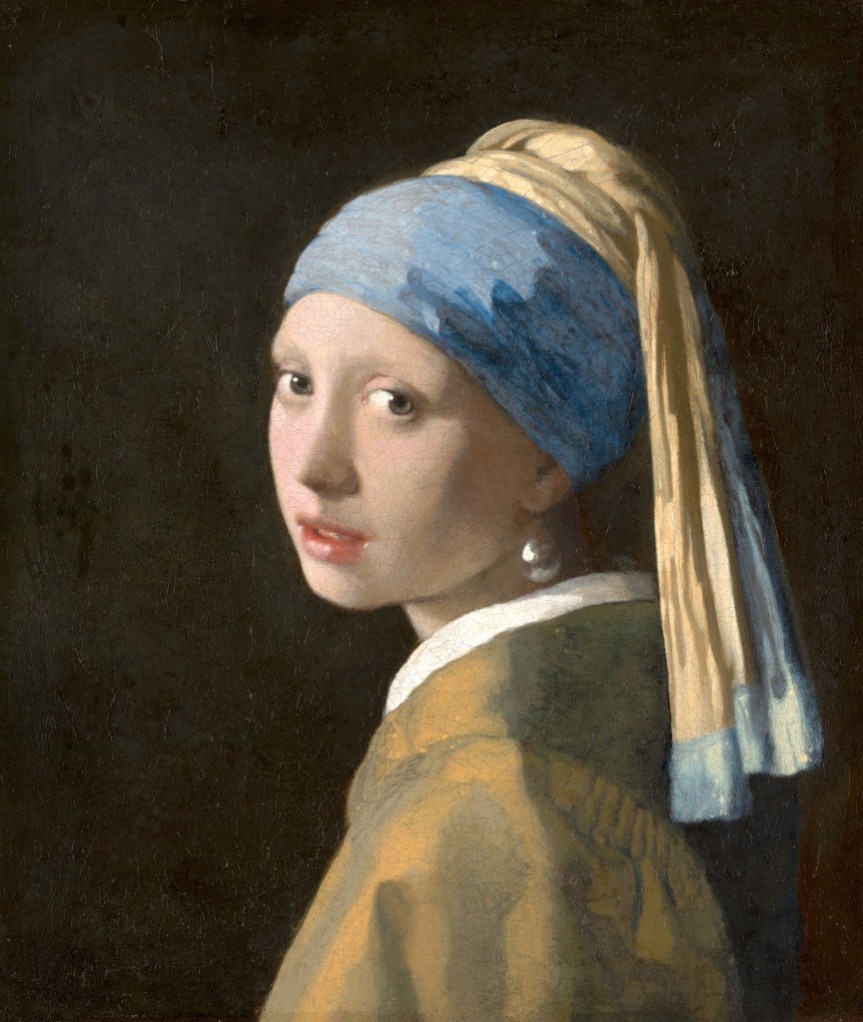
The Girl With a Pearl Earring: What Made It So Famous

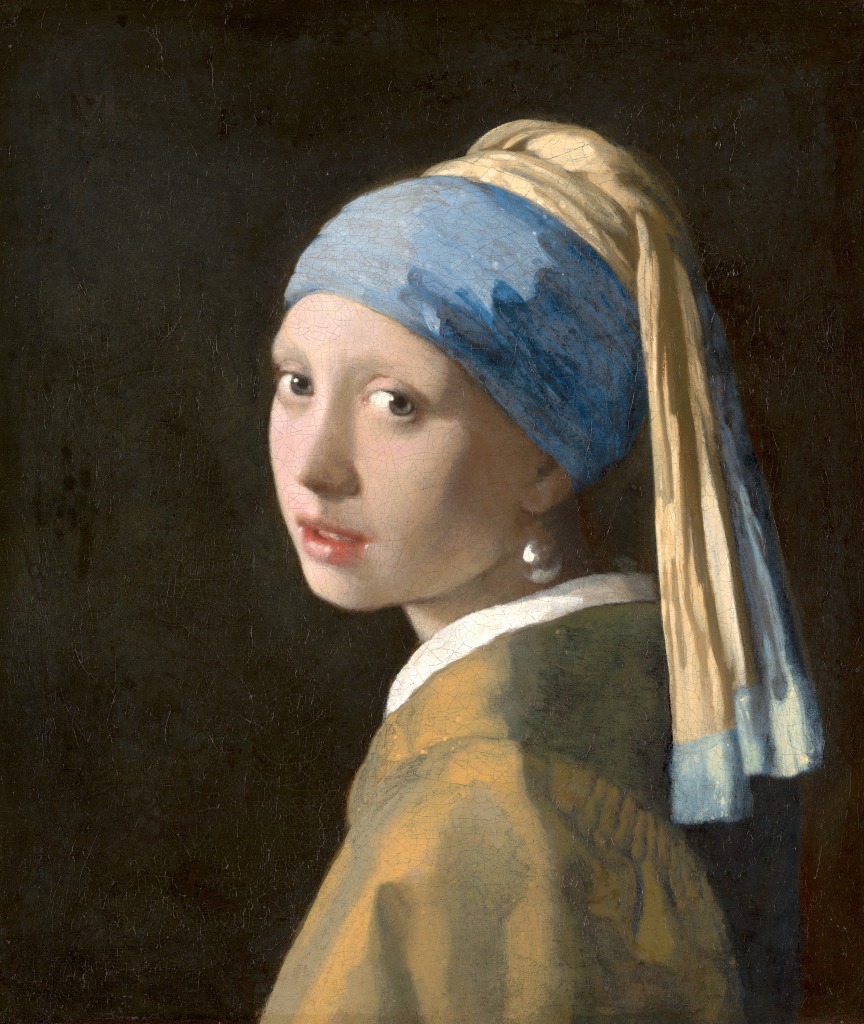
The Girl With a Pearl Earring (1665) by Johannes Vermeer

Introduction

Nicknamed the “Mona Lisa of the North“,the Girl with a Pearl Earring, is one of the masterpieces by famed Dutch painter, Johannes Vermeer. It hauntingly engages the viewer with enhanced realism, showcasing the electrifying gaze of a young girl adorned with a blue and gold turban. Created by Vermeer in 1665 during the Baroque period, the upper bust of the girl against a dark background has a three-dimensional effect that sets off her glowing appearance.

Historic Background

In Vermeer’s era, paintings were considered to be craftsmanship instead of art. Vermeer, a Dutch master painter at his peak, dedicated his life to developing his craft. By 1665, when the Girl with a Pearl Earring was created, Vermeer had begun to depict women, demonstrating a deep interest in their socio-cultural roles. The subject in this painting is believed to be Vermeer’s daughter, Maria.
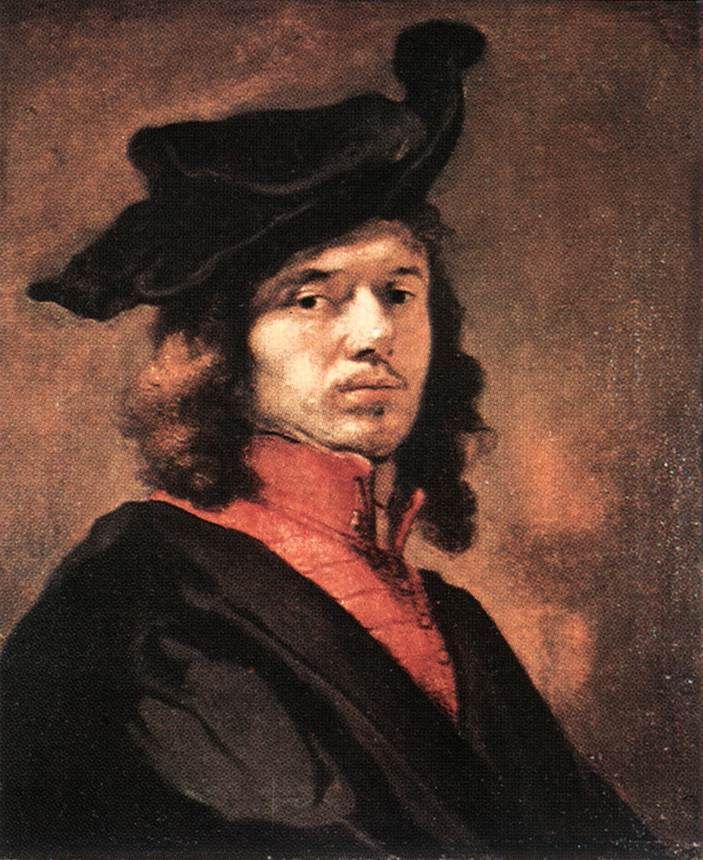
Self-Portrait of Johannes Vermeer

Subject of The Painting

The Painting was basically crafted with oil Painting on canvas and is categorized in Dutch Realism Movement arts. Although many art critics contend that the Girl with a Pearl Earring is a portrait, the prevailing argument is that it is a tronie, which is a study of the facial expressions of a living model. The composition of Girl with a Pearl Earring is delightfully simple. Unlike most of the other paintings by the Delft master, the subject here is only a simple head of a girl looking over her shoulder at the viewer. In Girl With a Pearl Earring, the young female model appears to be startled by something, while glancing taciturnly over her shoulder.No hint of a setting is provided, other than its atmospherically dark tone. This too is unusual for the mature Vermeer. The unusually direct contact between subject and spectator, and the slightly parted position of the lips, presents a sense of immediacy so great as to imply significant intimacy. The girl is wearing a simple brownish-yellow top, which contrasts strongly with her bright white collar. A further contrast is offered by her blue and yellow or turban (or chaperon) which gives the picture a distinctly exotic effect. During Vermeer’s time, the turban was a popular prop for tronies because of its deep folds and robust shades, which allowed artists to show off their skills and abilities.

Discussing the Painting: The uniqueness

Utilizing the technique of under-painting, or a monochromatic ground, Vermeer made the Girl with a Pearl Earring seem to lift from the canvas. Through careful use of his palette, he created the deep, rich tones of the girl’s headdress and gown. Then, to give her skin a glowing appearance, he used pigments to create light and shadow effect that contrasted the background. The Pearl Earring, status symbol of the period , worn by the subject, composed by only two brush strokes. The two whites, one on each corner of her mouth, helped to enliven the subject’s pensive smile.
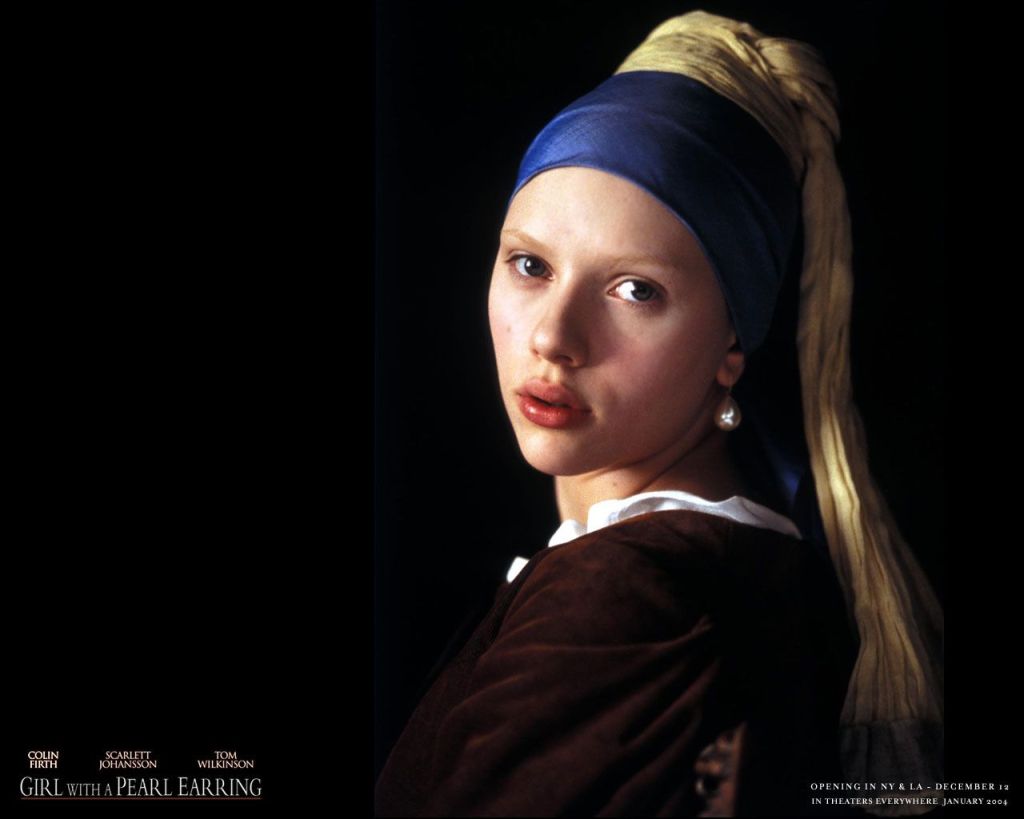
Scarlett Johansson in Girl With a Pearl Earring movie (2003)

The Painter’s Touch: The Cinematic Adoption

Although now a highly regarded artist, Vermeer was not well known outside of his native city of Delft during his lifetime or in the decades after. Historians credit the 19th-century French critic Étienne-Joseph-Théophile-Thoré (under the pseudonym of William Bürger) for reassessing the artist’s work, which eventually led to Vermeer’s distinguished reputation. Even so, Girl with a Pearl Earring became one of Vermeer’s more famous pieces only around the turn of the 21st century, with the 1995 blockbuster exhibition at the National Gallery of Art, Washington,D.C. and the publication of the best-selling novel Girl with a Pearl Earring by Tracy Chevalier in 1999. The book fashioned the painting’s subject into a housemaid named Griet who works in Vermeer’s home and becomes his paint mixer. It was adapted into an Oscar nominated movie in 2003 starring Scarlett Johansson as the fictional Griet and Colin Firth as Vermeer.
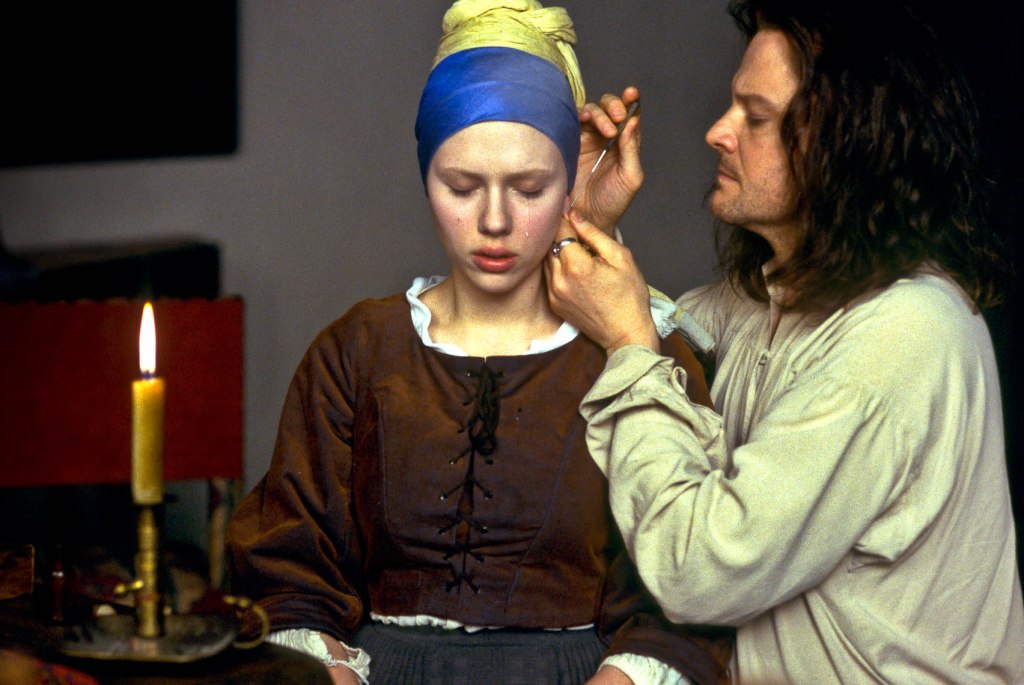
Scarlett Johansson as Griet and Colin Firth as Vermeer in Girl With a Pearl Earring movie (2003)

Where at Present Day

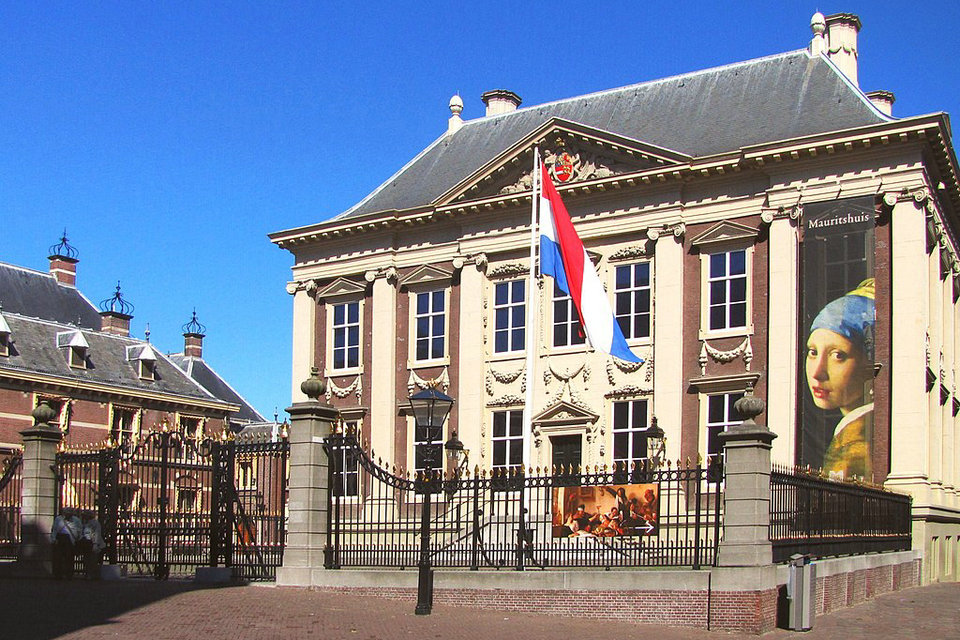
Mauritshuis, Den Haag, Netherlands

As the buildings of Mauritshuis Museum ,Hague underwent renovation in 2012, Girl with the Pearl Earring travelled to Japan, Italy, and the United States. It drew crowds in each location, attesting to its now firm place in audience regard. When Girl returned to the Netherlands in 2014, the Mauritshuis announced it would no longer lend out the painting, assuring visitors that the museum’s main attraction would always be in its home.
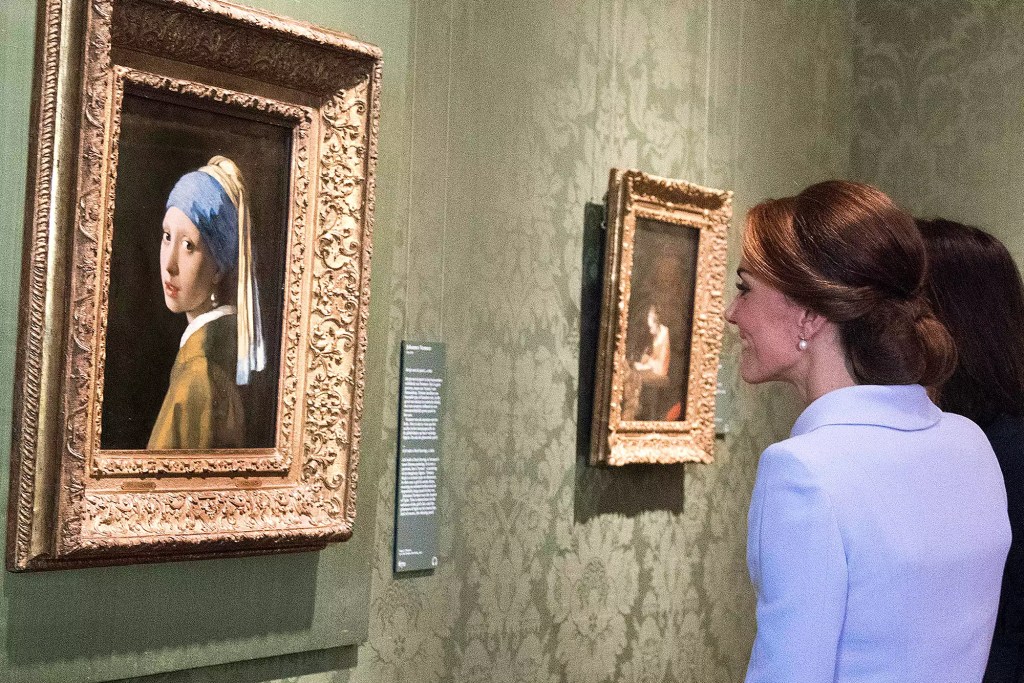
Princess Kate Middleton of England came face-to-face with one of the best-loved paintings in the world — “Girl with a Pearl Earring” — during a visit to the Mauritshuis museum in The Hague.
 

Conclusion

Humans have always adored paintings as one of the highest form of visual arts, and few of such arts can truly surpasses the inertness of still lives and remains immortal forever. The Girl With a Pearl Earring, poses the appeal of simplicity to rethink of life and consider the fact that beauty of life can also be found in the simplest joys around us.
Dhakai Muslin: The Exclusive Bengal Silk from The Past

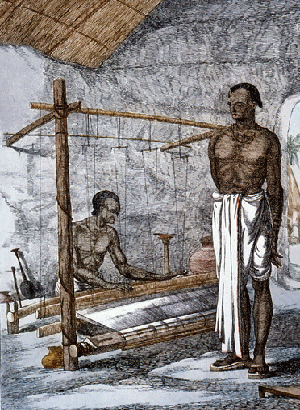
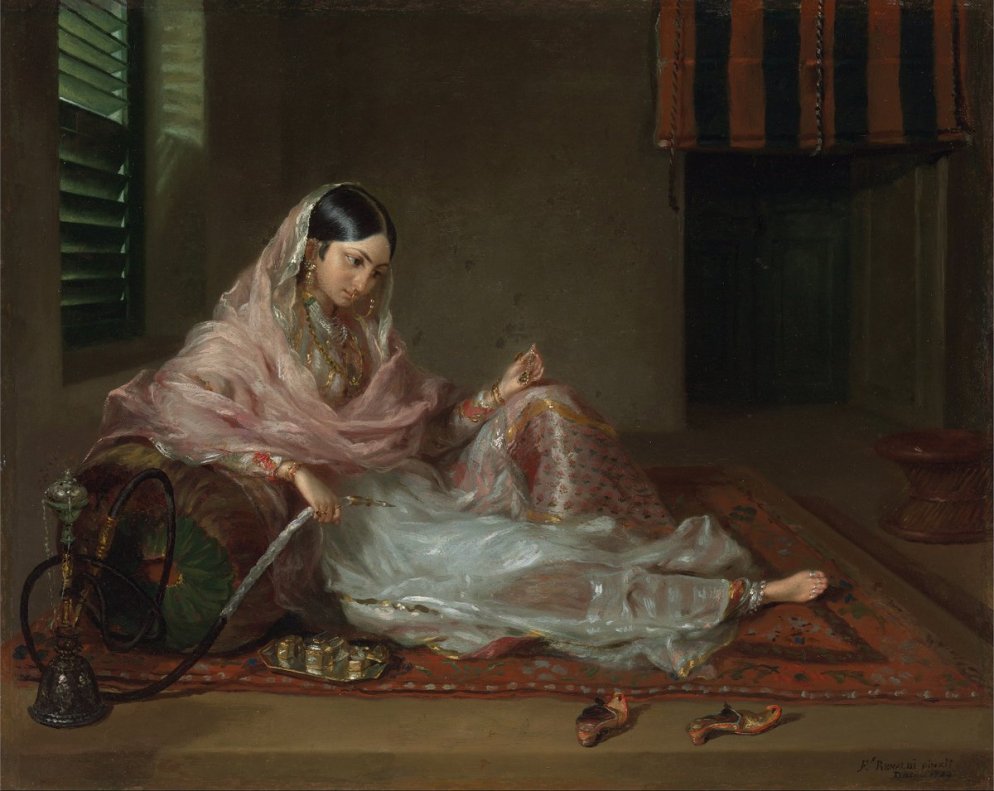
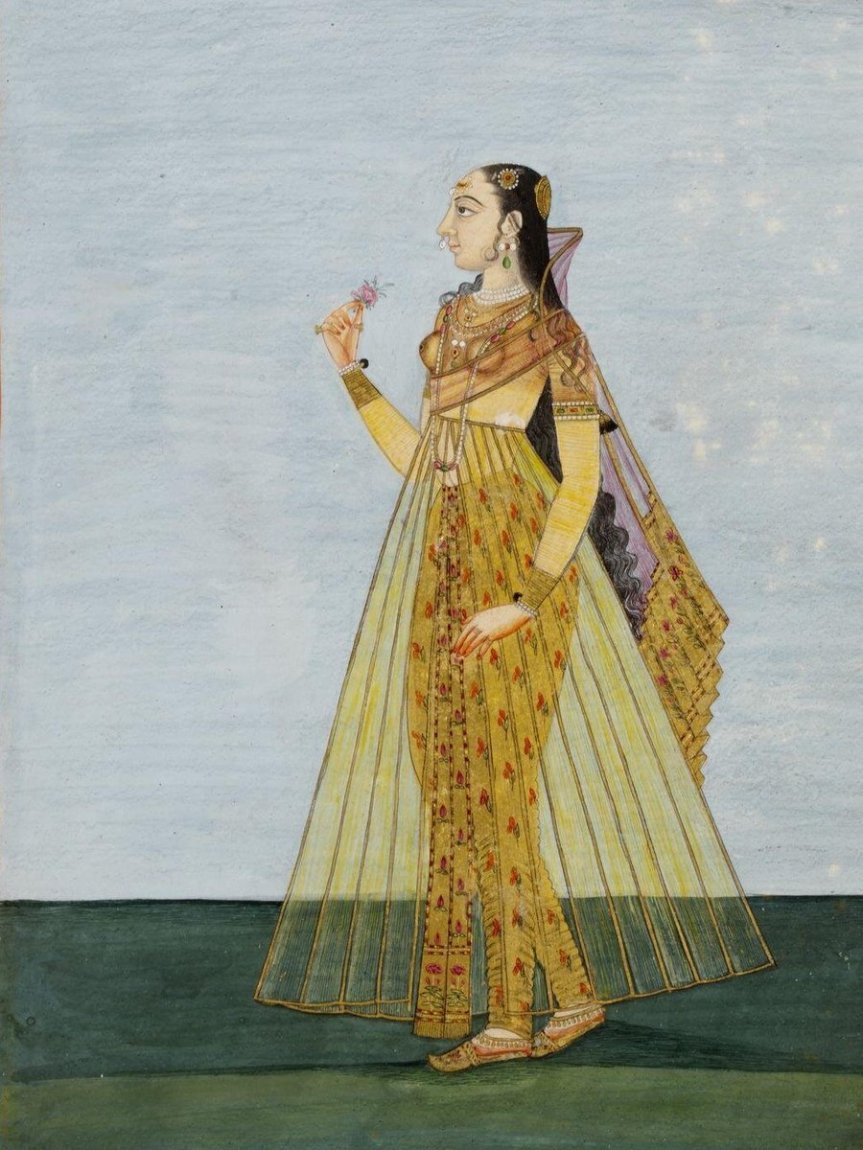
A portrait illustrating how Transparent Muslins were

Introduction

Muslin today has come to mean almost any lightweight, gauzy, mostly inexpensive, machine-milled cotton cloth. The word has lost all connection to the handwoven fabric that once came exclusively from Bengal. Cotton, stated the historian Fernand Braudel, was first used by the ancient civilizations on the Indus, while the art of weaving itself has been traced back to much earlier times. This head start perhaps was why ancient India became proficient in making cotton textiles. They became a staple export commodity to the Roman Empire, and they expanded in volume in the Middle Ages with the growth of the “maritime Silk Road” in the Indian Ocean.

Historic Background

Muslin a brand name of pre-colonial Bengal textile, especially of Dhaka origins. Muslin was manufactured in the city of Dhaka and in some surrounding stations, by local skill with locally produced cotton and attained world-wide fame as the Dhaka Muslin. The origin of the word Muslin is obscure; some say that the word was derived from Mosul, an old trade centre in Iraq, while others think that Muslin was connected with Musulipattam, sometime headquarters of European trading companies in southern India. Muslin is not a Persian word, nor Sanskrit, nor Bengali, so it is very likely that the name Muslin was given by the Europeans to cotton cloth imported by them from Mosul, and through Mosul from other eastern countries, and when they saw the fine cotton goods of Dhaka, they gave the same name to Dhaka fabrics. That the name Muslin was given by the Europeans admits of little doubt, because not only Dhaka cotton textiles, but cotton goods imported by the Europeans from other parts of India like Gujrat, Golconda, etc were also called Muslin.

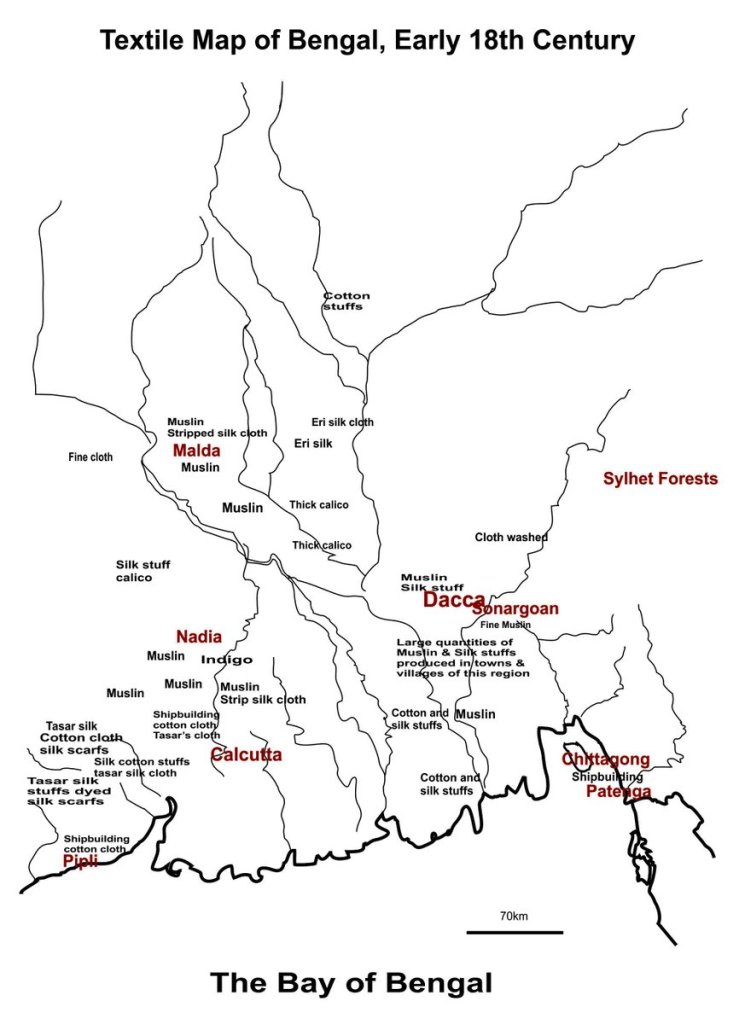
The route connecting the Hubs of Muslin Industry in Bengal

How Muslins Were Made

The textile industry of Bengal is very old. Bengal cotton fabrics were exported to the Roman and the Chinese empires and they are mentioned in Ptolemy’s Geography and the Periplus of the Erythraean Sea, and by the ancient Chinese travellers. But Dhaka Muslin became famous and attracted foreign and transmarine buyers after the establishment of the Mughal capital at Dhaka. The Muslin industry of Dhaka received patronage from the Mughal emperors and the Mughal nobility. A huge quantity of the finest sort of Muslin was procured for the use of the Mughal emperors, provincial governors and high officers and nobles. In the great 1851 Exhibition of London, Dhaka Muslin occupied a prominent place, attracted a large number of visitors and the British Press spoke very highly of the marvelous Muslin fabrics of Dhaka. Weavers in Dhaka, Bangladesh, used to make this incredibly fine cloth using a method called the discontinuous weft technique. This technique required the weaver to work two layers of weft – one as fine as spider’s silk to hold the cloth together and the other forming the pattern. Each pattern motif was worked individually, using fine bamboo sticks to interlace the pattern threads with the warp threads.

Weaving of Muslins under the supervision of royal official( Painting, in 1800s)

Types And Variations

The finest sort of Muslin was made of phuti cotton, which was grown in certain localities on the banks of the Brahmaputra and his branches. The other kinds of cotton called bairait and desee were inferior and were produced in different parts of Dhaka and neighbouring areas; they were used for manufacturing slightly inferior and coarse clothes.The productions of Dhaka weavers consisted of fabrics of varying quality, ranging from the finest texture used by the highly aristocratic people, the emperor, viziers, nawabs and so on, down to the coarse thick wrapper used by the poor people. Muslins were designated by names denoting either fineness or transparency of texture, or the place of manufacture or the uses to which they were applied as articles of dress. Names thus derived were Malmal (the finest sort), Jhuna (used by native dancers), Rang (of transparent and net-like texture), Abirawan (fancifully compared with running water), Khasa (special quality, fine or elegant), Shabnam (morning dew) Alaballee (very fine), Tanzib (adorning the body), Nayansukh (pleasing to the eye), Buddankhas (a special sort of cloth), Seerbund (used for turbans), Kumees (used for making shirts), Doorea (striped), Charkona (chequered cloth), Jamdanee (figured cloth). The finest sort of Muslin was called Malmal, sometimes mentioned as Malmal Shahi or Malmal Khas by foreign travellers. It was costly, and the weavers spent a long time, sometimes six months, to make a piece of this sort. It was used by emperors, nawabs etc. Muslins procured for emperors were called Malbus Khas and those procured for nawabs were called Sarkar-i-Ala. The Mughal government appointed an officer, Darogah or Darogah-i-Malbus Khas to supervise the manufacture of Muslins meant for the emperor or a nawab.

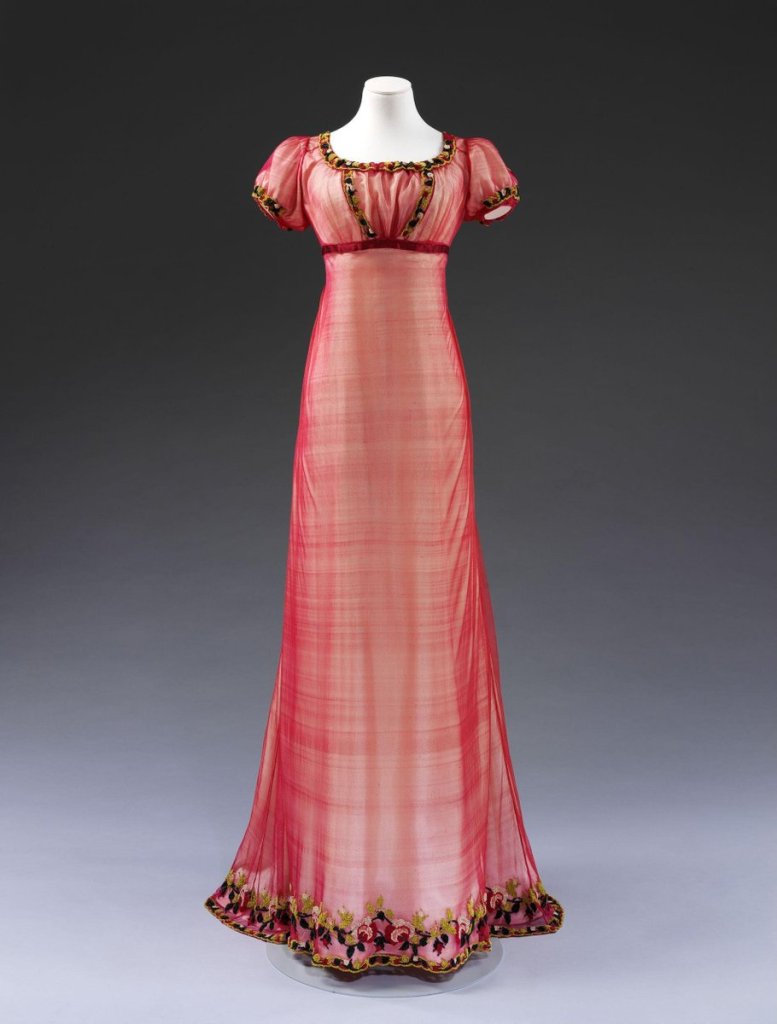
A real Muslin dress exported to England from colonized India

Areas of Production

Weaving was prevalent in the Dhaka district in almost every village, but some places became famous for manufacturing superior quality of Muslins. These places were Dhaka, Sonargaon , Dhamrai, Teetbady, Junglebary and Bajitpur.

Why It Was So Exclusive

The finest of Muslins were honoured with evocative names conjured up by imperial poets, such as “baft-hawa”, literally “woven air”. These high-end muslins were said to be as light and soft as the wind. According to one traveller, they were so fluid you could pull a bolt – a length of 300ft, or 91m, through the centre of a ring. Another wrote that you could fit a piece of 60ft, or 18m, into a pocket match-box. Dhaka muslin was also more than a little transparent.

Muslins were adored by the elites

How The Industry Was Lost

Unfortunately, during the period of the East India Company, European manufacturers all but destroyed the industry by flooding the market with factory produced muslin equivalents. Through a combination of punitive taxes on locally produced textiles and the dissolution of local and influential patrons, Jamdani muslin became uneconomical to produce and the skills were almost lost.

Conclusion

Thankfully, there are organisations in Bangladesh today that are encouraging local weavers to continue to practice their craft. Coupled with the UNESCO listing of Jamdani muslin on its Representative List of the Intangible Cultural Heritage of Humanity, there is more impetus to continuing production, albeit on a very small scale. With the proliferation of mass produced and synthetic fabrics on the market today, it is important that these historical techniques aren’t lost forever. No factory can ever emulate the quality arising out of a skilled artisan. Their skills are part of our textile heritage and it’s wonderful they are being recognised and preserved.

The Toxic Beauty: How Cosmetics Killed Her Highness Queen Elizabeth I

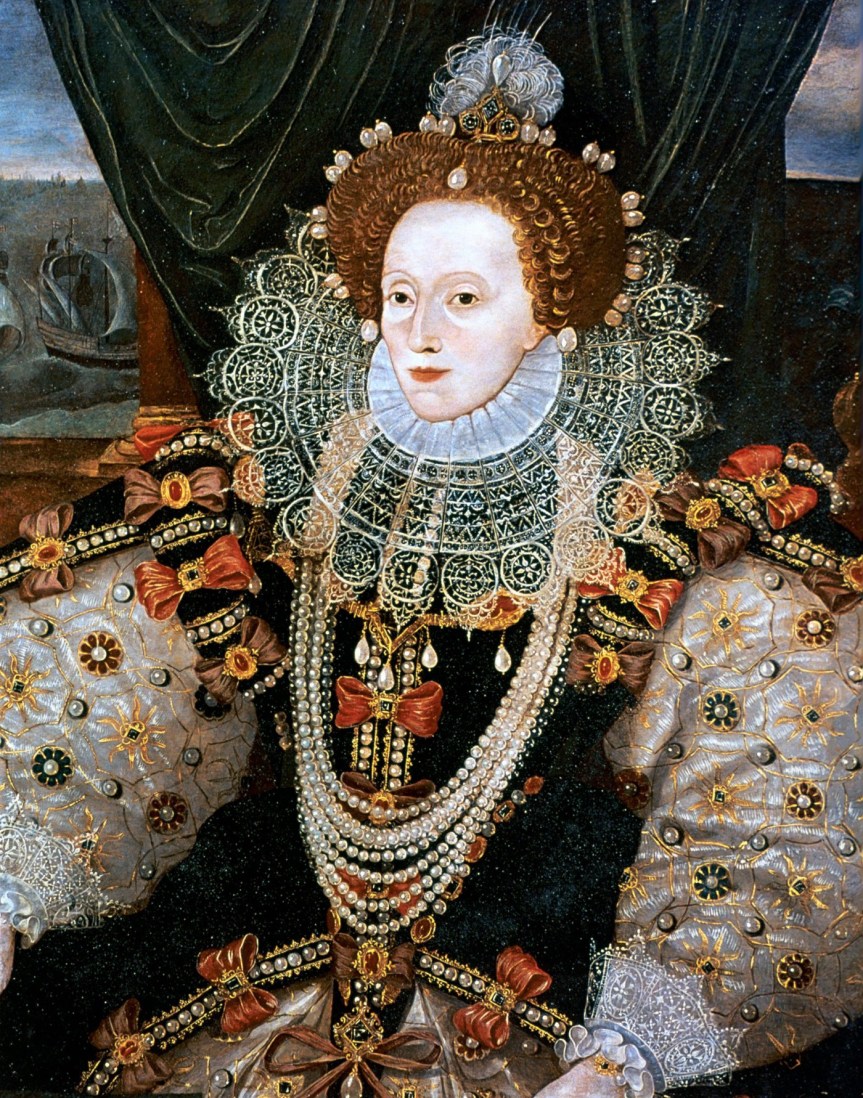
Queen Elizabeth I of England and Ireland

Introduction

Beauty has always been the greatest concern for women since ages. Women , all over the world did what not, to look pretty and presentable throughout the history of Human Civilization. And to address the need of looking flawlessly beautiful, the practice of using cosmetic or make-up came to the play. Women, sometimes, followed bizarre rituals to enhance their look, but sometimes, to their worst, the cosmetic turned out to be toxic and endangered their lives. To look beautiful it cost them a fatal price. Royalties and Elites were victims of the same death trap, including the Great Queen Elizabeth I.

Queen Elizabeth: The Beginning

Elizabeth I was the fifth and last monarch of the House of Tudor. She was born in the Palace of Placentia on 7 September 1533 and was died on 24 March 1603 at the age of 69. Her father was Henry VIII and her mother was Anne Boleyn who was her father’s second wife. On 17 November 1558, she became the Queen of England and Ireland and ruled it for 44 years until her death. She was also called the Virgin Queen and Good Queen Bess. Elizabeth was third in line to become the monarch and she was not even destined to be queen. She was behind her half younger brother Edward VI and half elder sister Mary I. As her father Henry VIII died, on 28 January 1547, her younger brother Edward VI became the monarch at age nine and ruled for six years, dying at the age of 15 because of tuberculosis. After, Mary I became queen and ruled for five years, dying at age 42 on 17 November 1558. Finally, Elizabeth was the last child of Henry VIII to rule England and became the Queen of England, ruling for 44 years.

The Scars in Her Beauty : What Led Her to Toxic Cosmetics

During her 20’s the Queen got infected with smallpox. Though the young queen survived smallpox but the disease left scars and blemishes on her skin and in order to hide those she started using the makeup more vigorously.

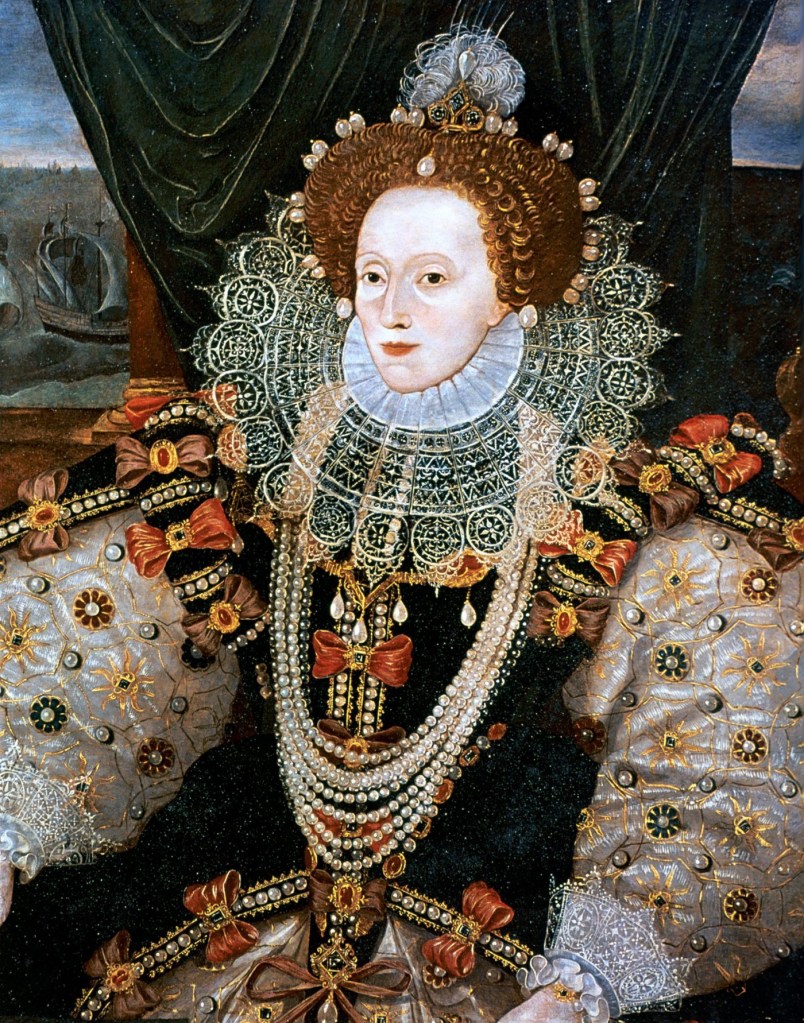
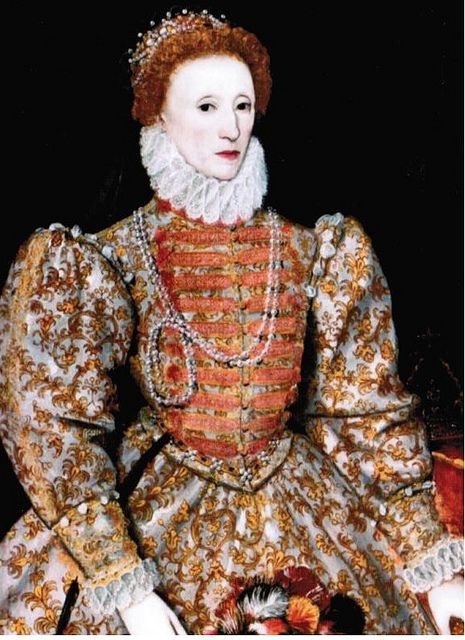
Portrait of the Queen

Bizarre Beauty Standards

The cosmetics that were worn by women in the time of Queen Elizabeth are drastically different from those we wear today. Not only were the materials they used very different but the look they were trying to achieve was very different as well. Standards of beauty change all the time. To understand the cosmetics worn by Elizabethan women, it’s important to understand the effect they were trying to achieve—that “ideal” beauty they wanted to imitate. The ideal Elizabethan female had bright wide-set eyes, snow white skin, rosy cheeks, red lips and fair hair. Pale skin was a sign of nobility, wealth and delicacy was sought after by many. In a time where sunscreen was unheard of, skin problems and pox was a common thing smooth, unblemished skin was a rarity. The pale skin women (and men) wanted was achieved by a number of ways. The most popular being Venetian Ceruse (also known as Spirits of Saturn), a mixture of white lead and vinegar. This white foundation was applied to the face, neck and bosom. Naturally, smearing lead all over one’s skin caused some serious skin damage not only did it make the skin look “grey and shrivelled” there was lead poisoning, hair loss and if used over an extended period of time could cause death. They lined their eyes with black kohl to make them look darker and belladonna eyedrops (used to dilate women’s pupils, an effect considered to be attractive and seductive). Fashion required eyebrows to be thin and arched which would create a high forehead it was considered to be a sign of aristocracy. Rouged cheeks and red lips were very popular. This was obtained with plants and animal dyes.

Her Majesty’ s Royal Makeup

She used ingredients like lead and vinegar in her makeup which is called — “Venetian ceruse. It is said that she was the only monarch that always took a long time to get ready. She used multiple layers of lead and vinegar and applied a thick white mask to her face and neck. The white skin was not a part of racism but it depicted that a woman was of a higher class. she applied was from If you have seen a portrait of Queen Elizabeth you may have noticed that her lips are very red. The red colour cinnabar, a mercury. poisonous substance that contains She used to remove it with a mixture of elements like eggshells, alum, and mercury. Thus, this leads to another use of poison in her makeup. People at that time would say that her skin became soft after makeup re moval but basically, it was peeling one layer at a time. All these caused wrinkles, aging, and the deterioration of her health. And it is assumed by the historians, that continuous use of those deadly chemicals as Cosmetics, led to her death.

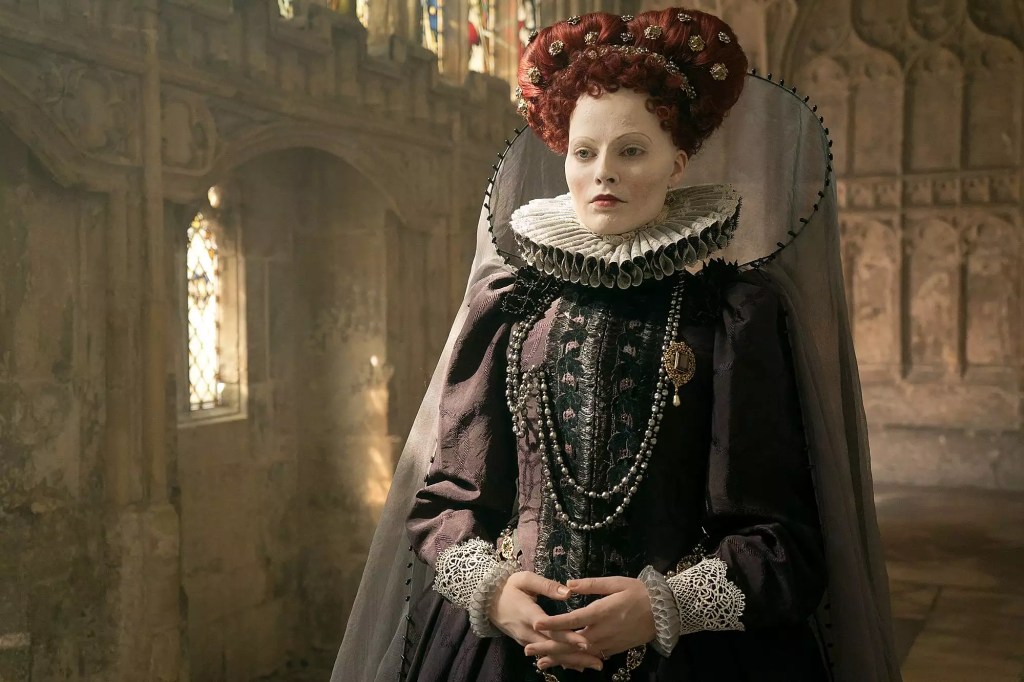
Cinematic Portrait of the Queen, played by actress Margot Robbie

Conclusion

The urge of looking beautiful , sometimes proves hard on women’s overall health. body and The obsession of being perfect, has killed many women, including such Royalties like Queen Elizabeth I. Even today, women are insure about their natural beauty and sometimes find it hard to accept body positivity. We should learn to feel confident in our skin first, and the glow then comes from within as our flaws make us Earthly and more humane.

Dhakis of West Bengal: Where They Come From and Where They Go

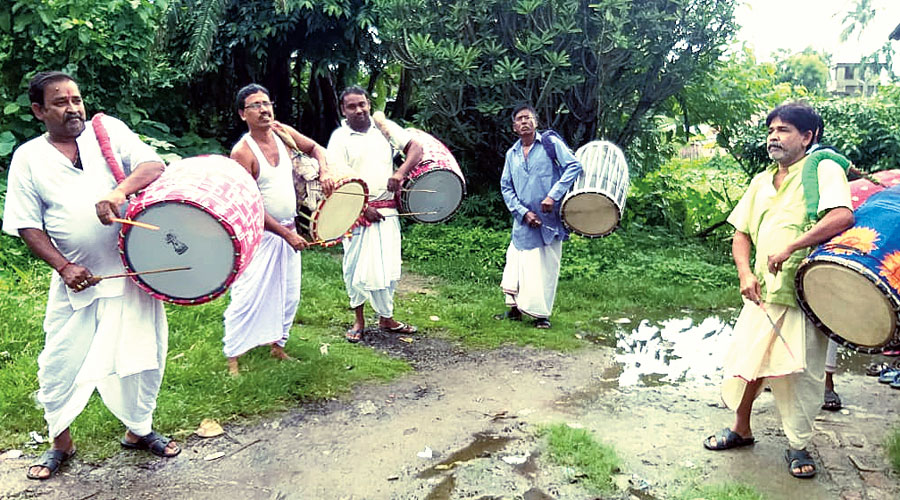
Dhakis playing dhaks in a Durga Puja pandal

Introduction

India is a country of rich cultural diversity and the essence of festivity for each Indian state is unique on its own. The main festival of the Indian state of West Bengal is Durga Puja, which is held during the auspicious Aashwin Durga Navtras in the months of September-October. During the festival the Mother Goddess is welcomed to her home on Earth with 9 long days of celebrations and joy. As a ritual of the festivity both her arrival and departure are rung by hundreds of thousands of “Dhaks” played by the professional drummers, locally called as “Dhakis”.

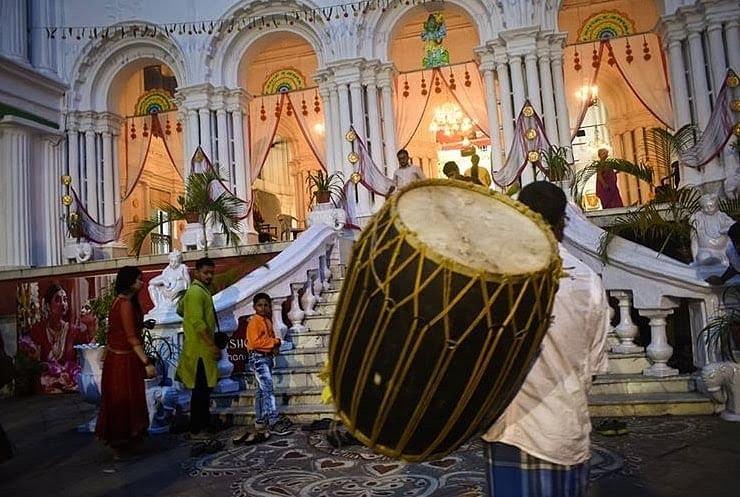
Dhak at a Puja Bari

What “Dhaks” Are: How They Are Made

The word “Dhak” comes from the Austric word “Dhaka” included in the Sanskrit language. The word later became a part of the Bengali script. The dhak is a big membranophone instrument that originally belongs to South Asia. The dhak has become an integral aspect of the widely loved Bengali festival of Durga Puja, other Bengali rituals and festivities. It would have no festive aura if not for the maddening rhythm of the dhak. The dhak is beaten with two sticks loudly to infuse the frenzied beats into the listeners. These beats are enough to raise the spirits and conjure up the feel of the Durga Puja. Without the instrument, the heavily celebrated festival would have felt sombre.

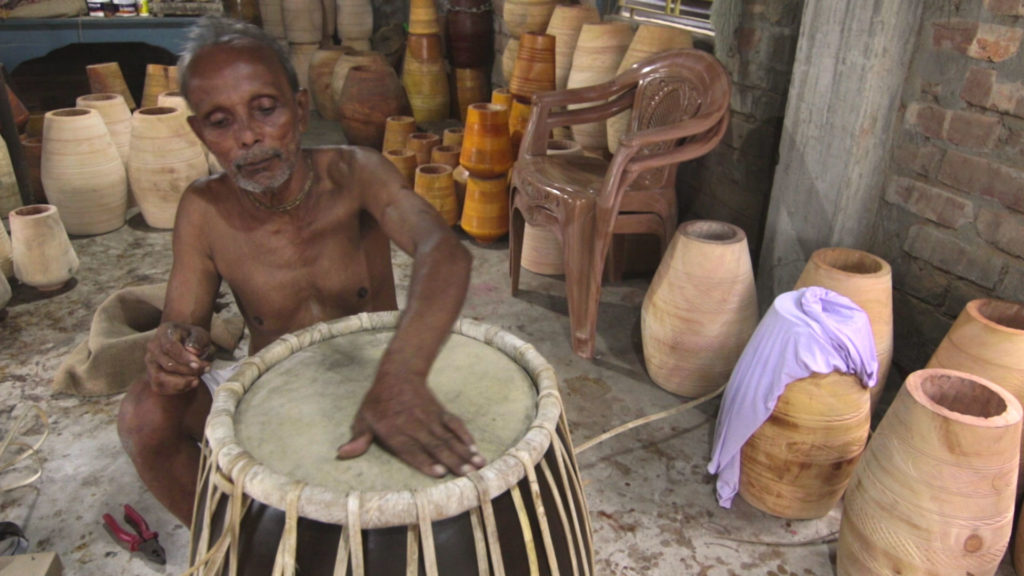
The sound of the dhak depends on a lot of factors like the shape. The shape varies from almost cylindrical to barrel-like. On one hand, the outer portion of the wood is shaved off and carved to create the barrel shaped instrument. On the other hand, the inner side of it is made to be absolutely hollow.The two ends of the dhak are wrapped up with goat skin on the top and calf skin at the bottom. It is said that using these two types of hides bring out the perfect sound texture of the dhak. The manner of stretching the skin over the mouth of the dhak and lacing it is also an important factor in the kind of sound that will be produced. The more the strings on the side of the dhak are pulled the higher the pitch of the dhak gets. The two sticks that are used to beat the dhak are carefully chiseled and formed out of thin cane or bamboo. Because of the drying session of the wooden structure and the intricate handwork and decoration, it takes around one month to reach the perfection in making the instrument.

Making of Dhaks

Who “Dhakis” Are: The Heritage follows

‘‘Dhakis’’ are integral to almost all festivities in Bengal but the art of playing the huge barrel-shaped membranophone instrument is considered as a staple of Bengal’s most celebrated Durga Puja. Most of the ‘dhakis’ or men who play the ‘dhak’ hail from humble rural backgrounds of Murshidabad, Hooghly, Malda, Bankura and Purulia districts of the state. Just like playing any other instrument that is highly associated with a centuries-old cultural heritage, the art of playing dhak, or the business of dhakis are often found to be ancestral and moving in the families since ages. The art of playing such instrument is considered as a living witness, bearing the tradition of the state of West Bengal. The art of playing dhak is passed on from one generation to the next though this art is gradually dying out and losing its focus. One of the reasons for this is the uncertain informal nature of this profession. They still teach the children to play the dhak is to preserve the culture and heritage.

Each part of Durga Puja rituals has a different and unique tune and beat of the dhak right from the arrival of the idols till their immersion. It is played when the idol enters the pandal and even when it exits the pandal on the last day of puja, Dashami. In fact, it is the deafening sound of the dhak that fills the air of immense celebration during the ‘Sandhya Arati’ on Ashtami. This ceremony is absolutely incomplete without the beats of the dhak. Along with that, the ‘Dhunuchi Nach’ is also an essential part where the dhak provides the musical rhythm to which people dance with the ‘dhunuchi’. Another popular tradition is the ‘Dhaker Lorai’ or ‘Fight between Dhaks’ where the grandeur is revealed the best when dhakis play in groups. It is usually a fascinating experience for the audience to see the feathered drums being played by the dhakis dancing to the music produced. Finally, on Dashami, the majestic beats of the dhak helps lift the air of sadness and gloom during the vermilion ritual and ultimately, the immersion.

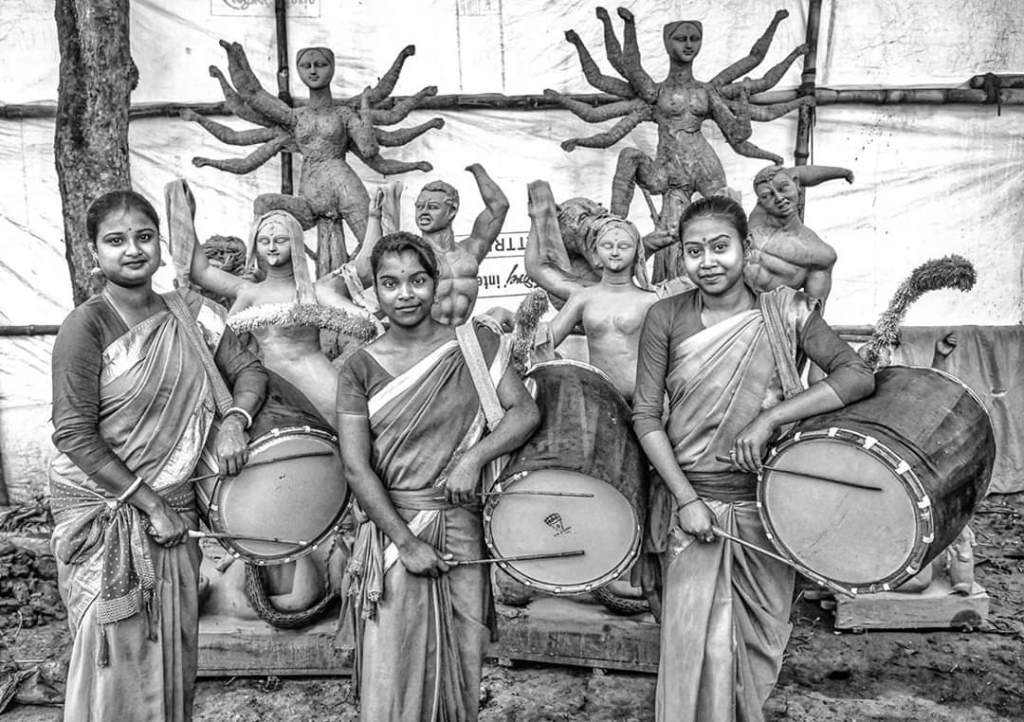
Female artists too have now taken up the responsibility to revive the age old art of playing the dhak. In such a male-dominated profession where carrying the dhak is a major issue, women have proved themselves to be no less than their male counterparts. Teams of women dhakis are finding fame and getting established slowly in their fields.

Dhakis of Bengal

COVID-19 and The Livelihood of Dhakis

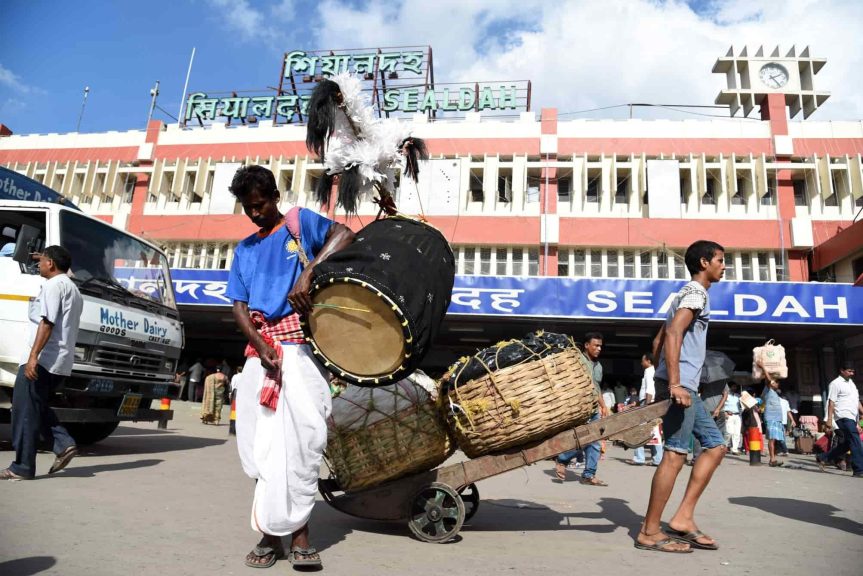
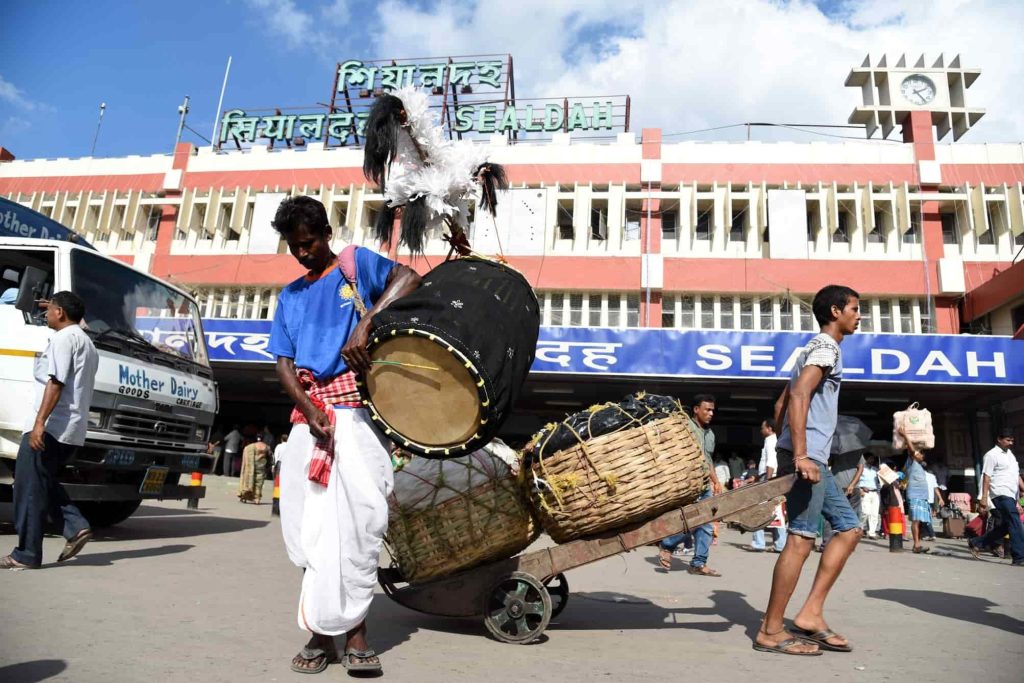
The Impact The drop in the number of Durga Pujas in and outside Bengal amid the novel coronavirus outbreak has taken the rhythm out of the lives of many dhakis (traditional drummers) who look forward to this festive season as their main source of earnings in the year. Every year, the dhakis from different districts and villages of Bengal use to appear at Sealdah station premises before Durga puja. The dhakis used to play the drums in front of Sealdah station every year before puja. From there, various puja committees used to take them in the puja pandals to play the ‘dhak’. But for the past two years the situation is very different, as Puja Committees and Organizers are tight in budget and have to follow a lot of restrictions . Moreover, thousands of dhakis from Bengal districts like East Burdwan, Birbhum, Purulia, Bankura and Hooghly would in other years travel to states such as Assam, Maharashtra, Delhi, Uttar Pradesh to perform at Durga Puja pandals and get higher pay than what they would have got in their home state. But, COVID-19 has restricted that option too for these drummers in past years.

Dhakis at Sealdah station, Kolkata

Where Are They At Now: How We Can Help

Acknowledging the fact that, playing dhak couldn’t be considered as a stable profession and is more inclined to be an occasional source of performing art and earning money, most of the dhakis are often associated with other rural jobs like farming, weaving, fishing to support their livelihood. During Pandemic, the dhakis hope that though they could not travel outside Bengal, they were still lucky if they got calls from Bengal puja organisers. When budgets are low, organisers play recorded beats of the dhaki in pandals. However, several organisers in Bengal have decided to go ahead with dhakis to add the traditional fervour to festivities with the state government offering a dole of Rs 50,000 to each puja committee.

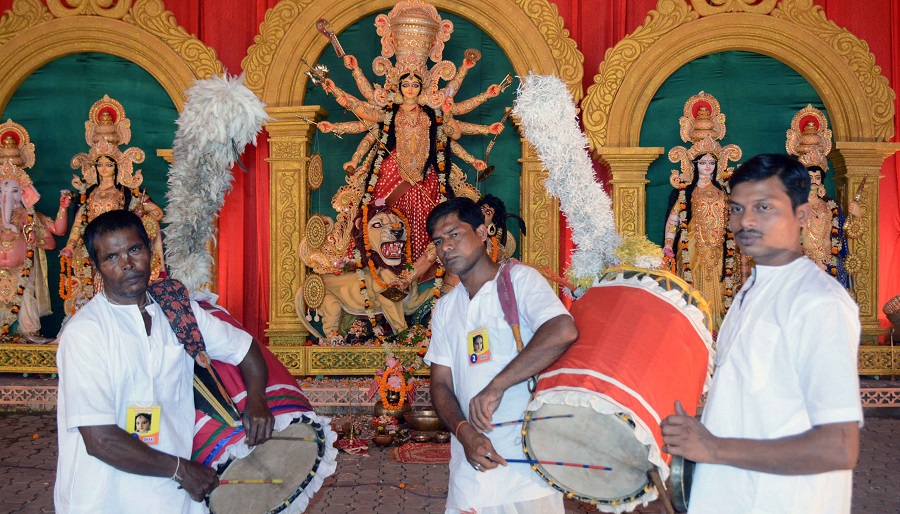
A group of Women Dhakis in front of Goddess Durga idols

Conclusion

Just like of everyday’s, MachhBhaat, Bengal ’s essence of festivity is incomplete without the rhythmic beats of Dhaks. Along with everyone one of us, they are also looking forward for a better situation in the upcoming years, while we can celebrate together the joys of life without fearing for the safety of our health . With the constant effort of the Government and the citizens together , hope we are going to reach that phase very soon.

VARIOUS DANCE FORMS OF INDIA

Dances reflect the mood and feelings of human beings through expression and body movements. India is known for many dance forms each of which is originated from its state. However, only six classical dance forms such as Bharatanatyam, Kuchipudi, Kathak, Kathakali, Odissi, and Manipuri are nationally recognized. Apart from this, many dance forms have their origin from India. Indian dance arts are not only about body movements and gestures. It is one of the ancient ways of showing devotion to God. It shows the inseparable connectivity with the Indian culture. Here, in this article, some of the famous dance forms of India would be discussed briefly.

BHARATANATYAM

Being one of the most famous classical dances of the world, Bharatanatyam owns its origin from Tamil Nādu, one of the southern states of India. Bharatanatyam was performed for the divine Carnatic music by women in temples in the ancient period. The movements and gestures of this dance form are called mudras and the dancer uses mudras and facial expressions to show the Navarasa (9 emotions). It is one of the most honourable art and is still learned by many women in the south.

KATHAK

Kathak is an Indian dance form that has its origin from the northern state, Uttar Pradesh. The word Kathak is derived from the term ‘Katha’ which means story. This dance is performed in a way to narrate a story with the dance movements. Both male and female dancers perform together. The ankle movement is the most important one which is done by wearing the Ghungroos (Ankle bells). 

KATHAKALI

Kathakali is another traditional dance form that is related to storytelling. It is originated from The Land of Spices of India, Kerala. The tales performed are Ramayana and Shiva stories. It includes heavy makeup, costumes, and face masks that are bright and colourful. The dance depicts both evil and good through facial expressions and gestures.

KUCHIPUDI

Kuchipudi, belonging to the southern state Andhra Pradesh is said to be the toughest dance form. It includes singing along with dancing. Hence it requires more skill and dedication compared to other forms. It was performed by male dancers, especially the brahmins in temples in ancient times. However, as time flew it became common and is performed even by women nowadays.

ODISSI

Odissi is the oldest dance form from the eastern state of India, Odisha. It narrates the stories of the Gods Shiva and Surya which are given in the form of poems. These poems are played as songs and the dancers express them through more than 50 intriguing mudras. These mudras are sculpted in the Hindu temples of India. It is preserved by practicing and making its survivance till today.

MANIPURI

Manipuri stands as a symbol to represent the rich traditions of the north-eastern state, Manipur. It narrates the romantic relationship between Lord Krishna and Radha, which is called Raas Leela. It is performed to the music of classical instruments by wearing the traditional Manipuri costumes and makeup to showcase the tale of the two gods. 

Bhangra, Garba, Bihu, Mohiniyattam, Ghoomar, Lavani, Rouf, Karagattam, etc. are the other well-known dance forms of India. 

VEDANGAS – THE LIMBS OF THE VEDAS

Vedangas are the six forms i.e., the six auxiliary disciples of Vedas. It is said to be the six limbs of the Purusha called Veda. 

  1. Shiksha (Education) – Nose 
  2. Kalpa (Ritual) – Arms
  3. Vyakarana (Grammar) – Mouth 
  4. Nirukta (Etymology) – Ears 
  5. Chhanda (Metrics) – Feet 
  6. Jyotisha (Astronomy) – Eyes 

SHIKSHA

It is referred to as the nose of the body. Shiksha is related to giving instructions through recitation. It consists of instructions for correct pronunciation and accent of the Samhita texts. It mainly focuses on phonetics and gives the rules for the sound of syllables and pronunciation. Phonetics decides the sound changes while recitation and hence becomes very important for Vedic language. The aim is to attain 

  • Akshara suddhi – syllable purity
  • Swara suddhi – tone and pitch purity
  • Maatraa suddhi – durational purity
  • Balam – the force of articulation
  • Samam – evenness
  • Santana – continuity

KALPA

Kalpa is the arm of the Vedas. It speaks about rules for the right method of performing the rituals. These rules are followed in ceremonies such as weddings, naming functions, and other ceremonies. It has its origin from the brahmana texts of the Veda. These are written in sutra style, referring to sacrifices. Kalpa sutras are divided into 

  • Srautasutras – contains rules for performing different sacrifices and rituals.
  • Smarthasutras – further partitioned into 
    • Grihyasutras – gives domestic rites and rituals for the three castes namely – Brahmins, Kshatriyas, Vaisyas, and the responsibilities for the household life.
    • Dharmasutras – gives rules for behaviour and talks about the four stages of life

VYAKARANA

Vyakarana is called the grammar for the Vedas. It is essential for the formation of sentences, phrases, and words. It is the mouth of the Vedas. It is necessary for understanding the Vedas. It is related to the next Vedanga, Nirukta. It is written by scholars named Panini and Yaska. It consists of 4000 sutras which belong to the four padas of the eight chapters. The four divisions are 

  • Siva sutras – deals with phonetics and intonation
  • Ashtadhyayi – deals with sentence structure and construction
  • Dhatupadha – deals with root words
  • Ganapadha – deals with a group of nouns and phrases

NIRUKTA

Nirukta is the ear of the Veda purusha. It means etymology and tells why a word is chosen for the context and the meaning of the used word. It is generally called the Kosa or the dictionary. It deals with the interpretation of obscure and difficult words and provides insights into the hidden meaning delivered in the content. Hence, the study of Nirukta becomes essential to understand the concealed meaning and linguistic significance of the texts.

CHHANDA

It is regarded as the feet of the Veda Purusha. The word Chhanda is derived from the term Chad meaning to cover. It deals with the metrics to be used in the Vedic hymns. A sloka generally consists of four quarters called paadas. Based on the number of syllables in each paada, there are different meters.

  • Gayatri – 8 syllables
  • Trishtup – 11 syllables
  • Jagati – 12 syllables

JYOTISHA

Jyotisha is the eyes of the Vedas and it means astronomy or astrology. It gives knowledge about auspicious dates and times for the ceremonies and rituals to be performed. This is determined based on the position of the sun, the moon, the planets, and other heavenly bodies. It is believed that the rituals succeed when performed under the influence of a particular graha, nakshatra, or thithi. This is calculated using some mathematical calculations and hence mathematics forms an integral part of it.

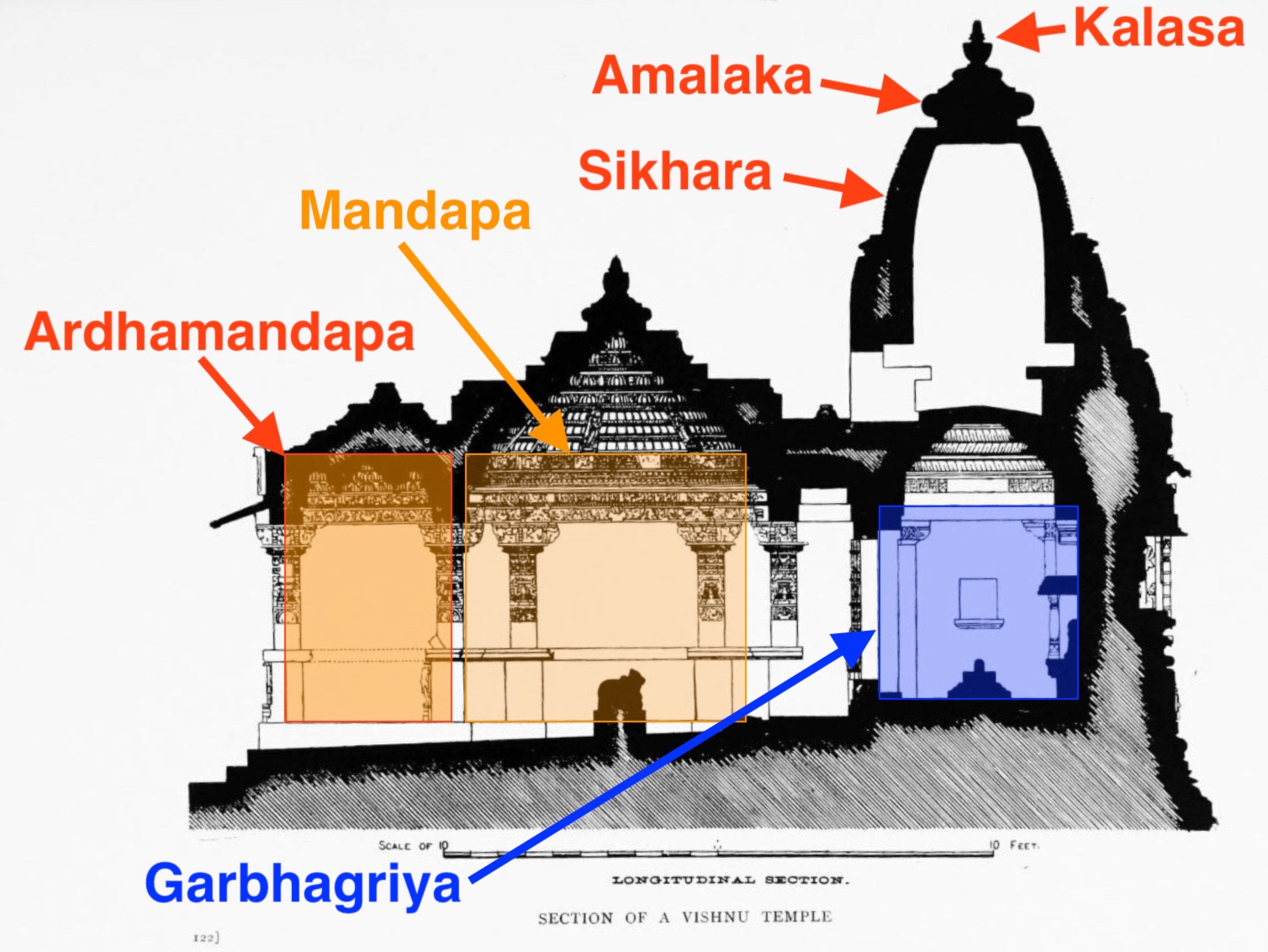
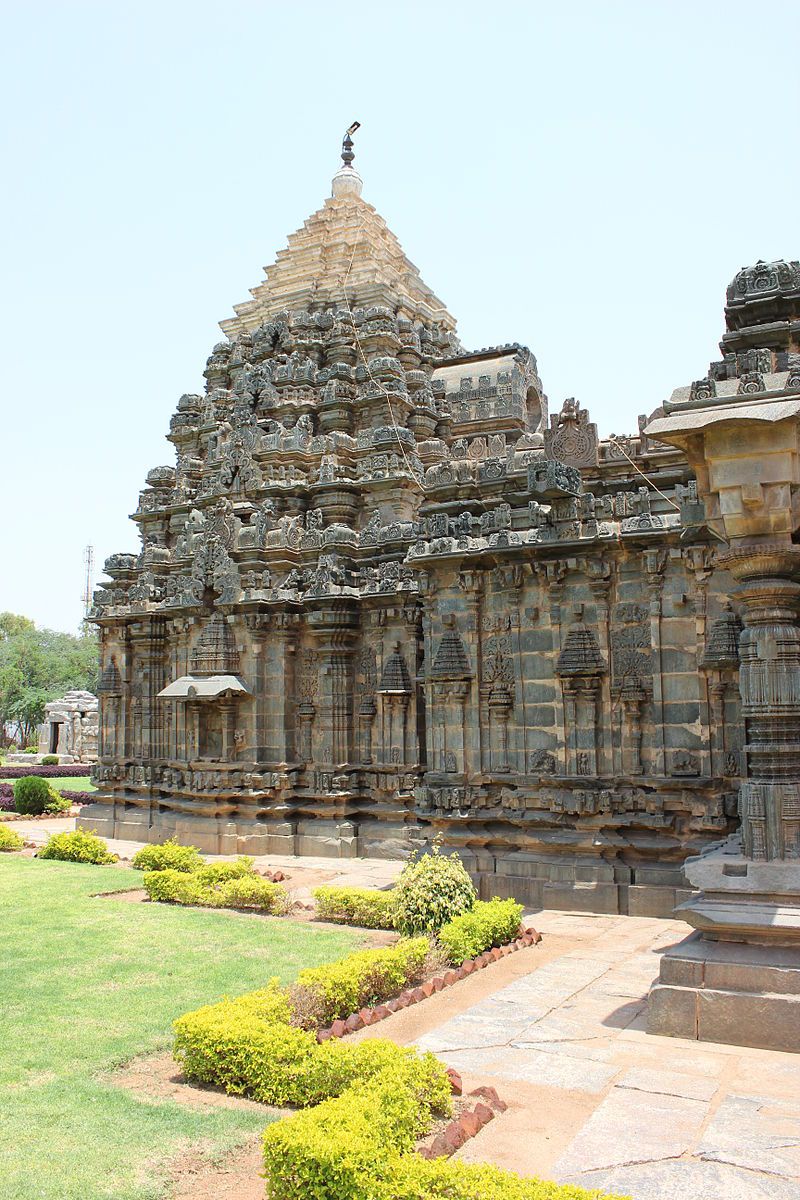
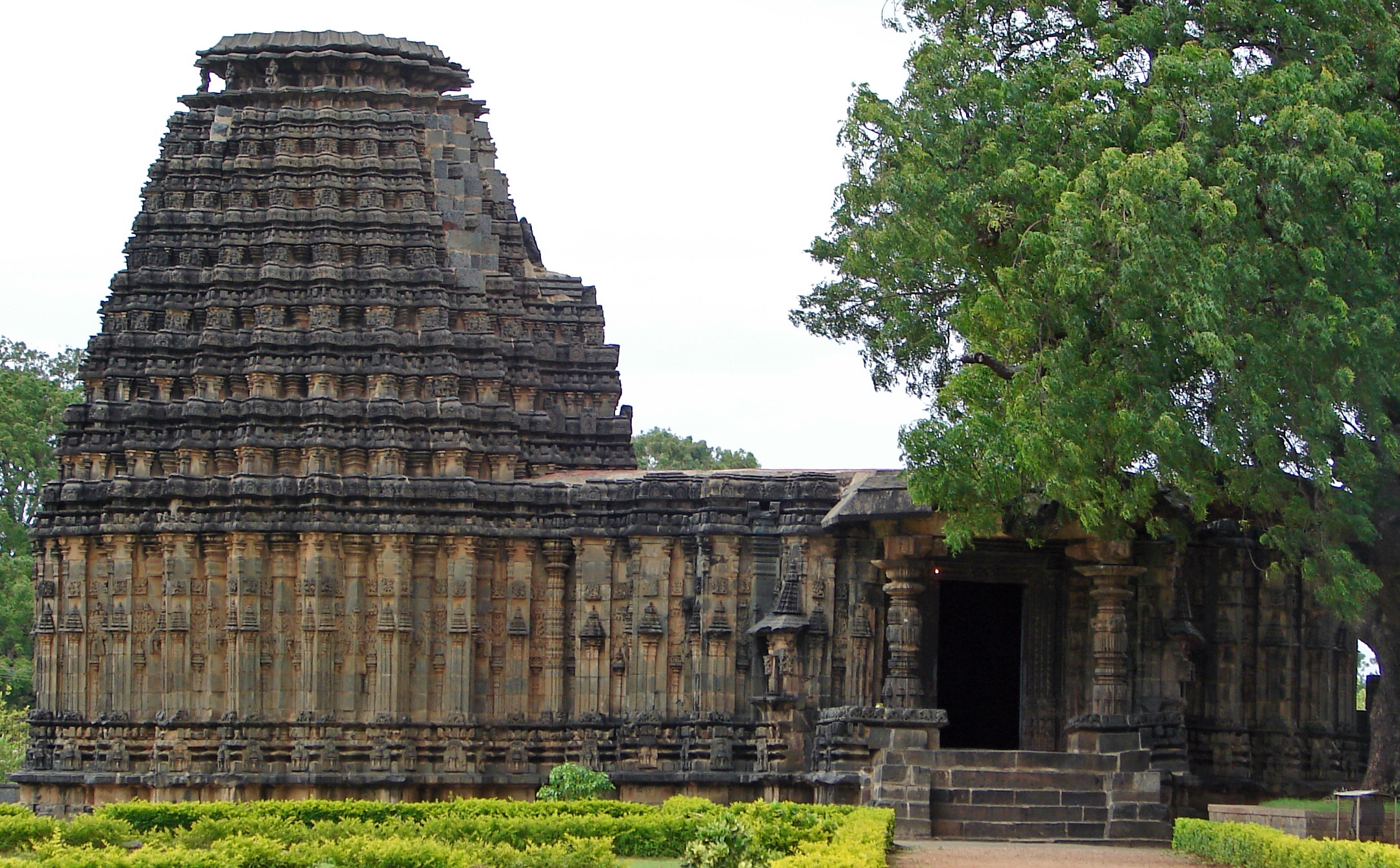
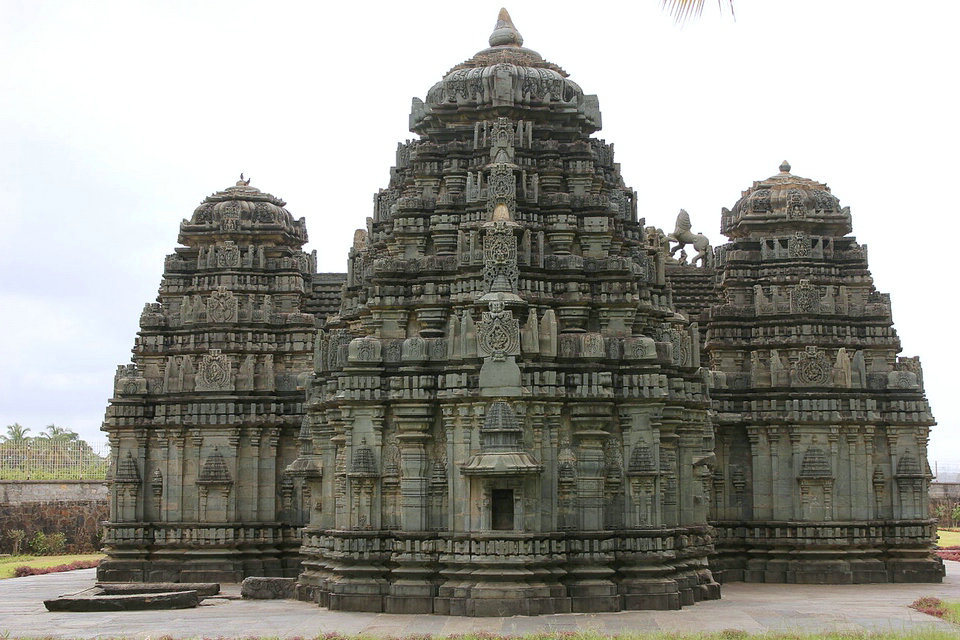
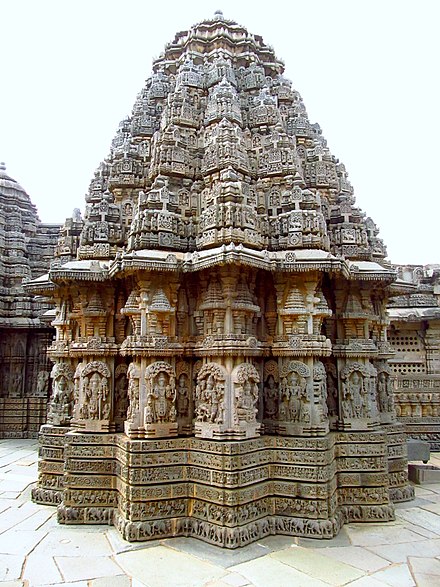
Indian Temple Architecture

India is a Diverse country with many Cultures, religions, Traditions and beliefs living in Harmony. The true meaning of Unity in Diversity. Today we’ll talk about the diverse Temple architecture of India.

As temples grew more complex, more surfaces were created for sculpture by adding more and more rhythmically projecting, symmetrical walls and niches, without breaking away from the fundamental plan of the shrine.

Nagara or North Indian Temple Style

  • In North India it is common for an entire temple to be built on a stone platform with steps leading up to it.
  • Further, unlike in South India it does not usually have elaborate boundary walls or gateways.
  • While the earliest temples had just one tower, or shikhara, later temples had several.
  • The garbhagriha is always located directly under the tallest tower.
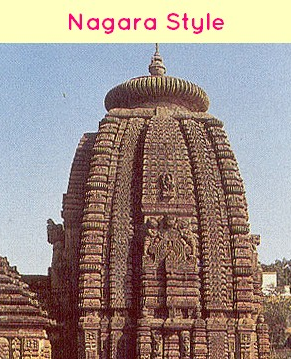
  • There are many subdivisions of nagara temples depending on the shape of the shikhara.
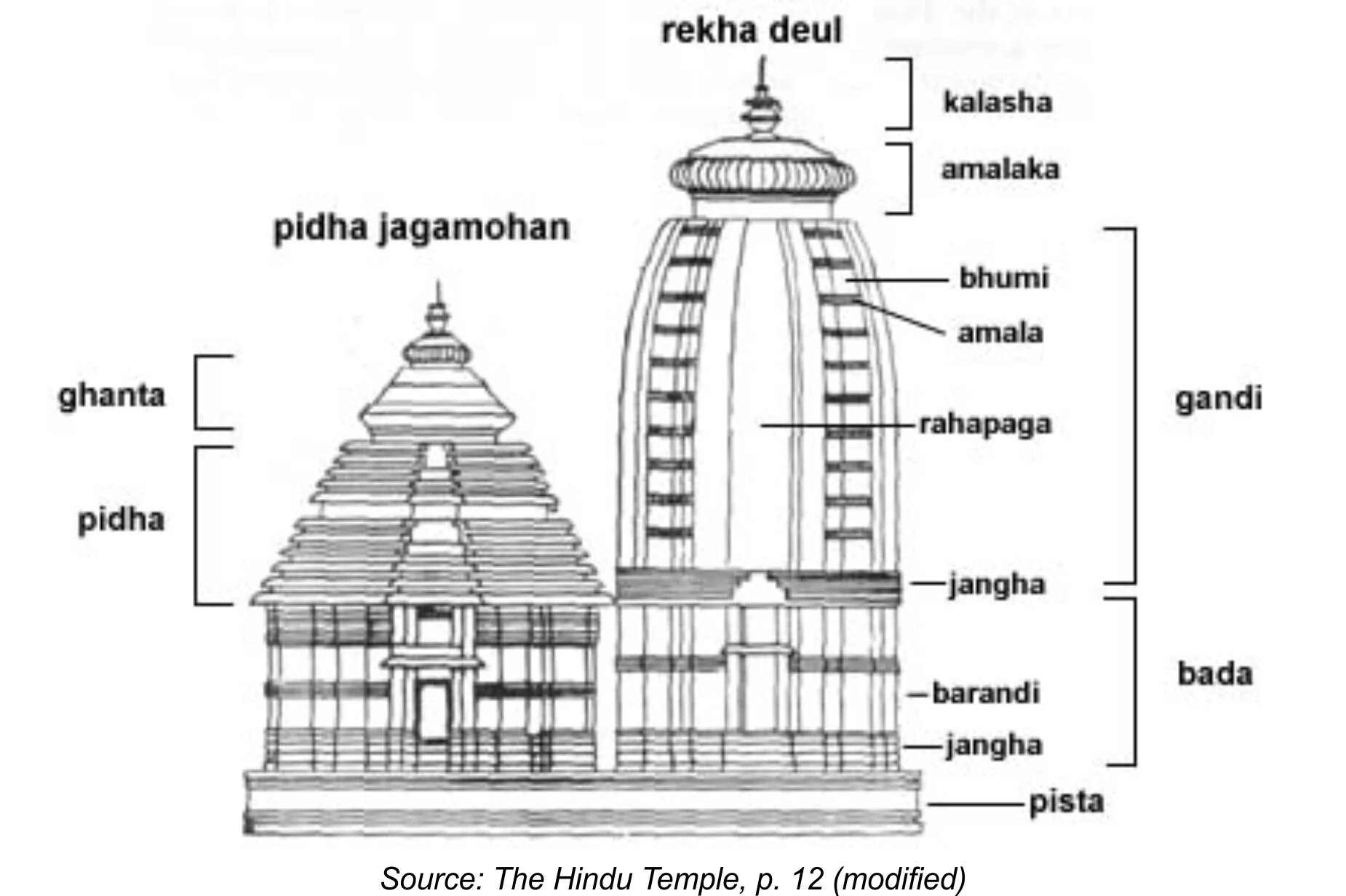
  • There are different names for the various parts of the temple in different parts of India; however, the most common name for the simple shikhara which is square at the base and whose walls curve or slope inward to a point on top is called the ‘latina’ or the rekha-prasada type of shikara.
  • The second major type of architectural form in the nagara order is the phamsana, which tends to be broader and shorter than latina ones. Their roofs are composed of several slabs that gently rise to a single point over the centre of the building, unlike the latina ones which look like sharply rising tall towers.
  • The third main sub-type of the nagara building is generally called the valabhi type. These are rectangular buildings with a roof that rises into a vaulted chamber.

Central India Temples

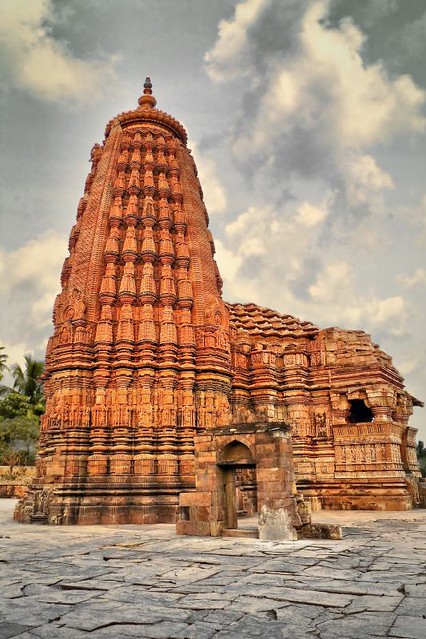
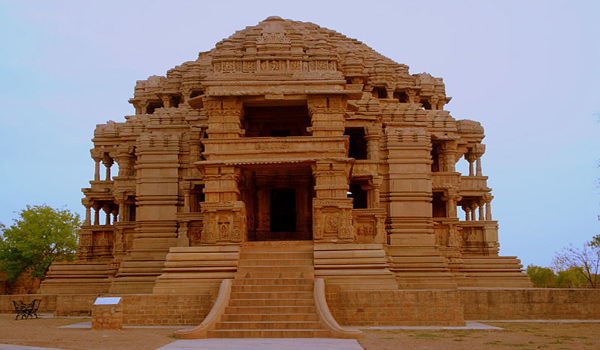
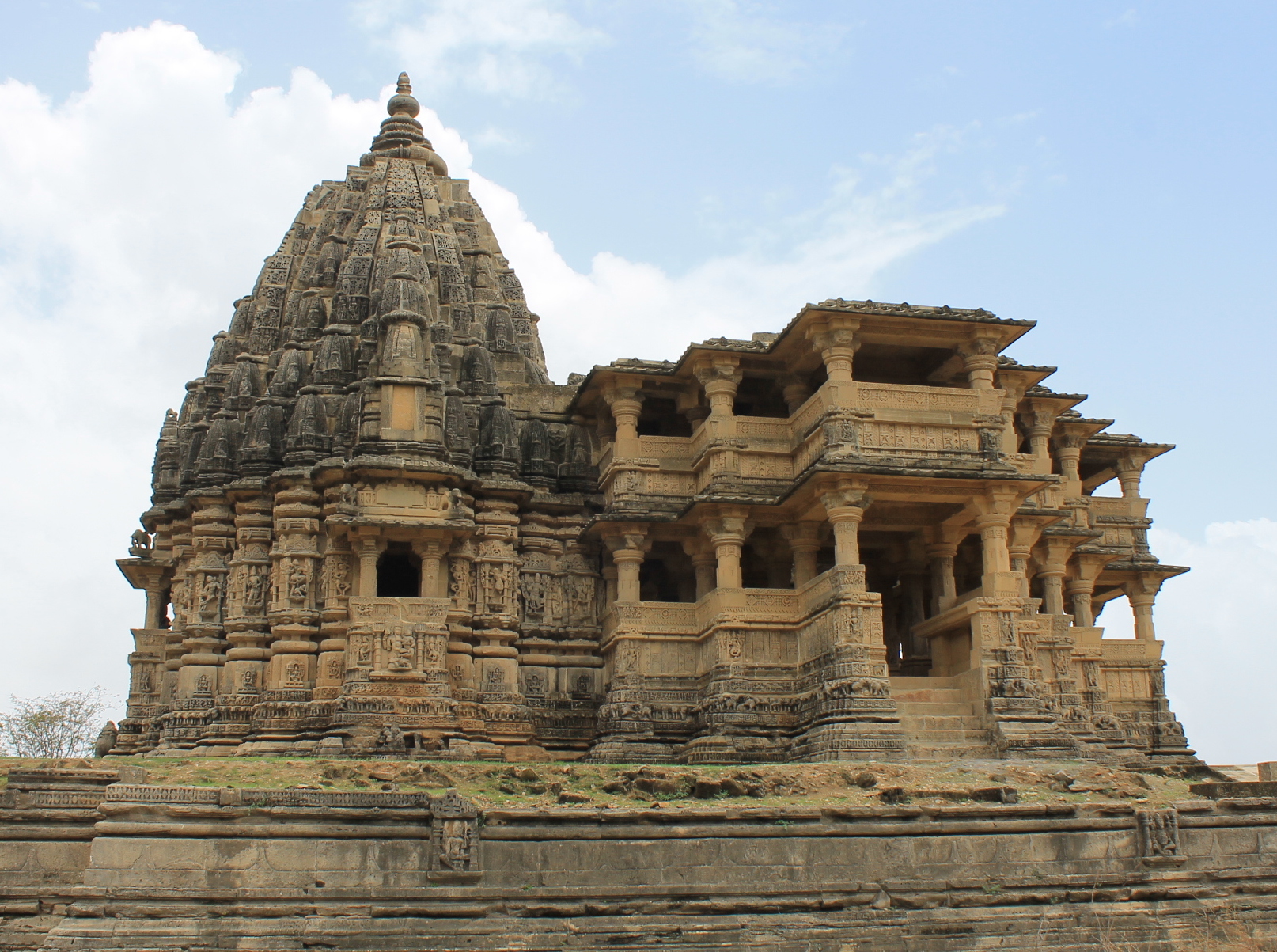
  • Ancient temples of Uttar Pradesh, Madhya Pradesh and Rajasthan share many traits. The most visible is that they are made of sandstone.
  • Some of the oldest surviving structural temples from the Gupta Period are in Madhya Pradesh.
  • The crowning elements- amalak and kalash, are to be found on all nagara temples of this period.
  • These are relatively modest-looking shrines each having four pillars that support a small mandapa which looks like a simple square porch-like extension before an equally small room that served as the garbhagriha.
  • Udaigiri, which is on the outskirts of Vidisha is part of a larger Hindu complex of cave shrines, while the other one is at Sanchi, near the stupa.
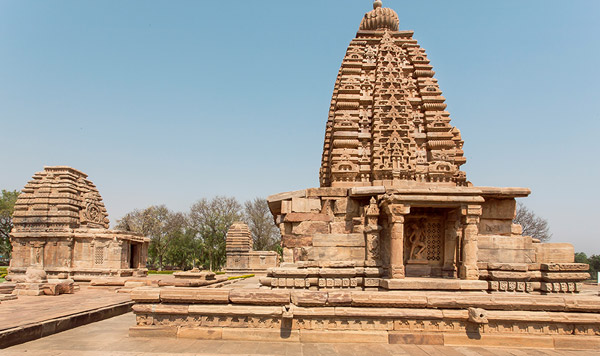
  • Deogarh (in Lalitpur District, Uttar Pradesh) was built in the early sixth century CE, is a classic example of a late Gupta Period type of temple. This temple is in the panchayatana style of architecture where the main shrine is built on a rectangular plinth with four smaller subsidiary shrines at the four corners (making it a total number of five shrines, hence the name, panchayatana).
  • The presence of this curving latina or rekha-prasada type of shikhara also makes it clear that this is an early example of a classic nagara style of temple.
  • The temple depicts Vishnu in various forms, due to which it was assumed that the four subsidiary shrines must also have housed Vishnu’s avatars and the temple was mistaken for a dashavatara temple.
  • Predating the tenth century, Chausath Yogini temple is a temple of small, square shrines of roughly-hewn granite blocks, each dedicated to goddesses associated with the rise of Tantric worship after the seventh century.Built between 7th and 10th centuries, several such temples were dedicated to the cult of the yoginis across Madhya Pradesh, Odisha and even as far south as Tamil Nadu.
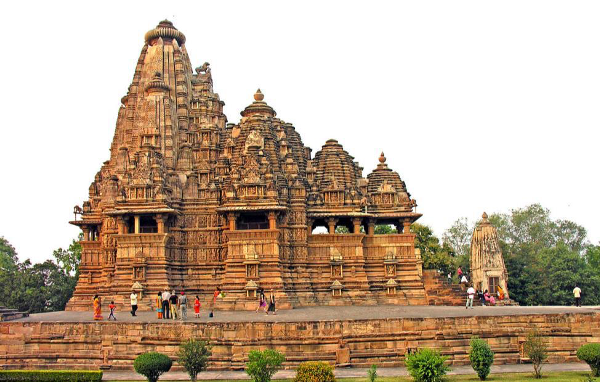
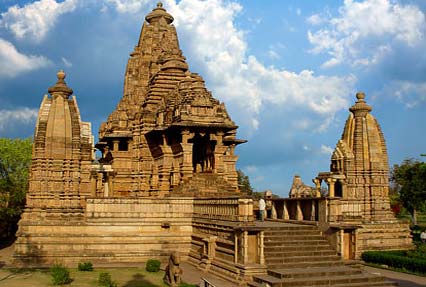
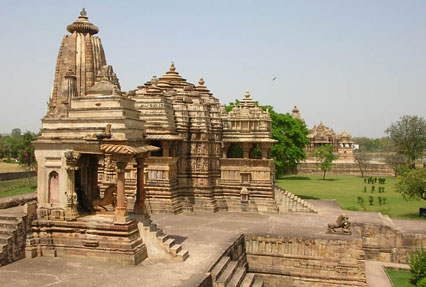
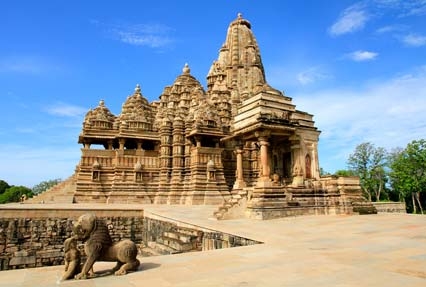
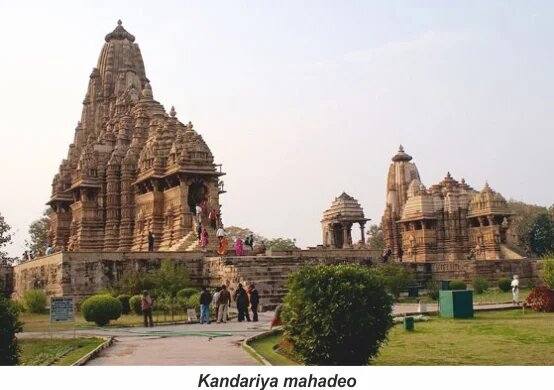
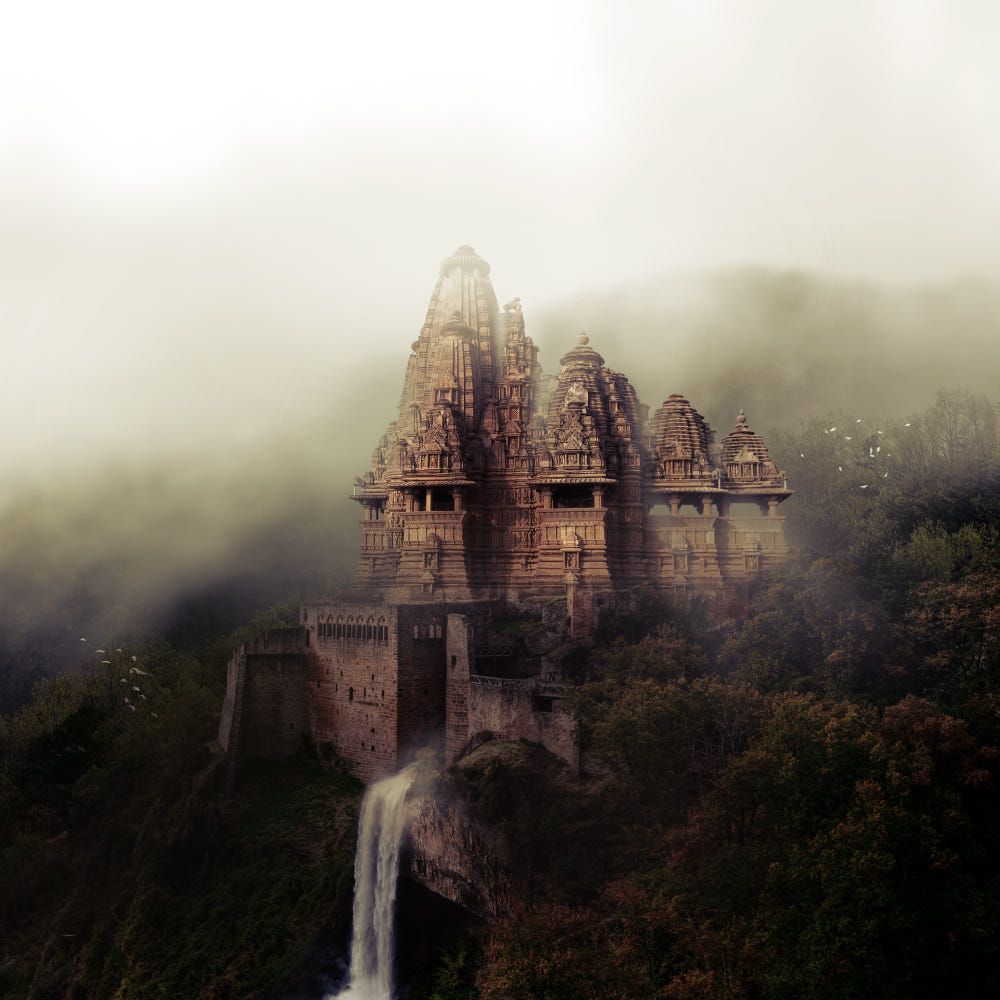
  • There are many temples at Khajuraho, most of them devoted to Hindu gods. There are some Jain temples as well. Khajuraho’s temples are also known for their extensive erotic sculptures; the erotic expression is given equal importance in human experience as spiritual pursuit, and it is seen as part of a larger cosmic whole.
  • The Lakshmana temple of Khajuraho, dedicated to Vishnu, was built in 954 by the Chandela king, Dhanga. It is a nagara temple placed on a high platform accessed by stairs.
  • Kandariya Mahadeo temple at Khajuraho is the epitome of temple architecture in Central India.

Western Indian Temples

  • The temples in the north-western parts of India including Gujarat and Rajasthan, and in western Madhya Pradesh are large in numbers.
  • The stone used to build the temples ranges in colour and type.
  • While sandstone is the commonest, a grey to black basalt can be seen in some of the 10th to 12th century temple sculptures.
  • The most exuberant and famed is the manipulatable soft white marble which is also seen in some of the 10th-12th century Jain temples in Mount Abu and the 15th century temple at Ranakpur.
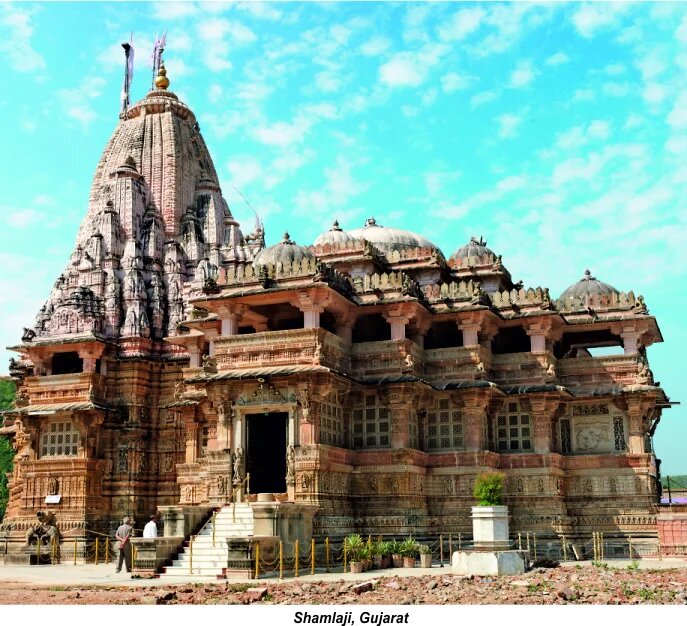
  • Among the most important art-historical sites in the region is Samlaji in Gujarat.
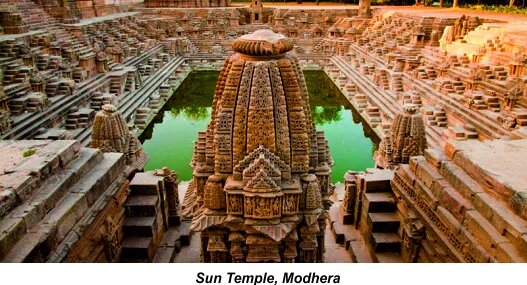
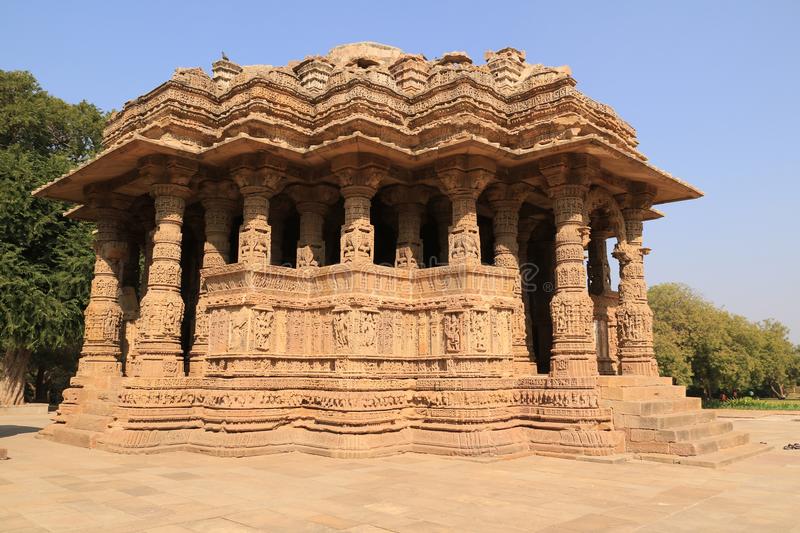
  • The Sun temple at Modhera dates back to the early 11th century and was built by Raja Bhimdev I of the Solanki Dynasty in 1026. There is a massive rectangular stepped tank called the surya kund in front of it, perhaps the grandest temple tank in India.
  • Every year, at the time of the equinoxes, the sun shines directly into this central shrine of the temple.

Eastern Indian temples

  • Eastern Indian temples include those found in the North East, Bengal and Odisha.
  • It appears that terracotta was the main medium of construction, and also for moulding plaques which depicted Buddhist and Hindu deities in Bengal until the 7th century.

Assam

  • An old sixth-century sculpted door frame from Dah Parvatia near Tezpur and another few stray sculptures from Rangagora Tea Estate near Tinsukia in Assam bear witness to the import of the Gupta idiom in that region.By the 12th-14th centuries, a distinct regional style developed in Assam.
  • The style that came with the migration of the Tais from Upper Burma mixed with the dominant Pala style of Bengal and led to the creation of what was later known as the Ahom style in and around Guwahati.
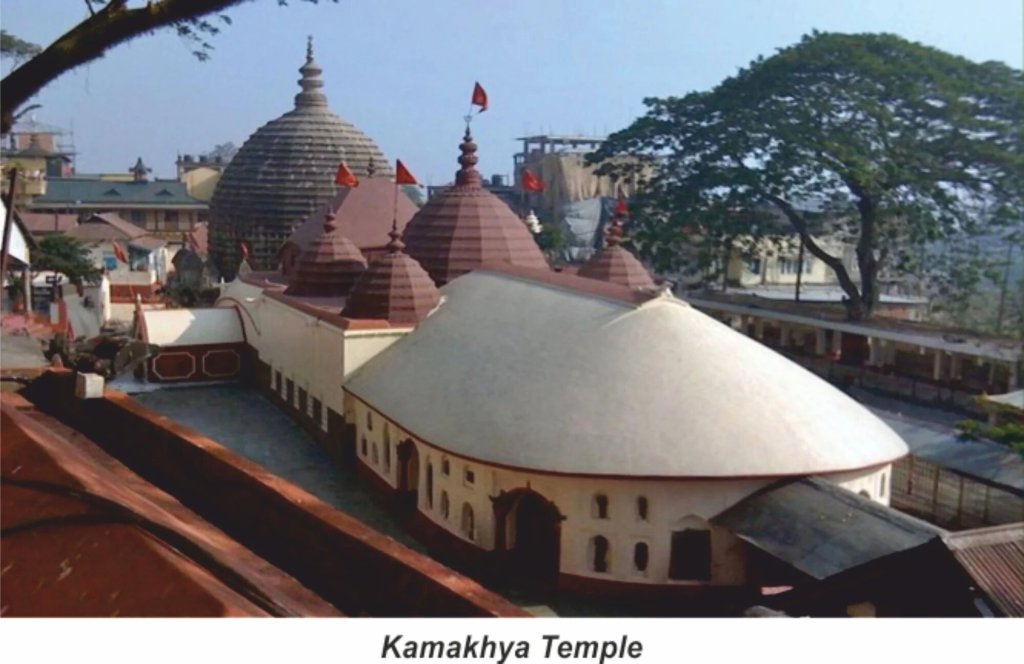
  • Kamakhya temple, a Shakti Peeth, is dedicated to Goddess Kamakhya and was built in the 17th century in Assam.

Bengal

  • The style of the sculptures during the period between the ninth and eleventh centuries in Bengal (including Bangladesh) and Bihar is known as the Pala style, named after the ruling dynasty at the time.
  • While the style of those of the mid-eleventh to mid-thirteenth centuries is named after the Sena kings.
  • While the Palas are celebrated as patrons of many Buddhist monastic sites, the temples from that region are known to express the local Vanga style.
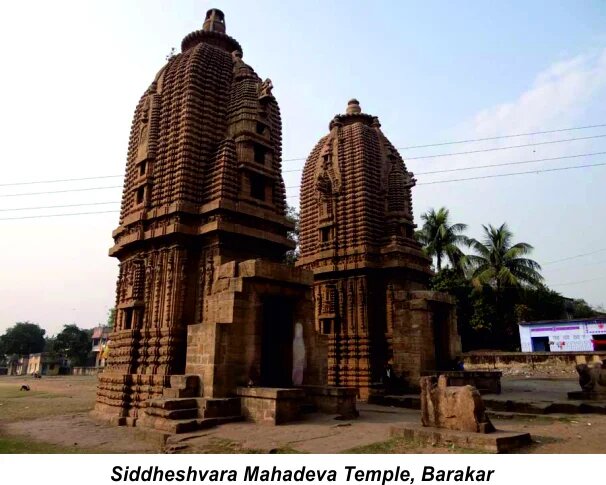
  • The 9th century Siddheshvara Mahadeva Temple in Barakar in Burdwan District, for example, shows a tall curving shikhara crowned by a large amalaka and is an example of the early Pala style.
  • The black to grey basalt and chlorite stone pillars and arched niches of Purlia temples heavily influenced the earliest Bengal sultanate buildings at Gaur and Pandua.
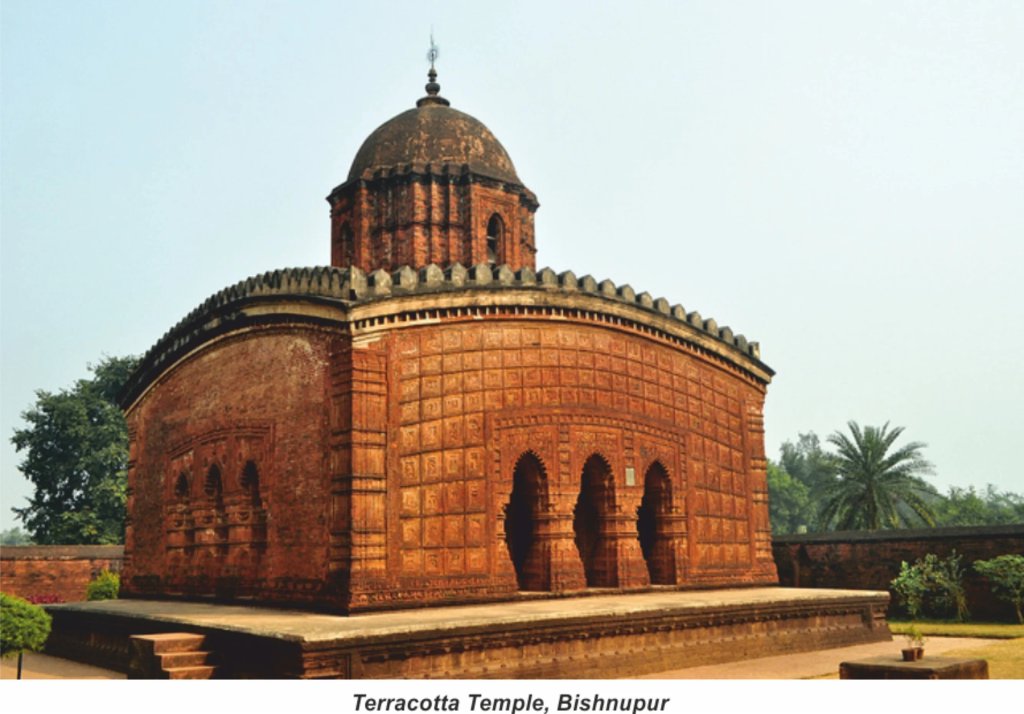
  • In the Mughal period and later, scores of terracotta brick temples were built across Bengal and Bangladesh in a unique style that had elements of local building techniques seen in bamboo huts.

Orissa

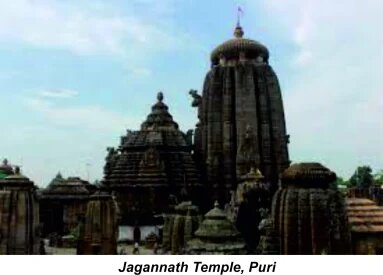
  • The main architectural features of Odisha temples are classified into three orders, i.e., rekhapida, pidhadeul and khakra.
  • Most of the main temple sites are located in ancient Kalinga—modern Puri District, including Bhubaneswar or ancient Tribhuvanesvara, Puri and Konark.
  • In general, the shikhara, called deul in Odisha, is vertical almost until the top when it suddenly curves sharply inwards.
  • Deuls are preceded, as usual, by mandapas called jagamohana in Odisha.
  • Odisha temples usually have boundary walls.
  • The ground plan of the main temple is almost always square, which, in the upper reaches of its superstructure becomes circular in the crowning mastaka.
  • Compartments and niches are generally square, the exterior of the temples are lavishly carved, their interiors generally quite bare.
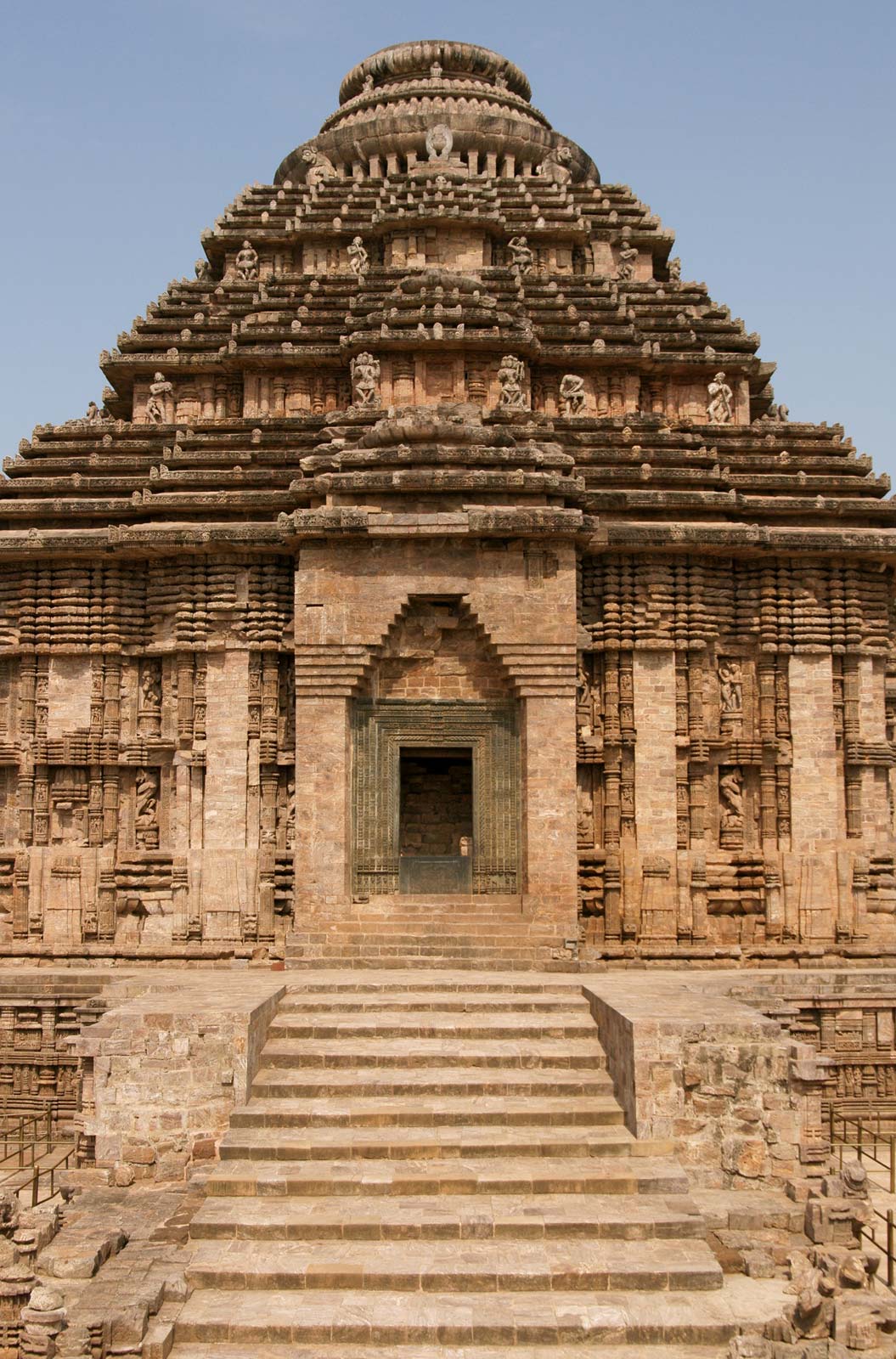
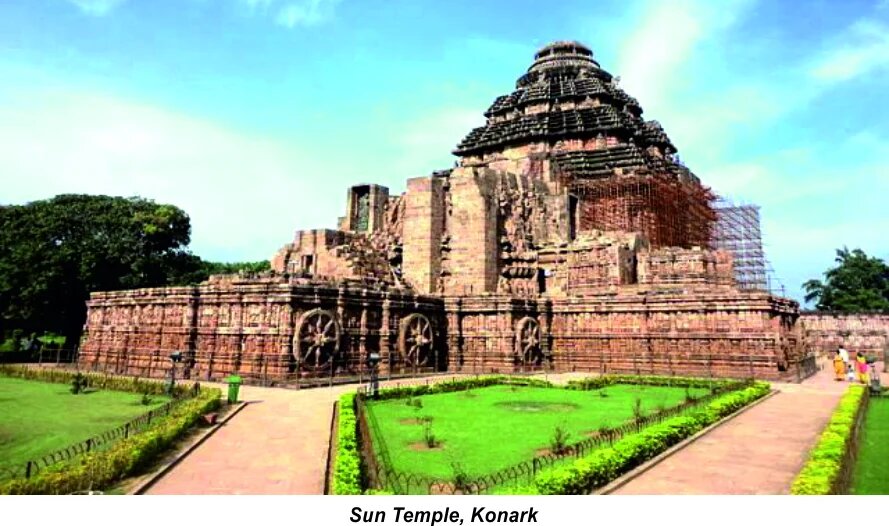
  • At Konark, on the shores of the Bay of Bengal, lie the ruins of the Surya or Sun temple built in stone around 1240. The Sun temple is set on a high base, its walls covered in extensive, detailed ornamental carving.
  • These include twelve pairs of enormous wheels sculpted with spokes and hubs, representing the chariot wheels of the Sun god who, in mythology, rides a chariot driven by seven horses, sculpted here at the entrance staircase.

Hill Temples

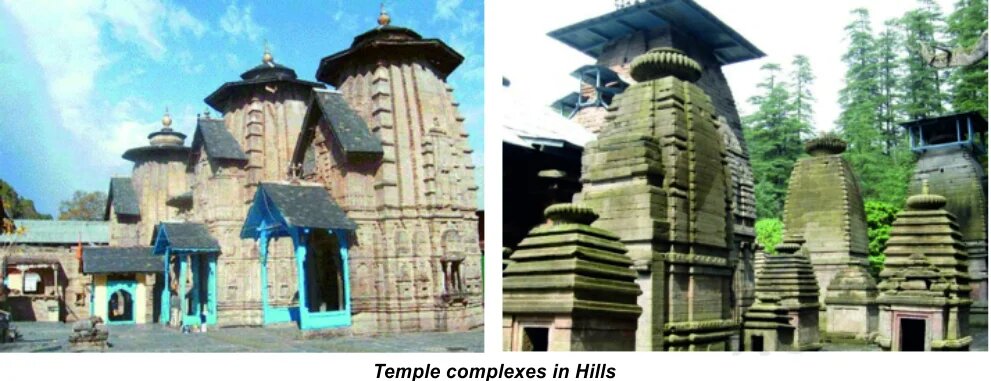
  • A unique form of architecture developed in the hills of Kumaon, Garhwal, Himachal and Kashmir.Kashmir’s proximity to prominent Gandhara sites (such as Taxila, Peshawar and the northwest frontier) lent the region a strong Gandhara influence by the 5th century CE.
  • This began to mix with the Gupta and post-Gupta traditions that were brought to it from Sarnath, Mathura and even centres in Gujarat and Bengal.
  • Brahmin pundits and Buddhist monks frequently travelled between Kashmir, Garhwal, Kumaon and religious centres in the plains like Banaras, Nalanda and even as far south as Kanchipuram.
  • As a result both Buddhist and Hindu traditions began to intermingle and spread in the hills.
  • The hills also had their own tradition of wooden buildings with pitched roofs.
  • At several places in the hills, while the main garbhagriha and shikhara are made in a rekha-prasada or latina style, the mandapa is of an older form of wooden architecture.
  • Sometimes, the temple itself takes on a pagoda shape.
  • The Karkota period of Kashmir is the most significant in terms of architecture.
  • One of the most important temples is Pandrethan, built during the 8th and 9th centuries. In keeping with the tradition of a water tank attached to the shrine, this temple is built on a plinth built in the middle of a tank.
  • Like the findings at Samlaji, the sculptures at Chamba also show an amalgamation of local traditions with a post Gupta style.
  • The images of Mahishasuramardini and Narasimha at the Laksna-Devi Mandir are evidences of the influence of the post-Gupta tradition.
  • Of the temples in Kumaon, the ones at Jageshwar near Almora, and Champavat near Pithoragarh, are classic examples of nagara architecture in the region.

Dravida Or South Indian Temple Style

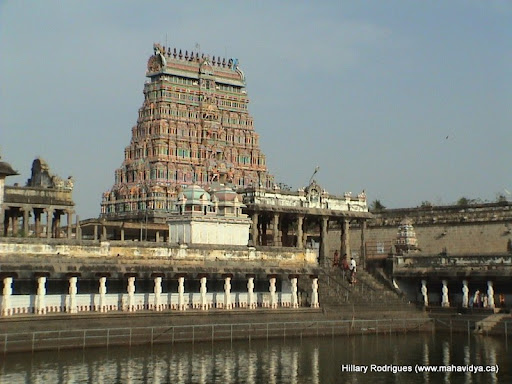
  • Unlike the nagara temple, the dravida temple is enclosed within a compound wall.
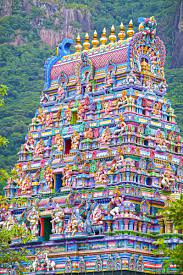
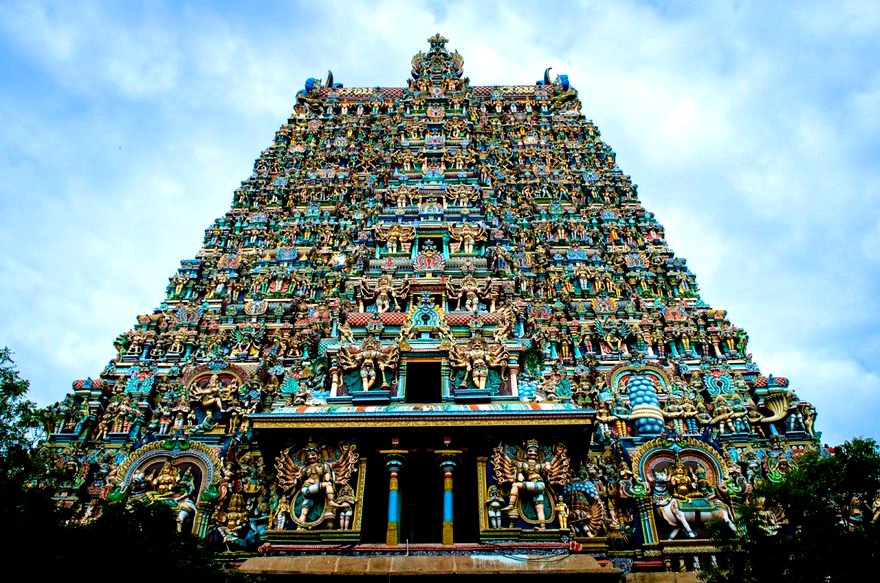
  • The front wall has an entrance gateway in its centre, which is known as a gopuram.
  • The shape of the main temple tower known as vimana in Tamil Nadu, is like a stepped pyramid that rises up geometrically rather than the curving shikhara of North India.
  • It is common to find a large water reservoir, or a temple tank, enclosed within the complex.
  • Subsidiary shrines are either incorporated within the main temple tower, or located as distinct, separate small shrines beside the main temple.
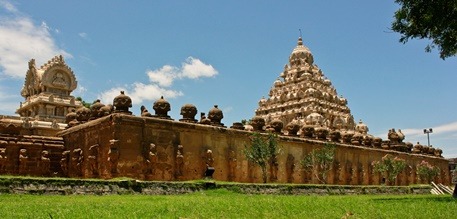
  • Kanchipuram, Thanjavur or Tanjore, Madurai and Kumbakonam are the most famous temple towns of Tamil Nadu, where, during the 8th-12th centuries, the role of the temple was not limited to religious matters alone.
  • Temples became rich administrative centres, controlling vast areas of land.
  • Just as there are many subdivisions of the main types of nagara temples, there are subdivisions also of dravida temples.
  • These are basically of five different shapes: square, usually called kuta, and also caturasra
  • rectangular or shala or ayatasra
  • elliptical, called gaja-prishta or elephant backed, or also called vrittayata, deriving from wagon vaulted shapes of apsidal chaityas with a horse-shoe shaped entrance facade usually called a nasi
  • circular or vritta
  • octagonal or ashtasra.
  • The Pallavas were one of the ancient South Indian dynasties. They spread their empire to various parts of the subcontinent, at times reaching the borders of Odisha, and their links with South–East Asia were also strong.
  • Although they were mostly Shaivite, several Vaishnava shrines also survived from their reign, and there is no doubt that they were influenced by the long Buddhist history of the Deccan.
  • Their early buildings, it is generally assumed, were rock cut, while the later ones were structural.
  • The early buildings are generally attributed to the reign of Mahendravarman I, a contemporary of the Chalukyan king, Pulakesin II of Karnataka.
  • Narasimhavarman I, also known as Mamalla, inaugurated most of the building works at Mahabalipuram which came to be known after him as Mamallapuram.
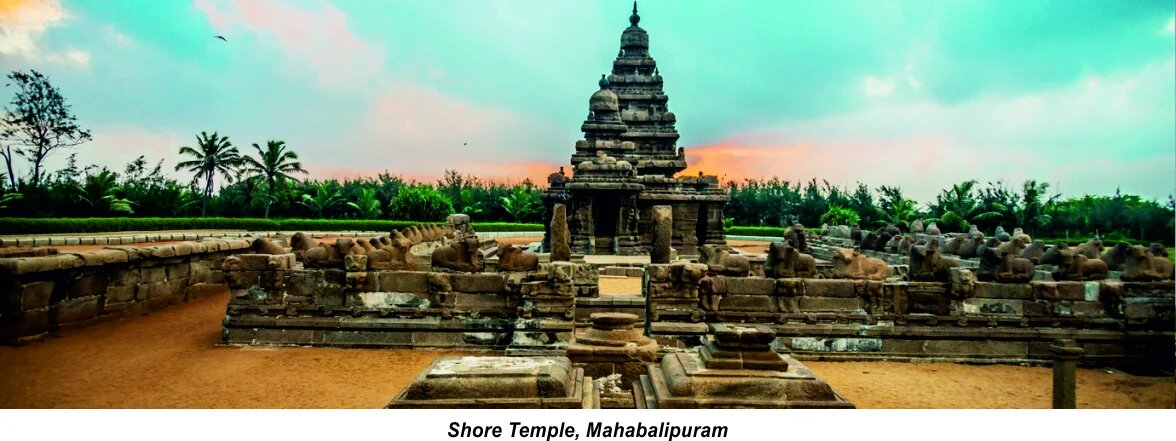
  • The shore temple at Mahabalipuram was built later, probably in the reign of Narasimhavarman II, also known as Rajasimha who reigned from 700 to 728 CE. The temple houses three shrines, two to Shiva, one facing east and the other west, and a middle one to Vishnu.
  • In the compound there is evidence of a water tank, an early example of a gopuram, and several other images.
  • Sculptures of the bull, Nandi, Shiva’s mount, line the temple walls, and these, along with the carvings on the temple’s lower walls have suffered severe disfiguration due to erosion by salt-water laden air over the centuries.
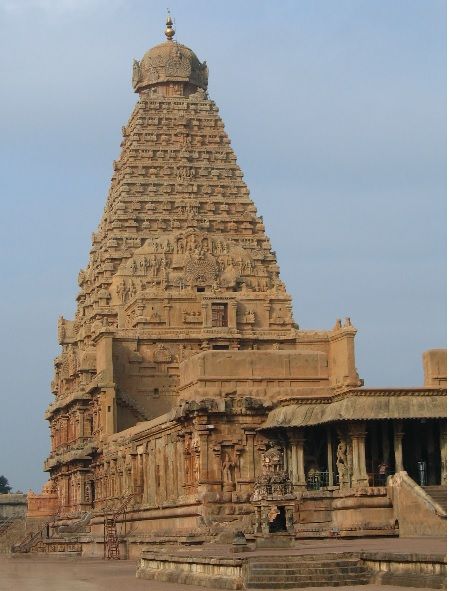
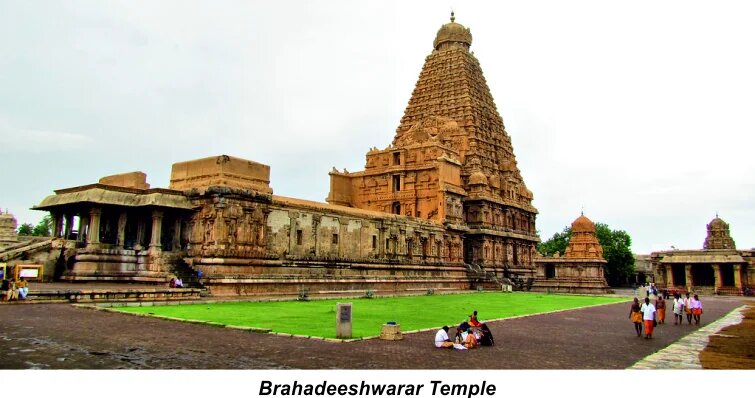
  • The magnificent Shiva temple of Thanjavur, called the Rajarajeswara or Brahadeeshwarar temple, was completed around 1009 by Rajaraja Chola, and is the largest and tallest of all Indian temples.
  • It is in this temple that one notices for the first time two large gopurams (gateway towers) with an elaborate sculptural programme which was conceived along with the temple.

Vesara / Deccan Style of Indian Temple Architecture

  • Many different styles of temple architecture influenced by both North and South Indian temples were used in regions like Karnataka.
  • By the late 7th or early 8th century, the ambitious projects at Ellora became even grander.
  • By about 750 CE, the early western Chalukya control of the Deccan was taken by the Rashtrakutas.
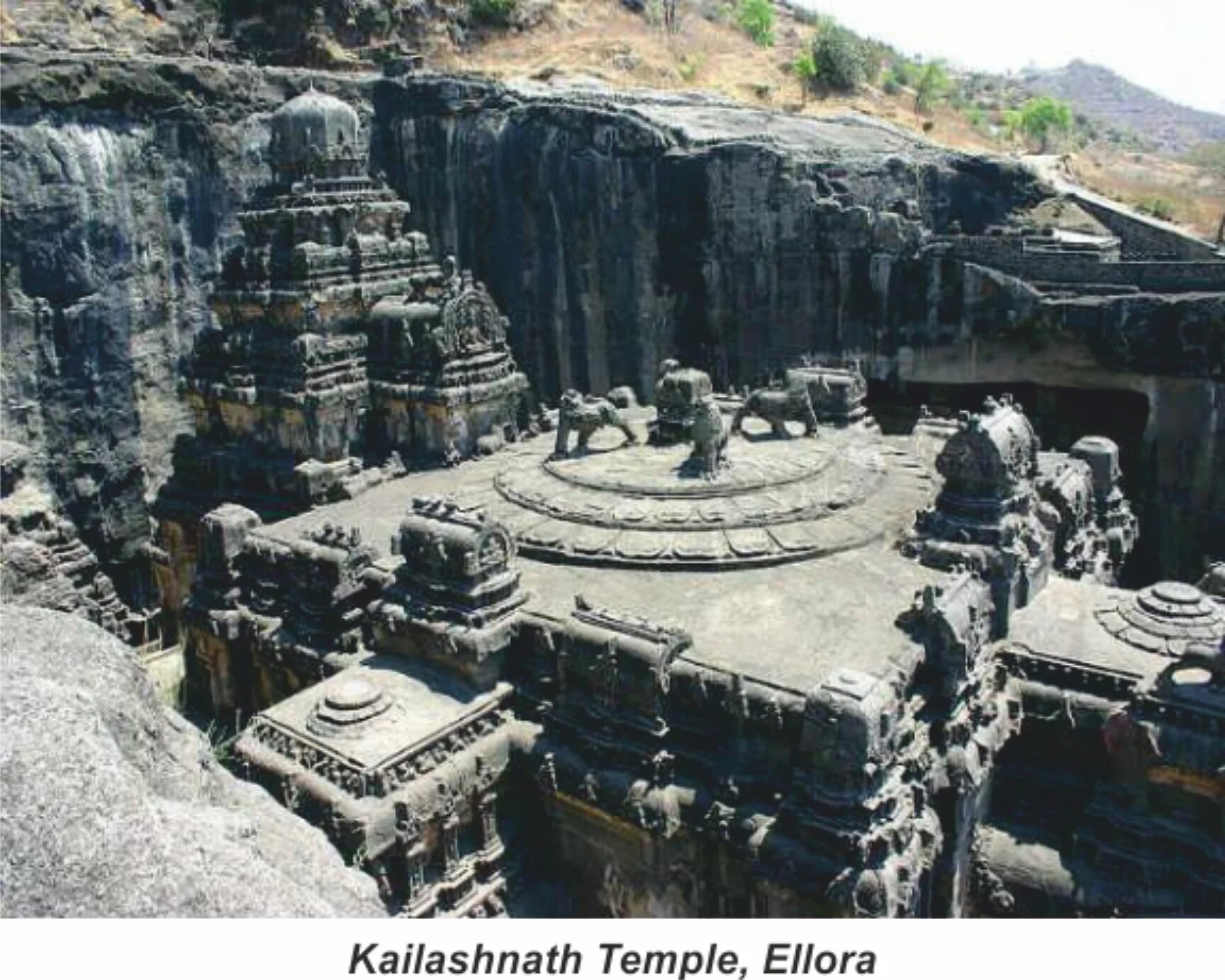
  • Their greatest achievement in architecture is the Kailashnath temple at Ellora, a culmination of at least a millennium-long tradition in rock-cut architecture in India.
  • It is a complete dravida building with a Nandi shrine—since the temple is dedicated to Shiva—a gopuram-like gateway, surrounding cloisters, subsidiary shrines, staircases and an imposing tower or vimana rising to thirty metres.
  • Importantly, all of this is carved out of living rock. One portion of the monolithic hill was carved patiently to build the Kailashnath temple.
  • In the southern part of the Deccan, i.e., in the region of Karnataka where some of the most experimental hybrid styles of vesara architecture are to be found.
  • Pulakesin I established the western Chalukya kingdom when he secured the land around Badami in 543.
  • Early Chalukyan activity also takes the form of rock-cut caves while later activity is of structural temples.
  • The earliest is probably the Ravana Phadi cave at Aihole which is known for its distinctive sculptural style.
  • One of the most important sculptures at the site is of Nataraja, surrounded by larger -than-life-size depictions of the saptamatrikas: three to Shiva’s left and four to his right.
  • The most elaborate of all Chalukyan temples at Pattadakal made in the reign of Vikramaditya II (733-44) by his chief queen Loka Mahadevi is Virupaksha temple. Another important temple from this site is Papnath temple, dedicated to Lord Shiva.
  • Lad Khan temple at Aihole in Karnataka, seems to be inspired by the wooden-roofed temples of the hills, except that it is constructed out of stone.
  • The Hoysaleswara temple (Lord of the Hoysalas) at Halebid in Karnataka was built in dark schist stone by the Hoysala king in 1150. Dedicated to Shiva as Nataraja, the Halebid temple is a double building with a large hall for the mandapa to facilitate music and dance.
  • Founded in 1336, Vijayanagara, literally ‘city of victory’, attracted a number of international travellers such as the Italian, Niccolo di Conti, the Portuguese Domingo Paes etc.who have left vivid accounts of the city.
  • In addition, various Sanskrit and Telugu works document the vibrant literary tradition of this kingdom.
  • Architecturally, Vijayanagara synthesises the centuries-old dravidian temple architecture with Islamic styles demonstrated by the neighbouring sultanates.

Gender Pronouns.

Have you ever come across an Instagram/ social media bio, where the account has either she/her, his/him, they/them or he/she/they written and gotten confused as to why people are writing their pronouns on the Instagram page?

A bio or a social media bio typically means information about the person. 

A pronoun is a term that is used instead of a noun or noun phrase. Pronouns refer to either a noun that has already been mentioned or to a noun that does not need to be named specifically. And the addition of pronouns helps not to misgender a person who isn’t gender conforming. 

Source: www.personneltoday.com

Gender is not what you are assigned at birth, rather what you identify with. It refers to you as an individual psychologically, socially and emotionally. 

Using pronouns in social media bios help people with inclusivity. 

As kids, always in our English grammar class, we are taught to assume the gender of the person based on their physical form. But sometimes this assumption leads to be disrespectful and oppressive to people who don’t go by the pronouns assigned due to their appearance. 

As pronouns are connected to gender identity and a way for people to feel like their own person. Hence it’s important to always ask someone their pronouns and continue to call them by their pronouns even if they are not around.

If you are unsure about someone’s pronouns, all you have to do is ask them. And even if you misgender them, apologise and do not belittle and complain as to why you have to call them by their pronouns. Misgendering more often may lead to depression, anxiety and suicidal tendencies. It invalidates their identity. 

For cisgender people, this may feel like stating the obvious at times. But here’s why it’s crucial: It isn’t appropriate for you. And, rather than dominating the conversation, it’s occasionally necessary to employ cis-privilege in a way that really contributes to equality. So, even if adding pronouns to your “Hello, my name is and these are my pronouns.” routine is a little odd at first, but stick with it. You’ll grow accustomed to it. When persons who are not cisgender use pronouns on a daily basis, they will eventually become less noticeable.

It’s worth mentioning though, that some individuals don’t feel comfortable declaring their gender pronouns publicly, and just because you announce yours it does not entitle you to everyone else’s.

Pronouns Dos and Donts:

Do! 

1) Recognise that even cisgender people have pronouns. 

2) Remember that some people go by more than one set of pronouns. Ask people about the pronouns they use. 

3) Peoples pronouns may change regularly, hence it’s necessary to ask.

4) Consider using ways to make the language more gender-inclusive. 

Don’t!

1) Don’t describe to the pronouns are preferred, as it is not a preference. 

2) Don’t say, male pronouns and female pronouns. Pronouns are not necessarily tied to someone’s gender identity, as pronouns are not necessarily tied to someone’s gender identity.

Its is necessary to not misgender a person and be respectful to their pronoun.

———————–

Reference and source:

1)  https://www.thesmujournal.ca/editor/normalizing-pronouns-why-cis-gendered-folks-should-use-personal-pronouns-too

2)https://in.style.yahoo.com/pronouns-bios-mean-why-sensitive-164629025.html

3) https://www.merriam-webster.com/dictionary/pronounce

Love or friendship

Love is an intense feeling towards someone but as a science student I call it just hormonal action.

Friendship is the purest love…

– osho

Friendship is the sweetest form of love. Try to find love and friendship both in same person.

It is an intense affection towards a person or thing. It maybe anything like if a person read the novel and their hobby is to read a novel. By doing this he or she is just forget everything what is happening in this whole world. They can do anything just to read the next part of the book. Their mood is depend on what is going on in that novel.

Like if a person attracted towards someone, then the person sacrifice their own happiness for them.

As parents sacrifice their happiness just for the sake of their child’s happiness. They do everything just to see a smile on our face. that

Mother’s and father’s love is very different as we see mother’s love everyday Like- how can she make good meals for us, she make us feel good when we at our worst.

If we need something we don’t directly go to the Dad, we just say that to the mom and as a postman mom deliver our messages to the Dad. And she convinces the dad for doing that.

Dad don’t show us that how much they love us, how much day care for us. But he do every single thing everyday just to give us some comfort.
I Remember one thing in when my mom was admitted to the hospital, my dad has a bicycle there was a little seat on its rod and where I used to sit and a seat is also on back of the bicycle where my brother was used to sit. Dad take us to the hospital by bicycle and we used to talk all over the way to the hospital and it is best my memory of life.

My Dad was dropping and picking me up after school is my best memories of school time.

Dad work all the day just for us. So that we spend time with mom. And that is another way of showing love.
Dad was always doing things for me we talked like friends. And also my mom behave like a friend to me. We always share our feelings, everything. Mom never judge me what I say. She always understands my intentions. She always wants me to do right. She motivates me.
Whenever I think of that time, Nostalgia hit me like a truck.

In today’s world everyone thought love is just only between two couples.

Love has no limitations. It may be started from a little child’s affection towards their toy to a various sacrifices of our parents.

Pure love has sacrifices, trust, affection, care, mutual understanding. There is no space for selfishness.

Friendship is very important in every single relationship.

If there is no friendship in between parent – student, teacher – student, 2 couples or every single relationship then that relationship has to end at last.

Like we observe the relationship between 2 best friends are unbroken. No matter what happens between them their bond always remains same.

So only love is not necessary for a relationship, friendship is more important.

In every relationship, love and friendship both is very important.

Caste Discrimination

Caste discrimination is one of the most exceedingly awful denials of basic freedoms on the planet today. It is minimal perceived and infrequently recognized, and influences in excess of 260 million individuals around the world. Through a hierarchical situation, the task of essential rights among different castes is profoundly inconsistent, with those at the top getting a charge out of most rights combined with least obligations and those at the base performing most obligations combined with no rights. The situation is kept up with through the inflexible implementation of social segregation (an arrangement of social and financial punishments).

Caste discrimination includes enormous infringement of common, political, financial, social and social rights. It is normal banned in nations influenced by it, yet an absence of execution of enactment and caste-inclination inside the equity frameworks to a great extent leave casualties without security.

The rejection of supposed ‘lower caste networks’ by different gatherings in the public eye and the intrinsic underlying disparity in these social connections lead to significant degrees of neediness among influenced populace gatherings. There is little admittance to advantages and improvement measures, and their position by and large blocks contribution in dynamic and significant investment openly and common life.India’s caste framework is maybe the world’s longest enduring social progressive system. A characterizing highlight of Hinduism, caste includes an unpredictable requesting of gatherings of people based on custom immaculateness. An individual is viewed as an individual from the caste into which the person in question is conceived and stays inside that caste til’ the very end, albeit the specific positioning of that caste might differ among areas and over the long run. Contrasts in status are generally advocated by the strict regulation of karma, a conviction that one’s place in life is controlled by one’s deeds in past lifetimes.

Conventional grant has portrayed this over 2,000-year-old framework inside the setting of the four head varnas, or enormous caste classes. Arranged by priority these are the Brahmins (ministers and educators), the Ksyatriyas (rulers and officers), the Vaisyas (dealers and merchants), and the Shudras (workers and craftsmans). A fifth classification falls outside the varna framework and comprises of those known as “untouchables” or Dalits; they are regularly appointed undertakings also customarily dirtying to justify incorporation inside the customary varna system.7 Almost indistinguishable designs are likewise noticeable in Nepal.

Regardless of its established abrogation in 1950, the act of “distance”- the inconvenience of social incapacities on people by reason of birth into a specific caste-stays a lot of a piece of rustic India. Addressing more than one-6th of India’s populace or exactly 160 million individuals Dalits suffer close to finish social segregation. “Untouchables” may not go too far isolating their piece of the town from that involved by higher castes. They may not utilize similar wells, visit similar sanctuaries, or drink from similar cups in tea slows down. Dalit youngsters are regularly made to sit at the rear of study halls. In what has been called India’s “covered up politically-sanctioned racial segregation,” whole towns in numerous Indian states remain totally isolated by caste.

“Distance” is supported by state portion of assets and offices; separate offices are accommodated separate caste-based areas. Dalits frequently get the less fortunate of the two, in the event that they get any whatsoever. In numerous towns, the state organization introduces power, disinfection offices, and water siphons in the upper-caste segment, however fails to do likewise in the adjoining, isolated Dalit region. Fundamental conveniences, for example, water taps and wells are additionally isolated, and clinical offices and the better, covered rooftop houses exist solely in the upper-caste province. As uncovered by the contextual analysis underneath on the tremor in Gujarat, these equivalent practices remain constant even in the midst of extraordinary cataclysmic event.

4 K-Pop Group Famous in the World

Everyone  have heard about K-Pop culture .It’s origin is South Korea . K-Pop means Korean Pop Culture . A group of young girls & boys are trained & become professional in dancing & singing .They then together release song videos with their amazing hip-hop dance .This K-Pop culture is now very famous  all around the world . These K-Pop bands are internationally very acknowledged .Let’s talk about some of them —–

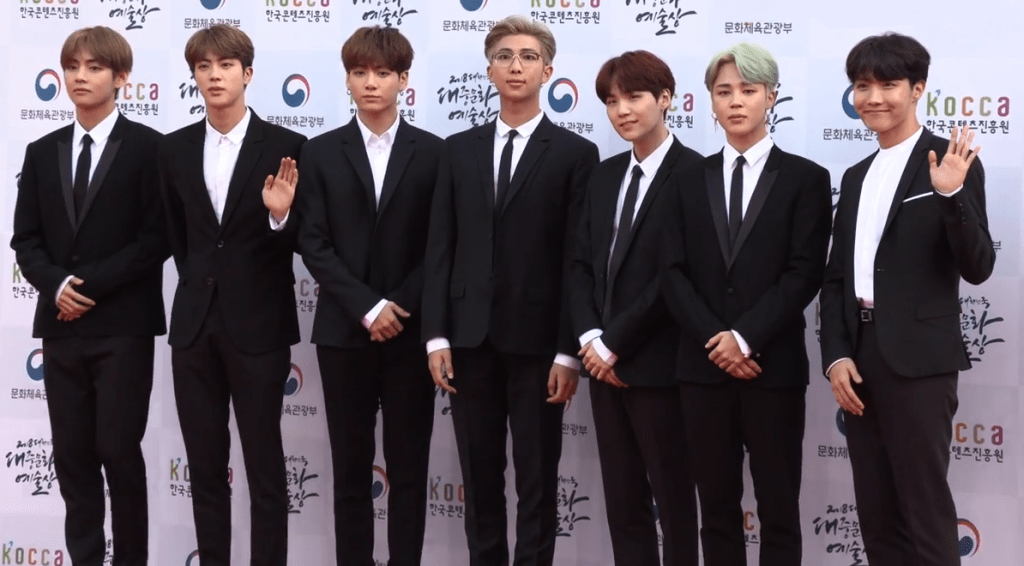
1. BTS : It is the most internationally famous K-Pop band .It is a 7 boys band group .The other name of BTS is Bangtan Boys .Their formation time is 2010 & they first debuted in 2013 .They work under Big Hit Entertainment company of South Korea .Name of the & boys are – V or, Kim Tea-hyung (He is a vocals ) ,Jeon Jungkook (He is the main vocals) , Park Ji-min (he is the lead vocalist) , Kim Seok-jin (he is a vocals) , Suga or ,Min Yoon-gi (he is a rapper) , RM or, Kim Nam-joon (he is also a rapper) , J-Hope or, Jung Ho-seok ( he is also a rapper) . Their fandom circle is called BTS Army . They have achieve numerous awards ,recognition , credits for their works from all around the world . Their song Dynamite had nominated for Grammy award . Some of their album are — Youth ,Wake up ,Love yourself , The most beautiful moment in life  and many others .

BTS

2. Blackpink : It is one of the most internationally recognized girl K-Pop band group in Korea .There are 4 girls in this Group .Their name are  — Jennie or, Kim Jennie (she is the lead vocalist 7 also a rapper) , Lisa or, Lalisa Manoban (She is the main dancer) ,Rose or, Park Roseanne  (she is the main vocals) , Jisoo or, Kim Ji-soo (she is the lead vocalist) . They work under YG Entertainment in Korea .They first debuted in the August of the year of 2016 . They have also got many awards . Some of their album are  – Kill this love , square up  and many more .

BLACKPINK

3. EXO : It is also one of the famous boys band of Korea which is globally recognizes .It works under SM Entertainment . Their group was formed in 2011 & they first debuted in 2012 . At first they were a 12 members group including 4 chinese members .But after 2016, 3 chinese members (Kris ,Luhan ,Tao) have left the group & now they are a & membered boys group .Name of these 9 members —  Kai or, Kim Jong-in (he is vocals & a very good dancer) , D.O. or, Doh Kyung-soo (he is the main vocals & also an actor) ,Beakhyun or, Byun Baek-hyun (He is the main vocals & an actor) , Chanyeol or, Park Chan-yeol (he is a vocals) ,Sehun or, Oh Se-hun (he is the main rapper) ,Chen or, Kim Jong-dae (he is the main vocals) ,Suho or, Kim Jun-myeon (he is the group leader &  the lead vocalist) ,Lay or, Zhang Lay (he is a vocal & a Chinese actor) ,Xiumin or, Kim Min-seok (he is a lead vocalist) .They also got numerous awards .Some of their album are – Wolf ,Love shot ,XOXO ,Exodus ,Tempo ,Obsession & many others .Currently some of the members are serving in Military (like Suho ,Beckhyun ,Chanyeol) , D.O. & Xiumin had already finished their military training & remaining members will be enlisted in future .

EXO (Except Lay)(All Korean members)
EXO (Current 9 members)
EXO (Total 12 members in the past )

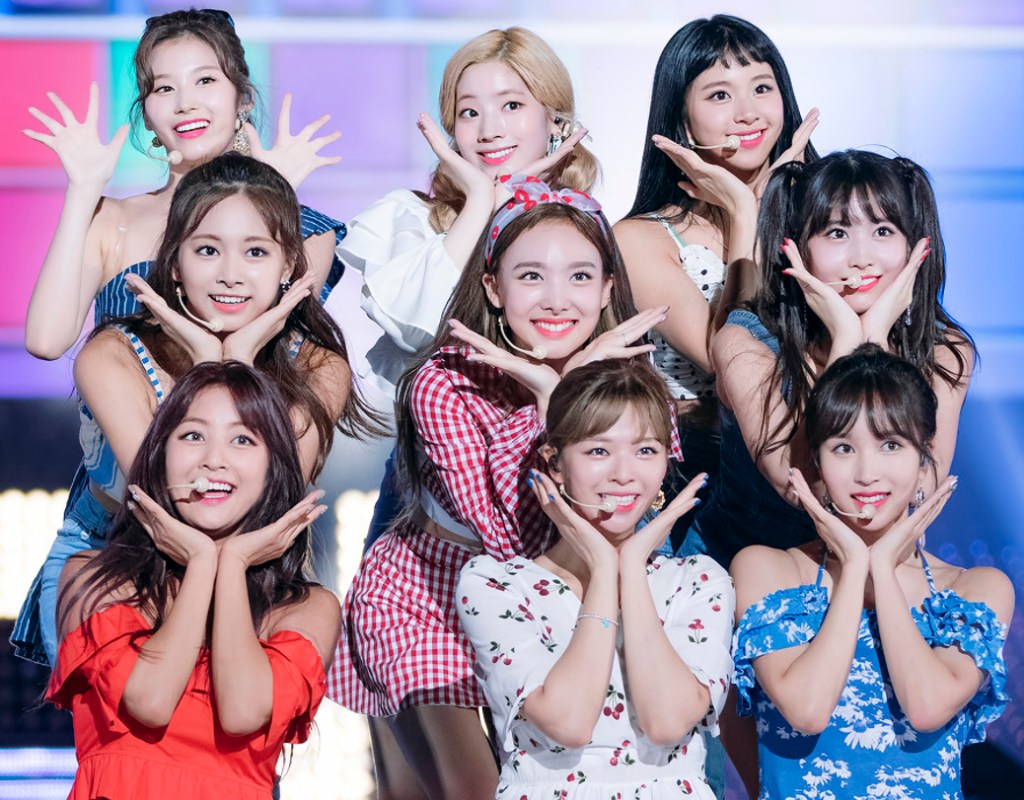
4. TWICE : It is also a very famous girls group in Korea .This group works under JYP Entertainment .They debuted in the year of 2015  .They are 9 girls member . Their name – Sana (She is a vocals) ,Tzuyu ,Momo (she is the main dancer) ,Nayeon (she is the vocals) ,Jeongyeon (she is the lead vocalist) ,Mina (she is the vocals) ,Jihyo (she is the main vocals) ,Dahyun (she is the main rapper) ,Chaeyoung (she is the main rapper) . They also have got many awards .Some of their album are — Perfect World , Merry & Happy ,Taste of Love ,What is love and many more .

TWICE
TWICE

THE SOCIAL NOVEL

The Social Novel may be defined as a fictional narrative that focuses on the varieties of human behavior in society and the way in which the characters reflect or contradict the values of that society.

In this genre, the characters are seen in the background of their social milieu and culture. The inner life of the characters find the place in such novels, greater importance is given to their conflicts and collisions with classes and believes. The essence of a social novel is the conflict between the individual and the society that surrounds him based on different concepts of values.

Two Groups of Social Novel:

Social novels can be divided into two groups.

  • The novel of Manners.
  • The novel of Civilization.

The novel of Manners:

The novel of manners is concerned with social behavior and its correctness in a given society. The concept of behavior achieves some grant moral effect as we find in the novels of Jane Austen “Pride and Prejudice” and Emma are the best examples. The novelist is preoccupied with the niceties of social conduct and often, commerce by the employment of Irony and satire exposes undesirable passions like arrogance, hypocrisy, and snobbery. Henry James’ novel ‘The ambassador’ is a successful social novel of manners. It depicts with great humor and delicacy the reaction of different American types to a European environment. Evelyn Waugh’s “A handful of dust” is a social novel of manners that presents The vision of sin and guilt in the modern world. The social novel of manners has a satiric structure as we find in Jane Austen. Even modern novelists make use of the same formula. For instance, Philip Roth satirizes the self-protective attitude of the modern middle class in his novel ‘Goodbye Columbus’.

The novel of Civilization:

The social novel of Civilization takes a comprehensive view of the whole Civilization. The best examples are Charles Dickens’s “Little Dorrit” and Tolstoy’s “War and Peace” the novel Civilization aims at revealing the meanings, principles, and social styles that govern people’s lives. The action of individuals is examined in the light of the Civilization that surrounds them. In “Little Dorrit” Dickens explores the English society dominated by the corrupt business class. In the novel Civilization characters or viewed as part of the developing environment. The splendor or shame of their past is exploding. The significance of the character’s behavior becomes clear only in the background of the Civilization which he represents. In “War and Peace” Tolstoy presents the different stages in the development of each character. The novel Civilization, sometimes, depicts the different stages in the growth of the writer’s consciousness as in Marcel Proust’s ‘Remembrance of Things Past’. Sometimes it uses our family story as in Faulkner’s ‘Sartoris’ or Galsworthy’s ‘Forsyte Saga’.

The Social Novel is a technique in literature. In which the authors express and illustrate society, ethics, etiquette, and protocols. Nowadays, various authors are following this technique in their writings. Especially, to illustrate the Epic society, Dynasty, and fictional Mythologies. This literary form serves as a device to illustrate society.

The Detective Novels

The Gothic Novels

COLD WAR

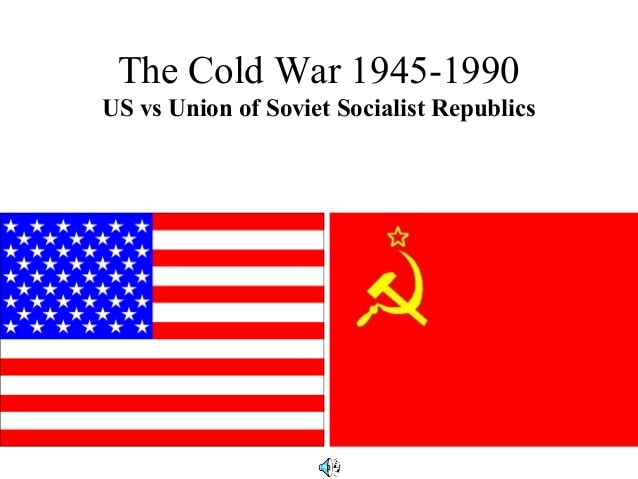
The Cold War is the term used to describe the extreme political and friendliness that existed from the end of world war II to the late eighties between groups of Communist and non communist countries. On one side with the USSR and its communist allies known as the Eastern bloc and walked and on the other side by the western powers of the USA and its allies.

There was mutual suspicion distressed and misunderstanding between two blocs. The USA and its allies felt that the USSR’s game of spreading communism throughout the world threatened their security. The soviets on the other hand accused the USA of practicing imperialism and after attempting to stop revolutionary activities in other Nations. Each bloc had its own political ideas which were diametrically opposed to the other.

THE BEGINNING OF COLD WAR:

Soon after world War II the two great blocs were formed and the cold war began. It intensified during the 1940’s and 1950’s and reached its peak in the 1960’s. World peace was severely threatened the arms race begin a fresh with both sides experimenting with nuclear weapons at the same time there was a space race between the USA and USSR. The world was in astonishment as the Americans and the soviets try to outdo each other in conquering space. By the seventies both sides begin to realise the dangers involved in recklessly amazing powerful weapons that could wipe out large cities and populations in minutes. In the eighties many efforts were made to improve relations between the two superpowers.

HISTORIANS ABOUT THE COLD WAR:

Most historians agree that the cold war begin after the Yalta conference. The Big Three-President Franklin D Roosevelt of the USA, Premier Joseph Stalin of the USSR and the Prime Minister Winston Churchill of Great Britain met at the Yalta (Ukraine) in February in 1945 to plan for the peace that would follow the war. Stalin would not co-operate with the other leaders regarding the peacetime program. Great Britain join the USA in criticizing the USSR plan to spread communism in Eastern Europe.

IRON CURTAIN

During 1945 and 1946 the USSR broke off all contacts between west and the occupied territories of Eastern Europe in March 1946 Churchill want that an “Iron Curtain” had descended across the continent. The Berlin wall became a symbol of the confrontation between the two blocs.

NUCLEAR WEAPON:

In the 60 the world came dangerously close to a nuclear war. this time both block started to practice nuclear weapon and they started to treat each other with weapons many efforts made to improve relationship between both two superpowers. The cold war took a fresh turn in the eighties when Mikhail Gorbachev took over the leadership of the USSR. Glasnost ( openness) and Perestroika (reconstructio) were the terms which came to be associated with the campaign of Gobrachev to reform the economic and political missionary of the USSR.

GREAT BRITAIN:

Great Britain as one of the country’s belonging to The Western bloc, had to support the USA in any action that it took against the USSR. Britain had to pay a high price for the cold war she had to face every high military expenditure and there was uneasiness in the minds of the British that they were playing second fiddle to the USA. In the seventies Britain’s role as washington’s partner was reduced due to her economic deterioration.

MARGARET THATCHER:

Margaret Thatcher became the prime minister in 1979 and she paved the way for an economic revival and sought to avoid any public conflict with the USA. Through her personal friendship with President Reagan of the USA she was able to make Britain’s position more respectable. Up to 1982 to 83 Thatcher continue to repeat the anti-Soviet rhetoric of the Reagan administration. she was the “Iron Lady” in the USSR after she was re-elected in 1983 she changed her approach. The British government began to establish contact with the Warsaw pact countries. Thatcher paid a visit to Hungary and later she went to Moscow.

The Warsaw pact was a treaty signed by the communist nations of Europe that were under Soviet military command. They were Albania, Bulgaria, Czechoslovakia, East Germany, Hungary, Poland and Romania.

FRESH START BY THATCHER:

In 1984 she made a visit to the USA and the secured the Camp David pacts which said that the USA would not seek nuclear superiority over the Soviet member that played a major role in the negotiations leading to the signing of this treaty. President Reagan spoke of a fresh start in East West relationships.

BREAKING OF BERLIN WALL:

The breaking of the Berlin wall in 1989 was a symbolic act which site signalled the end of bitterness between the power blocs. The cold war become a thing of the past with the disintegration of the Soviet Union in 1991.

THE REAL STORY OF THE ANCIENT OLYMPIC GAMES

A short history of the winter olympic games | Sutori

The Olympic Games, which originated in ancient Greece as many as 3,000 years ago, were revived in the late 19th century and have become the world’s preeminent sporting competition. From the 8th century B.C. to the 4th century A.D., the Games were held every four years in Olympia, located in the western Peloponnese peninsula, in honor of the god Zeus. The first modern Olympics took place in 1896 in Athens, and featured 280 participants from 12 nations, competing in 43 events. Since 1994, the Summer and Winter Olympic Games have been held separately and have alternated every two years. The 2020 Summer Olympics, delayed one year because of the COVID-19 pandemic, will be held from July 23 to August 8, 2021 in Tokyo, Japan.

The Olympics Begin in Ancient Greece

The first written records of the ancient Olympic Games date to 776 B.C., when a cook named Coroebus won the only event—a 192-meter footrace called the stade (the origin of the modern “stadium”)—to become the first Olympic champion. However, it is generally believed that the Games had been going on for many years by that time. Legend has it that Heracles (the Roman Hercules), son of Zeus and the mortal woman Alcmene, founded the Games, which by the end of the 6th century B.C had become the most famous of all Greek sporting festivals. 

The ancient Olympics were held every four years between August 6 and September 19 during a religious festival honoring Zeus. The Games were named for their location at Olympia, a sacred site located near the western coast of the Peloponnese peninsula in southern Greece. Their influence was so great that ancient historians began to measure time by the four-year increments in between Olympic Games, which were known as Olympiads.

After 13 Olympiads, two more races joined the stade as Olympic events: the diaulos (roughly equal to today’s 400-meter race), and the dolichos (a longer-distance race, possibly comparable to the 1,500-meter or 5,000-meter event). The pentathlon (consisting of five events: a foot race, a long jump, discus and javelin throws and a wrestling match) was introduced in 708 B.C., boxing in 688 B.C. and chariot racing in 680 B.C. In 648 B.C., pankration, a combination of boxing and wrestling with virtually no rules, debuted as an Olympic event. Participation in the ancient Olympic Games was initially limited to freeborn male citizens of Greece; there were no women’s events, and married women were prohibited from attending the competition.

Tokyo Olympic Torch to be powered by hydrogen

Decline and Revival of the Olympic Tradition

After the Roman Empire conquered Greece in the mid-2nd century B.C., the Games continued, but their standards and quality declined. In one notorious example from A.D. 67, the decadent Emperor Nero entered an Olympic chariot race, only to disgrace himself by declaring himself the winner even after he fell off his chariot during the event. In A.D. 393, Emperor Theodosius I, a Christian, called for a ban on all “pagan” festivals, ending the ancient Olympic tradition after nearly 12 centuries.

It would be another 1,500 years before the Games would rise again, largely thanks to the efforts of Baron Pierre de Coubertin (1863-1937) of France. Dedicated to the promotion of physical education, the young baron became inspired by the idea of creating a modern Olympic Games after visiting the ancient Olympic site. In November 1892, at a meeting of the Union des Sports Athlétiques in Paris, Coubertin proposed the idea of reviving the Olympics as an international athletic competition held every four years. Two years later, he got the approval he needed to found the International Olympic Committee (IOC), which would become the governing body of the modern Olympic Games.

The Olympics Through the Years

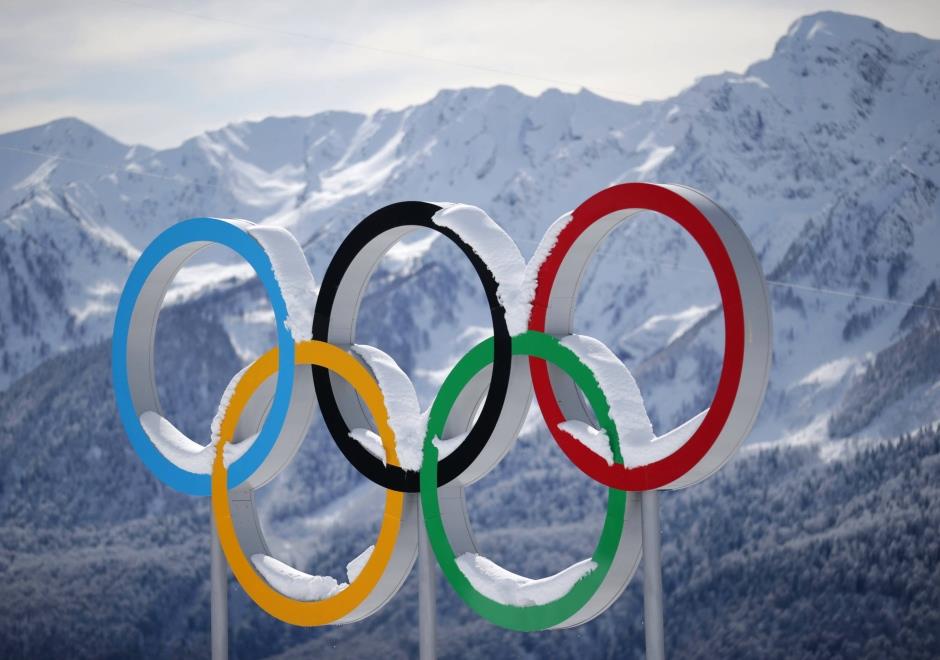
The first modern Olympics were held in Athens, Greece, in 1896. In the opening ceremony, King Georgios I and a crowd of 60,000 spectators welcomed 280 participants from 12 nations (all male), who would compete in 43 events, including track and field, gymnastics, swimming, wrestling, cycling, tennis, weightlifting, shooting and fencing. All subsequent Olympiads have been numbered even when no Games take place (as in 1916, during World War I, and in 1940 and 1944, during World War II). The official symbol of the modern Games is five interlocking colored rings, representing the continents of North and South America, Asia, Africa, Europe and Australia. The Olympic flag, featuring this symbol on a white background, flew for the first time at the Antwerp Games in 1920.

The Olympics truly took off as an international sporting event after 1924, when the VIII Games were held in Paris. Some 3,000 athletes (with more than 100 women among them) from 44 nations competed that year, and for the first time the Games featured a closing ceremony. The Winter Olympics debuted that year, including such events as figure skating, ice hockey, bobsledding and the biathlon. Eighty years later, when the 2004 Summer Olympics returned to Athens for the first time in more than a century, nearly 11,000 athletes from a record 201 countries competed. In a gesture that joined both ancient and modern Olympic traditions, the shotput competition that year was held at the site of the classical Games in Olympia.

FEMINISM : Good or Bad ?

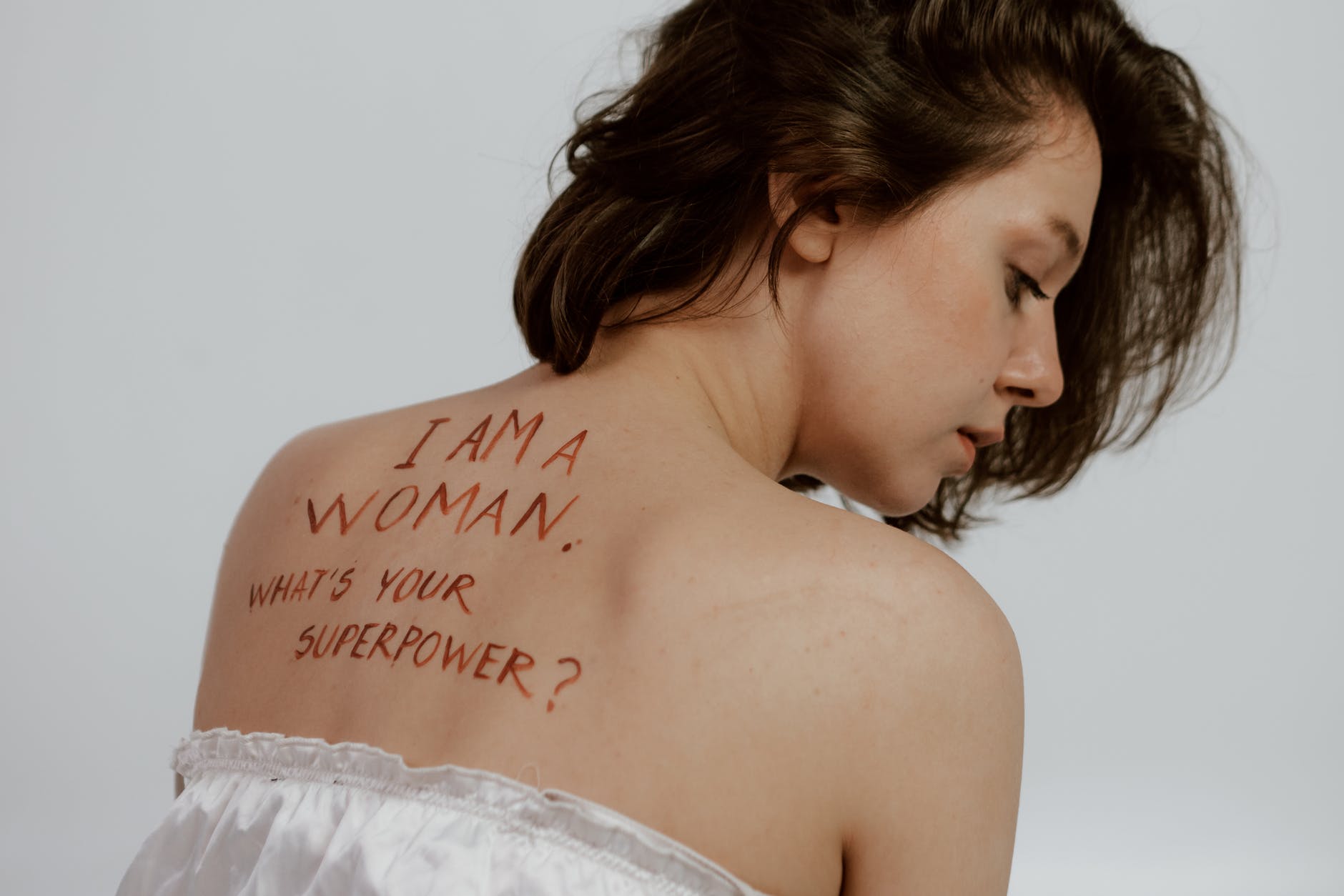
Feminism is the advocacy of the equality of the sexes. It does not seek exploitation and harassment of men by women in any field as many ‘intellectuals’ think! It only seeks to eradicate the violence against women and their poor treatment by their male counterparts wherever it is happening. People think feminism is giving women another superpower through which they can rule others , but this is not the true side , Feminism means equality in education & professional fields , equality in terms of rights , & this equality is not only for women but for men also . Feminism seeks to achieve the political, economic, personal, and social equality of BOTH the sex & not just females. Societies around the world often give exclusive rights and privileges to men (like standing up for themselves without being branded as being ‘loud’ and ‘bossy’, doing what they love to do, not being responsible for bringing up the kids and many more!) while women, in general, are treated unfairly. Feminism fights against gender stereotypes and seeks equal educational and professional opportunities for women. Feminists work for women’s rights, like the right to work, to remove the gender pay gap, to get an education, to have equal rights and respect within marriage, and to have paid maternity leave , to do what ever they want to , etc.

FIVE REASON WHY FEMINISM IS STILL A NEED OF THE HOUR ARE :

  1. Gender inequality is very bad for women health : Gender inequality is bad for women health , it makes them think that they are not superior to others , which leads to bad mental health . Further mental health leads to many diseases like PCOD, heart diseases, etc.
  2. Equal pay for all genders : Since work hours are same , so should be the pay range is the moto of feminism. Women are often paid less as compare to men & gives the reason that they work less , this belief should be removed & females should be paid equal to men .
  3. Education : Girls are pressurized to marry , then what about their dreams & education ? This is why we need feminism , just like men are asked to study so do women should have been asked too .
  4. Right to work : Still there is this stereotype in our brain that women can not do this job or this job is not meant for women . to remove this thinking from the society , feminisms is the need of the hour.
  5. Have equal rights & respect within the marriage .

At last i would like to conclude this article with a quote , ” Feminism is not a dirty word. It does not mean you hate men. It does not mean you hate girls that have nice legs and a tan, and it does not mean you are a bitch or a dyke, it means you believe in equality.”

– Words of REBBICA WEST