
Beauty Of Indian Cave Paintings

Indian history is rich and diverse. For centuries, cultural beauty of India has inspired music, religion, heritage and ancient caves. Tradition and culture followed across India is intricately portrayed through hidden paintings and sculptures in enormous rock-cut cave temples that have been guarding the heritage of India. These paintings have been highlighting the evolution in Indian dynasties and culture for ages. We are able to witness the true beauty of ancient art through these magnificent creations. Cave Paintings were not confined to certain decorations but were tales of growing habitation.

One of the most valued cave paintings in India known as Bhimbetka Cave Paintings in Bhopal, Madhya Pradesh date back to 12,700 BC or earlier. Bhimbetka Caves was named after ‘Bhima’ – one of the five Pandavas of Mahabharat. It was declared UNESCO World Heritage site in 2003. These paintings exhibit the early human life. The inscriptions are monochromatic. Wild animals are shown like elephant, tiger, monkey with red and white color as the most commonly used with a rare hint of green and yellow color. There are more than 600 caves in this group of caves. Bhimbetka’s paintings artistically show culture and events.

Ajanta Caves located in Aurangabad district of Maharashtra are among the most commonly visited caves in India. These paintings were created in 1st Century BC. Ajanta Cave Paintings mainly depict the Mahayana Sector of Buddhism. The portraits and carvings are said to be masterpieces of Buddha’s life. Paintings and portraits are praised worldwide for its exceptional technique. Refined brush strokes and firm lines are breathtaking. This artwork is of spectacular extravagance. Meticulous representation of vivid human emotions like love, greed, compassion has left tourists awestruck.

Ellora caves date back to 600-100 CE, widely knowns as UNESCO World Heritage site. These caves are located in Maharashtra. Ellora Caves are also the world’s largest rock-cut monastery caves that symbolize Hindu, Jain and Buddhist traditions and culture. It conveys the message of secularism. Painting style adopted resembles painting style of Ajanta.

Kailasha or Kailasanatha is the largest temple in Ellora caves. Due to its huge breathtaking architecture, it is placed among the most remarkable temples. This temple is devoted to Lord Shiva. 12 caves of Ellora represent Buddhism and 5 cave temples represent Jainism.
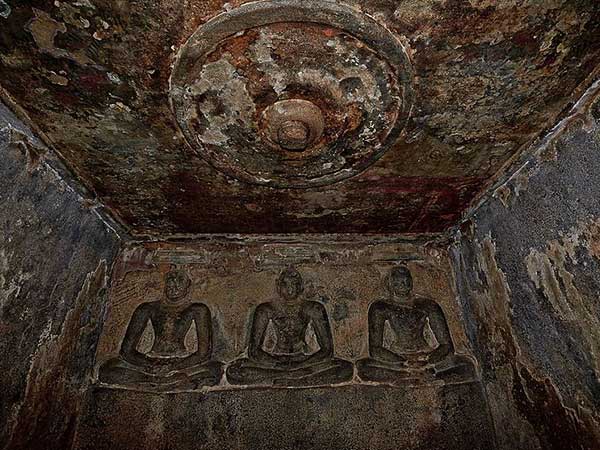
Sittanavasal Paintings located in Tamil Nadu is a Jain Monastery site, also known as the ‘Ajanta of Tamil Nadu’. These paintings represent the era of Pandyan reign. Mostly, these paintings are about animals, ducks and dancing figures. Ardhamandapam ceilings are covered with exquisite murals. Murals are painted with vegetable dyes. It is seen that that artwork of Sittanaval is similar to that of Ajanta Caves.

Cave paintings symbolize Indian culture and traditions that feature the pre-historic human life from various reigns. But sadly, these portraits are damaged to a greater extent. Lack of maintenance of these treasures have destroyed their beauty. Over the years, the condition of cave paintings have deteriorated. Cautious attention has to be given to the restoration of the caves to preserve ancient history and art.

COLORISM IN INDIA

See the source image

Colorism

Colorism is the practice of favoring lighter skin over darker skin. The preference for lighter skin can be seen within any racial or ethnic background. Race can be defined as the attributes, traits and features which differentiates one group from the other existing social groups. In simple words, races are the physical qualities that one inherits biologically and serves as a way of self-identification from the other groups. Racism is a theory that one race is superior that the other based on the physical attributes, caste, creed, ethnicity or origin. A person is being racist when he displays the emotions of hatred, prejudice, biasness and intolerance against another person solely due to his skin color, structure of his lips, language, place of origin or any other attribute which he might have gained biologically.

Colorism in India

India is known as one of the most mega diverse nations in the world. It is indeed a diverse country and a home for people belonging to different caste, religion, color, creed, culture and traditions. Indians are known for their varied degrees of skin complexion termed as fair skinned and dark skinned. The skin color has always remained an important factor in determining a person’s value and worth. Fair skin people are considered to be of a superior status than to the people with a dark sin. Racism has been prevailing in India since the Rig Veda Period, followed by the Mughal era and the British ruleWe live in a society where the people are highly obsessed with one’s skin tone. Indians have varied degrees of skin complexion and they are categorized as fair, dusky, dark etc. Indians believe that fair-skinned people are of a much more worth and value than those who are dark skinned. The fair is considered the intellectual and gets the respect, dignity and the social status while the dark are left behind struggling for their rights and status. We face color hatred and prejudice and somehow still choose to remain silent about it.

The people need to understand that a person’s worth or status is not determined by his or her color. There are numerous cosmetic brands promoting skin lightening creams and lotions. There are advertisements promoting the desperate need of looking fair. The question is why? No one has the right to question or judge one’s complexion. Racial discrimination brings down the morale and the enthusiasm of the dark, they do not get a chance to stand up and speak up or fight for themselves. The mindset of the Indian society should realize the fact that no matter what the skin tone is, what caste or origin a person belongs to, irrespective of all the other physical traits, a person is entitled to equality before the law and has every right to deserve the same respect and honor a fair person gets. Racism is a refuge for the ignorant. It seeks to divide and to destroy. It is the enemy of freedom, and deserves to be met head-on and stamped out.

JAIPUR: THE PINK CITY

See the source image

 HISTORY OF THE PINK CITY

Jaipur is popularly known as the Pink City of Rajasthan, which is not only Pink but also the most colorful city of India. The city is the mixture and combination of Indian culture and modern experiences. Jaipur is probably the first planned city of India. It was planned to design in Pink color, as the color signs for hospitality. The city is known to give an unending experience to the tourist as well as the localities. Pink city has its own vibes and flavors which blends to perfection and brings a completely different exposure. Jaipur is all about forts, museums, food, monuments, shopping and many more things. As a tourist or a newbie in the city, it is always considered to explore the city as a local but in the end, it becomes too messy.

Why Jaipur is known as Pink City

The moment you arrive in Jaipur you will witness that the walls of most building are painted in “pink” terracotta color. The color resembles the city’s heritage and culture. Going back in the history, when Maharaja Sawai Ram Singh was in power and when Prince Albert came to Jaipur during the India tour in 1876. Maharaja wanted to impress the Prince and hence, he planned an extreme strategy. Maharaja constructed a large concert hall and named it after Prince Albert Hall Museum. Then, he decided to repaint the entire city for beautification and chose terracotta pink for the same. The color was durable in all weather conditions. The color represents hospitality. The queen of Maharaja Sawai Ram Singh loved the color and asked the Maharaja to make a law that every house in Jaipur should be pink in color and use of any other color is illegal. The law was passed in the year 1877 and it is effective till today.

PLACES TO VISIT IN JAIPUR

  1. Jal Mahal- Jal Mahar, as per the name suggests is the water palace in Jaipur. Its tropical architectural style with a mixture of Rajput and Mughal structures are just amazing to human sight. It is located in the middle of the Man Sagar Lake and it was built for the royal family to on a summer gateway.
  2. Amer Fort- One of the most famous forts of India. The Amer fort is located on a hill, earlier it was a strong defense around the city. The Indian and Mughal blend of architecture is immensely beautiful. It is said that even the attackers did not want to destroy it.
  3. Hawa Mahal- It was built by Maharaja Sawai Pratap Singh in 1799. The Hawa Mahal was built for the royal women to enjoy festivals and events. It is made of beautiful pink and red sandstone. The structure is in such a way that royal women could enjoy the street view and city life without coming in the sight of the public. It’s shape is like a crown of Lord Krishna which has 953 jharokhas also called as windows in a five-story building.
  4. Nahargarh Fort- Nahargarh fort beautifully displayed the unique blend of Indian and European architectural style. It was built by Madhavendra Bhawan, he built 12 similar suites for his queens. Its construction was done in such a way that Maharaja was able to visit any queen’s suite and none of the other could acknowledge it.