

Three-time National Award winner, veteran Bollywood choreographer Of Iconic Bollywood Numbers, Saroj Khan, passed away due to cardiac arrest on early Friday morning at 71.
In a career spanning over four decades, Khan is credited with choreographing more than 2,000 songs, including ‘Dola Re Dola’ from Sanjay Leela Bhansali’s ‘Devdas’, ‘Ek Do Teen’ from Madhuri Dixit-starrer ‘Tezaab’ and ‘Ye Ishq Haaye’ from ‘Jab We Met’ in 2007.
Most of the songs choreographed by Khan had big names as lead actors. Khan has also trained a slew of choreographers who went on to make a big name for themselves in the ’90s, including Farah Khan. Khan was known for blending Indian classical dance with modern beats.
Actress Madhuri Dixit has often credited Khan for catapulting her to fame by choreographing several of her dance numbers. The song ‘Dhak Dhak’ starring Dixit from 1992 film ‘Beta’, was choreographed by Khan and went on to become a national rage.

was one of the most prominent and leading Indian dance choreographers in Hindi cinema. She was born in Mumbai, India. With a career span of over forty years, she choreographed more than 2000 songs and is known as “The Mother of Dance/Choreography in India”.
Saroj Khan appeared on a number of reality dance shows which includes :
- Nach Baliye,2005 as a member of the jury which aired on STAR One
- Ustaadon Ka Ustaad as a judge which is aired on Sony Entertainment Television (India)
- Nachle Ve with Saroj Khan, 2008 which was aired on NDTV Imagine.
- Boogie Woogie (TV series), 2008 as one of the judges, along with Javed Jaffrey, Naved Jaffrey and Ravi Behl.
- Jhalak Dikhhla Jaa, 2009 which was aired on Sony Entertainment Television (India) alongside former Nach Baliye judge Vaibhavi Merchant and actress Juhi Chawla.
In 2012, The Saroj Khan Story, a documentary produced by PSBT and Films Division of India and directed by Nidhi Tuli was also released.
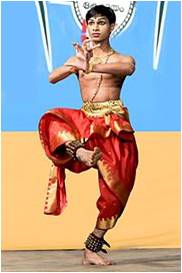 The history of Kuchipudi can further be traced back to the 1st century B.C. but the more popular stories are from 1502 A.D. According to some local legends, an orphan boy adopted the name Sidhendra Yogi acquiring higher studies, and one day when he asked God to help him cross a river, he vowed to devote his life to religious affairs. He then began to teach Brahmin boys devotional dance which was called Natya Shastra (which translated to offerings to God). In those days Kuchipudi was performed once in a year but was cautiously kept out of the reach of Devadasis. Even today in some coastal areas of Andhra Pradesh Kuchipudi is not accessible by all; it is still performed by all-male troupes.
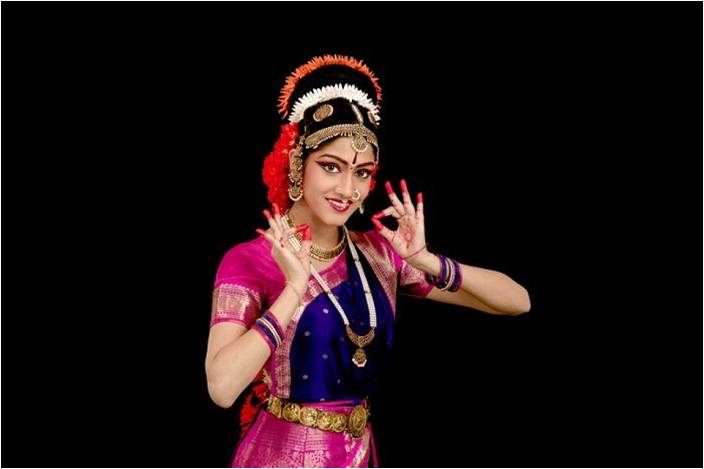 With its lilting music and flowing music, Kuchipudi performances are a delight to watch. The beautiful costumes and light makeup of the artists contribute to their vibrant stage presence. While a male wears a dhoti, a female is adorned with a sari that is stitched with a pleated cloth that opens like a hand fan when the dancer stretches or bends her legs while portraying spectacular footwork. Traditional jewelry like a metallic waist belt is used along with ghungroos for producing rhythmic sounds. The eye expressions are given extra importance by outlining them with black kajal.
 Eduindex
You must be logged in to post a comment.