

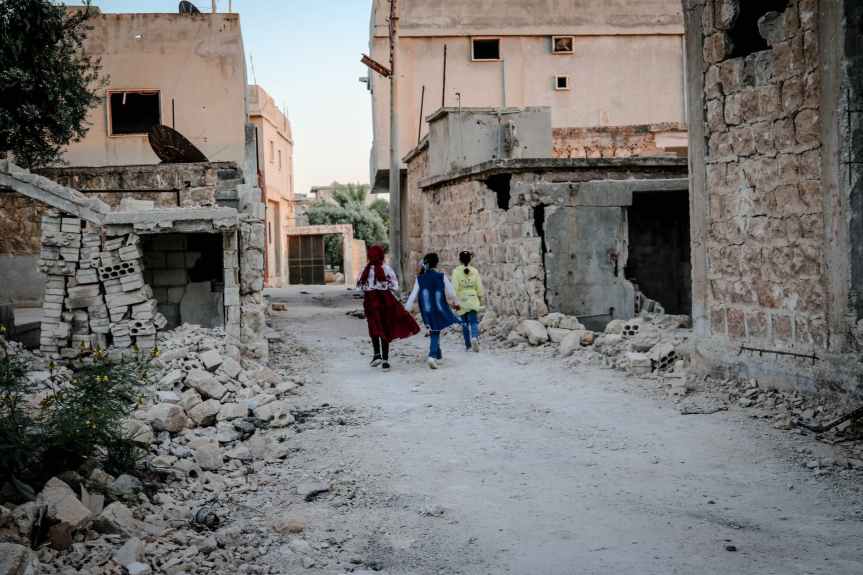
An earthquake is a natural disaster whose arrival cannot be announced in advance. Earthquakes are more frequent in mountainous areas. Earthquake has many causes such as volcanic eruption due to excess heat. Sliding rocks under the earth. Collide or move existing plates under the earth. Earth quakes when an earthquake strikes, due to which houses, trees, plants etc. fall and millions of humans and animal birds die under them. Whenever an earthquake comes, there is a lot of destruction.
Earthquake also comes due to the burden on the earth and when it comes, the biggest danger is the collapse of high buildings. In the event of an earthquake, all people should go out of the house to the open ground. An earthquake cannot be predicted, but many preparations can be made to avoid it. For this people are advised to stay in wooden houses. They must keep a mobile phone and flashlight with them. It is not possible for humans to stop earthquakes but tree plants protect us from earthquakes. So to prevent disaster like earthquake, we should plant more and more trees.
Simply speaking, Earthquake means the shaking of the Earth’s surface. It is a sudden trembling of the surface of the Earth. Earthquakes certainly are a terrible natural disaster. Furthermore, Earthquakes can cause huge damage to life and property. Some Earthquakes are weak in nature and probably go unnoticed. In contrast, some Earthquakes are major and violent. The major Earthquakes are almost always devastating in nature. Most noteworthy, the occurrence of an Earthquake is quite unpredictable. This is what makes them so dangerous.
Types of Earthquake
Tectonic Earthquake: The Earth’s crust comprises of the slab of rocks of uneven shapes. These slab of rocks are tectonic plates. Furthermore, there is energy stored here. This energy causes tectonic plates to push away from each other or towards each other. As time passes, the energy and movement build up pressure between two plates.
Therefore, this enormous pressure causes the fault line to form. Also, the center point of this disturbance is the focus of the Earthquake. Consequently, waves of energy travel from focus to the surface. This results in shaking of the surface.
Volcanic Earthquake: This Earthquake is related to volcanic activity. Above all, the magnitude of such Earthquakes is weak. These Earthquakes are of two types. The first type is Volcano-tectonic earthquake. Here tremors occur due to injection or withdrawal of Magma. In contrast, the second type is Long-period earthquake. Here Earthquake occurs due to the pressure changes among the Earth’s layers.
Collapse Earthquake: These Earthquakes occur in the caverns and mines. Furthermore, these Earthquakes are of weak magnitude. Undergrounds blasts are probably the cause of collapsing of mines. Above all, this collapsing of mines causes seismic waves. Consequently, these seismic waves cause an Earthquake.
Explosive Earthquake: These Earthquakes almost always occur due to the testing of nuclear weapons. When a nuclear weapon detonates, a big blast occurs. This results in the release of a huge amount of energy. This probably results in Earthquakes.
Effects of Earthquakes
First of all, the shaking of the ground is the most notable effect of the Earthquake. Furthermore, ground rupture also occurs along with shaking. This results in severe damage to infrastructure facilities. The severity of the Earthquake depends upon the magnitude and distance from the epicenter. Also, the local geographical conditions play a role in determining the severity. Ground rupture refers to the visible breaking of the Earth’s surface.
Another significant effect of Earthquake is landslides. Landslides occur due to slope instability. This slope instability happens because of Earthquake.
Earthquakes can cause soil liquefaction. This happens when water-saturated granular material loses its strength. Therefore, it transforms from solid to a liquid. Consequently, rigid structures sink into the liquefied deposits.
Earthquakes can result in fires. This happens because Earthquake damages the electric power and gas lines. Above all, it becomes extremely difficult to stop a fire once it begins.
Earthquakes can also create the infamous Tsunamis. Tsunamis are long-wavelength sea waves. These sea waves are caused by the sudden or abrupt movement of large volumes of water. This is because of an Earthquake in the ocean. Above all, Tsunamis can travel at a speed of 600-800 kilometers per hour. These tsunamis can cause massive destruction when they hit the sea coast.
In conclusion, an Earthquake is a great and terrifying phenomenon of Earth. It shows the frailty of humans against nature. It is a tremendous occurrence that certainly shocks everyone. Above all, Earthquake lasts only for a few seconds but can cause unimaginable damage.
 Eduindex
You must be logged in to post a comment.