WHY ARE INDIANS AFRAID OF DIVORCE?

PROLOGUE TO THE THOUGHT

Our general public has been man centric and man-driven for quite a while. It gives men the opportunity to be their own lords yet denies ladies the equivalent. Culture completely concurs with men continually ruling and ladies continually being ruled. A man can stop a marriage at whatever point he wishes to, however society questions and derides her if a lady wishes to do likewise. It in a real sense anticipates that women should endure quietly, even get suffocated yet not get a separation.

SOCIETY’S PERSPECTIVE

Tragically a man needn’t bother with authorization for anything, while a lady needs it for everything. We gladly declare that we are instructed and making the world a superior spot to live. We yell trademarks about opportunity for ladies as loud as possible yet, actually, neglect to walk the discussion. It plainly draws out the false reverence of our general public. We gladly announce ourselves to be ‘present day. ‘For what reason can’t a lady decide to carry on with her own life according to her own preferences? We forcefully go against abusive behavior at home and the customary traditionalist mentality about ladies. In any case, do we really follow it at our homes?

They say ‘Good cause starts at home. Be that as it may, shockingly, separate is as yet a no-no in our general public. We show our kids that marriage is a sacrosanct establishment. Yet, that doesn’t imply that it is a declaration of joy. For what reason wouldn’t we be able to comprehend if marriage as an establishment isn’t working any longer? Most families consider separation to be the apocalypse. They don’t attempt to put themselves in the spot of individuals who are in that despondent marriage. Separation can have a good implication. Assuming a dead relationship is finished, it doesn’t mean everything is broken. All things considered, it is a new beginning. On the off chance that the two players arrive at a shared agreement that separation is the best hotel for them to be content in their particular lives, for what reason do individuals have an issue?

WHY IS DIVORCE VIEWED AS A SOCIAL STIGMA?

Another misinterpretation is that assuming individuals get separated, they become fierce foes to one another. In our country, ladies can’t consider leave a relationship rapidly. This is on the grounds that they are ladies. Society regularly fails to remember that before ladies, they are people. In the event that a man has the option to be the expert of his own life, then, at that point so does a lady. Much of the time, because of family pressure, ladies can’t tolerate upping for themselves and move out of a poisonous relationship.

We need to comprehend that solitary the spouse and the wife go through detachment after separate. The detachment doesn’t happen among youngsters and guardians. The guardians’ condition with their youngsters stays as before. It is only that the guardians play out their obligations independently. Subsequently, the two players improve life. Created nations like the USA are substantially more OK with separate. They comprehend the issue and backing the reason. In the event that we can take on their dressing sense and style of food, for what reason wouldn’t we be able to accept their expansive mindedness?

Marriage can give a conviction that all is good, yet separate from gives another desire to have a glad existence. Likewise, being a solitary parent is any day better than displaying a poisonous relationship. We need to comprehend that separation is surely not the most exceedingly terrible thing for youngsters, but rather undesirable everyday life is. It can likewise empower the two accomplices to fill in life once they feel glad intellectually.

POSITION OF LAW

The Seventy-First Law Commission Report of 1978 methodicallly contended the meaning of defining which perceived unrecoverable breakdown of marriage as a firm ground for separate. As per this, great separation law has twofold articles. Right off the bat to safeguard, and not subvert, the soundness of the relationship. Then, if the couple, through shared agreement, concludes that their marriage has hopelessly separated, then, at that point they ought to be liberated of it. This should be finished with complete equity and the base harshness.

TOWARDS THE END

A few cases have offered strong help to this contention. Henceforth it plainly addresses a social reality. Society has changed drastically, thus has our manner of thinking towards marriage. In this way, if a marriage has gotten suffocating and broken past all prospects of fix, then, at that point it should be finished.

Separation, in India, is as yet a sociocultural disgrace. Separation rates for Indian people are 0.3 percent and 0.2 percent, separately. Incidentally, this is in spite of that spousal viciousness is the most normal type of aggressive behavior at home in India. Thus, separation ought to be viewed as an answer and the way to independence from a poisonous relationship. It ought to positively not be a social shame.

Eventually, advancement is reflected in one’s thoughts.

Divorce by Mutual Consent

Although it is believed that relationships are created in heaven, these heavenly ties do not always continue forever. Divorce is now seen casually, and individuals utilize it as a first choice, despite the fact that the law intended it to be a last resort. Many times, the partners in a marriage can no longer stand one other and cannot live peacefully together. In such situations, the couple may choose to divorce mutually. Mutual divorce occurs when both husband and wife mutually agree that they can no longer live together and decide to dissolve their marriage.

Essential Conditions of Mutual Divorce

  • Parties must be living separately – In order to dissolve a marriage by mutual divorce, the parties must have been living apart for at least one year prior to submitting the divorce petition. Living apart does not imply living in different locations. Living under the same roof as a couple but without sharing the bond of husband and wife qualifies the required requirement of living apart.
  • Parties are unable to live together – There are a variety of scenarios in which a couple is unable to live together despite mediation, reconciliation, and numerous efforts. In such a case, the couple can divorce by mutual consent. Following the filing of the petition, the parties are allowed a six-month cooling period, which can be extended to eighteen months. Both parties must ponder and examine their options during this period. If the parties are still unable to live together, the district judge should issue a divorce order.
  • Parties have mutually consented to end the marriage– In order to dissolve the marriage by a mutual divorce, both parties must have agreed to do so. The divorce petition is submitted jointly by both parties in the case of mutual divorce. The parties have the right to withdraw the petition at any moment. The petition appears to be withdrawable at the request of one of the parties within six months of the petition’s filing date. When a joint motion is adopted by the parties after the expiry of six months but before the expiration of eighteen months from the date of presentation of the petition for inquiry, the individual right of a party to withdraw the petition seems to be barred.
  • Parties must file for divorce jointly and without undue influence, fraud, or corruption– Both parties must have consented willingly and without pressure from the other parties to file for divorce. If neither partner is willing to file for amicable divorce, the party seeking divorce may do so using the grounds specified in Section 13 of the Hindu Marriage Act.

Advantages of Mutual Divorce

  • A divorce by mutual consent minimizes needless confrontations, saving both spouses time and money.
  • Maintenance and custody of the kid can be readily arranged by the parties amicably before the marriage is dissolved.
  • In this divorce, the court legalizes and agrees to all that the couple has talked and chosen.
  • Under this, the spouses need not explain the reason for divorce before the court of law. 
  • It does not lead to any confusion or chaos between the parties regarding how the assets and liabilities will be divided between the couple.
  • If the divorce takes place amicably without any conflict the couple can continue to be friends rather than sworn enemies.

Procedure for Mutual Divorce

To get a divorce by mutual consent, one must follow several steps. In India, the process of mutual divorce usually begins with the filing of a petition under Section 13B of the Hindu Marriage Act. Two motions are also involved in this procedure. Following are the important steps:

  • Filing a Joint Petition– The first step is to file a joint petition in the relevant family court. This joint petition must be signed by both parties. Both parties sign a joint declaration in the divorce petition declaring that they can no longer live together due to fundamental disputes and should be granted a divorce. This declaration also includes a distribution agreement, parental rights, and other details.
  • The appearance of both the parties in Court– The second step involved is the appearance of both the parties before the competent court before which the petition is filed. The court fixes the date and on this date, parties are asked to present before the court with their counsels. 
  • Court review of the petition– The court will review the petition as well as the papers filed by both parties. When the court is satisfied, it records both parties’ statements. In some situations, the court will attempt to mediate a resolution between the parties. When the parties are unable to reconcile, the divorce process begins.
  • Recording of the statement and adoption of the order on the First Motion– When both parties’ statements are recorded, the court issues the first motion order. Previously, the parties were allowed six months to reconcile. This six-month period can be extended to eighteen months, after which a second motion can be submitted. This is no longer a required requirement. In the case of Amardeep Singh v. Harveen Kaur, the Supreme Court waived the six-month cooling period if it was believed that both parties were committed to the divorce, there was no possibility of cohabitation between an estranged couple, and no alimony, child custody, or property issues were raised.
  • Appearing for Second motion– If neither party agrees to come together after six months from the first motion or by the conclusion of the reconciliation period, the parties may appear for the second move for the final hearing. This also entails the parties appearing in court and making remarks that are recorded. Both parties present their cases at the final hearing, and the court records their statements under oath in the family court.
  • The Court’s decision– The most essential condition for a divorce by mutual consent is the free consent of both parties. In other words, unless there is total agreement between the husband and wife for the dissolution of the marriage and the court is satisfied, the court cannot grant a decree of divorce by mutual consent. Based on the parties’ declarations as well as the facts and circumstances of the case, the court makes the proper judgments and dissolves the marriage. The divorce is then finalized when the court issues a divorce decree.

Conclusion

Divorce is a painful issue that should only be used as a last resort; nevertheless, many people nowadays do not hesitate to divorce. It causes family disintegration, and the kid of a divorced marriage suffers substantial stress as a result of growing up with split parents. The best way to divorce is by mutual consent since the parties do not have to publicly embarrass each other in court and may resolve any issues and dissolve their marriage willingly. From the time of filing until the finalization of the divorce judgement, the total mutual consent divorce procedure might take anywhere from 6 months to 1-1.5 years.

Women’s Rights During and After Divorce in India

INTRODUCTION

In India, women are assumed to be reliant on their husbands at the moment of marriage. After their divorce, they have no access to work or any other means of gaining independence. Some of these limitations are alleviated by the rights they can assert following their divorce.

RIGHT TO ALIMONY AND MAINTENANCE

After marriage, women have the right to alimony. If women are not granted an adequate amount of alimony, they can petition the court for maintenance. Alimony is a lump sum payment made after a divorce, while maintenance is when the payment is made on a regular basis on a set date. If alimony is insufficient to cover her needs, the wife may request maintenance until she remarries.

Women’s rights in divorce include the fundamental right to request an allowance in order to support oneself. Maintenance is a certain payment paid by the husband to the wife after their divorce to make it easier for her to support herself. Maintenance refers to the requirements for self-sufficiency. Women may not be able to support themselves after a divorce, therefore they may be able to claim maintenance. Women in India have access to this right. If the spouse violates this right, the woman can seek redress under Section 125 of the Cr. P.C.

However, section 125(4) states that if both spouses are not living together by mutual consent, the women cannot seek support. However, if a divorce decision allows them to live apart, the wife might file a claim for support. Some personal laws, such as Parsi and Christian laws, provide provisions for support. Section 125 Cr. P.C. is a criminal claim in the event that the wife is refused support, and it applies equally to all laws.

Women may be granted maintenance on a variety of grounds, including:

  • Her husband has been nasty to her.
  • Her husband has either purposefully ignored her or abandoned her.
  • The husband has a severe leprosy or a venereal illness.
  • At the time, the husband had another wife living with him.
  • The husband maintains a concubine in the house or lives elsewhere with that woman.
  • The husband has left Hinduism and converted to another faith.
  • The husband has a mental illness ( mental state and unsound mind)
  • If the woman hasn’t heard from her spouse in at least seven years, the husband is presumed dead.
  • Any other legal reason for the husband and wife’s separation.

RIGHT TO RESIDENCE

After her divorce, the lady is entitled to a place to live. The marital home in which the couple dwelt belongs to both husband and wife; she can assert her right to residence even if the house is in the hands of the husband or is a rental or ancestral property.

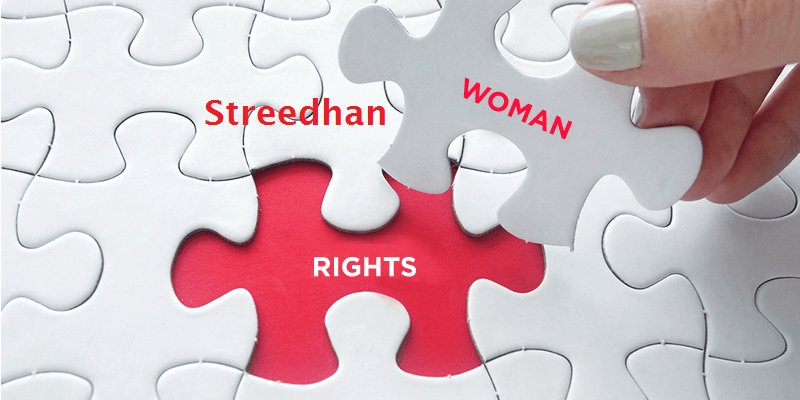
RIGHT OF STREEDHAN

Streedhan refers to the presents of riches, jewels, property, and so on that are presented to the bride at the time of her marriage. She has exclusive ownership of the Streedhan, which differs from dowry in that it is given to the bride freely. The wife is free to keep her Streedhan because she is the only owner of it. She might use her Stree Dhan to alienate, sell, or give as she pleased. Women’s rights are guaranteed in Section 27 of the Hindu Marriage Act of 1955, as well as Section 14 of the Hindu Succession Act. There are no conditions linked to the wife’s ability to keep her Streedhan after the divorce.

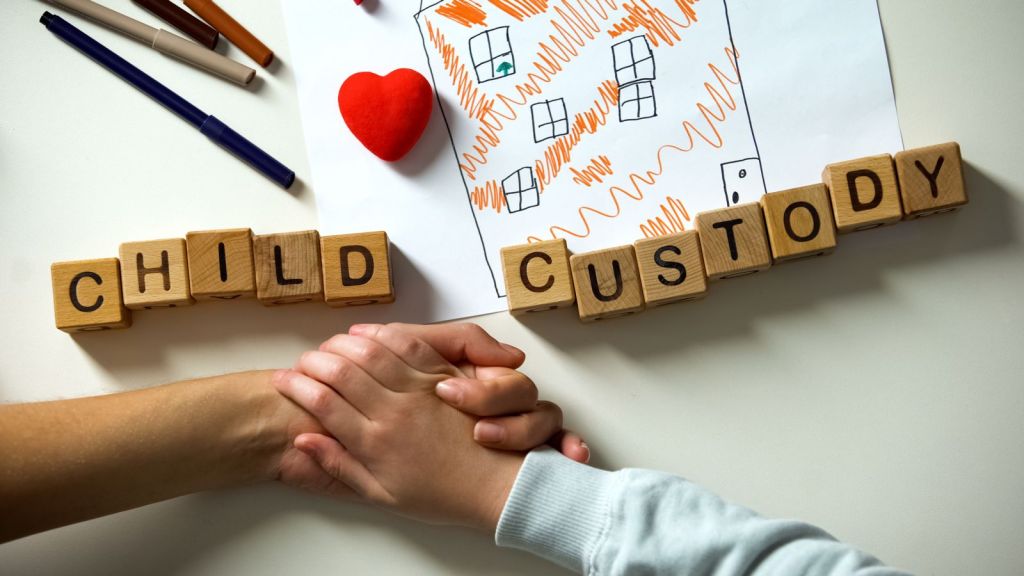
CHILD CUSTODY RIGHTS

The youngster suffers as a result of the couple’s separation. When a marriage falls apart, it separates every aspect that is linked to it. The children are also forced to pick a side and stay with either of their parents.

The guardian and wards legislation of 1890 and the Hindu minority and guardianship act of 1956 govern child custody rights. The mother has custody of a kid under the age of five years under the Hindu minority and guardianship legislation of 1956.

The natural guardian of a child is generally considered as a father otherwise mother. In case the child’s custody is not suitable for the father in that case or if it is not better than that of the mother’s then any indefeasible right can be claimed. Depending upon the welfare and security of the child, the custody can be shifted on either of father or mother.

Categories of child custody:

  1. Physical custody
  2. Joint custody
  3. Legal custody
  4. Third-party custody

Both parents have the right to custody of their children because they are the primary caretakers for them. However, the court makes this judgement with the child’s safety and well-being in mind. When deciding on child custody, the idea of ‘the best interest of the kid’ is applied, and custody of the child is awarded as a result.

RIGHT TO ANCESTRAL PROPERTY

If the woman is part of the joint family property she will have the right over the property even after divorce. This right to retain her property cannot be taken from her.

CONCLUSION

Women are free even after divorce and are not constrained by any boundaries when it comes to enforcing their rights. Maintenance, child custody, property, retaining her gifts, and other rights are all accessible to her. Some of these rights have evolved through time, and law has been interpreted differently, paving the door for women to seek justice. The law guarantees that their rights are provided to them and that they are safeguarded if they seek redress.

Why the rise in divorce ?

Between 1970 and 2008, Cheng-Tong Lir Wang and Evan Schofer, two sociologists from the University of California discovered that the global divorce rate rose from 2.6 divorces for every 1,000 married people to 5.5 – the rate had more than doubled. Meanwhile, in 2017 India’s divorce rate — stood at 1%, according to a report from the Organisation for Economic Co-operation and Development. While the absolute number of divorces has gone up from 1 in 1,000 to 13 in 1,000 over the last decade or so, India still remains at the top of the list of countries with the lowest divorce rates. But why a sudden increase in divorce rates for a country where marriage holds the highest status and divorce is still a taboo?

Divorces are riddled with stigma in India with divorced women being looked down upon in society. One of the main reasons for the rise in divorce rates is women finally taking a stand against the injustice done to them for generations. Today, three billion women and girls live in a country where rape within marriage is not explicitly criminalized. But injustice and violations take other forms as well. In one out of five countries girls do not have the same inheritance rights as boys, while in others (a total of 19 countries) women are required by law to obey their husbands. Around one third of married women in developing countries report having little or no say over their own healthcare. A divorce gives them the opportunity to be more in control of their lives and not rely on anyone else.

Cheating and affairs are also major contributors to divorce in India. This issue has grown with the growth of a more digitalised world, with apps providing the ability to contact people at a ‘tap’ of a screen. Many Indian women in marriages are even aware of their husbands having affairs and ‘turn a blind-eye’ due to their age or years in the marriage. But it does not mean the dynamics of the marriage are happy anymore. Having an affair is the one thing that is destructive to a marriage, once found out. It destroys trust, love and care but for many, the marriage will carry on due to family and society pressures.

Indian marriages are influenced, supported and inspired by family. But also, sadly, marriages are destroyed by family too. Especially, extended family. The most common marital issue is that of the in-laws and the daughter-in-law. Breakdown of Indian marriages where the daughter-in-law is not good enough for the in-laws is one of the biggest reasons for divorce in India. From issues like ‘not enough dowry’ to ‘not being part of the family’ to ‘stealing the son from the family’ are all typical examples of the cause.

Divorce has led to the death of marriages which gives it a reputation of it being a negative word. But women are challenging that perception now and pushing for a change. Through stand-up comedies, spoken word poetry, Instagram accounts and support groups, they are fighting the stigma around divorce, one act, one verse, one post at a time. The end of a marriage could mean the beginning of a happy life and not necessarily the end of life itself.

THE BIGGER THE AGE DIFFERENCE, THE SHORTER THE MARRIAGE

There are numerous factors which can affect a relationship. Some of them are income levels, age difference or commitment etc. With the help of different researches and studies, it was concluded that age difference can also emerge as one of the factors for divorce and for creating odds in an relationship. Studies have concluded that, the greater the age difference between couples, the greater is the chance of ending a marriage and having divorce. Different studies were conducted for understanding the situation of marriage in different age intervals . According to different studies, couples having one or less than one year age difference have only 3% chances of getting divorced. If there is a difference of 5 years then the risk increases to 18%. And if the age difference is 10 years then the risk factor is 39%. This rate keeps on increasing with the increasing age gap. Couples who have less age gap have lesser chances of getting divorced and ending the marriage than those with someone who is very young or old as compared to the other. Individuals who are close in age belong to the same generation and have similar mindsets and outlook towards society and life. This provides a strong foundation to the relationship. These people have similar cultural references and taste, life experiences and will be achieving milestones in the same time. According to different findings, the chances of ending a marriage is highly reduced if marriage is done with the person having same age.

SMALL GAPS : Researchers have found that the couples having small age gaps have less chances of getting divorced. That’s not to say those marriages will not end in divorce. They certainly could. But the age difference would not be the reason for the divorce.

LARGE GAPS :The problem arises when the age difference is higher and the bigger the gap there is between people’s age, the more likely they are to end in divorce.

Changes happen slowly. The marriage may feel to be successful in the starting but the feeling change with time if there are unsuitable conditions. And in case of large age difference, it is seen that the people of more age feel to be more satisfied than the younger one and this eventually pushes the couple to divorce. People find themselves in different places and phases of and in life. If one thinks about his career or good health while the other will be focusing on retirement or declining health due to old ages. Despite the age differences and perspectives, people also have similar feelings and must have felt the happiness but in the similar way there will be numerous differences also. While examining or understanding any relationship it is necessary to understand both the partners. Relative ages of spouses affect if the husbands will leave their wives or the wives leave the husband and mostly it is found that the older spouses are left by the younger. Hence, spouses start to look less appealing and the thinking styles differs more and more as he or she ages, and it is absolute age that is driving divorce.

WHAT MAY BE THE REASONS BEHIND INCREASING NUMBER OF DIVORCES ?

The society went through number of shifts in attitude and behavior over the past 80 years and with all these shifts and transitions, the definitions, meanings, lifestyle etc. of people and the life events have also changes. There is change in the beliefs of the people and the meaning of marriage is also redefined and beliefs relating to marriage have also changed significantly. Marriage requires lifelong commitment and is dependent on an individuals fulfillment and satisfaction. With all these shifting’s, the stigma related with divorce has also been eliminated.

With the help of qualitative and quantitative studies it had been seen that there are number of reasons for divorce and some of the major reasons for divorce are lack of commitment, infidelity, and conflict/ arguing. And the most common final straw is domestic violence, infidelity and substance use. In recent decades, there is an increase in number of divorces. The increasing number of divorce is related to various social aspects.

  1. LACK OF PROPER COMMUNICATIONS : Communication is very important when we’re interacting with someone and bad communication can have many impacts on a marriage. It is important to clarify each other’s meanings and concerns, otherwise, it will lead into suspicion, mistrust and arguments and many times it can affect the marriage severely. Arguments in any relationship is not a bad thing and can have healthy results but they can have bad impacts due to lack of communication.
  2. LACK OF COMMITMENT : According to various studies, the major reason behind divorces is the lack of commitment. The commitment gradually erodes until there was not enough commitment for sustaining the relationship and also due to negative events such as infidelity.
  3. ABUSE : When there is abuse in a marriage or in a family then divorce is the best ending and result possible. In some cases it is the husband. While there are some spouses who are able to end and overcome abuse and sometimes with the help of involvement of in laws and elders, the issues can be solved. But everything depends on the attitude and mindset of the person in relationship.
  4. INFIDELITY : Infidelity is considered as a critical turning point in a destroying a relationship and majority of couples end their relationship if they are cheated and due to infidelity. In some cases it is also seen that couples overcome this challenge and find strength to stay together.
  5. ADDICTIONS : Addictions can be in many forms. It can be in the form of alcohol, gambling etc. In many cases it was found that the addicted partner can recover from it and the marriage can be continued but if there is no change and recovery from addictions then it is best for the spouse and children to separate and see if progress is possible. Depending on the circumstance, it can be decided what to do and when to do.
  6. WOMEN’S INDEPENDENCE : Women have become more independent over these years and they are no more dependent on anyone and are no more mere housewives. Women have now become financially, socially, physically and mentally independent and this affects the old aged mentality of many people who believed that women have only one function to play that is nurturing the family. Besides so much advancements, there are many people who have still been hesitant to see women’s progress. And there men who cannot see the progress of women. There are ego clashes which cause dissatisfaction in marriage and lead to divorce.

Does India has low divorce rate because of happy marriages?

Divorce refers to the legal cancellation of marriage declaring that marriage as null and void. Marriage which is said to be a union of two individuals is generally expected to last till the death of the couple but in some cases when the couple feels that they are not compatible with each other or are hindering each other’s growth or any other reason , they decide to legally cancel their marriage . The reasons for divorce are many not just the two reason which are mentioned above raging from domestic violence, to the cases where one partner commits infidelity to cruelty, insanity, desertion etc. It is not good to continue in a relation which is turning toxic as it will affect the mental as well as physical well being of an individual.

India , the second most populated country in the world has less than 1% of divorce rate while Maldives which is 11,031 times less populated in India has the highest divorce rate in the world with 10.67% of divorces happening per 1000 inhabitants. The reason for such a high rate is that being a Muslim country, Maldives prevents any kind of premarital physical relations and as soon as the children turn 18 , they marry . Also the marriages there are not at all a costly affair with $10 being the fee for the judge and 10 relatives being invited to the wedding. The decisions taken in such tender age of 18 are often proves to be wrong , as the partners mature with time they realise that their aims are very different from others. Also, there are no social obligation restricting them in a unhappy marriage.

Why is there such a huge discrepancy between both the countries? Is it because people in India are quite happy with their partners? Or is it because they are married with their choice of life partner? Read the blog completely to know the reasons.

Why does India has such low divorce rate?

The main reason for divorce rate being the lowest in the second most populated country in the world is that people consider divorce to be a taboo. Marriages in India are a big affair with every acquaintance being invited and treated to the best lavish dishes and luxurious gifts that the family can provide which often leads to the expenditure of the entire savings of the family and heft loan amounts. According to a common belief, here marriages are made in Heaven and even if you are suffering terribly you should not break the bond which is said to be pious tying to people in a matrimony for their next seven human lives. This belief is very contrary to what the VEDAS(the oldest religious scriptures in the world which is a theoretical source for all the laws written in the SMRITIS which used to govern the laws in ancient times) say.

Also, there is a social stigma attached to the divorces which questions the character of mainly the woman stating her to be incapable of “fulfilling her husband’s demands”. Women since centuries now, are a piece of toy who despite all her qualification fails to be called a successful woman if she is not married and has not produced the kids. It is a woman who is supposed to adjust, putting even her self respect at stake. This is the reason where a woman even after becoming a victim to domestic violence never dares to file for separation as victim blaming and shaming starts soon after and she eventually accepts domestic violence as a part of her life. A woman is supposed to have no voice of hers as she is considered incapable of taking correct decisions for herself. What an irony it is that staying in a venomous marriage is considered to be good for a woman! This is the reason that the states of Bihar, Haryana, Rajasthan and UP where patriarchy still has a strong hold have the lowest divorce rates while the liberal North East has the high rates. It is the state of Mizoram in India that has the highest divorce rate of 6.34%

The time period of divorce also stretches infinitely long sometimes taking years when the divorce is not mutual which drains the involved parties emotionally, mentally and financially due to the amount of alimony involved.

What does the VEDAS say about the marriage and divorce

According to Kirron Krishnan a Vedic spiritual theist, Rigveda (which contains information about religious, social and economic life of the people) or any of the other three Vedas do not contain any mention of the term called divorce. In those times the term was not needed because according to Rigveda , the husband takes the hand of the bride to live with her till their old age playing with their grandchildren respecting her , loving her and supporting her all along. Meanwhile the wife was the queen of her husband’s household who would over the same support , respect and love back. It was a mutual show of respect by both the parties which did not leave any scope for any domestic violence case. Further, unlike in today’s time where a daughter is considered to be a liability who is born just to be married off, in the days when India was a golden bird the women were trained and skilled by her family and was married to the groom of her choice and the same was prevalent with men.

However there is the mention of remarriage if one partner dies , rennounces the world , disappears , is involved in criminal activity or is impotent. The laws in the ancient times were far more suitable for both the genders than they are today.

Is it good to have such a low divorce rate in the country

By stating that the low divorce rates are not good it doesn’t implies that the divorces are good and more people should have it. If the couple in the marriage is happy then there are no issues, but if the couple in the marriage is not happy with each other and is only together “because they have no other way” then it is completely wrong as it will generate negative vibes harming the couple as well as their innocent children . It is seen in more than one cases that the children from unhappy marriages results in being a frustration box to their parents’ outbursts which hampers the growth of the child.