Graduate Research: Tools

research toolsOn Tools
There are lots of tools that can make writing your thesis or other large research project more doable. I’m telling you about these up front so that you can start using them now, because—trust me—they make a huge difference!
  1. Endnote or another citation software
    I’m no expert on the differences between citation softwares, but they are worth the investment. I used Endnote because it was what a friend recommended to me (thank you Adrienne G.). Endnote allowed me to connect PDFs of articles to the bibliographic information and to import the citations in a variety of writing styles (e.g. APA) as you write. A bonus, the software will build your bibliography as you go. You’ll need to do some editing, but the software does the heavy lifting. You can even export the citations from academic databases and import directly to Endnote so that you capture the data in a matter of seconds.
  2. Drive, Dropbox, or another cloud based storage solution
    This may or may not be a no-brainer, but it needs to be said. Save your data, your drafts and all of your files in one manageable place (stay organized) that is backed up to the cloud or an external drive, or both. I used Dropbox which was convenient for switching between computers, accessing files if I was on someone else’s machine and ensuring that my data was backed up in real-time. I have no scary, I lost my files story, but I do have about 35 saved iterations of my thesis, each one a few pages longer than the last.
  3. Note Taking System (for random notes)
    Have you ever had thoughts pop into your head in the middle of the night, or first thing in the morning or while just hanging out? You were unconsciously thinking about research! Make sure to have a notepad near your bed, in your purse or backpack or use your phone’s note app to jot down ideas. I regularly scanned through my phone’s note pad to find research notes that popped up out of the ether. Writing doesn’t just appear, but ideas do.
  4. Support Network
    We all need support, but the most meaningful support comes from those who know what we are experiencing. Connect with other graduate students, professional colleagues, and friends from outside of the University who’ve completed similar research projects. These people will provide perspective when you’re stuck, laughs when you are grumpy and encouragement to see you through the end. Plus, you’ll have a team of fans waiting to celebrate with you when you are done. Let them know how you’re progressing, share your successes – the right people will want to know.
  5. Formatting Rules
    Regardless of your discipline’s formatting standards, the University has additional standards for completing your final thesis. Do yourself a favor, find them before your defense and see if you can’t just incorporate the ProQuest requirements before you send it off to your advisor and committee. This is sure to save you some headache later as you won’t be trying to reformat page margins and tables during finals week.
  6. Awareness
    Many graduate students will at some point encounter or experience a bout of what has been termed imposter syndrome. Do yourself a favor now, look it up, read a few articles and know that you are not an imposter. If you’ve come this far, you’re right where you are supposed to be and you are smart enough to complete and take full credit for your awesome research.

Graduate Research: Organizing and Planning

office 1
office 2office 3office 4
Getting organized is key to your success. The thesis will not magically happen. It will not write itself and you cannot absorb theory through pillow osmosis—though that would be nice. A former boss told me that theses and dissertations require only a modicum of intelligence and a lot of sweat (she had a Ph.D.) I’d say most of us have more than a modicum of intelligence, but without organization and structure you’ll never gain traction and momentum. In my six years working in higher education, I’ve heard, anecdotally, that there are a lot more ABD’s in the world than Ph.D.’s. If you want to earn the second set of letters – keep reading.
  1. Know Yourself
    Know your work style, your strengths and weaknesses and accept them. You need to know these to work into your planning. If you’re not sure, contact University Career Services, the Korbel Office of Career and Professional DevelopmentDaniels Career Services or Sturm College of Law’s Office of Career Development & Opportunities  to see what assessments you can complete.
  2. Have a SystemI’m naturally deadline driven and work well when I know what my next milestone is. With my advisor I always set up a timeline for the next few weeks or months depending on what phase of the thesis I was in. While I was analyzing data my dates were more spread out so that I had time to read and take notes. When I was writing, we met more frequently to review my progress and get feedback. Your discipline might require a different system or structure, but try to make a plan and stick to it as best as you can. In my experience, having the structure and deadlines also freed me up to say yes to fun activities without feeling guilty about the looming amount of work.How you schedule and work with your advisor will depend on your work style as well as the advisor’s, but know what you need to stay on track and commit to that for your own sake. Advisor doesn’t care if you have a timeline, but you know you’d be better off having one – then create it. Put it on paper or a calendar and set electronic reminders if needed – whatever you need to get it done.
  3. Create a SpaceDo you remember Arianna Huffington’s Sleep Revolution tour? She and other advocates of sleep (that could be another post about research and sleep) talk about the importance of creating a space that is dedicated to sleep and rest—a space that is free of distractions, noises, lights and electronics that disturb deep sleep. Apply this notion to your work space.Create a space that is free of distractions and dedicated to your research. Make sure that you have what you need to accomplish your work so that you never have to go hunting for tools or comfort items that improve your work. My “home office” included 24″ monitor so that I could work off of two screens (my laptop, too) and save time flipping between tabs. I installed a keyboard tray and bought an exercise ball to round out my ergonomic needs, ensuring that I could occasionally sit and work for extended hours. Even if you work 1-3 hours per day like I did, after a week of writing and a full-time job I was at a computer 30-50 hours per week.
  4. Office in a BagSometimes I couldn’t bear to sit at my “home office” any more. I needed to get out, get some fresh air, see some other faces or hear some ambient coffee-house noise or music, depending on your favorite local hangout. Figure out what you need, bare minimum, to accomplish solid work, and put it all in one bag, purse or backpack. Save everything online so that you can access it from anywhere and still reference your articles and other research even if you are Steam Espresso Bar. Need other physical tools? Know what those are and if practicable, have a second set ready to go for those spontaneous research and writing dates you’re planning—you never know who you’ll bump into at a coffee house. But seriously, research doesn’t have to be a lonely endeavor! setting up times to write and work alongside other students can boost morale and encourage us to stay on track.
  5. Other Ideas?I’m sure there are many other great ways to stay and be organized for research. If you’ve got great ideas, send them my way and I will update. There are many students whose work also includes being in a lab and working on teams, so I’d love to hear what other planning and organization issues, struggles or successes you’ve had.
Read more in this series:
maria headshot croppedMaria Kuntz is the Marketing and Events Manager at University Career Services at DU. She just defended her Master’s thesis, How the Greek Press Constructed the “Greek Economic Crisis,” and graduates in June 2016 with a master’s degree in International and Intercultural Communication from Media, Film & Journalism Studies and the Josef Korbel School of International Studies. She’s been working in marketing, communications, community relations and development for nearly 14 years and began working at University of Denver in August 2010.

Graduate Research: Writing and Editing

EditingInspirationYou’ll be writing until there’s no need to write anymore, until you’ve covered your topic sufficiently and the questions are answered. Will it be 60 pages, 90, 150? Just depends. When you get started and throughout, don’t worry about the page count, just write. If you stare at the numbers, they just stare back, so better to ignore if possible.
Inevitably, there are writing struggles. Some days are just easier than others and some days the words flow effortlessly. Here are some quotes that helped me maintain perspective and keep writing even if I had just put my head on my desk and cried from fatigue (yes this really happened).
  1. The first draft of anything is shit. ~Ernest Hemingway
    Well, he got that right. It does not have to be perfect and trust me it isn’t. So stop agonizing over the punctuation or the best synonym or the word that you’ve used three times in one paragraph, just keep the words flowing. There is always time for editing, but first you need to have something to edit.
  1. It’s just words on paper. ~Adrienne Gonzales, Ph.D., Associate Director, DU Center for World Languages and Cultures
    Sometimes you just need a little perspective. We’re probably not saving the world with our research, but hopefully we are adding something meaningful to society and knowledge. This friendly reminder was the mantra I recited every time I sat down to work. Don’t take yourself too seriously and just get some ideas on paper. Again, there’s always time to edit.
  2. If I waited till I felt like writing, I’d never write at all. ~Ann Tyler
    A few days after I defended my thesis, I met a gentleman at a conference who had completed a Ph.D. he told me that every day he scheduled to write from 9-11 p.m. (Same as me!) He said that no matter what, he sat down to write at 9 p.m. and did his best to try to write something, anything. If after 15 or 20 minutes he was coming up short, he stopped for the night and started again at 9 p.m. the next day. I swear this works. I watched my so doing spelling and writing homework and the first six-word sentence was arduous—but it gave way to sentence number two that was longer and eventually to sentence number four that  37 words long! It wasn’t the best sentence (he said recess four times), but he gained some momentum and once he got writing he was beaming from ear to ear.The colleague I met and I both have kiddos, so 9–11 p.m. worked for us, but really this refers back to organizing. Maybe you work best at 5 a.m. and you like four-hour blocs. That’s great, too. The point is schedule your writing time—it’s a date with yourself and your diploma.
  3. The biggest part of it is editing. It takes longer to edit one episode than to shoot it and write it. ~Larry David
    Larry David, the producer of and other brain behind Seinfeld, was talking about TV, but the same holds true for any writing. Great prose, narrative, poetry, and journal articles all have one thing in common – editing and lots of it. If your advisor or committee members keep suggesting edits, edits and more edits this is good news. They could be telling you to start over or that you are way off the mark. One day I told my editor, “there was just so much editing, I couldn’t have completed this without you.” Her reply: “You gave me something great to start with.” When she handed me pages covered in ink and handwritten notes, I never felt that my draft had been great – but it’s all perspective. You’ve got to start somewhere, so realize that editing may very well take more time than writing the initial draft.
  4. The secret to editing your work is simple: you need to become its reader instead of its writer. ~Zadie Smith
    I love this quote, except that you can’t really stop being the writer of your own work. The most valuable gift I received was an advisor who provided lots of edits. At first her notes seemed soul crushing, but eventually I came to value her perspective. The voice in my head—my writer’s voice—can justify a lot of what I’ve written, to my own detriment. If you have an outside editor that is best. If not, set your work aside for days or even a week before trying to edit it. The time provides distance and you’ll be more likely to critique and edit your own work effectively.
  5. People think that writing is writing, but actually writing is editing. Otherwise, you’re just taking notes. ~Chris Abani
    You’d never turn your notes in for your term paper. Well, maybe you have, but let’s pretend you didn’t admit that.  You’d never turn in notes to your thesis or dissertation committee, right? So, one last perspective, that first draft you wrote—it is shit. Hemingway was right. But those are just your notes. The real writing starts with editing. So get out your red pen, track changes or a crayon if you prefer and have at it. Make those notes bleed and before you know it you’ll have become a writer.
In the end, your thesis or dissertation should be easy to follow, even for a novice in your field. It’s never going to be perfect—I’m not suggesting that anyone fall into the perfectionism trap, but do your best and know that writing that first draft is just the beginning. Embrace editing as a crucial part of the writing process, don’t take any comments personally and keep your eye on the prize—your diploma.
 Read more in this series:
maria headshot croppedMaria Kuntz is the Marketing and Events Manager at University Career Services at DU. She just defended her Master’s thesis, How the Greek Press Constructed the “Greek Economic Crisis,” and graduates in June 2016 with a master’s degree in International and Intercultural Communication from Media, Film & Journalism Studies and the Josef Korbel School of International Studies. She’s been working in marketing, communications, community relations and development for nearly 14 years and began working at University of Denver in August 2010.

Central Intelligence Agency: Careers and Internship Information Session

Interested in career and internship opportunities with the CIA? All University if Denver students come join representatives from the organization on May 25th for an information session on what they’re looking for, available opportunities, programs, and more!
MAY 25, 2016 * 5:00 -6:30PM
SIE INTERNATIONAL RELATIONS COMPLEX 1ST FLOOR FORUM

3 Low Stress Ways for Pios to Heat Up the Job Search this Summer

At the University of Denver about half of our new graduates have nailed down jobs or grad school admissions by the time they don the cap and gown and collect that diploma. If you’re just graduating, or if you’re an undergrad still seeking a job or internship, here are some suggestions that can help you get started.
  1. Talk Careers
Summer is a great time to network because people are more open and relaxed. Perhaps you see yourself working as an entry-level marketing professional come the fall. If so, start talking to marketing pros now.
Try informational interviewing. It’s really nothing more than picking someone’s brain whether at a great summer event, via the Net, or even at Kaladi’s on Evans Avenue over a latte. DU’s Pioneer Connect has almost 2000 alumni in various fields who have volunteered to do this very thing. They WANT to talk to you!  Check it out.
2. Be Active
Summer in the Rockies is not couch potato time. Check out the “Get Hired Now” job readiness boot camp coming in June. It’s free to DU grads! Three days of great workshops culminate in the All-Colorado Alumni Career Fair on June 16th at the Denver Tech Center. Learn more.
3. Leap in
“The idea that companies cut back on hiring in the summer is a myth,” says Patty Coffey, a partner at staffing firm Winter Wyman. “In fact, most employers fill job openings at the same pace, or even an increased pace, during the hottest months of the year.” The response times to applications may be slower due to vacations and time off, but give yourself an edge by jumping into the job-seeking pool while others are snoozing in their hammocks.

Why the Insurance Industry is Perfect for Millennials

young insurance agentsCollege students and alumni are told to take their job hunt seriously. People giving them advice often warn of how the decisions they make at the beginning of their career can have a tremendous effect on where their career ends up years later. That can be both positive and negative. Millennials are a very different generation than those that came before them and the industries their parents look to for a career are frequently very different than the industries where millennials are look. One industry where millennials may be making a mistake by overlooking it is, Insurance.
Yes, insurance is a great industry for millennials to start their career. That is because the workforce in the insurance industry is aging. The average age of an insurance agent is now 59 years of old. In the next 10 years there are going to be thousands of professionals who need to be replaced in the industry. On top of this millennials are now coming to the age where they are buying their own personal insurance and are beginning to start their own businesses. Insurance companies need employees to help them communicate with these potential customers. If you can promote yourself as someone who can effectively market to these new demographics than you can set yourself up for long-term success in the insurance industry.
There are many industries that are here today and gone tomorrow. Insurance is the polar opposite of those industries. Insurance is kind of like death and taxes. People will always have to purchase insurance in some form or fashion. Regardless of whether that coverage is for their personal life (car, home and health insurance) or for their business, there will only be more people purchasing these coverages in the future. On the personal side of the industry, health, car and home insurance are required by law. On the commercial side of the industry, Workers’ Compensation and General Liability Coverage are required by law in nearly every state for nearly all businesses. For this reason, millennials can get into the insurance industry knowing comfortably the industry will still be strong in a decade or two.
Aside from the stability of the industry, the industry provides recent graduates with the ability to develop three important and easily transferable skills.  Those three skills are communication, risk management and critical thinking skills. Through working in the insurance industry you will learn how to effectively communicate with people of diverse backgrounds. In a typical day you might have a phone conversation with a small business owner who owns a construction business and the next phone conversation might be with an account or a lawyer. Thinking quickly on your feet to adapt your message to all types of clients will go a long way towards your success or failure in this industry. The skills you learn in the insurance industry will set millennials up for success now and in the future.
Mitchell Sharp is a Marketing Associate for The Insurance Shop LLC.  His passion is in using his knowledge of social media and content marketing to benefit the small business community.

Brian Spencer: Core Consultant with Hitachi Consulting

Congratulations to Brian Spencer for landing a job as a Core Consultant with Hitachi Consulting!
DCS_Brian SpencerTell us your story about how you landed your job or internship.
“Hitachi Consulting visited Daniels in the Fall Quarter to discuss positions they were hiring for at the time. I applied for the Core Consultant role and received a first-round interview. The first round of interviews took place on campus. Shortly after, I received notice that I was invited to the final round of interviews. The final round of interviews took place in Hitachi’s downtown Denver office. I had prepared myself for the 4-hour interview process with the help of Daniel’s Career Services. I was offered the job and accepted it shortly after receiving this news.”

What primary factor would you contribute your success in landing your job and why?
“Daniels Career Services office played a huge role in helping me land this job. Mock interviews put me in the “head space” of a consultant. My career coach assisted in taking my previous work experiences and framing them so that they were relevant to the job I was applying for. Another factor that contributed to getting the job offer was having an internship with a sister company of Hitachi Consulting called Hitachi Data Systems. My internship with Hitachi Data Systems ensured me and those I interviewed with that I understood the culture of the company and that it was a good fit.”
What advice would you give to other students about the job search process?
“Thoroughly prepare yourself for any interview. Understand what the company does, and what they are looking for in a candidate. Leverage the career center to help in this process. The coaches and counselors want you to succeed and will give constructive feedback on how you can effectively interview. Mock interviews will give you a chance to reflect on how your responses can improve.”

Career Advice from DU Alumnus, Andy Taylor

andy taylor enterpriseUniversity alumni revisit campus on a regular basis. They interact with current students, chat with old professors, and admire the progress and development of our school since their graduation. From time to time, DU welcomes alumni in a more formal setting. A notable alum and recipient of the University of Denver Evans Award is Andy Taylor. He and his wife Barbara, who is also an alum, have maintained an excellent relationship with the university since their graduation. In 2012, they donated a generous gift, matched by the university, which was used to establish the Taylor Family Undergraduate Career Center for business students, as well as to award two different need-based scholarships to dozens of Daniels students year after year.
When Andy visited campus in early March, Taylor Scholars, alongside Daniels faculty and staff, joined him and Chancellor Chopp for brunch. Even as the Executive Chairman of Enterprise Holdings, Andy was not too busy to share some words of wisdom with current students. He spent the session encouraging students to learn from his experiences in the business world. These were some of the key lessons from this event:
  1. Love your job
    Of course, we have heard this time and time again, but you have to take it to heart when someone who has been there says it. Andy talked about how every day he looks forward to going to work, which makes all the difference in the workplace. Having passion behind what you are doing can make all the difference and keep you motivated throughout your career.
  2. Strive towards ethics
    Daniels places huge emphasis on the importance of ethics, and Andy has found that pursuing ethical business practices has held great value throughout his career. He encourages students to maintain a strong sense of ethics on their professional and personal journey as well.
  3. Always look forward
    The business environment is ever-changing, so we must continue to adapt our businesses and strategies to remain relevant. Andy talked about how Enterprise is always looking forwards – analyzing trends and deciding how they will fit into the equation in the future. As a leader in a big company, he talked about the importance of pushing innovation and creativity in the workplace.
  4. Keep a balance between work and personal life
    Surprisingly, these two do not have to be separate in order to be well-balanced. When Andy’s children were still young, he would sometimes bring them into work. He described this sort of event as a “family thing,” where the kids might learn a thing or two on a Saturday morning for example.
  5. Reinvest in your businessAndy attributed a good portion of the growth in his business to the consistent re-investments he made. He talked about how he chose not to take the money for himself and instead used it to push development in his business. While this may sound intuitive for many, the key lies in making sure not to take excess profits to keep for personal use, which may be challenging if your business is doing well.
A couple of good lessons later, brunch wrapped up. Students lined up to meet Andy Taylor and to thank him for his generous gift. For many students, the funds dedicated to the Taylor Scholarships have made all the difference today and his words of advice will shape their future.

Getting Your Startup to the Starting Line

traxion with graphic and logoGetting Your Startup to the Starting Line
For many DU graduates, starting a new business is the preferred path for combining classroom learning with specific industry expertise to create a new product or service that fills a customer need with a better solution.  The rewards of entrepreneurship are well-publicized and frequently glamorized – but the reality of transforming an idea into a company can be more challenging and time-consuming than originally envisioned.
Based on lessons from successful startups, steps that can help aspiring DU entrepreneurs include:
  1. Make your idea specific – clearly define the product or service so that a potential customer or investor understands exactly what you’re proposing, (A “new app that will revolutionize retail” isn’t specific).
  2. Define the market – who’s the most likely buyer? (It can’t be everyone).
  3. What specific need are you filling or what problem are you solving? (Make sure you’re looking through the eyes of a customer rather than your own).
  4. What competition exists? (Even if you think your idea is completely new, there’s probably a company already offering a product to your target market, even if it’s not exactly like yours).
  5. What price do you expect a customer to pay – and based on what research? Can you define the value to the customer that supports your proposed price?
  6. What percentage of the market or how many customers are needed to succeed? (If you need 50% of the market, it’s not likely)
  7. What resources, team, technology and marketing will be needed to turn your idea into a company?
While the founders of Facebook and Apple arguably created demand for something that didn’t exist, most startups succeed by identifying a specific market need that isn’t being met, or being able to service an existing need at a lower price.
The building blocks of the DU curriculum prepare graduates for success in a number of fields, but putting all the ingredients together in a recipe that bakes a successful startup can require additional expertise – or access to people who have already been down the same road.
For some entrepreneurs, an “accelerator” provides the dynamic environment that lets them put the pieces together in an intensive short-term program that offers high levels of mentor support, a curriculum specifically tailored to the needs of a startup and access to industry experts who can validate a market need or suggest an effective pivot.   Typically, the accelerator’s goal is to help the startup team develop a complete business plan for presentation to potential investors – and hopefully secure funding that will let them bring their product to market.
Traxion, a new business accelerator in Golden, is now soliciting applications from all types of non-manufacturing startups, with a preferred focus on Technology, Environment and Energy.
Participation will require 12 weeks of dedicated immersion in the program starting in late August.  A funding stipend to cover short-term development expenses will be provided.
Entrepreneurs with a business idea, team and preliminary market analysis interested in working with Traxion, can learn more now.
bud rockhillAbout the Author: Bud Rockhill provides hands-on support to mid market companies as an advisor or Board member to improve sustainable profitability and scale through management processes, organizational design or infrastructure. He has been the CEO, President or owner of four companies in three industries over the last 25 years, and three of the companies he has led have been sold to outside investors.

13 Ways Your Life Will Change After College (Huff Post)

Huffington Post*)
For many soon-to-be DU graduates, this is the first time in your life where there is not a structure or schedule for your life.  In high school, you worked toward going to college.  In college you days and weeks were counted by quarters, winter breaks, spring breaks and summers.  As June quickly approaches, it is common to experience excitement, anxiety, fear and an urgent need to get on with your life whether  or not you know what you are doing come June 5th.  Here are 13 great things you will likely see changing as you charge ahead into Life After DU.
Don’t Forget– If you need assistance with those post-DU plans, you have life-long career services at DU!
Co-authored by Jody Porowski, CEO at Avelist
It’s a good thing, I promise.
1. Life changes after college. And at first it will be hard. You and all of your best friends won’t live in the same building. You might even live in different cities.
2. You’ll find yourself spending way more time alone than you have in the past four years combined. Maybe you’ll finally eat at a restaurant alone (with a book or your computer, of course).
3. And there will be Friday nights that you don’t have anything to do. In fact, you probably won’t want to do anything on a Friday night. Because you’ll be tired.
4. Gone are the days when you were constantly recruited to join social groups or campus organizations. No one’s fighting over you now, that’s for sure.
5. You’ll try to stay in touch with college friends. You’ll look forward to reunions. You’ll make weekend road trips a priority. You’ll spend tons of time on the phone and writing each other emails.
6. You’ll probably try to meet new friends too. And you might cry, because you feel like you won’t ever find any friends as good as the ones you made in college.
7. But slowly you’ll shift gears and the “real world” will start to feel normal.
8. You will find a career path that you’re passionate about. But don’t be discouraged if it takes a few jobs or grad school to get there. That’s normal.
9. You’ll realize that you don’t have to study for tests and write papers.Suddenly you’ll be able to explore interests, hobbies and passions that you didn’t have time for in college.
10. You’ll be “on your own” in a new way. While the heightened responsibilities of life might feel scary at first, eventually you will feel empowered and independent.
11. You’ll see your friends working hard to make the world a better place, investing themselves in all different industries, becoming the people they were created to be. And you’ll be proud of them. You’ll also smile when you think about the days you lived together in the same house.
12. As time moves on, you’ll find a new normal. You’ll keep your old friends but you’ll make new friends too. Through work, your gym, networking events, your young pro kickball team, parties, or a non-profit you volunteer at.
13. And one day, out of the blue, you’ll sit back and realize that if someone gave you the choice, you wouldn’t go back to college. Because you love your life. You’re excited about the future. And you want to keep moving forward.
*This article was originally published in the Huffington Post on October 21, 2015.

3 Lies You Tell Yourself When You Can’t Seem to Get Any Interviews

3 Lies You Tell Yourself When You Can’t Seem to Get Any Interviews was originally published on The Muse, a great place to research companies and careers. Click here to search for great jobs and companies near you.
At one point during my last job search, I lost count of how many days went by without an interview. And as much as I wanted to say I was doing just peachy, the truth was that having nothing on my calendar was taking a toll on me. I get a lot of energy from being around people, so the fact that I had nowhere to be but the little desk in our living room made me feel like a complete failure.
Fast-forward to today and that experience makes me confident enough to say two things. For starters, people in a similar situation are absolutely not failures. But even more importantly, there are some pretty common lies that are easy to believe when you’re constantly striking out.
Since you’re reading this right now, here are a few things I have a feeling you’re thinking right this second.

1. I Need to Apply to More Jobs to Increase My Odds

Sometimes, job openings can seem like lottery tickets. When you need to find something ASAP, it’s even easier to look at the number of positions you’ve applied for and say, “I need to double that number to increase my chances of landing one of them.” And when that happens, you end up spending an entire day sending out typo-ridden resumes and badly-tailored cover letters just for the sake of being able to say you did “everything you could” to find your next gig.

What to Do Instead

Instead of applying for more jobs, take a closer look at the positions you’ve applied for recently. You might find that some of them aren’t actually aligned with your career goals. In other cases, you’ll discover that you made a critical error on your application that cost you the interview. No matter what you find, do a little homework on your past applications before you start blasting out more to out to any company that happens to be hiring.

2. I Have it Pretty Good at My Current Job

When all you’re getting is radio silence, it’s easy to look at your current role with rose-colored glasses and assume that it’s a sign that you should stay put. I’ve been there myself. Ask any one of my closest friends, and they’ll tell you about a time when I said that even though my job at the time kept me up all night, that at least I was able to make my rent. And when nobody’s reaching out to schedule any interviews, it’s easy to take this lie as proof that it’s time to pump the brakes on trying to find something new.

What to Do Instead

A friend of mine forced me at one point to write down everything I disliked about my position. Not just hypothetically, and not just during a general brainstorming session. I mean I got a pen and pad out of my desk, gave myself 30 minutes to think about my job, and write down what I couldn’t stand about it.
At the end of the exercise, I realized that it was time to start pursuing new opportunities ASAP. This might sound silly, but seeing your biggest grievances written down in ink is a pretty good motivator to keep grinding during a long hunt.

STILL HAVEN’T FOUND THE RIGHT JOB FOR YOU?

Good thing we have 80,000+ openings listed just one click away.
Hint: This is the one click
\'jobs\'

3. There’s Nothing I Can Do to Change This

When things aren’t going your way, simply getting an interview on the calendar can seem impossible. And as the days (sometimes, weeks) go by with nothing but radio silence, it’s natural to assume that you’re not hearing back from employers because you’re just the worst candidate on the face of the earth. Of course, that couldn’t be further from the truth—but when you have nothing to look forward to, it’s hard to believe otherwise.

What to Do Instead

This might sound counterintuitive, but I found that it was incredibly helpful at these junctures to take a break from my hunt. I had a really hard time being productive (let alone find openings I actually wanted) when I was so down on myself. If you’re currently employed, take a day to focus 100% on your current role, even if you hate what you’re doing.
Or, if you’re unemployed, take an afternoon to catch up on something you enjoy doing. This might sound like a step in the wrong direction, but you’ll be more inspired to get back on the grind after you take a second to catch your breath.
But in the event that you still need a little kick in the pants to shake the feeling that you can’t change your situation, consider hiring a career coach to help you understand why you’re not getting any responses.
No matter where you are in your job search, it’s hard to look at your calendar and see absolutely nothing on the docket. Of course, there are a few things about your approach you could consider adjusting.
But no matter how many (or how few) interviews you have lined up, don’t let yourself believe that things will be like this forever. Find the help you need, take a few beats to collect your thoughts, and attack the search like you and I both know you can attack it.

How To Get That Interview And Land The Job

Get That Interview And Land The Job
Do you feel as though you’re great on paper, but you’re not able to get past the application stage of the job search process? It’s not about your experience, but the approaches you’re taking when looking for work. Here’s how you can optimize your job seeking process and get that interview.

Take advantage of applicant tracking systems

Many companies now use applicant tracking systems to whittle down the applicants for interview automatically. These systems use keywords and look for them in your application. If they can’t find enough instances of them, your application is instantly rejected. Determine what they keywords may be, and make sure you use them.

Don’t be too picky

Students who have just graduated, or people looking to switch career, are often stuck in the trap of looking for the perfect job. The problem is, it doesn’t exist. The roles you’re applying for will never be able to meet every single thing you require of them. If you understand that when you’re applying, you’re much more likely to be able to adapt to the roles at hand.

Take your time

Don’t rush an application. Take your time and research the company you’re applying to. Take care in the writing of your CV and covering letter. If you plan in advance, you can put a lot more care and attention into what you write.

Don’t ignore temporary jobs

Temp jobs may feel like a step back when you’re job hunting, but in fact, you’re much better off in a temp job than unemployed. If you have large gaps in your CV, then you’ll have to explain them to any recruiter who asks. If you’ve been temping though, you can show that you’ve been active in working, even if it’s just temping, while you’ve been looking for a better role. Some companies will hire their temps on permanently if they’re good, so it’s worth making a good impression while you’re there.

Get your foot in the door

Before getting that perfect role, you need to get your foot in the door. Don’t focus too much on the role itself, if it’s with the right industry or company. Instead, just get in here and then focus on working your way up the ladder. You have the opportunity to really show what you’re made of, so use it.

Tools to help you get that job

– Resumention: These writers will happily work with you in order to get your CV looking perfect.
– 5 Ways To Create A Truly Memorable Resume: This guide has some highly useful technical tips to help you put your CV together before you apply.
– PaperFellows: If you struggle with grammar, this is a writing community to turn to. Users can suggest you how to correct the grammar in an existing CV, or help you with writing a new one.
– 10 Resume Building Tools And Services: These tools can be very helpful in the CV writing and application process, and so are worth checking out.
– Resume Genius: This website has a whole host of resume templates to choose from, so you have a good base to start writing from.
– EasyWordCount: If you’re struggling to proofread, or you don’t have time to get it done, use this online tool. It will highlight the misspells in your CV.
To get that interview, it just takes a slight readjustment of expectations and a different approach to what you’re doing. Take this advice and you’ll soon be getting the interviews you need. You’ll get that job in no time.

Mentoring in the Workplace


Looking for a way to enhance your professional and personal skills in the workplace?  Finding a mentor is a great way to do just that!  Mentoring programs are becoming a standard in many organizations.  According to Chronus Corporation, over 71 % of Fortune 500 companies now offer mentoring or sponsorship programs.
A few benefits to having a mentor are learning:
  • valuable business and life skills
  • best practices for your industry
  • appropriate behaviors and protocols.
Having a mentor gives you the opportunity to discuss your ideas and opinions with an interested listener in a safe and confidential environment.  You can also benefit from hearing the lessons that your mentor has learned along the way – both their successes and failures.  Having a mentor sets a great training ground to enable you to develop good mentoring behaviors to become a good mentor for others in the future.
Here are a few tips on how to find a mentor:
  1. Ask yourself what you want in a mentor. Is it an expert who can help with a specific business challenge?  Are you looking for someone inside your workplace who has the inside track to be an advocate for you?  Mentoring doesn’t have to be a “business” relationship, you can find mentors outside the workplace from organizations you belong to or neighbors and relatives as well.
  2. Check with your employer’s human resources department to see if they have a mentoring program. Many big corporations offer sponsorship or mentoring programs.  You can also tap into industry associations.
  3. College ties do bind. Find a mentor from your alma mater by utilizing Pioneer Connect and LinkedIn.
  4. Try to find a mentor who will challenge your thinking and show you there might be a different way to approach a problem, or an additional potential, one you never knew existed.
  5. Make it fun! When asking for a meeting with a potential mentor, avoid making it seem as though you will only add to their workload.
Mentorship is an exciting opportunity for both of you and often turns into a mutually beneficial relationship.
Author: Kelli Sessions is the Career Services Coordinator in the Taylor Family Undergraduate Career Center in Daniels College of Business.
Editor: Maria Kuntz, Assistant Director, Advancement Marketing at University of Denver

What Actually Happened When I Transferred to a Different Team at My Company

What Actually Happened When I Transferred to a Different Team at My Company was originally published on The Muse, a great place to research companies and careers. Click here to search for great jobs and companies near you.
If you told me a year ago that I’d wind up changing jobs, there’s no way I would’ve believed you. I felt really lucky that my first role out of college was at a company with a mission I believed in—and I had no complaints.
Fast forward and I’m working in a completely different field as an HR Coordinator. I love my current role, even though I hadn’t always been planning on it.
So, what happened in between? I transferred internally from the profiles team at The Muse to a role in human resources, and the process was nowhere near as scary as I imagined it would be.
That said, there were three steps that helped make the transition go smoothly that I’d recommend to anyone contemplating a similar move.

1. I Tried the Sort of Work I’d Be Doing First

My first hint that I was interested in another field came out of a project I worked on for fun in which I helped organize a way to formally celebrate employee anniversaries. (Yes, this was something I thought was fun!)
After testing it out and seeing the success, I kept going—despite the fact it was in no way a part of my role.
The fact I looked forward to this was a big sign to me that I wanted to be a part of helping people feel recognized and appreciated for their time at work.

Here’s How You Can Do the Same

If you’re drawn to opportunities outside of your job description, take them on. Yes, it can mean more work in the short run, but it’s a great way to find out how much you enjoy it—before you set things in motion to change roles.
Not to mention, when something opens up in that other department and you want to apply, you’ll have concrete examples of how you can contribute.
\'\'
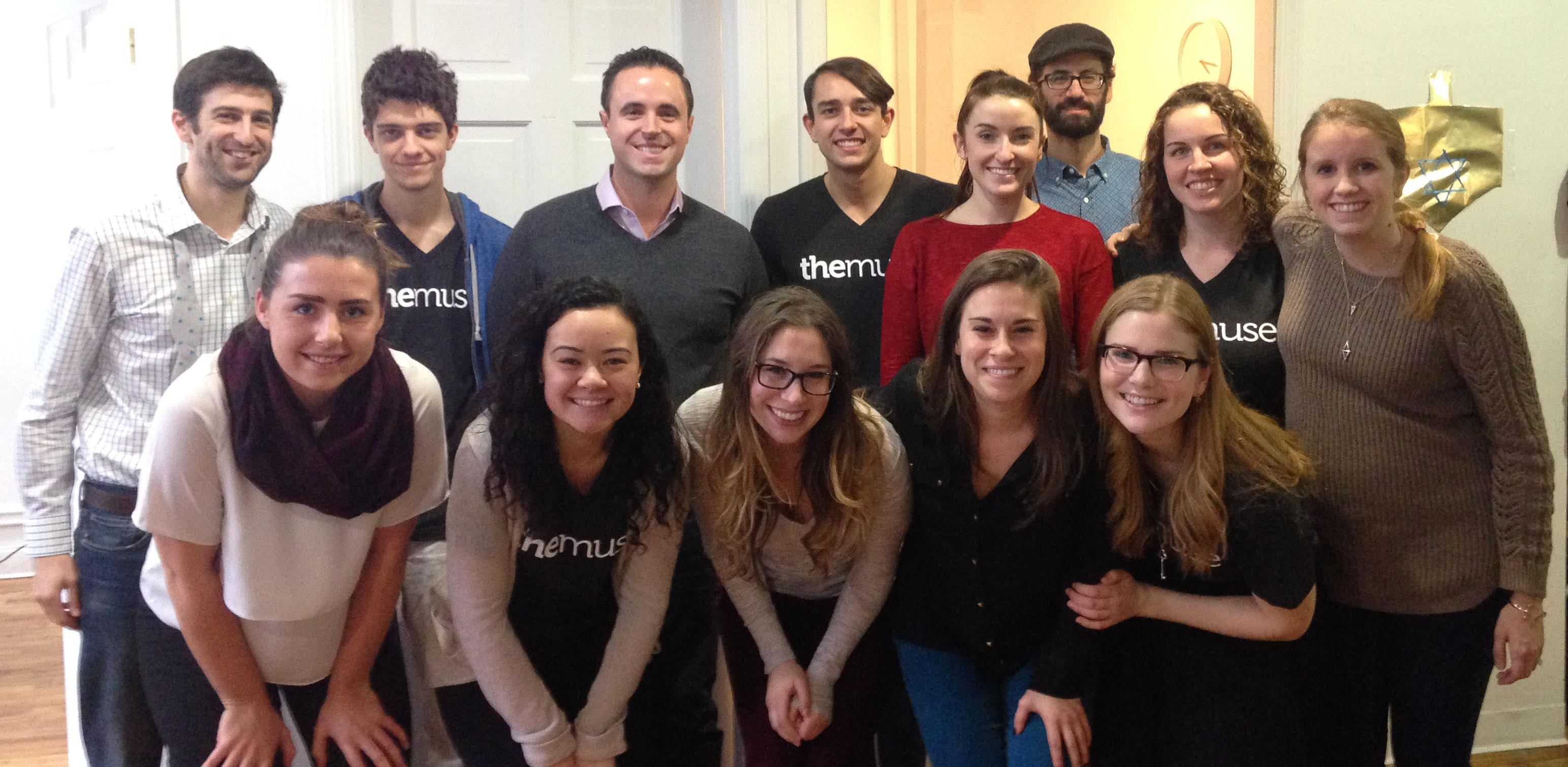
Hanging out with my first team at The Muse in the office

2. I Talked to My Boss

After I read the job description for the HR Coordinator role, I decided I’d like to pursue it. So, my next step was to have a long talk with my manager about what it would mean if I applied—whether or not I ended up getting the job.
I was torn between wanting to apply, and not wanting to leave the team that I’d grown so close to. It was hard for me to wrap my head around the right decision since I wasn’t unhappy. My manager was extremely supportive and let me know that my current position would still be there for me if I didn’t end up getting this new job.

Here’s How to Have That Conversation

Before you sit down with your boss, be prepared to discuss why you want to apply. Assuming you’re on good terms with your manager and he or she cares about your growth, it’ll be a positive exchange (albeit a little awkward).
Think of this discussion as a good time to talk about what you like and dislike about your current position. If you end up staying, you’ve started a dialogue about the work you’re most passionate about, and if someone else needs to take your place, your manager has the information they need to help the team move forward. Since you’ll remain working in the same vicinity, it’s incredibly important to keep this conversation positive (so no burning bridges or turning this into a venting session).
That said, I know not everyone has a good relationship with their boss. So, if you think they may start excluding you from good projects if you share your desire to change roles—and then stay put—that’s something to think about before moving forward.
\'\'
Hanging out with my second team at The Muse on our ski retreat

3. I Stayed Considerate of My Old Team

When I found out that I got the position, I was thrilled for this new chapter to start, but also anxious. I knew why I wanted it, but since I hadn’t been unhappy or actively looking for a job before applying, how would I explain it to my co-workers? Would I have to explain my move to people one by one as I ran into them at the Keurig machine?
I informed the people I worked closest with first and worked with my team to make sure all of my daily responsibilities would be covered before I moved. The week before I started, my new manager sent out an email to the whole team announcing my new role (and saving me from having to explain why I was suddenly sitting at a different table).

Here’s How to Leave on Good Terms

If you get the offer: Congrats! Once everything’s official, have a conversation with your manager letting them know you’ve accepted and offer up any details about the timeline.
Fortunately for your team, your transition away from the role will be a little less scary since you’ll still be around for any questions. Be sure you speak personally with anyone who reports to you or who relies on you to get their own job done before any wider announcements are made.
If you don’t get the job, spend some time thinking about what motivated you to apply and focus on ways you can grow your current role—or if that’s not possible, ways you stretch outside of work.
At most (reasonable) organizations, applying for a job internally will not affect your current role. Though, if you find yourself incredibly bummed that you didn’t get it—or you do feel repercussions—it might be a sign that it’s time to explore other similar opportunities outside of your current company.

WANT TO SEE WHAT IT WOULD BE LIKE TO WORK IN HR?

…You know, just like, take a quick peek at what the roles look like?
Yes? Check Out HR Openings Here
\'Human
Once everyone knew, my inbox flooded with supportive and congratulatory messages from my co-workers. I learned that if you take the initiative to explore what you’re really passionate about, it’s hard for people not to be excited for you.
So, if you find yourself being drawn to a new opportunity, see it through. And when you’re happy at your current company already, an internal transfer is really the best of both worlds.

3 Things Recruiters Always Look for on Your LinkedIn Profile

3 Things Recruiters Always Look for on Your LinkedIn Profile was originally published on The Muse, a great place to research companies and careers. Click here to search for great jobs and companies near you.
Let’s cut to the chase: If your profile isn’t telling hiring managers who you are, what you’re about, and how well you’ll do the job–you could be missing out on your next opportunity (and not even know it).
As an HR professional and career coach, I work with recruiters every single day, so I can give you an inside look at what needs to be on your LinkedIn profile if you want to get noticed.
Although there’s no hard and fast rule that’ll guarantee you’ll get hired, there are at least three things your profile must have in order to up the odds you’ll get noticed.

1. Your Qualifications Match the Open Role

The number one mandate every recruiter has is to match competent and qualified individuals to open positions. One of the easiest ways for them to do this via LinkedIn is to search for keywords that relate to the position they’re trying to fill.
For example, if a particular role requires extensive project management skills, one of the key things they’ll be searching for is: extensive project management experience.
Your job is to make it easier for them to understand your specific expertise as well as your core skills and accomplishments. In the time it takes to scroll down the page, they’ll need to see concrete examples of your experience relevant to the role being filled. You can demonstrate this by doing some research on the one or two skills people who do well in the jobs you’re applying for have and making sure to clearly describe them in key places on your profile (i.e., in the headlinesummary, and job description sections).
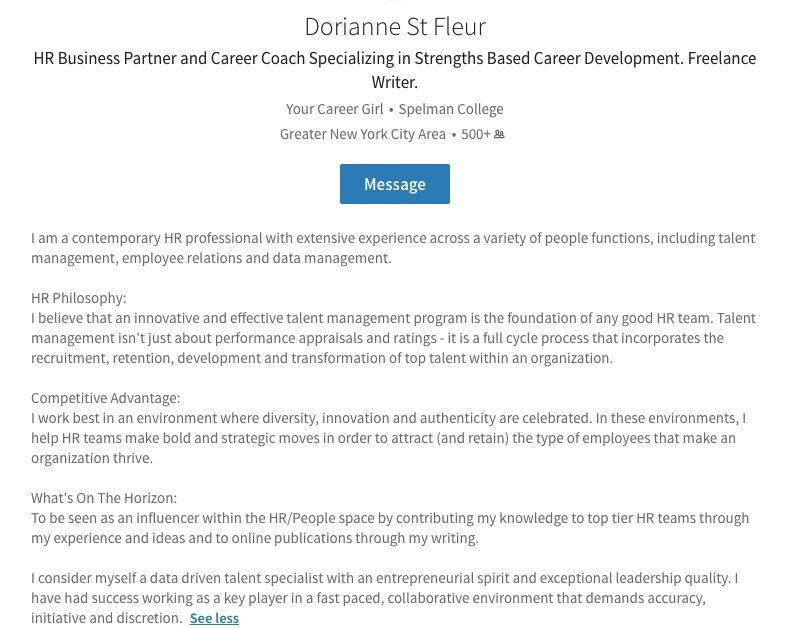
For example, if I were to apply for openings in human resources, a recruiter would take one look at my profile and see how I stand up to the competition and what I’ve accomplished:
\'\'

2. You’re Accomplished

It may seem counterintuitive, but including buzzwords like “team player” and “subject matter expert” on your profile can actually work against you since recruiters are more interested in learning about what you’ve actually achieved throughout your career, instead of how many adjectives you can use to describe yourself.
It’s important that you identify key professional accomplishments (at least two or three) and infuse them into the narrative on your profile. Explaining that you’ve led a team that was able to exceed target revenue for the past three quarters, for example, is a good way to highlight your leadership skills—rather than simply describing yourself as an “experienced leader.”
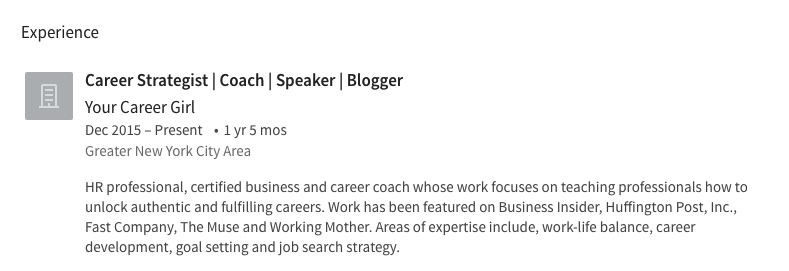
You’ll see in one of my job experience description featured below, I avoid buzzwords that fail to demonstrate my achievments. Instead, I clearly show where I’ve been featured and the many roles I’ve held within a particular company:
\'\'

3. You Have Zero Red Flags

Part of a recruiter’s responsibilities is to sort through the hundreds of candidates searching for roles to find individuals with the skills and experience needed for the open positions. One of the filters they use to get through the high volume is to eliminate anyone with glaring red flags.
Some common one include:
• Inflated Job Titles: It’s hard to become the VP of your department with only two years of work experience. Exaggerating about your title can make you seem disingenuous and untrustworthy—two things you don’t want recruiters to associate with you.
• Excessive Job Hopping: While there could very likely be a good reason for one short stint (maybe even two) on your resume, candidates who switch jobs every year can seem like they tap out quickly or have trouble meshing well with new co-workers.
• Inappropriate Language: It’s never OK to use profanity or suggestive language on LinkedIn (this includes articles you share and statuses you “like”). It can make you come off as unprofessional, which is the opposite of what you want a recruiter to think about you.
Things like these are warning signs to recruiters and can take you out of the running immediately. In order to position yourself as a good match for what a company is looking for, you’ve got to keep an eye out for anything on your profile that could be perceived in a negative light.

IS YOUR LINKEDIN PROFILE IN GREAT SHAPE?

Then start job searching with the confidence that you’ll stand out.
Just click here
\'jobs\'
If you’re looking for your next job and your profile could use some work, my advice to you is to take a break from your search until you’ve had a chance to make the necessary updates. A well put-together LinkedIn page will dramatically improve the likelihood you’ll pique recruiters’ interests—which could, in turn, help you land your next gig.