3 Ways to Develop Your Career Skills Through Travel in College

Planning a trip away during university? You might be surprised to know that a vacation can help you develop your professional skills while in college. This is because travel helps you develop yourself through the unique situations you encounter while on the road.
An adventure will help you develop skills that you will be able to take with you into the workplace. You will also stand out from the crowd in an interview when you can recount the amazing adventure you went on during your college years.
  1. Improve your communication and social skills
The most valuable skills to have are communication and “people” skills. Employers are looking for candidates who know how to relate to other people, work with individuals from different backgrounds and and those who are strong negotiators. These skills are the foundation to any successful career and you will need to be a great communicator to get ahead.
While travelling, you will have to deal with language barriers, different cultures and social norms. Part of travelling is immersing yourself in these differences and broadening your communication skills. This can be done by interacting with people from different parts of the world, which will make you a better listener and ultimately a much stronger communicator.
  1. Strengthen your teamwork skills
Prospective employers are also looking for individuals who can work cooperatively with others and contribute to a group. Most interviewers will touch on the topic of teamwork during an interview. You will often be asked to think about a time when you have worked with others and provide an example.
During your travels, you will need to plan trips and arrange common goals. In order to have a great trip, everyone in your group will need to communicate effectively and actively participate in planning. These experiences will give you the perfect time to share with prospective employers and help you land your dream job.
  1. Learn to manager your time effectively
One major skill to any role is efficient time management. This doesn’t only mean getting projects done on time but also setting priorities, goals and being smart about your time. Time management also involves how you allocate time for yourself outside of the workplace.
When you are on a trip, the most important factor to having a fun vacation is effectively managing your time away. It takes excellent planning skills to maximise the time you have on vacation. This includes catching flights, seeing an entire city in a short space of time or exploring multiple countries all in one year. Just like the workplace, this involves creating to-do lists, smart goals and careful consideration.
Plan your trip today!
Who knew an adventure could become an opportunity to develop yourself professionally? Get out there and discover new places in between classes. The benefits of travel are endless – including valuable lessons for your first career.
Amy Pritchett is a travel blogger who write about walks, cottages and spas (wegoplaces.me). She encourages all college students to take an adventure away to grow and develop themselves both personally and professionally.

4 Times a Step Forward at Work is Actually a Step Back in Your Career

4 Times a Step Forward at Work is Actually a Step Back in Your Career was originally published on The Muse, a great place to research companies and careers. Click here to search for great jobs and companies near you.
It’s easy to think that there’s one direction you should be moving in your career: forward. You’re supposed to keep putting one foot in front of the other until you finally reach the top of that proverbial ladder.
But, here’s the thing: Career paths aren’t always so simple. And, just because something seems like it will get you one rung higher doesn’t necessarily mean it’s the best decision for you long-term.
Not convinced? Here are four times that a step forward at work is actually taking you one step back in your career.

1. When a Promotion Takes You Away From What You Love

Of course, a promotion is a great thing. You’re being formally recognized (and compensated!) for all of your valuable contributions with a new title and a pay bump. But, that step up also likely involves some changes to your daily responsibilities—which may or may not be what you want.
Perhaps this new position means you’ll no longer need to attend those weekly marketing meetings, which are actually one of your favorite parts of each work week. Or, maybe instead of communicating directly with customers (which you love!), you’ll now be charged with overseeing the team that does that.
That’s not to say that you should turn down that offer for a promotion without batting an eye (that decision deserves some serious consideration!). But, it’s worth thinking through whether or not you could take that superior role without losing all of the job duties you’ve grown to love.

2. When a New Responsibility Eats Up Time for Your Side Project

Your boss gives you a new responsibility to take on at work. You’re honored that she would trust you to grab the reins on something new. But, you’re also aware that this is going to involve much longer hours—hours that you were previously dedicating to the side hustle that you’d eventually like to take full-time.
In a situation like this, it’s important to take a step back and consider your long-term career goals. If you do intend to make your side project your full-time career in the near future, that’s going to involve some time and dedication—which you’ll be short on if you continue to fill up your plate at your day job.

3. When a Speaking Opportunity Is About a Topic You Have No Interest In

Giving a presentation or agreeing to a public speaking opportunity is a great way to make some new connections and build your personal brand. But, there’s a caveat here: You want whatever you’re asked to speak about to be somewhat relevant to your career and expertise. You don’t want to establish yourself as a thought leader in a subject that totally deviates from your area of interest.
No, there’s nothing wrong with pushing yourself out of your comfort zone a little bit. But, you want to be careful not to foster a reputation that’s totally irrelevant to your actual skills and your goals.
Sure, being asked to speak about social media marketing at that association event might be an honor. However, it won’t do you too many favors if you’re growing your career as an engineer. In fact, agreeing to that opportunity will likely only serve to confuse people about who you are and what you bring to the table.

4. When a New Job Doesn’t Fit Your Goals

You weren’t actively job hunting. But, you were approached by another company that ended up offering you a position. By all intents and purposes, this new role is a big step up. It comes with a higher salary, a fancier title, a corner office, and an employer that’s a household name in your field.
What’s the catch? Well, you’ve been thinking about switching industries or making a major career change altogether—meaning that this new role doesn’t fit with your plans for the future.
Yes, accepting that position might mean a step forward—but, that’s irrelevant if that’s not actually the direction you want to be heading in.
More often than not, a step up in your career is a great thing that deserves to be celebrated. However, there are some circumstances when that one step forward would ultimately take you two steps back.
Regardless of your individual situation or preferences, it’s important to remember to give major career decisions—whether good or bad—the time for consideration that they deserve.
Do that, and you’re much more likely to take things in the direction that works best for you.

8 Mistakes that Make You Unprofessional at an Interview

Interviews can be a very nerve-wracking experience for students because of immense pressure to get that job. During the college years, they face the first experience with the corporate world and, in many cases, the experience is not that positive.
Remember these the next time you’re prepping yourself for a new job opportunity.
1. Arriving Late
This is a classic: a student who has poor time management skills arrives at an interview late. It does not really matter to the hiring manager whether you had a real emergency or you just don’t like to get up early in the morning.
How to avoid: get ready to leave your home earlier than usual and ask Google about the traffic in your area.
2. Criticizing your previous employer
When an interviewee says bad things about their past employer, the hiring manager might reasonably think that there is a good chance they’ll do the same again. As the result, your candidacy will be rejected.
How to avoid: when talking about the previous place of employment, avoid stating your personal opinion. Just provide facts and try not to trash-talk.
3. Having a smartphone go off
If you forget to turn off your smartphone, it can go off during the interview and interrupt the conversation. To turn it off, you have to reach in your pocket. How does that make you look? Right, like an unorganized person.
How to avoid: don’t forget to turn off your smartphone before going into the interview room.
4. Not asking any questions
If a person is truly interested in the job, they will ask questions when allowed. Being aloof and uninterested can be appealing to get some reputation in college, but obviously not when you’re trying to persuade a hiring manager that you’re the most qualified person for the position.
How to avoid: if you’re unsure what you can ask, do some research about the company (recent products, organizational culture, etc.) and think about possible questions.
5. Being underdressed
Looking sloppy and unprepared will not impress the hiring manager. Of course, it would be hilarious if you walked up in the interview room in the jeans and the jersey of your college basketball team, but they will profoundly hurt your chances for success.
How to avoiddress for success. It’s better to be overdressed than underdressed.
6. Not researching the company before the interview
During an interview, the hiring manager might mention the names of the CEO and other key figures in the organization as well as other information related to the company. If you don’t conduct a research beforehand, you’ll have no idea who are they talking about.
How to avoid: educate yourself about the organization before you go there for an interview.
7. Interrupting the interviewer
If you interrupt the hiring manager during the interview, it shows that you think you’re better than they are. Plus, it rude and inappropriate.
How to avoid: wait for your turn to speak and let the interviewer dominate the conversation.
8. Oversharing
The interviewer is not really interested in how you almost slept through your alarm in the morning or that your roommate likes to stay late listening to music.
How to avoid: if you overshare information like this, the hiring manager will think you’ll have troubles getting to the office on time.
Tools for Interview Preparation for Students
  • myinterviewsimulator.com – the program that allows practicing being an interviewee with simulations.
  • Interview4.com – practice interviewing with helpful video materials and examples.
  • HR Interview Preparation Guide – a popular Android app that contains a lot of interview tips, questions, and answers.
  • Assignmenthelper.com.au – the tool for preparing excellent resumes and other materials to impress the interviewer.
  • Interviewstream.com – mock interviewing for students to improve their skills necessary to present themselves well to employers.
Lucy Benton is a writing coach, an editor who finds her passion in expressing own thoughts as a blogger. She is constantly looking for the ways to improve her skills and expertise. Also, Lucy has her own blog ProWritingPartner where you can check her last publications. If you’re interested in working with Lucy, you can find her on FaceBook and Twitter.

Checklist for Back-to-School Safety and Career Success

Failing to plan, as the saying goes, means planning to fail, and this adage holds truer than ever at the beginning of a new school year. When everyone returns to campus in the fall it can be too easy to neglect your goals and slip back into unhealthy, even unsafe, habits that keep you from reaching your professional goals.
Because September is a month for seasonal change – as well as National Preparedness Month – as you think about your classes, your living arrangements, and post-grad plans, think critically about the small choices you make every day to boost your success. Make a plan before classes start to not only survive but thrive this year on campus. Here’s a back-to-school preparedness checklist to get you started.

Professional Prep

Post-grad plans shouldn’t begin when you’re already at senior level. You might not have the clearest picture of where you see yourself in 10 years after entering the workforce, but regardless of your enrollment status, thinking about the next stage of life will serve you well as you rev up for the yearly back-to-school transition. Start by considering the following:
Education
It’s okay to wait on declaring a major, but don’t wait on taking classes that combine professional skills with critical thinking. A liberal arts degree, such as English or philosophy, can improve your communication skills. Employers look for candidates who can communicate effectively and work well under pressure. If you’re undecided about your future, try business. Even if you don’t dream of becoming a CEO, having a business education and training will open doors into different areas, including innovative brands and campaigns for social change.
Networking
Don’t underestimate the power of making the right connections. If you’ve got a clear career path already, take the time to talk to professors in that field. Find out what they did after college, whether they always wanted to teach or if they chose it after working in the field, and how they’ve used their skills in the real world. Attend conventions, area business meetings or even local chamber of commerce mixers. The wider your network, the easier it’ll be to land a great employer once you graduate.
Application
Turn your textbook education into a hands-on application by applying for a diverse range of research opportunities and internships. This is where you’ll benefit from your school’s on-campus career center. Talk to the counselors there to learn how to connect with local professionals and apply for extracurricular activities that fit in with your career goals. How do you show employers that you can do the job you’re applying for? Let your resume – filled with hands-on experiences – speak for itself.
Money
Now’s the time to think hard about your financial future. Don’t neglect your credit card statements or your bills. Building a good credit score now and learning how to handle your finances will set you on the right path for future employment. Your would-be employer might run a credit check because it can be an accurate gauge for how well you handle different responsibilities. You may also be subject to a background check, so clear up any college shenanigans now.

Preparing for Campus

Planning for life after graduation isn’t the only prep work you need to do as you head back to school this season. Personal safety should also top the list. Here’s how to stay safe on and off campus this year.
Watch Where You’re Going
Criminals discriminate, meaning they look for easy targets who aren’t aware of their surroundings. Get to know your campus and the nearby area well. Map out the routes from your living space to your classes, avoiding poorly-lit areas or those unfrequented by other students. In the case of personal safety, taking the road less traveled is a bad idea. Walk in groups when possible, and park your car in a well-lit space close to your classes.
Sharing is Caring – Except When It Isn’t
Add the campus safety department’s number to your phone, and read up on the resources available to you. Some schools, for instance, will give you a lift across campus if you’re uncomfortable walking home alone. Map out what to do in an emergency, whether it’s a natural disaster or an unexpected attack. Downloading personal safety apps for when you’re walking alone or at home alone could help you in a pinch and contact the proper authorities automatically. Along the same lines, don’t keep to yourself when it comes to your schedule. Let your roommates or friends know where you’ll be so they can expect you at certain times. But be careful with what you post on social media. Disable your location services, and be intentionally vague with your whereabouts.
Be Proactive About Safety
Taking a self-defense class might seem like overkill, but you’ll learn good tips from professionals, often police officers or local safety experts. Men and women alike benefit from expert advice! Keep in mind that campus safety is a team effort – if you witness a situation that could lead to violence or an assault, you can step in and defuse the situation before it escalates.
Each year back on campus will present many unforeseen challenges, and the best way you can deal with them is simply by being prepared. Professional development and personal wellness go hand in hand; take some time to consider what helps you stay focused, motivated, and safe – so you will be ready to make informed choices when the new school year begins.

Why ‘perceived value’ is key for graduate businesses

One of the very few blanket statements we can confidently make about customers of almost any company is that they’re all looking to receive value from their purchase or investment. For anyone starting up a new graduate business, failing to deliver a sense of value to customers early on means you’re very unlikely to have a sustainable model on your hands, regardless of what service or product it is you’re selling.
Despite this being a pretty unequivocal (not to mention obvious) statement, the concept of value itself can sometimes seem a tricky thing to pin down from the business side. In large part, this is because it’s a highly subjective quality in many regards, and we know that perception of value will differ from customer to customer.
Moreover, it can and does change dramatically over time, influenced by countless market forces including fashion, branding, and availability. As a throwaway example, just look at the way lobster has gradually shifted from being a 17th-century prison canteen staple to a universal signifier of expensive high-end dining, and dragged perceptions of value for our lobster buck right along with it.
When thinking about starting a graduate business, then, how do you go about baking such a nebulous concept as ‘value’ into the heart of your new model?
Well, first and foremost, you’ll need to be very clear on the core differences between price, cost, and value. Again, this may sound straightforward enough, but could you neatly express it in a couple of sentences? If not, it’s possible that you’re somewhat muddled in your thinking about each of these key factors in the overall value equation – and your business approach may suffer as a result.
In simple terms, price is a fixed number, and is perceived similarly from all angles. Cost, though closely related to price, is more about impact, and can be perceived differently by buyers and sellers. Value requires a wider context to be defined; it’s only partly dependent on the other two, and can only truly be assessed by the end user. Or, to boil it down to its most fundamental form, value is the only one of the three that isn’t expressible as a number.
Remember, too, that the relationship between price, cost, and value doesn’t remain constant as the figures change. Indeed, their movements relative to one another aren’t even unidirectional; beyond a certain point, lowering prices can negatively affect the overall perception of value, and vice versa. In recent years, Apple products have become a commonly cited example of this exact phenomenon in action – the iPhone really didn’t push existing smartphone technology forward when it launched, but it’s marketing, build quality and high price point combined to create a culture of perceived value that, a decade later, loyal customers worldwide are still in thrall to.
Perceived value is really the crux of it all, as that’s essentially what defines the amount customers are willing to pay. Because perceived value is so closely linked to credibility, generating it can seem tricky for new graduate businesses, as they don’t initially have much of a foundation to build it on. However, there are numerous ways to help to create it.
Free trials, for example, are an excellent way for new companies to show that they stand firmly behind their product, and customers will implicitly pick up on this. (It also effectively removes the initial confidence barrier that prevents many potential new customers from giving credit card details to a company they’ve never dealt with before.) Openly publishing customer reviews, testimonials and feedback is another smart way to display and impart similar feelings of confidence. You might also consider trying to partner in relevant areas with a brand that has already established a credible reputation among a similar target client base.
While all of the above can be effective ways for new businesses to generate a sense of perceived value, they’ll quickly prove useless if not followed up with practices that consolidate it. Consistent delivery of a quality product or service is, of course, the first step, but it’s also wise to consider the importance of time in the value equation. It can’t be overstated how vital it is for customers to feel that a new company makes time for them – after all, time is arguably the one commodity we take even more personally than money.
Excellent customer service is one obvious way to deliver here, but remember that the time customers don’t spend with you is just as crucial: ensuring your product is convenient can, therefore, pay dividend, but be aware of the relationship between availability and perceived value. It’s widely held that having to work harder to get something makes it feel more valuable, but – particularly in this age of convenience-driven shopping around online – reducing accessibility or availability is seen a very high-risk strategy for new businesses.
Exclusivity for returning customers can be an effective way to build a loyal community around a shared sense of perceived value, but new clients will seldom cherish a product for its scarcity or complexity alone. That’s why we all see ‘limited time offer’ or ‘while stocks last’ used far more often than ‘only [x number] available’.
Because value is ultimately about use, the relationship between how a customer uses a product or service and how they pay for it can also have an impact on the perception of value. In an article on price-setting practices, the Harvard Business Review noted that gym membership fees were typically more likely to be renewed after a year if they’d been paid monthly, rather than up front.
In this specific example, that’s because those smaller, more regular payments provided users with a regular reminder that the service was costing them. They, therefore, felt more compelled to keep using it (and of course saw better results) than people who’d taken a bigger financial hit as a one-off – the sting of the up-front payment faded over time, and the motivation to keep using the service faded with it. For a new business venture, it may be worth considering this phenomenon from both angles, and deciding which model might be most helpful in generating a sense of perceived value around the type product or service you’re offering.
Above all, be mindful that first impressions really do count, and that while some aspects of how customers perceive value aren’t necessarily under the control of the company, the vast majority are. By paying close attention to those factors that most commonly impact on the perception of value, a new graduate business or startup can earn itself an incredibly valuable early lead on an ever-widening field of competition.


How to Juggle Both Work and Family

Many working parents struggle with the equally important responsibilities of raising a family and providing for them. There is a fundamental need—and for many parents, a real want and desire—to work. However, many simultaneously feel a pull towards home and to be with children, especially young ones. Given these conflicting priorities, how can someone best succeed as parent and employee?
Fortunately, there are a number of strategies you can utilize as you work to find your own version of balance. Most importantly: abandon the guilt. Guilt that you aren’t there for your child. Guilt that you’re actually glad to be at work with other adults. Let it all go. Check out the resources on the Working Moms Against Guilt website or join a local Working Moms Meetup in your area. Knowing that your feelings are normal and valid will help diminish that guilt and allow you to enjoy both roles.
Trusting your childcare provider will help ease your mind and allow you to more efficiently get your work done during the day. Verify your daycare’s safety and educational quality through organizations like the National Association for the Education of Young Children (NAEYC) and the American Academy of Pediatrics’ HealthyChildren.org.
Take advantage of calendar sharing apps to stay organized and in communication with your partner and childcare provider. Ensuring that you know when and where everyone is supposed to be will allow you to avoid feeling frazzled and give you the peace of mind to focus on whatever is in front of you at the time. Sharing calendars with your partner will also allow the two of you to effectively distribute the load of responsibilities and avoid scheduling conflicts or surprises.
Lastly, be present wherever you are. As much as you can, try to focus on your current environment and those you are with at the time. Challenging as it may be, turning off your work email in the evenings will allow you to enjoy the special time with your family you’ve been craving all day. Similarly, avoiding social media or not watching your nanny-cam at work will allow you to be more productive and consequentially, get home at a reasonable hour. By giving your best to your family or supervisor each day, you’ll feel better about the work you are doing and the balance you are achieving.
The balancing act of work and family is an ever-moving target; you will find various strategies throughout your career and your children’s lives that work at times and lose their value at others. The important thing is to be easy on yourself, recognize the value of your job for your family and continually acknowledge your personal and professional goals.
Looking for more advice and support? Join the Women’s Professional Alliance for their “Juggling Work and Family” event. Gretchen Gagel, DU alum of 1993 and author of 8 Steps to Being a Great Working Mom, will be speaking on this nebulous topic and attendees will also have the chance to hear about strategies for parents returning to the work force. The event scheduled for Thursday, September 7th has been cancelled, but will be rescheduled for early 2018. Keep checking back for updated event information on our events page.

Consider the internet revolution when choosing a career

Some people know what they want to do with their lives almost from the time they are able to walk and talk, while other may drift around between jobs for years before they finally find their calling and sadly some with never truly realize their passion. Regardless of which category you may fit into, at some point, everyone asks themselves: “What do I want to do?”, or, “what do I want to become?” It certainly is one of the toughest decisions you will have to make in your lifetime, and how you answer it could well define major parts of your life.
Most Career Advice professionals might advise you to focus on determine your skills and aptitudes, and will no doubt ask what your interests are. All of this is good and well, but for most of us, whether or not you will be able to find gainful employment within your chosen field is perhaps the most important criteria, as not too many have the luxury of only considering their likes and dislikes which charting a career path. This however always carries an element of uncertainty with it, as no one can be completely sure of what the future may hold in store, but you can have a good idea.
We are currently living in a period which is fast being defined by a new internet revolution, which will certainly play a pivotal role in shaping the future of society. The internet is quickly becoming instrumental in helping to make everyday life easier and more efficient, by connecting all facets of ourselves and our environments to devices and machines via the internet. This changing reality which we are slowly witnessing will undoubtedly improve how we produce, consume, interact and perhaps even think- and companies and not unaware of this.
With a constantly evolving environment, businesses all must ask themselves if they are in a position to take advantage of this, or will it end up proving a disadvantage. In order to update and upgrade their companies and its various systems, companies will have to invest in the human resource requirement in order to optimise their transition into this new industrial revolution. Because of the potential for machine automation in the near future, it is estimated that more than 5 million jobs will be shed globally by 2020 as a result of this. There will, however, be over 2 million jobs created within the tech sector within the same time frame. This is especially great news if you were planning on moving into a field related to computer science, mathematics or engineering.
Not everyone is technically minded and maths can be a real pain for so many- so what do these people do? Well, it’s not all doom and gloom for the rest, as there are certain things which machines cannot yet do and probably will not be able to in the foreseeable future. These vocations and required skills related to problem-solving, creative thinking, people management, and negotiation, among others. This really is an important time if you are considering or reconsidering your career options, to take a good look at the changing world of employment and determine where your place in it may be.

4 Ways Life Changes After College!

For the privileged and lucky ones who get to pursue a college education, college life can be a magical bubble. The dynamics, lifestyle, and nuances of college life are starkly different from that of real life. While some skills learned in college would help in landing a decent job, the transition from college to the outside world can sometimes disorient college graduates.
In order to help college students make the move without being knocked out by unexpected responsibilities and obstacles, a list has been compiled of the ways in which one can expect life to change after college.
1. You Get An Interim Period Of Free Time
After four years of constant companionship, where at the very least you are sitting in a room with dozens of your papers, you might find yourself making your way alone after graduation. This is a good time to get in touch with yourself and learn how to spend spare time productively without relying on others.
Many students don’t have time for leisure reading or hobbies when they enter college life. These positive habits can be picked up again after college life has let go of its hold on you.
2. Your Equations With The Friends Is No Longer The Same
In college, your friends were either in the same room or at least somewhere on campus. In other words, they were easily accessible. Graduating means the students either going to different institutions for higher studies or spreading out across the country (even the globe) in search of jobs in order to fulfill adult responsibilities. Your best friend might be in a different city, state or even country. You might feel at a loss without the people you’ve always been with for the past four years, but this feeling is temporary.
However, with the Internet, and applications such as Skype and Whatsapp, there really isn’t any excuse not to keep in touch with your group. While it may not be the same as before, you can still share your problems and advice with each other, as well as meet up to have fun!
3. You Make New Friends
Making friends in the real world is a whole new game. In college, you met the same people every day and knew they were probably going to be on the same campus for some years. Making friends in the workplace is a risky deal due to the politics and double meanings that form the undercurrent of any business or organization.
Similarly, making friends outside the workplace is just as hard, as the places won’t have the same people every day. Even meeting someone who seems nice can be a dangerous illusion that can end up badly. However, it’s totally possible as long as you keep putting yourself out there.
4. You Become More Down-To-Earth
You might have been a popular college individual, but the real world doesn’t look at how many student organizations and clubs wanted you as a part of their team. Even if something looks good on your resume, your work is what will get you a fixed place at any organization.
College protests against the administration or for supporting social issues can easily be done on campus or under the banner of the institution. In a workplace, you have to choose your battles. Working hard and knowing how to comply with authority is key to being successful at any entry-level job you’re probably going to get after graduating.
Final Thoughts…
Life in college is a bubble, no doubt. However, graduating and starting a new life has to come at some point. So instead of fantasizing about going back and having things be the same again (which isn’t possible), one has to move on and try to make it.
Finally, there will be a time when real life seems to be a most enjoyable and magical one, especially if you can find a career you love, along with some good company. Hopefully, the time would come when you won’t choose to go back to college if you had the chance!
About Writer: Yashmita Kavni is a Student Counselor, Blogging Expert, and a Professional Assignment Writer. She has a penchant for writing about topics related to education and student’s affairs.

Using Social Media as an Effective Job Search Tool

You have finally graduated, and it’s time to get out there into the real world and begin your career. So, you need to start using all of the job search tools that are available at your disposal. Did you know that the social media sites you use can also be effective job search tools? Social media isn’t just all about posting selfies and chatting with friends. It can be a really effective resource. As long as you know how to use it properly, it can be a great tool to help you get the job of your dreams, or one that is going to take you in the direction you need to go. Here are some ways that you can use your social media sites as effective job search tools.
  • Create a Professional Presence – If you are going to use social media in your job search, it is time to become more professional. Gone are the days when you can post photos of yourself partying, drinking, and basically being unprofessional. These are all things that potential employers do not want to see. You need to change your profile photo to one that looks professional (a head and shoulders shot is best), and basically turn your social media into online resumes. If there is a lot of stuff on your pages that wouldn’t be considered professional, it is time to clean things up.
  • Include the Right Information – Potential employers are looking for certain things. It is a good idea to start looking at the social media profiles of other professionals and see what information they are offering. Your social media presence should be professional, and your pages should contain information that make recruiters want to learn more about you and what you can offer a company. Again, we can’t stress enough how important it is to remain professional at all times, even when you really want to post that dirty joke, your latest party photos, etc.
  • Watch Your Words – This goes right along with including the right information. You have to be so careful about what you say on your social media pages. It is so easy for words to be taken out of context, and then you don’t look the least bit professional. One careless comment could completely destroy all of the good you have done for your online reputation, so be careful about everything you say when you are using your social media pages.
  • Upgrade Your Tech – If you are using an older smartphone or laptop, it probably runs slow, and doesn’t have the features you need to be able to get the most out of social media. So, it is time to upgrade to something new. You might think you can’t afford it, but if you visit sites like Gadget Salvation, you can sell your old iPhone or laptop for top dollar, and use the money to upgrade to a newer version that has the features you really need to help you succeed in your job search.
  • Activate Privacy Settings – Just because you are using your social media to advance in your career, it doesn’t mean that it can’t also be used for personal purposes. But, you need to keep your personal life and business life separate, which means that it is important to take advantage of the privacy settings. There are things that employers just do not need to know about you, but if you don’t use the privacy settings, everyone can see everything on your pages. It is extremely important to manage what others see. Make sure that only certain people can see certain posts, and that employers are not able to see everything you post.

Knock, Knock….

Did you know that Career & Professional Development has current students trained as Career Peer Advisors?  We have a team of undergraduate and graduate students who can help you with all of your resume, cover letter, and job or internship search needs.  If you live in a residence hall, these peer advisors will be coming by to knock on your door in the first few weeks of classes to introduce themselves and make sure you’re aware of all the great resources Career & Professional Development has available to you to achieve your goals. Be on the lookout for a friendly face and feel free to ask them questions you may have about your own job or internship ideas!

Understand Your Professional Self with a Personality Assessment

Though our preferences and predilections can change over time, fundamentally we remain the same. We like certain things, are drawn to certain types of people and situations and make decisions in characteristic ways. But have you ever wondered why you do what you do? Or why you are drawn to certain types of people or work environments?
Personality assessments are a great way to learn more about yourself and better understand and leverage your strengths. They can be particularly helpful as you consider your career and professional future. The challenge however, is to fully understand the scope and limitations of a personality assessment. Too often, people see them as limiting and restrictive.  In reality, they should be interpreted as your preferences—not your inabilities.
There are a number of assessments, some better than others. Alumni Career & Professional Development offers the Myers-Briggs Type Indicator (MBTI); the Career Center also offers the StrengthsFinder assessment. Each has a small fee but comes with a comprehensive report that explains your results. The MBTI focuses on your personality type—the way you interact with people, make decisions, and understand the world around you. StrengthsFinder focuses more on your fundamental talents and aptitudes. The two assessments complement each other nicely in giving you a whole picture of not only what you’re good at doing, but how you like to do it.
Interested in taking one or both of these assessments? Call Career & Professional Development at 303-871-2150. Current students will take the assessment on their own and meet individually with their respective career advisor. Alumni interested in the MBTI can participate in a group interpretation of their results on Monday, September 18 at 5:30pm. Interested alums can either call Career & Professional Development or email Grace Goodman.

Graduate School Applications: What Do They Include?

While every program will have specific requirements, there are some common elements to grad school applications. When planning to apply to grad school, prepare to meet the following requirements for most programs:

Transcripts

You’ll need to send in your transcript from DU (and any other institution you’ve attended in the past) when you apply to grad school. Make sure to get your requests in to the Registrar’s office early so that your applications will be submitted and complete by the deadline.

Standardized Tests

A person behind a laptop writing on a tablet.Many grad programs require a standardized test, such as the GRE or GMAT, as part of the application package. Research ahead of time which test you may be required to take, if any, and begin studying early. Resources to help prepare for standardized tests include study guides, practice exams, and preparation courses, as well as information from the testing companies themselves:


Resume or CV

Your resume or CV (depending on your field) is the key document to highlight your academic achievements and relevant experience going into your program. Be attentive to whether programs ask for a professional resume or a CV.
A resume should be a short, effective summary of your relevant experience, usually no more than one page long. A CV, on the other hand, should be as long as necessary to include relevant information pertaining to your academic career, such as research projects, conference presentations, publications, and fellowships and grants you have been awarded.
If you are creating a CV using your undergraduate experience, make sure to have a mentor or advisor in your field review the CV to make sure it meets the standards for your specific discipline.

Statement of Purpose

A common element of the graduate school application is the statement of purpose or personal statement. For some programs, there might be a series of essay questions instead.
This document should inform the admissions committee about who you are, what has influenced your academic or career path so far, your professional or research interests, and how you plan to utilize that specific program to reach your future goals. When writing the statement, it’s crucial to plan ahead and start early, so that you can get feedback. These resources can help:
  1. The DU Writing Center
  2. Career and Professional Development: Schedule an appointment with us by visiting Pioneer Careers.
  3. Additional tips and samples are available at statementofpurpose.com

Letters of Recommendation & References

It is common for a program to request 3-4 letters of recommendation or references from past professors or supervisors. When reaching out to references, be sure to communicate as early as possible the deadlines, prompts, and what you would like them to focus on. Include your resume with your request as a helpful reminder of your achievements, and follow up with a formal thank you, as well as with an email letting them know your final decision of where to attend.

Ready to get started on these parts of the application? Come to Grad School Applications that Get Results on October 19th, 4:00 – 5:00pm in Sturm Hall 453.

Start Your Job or Internship Search NOW

Do you plan on having a job or internship lined up for June 2018?  Think if you get started looking in March you’ll be way ahead of the game?  Think again!!  Recruiting has started happening earlier and earlier every year as companies compete for the best talent.
There are currently postings in Pioneer Careers for positions that will start in JUNE.  What can you do to stay ahead of the game and not miss out on opportunities by waiting until winter quarter to get started?
  1. Set your preferences in Pioneer Careers.
  2. Attend fall recruiting events – to see the most current and comprehensive list, check out the Events tab in Pioneer Careers.
  3. Develop a target list of companies you are interested in and find out when their positions get posted.
  4. Set weekly goals for your job or internship search – view the process as a course and block time in your calendar to work on your search as if it were class time.
  5. Meet with your career advisor (call 303.871.2150 or schedule via the Appointments tab in Pioneer Careers) to form a strategy and learn about additional resources.
  6. Attend the Job Search Strategies workshop at 5pm on October 24

Upcoming Meetup! Social Impact Careers and Internships

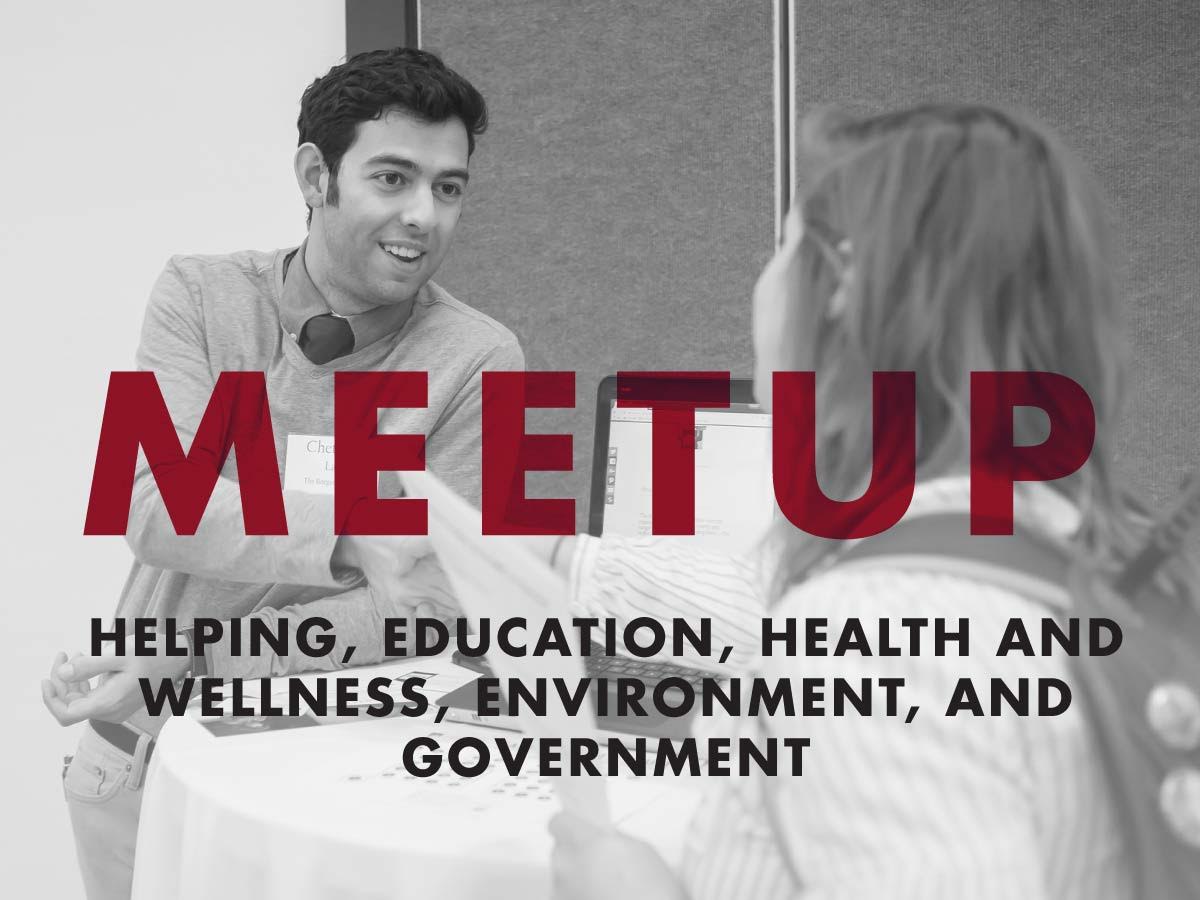
Are you interested in making a positive impact on the world? Are you interested in an internship or professional career in social justice? The Meet Up for Social Impact might be the perfect place for you to jump-start your search for internships and jobs! This will be an excellent opportunity for you to connect with employers and promote yourself for positions in their organizations.
Here are a few tips to consider ahead of the Meet Up…
  • Be prepared. Login to Pioneer Careers and view the Meet Up for Social Impact in the Events section. Not only can you register for the event here (registration is open until the 24th of October), but you can also view a list of employers that will be there. It will be important for you to conduct research on employers you are interested in speaking with. Spend time on their websites, read more about the work they are doing in news articles and press releases, do research on the specific industry that they are in. The more you know about a company when you speak with their representatives on campus, the more impressive and polished you will look! There will be more employers added as we get closer to the event, so keep checking back to make sure you stay updated on who will be there. Here’s some helpful information on how to prepare and “work” an event like this one!
  • Practice your Elevator Pitch: Engaging with employers at this meet up will not be a formal interview. Rather you will need to be prepared for a quick conversation about you and why you’re interested in their company. This conversation often starts with a statement like, “Tell me about yourself.” The answer to this question is what we call the elevator pitch. You’ll want to give them a brief overview of your academic and internship experience, perhaps what your short and long-term goals are, and why you’re interested in working for their company. An elevator pitch is not easy, and creating an effective one will take practice. Please make an appointment with a Career Advisor to work on your elevator pitch, by using our online appointment scheduling feature in Pioneer Careers or by calling 303-871-2150.
  • Be yourself. Certainly connecting with employers can be intimidating, but remember that they are people just like you and I. They are here because they want to engage with students and alumni and they have an interest in working with DU students. While it’s normal to be nervous, remember that you are here for a reason and that these organizations want to hear more about you.
EVENT DETAILS
Meet Up: Social Impact
Wednesday, October 25th| 4:00pm – 7:00pm | Sie Complex
Attire: Business Formal
Remember to bring copies of your resume/CV’s and business cards if you have them.

Two Hiring Trends that Will Affect Your Career

Each company solves the problem of staff shortages in its own way. Some develop tempting compensation packages and entice specialists from competing firms; others improve the system of training or invent special motivational programs. Each method has its pros and cons. A universal human resource management tool has not yet been invented. Leading world experts formulated the main directions in the selection of personnel, which will develop over the next couple of years.

Trend №1 – Passive Candidates Are in the Spotlight

In the modern world, most companies strive to find an employee for a certain amount of dollars as quickly as possible. Rare vacancies remain relevant for months. New employees were needed yesterday, so recruiters are no longer just waiting for feedback on posted ads, but taking the initiative in their own hands. About 85% of the audience for job search sites is “passive candidates.” They do not think seriously about the change of employer until they are presented with the opportunities and benefits of cooperation with another organization. John Sullivan, an HR consultant writes that:
“Instead of the resume, companies can work with the candidate’s profile in social networks, which will open the doors to candidates who are not actively searching for a new position.”
What Does This Mean for the Applicant?
  • A personal profile on Facebook or LinkedIn is a must have the next few years since they become the main source of hiring.
  • You no longer have to spend a lot of time on posting resumes on dozens of similar sites. It is enough to attend 1-2 of the most visited in your region.

Trend № 2 – Quality of Employment Forms the Brand of the Company

It is not important now what the organization says about itself, but it is decisive what people say about it. More and more employers come to the realization of this principle and are serious about working with the brand. In conformity with LinkedIn data, which were collected by interviewing more than 3,800 employees of HR departments around the world, in 2015 the development of the employer’s brand was a priority for 62% of companies. 59% of companies significantly increased their investments in relevant activities. In the last two years, this figure continued to grow and now this indicator does not lose its relevance.
For an Employee, This Means the Following.
The principle “the best work for the best” not only has not lost its relevance but is successfully implemented in the life of the absolute majority of companies.
Secondly, directly during the interview, focus the attention of the recruiter on the fact that you plan to grow inside the company. This does not mean that you have to dream about the SEO’s post. You can successfully build a horizontal career.
Third, allocate time and investment in the formation of a personal brand. Declare yourself in a professional environment as an expert, and your chances of getting into the dream organization will increase substantially.