
\’National Women\’s Day: 13 February\’ in India (225 Words)

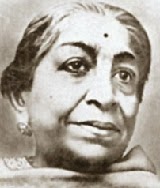
In India \’National Women\’s Day\’ is celebrated on 13th February every year. It is the birthday of Sarojini Naidu. Sarojini Naidu was born on 13th February 1879 in Hyderabad, Andhra Pradesh, India.

Sarojini Naidu was also known as the \’Nightingale of India\’. This great leader and freedom fighter used to write poems and also sing very well. Sarojini Naidu began writing poems in English while she was still in school. She became a member of the Royal Literary Society London. She also became the President of the Indian National Congress. Sarojini Naidu took active part in the Civil Disobedience Movement, Satyagraha Movement and the Quit India Movement. She was also sent to jail several times. She was the first Indian woman to become the President of the Indian National Congress. She was also the first Indian woman to become Governor of any State (Uttar Pradesh) in India. She has left a great name for herself in the History of India. Her birthday is celebrated as \’National Women\’s Day\’ in India.

National Women\’s Day in India is marked as general celebration of respect, appreciation and love towards women. On this day many events are held by women\’s groups around the country. It is customary for men to give the women in their lives – mothers, wives, girlfriends, daughters, colleagues, etc. – flowers and gifts on this day. 
 

\’National Women\’s Day: 13 February\’ in India (225 Words)

In India \’National Women\’s Day\’ is celebrated on 13th February every year. It is the birthday of Sarojini Naidu. Sarojini Naidu was born on 13th February 1879 in Hyderabad, Andhra Pradesh, India.

Sarojini Naidu was also known as the \’Nightingale of India\’. This great leader and freedom fighter used to write poems and also sing very well. Sarojini Naidu began writing poems in English while she was still in school. She became a member of the Royal Literary Society London. She also became the President of the Indian National Congress. Sarojini Naidu took active part in the Civil Disobedience Movement, Satyagraha Movement and the Quit India Movement. She was also sent to jail several times. She was the first Indian woman to become the President of the Indian National Congress. She was also the first Indian woman to become Governor of any State (Uttar Pradesh) in India. She has left a great name for herself in the History of India. Her birthday is celebrated as \’National Women\’s Day\’ in India.

National Women\’s Day in India is marked as general celebration of respect, appreciation and love towards women. On this day many events are held by women\’s groups around the country. It is customary for men to give the women in their lives – mothers, wives, girlfriends, daughters, colleagues, etc. – flowers and gifts on this day. 
 

\’National Women\’s Day: 13 February\’ in India (225 Words)

In India \’National Women\’s Day\’ is celebrated on 13th February every year. It is the birthday of Sarojini Naidu. Sarojini Naidu was born on 13th February 1879 in Hyderabad, Andhra Pradesh, India.

Sarojini Naidu was also known as the \’Nightingale of India\’. This great leader and freedom fighter used to write poems and also sing very well. Sarojini Naidu began writing poems in English while she was still in school. She became a member of the Royal Literary Society London. She also became the President of the Indian National Congress. Sarojini Naidu took active part in the Civil Disobedience Movement, Satyagraha Movement and the Quit India Movement. She was also sent to jail several times. She was the first Indian woman to become the President of the Indian National Congress. She was also the first Indian woman to become Governor of any State (Uttar Pradesh) in India. She has left a great name for herself in the History of India. Her birthday is celebrated as \’National Women\’s Day\’ in India.

National Women\’s Day in India is marked as general celebration of respect, appreciation and love towards women. On this day many events are held by women\’s groups around the country. It is customary for men to give the women in their lives – mothers, wives, girlfriends, daughters, colleagues, etc. – flowers and gifts on this day. 
 

Short Essay on \’Nelson Mandela\’ (294 Words)

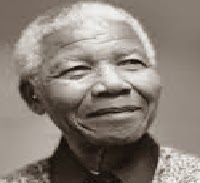
\’Nelson Mandela\’ was born on July 18th, 1918 in the village of Mvezo in Umtata, then a part of South Africa\’s Cape Province. His story symbolizes a lifestyle struggle against apartheid in South Africa. It was a terrible form of institutionalized racism that held the South African society in it\’s grip for a long time. It was not easy for Mandela to fight against it, as he too was among those who were oppressed by the system.

Before becoming actively involved in the anti-apartheid struggle, Mandela survived many years of his life as a subject of colonialism. As a child in Africa, Mandela was a victim of the European colonial project which involved \’civilizing\’ indigenous communities by silencing African ways of life in favour of a Euro-centric culture.

In the early 1960\’s, Mandela was imprisoned for his stand against the racist laws of the government. He stayed in prison for nearly three decades but refused to compromise his position, which was to fight for justice and equality for all people.

A courageous and uncompromising hero, Mandela was a man of principles, strength and integrity. In 1994, he led the country to the end of apartheid and was elected the first black president of South Africa. He served as President of South Africa from 1994 to 1999. After he retired from public life, Mandela continued to embody the hopes and dreams of a free and equal world. He died on December 5th, 2013 at the age of 95 at Johannesburg, South Africa.

Nelson Mandela received more than 250 honours, including the 1993 Nobel Peace Prize, the US Presidential Medal of Freedom, the Soviet Order of Lenin and the Bharat Ratna. Today, Nelson Mandela, popularly known as ‘Madiba\’ in South Africa, is a household name all over the world. 

Short Essay on \’Nelson Mandela\’ (294 Words)

\’Nelson Mandela\’ was born on July 18th, 1918 in the village of Mvezo in Umtata, then a part of South Africa\’s Cape Province. His story symbolizes a lifestyle struggle against apartheid in South Africa. It was a terrible form of institutionalized racism that held the South African society in it\’s grip for a long time. It was not easy for Mandela to fight against it, as he too was among those who were oppressed by the system.

Before becoming actively involved in the anti-apartheid struggle, Mandela survived many years of his life as a subject of colonialism. As a child in Africa, Mandela was a victim of the European colonial project which involved \’civilizing\’ indigenous communities by silencing African ways of life in favour of a Euro-centric culture.

In the early 1960\’s, Mandela was imprisoned for his stand against the racist laws of the government. He stayed in prison for nearly three decades but refused to compromise his position, which was to fight for justice and equality for all people.

A courageous and uncompromising hero, Mandela was a man of principles, strength and integrity. In 1994, he led the country to the end of apartheid and was elected the first black president of South Africa. He served as President of South Africa from 1994 to 1999. After he retired from public life, Mandela continued to embody the hopes and dreams of a free and equal world. He died on December 5th, 2013 at the age of 95 at Johannesburg, South Africa.

Nelson Mandela received more than 250 honours, including the 1993 Nobel Peace Prize, the US Presidential Medal of Freedom, the Soviet Order of Lenin and the Bharat Ratna. Today, Nelson Mandela, popularly known as ‘Madiba\’ in South Africa, is a household name all over the world. 

Short Essay on \’Mihir Sen\’ (138 words)

\’Mihir Sen\’ was born on 16th November, 1930 in Purulia, West Bengal, India. His father\’s name was Ramesh Sen, who was a physician. His mother\’s name was Lilabati. Mihir Sen went on to graduate with a degree in law from the local Utkal University.

Mihir Sen was an Indian swimmer, best known for being the first Asian to swim the English Channel in 1958. He was the first Indian to swim the English Channel in a record time of 14 hours and 45 minutes. He was the first swimmer ever to have crossed the Palk Straits in 1966. He swam across seven seas in five continents. He passed away on 11 June 1997.

For his trend-sitting feats in long-distance swimming, Mihir Sen was conferred with the Padma Shri in 1956 and Padma Bhushan in 1967 by the Government of India. 

Short Essay on \’Mihir Sen\’ (138 words)

\’Mihir Sen\’ was born on 16th November, 1930 in Purulia, West Bengal, India. His father\’s name was Ramesh Sen, who was a physician. His mother\’s name was Lilabati. Mihir Sen went on to graduate with a degree in law from the local Utkal University.

Mihir Sen was an Indian swimmer, best known for being the first Asian to swim the English Channel in 1958. He was the first Indian to swim the English Channel in a record time of 14 hours and 45 minutes. He was the first swimmer ever to have crossed the Palk Straits in 1966. He swam across seven seas in five continents. He passed away on 11 June 1997.

For his trend-sitting feats in long-distance swimming, Mihir Sen was conferred with the Padma Shri in 1956 and Padma Bhushan in 1967 by the Government of India. 

Short Essay on \’Nelson Mandela\’ (294 Words)

\’Nelson Mandela\’ was born on July 18th, 1918 in the village of Mvezo in Umtata, then a part of South Africa\’s Cape Province. His story symbolizes a lifestyle struggle against apartheid in South Africa. It was a terrible form of institutionalized racism that held the South African society in it\’s grip for a long time. It was not easy for Mandela to fight against it, as he too was among those who were oppressed by the system.

Before becoming actively involved in the anti-apartheid struggle, Mandela survived many years of his life as a subject of colonialism. As a child in Africa, Mandela was a victim of the European colonial project which involved \’civilizing\’ indigenous communities by silencing African ways of life in favour of a Euro-centric culture.

In the early 1960\’s, Mandela was imprisoned for his stand against the racist laws of the government. He stayed in prison for nearly three decades but refused to compromise his position, which was to fight for justice and equality for all people.

A courageous and uncompromising hero, Mandela was a man of principles, strength and integrity. In 1994, he led the country to the end of apartheid and was elected the first black president of South Africa. He served as President of South Africa from 1994 to 1999. After he retired from public life, Mandela continued to embody the hopes and dreams of a free and equal world. He died on December 5th, 2013 at the age of 95 at Johannesburg, South Africa.

Nelson Mandela received more than 250 honours, including the 1993 Nobel Peace Prize, the US Presidential Medal of Freedom, the Soviet Order of Lenin and the Bharat Ratna. Today, Nelson Mandela, popularly known as ‘Madiba\’ in South Africa, is a household name all over the world. 

Short Essay on \’Nelson Mandela\’ (294 Words)

\’Nelson Mandela\’ was born on July 18th, 1918 in the village of Mvezo in Umtata, then a part of South Africa\’s Cape Province. His story symbolizes a lifestyle struggle against apartheid in South Africa. It was a terrible form of institutionalized racism that held the South African society in it\’s grip for a long time. It was not easy for Mandela to fight against it, as he too was among those who were oppressed by the system.

Before becoming actively involved in the anti-apartheid struggle, Mandela survived many years of his life as a subject of colonialism. As a child in Africa, Mandela was a victim of the European colonial project which involved \’civilizing\’ indigenous communities by silencing African ways of life in favour of a Euro-centric culture.

In the early 1960\’s, Mandela was imprisoned for his stand against the racist laws of the government. He stayed in prison for nearly three decades but refused to compromise his position, which was to fight for justice and equality for all people.

A courageous and uncompromising hero, Mandela was a man of principles, strength and integrity. In 1994, he led the country to the end of apartheid and was elected the first black president of South Africa. He served as President of South Africa from 1994 to 1999. After he retired from public life, Mandela continued to embody the hopes and dreams of a free and equal world. He died on December 5th, 2013 at the age of 95 at Johannesburg, South Africa.

Nelson Mandela received more than 250 honours, including the 1993 Nobel Peace Prize, the US Presidential Medal of Freedom, the Soviet Order of Lenin and the Bharat Ratna. Today, Nelson Mandela, popularly known as ‘Madiba\’ in South Africa, is a household name all over the world. 

Short Essay on \’Mihir Sen\’ (138 words)

\’Mihir Sen\’ was born on 16th November, 1930 in Purulia, West Bengal, India. His father\’s name was Ramesh Sen, who was a physician. His mother\’s name was Lilabati. Mihir Sen went on to graduate with a degree in law from the local Utkal University.

Mihir Sen was an Indian swimmer, best known for being the first Asian to swim the English Channel in 1958. He was the first Indian to swim the English Channel in a record time of 14 hours and 45 minutes. He was the first swimmer ever to have crossed the Palk Straits in 1966. He swam across seven seas in five continents. He passed away on 11 June 1997.

For his trend-sitting feats in long-distance swimming, Mihir Sen was conferred with the Padma Shri in 1956 and Padma Bhushan in 1967 by the Government of India. 

Short Essay on \’Mihir Sen\’ (138 words)

\’Mihir Sen\’ was born on 16th November, 1930 in Purulia, West Bengal, India. His father\’s name was Ramesh Sen, who was a physician. His mother\’s name was Lilabati. Mihir Sen went on to graduate with a degree in law from the local Utkal University.

Mihir Sen was an Indian swimmer, best known for being the first Asian to swim the English Channel in 1958. He was the first Indian to swim the English Channel in a record time of 14 hours and 45 minutes. He was the first swimmer ever to have crossed the Palk Straits in 1966. He swam across seven seas in five continents. He passed away on 11 June 1997.

For his trend-sitting feats in long-distance swimming, Mihir Sen was conferred with the Padma Shri in 1956 and Padma Bhushan in 1967 by the Government of India. 

Short Essay on \’Nelson Mandela\’ (294 Words)

\’Nelson Mandela\’ was born on July 18th, 1918 in the village of Mvezo in Umtata, then a part of South Africa\’s Cape Province. His story symbolizes a lifestyle struggle against apartheid in South Africa. It was a terrible form of institutionalized racism that held the South African society in it\’s grip for a long time. It was not easy for Mandela to fight against it, as he too was among those who were oppressed by the system.

Before becoming actively involved in the anti-apartheid struggle, Mandela survived many years of his life as a subject of colonialism. As a child in Africa, Mandela was a victim of the European colonial project which involved \’civilizing\’ indigenous communities by silencing African ways of life in favour of a Euro-centric culture.

In the early 1960\’s, Mandela was imprisoned for his stand against the racist laws of the government. He stayed in prison for nearly three decades but refused to compromise his position, which was to fight for justice and equality for all people.

A courageous and uncompromising hero, Mandela was a man of principles, strength and integrity. In 1994, he led the country to the end of apartheid and was elected the first black president of South Africa. He served as President of South Africa from 1994 to 1999. After he retired from public life, Mandela continued to embody the hopes and dreams of a free and equal world. He died on December 5th, 2013 at the age of 95 at Johannesburg, South Africa.

Nelson Mandela received more than 250 honours, including the 1993 Nobel Peace Prize, the US Presidential Medal of Freedom, the Soviet Order of Lenin and the Bharat Ratna. Today, Nelson Mandela, popularly known as ‘Madiba\’ in South Africa, is a household name all over the world. 

Short Essay on \’Mihir Sen\’ (138 words)

\’Mihir Sen\’ was born on 16th November, 1930 in Purulia, West Bengal, India. His father\’s name was Ramesh Sen, who was a physician. His mother\’s name was Lilabati. Mihir Sen went on to graduate with a degree in law from the local Utkal University.

Mihir Sen was an Indian swimmer, best known for being the first Asian to swim the English Channel in 1958. He was the first Indian to swim the English Channel in a record time of 14 hours and 45 minutes. He was the first swimmer ever to have crossed the Palk Straits in 1966. He swam across seven seas in five continents. He passed away on 11 June 1997.

For his trend-sitting feats in long-distance swimming, Mihir Sen was conferred with the Padma Shri in 1956 and Padma Bhushan in 1967 by the Government of India. 

Short Essay on \’Mihir Sen\’ (138 words)

\’Mihir Sen\’ was born on 16th November, 1930 in Purulia, West Bengal, India. His father\’s name was Ramesh Sen, who was a physician. His mother\’s name was Lilabati. Mihir Sen went on to graduate with a degree in law from the local Utkal University.

Mihir Sen was an Indian swimmer, best known for being the first Asian to swim the English Channel in 1958. He was the first Indian to swim the English Channel in a record time of 14 hours and 45 minutes. He was the first swimmer ever to have crossed the Palk Straits in 1966. He swam across seven seas in five continents. He passed away on 11 June 1997.

For his trend-sitting feats in long-distance swimming, Mihir Sen was conferred with the Padma Shri in 1956 and Padma Bhushan in 1967 by the Government of India. 

Short Essay on \’Nelson Mandela\’ (294 Words)

\’Nelson Mandela\’ was born on July 18th, 1918 in the village of Mvezo in Umtata, then a part of South Africa\’s Cape Province. His story symbolizes a lifestyle struggle against apartheid in South Africa. It was a terrible form of institutionalized racism that held the South African society in it\’s grip for a long time. It was not easy for Mandela to fight against it, as he too was among those who were oppressed by the system.

Before becoming actively involved in the anti-apartheid struggle, Mandela survived many years of his life as a subject of colonialism. As a child in Africa, Mandela was a victim of the European colonial project which involved \’civilizing\’ indigenous communities by silencing African ways of life in favour of a Euro-centric culture.

In the early 1960\’s, Mandela was imprisoned for his stand against the racist laws of the government. He stayed in prison for nearly three decades but refused to compromise his position, which was to fight for justice and equality for all people.

A courageous and uncompromising hero, Mandela was a man of principles, strength and integrity. In 1994, he led the country to the end of apartheid and was elected the first black president of South Africa. He served as President of South Africa from 1994 to 1999. After he retired from public life, Mandela continued to embody the hopes and dreams of a free and equal world. He died on December 5th, 2013 at the age of 95 at Johannesburg, South Africa.

Nelson Mandela received more than 250 honours, including the 1993 Nobel Peace Prize, the US Presidential Medal of Freedom, the Soviet Order of Lenin and the Bharat Ratna. Today, Nelson Mandela, popularly known as ‘Madiba\’ in South Africa, is a household name all over the world.