

Yes, it is basically a question of how serious the govts are regarding implementation of RTE. Do they have required amount of political will or commitment? Are they willing to allocate adequate funds & invest in education? Once these factors are settled, there is no private school good enough to rival our schools in quality. But will the politicos do so on their own? No hope since none of them has any stake involved. Unless forced to.
Tag: Education
SC Issues Slew Of Directions To Curb Air Pollution
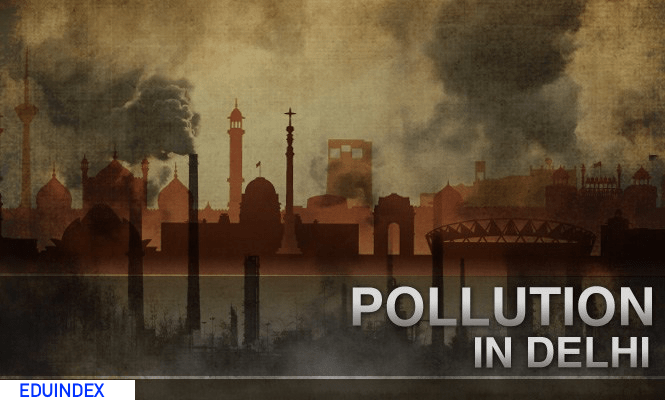
We all know fully well that air pollution in Delhi and even adjoining regions like several districts of West UP are crossing all limits and this year even in districts adjoining Delhi like Meerut where air pollution was never felt so much as is now being felt. Delhi is obviously the worst affected and this is most concerning for our nation as it is the national capital of India. India’s reputation in containing air pollution right in the capital itself is at stake and it is high time that a host of strong steps are taken in the right direction to ensure that it is checked immediately.

It must be mentioned here that the Apex Court Bench of Justices Arun Mishra and Deepak Gupta on November 4, 2019 took up the issue of air pollution in Delhi-NCR in the wake of the Environment Pollution Control Authority (EPCA) declaring a public health emergency taking note of the severely deteriorated air quality. First and foremost, it is pointed out by the Bench that, “We have heard Mr Bhrelal who has pointed out about irrigation. We have also heard some experts from the Ministry and the IIT and learned senior counsel for the parties and Amicus Curiae.”
Without wasting any time, the ball is then set rolling by pointing out that, “Today everyone is concerned about level of pollution in Delhi and NCR region. This is not something new, every year this kind of piquant situation arises for a substantial period. It is compounded by the fact that year to year in spite of various directions issued by High Court, other authorities including this Court, the State Governments, Government of NCT of Delhi and the corporations of Delhi and nearby States are not performing their duties as enjoined upon them. This is a shocking state of affairs in which we are put as on today. This is blatant and grave violation of right to life of the sizable population by all these actions and the scientific data which has been pointed out indicates that life span of the people is being reduced by this kind of pollution which is being created and that people are being advised not to come back to Delhi or to leave the Delhi due to severe pollution condition which has been created. There cannot be large scale exodus. People have to perform their duty in Delhi also and people cannot be evacuated from Delhi being a capital city. We are at a loss to understand why we are not able to create a situation in which this kind of pollution does not take place, that too in a routine manner every year. Obviously, it is writ large that the State Governments, Government of NCT of Delhi and civic bodies have miserably failed to discharge their liability as per the Directive Principles of State Policy which have found statutory expression, they are being made statutory mockery and also the directions of this Court and High Courts in this regard are being violated with impunity.”
Why should heavy fine not be imposed on the respective State Governments and those civic bodies who have failed utterly to discharge their liability as enshrined in the Directive Principles of State Policy? Why should they be allowed to get away freely or lightly? Why should they not be taken to task forthwith?
Without mincing any words, the Bench then goes forth to very rightly point out in simple and straight language that, “Time has come when we have to fix the accountability for this kind of situation which has arisen and is destroying right to life itself in gross violation of Article 21 of the Constitution of India. No farmer can be said to be having a right under the guise that he is not having sufficient time to use the stubble for the purpose of manure, since they have less time between two crops, cutting and sowing of next crop. As such, they cannot by burning it in their fields, put life of sizeable population in jeopardy.” Farmers too must understand their responsibility which they owe to the nation! Centre and respective State Governments too must do all that they can to ensure that the farmers are helped in every possible manner to help dispose of the remains without polluting the atmosphere! They have so far not done enough adequately in this direction!
Furthermore, it is then pointed out in the next para that, “It is apparent from the satellite images which has been produced before us for the period 30.10.2019 to 04.11.2019. The satellite image clearly indicates that in Punjab there is widespread stubble burning which has taken place as compared to Haryana, in which only in four districts it has taken place. There is some burning in Western U.P. also. It could not have taken place even in a singular district or gram panchayat area as we live in a civilized country in which such kind of activities which create such menacing pollution not only in the area concerned but to the neighbouring States also, by ill-effects of that people cannot be left to die or to suffer various ailments.”
While apportioning liability on all, it is then held by the Bench in the next para that, “Everybody has to be answerable including the top state machinery percolating down to the level of gram panchayat. The very purpose of giving administration power up to the panchayat level is that there has to be proper administration and there is no room for such activities. The action is clearly tortuous one and is clearly punishable under statutory provisions, besides the violation of the Court’s order. In the circumstances, as widespread stubble burning has taken place, we direct the States of Punjab and Haryana and adjoining State of Uttar Pradesh where there is blatant violation which has taken place, to halt it. We direct the Chief Secretaries of the States of Punjab, Haryana and Uttar Pradesh to be present in this Court on 06.11.2019 and Chief Secretary of Government of NCT of Delhi.”
Not stopping here, it is then further added very rightly in the next para while issuing strict directions that, “We direct the Chief Secretaries of the State Governments, District Collectors, Tehsildars, Director General, IG/SP and other police officers of the area of concerned police station and the entire police machinery to ensure that not even a single incident takes place of stubble farming henceforth. If it is found that any stubble burning has been made not only that person doing it will be hauled up for the violation of the order passed by this Court but the entire administration, right from the Chief Secretary, Commissioner, Collector and all other concerned functionaries and Panchayats. Gram Pradhan/Sarpanch Panchayat are also directed to ensure that no such stubble burning takes place.”
What’s more, it is then further strongly observed in the next para that, “Let the State Governments of Punjab, Haryana and Uttar Pradesh and officials also explain that why they should not be asked to pay the compensation for tortuous liability as they have acquiesced and due to their failure in preventing stubble burning which is in utter violation of the Public Trust doctrine, why they should not be held liable to compensate, and also the incumbents who are burning the stubble in spite of clear restrictions imposed by this Court and statutory prohibition.” In other words, the Apex Court has made it abundantly clear that it is not just the farmers who indulge in stubble burning who will be held accountable but also the State Governments of Punjab, Haryana and Uttar Pradesh will have to be held accountable for not doing enough to check air pollution in their respective states and allowing stubble burning with impunity by not taking any strict action against those indulging in it!
As if this is not enough, it is then also further added in the next para while fixing accountability that, “We also direct the Sarpanch of each and every Panchayat and SHO of the concerned area to prepare inventory of the incumbents who have burnt the stubbles in their fields. We also direct the Sarpanch, Gram Panchayat as well as the concerned police of the area and local administration including the Collector and all subordinate authorities to ensure that no further stubble burning takes place. In case, any stubble burning takes place responsible machinery from top to bottom and Sarpanch, Gram Panchayat shall be liable for tortuous act and for not complying with the order passed by this Court and let the Gram Panchayat also advise forthwith the villagers not to involve in stubble burning anymore and take appropriate action.” Very rightly so! Unless accountability is fixed and very strict action is taken against all those violating the rules, we cannot control air pollution under any circumstances no matter how much day dreaming we continue to indulge in! This was exactly what eminent and senior Supreme Court lawyer and former Solicitor General of India – Harish Salve also very rightly pointed out while talking in a news channel!
Be it noted, the Bench then very rightly directs and underscores in the next para that, “We also direct the State Governments, Central Government as well as the Government of NCT of Delhi to take immediate steps to take care of the emergent situation due to air pollution which has taken place. No doubt about it that everybody knows the situation, let the steps be taken forthwith with the help of the experts. We direct the Government of NCT of Delhi as well as various corporations to work in tandem and to see that waste and garbage which is contributing to air pollution is tackled at war level. The efforts should be made right from today without any loss of time.”
Each and every one of us who stay in India must adhere to what the top court has said so rightly, elegantly and commendably! If we abide by what the top court has said, we would only be improving not just our own lives but also other lives and the lives of the coming generations! No time should be wasted on this score as the Apex Court has rightly emphasised!
While elaborating further, it is then pointed out by the Bench that, “Let the EPCA consider as it was suggested by Ms. Aprajita Singh, learned senior counsel and the learned Amicus Curiae that diesel vehicle should not enter the Delhi. Let the EPCA immediately take the steps in this regard as may be considered appropriate as it has the power to do the needful taking care of the emergent situation.”
Going forward, it is then envisaged that, “With respect to demolition and construction activities we direct that no demolition and construction activities take place in Delhi and NCR region. In case it is found that such activity is done, the local administration as well as the municipal authorities including the Zonal Commissioners, Deputy Zonal Commissioners shall be personally held responsible for all such activities. They have to act in furtherance of the Court’s order and to ensure that no such activity takes place.”
It must be brought out here that the Bench then adds that, “We are informed that use of coal based industries have been stopped. In case any violation of this is found the concerned person including Zonal Deputy Commissioner would be liable for violation of the order of this Court and liable to be punished for contempt of Court.”
Coming to odd/even scheme, the Bench then notes that, “It was also pointed out by Mr. Sanjiv Sen, learned senior counsel, that during odd/even scheme in Delhi more use of two wheelers has taken place and they are being plied more causing equal pollution, as such no useful purpose is being served by stopping the use of certain vehicles only on the basis of odd and even numbers. He has also pointed out that it would be appropriate to stop the use of diesel vehicle, in case it is necessitated as the diesel vehicles cause more pollution as compared to petrol and CNG vehicles. Let the Government of NCT of Delhi explain this aspect and file the data in this regard in the Court on the basis of the previous experience and whether if three wheelers and taxies are plying more on road during such restriction and relevant data be placed.” Definitely, if this is done carefully and correctly, we would come know the real picture on air pollution!
Briefly stated, while questioning the Odd/Even Scheme sponsored by the Delhi state government, it is then mentioned in the next para that, “During Odd/Even Scheme what is the difference being caused by stopping use of four wheelers when various other contributing factors are not taken care of by Government of NCT of Delhi.”
To put things in perspective, the Bench rightly points out the reasons for air pollution that, “As per the Air Quality Inspection Construction and Demolition Activities in Delhi/NCR region causing damage in Noida, Faridabad, Gurugram, Ghaziabad as well as instances of Delhi have also been mentioned.
1. Construction and demolition.
2. There is open dumping of waste/garbage.
3. Unpaved road/pit.
4. Road dust.
5. Garbage burning.
6. Traffic congestion.
As it turned out, the Bench then holds that, “We direct that construction, demolition and activities be stopped forthwith as well as garbage burning. In case, any person is found in construction and demolition activity and garbage burning in Delhi and NCR region, he/she shall be penalized. Any person doing construction and demolition activity in violation of this order, shall be penalized with Rs. 1 Lac for such activity. For garbage burning he/she shall be penalized with Rs. 5,000/- and besides liable for violation of the order passed by this Court to be dealt with in accordance with law.”
Moving on, the Bench then further holds that, “With respect to open dumping of waste and garbage, we direct the Government of NCT of Delhi as well as the concerned Municipal Corporation to chalk out immediate plan and to ensure that waste and garbage to be removed to safe places forthwith and also to ensure that no open dumping takes place. We direct Zonal Deputy Commissioner to be responsible with other officers in this respect. Let road-maps be prepared so as to provide proper amenities in order to prevent open dumping of waste and garbage, and be placed before this Court within four weeks.”
Now come to think of roads, the Bench on this score lays down that, “For taking care of the road dust let water sprinklers/dust suppressors be used on the roads. An IIT expert suggested about the appropriate water pressure for the sprinklers. At what pressure water should be sprinkled so as to reduce the pollution and dust so that it does not add to the pollution. Let the Corporations act on advice of the expert of the IIT. Such roads where traffic congestion is more, let traffic plan be also prepared in such a manner so that there is no extra burden on a particular road so that traffic congestion is taken care of. It is for the concerned traffic authorities to take immediate steps in this regard.”
More importantly, it is then observed in the next para that, “Since we are fixing the liability on the person responsible for inaction at the village level as well as three States in the NCR regions as well as Delhi, let the widest publicity by all means of publication i.e. Television, Media, newspapers, Radio be made. In Gram Panchayats by beat of drums also and other modes to ensure that villagers are made aware of their responsibility and liability towards the other humans so that they do not involve in such acts. Let the Gram Panchayat, police station, district and taluk levels by the concerned administration take steps in this regard. Let the State Governments also take the requisite steps to extinguish the stubbles which are burning and for that let State Level High Level Committee meet forthwith and take appropriate decision and implement it. Steps taken be informed to this Court on 06.11.2019 by the concerned Chief Secretaries of the three States and Government of NCT of Delhi.”
No less important is what is then stated in next para that, “Let the concerned authorities of EPCA meet forthwith and take a call in this regard with respect to industrial activities which are causing pollution on how to control it. We also direct all pollution control Boards of three States and Government of NCT of Delhi that polluting industries/activities against norms are put to halt forthwith.”
In addition, it is also then directed that, “It was also submitted by M/s. Sanjiv Sen and Gopal Sankaranarayanan, learned senior counsel that in certain States generators are also being used which increase pollution mainly due to cut off in the electricity supply. Generators in Delhi also add to pollution in Delhi as well as in NCR region. Let the State Governments and Government of NCT of Delhi ensure that electricity is not cut so that generators are not used and let no generators be used till next day of hearing except in emergency/healthcare services.”
Last but not the least, it is then held that, “Let the State Governments, NCT of Delhi and also the Government of India prepare a road map for preventing this kind of situation in future and be placed before this Court, within three weeks. Let the Action Taken Report be submitted within four weeks. Directions/order to be effective unless otherwise ordered.”
In conclusion, it is high time and there is no reason why Centre, Delhi government and governments of neighbouring states of Delhi like Punjab, UP and Haryana among others should not obey strictly the directions laid down by this top court in this latest, landmark and extremely laudable judgment. There is no reason why pollution of air can’t be controlled if the commendable directions laid down by the Apex Court in this noteworthy case are followed in letter and spirit. We all also must as good citizens do our best to contribute as much as possible to control air pollution as it is we ourselves who are worst affected by it!
Sanjeev Sirohi, Advocate,
s/o Col BPS Sirohi,
A 82, Defence Enclave,
Sardhana Road, Kankerkhera,
Meerut – 250001, Uttar Pradesh.
What Do We Actually \’Celebrate\’ In Our Schools?
\’So, you\’re \’celebrating\’ again.\’
\’Yes, it\’s Independence Day tomorrow.\’
\’Oh, so another round of ritualistic speeches?\’
\’What do you mean, ritualistic speeches?\’
\’You know what I mean. The same old \’important\’ people will be called. They will be welcomed, garlanded and they will walk around, feeling even more self-important.\’
\’You\’re being very unkind, you know.\’
\’But close to the truth, isn\’t it?\’
\’I\’m not sure if this is really ritualistic…\’
\’No, it is what follows afterwards…. The same formal atmosphere will be created. Children will sit in neat rows and told not to talk too much. The LIP (or your Local Important Person) will be praised, invited to give us the benefit of his wisdom, children will be asked to shush, and then the LIP will give the same speech as every year – you are the future of the country… freedom is very important.. our great leaders were so very great… you must work hard… you must try to like the great people of the past… And all this while instead of experiencing freedom on Independence Day of India, children will be sitting bored, stiff, not allowed tomove around or talk or express themselves….\’
\’You\’re being really harsh!\’\’
\’OK, tell me, didn\’t you hear the same speeches when you were a child?\’
\’Ye-es.\’
\’Did you really enjoy those celebrations? Were they a celebration for you?\’
\’Actually, to be honest, no, not really.\’
\’Aren\’t you surprised that the same speeches are being made even now?\’
\’Yeah, now that you mention it…\’
\’And shouldn\’t children be more like the leaders of tomorrow rather than the leaders of long past. After all, every kid is not going to experience walking 17 kilometres to school!\’
\’Hmm… something to think about, there. And come to think of it, why was every great man\’s school 17 kilometres away?\’
\’See, it\’s getting you too! And when it comes to – no, no, better not to say that.\’
\’Well you can tell me… I\’m not going to shout at you!\’
\’I know you won\’t. But I don\’t want you to feel depressed either.\’
\’Come on, I can handle it. Tell me what you were going to say.\’
\’Well, if you insist. The thing is, children attend all these functions year after year, experience the same thing over and over again. And what do they learn? They learn that they don\’t matter. Their job is to listen. Their role is to be passive, not think for themselves. And look at you – you were a child who once found these functions boring but you are organizing exactly the same kind of function again! Independence Day isn\’t quite an experience in Independence, isn\’t it? My thesis is that these National Day type of \’celebrations\’ only teach us to be slaves, to accept that we have no freedom to be different or better, to allow ourselves to be defined by the limited vision of those limited adults who were similarly made limited by the experience they went through as children themselves…. Hey, you\’re suddenly very silent now. This is not look good… come on, say something.\’
\’What do I say? I\’m feeling so…\’
\’So… what?\’
\’So depressed!\’
————————————————-
What do you think about the other \’celebrations\’ we have in our schools? Is the birthday of a child celebrated \’more\’ or differently or better than that of other children whose families are considered to be less important or not influential?
What are the festivals celebrated in schools? Whose festivals are left out? Many communities / religious groups never see their festivals even discussed in school? What do they feel about it? And what do they \’learn\’ from this?
On Sports Day, do most children have the scope to participate and gain something? Or is only the \’victory\’ of a few celebrated again and again? And what do the rest learn from this?
And on Results Day, whose achievements stand out? And what does everyone learn from this? (Maybe CCE will make a difference here?)
Perhaps all these celebrations, in the end, make us realise that their isn\’t much about us that is worth celebrating. When I was younger I would have said that this happens even though the intention is quite different. But now, a little more battered and older, I think the intention was always this – to make you realise that only a few can be \’important\’ persons worth celebrating, not you.
————————————————-
So what should we celebrate in our schools?
For starters, children and learning. Simply the presence of every child is worth celebrating (rather than \’Oh God, another one!\’). And how to celebrate? By smiling, by welcoming, by genuinely talking with the child, giving space to her questions, by looking for ways to ensure she is comfortable, involved and engaged in an actual learning.
Children will ask unexpected questions, offer different points of view, find innovative ways of doing things, or help each other… celebrate this. Point out what they have done which is so good, and why it is so.
There will be times when those who usually \’fall behind\’ will make an effort, come up with something of their own (of course, only if you ensure they have the opportunity to do so). Celebrate their efforts, point out their good parts, and indicate what else they can do that will earn them similar \’celebration\’.
If you find a fellow teacher, a staff member, a parent, an SMC member who is doing something successfully and contributing to children and the school, that\’s worth celebrating.
And on Independence Day? Start a few days before. Discuss with children what Independence Day means to us. Ask them how they think it should be celebrated. Come up with ideas that puts the children in the front, not adults or LIPs. Maybe they make drawings and posters related to freedom. Maybe they hold a debate on what freedom means and whether we really are a free people. Maybe they decide not to do a \’function\’ in the school at all and instead spend time with children who are unable to be in school because they are not really free…And maybe they will learn something very different from such \’celebrations\’ than we did.
What Do We Actually \’Celebrate\’ In Our Schools?
\’So, you\’re \’celebrating\’ again.\’
\’Yes, it\’s Independence Day tomorrow.\’
\’Oh, so another round of ritualistic speeches?\’
\’What do you mean, ritualistic speeches?\’
\’You know what I mean. The same old \’important\’ people will be called. They will be welcomed, garlanded and they will walk around, feeling even more self-important.\’
\’You\’re being very unkind, you know.\’
\’But close to the truth, isn\’t it?\’
\’I\’m not sure if this is really ritualistic…\’
\’No, it is what follows afterwards…. The same formal atmosphere will be created. Children will sit in neat rows and told not to talk too much. The LIP (or your Local Important Person) will be praised, invited to give us the benefit of his wisdom, children will be asked to shush, and then the LIP will give the same speech as every year – you are the future of the country… freedom is very important.. our great leaders were so very great… you must work hard… you must try to like the great people of the past… And all this while instead of experiencing freedom on Independence Day of India, children will be sitting bored, stiff, not allowed tomove around or talk or express themselves….\’
\’You\’re being really harsh!\’\’
\’OK, tell me, didn\’t you hear the same speeches when you were a child?\’
\’Ye-es.\’
\’Did you really enjoy those celebrations? Were they a celebration for you?\’
\’Actually, to be honest, no, not really.\’
\’Aren\’t you surprised that the same speeches are being made even now?\’
\’Yeah, now that you mention it…\’
\’And shouldn\’t children be more like the leaders of tomorrow rather than the leaders of long past. After all, every kid is not going to experience walking 17 kilometres to school!\’
\’Hmm… something to think about, there. And come to think of it, why was every great man\’s school 17 kilometres away?\’
\’See, it\’s getting you too! And when it comes to – no, no, better not to say that.\’
\’Well you can tell me… I\’m not going to shout at you!\’
\’I know you won\’t. But I don\’t want you to feel depressed either.\’
\’Come on, I can handle it. Tell me what you were going to say.\’
\’Well, if you insist. The thing is, children attend all these functions year after year, experience the same thing over and over again. And what do they learn? They learn that they don\’t matter. Their job is to listen. Their role is to be passive, not think for themselves. And look at you – you were a child who once found these functions boring but you are organizing exactly the same kind of function again! Independence Day isn\’t quite an experience in Independence, isn\’t it? My thesis is that these National Day type of \’celebrations\’ only teach us to be slaves, to accept that we have no freedom to be different or better, to allow ourselves to be defined by the limited vision of those limited adults who were similarly made limited by the experience they went through as children themselves…. Hey, you\’re suddenly very silent now. This is not look good… come on, say something.\’
\’What do I say? I\’m feeling so…\’
\’So… what?\’
\’So depressed!\’
————————————————-
What do you think about the other \’celebrations\’ we have in our schools? Is the birthday of a child celebrated \’more\’ or differently or better than that of other children whose families are considered to be less important or not influential?
What are the festivals celebrated in schools? Whose festivals are left out? Many communities / religious groups never see their festivals even discussed in school? What do they feel about it? And what do they \’learn\’ from this?
On Sports Day, do most children have the scope to participate and gain something? Or is only the \’victory\’ of a few celebrated again and again? And what do the rest learn from this?
And on Results Day, whose achievements stand out? And what does everyone learn from this? (Maybe CCE will make a difference here?)
Perhaps all these celebrations, in the end, make us realise that their isn\’t much about us that is worth celebrating. When I was younger I would have said that this happens even though the intention is quite different. But now, a little more battered and older, I think the intention was always this – to make you realise that only a few can be \’important\’ persons worth celebrating, not you.
————————————————-
So what should we celebrate in our schools?
For starters, children and learning. Simply the presence of every child is worth celebrating (rather than \’Oh God, another one!\’). And how to celebrate? By smiling, by welcoming, by genuinely talking with the child, giving space to her questions, by looking for ways to ensure she is comfortable, involved and engaged in an actual learning.
Children will ask unexpected questions, offer different points of view, find innovative ways of doing things, or help each other… celebrate this. Point out what they have done which is so good, and why it is so.
There will be times when those who usually \’fall behind\’ will make an effort, come up with something of their own (of course, only if you ensure they have the opportunity to do so). Celebrate their efforts, point out their good parts, and indicate what else they can do that will earn them similar \’celebration\’.
If you find a fellow teacher, a staff member, a parent, an SMC member who is doing something successfully and contributing to children and the school, that\’s worth celebrating.
And on Independence Day? Start a few days before. Discuss with children what Independence Day means to us. Ask them how they think it should be celebrated. Come up with ideas that puts the children in the front, not adults or LIPs. Maybe they make drawings and posters related to freedom. Maybe they hold a debate on what freedom means and whether we really are a free people. Maybe they decide not to do a \’function\’ in the school at all and instead spend time with children who are unable to be in school because they are not really free…And maybe they will learn something very different from such \’celebrations\’ than we did.
What Do We Actually \’Celebrate\’ In Our Schools?
\’So, you\’re \’celebrating\’ again.\’
\’Yes, it\’s Independence Day tomorrow.\’
\’Oh, so another round of ritualistic speeches?\’
\’What do you mean, ritualistic speeches?\’
\’You know what I mean. The same old \’important\’ people will be called. They will be welcomed, garlanded and they will walk around, feeling even more self-important.\’
\’You\’re being very unkind, you know.\’
\’But close to the truth, isn\’t it?\’
\’I\’m not sure if this is really ritualistic…\’
\’No, it is what follows afterwards…. The same formal atmosphere will be created. Children will sit in neat rows and told not to talk too much. The LIP (or your Local Important Person) will be praised, invited to give us the benefit of his wisdom, children will be asked to shush, and then the LIP will give the same speech as every year – you are the future of the country… freedom is very important.. our great leaders were so very great… you must work hard… you must try to like the great people of the past… And all this while instead of experiencing freedom on Independence Day of India, children will be sitting bored, stiff, not allowed tomove around or talk or express themselves….\’
\’You\’re being really harsh!\’\’
\’OK, tell me, didn\’t you hear the same speeches when you were a child?\’
\’Ye-es.\’
\’Did you really enjoy those celebrations? Were they a celebration for you?\’
\’Actually, to be honest, no, not really.\’
\’Aren\’t you surprised that the same speeches are being made even now?\’
\’Yeah, now that you mention it…\’
\’And shouldn\’t children be more like the leaders of tomorrow rather than the leaders of long past. After all, every kid is not going to experience walking 17 kilometres to school!\’
\’Hmm… something to think about, there. And come to think of it, why was every great man\’s school 17 kilometres away?\’
\’See, it\’s getting you too! And when it comes to – no, no, better not to say that.\’
\’Well you can tell me… I\’m not going to shout at you!\’
\’I know you won\’t. But I don\’t want you to feel depressed either.\’
\’Come on, I can handle it. Tell me what you were going to say.\’
\’Well, if you insist. The thing is, children attend all these functions year after year, experience the same thing over and over again. And what do they learn? They learn that they don\’t matter. Their job is to listen. Their role is to be passive, not think for themselves. And look at you – you were a child who once found these functions boring but you are organizing exactly the same kind of function again! Independence Day isn\’t quite an experience in Independence, isn\’t it? My thesis is that these National Day type of \’celebrations\’ only teach us to be slaves, to accept that we have no freedom to be different or better, to allow ourselves to be defined by the limited vision of those limited adults who were similarly made limited by the experience they went through as children themselves…. Hey, you\’re suddenly very silent now. This is not look good… come on, say something.\’
\’What do I say? I\’m feeling so…\’
\’So… what?\’
\’So depressed!\’
————————————————-
What do you think about the other \’celebrations\’ we have in our schools? Is the birthday of a child celebrated \’more\’ or differently or better than that of other children whose families are considered to be less important or not influential?
What are the festivals celebrated in schools? Whose festivals are left out? Many communities / religious groups never see their festivals even discussed in school? What do they feel about it? And what do they \’learn\’ from this?
On Sports Day, do most children have the scope to participate and gain something? Or is only the \’victory\’ of a few celebrated again and again? And what do the rest learn from this?
And on Results Day, whose achievements stand out? And what does everyone learn from this? (Maybe CCE will make a difference here?)
Perhaps all these celebrations, in the end, make us realise that their isn\’t much about us that is worth celebrating. When I was younger I would have said that this happens even though the intention is quite different. But now, a little more battered and older, I think the intention was always this – to make you realise that only a few can be \’important\’ persons worth celebrating, not you.
————————————————-
So what should we celebrate in our schools?
For starters, children and learning. Simply the presence of every child is worth celebrating (rather than \’Oh God, another one!\’). And how to celebrate? By smiling, by welcoming, by genuinely talking with the child, giving space to her questions, by looking for ways to ensure she is comfortable, involved and engaged in an actual learning.
Children will ask unexpected questions, offer different points of view, find innovative ways of doing things, or help each other… celebrate this. Point out what they have done which is so good, and why it is so.
There will be times when those who usually \’fall behind\’ will make an effort, come up with something of their own (of course, only if you ensure they have the opportunity to do so). Celebrate their efforts, point out their good parts, and indicate what else they can do that will earn them similar \’celebration\’.
If you find a fellow teacher, a staff member, a parent, an SMC member who is doing something successfully and contributing to children and the school, that\’s worth celebrating.
And on Independence Day? Start a few days before. Discuss with children what Independence Day means to us. Ask them how they think it should be celebrated. Come up with ideas that puts the children in the front, not adults or LIPs. Maybe they make drawings and posters related to freedom. Maybe they hold a debate on what freedom means and whether we really are a free people. Maybe they decide not to do a \’function\’ in the school at all and instead spend time with children who are unable to be in school because they are not really free…And maybe they will learn something very different from such \’celebrations\’ than we did.
What Do We Actually \’Celebrate\’ In Our Schools?
\’So, you\’re \’celebrating\’ again.\’
\’Yes, it\’s Independence Day tomorrow.\’
\’Oh, so another round of ritualistic speeches?\’
\’What do you mean, ritualistic speeches?\’
\’You know what I mean. The same old \’important\’ people will be called. They will be welcomed, garlanded and they will walk around, feeling even more self-important.\’
\’You\’re being very unkind, you know.\’
\’But close to the truth, isn\’t it?\’
\’I\’m not sure if this is really ritualistic…\’
\’No, it is what follows afterwards…. The same formal atmosphere will be created. Children will sit in neat rows and told not to talk too much. The LIP (or your Local Important Person) will be praised, invited to give us the benefit of his wisdom, children will be asked to shush, and then the LIP will give the same speech as every year – you are the future of the country… freedom is very important.. our great leaders were so very great… you must work hard… you must try to like the great people of the past… And all this while instead of experiencing freedom on Independence Day of India, children will be sitting bored, stiff, not allowed tomove around or talk or express themselves….\’
\’You\’re being really harsh!\’\’
\’OK, tell me, didn\’t you hear the same speeches when you were a child?\’
\’Ye-es.\’
\’Did you really enjoy those celebrations? Were they a celebration for you?\’
\’Actually, to be honest, no, not really.\’
\’Aren\’t you surprised that the same speeches are being made even now?\’
\’Yeah, now that you mention it…\’
\’And shouldn\’t children be more like the leaders of tomorrow rather than the leaders of long past. After all, every kid is not going to experience walking 17 kilometres to school!\’
\’Hmm… something to think about, there. And come to think of it, why was every great man\’s school 17 kilometres away?\’
\’See, it\’s getting you too! And when it comes to – no, no, better not to say that.\’
\’Well you can tell me… I\’m not going to shout at you!\’
\’I know you won\’t. But I don\’t want you to feel depressed either.\’
\’Come on, I can handle it. Tell me what you were going to say.\’
\’Well, if you insist. The thing is, children attend all these functions year after year, experience the same thing over and over again. And what do they learn? They learn that they don\’t matter. Their job is to listen. Their role is to be passive, not think for themselves. And look at you – you were a child who once found these functions boring but you are organizing exactly the same kind of function again! Independence Day isn\’t quite an experience in Independence, isn\’t it? My thesis is that these National Day type of \’celebrations\’ only teach us to be slaves, to accept that we have no freedom to be different or better, to allow ourselves to be defined by the limited vision of those limited adults who were similarly made limited by the experience they went through as children themselves…. Hey, you\’re suddenly very silent now. This is not look good… come on, say something.\’
\’What do I say? I\’m feeling so…\’
\’So… what?\’
\’So depressed!\’
————————————————-
What do you think about the other \’celebrations\’ we have in our schools? Is the birthday of a child celebrated \’more\’ or differently or better than that of other children whose families are considered to be less important or not influential?
What are the festivals celebrated in schools? Whose festivals are left out? Many communities / religious groups never see their festivals even discussed in school? What do they feel about it? And what do they \’learn\’ from this?
On Sports Day, do most children have the scope to participate and gain something? Or is only the \’victory\’ of a few celebrated again and again? And what do the rest learn from this?
And on Results Day, whose achievements stand out? And what does everyone learn from this? (Maybe CCE will make a difference here?)
Perhaps all these celebrations, in the end, make us realise that their isn\’t much about us that is worth celebrating. When I was younger I would have said that this happens even though the intention is quite different. But now, a little more battered and older, I think the intention was always this – to make you realise that only a few can be \’important\’ persons worth celebrating, not you.
————————————————-
So what should we celebrate in our schools?
For starters, children and learning. Simply the presence of every child is worth celebrating (rather than \’Oh God, another one!\’). And how to celebrate? By smiling, by welcoming, by genuinely talking with the child, giving space to her questions, by looking for ways to ensure she is comfortable, involved and engaged in an actual learning.
Children will ask unexpected questions, offer different points of view, find innovative ways of doing things, or help each other… celebrate this. Point out what they have done which is so good, and why it is so.
There will be times when those who usually \’fall behind\’ will make an effort, come up with something of their own (of course, only if you ensure they have the opportunity to do so). Celebrate their efforts, point out their good parts, and indicate what else they can do that will earn them similar \’celebration\’.
If you find a fellow teacher, a staff member, a parent, an SMC member who is doing something successfully and contributing to children and the school, that\’s worth celebrating.
And on Independence Day? Start a few days before. Discuss with children what Independence Day means to us. Ask them how they think it should be celebrated. Come up with ideas that puts the children in the front, not adults or LIPs. Maybe they make drawings and posters related to freedom. Maybe they hold a debate on what freedom means and whether we really are a free people. Maybe they decide not to do a \’function\’ in the school at all and instead spend time with children who are unable to be in school because they are not really free…And maybe they will learn something very different from such \’celebrations\’ than we did.
What Do We Actually \’Celebrate\’ In Our Schools?
\’So, you\’re \’celebrating\’ again.\’
\’Yes, it\’s Independence Day tomorrow.\’
\’Oh, so another round of ritualistic speeches?\’
\’What do you mean, ritualistic speeches?\’
\’You know what I mean. The same old \’important\’ people will be called. They will be welcomed, garlanded and they will walk around, feeling even more self-important.\’
\’You\’re being very unkind, you know.\’
\’But close to the truth, isn\’t it?\’
\’I\’m not sure if this is really ritualistic…\’
\’No, it is what follows afterwards…. The same formal atmosphere will be created. Children will sit in neat rows and told not to talk too much. The LIP (or your Local Important Person) will be praised, invited to give us the benefit of his wisdom, children will be asked to shush, and then the LIP will give the same speech as every year – you are the future of the country… freedom is very important.. our great leaders were so very great… you must work hard… you must try to like the great people of the past… And all this while instead of experiencing freedom on Independence Day of India, children will be sitting bored, stiff, not allowed tomove around or talk or express themselves….\’
\’You\’re being really harsh!\’\’
\’OK, tell me, didn\’t you hear the same speeches when you were a child?\’
\’Ye-es.\’
\’Did you really enjoy those celebrations? Were they a celebration for you?\’
\’Actually, to be honest, no, not really.\’
\’Aren\’t you surprised that the same speeches are being made even now?\’
\’Yeah, now that you mention it…\’
\’And shouldn\’t children be more like the leaders of tomorrow rather than the leaders of long past. After all, every kid is not going to experience walking 17 kilometres to school!\’
\’Hmm… something to think about, there. And come to think of it, why was every great man\’s school 17 kilometres away?\’
\’See, it\’s getting you too! And when it comes to – no, no, better not to say that.\’
\’Well you can tell me… I\’m not going to shout at you!\’
\’I know you won\’t. But I don\’t want you to feel depressed either.\’
\’Come on, I can handle it. Tell me what you were going to say.\’
\’Well, if you insist. The thing is, children attend all these functions year after year, experience the same thing over and over again. And what do they learn? They learn that they don\’t matter. Their job is to listen. Their role is to be passive, not think for themselves. And look at you – you were a child who once found these functions boring but you are organizing exactly the same kind of function again! Independence Day isn\’t quite an experience in Independence, isn\’t it? My thesis is that these National Day type of \’celebrations\’ only teach us to be slaves, to accept that we have no freedom to be different or better, to allow ourselves to be defined by the limited vision of those limited adults who were similarly made limited by the experience they went through as children themselves…. Hey, you\’re suddenly very silent now. This is not look good… come on, say something.\’
\’What do I say? I\’m feeling so…\’
\’So… what?\’
\’So depressed!\’
————————————————-
What do you think about the other \’celebrations\’ we have in our schools? Is the birthday of a child celebrated \’more\’ or differently or better than that of other children whose families are considered to be less important or not influential?
What are the festivals celebrated in schools? Whose festivals are left out? Many communities / religious groups never see their festivals even discussed in school? What do they feel about it? And what do they \’learn\’ from this?
On Sports Day, do most children have the scope to participate and gain something? Or is only the \’victory\’ of a few celebrated again and again? And what do the rest learn from this?
And on Results Day, whose achievements stand out? And what does everyone learn from this? (Maybe CCE will make a difference here?)
Perhaps all these celebrations, in the end, make us realise that their isn\’t much about us that is worth celebrating. When I was younger I would have said that this happens even though the intention is quite different. But now, a little more battered and older, I think the intention was always this – to make you realise that only a few can be \’important\’ persons worth celebrating, not you.
————————————————-
So what should we celebrate in our schools?
For starters, children and learning. Simply the presence of every child is worth celebrating (rather than \’Oh God, another one!\’). And how to celebrate? By smiling, by welcoming, by genuinely talking with the child, giving space to her questions, by looking for ways to ensure she is comfortable, involved and engaged in an actual learning.
Children will ask unexpected questions, offer different points of view, find innovative ways of doing things, or help each other… celebrate this. Point out what they have done which is so good, and why it is so.
There will be times when those who usually \’fall behind\’ will make an effort, come up with something of their own (of course, only if you ensure they have the opportunity to do so). Celebrate their efforts, point out their good parts, and indicate what else they can do that will earn them similar \’celebration\’.
If you find a fellow teacher, a staff member, a parent, an SMC member who is doing something successfully and contributing to children and the school, that\’s worth celebrating.
And on Independence Day? Start a few days before. Discuss with children what Independence Day means to us. Ask them how they think it should be celebrated. Come up with ideas that puts the children in the front, not adults or LIPs. Maybe they make drawings and posters related to freedom. Maybe they hold a debate on what freedom means and whether we really are a free people. Maybe they decide not to do a \’function\’ in the school at all and instead spend time with children who are unable to be in school because they are not really free…And maybe they will learn something very different from such \’celebrations\’ than we did.
What Do We Actually \’Celebrate\’ In Our Schools?
\’So, you\’re \’celebrating\’ again.\’
\’Yes, it\’s Independence Day tomorrow.\’
\’Oh, so another round of ritualistic speeches?\’
\’What do you mean, ritualistic speeches?\’
\’You know what I mean. The same old \’important\’ people will be called. They will be welcomed, garlanded and they will walk around, feeling even more self-important.\’
\’You\’re being very unkind, you know.\’
\’But close to the truth, isn\’t it?\’
\’I\’m not sure if this is really ritualistic…\’
\’No, it is what follows afterwards…. The same formal atmosphere will be created. Children will sit in neat rows and told not to talk too much. The LIP (or your Local Important Person) will be praised, invited to give us the benefit of his wisdom, children will be asked to shush, and then the LIP will give the same speech as every year – you are the future of the country… freedom is very important.. our great leaders were so very great… you must work hard… you must try to like the great people of the past… And all this while instead of experiencing freedom on Independence Day of India, children will be sitting bored, stiff, not allowed tomove around or talk or express themselves….\’
\’You\’re being really harsh!\’\’
\’OK, tell me, didn\’t you hear the same speeches when you were a child?\’
\’Ye-es.\’
\’Did you really enjoy those celebrations? Were they a celebration for you?\’
\’Actually, to be honest, no, not really.\’
\’Aren\’t you surprised that the same speeches are being made even now?\’
\’Yeah, now that you mention it…\’
\’And shouldn\’t children be more like the leaders of tomorrow rather than the leaders of long past. After all, every kid is not going to experience walking 17 kilometres to school!\’
\’Hmm… something to think about, there. And come to think of it, why was every great man\’s school 17 kilometres away?\’
\’See, it\’s getting you too! And when it comes to – no, no, better not to say that.\’
\’Well you can tell me… I\’m not going to shout at you!\’
\’I know you won\’t. But I don\’t want you to feel depressed either.\’
\’Come on, I can handle it. Tell me what you were going to say.\’
\’Well, if you insist. The thing is, children attend all these functions year after year, experience the same thing over and over again. And what do they learn? They learn that they don\’t matter. Their job is to listen. Their role is to be passive, not think for themselves. And look at you – you were a child who once found these functions boring but you are organizing exactly the same kind of function again! Independence Day isn\’t quite an experience in Independence, isn\’t it? My thesis is that these National Day type of \’celebrations\’ only teach us to be slaves, to accept that we have no freedom to be different or better, to allow ourselves to be defined by the limited vision of those limited adults who were similarly made limited by the experience they went through as children themselves…. Hey, you\’re suddenly very silent now. This is not look good… come on, say something.\’
\’What do I say? I\’m feeling so…\’
\’So… what?\’
\’So depressed!\’
————————————————-
What do you think about the other \’celebrations\’ we have in our schools? Is the birthday of a child celebrated \’more\’ or differently or better than that of other children whose families are considered to be less important or not influential?
What are the festivals celebrated in schools? Whose festivals are left out? Many communities / religious groups never see their festivals even discussed in school? What do they feel about it? And what do they \’learn\’ from this?
On Sports Day, do most children have the scope to participate and gain something? Or is only the \’victory\’ of a few celebrated again and again? And what do the rest learn from this?
And on Results Day, whose achievements stand out? And what does everyone learn from this? (Maybe CCE will make a difference here?)
Perhaps all these celebrations, in the end, make us realise that their isn\’t much about us that is worth celebrating. When I was younger I would have said that this happens even though the intention is quite different. But now, a little more battered and older, I think the intention was always this – to make you realise that only a few can be \’important\’ persons worth celebrating, not you.
————————————————-
So what should we celebrate in our schools?
For starters, children and learning. Simply the presence of every child is worth celebrating (rather than \’Oh God, another one!\’). And how to celebrate? By smiling, by welcoming, by genuinely talking with the child, giving space to her questions, by looking for ways to ensure she is comfortable, involved and engaged in an actual learning.
Children will ask unexpected questions, offer different points of view, find innovative ways of doing things, or help each other… celebrate this. Point out what they have done which is so good, and why it is so.
There will be times when those who usually \’fall behind\’ will make an effort, come up with something of their own (of course, only if you ensure they have the opportunity to do so). Celebrate their efforts, point out their good parts, and indicate what else they can do that will earn them similar \’celebration\’.
If you find a fellow teacher, a staff member, a parent, an SMC member who is doing something successfully and contributing to children and the school, that\’s worth celebrating.
And on Independence Day? Start a few days before. Discuss with children what Independence Day means to us. Ask them how they think it should be celebrated. Come up with ideas that puts the children in the front, not adults or LIPs. Maybe they make drawings and posters related to freedom. Maybe they hold a debate on what freedom means and whether we really are a free people. Maybe they decide not to do a \’function\’ in the school at all and instead spend time with children who are unable to be in school because they are not really free…And maybe they will learn something very different from such \’celebrations\’ than we did.
Anna\’s is NOT a movement for change
Let\’s imagine for a moment that corruption vanishes – no one takes bribes any more. Which of the following do you think would now happen as a result?
- Dalits will not face discrimination anywhere; people will stop believing in caste and elections will be around issues, not social groups. Unborn girls will not be killed, dowry will go, sexual harassment will vanish, the notion of \’minority\’ will not need to be discussed, equality and equity will be established.
- People will start working harder, with greater commitment, be much more innovative, and therefore the economy will shoot up. Private enterprise will no more be required to shore up government efforts.
- We will stop exploiting environmental resources in a dangerous manner, all power and energy related problems will be solved, petrol will become cheaper, our sources of water will not be polluted any more and global warming will come to a halt (at least in India).
- All children will start attending school and learning well; teachers will transform into good teachers, all government schools will become great schools, and India\’s learning standards will be among the highest in the world. In sports too we will emerge as a world power.
- Inflation will not affect us any more, the price of food and other essentials will come down, no matter what happens elsewhere in the world.
- Health and nutrition levels will go up greatly, diseases of the poor (water-borne ones or those caused by malnutrition, for instance) will be vanquished.
- Poor governance will vanish – in the absence of bribes, officials will become competent, start taking good decisions, stop representing power groups, start listening to people and actually working for their betterment.
I hope you were able to tick off quite a few!
Oscar Wild said: \’Stupidity is the only sin.\’ And in that sense, Anna&Co are great sinners. Unfortunately, those who continue to believe they\’re helping destroy the roots of our problems and bringing about real change – are even more so.
Anna\’s is NOT a movement for change
Let\’s imagine for a moment that corruption vanishes – no one takes bribes any more. Which of the following do you think would now happen as a result?
- Dalits will not face discrimination anywhere; people will stop believing in caste and elections will be around issues, not social groups. Unborn girls will not be killed, dowry will go, sexual harassment will vanish, the notion of \’minority\’ will not need to be discussed, equality and equity will be established.
- People will start working harder, with greater commitment, be much more innovative, and therefore the economy will shoot up. Private enterprise will no more be required to shore up government efforts.
- We will stop exploiting environmental resources in a dangerous manner, all power and energy related problems will be solved, petrol will become cheaper, our sources of water will not be polluted any more and global warming will come to a halt (at least in India).
- All children will start attending school and learning well; teachers will transform into good teachers, all government schools will become great schools, and India\’s learning standards will be among the highest in the world. In sports too we will emerge as a world power.
- Inflation will not affect us any more, the price of food and other essentials will come down, no matter what happens elsewhere in the world.
- Health and nutrition levels will go up greatly, diseases of the poor (water-borne ones or those caused by malnutrition, for instance) will be vanquished.
- Poor governance will vanish – in the absence of bribes, officials will become competent, start taking good decisions, stop representing power groups, start listening to people and actually working for their betterment.
I hope you were able to tick off quite a few!
Oscar Wild said: \’Stupidity is the only sin.\’ And in that sense, Anna&Co are great sinners. Unfortunately, those who continue to believe they\’re helping destroy the roots of our problems and bringing about real change – are even more so.
Anna\’s is NOT a movement for change
Let\’s imagine for a moment that corruption vanishes – no one takes bribes any more. Which of the following do you think would now happen as a result?
- Dalits will not face discrimination anywhere; people will stop believing in caste and elections will be around issues, not social groups. Unborn girls will not be killed, dowry will go, sexual harassment will vanish, the notion of \’minority\’ will not need to be discussed, equality and equity will be established.
- People will start working harder, with greater commitment, be much more innovative, and therefore the economy will shoot up. Private enterprise will no more be required to shore up government efforts.
- We will stop exploiting environmental resources in a dangerous manner, all power and energy related problems will be solved, petrol will become cheaper, our sources of water will not be polluted any more and global warming will come to a halt (at least in India).
- All children will start attending school and learning well; teachers will transform into good teachers, all government schools will become great schools, and India\’s learning standards will be among the highest in the world. In sports too we will emerge as a world power.
- Inflation will not affect us any more, the price of food and other essentials will come down, no matter what happens elsewhere in the world.
- Health and nutrition levels will go up greatly, diseases of the poor (water-borne ones or those caused by malnutrition, for instance) will be vanquished.
- Poor governance will vanish – in the absence of bribes, officials will become competent, start taking good decisions, stop representing power groups, start listening to people and actually working for their betterment.
I hope you were able to tick off quite a few!
Oscar Wild said: \’Stupidity is the only sin.\’ And in that sense, Anna&Co are great sinners. Unfortunately, those who continue to believe they\’re helping destroy the roots of our problems and bringing about real change – are even more so.
Anna\’s is NOT a movement for change
Let\’s imagine for a moment that corruption vanishes – no one takes bribes any more. Which of the following do you think would now happen as a result?
- Dalits will not face discrimination anywhere; people will stop believing in caste and elections will be around issues, not social groups. Unborn girls will not be killed, dowry will go, sexual harassment will vanish, the notion of \’minority\’ will not need to be discussed, equality and equity will be established.
- People will start working harder, with greater commitment, be much more innovative, and therefore the economy will shoot up. Private enterprise will no more be required to shore up government efforts.
- We will stop exploiting environmental resources in a dangerous manner, all power and energy related problems will be solved, petrol will become cheaper, our sources of water will not be polluted any more and global warming will come to a halt (at least in India).
- All children will start attending school and learning well; teachers will transform into good teachers, all government schools will become great schools, and India\’s learning standards will be among the highest in the world. In sports too we will emerge as a world power.
- Inflation will not affect us any more, the price of food and other essentials will come down, no matter what happens elsewhere in the world.
- Health and nutrition levels will go up greatly, diseases of the poor (water-borne ones or those caused by malnutrition, for instance) will be vanquished.
- Poor governance will vanish – in the absence of bribes, officials will become competent, start taking good decisions, stop representing power groups, start listening to people and actually working for their betterment.
I hope you were able to tick off quite a few!
Oscar Wild said: \’Stupidity is the only sin.\’ And in that sense, Anna&Co are great sinners. Unfortunately, those who continue to believe they\’re helping destroy the roots of our problems and bringing about real change – are even more so.
Anna\’s is NOT a movement for change
Let\’s imagine for a moment that corruption vanishes – no one takes bribes any more. Which of the following do you think would now happen as a result?
- Dalits will not face discrimination anywhere; people will stop believing in caste and elections will be around issues, not social groups. Unborn girls will not be killed, dowry will go, sexual harassment will vanish, the notion of \’minority\’ will not need to be discussed, equality and equity will be established.
- People will start working harder, with greater commitment, be much more innovative, and therefore the economy will shoot up. Private enterprise will no more be required to shore up government efforts.
- We will stop exploiting environmental resources in a dangerous manner, all power and energy related problems will be solved, petrol will become cheaper, our sources of water will not be polluted any more and global warming will come to a halt (at least in India).
- All children will start attending school and learning well; teachers will transform into good teachers, all government schools will become great schools, and India\’s learning standards will be among the highest in the world. In sports too we will emerge as a world power.
- Inflation will not affect us any more, the price of food and other essentials will come down, no matter what happens elsewhere in the world.
- Health and nutrition levels will go up greatly, diseases of the poor (water-borne ones or those caused by malnutrition, for instance) will be vanquished.
- Poor governance will vanish – in the absence of bribes, officials will become competent, start taking good decisions, stop representing power groups, start listening to people and actually working for their betterment.
I hope you were able to tick off quite a few!
Oscar Wild said: \’Stupidity is the only sin.\’ And in that sense, Anna&Co are great sinners. Unfortunately, those who continue to believe they\’re helping destroy the roots of our problems and bringing about real change – are even more so.
Anna\’s is NOT a movement for change
Let\’s imagine for a moment that corruption vanishes – no one takes bribes any more. Which of the following do you think would now happen as a result?
- Dalits will not face discrimination anywhere; people will stop believing in caste and elections will be around issues, not social groups. Unborn girls will not be killed, dowry will go, sexual harassment will vanish, the notion of \’minority\’ will not need to be discussed, equality and equity will be established.
- People will start working harder, with greater commitment, be much more innovative, and therefore the economy will shoot up. Private enterprise will no more be required to shore up government efforts.
- We will stop exploiting environmental resources in a dangerous manner, all power and energy related problems will be solved, petrol will become cheaper, our sources of water will not be polluted any more and global warming will come to a halt (at least in India).
- All children will start attending school and learning well; teachers will transform into good teachers, all government schools will become great schools, and India\’s learning standards will be among the highest in the world. In sports too we will emerge as a world power.
- Inflation will not affect us any more, the price of food and other essentials will come down, no matter what happens elsewhere in the world.
- Health and nutrition levels will go up greatly, diseases of the poor (water-borne ones or those caused by malnutrition, for instance) will be vanquished.
- Poor governance will vanish – in the absence of bribes, officials will become competent, start taking good decisions, stop representing power groups, start listening to people and actually working for their betterment.
I hope you were able to tick off quite a few!
Oscar Wild said: \’Stupidity is the only sin.\’ And in that sense, Anna&Co are great sinners. Unfortunately, those who continue to believe they\’re helping destroy the roots of our problems and bringing about real change – are even more so.
Bhupen Hazarika: A Legend in the Music World
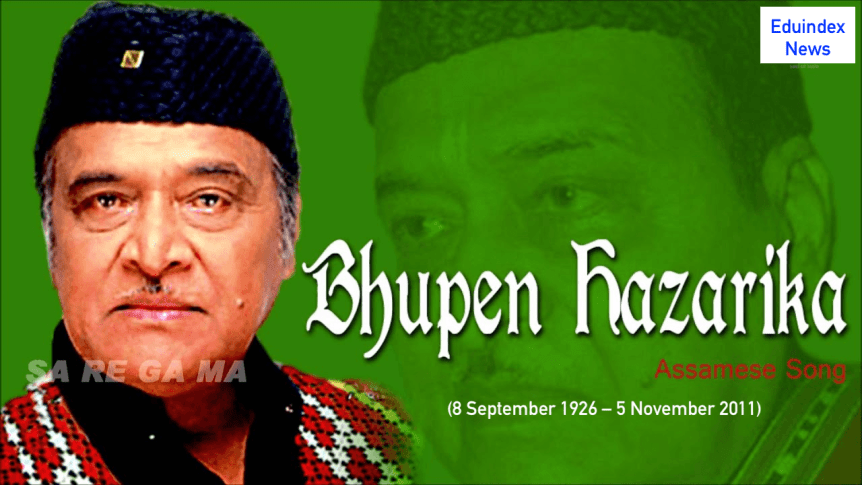
Death of Dr. Bhupen Hazarika is a loss of music lovers of the world. His songs contained rhythm of Indian classical music vis-a-vis a lucid meaning depicting nature, Indian culture, language, unity etc. For example “Mahabahu Brahmaputra, Maha Milonor Thirtha…….. “(Assamese song -Meaning River the Brahmaputra is symbol of national integration….). Another song in Bengali explains ‘love to human being ……’ i.e. in Bengali, “Ami Bhalobasi Manuske….”

In one of his songs, Dr Hazarika sang “Can anyone provide a person whose blood is white or any person whose blood is black. That is when colour of blood is same then why the differentiation among the human beings”. Meaning is so nice that after listening any human being will feel for others. All the songs carried specific meanings and very touchy. His songs enthralled us.
I had the opportunity to listen him in Guwahati in many occasions at the ‘Bihu-toli’ (where Bihu functions are held normally in mid of April i.e. in Assamese New Year).I have observed he sings with core of his heart. His songs are not only popular in India but also in Bangladesh and other countries. While I was in Bangladesh many persons told about him and his songs were highly esteemed by them, because of music and meaning. During my two years stint in Eritrea, (a country located in north east Africa) I carried mainly Dr. Hazarika’s CDs and evening always used to listen his songs. My Indian, Pakistani and Eritrean friends used to visit my residence and highly charmed by his melodious songs. I was explaining meaning of the songs so they were more excited and appreciated his talent.
Born at Sadia, in upper Assam on September 8, 1926, father Sri Nilakanta Hazarika was a high school teacher. Dr Bhupen Hazarika had his schooling in different places of Assam viz., at Dhubri, Guwahati and Tezpur. He completed his matriculation in 1940; Intermediate in Arts (IA) from Cotton College in 1942 and then joined Banaras Hindu University (UP) for higher study and subsequently completed his B.A. (1944) and M.A. (1946). The maestro rendered his services as music director in as many as 36 Assamese films, 8 Bengali films and 5 Hindi films. His activities were rightly recognized by conferring various awards. These inter alia, include Dada Saheb Phalke, Sangeet Ratna, Padma Bhusan, Asam Ratna, Srimanta Sankardev etc. He was the architect of the movement that culminated in the establishment of a film studio in Guwahati, a first full-fledged film studio in Assam. He made many films such as Era Bator Sur (1956), Mahut Bandhure (1958), Shakuntala (1961), Pratidhvani (1964), Loti Ghoti (1966), Chik Mik Bijuli (1969), Siraj (1988) and a tele- film Miri Jiori (1990), documentaries like For Whom the Sun Shines (1974), Amuthi Chaulor Kahini (1974), Rupkonwar Jyotiprasad aru Joymoti (1976), Through Melody and Rhythm (1977), Along the River Brahmaputra (1981), Satras and Namghars of Assam, Glimpses of the Misty East (1996) and The Brahmaputra, An Endless Journey (2006). Due to his endeavour ‘Sattriya dance’ (a form of dance performed at Holy places, i.e.Namghar) got national recognition. He published books for the children — Bhupen Mamar Geete-Mate, A, Aa, Ka, Kha and a transcript autobiography — Moi eti jajabor.
Although he passed away on 5th November 2011 in Mumbai but he will be remembered in this world through his melodious songs.
Sri Tej Hazarika, only son of Dr Bhupen Hazarika performed his last rites on 9th November 2011 at the cremation ground prepared for him at Jalukbari campus of Gauhati University, Guwahati. Before the pyre was lit, Jawans of the Assam Police offered 21-gun salute. During rituals many dignitaries including Governor of Assam, Sri JB Patnaik, Chief Minister Sri Tarun Gogoi, and opposition leader of Lok Sabha Smt. Sushma Swaraj, Union Minister of State (Independent) for Development of the North East Region (DoNER) Sri Pawan Singh Ghatowar, Secretary of All India Congress Committee Sri Jaydev Jena and many ministers of Assam were present. Sri Ghatowar represented the Prime Minister, while Jena represented UPA chairperson Sonia Gandhi. In addition to the dignitaries, millions of people irrespective of caste, creed, religion, language attended to adieu Dr Hazarika which vividly reveals that he was in the heart of all sections of people.
Dr Shankar Chatterjee
Former Professor & Head (CPME),NIRD & PR ( Govt. of India), Hyderabad, India
Former Associate Professor, Eritrea
Former Assistant Prof, Govt. Degree College, Tripura, India
Former Senior Planning Officer, Govt of Assam, India
 Eduindex
You must be logged in to post a comment.