Hindi as a National Language

Annual Hindi Diwas

14th September has been designated
as “Hindi Diwas”- meaning “Hindi Day”. Authors, speakers and various
contributors of different capacity towards promotion of Hindi, are recognized
and awarded on this day. Like many other festivals and days of the country,
this day has also lost its meaning and purpose. But even while this day has
failed to achieve anything significant, it always manages to achieve one thing-
that is attracting the supporters and criticisers of “Hindi as a National
Language”.
This year, the feud got kicked off by Home
Minister Amit Shah, while he was speaking at a ceremony on Hindi. He said, “While
diversity in languages is the strength of our nation, a national language
needed so that foreign languages and cultures do not overpower our own”.
He recognized Hindi as the most capable national language candidate.  Of course, this got twisted by all degrees by
various leaders for their interests. But Honorable Home Minister is not the
first person to say this. Many greater leaders have said similar things and
more passionately. Mahatma Gandhi- who was perhaps the first true National
Leader, said exactly similar things. Even his first language was not Hindi.
Interestingly, Hindi is not first language of Home Minister either. So, it is
interesting to understand why Hindi brings out such divisions? Why some
non-native speakers of Hindi vouch for Hindi, while others fight it fiercely.

History of Indian
Languages

Art XVII of the Constitution of India designates
Hindi as the official language of the Union and a clause “or in
English” is added for carrying out daily official work. Though English was
to be phased out in 15 years post the implementation of the constitution, but
such proposals have faced severe protests from non-Hindi speaking states.
In addition to official language, constitution
also recognizes 22 scheduled languages- English is not part of this list. Below
is the count of language wise speakers as per the Census 2011.
Language
Speakers (in lakhs, 2011)
Hindi
5280
Bengali
972
Marathi
830
Telugu
811
Tamil
690
Gujarati
555
Urdu
507
Kannada
437
Odia
375
Malayalam
348
Punjabi
331
Assamese
153
Maithili
136
Santali
73
Kashmiri
68
Nepali
29
Sindhi
27
Dogri
26
Konkani
22.5
Manipuri
18
Bodo
14.8
Sanskrit
0.2

What should be our way
forward?

As you can see, Hindi is the largest language
spoken by almost 40% Indians. If you add Hindi-family languages together, the
count would be even higher. So naturally Hindi has the highest potential of
becoming the language that can thread the pearls of India.
So why are there protests? Welcome to democratic
freedom!
Every voice matters. So does every choice. Why
would anyone give up their choice unless they see any gain from it? And this
cannot be done by force or law. That is where policymakers have been making
mistake. Hindi does not offer any more advantage than the other Indian
languages as far as work is concerned. In fact, the widely availability of
texts, research and other materials in English- makes English more efficient
language than most other languages of the world. There is no harm or shame in
acknowledging this.
So, in such scenario, what role Hindi can play?
Well, English can be language of minds, but matters of heart belong to Hindi.
There is no better option than this. But encouraging matters of heart is
totally different from encouraging matters of mind.
The pure Hindi is hardly spoken by a handful of
people in informal environment. There are tens of thousands of dialects of
Hindi and they all come to together in this beautiful language. We have
incorporated words from Awadhi, Brij, Magahi, Maithili, Bhojpuri, Punjabi,
Marathi, Bengali, Urdu, Farsi and even English. We will have to go further- we
can incorporate more languages. This can only happen when interaction between
two different cultures happen more often. School meets, sports meet, Melas and
other such informal gatherings can be the perfect way to do this.
Hindi deserves to be the language of hearts,
and this cannot be done formally. We have to be informal, experimental and
open-minded about this. Otherwise petty politicians will keep using this topic
as to create divide in the society.

Hindi is the language of coexistence. Its growth will never be at the cost of any other language: Shri Amit Shah

Union Minister of Home Affairs Shri Amit Shah graced the Hindi Divas Samaroh 2019 as Chief Guest today at Vigyan Bhawan in New Delhi. Also present on the dais were Ministers of State for Home Affairs Shri Nityanand Rai and Shri G Kishan Reddy, as well as Secretary and Joint Secretary, Department of Official Language.
Shri Shah said that while unity in diversity is India’s defining trait, a common language is needed as a culturally unifying factor. Shri Shah remarked that even Gandhi ji and Sardar Patel, who forged a united India, appealed to people to accept Hindi as the national language. Shri Shah lauded the work done by the Department of Official Language in popularizing Hindi, and appealed to citizens to work towards making Hindi the most widely used language in the world. Shri Shah also emphasized Hindi as a factor that unites India.
Shri Shah appealed to all to get connected with Hindi. He noted the unanimous consensus for Hindi as national language in the Constituent Assembly, in spite of the Assembly’s sheer diversity. He said that this decision was an important factor in ensuring cultural unity of India. Noting on the linguistic richness of India, he said that the nation was home to 122 languages and more than 19500 dialects.
Shri Shah said that a country that forgets its language kills its cultural existence. Language connects us to the roots of the nation. Addressing the youth of India, Shri Shah called for introspection and said that if we lose our language, we will be cut off from our culture. He asserted that the richest languages of the world belong to India. The depth of Indian languages is unparalleled, because of the equally unparalleled depth of Indian culture. 
Shri Shah said that we must leave the inferiority complex towards Hindi and our other languages that has set in due to colonial hangover. He called for greater use of the national language in all aspects of life. He said that only when we understand the importance of Hindi, can it thrive and prosper. He said that we must be proud of our language. Noting the role played by teachers in the growth of languages, he said that teachers and educators must instil a sense of pride about Hindi in students.
Shri Shah said that while diversity in languages is the strength of our nation, a national language needed so that foreign languages and cultures do not overpower our own. He proclaimed that next year, the Hindi Divas Samaroh would be a public program, as Hindi belongs to the people. He said that the Government would take Hindi Divas outside Delhi, and would celebrate a Hindi Saptah across the country. He called Hindi the heart and soul of the freedom struggle.
Shri Shah noted Vinoba Bhave’s love for Hindi and Gandhi ji’s assertion that a nation is mute without its national language. He said that our power to express our culture will die in the absence of our national language. Quoting Dr. Ram Manohar Lohiya, Shri Shah said that without Hindi, democracy is not possible in India. The language of the state should be that which people can understand. He remembered Purushottamdas Tandon, who proclaimed national language to be the lifeblood of a nation.
Shri Shah remembered former Prime Minister Shri Atal Bihari Vajpayee as the first Minister of External Affairs to give a speech in Hindi at the United Nations in 1977. He hailed this as a seminal step to break the inferiority complex of Indians with respect to Hindi. He also hailed former Minister of External Affairs Sushma Swaraj’s contribution to the global growth of Hindi, who encouraged the UN to use more Hindi, including on Social Media. This eventually led to the Hindi Twitter account of the UN.
Praising the Prime Minister’s commitment to Hindi, he noted that  wherever the Prime Minister addressed expatriates, he spoke in Hindi. Shri Shah noted that the Prime Minister addressed even the  UN General Assembly and the World Economic Forum in Davos in Hindi, making him the first head of government to address WEF in a national language other than English. 
Shri Shah called upon institutions and individuals to be committed to the growth and use of Hindi. He spoke of the need to proliferate Hindi in technical fields like medicine, engineering and law. He expressed confidence that Hindi would have reached ever greater heights by 2024 elections. He asserted that the growth of Hindi will never be at the cost of any other language and added that Hindi is the language of coexistence.
Speaking on the occasion, Minister of State Shri G Kishan Reddy said that while Telugu was his mother tongue, he had equal love for Hindi. He said that a mother tongue and national language must go together. He noted that the Constituent Assembly accepted Hindi as a national language, as it had been the unifying thread between cultures,  religions and regions during the freedom struggle. He called Hindi a source of self-pride for the country. He noted the famous Tamil poet Subramania Bharathi’s love for Hindi. He added that Hindi is India’s greatest social and cultural heritage and is emerging as a powerful cultural capital of India. He remarked that even multinational firms were accepting Hindi as a functional language. He noted the growing popularity of Hindi with India’s films, and said that the growth of Hindi on the global stage adds to India’s soft power. He advocated a greater use of IT for the development and popularization of Hindi.
Minister of State Shri Nityanand Rai said that languages are the souls of societies and nations. People express themselves in their languages. He added that Hindi consists of our emotions and aspirations, and acts as a connecting language for the whole of India. He called Hindi the symbol of India’s democratic system and said that our nation’s identity depends on the strength and popularity of our national language. He noted that the Constitution has given us the responsibility of the growth and development of Hindi and called for greater use of Hindi in the official work of Union Government and that of various regional languages in the official work of State Governments. He said that Antyodaya is our goal, and Hindi plays a vital role in achieving that goal, as it is the commonest language of communication across the nation. 
Shri Shah launched the E-Saral Hindi Vakya Kosh and E-Maha Shabda Kosh Mobile App, both initiatives of the Department of Official Language that aim to harness information technology for the growth of Hindi. He awarded Rajbhasha Gaurav Puraskar and Rajbhasha Kirti Puraskar to government departments and public sector units respectively for their contribution to Hindi.

The 15th Finance Commission meets with the Ministry of Women and Child Development

The 15th Finance Commission headed by Shri N.K. Singh and including Members and senior officials of the Commission held a meeting with the Union  Minister for Women & Child Development Smt. Smriti Z Irani and her team of senior officials of the Ministry of WCD.
  
The Ministry’s proposals for enhanced allocations for its important schemes covering Anganwadi Services, Poshan, Women Welfare, Women Safety, Women Empowerment were discussed in details.
Among its major recommendation for the consideration of the Commission: 
  • The Ministry of WCD has requested the 15th Finance Commission to include gender Budgeting in its fiscal devolution formula. 
  • In the Commission’s Vertical Devolution the Ministry has requested for prioritizing gender concerns within schemes/ programmes – with a minimum compulsory allocation of 25% to 40%.
  • In its horizontal devolution the Commission has been requested to incorporate gender criteria (Child Sex Ratio and Female Labour Force Participation) as a criteria for horizontal devolution of funds between States. 
  • The Commission has also been asked to provide for basic and performance grants under which additional activities could be added to current activities of Local Bodies for promoting gender equality.
The Ministry of WCD has also called for: 
  • Incentivizing performance: States with better performance in Women Education/ Health Outcomes/ LFPR/ Nutritional Outcomes may be considered for incentive grants.
  • Fiscal Equalization: Gap funding for States to reach normative levels of social sector spending.
  • Enhanced Funding: up from 1% to 1.5% of the Union Budget for WCD.
  • Development of CDI/ GDI based on International Practice.
  • Revamped indicator for women participation in workforce.
  • Increased allocation for Health and Education.
  • Reservation of certain percentage of funds for Women centric development works by local bodies.
  • Increased funding for capacity building of elected women representatives.
  • Women & Wataer: Jal Shakti Abhiyan / Augmentation of Water Resources.
  • Mechanism for single data source for SDGs with Annual Measurements.
The Commission has noted all the issues raised by the Ministry and has assured that they would look into all of them carefully while framing its  report to the Union Government

JALDOOT’ will encourage people’s participation for Water Conservation

Union Minister for Environment, Forest & Climate Change and Information & Broadcasting, Shri Prakash Javadekar said today that ‘Jaldoot’ is a unique initiative and it will take the message of water conservation to masses.  After flagging off  the ‘Jaldoot’  a travelling exhibition arranged by Regional Outreach Bureau , Pune under the Ministry of Information and Broadcasting, Mr. Javadekar said that Jaldoot will visit 8 districts of Maharashtra in next 2 months will also tell about the work done by the government in last 100 days. The exhibition highlights bold initiatives and decisive actions taken by the government.   
 
The Jaldoot will travel trough Pune , Ahmadngar, Nashik, Jalgaon , Buldhana, Amravati  and Solapur districts. Mr Javadekar further said that Modi government has given the priority for water conservation; a new ministry of Jalshakti has been formed to ensure that there will not be scarcity of water in the country. The central government is committed to provide water to every household by 2024 he added. On this occasion ‘Swachhta’ oath was administered by Shri Javadekar to participants. Shri Javadekar also appreciated the exhibition prepared for this.  
 
Shri Girish Bapat, Member of Parliament ,Smt Supriya Sule, Member of Parliament , Shri Satyendra Sharan, Director General, Regional Outreach Bureau, Shri R . N. Mishra Director General Press Information Bureau West Zone, Shri D J Narein ADG , Shri Santosh Ajmera Joint Director ROB Pune and other dignitaries were present.   
Jaldoot: Backgrounder
  • The Hon’ble Prime Minister, has launched the campaign on ‘Janshakti se Jalshakti’ abhiyan. The people are to join hands for water conservation and create a jan-andolan along the lines of the Swachh Bharat Mission, to save water and secure the future.
  • To tackle the water crisis looming the country, the Government of India launched the JALSHAKTI ABHIYAN, a water conservation campaign focusing on 1592 stressed blocks in 256 districts across the country.
  • The Regional Outreach Bureau, ROB, with its headquarter at Pune for Maharashtra and Goa region is the office under the Ministry of Information and Broadcasting, Government of India. It takes care of various outreach activities and development communication needs of the Central Government.
  • ROB in association with MSRTC (Maharashtra State Road Transport Corporation) is launching the Jaldoot campaign. The ROB has redesigned the bus, to create the Jaldoot : Travelling Exhibition on Jalshakti Abhiyan. The exhibition consists of various information display panels and Audio-Visual components. The Song &Drama Division cultural troupes and artists travelling along the bus would create awareness about the Government’s initiative.
  • The field units at those locations would have different activities like competitions, rallies, cultural programmes on the side-lines of visit of the bus, in order to create awareness on water conservation efforts.
  • The JALSHAKTI ABHIYAN focus on five key aspects:
  • Water Conservation and Rain Water Harvesting
  • Renovation of Traditional and other Water Bodies
  • Reuse of Water and Recharging of structures
  • Watershed Development
  • Intensive Afforestation

Nine Lakh Youth from Pune have benefitted from MUDRA Scheme: Union Minister Shri Prakash Javadekar

Nine Lakh Youth from Pune have benefitted from Mudra Scheme, schemes like Bharatnet, Ayushman Bharat, Pradhan Mantri Matrutv Vandana Yojana too are making rapid progress, said Union Minister for Environment, Forest & Climate Change and Information & Broadcasting, Shri Prakash Javadekar. He was speaking after the first meeting of District Development Co-ordination and Monitoring Committee (DISHA) in Pune, which took place today under the chairmanship of Shri Javadekar.
The Minister said, “Meetings of Disha are held to plan for the schemes, and monitor their execution. Mudra scheme is making rapid progress in the district and 9 lakh youths from district have been allotted loans worth Rs 8000 crore under it. Out of 58 railways stations in Pune division, 46 have been equipped with wifi facility. 5 Escalators too have been installed.”
“The Passport Seva Kendra in Baramati has distributed 5000 passports so far and has made the life of layman easier. Passport seva kendras have been started at 50 places in 5 districts. Bharatnet has given optical fibre connections to 790 Gram Panchayats in district and among them 155 have wifi facility, with average daily use of 20 GB. The schools are being provided with sports material and sports hour too will be made compulsory in schools”, Shri Javadekar added.
The Minister further said that National Health Mission comprising Ayushman Yojana and othe schemes has succeeded in reducing the Infant Mortality rate, Maternal Mortality rate, birth rate and death rate in Pune. “60,000 women in Pune have so far benefitted from Pradhan Mantri Matrutva Yojana.The target for building of toilets has also been achieved and the ranking of Pune in Swachhta has jumped from 10th place to 2nd place. The anganwadis are making rapid progress due to participation of people”.
While wishing the people on the occasion of Hindi Divas, Shri Javadekar reiterated the government policy of promoting all regional languages. He allayed the fear of local languages dying out and cited the increasing use of Hindi on the internet. He further said, rarely ever is such linguistic diversity seen in any other country. 
Members of Parliament Shri Girish Bapat and Smt Supriya Sule were also present on the occasion.

Engineers’ Day

The Prime Minister, Shri Narendra Modi has greeted engineers on Engineers’ Day. The Prime Minister also paid tributes to Sir M. Visvesvaraya on his birth anniversary.
“Engineers are synonymous with diligence and determination. Human progress would be incomplete without their innovative zeal. Greetings on Engineers Day and best wishes to all hardworking engineers. Tributes to the exemplary engineer Sir M. Visvesvaraya on his birth anniversary”, the Prime Minister said.

September 15 is celebrated every year in the country as “Engineers’ Day” to commemorate the birthday of the legendary engineer Sir MokshagundamVisvesvaraya. Sir Visvesvaraya, an eminent Indian engineer and statesman was born in a remote village of Karnataka, the State that is incidentally now the Hitech State of the country. Due to his outstanding contribution to the society, Government of India conferred “Bharat Ratna” on this legend in the year 1955. He was also called the precursor of economic planning in India. His learned discourse on economic planning in India, Planned Economy for India and Reconstructing India, was the first available document on the planning effort of the country and it is still held as the parent source matter for economic planners. A theme of national importance is chosen every year by the National Council of the Institution and deliberated at its various State/Local Centres to educate the engineering fraternity in general and the society in particular. This year the National Council of the Institution has selected the theme as “Engineering Challenges for Knowledge Era

Photojournalism

Photojournalism is a specific type of journalism that utilizes pictures
so as to recount to a news story. It is presently typically comprehended
to allude just to even now pictures, yet at times the term likewise
alludes to video utilized in communicate news coverage. Photojournalism
is recognized from other close parts of photography by consenting to an
unbending moral system which requests that the work be both fair and
fair-minded while recounting to the story in carefully journalistic
terms. 
Photojournalists make pictures that add to the news media, and
help networks associate with one other. Photojournalists must be very
much educated and proficient about occasions happening directly outside
their entryway. They convey news in an innovative arrangement that isn’t
just educational, yet additionally engaging. Photojournalism began to
come to fruition when picture takers could without much of a stretch
transport cameras into combat areas.

Death of a Committed IAS officer – B.N. Yugandhar

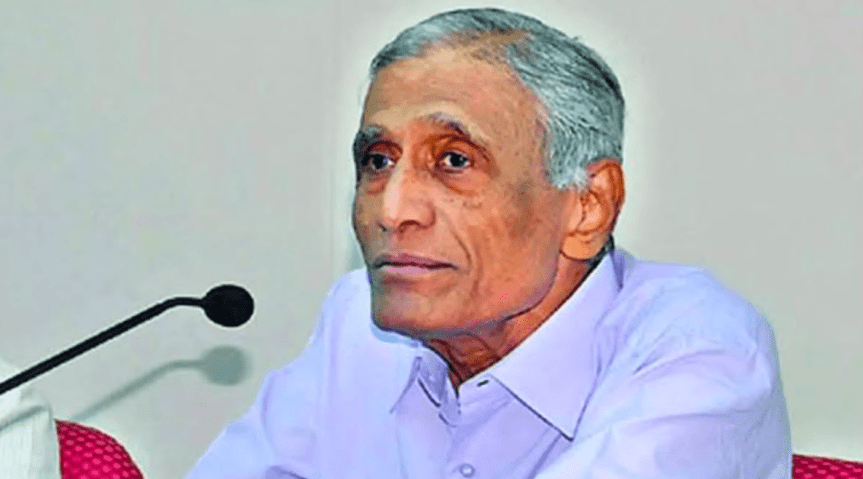
On 13 September 2019, country has lost a dedicated IAS officer (retired) of 1962 batch, Sri Bukkapuram Nadella Yugandhar, popularly known as B.N. Yugandhar, who served in many important positions in Union Government including Prime Minister’s Office and the Planning Commission. He also worked as Director Lal Bahadur Shastri National Academy of Administration, Mussoorie. Sri Yugandhar is from Anantapur district of Andhra Pradesh. It is known to all that great son of India, Sri Neelam Sanjiva Reddy who served as Sixth President of India was also from Anantapur district. 

In 2014, Sri BN Yugandhar’s life added a ‘feather in the cap’ when his erudite son Sri Satya Nadella became CEO of Microsoft. It is pertinent to mention that Microsoft founder Bill Gates was all praises for Sri Satya Nadella, saying “he has successfully charted a course for making the most of the opportunities created by technology and helped the IT giant to stand out in the computing industry”. Sri B.N. Yugandhar reached at the zenith because of his dedication, sincerity and hardwork. He was popular in the country not only among the officials but among the common persons also. When he was Secretary Rural Development in the Government of India, he with his team used to visit different regions of the country to assess and review rural development programmes implemented in their respective state and thus accountability for everyone is assured. And in those days progress of self-employment, wage employment and housing programmes of Ministry of Rural Development, Government of India in all the states were creditable. During his tenure few praiseworthy steps taken by him inter alia, were: 
He was instrumental for institutionalise money flow for watershed development direct to districts from the Central government, bypassing states so that time can be saved.
He played a pivotal role in the SC/ST special component plans — where resources were exclusively allotted to them
As member of Planning Commission, Sri Yugandhar was instrumental in getting an entire chapter on disability issues included in the Plan. 
He worked for upliftment of the marginalised sections of the society and to improve life in rural India. In this regard by quoting Poguri Chennaiah of AP Vyavasaya Vruthidarula Union, it may be stated that “He was instrumental in 30,000 acres passing on to farmers in Anantapur when he was the collector. The issue had festered for years with farmers tilling the land that was on paper classified as government land. Once we brought the issue to his notice, it was solved in three months”.
He authored some books on decentralised planning, land reforms and rural development. After his retirement on superannuation, he for a short period of time served in the National Institute of Rural Development and Panchayati Raj (NIRD&PR), Hyderabad which (NIRD&PR) is an autonomous organisation under the Union Ministry of Rural Development. It is a premier national centre of excellence in rural development and Panchayati Raj. In addition to the main campus at Hyderabad, the Institute has North-Eastern Regional Centre at Guwahati, Assam.
While serving at NIRD&PR, Sri Yugandhar has proved his academic brilliancy for which many faculty members were inspired. Although he left for heavenly abode on 13 September 2019 but his contributions both tangible and intangible will never be erased. 
Dr Shankar Chatterjee
Former Professor & Head (CPME),NIRD & PR ( Govt. of India), Hyderabad,  India
Former Associate Professor, Eritrea

Former Assistant Prof, Govt. Degree College, Tripura, India
Former Senior Planning Officer, Govt of Assam, India 
PRESENT ADDRESS
Prof. Shankar Chatterjee 
Lidom Villa, No.13
Peranchuru, Bandlaguda(Jagir), Hyderabad-5000091

Media Ethics

Media ethics is the subdivision of connected morals managing the
particular moral standards and benchmarks of media, including
communicate media, film, theater, expressions of the human experience,
print media and the web. The field covers many differed and very
questionable points, running from war reporting to Benetton
advertisement battles. Worldwide media ethics goes for building up a far
reaching set of standards and models for the act of reporting during a
time of worldwide news media. New types of communication are reshaping
the act of a once parochial art serving a nearby, provincial or national
open. 
A similar innovation enables news media to spread this data to
gatherings of people dissipated the world over. Media ethics includes
advancing and safeguarding qualities, for example, a general regard
forever and the standard of law and legality. Writing with respect to
the manners by which explicitly the Internet impacts media morals in
news coverage online is rare, subsequently confounding the thought for
an all-inclusive code of media ethics.

Career options in India: Disaster Management as a career Option

Disaster Management is an essential requirement of a modern society. Growing population and critical ecological balance have increased the risk of disaster. Natural disasters like- flood, cyclones, tsunami, flash floods, earthquakes; and man-made disasters like- fire incidents, train/plane crashes, civil structure collapses are just around the corner. The dense population and intense economic activities have raised the potential of the impact of these disasters astronomically. Natural disasters alone have taken 2 million lives according to UN estimates and another 800 million lives were affected directly or indirectly.
Therefore, the need of managing such disasters is more than ever before. The society and governments need to be ready for disasters beforehand; manage the disasters when they occur so that the impact is minimal and rehabilitating fast so that life gets back on the track. Disaster Management is basically a course to do these activities professionally and more systematically.


Career Options

Disaster Management roles can be categorized in 3 major categories-
  1. Disaster Prevention- Disaster prevention is one of the major and most important task of disaster managers. It is focused on activities and measures undertaken to prevent the occurrence of natural disasters and human hazards.
  2. Disaster Preparedness- This would concern with planning, monitoring and policy making regarding disaster management and safety practices.
  3. Disaster Relief- This is managing the disaster hit. Here the focus would be on the immediate recovery- minimizing impact on economy and lives.
  4. Disaster recovery- Here the focus is on bringing the lives back to normalcy. Rehabilitation of people, rebuilding of houses and restarting of economic activities. It would also involve studying the impact of the disaster and cultivating the learning to mitigate the disaster better the next time.


Pros and Cons of a career in Disaster Management

Pros
  • This career gives opportunity to help disaster victims and save lives.
  • By helping to prepare better for disasters, you can help country and society to save millions 
  • The work is exciting and adventurous.
  • As world is learning more about the disasters, the career options are on growth.
Cons
  • The field is still emerging, and the career options and payments are somewhat limited.
  • The work is often in remote areas and on the disaster struck locations.
  • The adventure also comes with significant risk.


How to pursue a career in Disaster Management?

You can complete your graduation in any stream and pursue masters in Disaster Management. You can follow this up with PhD.
The alternative path can be- after competing graduation and take a diploma in Disaster Management.


Top Disaster Management Institutes in India

College
Location
Website
Jamsetji Tata Centre for Disaster Management, Tata Institute of Social Sciences (TISS)
Mumbai
Indian Institute of Ecology and Environment
New Delhi
National Institute of Disaster Management (NIDM)
New Delhi
Indira Gandhi National Open University
New Delhi
School of Distance Learning (Annamalai University)
Annamalai, Tamil Nadu
University Centre for Disaster Management (Guru Govind Singh Indraprastha University)
Dwarka, Delhi
School of Distance learning (Sikkim Manipal University of Health, Medical and Technological Sciences)
Manipal
Department of Geography (Panjab University)
Chandigarh
International Centre of Madras University (Madras University)
Chennai
The Global Open University
Nagaland
National Civil Defense College
Nagpur
Asian Institute of Fire Safety
Chattisgarh
Faculty of Environmental Science, Rajiv Gandhi University
Arunachal Pradesh
North-Eastern Hill University
Shillong


Job Opportunities

As discussed earlier, the job opportunities are still growing in this sector. However, government is updating regulations about this regularly. Manufacturing plants are already required to have safety officers. Government has also constructed NDRF team. 

Other than the organized sector, plenty of opportunities lie with World Bank, UN agencies and NGOs.

Institutional Independence, Financial Autonomy Integral To Independence Of Judiciary: SC

It is most heartening, most gladdening and most refreshing to learn that the Supreme Court has in a recent judgment titled State Of Rajasthan And Ors Vs Shri Ramesh Chandra Mundra & Ors in Civil Appeal No. 457 of 2004 while exercising its civil appellate jurisdiction delivered on July 11, 2019 has very rightly and laudably maintained that institutional independence, financial autonomy is integral to independence of judiciary. There can be no denying or disputing it! This was very rightly held by the Supreme Court while clearly and categorically directing the Rajasthan Government to reconsider the two decade old proposal of the then Chief Justice of Rajasthan High Court to upgrade 16 posts of its Private Secretaries as Senior Private Secretaries which it had declined without even forwarding the same to the Governor. While interpreting the term ‘approval’ in the proviso to Article 229(2) of the Constitution of India, the Apex Court observed that the only ground on which the Government may refuse such proposal of the Chief Justice is that the proposal is not in conformity with the pay scales in civil services.
To start with, this latest, landmark and extremely laudable judgment delivered by a 3 Judge Bench of the Supreme Court comprising of Justice SA Bobde, Justice R Subhash Reddy and Justice BR Gavai sets the ball rolling in para 1 itself wherein it is pointed out that, “The Chief Justice of Rajasthan High Court found it necessary and appropriate to upgrade 16 posts of Private Secretaries as Senior Private Secretaries in the pay scale of Rs. 3450-5000/- with the special pay of Rs. 350/- from the pay scale of Rs.2500-4250/-.”
As we see, it is then pointed out in para 2 that, “Presumably since the decision to upgrade was accompanied by a decision to grant a special pay of Rs. 350/- and to place the upgraded employees in a higher financial implication, the Chief Justice wrote to the Government of Rajasthan for according sanction. This is in pursuance to the proviso to Article 229(2) of the Constitution of India which reads thus:
“229. Officers and servants and the expenses of High Courts: – (1) Appointment of officers and servants of a High Court shall be made by the Chief Justice of the Court or such other Judge or officer of the Court as he may direct:
Provided that the Governor of the State may by rule require that in such cases as may be specified in the rule no person not already attached to the Court shall be appointed to any office connected with the Court save after consultation with the State Public Service Commission.
(2) Subject to the provisions of any law made by the Legislature of the State, the conditions of service of officers and servants of a High Court shall be such as may be prescribed by rules made by the Chief Justice of the Court or by some other Judge or officer of the Court authorized by the Chief Justice to make rules for the purpose:
Provided that the rules made under this clause shall, so far as they relate to salaries, allowances, leave or pensions, require the approval of the Governor of the State.
(3) The administrative expenses of a High Court, including all salaries, allowances and pensions payable to or in respect of the officers and servants of the court, shall be charged upon the Consolidated Fund of the State and any fees or other moneys taken by the Court shall form part of that Fund.””
As it turned out, para 3 then states that, “The matter eventually went to the desk of the Finance Secretary of the Government of Rajasthan who wrote a dissenting note and the Government of Rajasthan declined to accept the upgradation of 16 posts of Private Secretaries. As a result, the government communicated the non-acceptance to the Rajasthan High Court by letter dated 30.04.1998. Apparently, the recommendations of the Chief Justice of the Rajasthan High Court were never sent to the Governor.”
What then ensued is stated in para 4 which envisages that, “The affected Private Secretaries challenged the decision before the High Court by way of filing a writ petition. The Division Bench of the High Court took the view that the powers of the Chief Justice in relation to the appointments, conditions of services which include strength of staff and promotional avenues etc., are supreme. The High Court held that it is the Chief Justice alone who has the power to determine these matters having regard the requirement of the High Court and for better administrative efficiency. The outside agency would have no say in the matter. While so observing, the High Court however held that the salary paid to the staff of the High Court is chargeable to the Consolidated Fund of India and there can be no Executive interference.”
As a consequence, we then see that para 5 states that, “In effect, the High Court held that the decision of the Chief Justice to upgrade the posts is part of the power to increase or reduce the strength of the staff attached to the High Court and there was no requirement of approval of the Governor under the proviso to Article 229(2) of the Constitution of India. The High Court therefore set aside the letter dated 30.04.1998 declining to accept the decision of the Chief Justice of Rajasthan High Court and directed that the letter cannot be an impediment in exercise of such authority. The result is that the approval of the government to the proposal is not necessary. When the matter was heard in this Court, this Court passed an order directing the State Government to put up the matter before the Government of Rajasthan since the proposal of the Chief Justice had not been put up before the Governor.”
To put things in perspective, it is then noted in para 6 that, “It appears that the dissent note of the Finance Secretary of the Government of Rajasthan was put up before the Governor who has approved the dissent. No reasons have been recorded.”
While upholding the decision of Rajasthan High Court, it is then further held in para 7 that, “We find that the judgment of the High Court is undoubtedly correct to the extent that it holds that the decision to upgrade any post can be taken only by the Chief Justice and the said decision cannot be questioned by any authority.”
Furthermore, it is then clarified in para 8 that, “However, it is clear from the proviso to Article 229(2) of the Constitution of India that where any decision of the Chief Justice affects or relates to salaries, allowances, leave or pension, it would require the approval of the Governor of the State. Article 229 of the Constitution of India does not require a prior approval. Therefore, an ex post facto approval may also be valid.”
Moving on, it is then held in para 9 that, “We have no doubt that the decision in question of the Chief Justice of Rajasthan High Court affected the salaries and allowances which should be payable to the upgraded posts. The matter clearly had financial implications which would require the approval of the Government of the State. To that extent the observations of the High Court are not in accordance with Article 229 of the Constitution of India.” 
While pooh-poohing the inept manner in which the State Government and Governor handled this matter, it is then pointed out in para 10 that, “We however find that the matter has not been properly processed by the State Government. In the first instance, the government did not even forward the decision of the Chief Justice for approval to the Governor of the State. They were indeed bound to do so. They merely returned the proposal to the High Court as “not acceptable”. No reasons were given by the Governor.”
While raising a thought provoking question, it is then pointed out in para 11 that, “The present case raises an important question of law, viz., what is the meaning, scope and ambit of the word “approval” appearing in the proviso 229(2)? The issue goes to the very heart of judicial functioning, for without desirable condition of service of officers and servants of the constitutional courts, the administrative side courts may become highly inefficient. The Constitution-makers, recognizing that the officers and servants of constitutional courts require special protection, included the aforementioned provision in the Constitution itself.”
Going forward, para 12 then illustrates that, “The provision in the first draft constitution read differently from the present Art. 229(2). Further, the clause for the Supreme Court (Clause 104) and the High Courts were pari material. Clause 170, which was adopted from Section 228 of the Government of India Act, 1935 read:
“170. The administrative expenses of a High Court, including all salaries, allowances and pensions payable to or in respect of the officers and servants of the court and the salaries and allowances of the judges of the court shall be charged upon the revenue of the Province, and any fees or other moneys taken by the court shall form part of those revenues.”” 
While adding a rider, para 13 then discloses that, “However, Section 228 of the Government of India Act, 1935 contained an additional sub-clause whereby the Governor controlled the expenditures of the High Court. Section 228(2) of the Government of India Act, 1935 read:
“(2) The Governor shall exercise his individual judgment as to the amount to be included in respect of such expenses as aforesaid in any estimates of expenditure laid by him before the Legislature.””
Be it noted, para 14 then brings out that, “Departing from this, the clause was amended by the drafting committee to the following form, seemingly to ensure that the executive does not interfere with the functioning of the High Court:
“205. (2) Subject to the provision of any law made by the Legislature of the State, the conditions of service of officers of a High Court shall be such as may be prescribed by rules made by the Chief Justice of the court or by some other judge or officer of the court authorized by the Chief Justice to make rules for the purpose:
Provided that the salaries, allowances and pensions payable to or in respect of such officers and servants shall be fixed by the Chief Justice of the Court in consultation with the Governor of the state in which the High Court has its principal seat.””
On the face of it, we then see that para 15 stating that, “A similar change was carried out in respect of Draft Article 122 (3), i.e., the provision relating to the Supreme Court. The Article took its final form on 27.05.1949 when in the Constituent Assembly, Dr. Ambedkar moved an amendment to Draft Article 122(2) to the state:
(2) Subject to the provisions of any law made by Parliament, the conditions of services of officers and servants of the Supreme Court shall be such as may be prescribed by rules made by the Chief Justice of India or by some other judge or officer of the court authorised by the Chief Justice of India to make rules for the purpose:
Provided that the rules made under this clause shall, so far as they relate to salaries, allowances, leave or pensions, require the approval of the President.”” 
Truth be told, para 16 then brings out that, “Shri M. Ananthasayanam Ayyangar and Shri Pandit Thakur Das Bhargava raised objections to the amendment of the article on the grounds that it impedes the independence of the judiciary. In reply, Dr. Ambedkar stated that the real object of the provision is to create uniformity in pay scales across all civil services. He stated:
“But it seems to me that there is another consideration which goes to support the proposition that we should retain the phrase “with the approval of the President” and it is this. It is undoubtedly a desirable thing that salaries, allowances and pensions payable to servants of the State should be uniform, and there ought not to be material variations in these matters with regard to the civil service. It is likely to create a great deal of heart burning and might impose upon the treasury an unnecessary burden. Now, if you leave the matter to the Chief Justice to decide, it is quite conceivable- I do not say that it will happen- but it is quite conceivable that the Chief Justice might fix scales of allowances, pensions and salaries very different from those fixed for civil servants who are working in other department, besides the Judiciary, and I do not think that such a state of things is a desirable thing, and consequently in my judgment, the new draft, the new amendment which I have tabled contains the proper solution of this matter, and I hope the House will be able to accept that in place of the original proviso.””
More importantly, it is then observed in para 17 that, “On a reading of the constituent assembly debates, it is clear that the real object of the proviso is to ensure that the pay-scales between officers of constitutional courts and civil services are kept equal. In the present case, this purpose has not been violated. It is not open to the government to reject a proposal which is not in violation of this object. In other words, the only ground on which the Government may refuse the proposal of the Chief Justice is that the proposal is not in conformity with the pay scales in civil services.”
What’s more, para 18 then stipulates that, “In Supreme Court Employees’ Welfare Assn. v. Union of India, (1989) 4 SCC 187 it was held that the conditions of service of officers and servants of the Supreme Court in relation to salaries, allowances, leave or pension are to be decided by the Chief Justice and his proposal will ordinarily be accepted by the President. It was held:
“62. Thus, as delegated legislation or a subordinate legislation must conform exactly to the power granted. So far as the question of grant of approval by the President of India under the proviso to Article 146(2) is concerned, no such conditions have been laid down to be fulfilled before the President of India grants or refuses to grant approval. By virtue of Article 74(1) of the Constitution, the President of India shall, in exercise of his functions, act in accordance with the advice of the Council of Ministers. In other words, it is the particular department in the Ministry that considers the question of approval under the proviso to Article 146(2) of the Constitution and whatever advice is given to the President of India in that regard, the President of India has to act in accordance with such advice. On the other hand, the Chief Justice of India has to apply his mind when he frames the rules under Article 146(2) with the assistance of his officers. In such circumstances, it would not be unreasonable to hold that the delegation of the legislative function on the Chief Justice of India and also on the President of India relating to the salaries, allowances, leave and pensions of the officers and servants of the Supreme Court involve, by necessary implication, the application of mind. So, not only that the Chief Justice of India has to apply his mind to the framing of rules, but also the Government has to apply its mind to the question of approval of the rules framed by the Chief Justice of India relating to salaries, allowances, leave or pensions. This condition should be fulfilled and should appear to have been so fulfilled from the records of both the Government and the Chief Justice of India. The application of mind will include exchange of thoughts and views between the Government and the Chief Justice of India and it is highly desirable that there should be a consensus between the two. The rules framed by the Chief Justice of India should normally be accepted by the Government and the question of exchange of thoughts and views will arise only when the Government is not in a position to accept the rules relating to salaries, allowances, leave or pensions.””
Do note, para 19 then states that, “It seems to us that the proviso to 229(2) (as also Article 146) does not reflect an architecture of hierarchy. We think that the correct constitutional approach is one of comity between different institutions working under the Constitution. The emphasis is not on the supremacy of one institution or demarcating the boundaries of the other. It is about ensuring institutional integrity of one while respecting the functional domain of the other. These provisions are meant to facilitate a dialogue of governance between high constitutional functionaries. A healthy dialogue, perhaps, even a debate is necessary for an efficient constitutional polity. The constitutional vision is not to draw “lakshman rekhas” between constitutional functionaries; its command is for the constitutional functionaries to efficiently coordinate to best achieve constitutional goals. It is this constitutional essence that was ignored when the request of the Ld. Chief Justice was not even placed before the Governor.”
Most importantly, it is then rightly underscored in para 20 that, “That independence of Judiciary is part of the basic structure of the Constitution is now well entrenched. The Constitution has insulated the Judiciary from outside influences both by the Executive and legislature. Article 223 to 234 in Chapter VI in part VI of the Constitution dealing with the Courts below the High Courts also show that the Constitution makers were equally keen to insulate even Subordinate Judiciary. Independence of Judiciary takes within its sweep independence of the individual Judges in relation to their appointments, tenure, payment of salaries and also non-removal except by way of impeachment. An integral part of ‘Independence of Judiciary’, as a constitutional value is the ‘Institutional Independence’ i.e. the aspect concerning the financial freedom or autonomy which the judiciary must possess and enjoy. This effective involvement of the judicial branch in budgeting, staff and infrastructure has also been recognized by the international community.”
In this context to what is mentioned in the last point of para 20, it would be worthwhile to mention what is then mentioned in para 21 that, “The United Nations Sub Committee in its preliminary reports in 1980, (Committee of Jurist and the International Commission of Jurist at Syracuse) emphasized the “Institutional Safeguards” for Independence of the Judiciary and the need for collaboration with the Judiciary in the preparation of budget. The relevant clauses are as under:-
“Financial Provisions: 
Article 24:- To ensure its independence the Judiciary should be provided with the means and resources necessary for the proper fulfillment of its Judicial Function.
Article 25:- The budget of the Judiciary should be established by the competent authority in collaboration with the judiciary. The amount allotted should be sufficient to enable each court to function without an excessive workload. The judiciary should be able to submit their estimate of their budgetary requirements to the appropriate authority.
[Note:- An inadequate provision in the budget may entail an excessive workload by reason of an insufficient number of budgetary posts, or of inadequate assistance, aids and equipments, and consequently by the cause of unreasonable delays in adjudicating cases, thus bringing the judiciary into discredit.]””
Not stopping here, it is then further pointed out in para 22 that, “The Universal Declaration of the independence of Judges has resolved as follows:
“2.40: The main responsibility for court administration shall vest in the judiciary.
2.41: It shall be a priority of the highest order of the state to provide adequate resource to allow for the due administration of justice, including physical facilities appropriate for the maintenance of Judicial independence, dignity and efficiency, judicial and administrative personnel; and operating budget.
2.42: The budget of the courts shall be paid by the competent authority in collaboration with the judiciary. The Judiciary shall submit their estimate of the budget requirement to the appropriate authority.””
Interestingly enough, it is then further stated in para 23 that, “The Seventh UN Congress on the prevention of Crime and treatment of offenders, Milan adopted the following resolutions:-
“7. It is the duty of each member state to provide adequate resources to enable the Judiciary to properly perform its function.””
Of course, para 24 then also points out that, “The Lusaka Seminar 1986 noted as follows:-
“23. Resources.
The executive shall ensure that the courts are adequately supplied with Judicial Officers and supporting staff.
49. Administration of the Post.
The Judiciary being a separate branch of Government should fall under the sole responsibility of the Chief Justice. Problem may arise when the Judicial Branch is considered as a department of a Ministry. Condition should therefore be created whereby the Judiciary has a greater say in the allocation of funds for the Judiciary.””
No doubt, it would be imperative to now mention that para 25 then reveals that, “Adequate budgeting so as to meet the judiciary’s work demands, so as to ensure proper infrastructure and facilities is integral to judicial functioning. In that sense, it is an aspect of judicial independence. That independence of Judiciary is part of the basic structure of the Constitution is by now well entrenched. An integral part of ‘Independence of Judiciary’, as a constitutional value is the ‘Institutional Independence’ i.e. the aspect concerning the financial freedom or autonomy which the judiciary must possess and enjoy.” 
More pertinently, it is then elucidated in para 26 that, “The scheme of Article 229 of the Constitution of India obviously requires a joint consideration of the proposal which the Chief Justice may make in regard to appointments, conditions of services, etc., in accordance with the Rules. Undoubtedly, if the Chief Justice takes a decision which has financial implications and that decision cannot be questioned by any authority, the financial implications which such decisions may have imposed, should receive due consideration at the hands of the State Government and eventually the Governor.”
For the sake of brevity, we have discussed only the key point of para 26. As a corollary, we further see that it is then observed in para 27 that, “We are in agreement with the above observations and find that in the present case, the State Government has not considered the issue in accordance with the spirit and letters of the Constitution of India.”
Suffice it to say, it is then held in para 28 that, “Having regard to the importance of the matter, we consider it appropriate to set aside the decision of not accepting the proposal of the Chief Justice and remand the matter back to the State Government for appropriate consideration. Undoubtedly, in case the State Government considers it necessary, it may hold a meeting with the concerned officers of the Rajasthan High Court as may be appropriate for resolving the issue.” Para 29 then says that, “Order accordingly.” Lastly, it is then held in para 30 that, “The instant appeal is disposed of in the above terms.”
In conclusion, it may well be said that this latest, landmark and extremely laudable judgment has sought to send the right, loud and unmistakable message to all the state governments and state governors that institutional autonomy and financial independence is integral to the independence of judiciary. Also, the decision to upgrade any post can only be taken by the Chief Justice of the concerned High Court and the said decision cannot be questioned by any authority. Also, in such cases where Chief Justice takes decision which cannot be questioned should receive due consideration from the State Government and eventually the Governor! There can be no two opinions that the State Government and the Governor should desist from not accepting what is recommended by the Chief Justice in such cases in keeping with what the Apex Court has clearly and convincingly held in this noteworthy case! 
Sanjeev Sirohi, Advocate,
s/o Col BPS Sirohi,
A 82, Defence Enclave,
Sardhana Road, Kankerkhera,
Meerut – 250001, Uttar Pradesh.


The allure of the journal impact factor holds firm, despite its flaws

Many researchers still see the journal impact factor (JIF) as a key metric for promotions and tenure, despite concerns that it’s a flawed measure of a researcher’s value.
A journal’s impact factor indexes the average number of citations its recently published articles receive. As critics have noted, it’s often driven by a small number of highly cited articles, is vulnerable to being gamed by editorial policy, and is not calculated in a transparent way. Nonetheless, it remains an integral part of the Review, Promotion and Tenure (RPT) process at many academic institutions.
A recent survey of 338 researchers from 55 universities in the United States and Canada showed that more than one-third (36%) consider JIFs to be “very valued” for promotions and tenure, and 27% said they were “very important” when deciding where to submit articles.
The survey was led by Meredith Niles, assistant professor at the Department of Nutrition and Food Sciences at the University of Vermont, and was part of a larger study, published as a preprint on bioRxiv, investigating how researchers feel about the JIF.
It found that the respondent’s age or status had no bearing on what they perceived to be the value of the JIF in the RPT process. But non-tenured and younger researchers, for whom RPT matters most, put more weight on JIFs when deciding where to publish.
The respondents also indicated a belief that their peers placed more importance on the JIF than they did. Niles describes this as a form of “illusory superiority”, whereby people tend to view themselves in a more favourable light than others.
This result indicates the need for “honest conversations” about what really matters when communicating academic research, Niles says.
“If we don’t actually care about the JIF as much as factors such as readership and sharing the results of our work with people who can most advance our field, then let’s stop pretending we care and treating it as the gold standard.”
A call for research assessment reform
The survey follows a study from the same project, published in eLife last month, which analyzed the text of 864 RPT documents from 129 North American universities.
Overall, 30 of the institutions (23%) referred to impact factors or related phrases such as “high impact journal” in at least one of their RPT documents. That figure rose to 40% for research-intensive institutions.
“Faculty often talk about impact factors as featuring heavily in evaluations, but we weren’t aware of any studies that had tried to quantify its use,” says lead author, Erin McKiernan, professor in the Biomedical Physics programme at the National Autonomous University of Mexico.
Among the 30 universities that mentioned impact factors, the majority (87%) supported their use. Just four (13%) expressed caution against using them.
McKiernan notes that the analyses did not include possible indirect references to JIFs such as “top-tier journal”. “We may be seeing only the tip of the iceberg,” she says.
According to Björn Brembs, a neuroscientist from the University of Regensburg, in Germany, who reviewed the study for eLife, the continuing deference to the JIF shows how scientists can be highly critical in their own subject domain, yet “gullible and evidence-resistant” when evaluating productivity.
“This work shows just how much science is in dire need of a healthy dose of its own medicine, and yet refuses to take the pill,” he says.
Anna Hatch, community manager of the San Francisco Declaration on Research Assessment(DORA), which cautions against the use of journal-level metrics in academic evaluations, adds that the results provide an important benchmark by which to measure progress in research assessment reform.
“I hope the findings inspire faculty, department chairs, and other university administrators to examine their RPT documents and, if necessary, have frank discussions about how to best evaluate researchers without relying on proxy measures of quality and impact,” she says.

A Guide For Building Sustainable Smart Cities

Smart cities must fulfil the need for sufficient fresh water, universal access to cleaner energy, ability to travel efficiently from one point to another, sense of safety and security, among others. Smart cities need to be able to efficiently combine a smart physical layer (ability to use sensors to connect physical assets like buildings, public transportation, energy grid, etc) with a smart digital layer (increasingly mixing capabilities like Big Data, AI, the IoT and the like) to crunch data collected and turn it into actionable decisions on the field, in a cost-efficient way.
Smart cities help create an urban environment for adapting to the needs of the population in the most environment-friendly, economically and socially-conscious way. These cities use data from people, vehicles, buildings and things to improve citizens’ life and minimise the environmental impact of the cities. These are continuously monitored through the Internet of Things (IoT) to maximise efficiency. Smart cities operate as one big data-driven ecosystem to avoid accidents, emissions and congestion. These employ a combination of low-power sensors, wireless networks, and Web and mobile-based applications, and use technology and data purposefully to make better decisions and deliver a better living experience.
Smart cities are collaborative projects that bring together technology, industry and governments. Technologies used for smart cities should be able to share data in an efficient, secure and open manner. Successful smart-city projects collect, manage and use data to improve living and workplace standards. Application-driven data is used by both humans and artificial intelligence (AI) to deliver back innovation and efficiencies to the cities.

Why a city needs to be smart

Cities are a pillar of our economic growth. But these can have several inefficiencies with the growing population due to migrators from less-developed cities and villages. Cities can be called developed when there is availability of good education, healthcare facilities, job opportunities, transport facilities, sanitation facilities, and good law and order practises to provide safe and secure places to live.Making a city smart means utilising digital technology and data to solve such problems as traffic management, waste management, monitoring available parking spaces, controlling humidity and temperature levels in the environment, maintaining quality of tap water, waste-water management, sound monitoring and so on.
Cities can be smart but still not livable. Hence, the aim of making smart cities should be to use technology as a tool to deliver sustainable solutions. Technologies like the Internet, the IoT, smartphones, smart meters, smart plugs, smart taps or showers, and other networks of sensors can be used to develop such cities.

What makes a city smart

Smart cities must include infrastructure that helps provide a better quality of life for its citizens. Adapted smart solutions should create a cleaner and more sustainable environment. Data helps in accessing patterns or inefficiencies to improve living standards for the citizens. The same data can be used to better plan the cities in the future and create a framework for smart cities that constantly get more efficient over time.
Smartphones help provide instant information about transit, traffic, health services, safety alerts, community news and everything else needed to know about the cities, in real time. These provide notifications about the best times to travel, personalised energy usage, tips for improving eating habits, etc.
Stephane Dejean, chief marketing officer, Kerlink, says, “From rural towns to bustling metropolises, municipal officials around the world are facing increasing challenges raised by climate change, population growth, appropriate infrastructure development and access to basic sanitation. Leveraging IoT networks, authorities can streamline the use of city infrastructure and deliver tailored services to citizens, while monitoring critical indicators.
“Cities now have the opportunity to easily, flexibly and cost-efficiently deploy, operate and monetise carrier-grade IoT connectivity on their own. These networks turn out to be key assets that cities want to control, financially and/or operationally, and that can be combined to power a growing diversity of use cases. Considering their budget challenges, cities are also looking for a better trade-off between financial sources and possible business models over time. Opting for a relevant alternative like low-power wide-area networks (LPWAN) and selecting a partner that can quickly and easily adapt to evolving collaboration models enable cities to address both their technical needs and financial challenges.”

Developing a sustainable city

To build future-ready smart cities, there are a few fundamental things that are required to establish a stable and adaptable framework.

Smart infrastructure

This is required to establish a foundation for digital economic development. Heating, energy usage, lighting and ventilation in buildings are managed and optimised by technology. Water-leakage detection and water potability monitoring are integrated into smart buildings. Rooftop gardens or side vegetations are integrated into building designs to produce oxygen and absorb carbon-dioxide.
Smart infrastructure also includes city-wide Wi-Fi for public use to provide real-time information on traffic congestion, parking spaces and other amenities. The aim of smart parking is to reduce both car emissions and traffic.
Smart roads are prepared for autonomous vehicles and self-driving car traffic system integration. With smart drainage systems and filtration, cities could drastically improve local living conditions. Smart lighting control systems reduce energy consumption, carbon emissions and maintenance costs, while providing a safe environment.

Security

Creating cities that are affordable and safe should be the priorities. This ensures secure and efficient operation of critical applications developed for the smart cities, which rely on constant connectivity to volumes of data from stationary and moving sensors, which is transformed into useful information through data analytics to provide a better quality of life. Failure to secure this data can cause extreme damage.
Be it a residential complex, market, school, hospital, district centre or public transport, sustenance of any urban setup is impossible without robust security measures. But with the advent of AI, the concept of a smart city is viable as well as feasible. AI has empowered security to automatically learn and detect crimes.

Sustainable energy

Solar panels are integrated into building design, replacing traditional materials. Solar and wind energy can be collected throughout the day by fully integrating these into roads, buildings and residential areas. Smart grids are used for energy consumption monitoring and management. These conserve energy in places that might not need power and then send it to areas that may need even more power.
A building can become entirely self-sufficient by using technology like solar windows. Unused energy generated can be offered to vehicles in the local area. By 2060, cargo will travel through hyperloop and will be moved rapidly around the world in smart containers that know their contents and their destination. Ports themselves will be automated, running on renewable energy and having zero carbon emissions.
Development of smart cities will require more energy, so the focus should be on sustainable energy sources. For example, cities can pave the roads with some kind of material that converts solar energy into electricity. Automobiles can be equipped with solar panels on roofs. Autonomous, environment-friendly, efficient transport can save time and money, too.

Digitalisation and automation

Smart cities use IoT devices and sensors to gather and analyse information across the infrastructure. This helps city authorities to intelligently manage their assets, increase efficiency, revolutionise transport, reduce costs and enhance the overall quality of life for residents.

Management

This is the last but the most important stage of building a smart city. It requires a platform that features AI and machine learning to monitor and improve smart city projects.

Initiatives for making smart cities

A prime example here is managing energy use in buildings—heating, air-conditioning and lighting—while maintaining comfortable room temperatures, monitoring facility status like occupancy and availability. These end-to-end solutions offer user-friendly apps on officials’ smartphones and provide programmed, automatic rule-based responses to changing environmental or weather conditions. Monitoring and counting the movements and whereabouts of building occupants or citizens in public areas also bring an effective smart-city application. The same way, LoRaWAN’s native geolocation capability also enables cities to track their assets.
Sustainability is a critical aspect of smart-city networks. Outdoors, cities can leverage low-power wide-area (LPWA) sensors and networks for traffic monitoring, streetlighting, parking availability, waste collection in addition to noise detection, like gunshots, and environment sensing.
In Kakinada, India, Kerlink’s Wirnet TM stations are powering a comprehensive, ambient air-quality monitoring system designed by Oizom that monitors air and noise pollutions and other environmental hazards.
Chengyang is a smart city project established by Huawei. It converts a wasteland into arable land capable of growing seawater rice using a combination of sensors, wireless and deep learning technologies. It feeds 80 million people using previously unusable land. This innovation is now being applied in other parts of the world.
India Maven, a smart-city solution provider from Pune, provides smart solutions in the fields of water and energy metering, lighting, agriculture, ambulance tracking, medical wearables, firefighting, city-pollution monitoring, smart parking, renewable energy management system and intelligent traffic management.
Dejean adds, “With increasing vital IoT deployments for cities, utilities, airports, harbours, farms, manufacturing plants and other sectors, we have LoRaWAN IoT connectivity building block. We also have industrial-grade network infrastructure—indoor and outdoor carrier-grade range of LoRaWAN gateways—with a full suite of user-centric value-added services that empower cities of any size to efficiently manage their IoT connectivity. The Wanesy Management Center, Kerlink’s Wanesy Geolocation and Wanesy Device Management solution value-added services can help cities not only manage/locate their assets and remote sensors, but also help them improve the services they grant to their citizens, like traffic information, parking availability, weather forecast, public-building attendance and public-private partnerships (PPP).”
Smart City Expo World Congress is looking to establish frameworks that will shape the collaborative approach to establish smart cities of the future. Its theme for 2018 was to determine how to structure smart cities in a future-proof and innovative manner.
International Electrotechnical Commission (IEC) Market Strategy Board brings together chief technology officers of leading companies to guide city planners and regulators, and develop standards in an effort to move cities to greater smartness.
Many places have a number of projects implemented on the ground, but these do not scale up because there are no steps taken at the national level or by individual government bodies. As more and more people are migrating towards cities, it is essential to develop a sustainable environment to make these places worth living. Human behaviour as a city dweller is changing, so everything has to be taken into account, including building material, climate, technology and so on while designing and building the cities of tomorrow.

Conclusion

Smart cities must fulfil the need for sufficient fresh water, universal access to cleaner energy, ability to travel efficiently from one point to another, sense of safety and security, among others. Smart cities need to efficiently combine a smart physical layer (ability to use sensors to connect physical assets like buildings, public transportation, energy grid, etc) with a smart digital layer (increasingly mixing capabilities like Big Data, AI, the IoT and the like) to crunch data collected and turn it into actionable decisions on the field, in a cost-efficient way. These cities need to meet the needs of current and future generations, and to maximise benefits while minimising the negative aspects of their daily living.

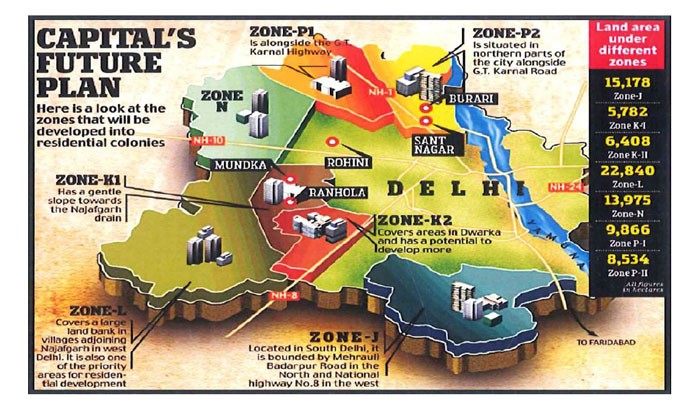
Land Pooling : A transformative step for Urbanisation

Shri
Hardeep S Puri, Minister of State (I/C) for Housing & Urban Affairs
has stated that the land pooling policy based on public private
partnership in land assembly in urban development represents a
paradigmatic shift, wherein land is being pooled and is to be developed
by private landowners. He further informed that the owners/group of
owners can pool land parcels of any size for development as per
prescribed norms and guidelines based on sectors as delineated in ZDPs.
“The Policy mandates that each sector will have a 60:40 ratio with 60%
of the land to be developed by Land owners/consortium for residential,
commercial, partly Public Semi Public (PSP) land uses and 40% of the
land to be used for various city level infrastructure requirements
including roads, greens, PSP facilities, development of utilities i.e.
water, sewerage, electricity etc. with involvement of private sector”,
he added.  He was speaking at a Conference on ‘Land Pooling : Building
India Capital – Opportunities in Real Estate and Infrastructure
organized by Delhi Development Authority(DDA) in association with the
Federation of Indian Chambers of Commerce & Industry(FICCI), here
today.   Shri Anil Baijal, Lieutenant Governor of Delhi, Shri Tarun
Kapoor, Vice Chairman, DDA besides land developers, stakeholders and
urban planners were also present at the Conference.
Land Pooling :  A transformative step for Urbanisation

Dwelling
on DDA’s commitment towards operationalization of the policy on fast
track mode, the Housing Minister said that DDA had launched portal for
inviting Expression of Willingness for participation earlier
this year wherein any landowner of contiguous land parcel of any size
falling in 95 villages of Planning Zones K-1, L, N and P-II could come
forward to register on the website. DDA conducted an extensive public
outreach program to raise awareness about the policy and educate the
citizens of Delhi on its benefits. This outreach program has paid
dividends – as on 06.09.2019, a total of over 6000 hectares (approx) of
land has been registered under the portal expressing their willingness
for participation with maximum registrations in Planning Zone N.
The
Land Pooling Policy augurs well for shaping Delhi’s urban landscape,
bolstering economic growth and improving living standards. DDA proposes
to take up planning of the sectors which are likely to achieve the
minimum threshold of 70% as Model Sectors on priority to generate
momentum in real estate and infrastructure sector. Under the policy,
every 1000 hectares of pooled land will accommodate about 3,85,000
persons in approx. 85,000 Dwelling Units. About 17 lakhs Dwelling Units
are expected to be constructed  of which approx. 5 lakhs will be
available under EWS category. The housing generated under the Land
Pooling Policy will be a key input in economic, social, and civic
development of the city. Simultaneously, development of the trunk
infrastructure i.e. roads, water supply, electricity supply, etc. will
be taken up by DDA in coordination with the service providing agencies.
Shri
Anil Baijal, LG of Delhi during his address stated that the success of
the policy largely depends on the provision of fast, time bound planning
and development of city level infrastructure and infusion of capital
which will act as a catalyst for integrated development of the sectors
and zones. “While, DDA in close coordination with service providing
agencies such as Transco, DJB, local bodies etc will work towards it,
the participation of the private sector is equally important.  The
required capital investment for development of smart infrastructure,
housing, schools, medical facilities etc. requires deliberation on
collaborative models between DDA, Service providing Agencies, landowners
with investors/real estate segment. This conference is a step towards
this effort to partner and get on board Investors, Real Estate
Developers, Banking sector and experts for making this policy a
success.   Delhi is at the cusp of urban innovation and presents an
untapped opportunity for Real Estate and Infrastructure Development. It
is envisaged that Smart city solutions deployed in 109 land pooling
sectors will turn these new urban centres in ‘smart neighbourhoods’. The
envisioned city level development under the Policy will provide the
high speed transport system, world class infrastructure facilities i.e.
24 hours water supply, power, pipe gas connectivity, health and
education facilities in these green field areas. Therefore, it is
anticipated that significant yields for both land owners and investors
will be garnered with the implementation of the Policy”, he added.
Shri
Tarun Kapoor, VC, DDA expressed hope that this Conference will provide
an opportunity to deliberate key issues pertaining to development of
Delhi.  The industry perspective was provided by Mr.Sanjay Dutt,
Chairman, FICCI Real Estate Committee & Managing Director and Chief
Executive Officer, Tata Realty and Infrastructure Ltd.

Scholastic Journalism

Student journalists request brilliance
in training from their news coverage counselors and projects. They
request educating in media law and morals, mindful announcing, and
successful journalistic practices. They gain best from counsels who have
been prepared in expert gauges. Journalists teach people in general
about occasions and issues and how they influence their lives. 
They
invest quite a bit of their energy talking with master sources, looking
open records and different hotspots for data, and in some cases visiting
the scene where a wrongdoing or other newsworthy event occurred