
Government policies regarding Education in India.

Before 1976, education was exclusively the responsibility of states; the Central government was only concerned with certain areas like co-ordination and determination of standards in technical and higher education, etc. In 1976, through a Constitutional amendment, education became a joint responsibility.

The Indian government has been trying to enhance the quality of education since the time of independence. There have been numerous policies and schemes that aimed at providing better education for everyone, irrespective of caste and religion. Indian constitution allows children with the right to education, which means that education isn’t just something that children want, it is their right.

The Indian government has had some long-term education policies along with some latest additions. Mentioned below are some of the best schemes that were framed to promote education in India-

Samagra Shiksha

Under this scheme, the government has decided to treat the school education from class 1 to 12 holistically and without segments. This scheme is framed to increase the efficiency of school education and provide students with better facilities to promote holistic growth. This has been done due to the long-time need for change in the education system of India.

Eklavya Schools

A lot of scheduled caste and minority people face issues like discrimination while trying to get educated; they generally don’t have enough money to have a proper education. This is why the government of India introduced this scheme. Under this scheme, special schools are to be made for scheduled caste and minority students that will provide basic education along with skill development in sports and other fields. This is being done to provide them equal opportunities.

Free education for poor

This was a masterstroke by the state government of Assam, and under this everyone with a BPL card will be allowed to avail free high quality senior secondary education, polytechnic and other degree courses from government institutions. This is done to help people to get an education even if they cannot afford it. This is sure to promote education in those areas.

Scholarships

One of the main reasons for people opting for not to educate their kids is due to limitations caused due to lack of money. Indian government runs a lot of scholarship schemes like Kanya Vidhya Dhan, which aims at providing funds for the education of girls. Similarly, there are a lot of other programs that cover meritorious students, minorities, etc.

Providing sanitation facilities

One of the main reasons for girls not attending schools in India was the lack of female sanitation facilities in government schools. Government has implemented a variety of policies and schemes to tackle this situation. Now over 80% of schools in India have proper sanitation facilities for students. This has worked efficiently till now and the government is planning to invest more in this area.

Gender education

Telangana government has announced that all the schools coming under their jurisdiction have to facilitate gender education to students compulsorily. This step will help in reducing the widespread inequality in gender in backward areas. Gender inequality is one of the main reasons as to why a lot of Indian kids don’t get a proper education.

Mid-day meals

This is one of the oldest running educational policies of the Indian government. Under this policy, primary schools in rural areas offer a one-time meal to their students. This policy has worked wonders and has been efficiently doing so for a long time now. The schools have to provide meals to students according to the government prescribed meal chart, to facilitate proper growth among students.

Free stationary and dress

Government schools have this policy for a long time now due to its efficiency. Under this policy, 2 members from a family that have a BPL card are allowed to get education from government schools without paying the fee. Stationery and schools dress are also provided to them.
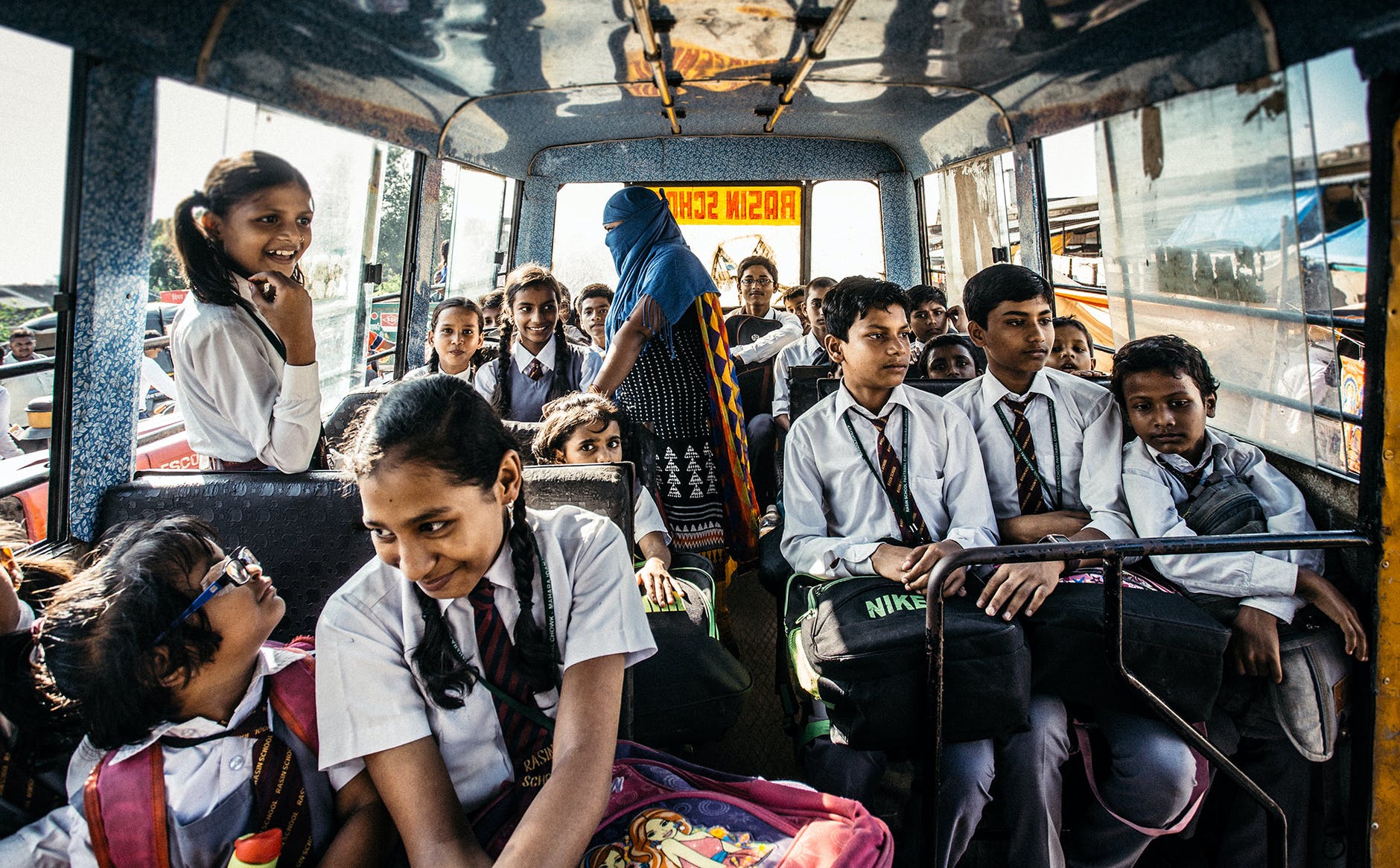
Government policies regarding Education in India.

Before 1976, education was exclusively the responsibility of states; the Central government was only concerned with certain areas like co-ordination and determination of standards in technical and higher education, etc. In 1976, through a Constitutional amendment, education became a joint responsibility.

The Indian government has been trying to enhance the quality of education since the time of independence. There have been numerous policies and schemes that aimed at providing better education for everyone, irrespective of caste and religion. Indian constitution allows children with the right to education, which means that education isn’t just something that children want, it is their right.

The Indian government has had some long-term education policies along with some latest additions. Mentioned below are some of the best schemes that were framed to promote education in India-

Samagra Shiksha

Under this scheme, the government has decided to treat the school education from class 1 to 12 holistically and without segments. This scheme is framed to increase the efficiency of school education and provide students with better facilities to promote holistic growth. This has been done due to the long-time need for change in the education system of India.

Eklavya Schools

A lot of scheduled caste and minority people face issues like discrimination while trying to get educated; they generally don’t have enough money to have a proper education. This is why the government of India introduced this scheme. Under this scheme, special schools are to be made for scheduled caste and minority students that will provide basic education along with skill development in sports and other fields. This is being done to provide them equal opportunities.

Free education for poor

This was a masterstroke by the state government of Assam, and under this everyone with a BPL card will be allowed to avail free high quality senior secondary education, polytechnic and other degree courses from government institutions. This is done to help people to get an education even if they cannot afford it. This is sure to promote education in those areas.

Scholarships

One of the main reasons for people opting for not to educate their kids is due to limitations caused due to lack of money. Indian government runs a lot of scholarship schemes like Kanya Vidhya Dhan, which aims at providing funds for the education of girls. Similarly, there are a lot of other programs that cover meritorious students, minorities, etc.

Providing sanitation facilities

One of the main reasons for girls not attending schools in India was the lack of female sanitation facilities in government schools. Government has implemented a variety of policies and schemes to tackle this situation. Now over 80% of schools in India have proper sanitation facilities for students. This has worked efficiently till now and the government is planning to invest more in this area.

Gender education

Telangana government has announced that all the schools coming under their jurisdiction have to facilitate gender education to students compulsorily. This step will help in reducing the widespread inequality in gender in backward areas. Gender inequality is one of the main reasons as to why a lot of Indian kids don’t get a proper education.

Mid-day meals

This is one of the oldest running educational policies of the Indian government. Under this policy, primary schools in rural areas offer a one-time meal to their students. This policy has worked wonders and has been efficiently doing so for a long time now. The schools have to provide meals to students according to the government prescribed meal chart, to facilitate proper growth among students.

Free stationary and dress

Government schools have this policy for a long time now due to its efficiency. Under this policy, 2 members from a family that have a BPL card are allowed to get education from government schools without paying the fee. Stationery and schools dress are also provided to them.

New Education Policy : Key Highlights.

The Union Cabinet chaired by the Prime Minister have approved the new National Education Policy 2020, making way for large scale, transformational reforms in both school and higher education sectors. This is the first education policy of the 21st century and replaces the 34-year-old National Policy on Education (NPE), 1986.

The New Education Policy 2020 has come up as a in the education sector as it aims at creating an equitable and vibrant knowledge for the society by providing high-quality education to all. Also it encourages to develop a deep sense of respect towards the fundamental rights, duties and Constitutional values, bonding with one’s country, and a conscious awareness of one’s role and responsibilities in a changing world. The New Education Policy believes in instilling skills, values, and dispositions that support responsible commitment to human rights, sustainable development and living, and global well-being, thereby reflecting a truly global citizen.

The key highlights of NEP are.

Early Childhood Care Education

The policy focuses on the importance of providing education to children between the age group of 3-6 years at an early age. The kids in the age group 3-5 years will be provided education through the current set-up of pre-schools and anganwadis, and those between the ages of 5-6 years will be included in the schooling system by 2025.

School Education for All

Aiming to make education from pre-primary level till the 12th grade universally accessible, NEP 2020 is looking to achieve 100% Gross Enrollment Ratio in providing the school education by 2030.
New Curriculum & Pedagogical Structure.

The new policy has eliminated the 10+2 education system and replaced it with a more organized 5+3+3+4 structure, that is, 5 years of primary education (for the age group 3-8 years), 3 years of preparatory stage (for the age group 8-11 years), 3 years of middle stage (for the age group 11-14 years), and 4 years of secondary stage (for the age group 14-18 years).

The Flexibility of Choosing Courses

There will be no rigid demarcations between vocational and non-vocational, science and arts, curricular and extra-curricular activities, thus providing equal emphasis on all the subjects and courses. Also, the students will have more choices and flexibility while picking up the subjects they want to study so that their educational path is more focused on their skills and interests.

Emphasis on Mother Tongue & Multilingualism

The policy emphasizes on the inclusion of local language in the curriculum with the medium of instructions in all the schools till at least class 5 (but preferably till 8th standard and beyond) to be either in mother tongue or regional language. Subsequently, foreign languages will be offered as options for students in secondary schools. It also states that Indian Sign Language (ISL) will be standardized across the country.

Assessment System

As per the new policy, though the board examination for 10th and 12th grades will continue to be in place, the structure of the exams will be reformed to make them easier by focusing on core competencies of the students, thus eliminating the need of coaching classes at these stages. Also, the school examinations will be conducted by proper authorities only in grades 3, 5, and 8.

Multidisciplinary Education

The students will be provided with multi-disciplinary holistic education at the undergraduate level to ensure an integrated exposure with multiple entry and exit options. The 3 or 4-year duration undergraduate degree will have exit options (with certifications) during the entire course – a certificate after 1 year, diploma after 2 years and/or a bachelor’s degree after 3 years.

New Education Policy : Key Highlights.

The Union Cabinet chaired by the Prime Minister have approved the new National Education Policy 2020, making way for large scale, transformational reforms in both school and higher education sectors. This is the first education policy of the 21st century and replaces the 34-year-old National Policy on Education (NPE), 1986.

The New Education Policy 2020 has come up as a in the education sector as it aims at creating an equitable and vibrant knowledge for the society by providing high-quality education to all. Also it encourages to develop a deep sense of respect towards the fundamental rights, duties and Constitutional values, bonding with one’s country, and a conscious awareness of one’s role and responsibilities in a changing world. The New Education Policy believes in instilling skills, values, and dispositions that support responsible commitment to human rights, sustainable development and living, and global well-being, thereby reflecting a truly global citizen.

The key highlights of NEP are.

Early Childhood Care Education

The policy focuses on the importance of providing education to children between the age group of 3-6 years at an early age. The kids in the age group 3-5 years will be provided education through the current set-up of pre-schools and anganwadis, and those between the ages of 5-6 years will be included in the schooling system by 2025.

School Education for All

Aiming to make education from pre-primary level till the 12th grade universally accessible, NEP 2020 is looking to achieve 100% Gross Enrollment Ratio in providing the school education by 2030.
New Curriculum & Pedagogical Structure.

The new policy has eliminated the 10+2 education system and replaced it with a more organized 5+3+3+4 structure, that is, 5 years of primary education (for the age group 3-8 years), 3 years of preparatory stage (for the age group 8-11 years), 3 years of middle stage (for the age group 11-14 years), and 4 years of secondary stage (for the age group 14-18 years).

The Flexibility of Choosing Courses

There will be no rigid demarcations between vocational and non-vocational, science and arts, curricular and extra-curricular activities, thus providing equal emphasis on all the subjects and courses. Also, the students will have more choices and flexibility while picking up the subjects they want to study so that their educational path is more focused on their skills and interests.

Emphasis on Mother Tongue & Multilingualism

The policy emphasizes on the inclusion of local language in the curriculum with the medium of instructions in all the schools till at least class 5 (but preferably till 8th standard and beyond) to be either in mother tongue or regional language. Subsequently, foreign languages will be offered as options for students in secondary schools. It also states that Indian Sign Language (ISL) will be standardized across the country.

Assessment System

As per the new policy, though the board examination for 10th and 12th grades will continue to be in place, the structure of the exams will be reformed to make them easier by focusing on core competencies of the students, thus eliminating the need of coaching classes at these stages. Also, the school examinations will be conducted by proper authorities only in grades 3, 5, and 8.

Multidisciplinary Education

The students will be provided with multi-disciplinary holistic education at the undergraduate level to ensure an integrated exposure with multiple entry and exit options. The 3 or 4-year duration undergraduate degree will have exit options (with certifications) during the entire course – a certificate after 1 year, diploma after 2 years and/or a bachelor’s degree after 3 years.