King Tutankhamen, popularly known as Tutankhamun, was born in the year 1341 BCE. “Aten’s living image” is the etymology of his name. He was crowned Egypt’s pharaoh at the young age of nine. He reigned from circa 1332 to 1323 B.C.E. as the 12th pharaoh of the 18th Egyptian dynasty. He ruled at a time when Egypt and the neighboring kingdom of Nubia were at odds over land and trade routes.
King Tut was confirmed to be the grandchild of the renowned pharaoh Amenhotep III and the offspring of Akhenaten, a contentious character of the 18th dynasty of Egypt’s the New Kingdom.
Akhenaten disrupted Egypt’s centuries-old religious system by favoring the worship of a single god, the sun god Aten, and relocating the country’s religious capital from Thebes to Amarna. Several of his father’s actions were annulled by King Tut, with the assistance of his advisor Ay, and Egypt returned to polytheism during his reign. Following Akhenaten’s demise, two pharaohs served for a short time until Tutankhaten inherited the crown.
Nearly a decade after attaining power, the “boy king” died under dubious circumstances only at 19. Below-mentioned are the few assumptions-
- The Egyptian royal family’s longstanding incest is also believed to have contributed to the young prince’s ill health and early demise. His parents were siblings, as per DNA testing revealed in 2010, and his spouse, Ankhesenamun, was also his half-sister.
- He stood tall but was fragile, with a terrible bone condition in his malformed left foot. He is the only pharaoh, believed to have sat while engaging in physical sports like archery. As per researchers, King Tut died from a gangrene infection, most likely triggered by a fractured leg.
- It was assumed Tutankhamun was slain because his remains exhibited a hole in the back of his skull, but current findings reveal the wound was formed during mummification.
- In 1995, CT scans indicated that the pharaoh had a crippled left leg, and DNA from his mummy showed signs of multiple malaria illnesses, all of which could have attributed to his premature death.
- Tutankhamun suffered from malaria and was crippled, necessitating a cane to move, as per a 2010 analysis of his DNA, which could have triggered his fall and exacerbated his leg infection.
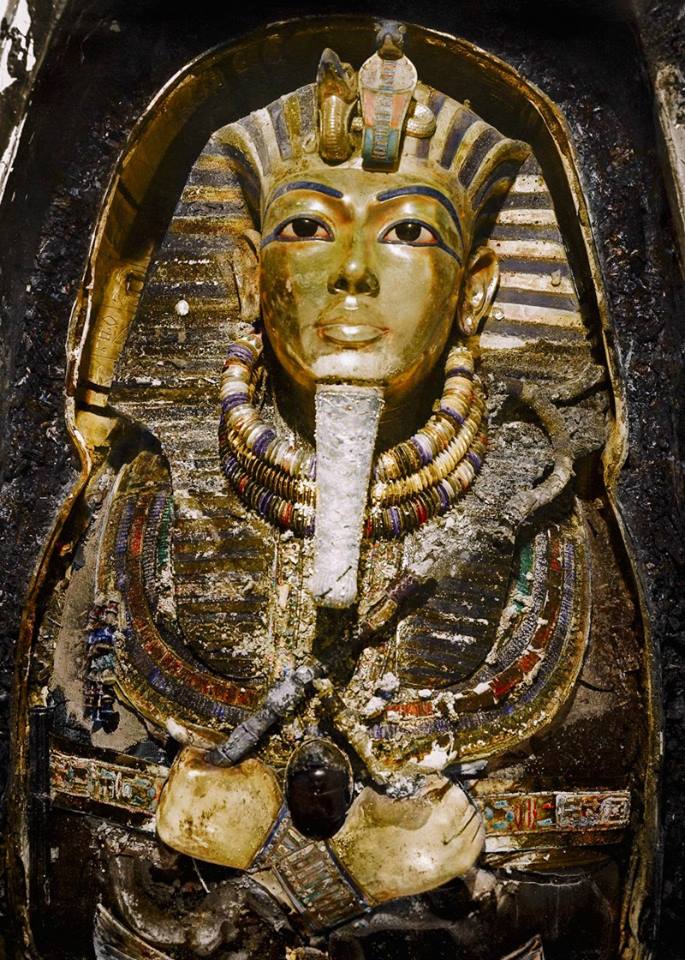
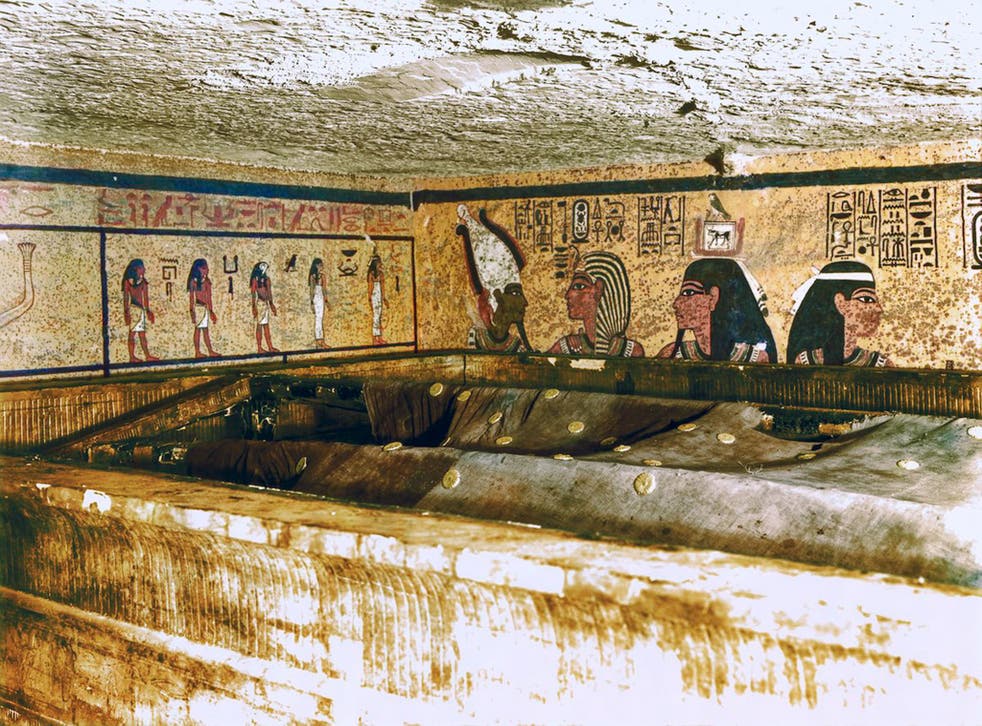
King Tut was mummified after he perished, in compliance with Egyptian religious practice. Embalmers removed his organs, dressed him in resin-soaked bandages, and then put in several nested coffins—three golden coffins, a granite sarcophagus, and four gilded wooden shrines, the greatest of which barely fit inside the tomb’s burial chamber.
According to archaeologists, King Tut’s death might’ve been unforeseen considering the modest size of his tomb.
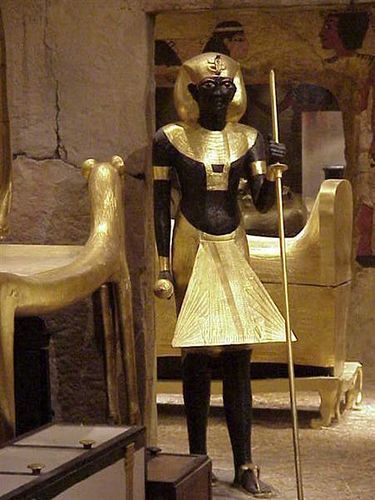
More than 5,000 antiquities, comprising a solid gold mask, furniture, chariots, apparel, couches, canopies, funerary objects, musical instruments, scribal instruments, jars, sticks, thrones, headrests, swords, and 130 of the crippled pharaoh’s walking sticks, were crammed into the tomb’s antechambers. The entryway passage was believed to have been ransacked shortly after the interment, whilst innermost chambers remained concealed. King Tut’s gold mask was crafted utilizing 22 pounds of gold.
TREASURES OF Tutankhamun
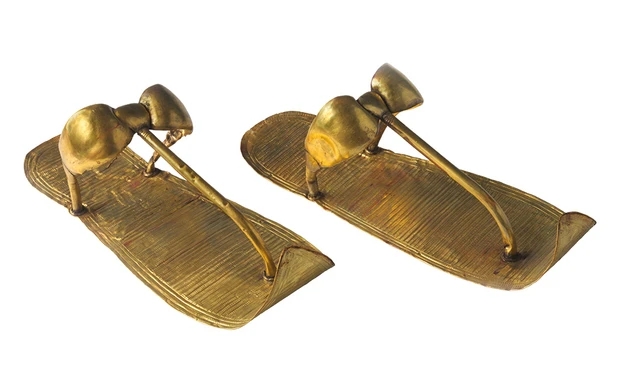
1. Walking on gold
These sandals, made of solid gold for burial purpose, would’ve been put on dead Pharaoh’s feet before he was draped in layers of linen. These resembled the leather and plant sandals Tutankhamun wore in actuality.
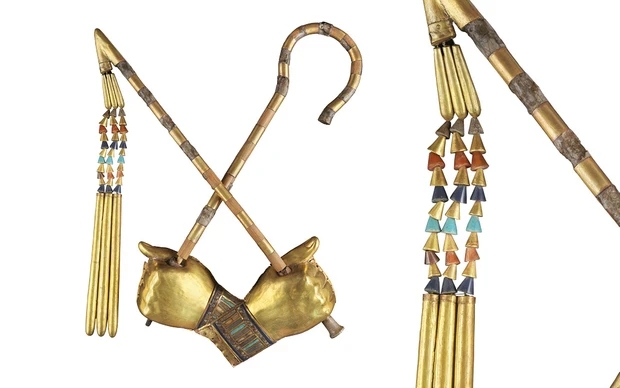
2. Symbols of pharaonic power
In Ancient Egypt, the crook and flail were the most important metaphor of royal power, with the shepherd’s crook symbolizing royalty and the flail indicating agricultural productivity. Within Tutankhamun’s mummy’s wrapping, The crook and flail featured silver centers, while the crossed hands were crafted of gold with colored glass.
3. Divine protection
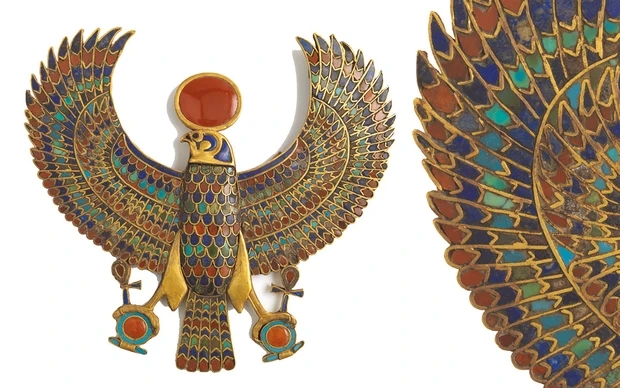
Pectorals, or extravagant pieces of jewelry, were worn across the chest. The gold Falcon depicts god Horus clutching the sign for eternity in his claws. Horus was believed to be the pharaohs’ creator and guardian.
4. Fierce protector
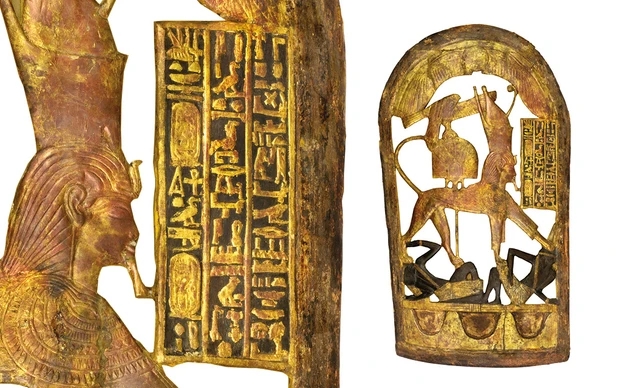
One of 8 wooden shields excavated in the tomb’s annex depicts Tutankhamun as a sphinx crushing his adversaries. The sphinx is surmounted by a falcon, which is a representation of the fighting deity, Montu. The openwork of the wood indicates that this armor was designed for ritualistic rather than fighting purposes. The Pharaoh’s armor represents him as a formidable pharaoh who safeguards Egypt from its enemies.
5. The hand of the king
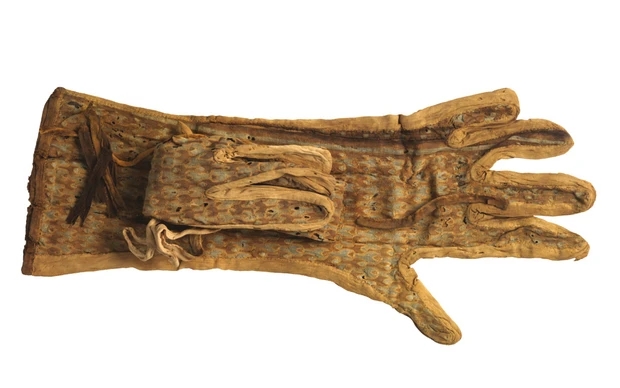
The majority of the items unearthed in the tomb were ritualistic or were meant for the Pharaoh’s afterlife use. But, researchers believe Tutankhamun used these linen gloves during his lifetime, most likely during the cold months, when in Memphis or while riding his royal chariot.
6. Gilded Wooden Bed
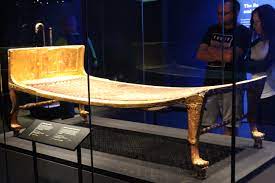
This gold-covered bed is assumed to have been prepared for King Tut’s funeral. The Ancient Egyptians felt that the deceased is just resting and that they’d awaken in the afterlife when they were reborn. Religious figures were carved on the bed to guarantee the Pharaoh’s safe travel into the afterlife and to keep evil powers away.
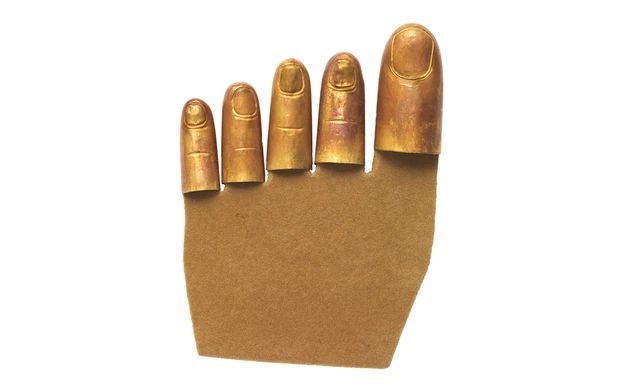
7. Immortal body
The ancient Egyptians believed that the body will be required in the afterlife, so they took great care to protect it after its demise. Stalls were used to maintain the shape of fingers and toes. Gold was highly regarded because it doesn’t rust or alter. It goes on and on.



 Eduindex
You must be logged in to post a comment.