The Toxic Beauty: How Cosmetics Killed Her Highness Queen Elizabeth I

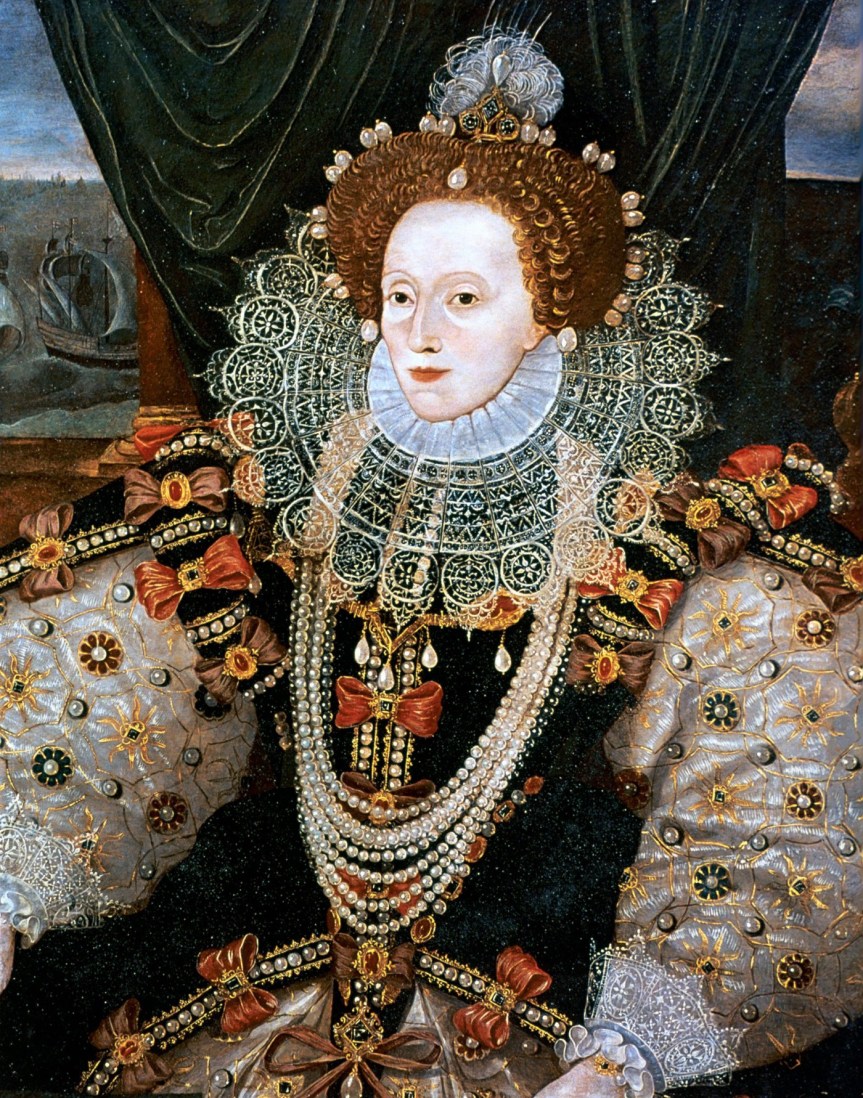
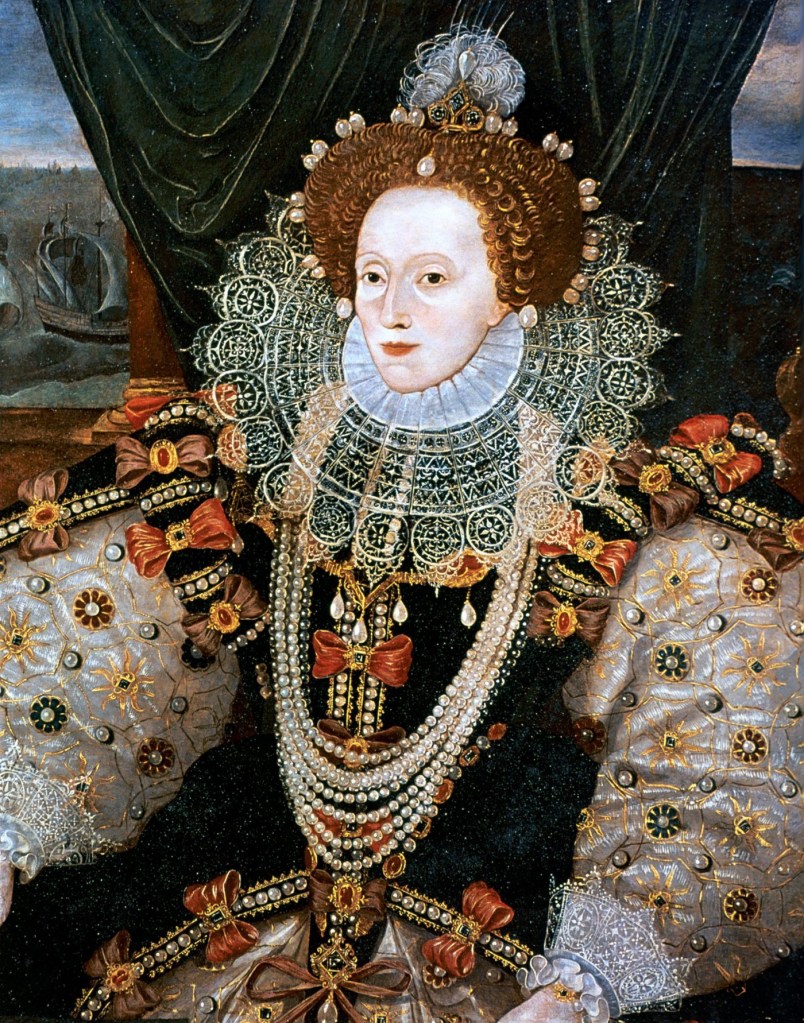
Queen Elizabeth I of England and Ireland

Introduction

Beauty has always been the greatest concern for women since ages. Women , all over the world did what not, to look pretty and presentable throughout the history of Human Civilization. And to address the need of looking flawlessly beautiful, the practice of using cosmetic or make-up came to the play. Women, sometimes, followed bizarre rituals to enhance their look, but sometimes, to their worst, the cosmetic turned out to be toxic and endangered their lives. To look beautiful it cost them a fatal price. Royalties and Elites were victims of the same death trap, including the Great Queen Elizabeth I.

Queen Elizabeth: The Beginning

Elizabeth I was the fifth and last monarch of the House of Tudor. She was born in the Palace of Placentia on 7 September 1533 and was died on 24 March 1603 at the age of 69. Her father was Henry VIII and her mother was Anne Boleyn who was her father’s second wife. On 17 November 1558, she became the Queen of England and Ireland and ruled it for 44 years until her death. She was also called the Virgin Queen and Good Queen Bess. Elizabeth was third in line to become the monarch and she was not even destined to be queen. She was behind her half younger brother Edward VI and half elder sister Mary I. As her father Henry VIII died, on 28 January 1547, her younger brother Edward VI became the monarch at age nine and ruled for six years, dying at the age of 15 because of tuberculosis. After, Mary I became queen and ruled for five years, dying at age 42 on 17 November 1558. Finally, Elizabeth was the last child of Henry VIII to rule England and became the Queen of England, ruling for 44 years.

The Scars in Her Beauty : What Led Her to Toxic Cosmetics

During her 20’s the Queen got infected with smallpox. Though the young queen survived smallpox but the disease left scars and blemishes on her skin and in order to hide those she started using the makeup more vigorously.
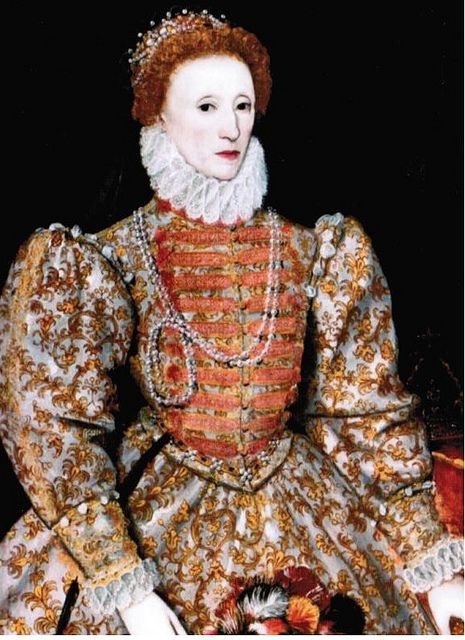
Portrait of the Queen

Bizarre Beauty Standards

The cosmetics that were worn by women in the time of Queen Elizabeth are drastically different from those we wear today. Not only were the materials they used very different but the look they were trying to achieve was very different as well. Standards of beauty change all the time. To understand the cosmetics worn by Elizabethan women, it’s important to understand the effect they were trying to achieve—that “ideal” beauty they wanted to imitate. The ideal Elizabethan female had bright wide-set eyes, snow white skin, rosy cheeks, red lips and fair hair. Pale skin was a sign of nobility, wealth and delicacy was sought after by many. In a time where sunscreen was unheard of, skin problems and pox was a common thing smooth, unblemished skin was a rarity. The pale skin women (and men) wanted was achieved by a number of ways. The most popular being Venetian Ceruse (also known as Spirits of Saturn), a mixture of white lead and vinegar. This white foundation was applied to the face, neck and bosom. Naturally, smearing lead all over one’s skin caused some serious skin damage not only did it make the skin look “grey and shrivelled” there was lead poisoning, hair loss and if used over an extended period of time could cause death. They lined their eyes with black kohl to make them look darker and belladonna eyedrops (used to dilate women’s pupils, an effect considered to be attractive and seductive). Fashion required eyebrows to be thin and arched which would create a high forehead it was considered to be a sign of aristocracy. Rouged cheeks and red lips were very popular. This was obtained with plants and animal dyes.

Her Majesty’ s Royal Makeup

She used ingredients like lead and vinegar in her makeup which is called — “Venetian ceruse. It is said that she was the only monarch that always took a long time to get ready. She used multiple layers of lead and vinegar and applied a thick white mask to her face and neck. The white skin was not a part of racism but it depicted that a woman was of a higher class. she applied was from If you have seen a portrait of Queen Elizabeth you may have noticed that her lips are very red. The red colour cinnabar, a mercury. poisonous substance that contains She used to remove it with a mixture of elements like eggshells, alum, and mercury. Thus, this leads to another use of poison in her makeup. People at that time would say that her skin became soft after makeup re moval but basically, it was peeling one layer at a time. All these caused wrinkles, aging, and the deterioration of her health. And it is assumed by the historians, that continuous use of those deadly chemicals as Cosmetics, led to her death.
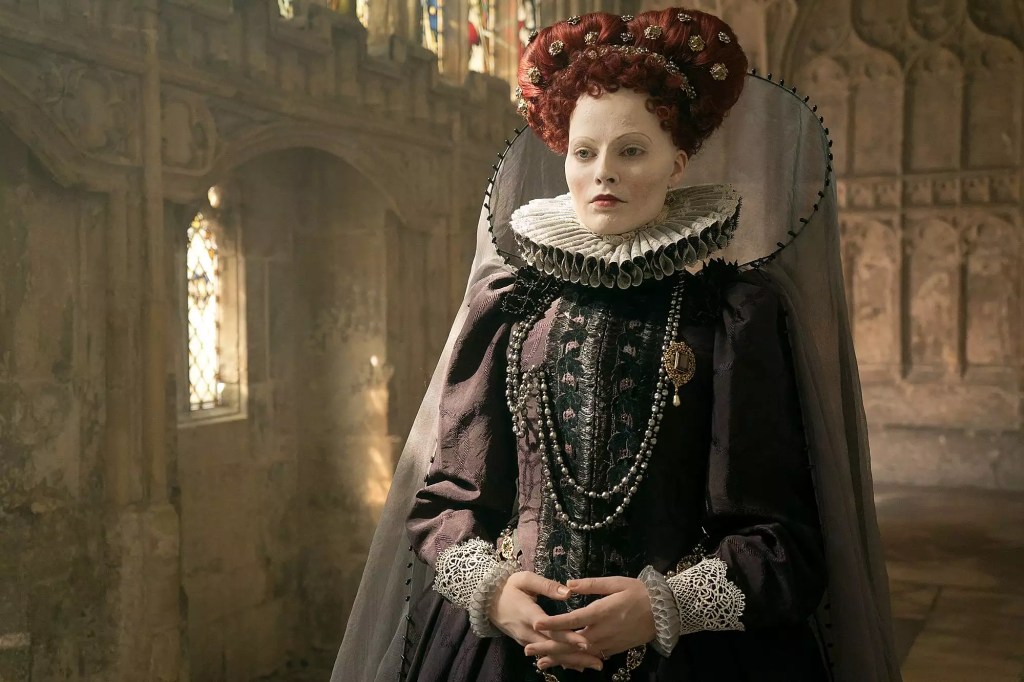
Cinematic Portrait of the Queen, played by actress Margot Robbie

Conclusion

The urge of looking beautiful , sometimes proves hard on women’s overall health. body and The obsession of being perfect, has killed many women, including such Royalties like Queen Elizabeth I. Even today, women are insure about their natural beauty and sometimes find it hard to accept body positivity. We should learn to feel confident in our skin first, and the glow then comes from within as our flaws make us Earthly and more humane.

Violence in Games : How Desirable ?

The UEFA Euro 2020 Final was a football match that took place on 11 July 2021 at the Wembley Stadium in London. Originally scheduled for 12 July 2020, the tournament had been postponed due to the COVID-19 pandemic. The match was contested by Italy and England. Italy won the final 3–2 on penalties, following a 1–1 draw after extra time. Italy won the European Championship since their first win in 1968. While the world was rejoicing Italy’s feat, it didn’t go well with England fans who were furious at their favourite team’s loss. Violence gripped the streets of London as England fans attacked Italian fans.

Sports are one of the things that people across the world take pleasure in and bond over. Sports can be wonderful, beautiful thing. However, they can also be incredibly toxic. Sports fans can generally be seen as loud and annoying and obnoxious about their team. This is a fair observation, and it’s perfectly fine and usually harmless to be outspoken about your support for your team. However, when your team wins or loses and you start to riot and overturn cars in the street, then it becomes a problem. It’s one thing to be decked out in your team’s colours, cheering on the players. It’s another thing however, to shout and celebrate in the street when your team is victorious. But property damage is crossing the line into the reckless kind of behaviour that needs to stop.

Pre-match, the Wembley stadium had to be briefly locked down after hordes of ticketless fans had breached sections of the stadium and stormed the concourse. Fences were torn down and thrown aside, with multiple eyewitnesses suggesting thousands had pushed in. This breach prompted violence and videos surfaced, capturing an adult punching a kid in the head inside the stadium, while a group of men kicked an Asian male while he was on the floor.

People need to take a step back and realize there are more important things in the world. People get into this weird state of mind where they put on the fan goggles and all rational thought goes out the window. Online platforms make it even worse. People can be downright nasty to other people for the sake of “the sport.” People will curse out others and send them hate and threats just because their opinions are different, they support another team, or they don’t like their team. Post the final, the England team football players Bukayo Saka, Jadon Sancho and Marcus Rashford were subjected to racial abuse online after missing penalties which contributed to England’s Euro 2020 final defeat to Italy. The three football players took the last three penalties – two of which were saved – during England’s 3–2 loss on penalties, and were all immediately targeted with racist language and emojis on their social accounts.

Sport in its purest form is a great display of athleticism that can be fun and rewarding to watch, but hinging your entire existence upon it and using it as an excuse to be a gross, terrible person is something that needs to be gone from sports and sports culture. Afterall at the end of the day, it’s just a game.

England charged by UEFA for laser amid replay petition

UEFA has charged England after a laser pointer was aimed at Denmark’s Kasper Schmeichel in the Three Lions’ Euro 2020 semi-final win.

The goalkeeper had a laser shone in his face before he saved Harry Kane’s extra-time penalty, although Kane scored the rebound to earn England a 2-1 victory on Wednesday.

England have also been charged with “disturbance caused by its supporters during the national anthem” after home fans booed the Denmark national anthem and the lighting of fireworks inside Wembley.

The case will be dealt with by the UEFA Control, Ethics and Disciplinary Body.

England came from behind after Mikkel Damsgaard’s free kick gave Denmark the lead.

Simon Kjaer’s own goal levelled for Gareth Southgate’s side and Kane booked England’s first major tournament final for 55 years when he followed up his missed penalty after Raheem Sterling was tripped by Joakim Maehle.

The Three Lions now play Italy at Wembley on Sunday aiming to win their first major trophy since lifting the World Cup in 1966.

The news comes amid a petition to get the game replayed.

The England penalty, which was deemed ‘soft’ by the Italian media and many others, has led one particularly salty individual to set up a petition to UEFA with change.org to try and get the match replayed.

The ‘Rematch England vs Denmark’ petition started by Cris Pinto reads: ‘We wish to overule the penalty decision against Denmark. It was a wrong call, there needs to be contact for a penalty and there was absolutely no contact. If this is not overuled, it would show a failure by UEFA and the beautiful game of football.’

Peter Schmeichel was also angry over the call which cost Denmark.

“He made a really big mistake on the penalty and this will be debated for a long, long time. It’s a hard one to take because it’s not a penalty,” he said.

“I would have been much more relaxed and acceptable if they had scored one of the many chances that they created, but unfortunately, the referee made a big mistake in my opinion.

“I know in your opinion and everyone’s opinion – my phone has not stopped going off – everyone else is saying it’s not a penalty so I’m quite sure that I’m right.

“We are very proud of the Danish team. We think the Danish team has done fantastically well. We leave the tournament with honour and England go on to play Italy in the final.

“They have had a really good tournament. It’s the first time, today, they have played against very, very top, tough opposition and in the end they came good.”


Football365

The Industrial Revolution

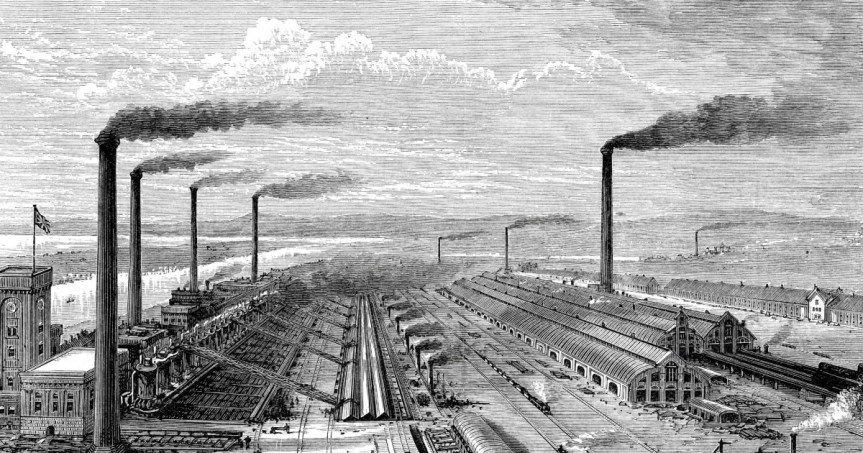
The Industrial Revolution began in the 18th century, when agricultural societies became more industrialized and urban. The transcontinental railroad, the cotton gin, electricity and other inventions permanently changed society. The revolution marked a period of development in the latter half of the 18th century that transformed large rural societies in Europe and America into industrialized, urban ones.

Goods that had once been painstakingly crafted by hand started to be produced in mass quantities by machines in factories, thanks to the introduction of new machines and techniques in textiles, iron making and other industries.

England : Birthplace of the Industrial Revolution

100 Textiles- Vintage Photos ideas | vintage photos, textiles, cotton mill
Cotton factory

Britain had a long history of producing textiles like wool, linen and cotton. The big gamechanger prior to the industrial revolution was in “cotton industry” with the work performed in small workshops or even homes by individual spinners, weavers and dyers. Producing cloth became faster and required less time and far less human labour. The mechanical production of cloth could meet the growind demand at home and abroad. Apart from textiles, the iron industry also adopted new innovations.

Steam Power

An icon of the Industrial Revolution broke onto the scene in the early 1700s, when Thomas Newcomen designed the prototype for the first modern steam engine . Called the “atmospheric steam engine,” Newcomen’s invention was originally applied to power the machines used to pump water out of mine shafts. 

In the 1760s, Scottish engineer James Watt began tinkering with one of Newcomen’s models, adding a separate water condenser that made it far more efficient. Watt later collaborated with Matthew Boulton to invent a steam engine with a rotary motion, a key innovation that would allow steam power to spread across British industries, including flour, paper, and cotton mills, iron works, distilleries, waterworks and canals. 

Just as steam engines needed coal, steam power allowed miners to go deeper and extract more of this relatively cheap energy source. The demand for coal skyrocketed throughout the Industrial Revolution and beyond, as it would be needed to run not only the factories used to produce manufactured goods, but also the railroads and steamships used for transporting them.

Transportation

Britain’s road network, which had been relatively primitive prior to industrialization, soon saw substantial improvements, and more than 2,000 miles of canals were in use across Britain by 1815.

SCIplanet - Steam Power and the Industrial Revolution: 1760-1840
Train powered by steam engine

In the early 1800s, Richard Trevithick debuted a steam-powered locomotive, and in 1830 similar locomotives started transporting freight and passengers between the industrial hubs of Manchester and Liverpool. By that time, steam-powered boats and ships were already in wide use, carrying goods along Britain’s rivers and canals as well as across the Atlantic.

Communication and Banking

In 1837, British inventors William Cooke and Charles Wheatstone patented the first commercial telegraphy system. Cooke and Wheatstone’s system would be used for railroad signalling, as the speed of the new trains had created a need for more sophisticated means of communication.

Banks and industrial financiers rose to new prominent during the period, as well as a factory system dependent on owners and managers. A stock exchange was established in London in the 1770s; the New York Stock Exchange was founded in the early 1790s. 

In 1776, Scottish social philosopher Adam Smith (1723-1790), who is regarded as the founder of modern economics, published The Wealth of Nations. In it, Smith promoted an economic system based on free enterprise, the private ownership of means of production, and lack of government interference.

Working Conditions

Working Conditions - Industrial Revolution

Rapid urbanization brought significant challenges, as overcrowded cities suffered from pollution, inadequate sanitation and a lack of clean drinking water. Industrialization increased economic output overall and improved the standard of living for the middle and upper classes, poor and working class people continued to struggle. The mechanization of labor created by technological innovation had made working in factories increasingly tedious and sometimes dangerous, and many workers were forced to work long hours for pitifully low wages. 

In the decades to come, outrage over substandard working and living conditions would fuel the formation of labour unions, as well as the passage of new child labour laws and public health regulations in both Britain and the United States, all aimed at improving life for working class and poor citizens who had been negatively impacted by industrialization.