

How Caste Continues To Affect Our Education System

The caste system has always been ubiquitous. Whether it’s politics, economics, the law, religion, the media, or even education, the seemingly immutable caste system affects all spheres of our society. Schisms along caste lines are ingrained into public discourse and cause discrimination, hatred, and violence. The caste system divided society into the Brahmins (priests and scholars), the Kshatriyas (rulers and warriors), Vaishyas (merchants and traders), Shudras (artisans, labourers, and servants), and the Untouchables. While untouchability was abolished by the Constitution, it is still prevalent in Modern India. Despite valiant efforts, most notably by B.R Ambedkar, to eradicate the caste system post independence, the over 3000 years old system continues to divide Indian society. As we’ll see, the caste system has significant effects on modern-day education; it is as extensive as it is pernicious, leaving its victims helpless. 

The caste system meant that every aspect of one’s life was controlled by “the accident of birth”. Therefore, every caste had specific jobs assigned to them. This meant that children were only taught skills that helped them do jobs that their caste did, even if they could do other work. The strictures of the caste system meant that one is confined to the social status associated with one’s caste. This is discordant with the modern notion that education is the “great equaliser” and it gives everyone and anyone the “ability to rise” because of their hardwork and not their social status and uncontrollable factors such as gender, religion, caste, etc. 

While the Right to Education Act guarantees education for students aged 6 to 14, the quality of that education is usually determined by caste. Students that belong to lower castes receive poor quality and inadequate education in schools that lack basic facilities. This makes it difficult for them to cope at higher levels of education. Ostensibly fair systems such as entrance tests don’t take into account existing disparities that prevent poor lower-caste students from attending coaching classes, studying without frequent interruptions, and preparing adequately for these tests.  

Students belonging to lower castes, especially Dalits, are often ostracized from the education system as they are deemed to be unworthy of education. Their education is hampered as they are more likely to be forced into child labour than other students. They have lower attendance rates and higher dropout rates too. When in school, they face discrimination, not only from other students but also from teachers. They are forced to sit separately, eat separately, and clean classrooms and toilets. They are physically and verbally abused. 

This constant discrimination leads to psychological problems, such as low-self esteem and depression, leading to further exclusion from the education system. This countervails any attempt to make our education system equitable and inclusive. Lower caste families are disproportionately affected by poverty as their members are less likely to get a good job even after receiving an education. This fuels a vicious cycle of poverty and caste-based discrimination. 

In an attempt to alleviate caste-based discrimination through affirmative action, the concept of reservation was introduced. A certain number of seats are reserved for the marginalised castes in public education institutes. The Constitution [Article 16(4)], as well as the Constituent Assembly debates, emphasize that reservation was intended to prevent the formation of caste monopolies in the public sector. However, critiques of reservation call it excessively subservient to lower castes. They suggest that once members of a particular caste become affluent, they no longer deserve reservation. They say that students should earn their place in an educational institution based on merit. 

This meritocratic approach is unfair and flawed as it does not consider centuries of discrimination and underrepresentation that lower castes have had to suffer through. Inherent in any meritocratic system is the premise that all participants start from the same starting line and play on an even playing field. According to the meritocratic approach, everyone has an equal chance to climb the ladder of success. But it would be foolish if we didn’t ask ourselves the question – is the distance between the rungs of everyone’s ladder the same? As we have seen, caste-based discrimination occludes students of lower castes from competing on an even playing field and the distance between the rungs of their ladders of success is miles longer than those of the other students. 

Undoubtedly, the potency of caste-based discrimination has been reduced in urban India. Intermingling between castes, at school, office, public spaces, and even through marriage are common. However, in rural areas and small towns, the caste system’s pervasive nature foments unscrupulous discrimination. The fact that we still have caste-based discrimination, even after it has been outlawed, shows that it is an entrenched and institutional form of discrimination, not an anomaly that can be brushed aside. Along with reservation, we need comprehensive social and economic changes to debilitate this atavistic system. 

We have taken a few steps towards a more egalitarian society. 

Millions have benefitted from our education system and have ended the cycle of poverty and exclusion. The possibility of India ever having a Dalit Chief Justice and two Dalit Presidents would have been ludicrous pre-Independence. However, it is a far cry to say our country is free from discrimination at all levels. The values that students learn from their education determine the character and behaviour that they espouse in the future. Educational institutions cannot continue to remain passive during incidents of caste-based discrimination, so that we can work towards a more inclusive society.  

We must remember that equity is not limited to equality of opportunity. It involves enabling marginalised groups to live in conditions that allow them to access these opportunities. Completely erasing centuries of disadvantage and discrimination, while desirable, may not be possible in the immediate future. But, creating an inclusive education system is something we can start doing right now.  
Dividends 101

As an investor, entrepreneur or even as someone aiming to be financially literate, one must know about Dividends, its types and implications as it is common source of additional income for many investors. Dividends are also considered as an important reflection of the company’s value as it is used in calculating the value of the stock in many methods. One can also determine the future yield or dividends estimates from historic data. Therefore, it is essential to know about dividends, from investor’s, management and entrepreneur’s perspective.

What is a Dividend?

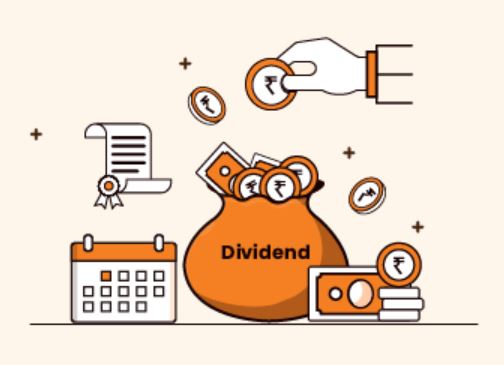
A dividend is a distribution of a portion of a company’s earnings, decided by the board of directors, to a class of its shareholders. A share of the after-tax profit of a company, distributed to its shareholders according to the number and class of shares held by them is called dividend.

The amount and timing of the dividend is decided by the board of directors, who also determine whether it is paid out of current earnings or the past earnings kept as reserve.

Dividend for Preference vs Equity shareholders

Holders of preference shares receive dividend at a pre-determined fixed rate and are paid first. But preference shareholders are not entitled to treat the preference dividend as debt and sue for its payment.

Holders of equity shares are entitled to receive any amount of dividend, based on the level of profit and the company’s need for cash for expansion or other purposes.

Dividend can be defined as the distribution of any sums to Members out of profits and wherever permitted out of free
reserves available for the purpose.
The right to claim dividend will only arise after a dividend is declared by the company in the General Meeting and until and unless it is so declared, the shareholder has no claim against the company in respect of it.

Types of Dividends

  • Final Dividend

Dividend is said to be a final dividend if it is declared at the annual general meeting of the company. Final dividend once declared becomes a debt enforceable against the company. Final Dividend can be declared only if it is recommended by the Board of Directors of the Company in the Directors’ Report.

  • Interim Dividend

Dividend is said to be an interim dividend, if it is declared by the Board of Directors between two annual general meetings of the company. All the provisions relating to the payment of dividend shall be applicable on the interim dividend also.

Dividends can tell us a lot about the company’s position. A deeper study of a company’s financial statements and dividends pay-out ratio (ratio of the dividend paid per share to earnings per share) can tell one about the company’s future plans as well.

For example, if the company chooses to retain most of its earnings and pay lesser dividends to its shareholders, it could possibly mean that it is planning to expand/grow by purchasing more machinery or opening another branch or outlet or introducing another product line. It could even mean that it is planning to invest in another company. This could increase the possibility of getting higher returns in the future. However, it is also riskier so investors with lesser risk appetite should sell their shares.

Hence, it is important to understand dividends and its implications in order to analyse the situation wisely and take decisions according to the risk appetite and wealth objectives of the investor. For the same reason, the management should also understand its implications to make sure the implications derived from company’s data and statements is in line with its future goals and objectives.

First impressions: Upcoming IPO of LIC

On the 1st February of the year, Govt released the budget for the year 2020 including various points and some new things to kick start. One of the major news was about the disinvestment of the LIFE INSURANCE CORPORATION. The government has decided to give an Initial Public Offering for his stake of some of its holdings. LIC was established in 1956 which is fully owned by the Govt. of India. “Listing on the stock exchanges disciplines the company, provides access to financial markets and unlocks value,” Finance Minister Nirmala Sitharaman said in her Budget 2020 speech. “It also gives an opportunity for retail investors to take part in the wealth so created.”

LIC has total assets and costs is around 36 lakh crores. This IPO plays a major role in Finance of India for this. After the COVID-19 situation, this becomes the most important yet vulnerable in equity market case. Govt has some more divesting plans including the BPCL and Air India in the 2nd half of FY 2020-21. However both are running sluggish but LIC expected to list soon. Govt. has set some targets and hopes from this move in future financial years which are following:

  • Disinvestment Target – Rs 2.1 lakh crores.
  • Expected IPO size of around 1 to 1.2 lakh crores for LIC.
  • IPO size of approx. 20k-25k crores for Air India.
  • Estimated IPO size of 50k-60k crores for BPCL.
  • Test of Indian share market’s depth.

Market depth will be stake for test because usually market crashes after some big IPO comes. Asset monetization is the big factor for reviving the economy after some crisis times. Latest fall in market was when SBI Card IPO was offered and hence market attracted towards it and rest of market saw a big down.

As year 2020 has seen a low phase of century in all terms like economy, socialites and life threat due to COVID-19. People are very cautious about their money and they are taking each step only after they are double sure, and they feel necessity to do so. Market has surge and it is not getting levelled in coming months.  A report suggests that economy has fall about odd 20% which will take a year or two to resurface. Looking at situation the only place people are hoping is for their insurance and other covers. Which is good sign for LIC and also for market and economy. Public is caring for their health crisis and hence it may result in good for LIC if it works well.

First year business of LIC before IPO is around 75.9% of market share. (we have not considered the first quarter as its not confirmed and also it is full of disruptions). It has registered the growth of 25% in this year. While Policies wise, it has share percent of 68.7%. However private companies also saw a growth rate of nearly 10% which is little better than their previous performances. LIC has total of 1.2lakh employees including its agents. This factor plays an important role for their brand value and reach to each people in India.

Unlike other finance options, Insurance and other schemes has seen a growth over the COVID-19 period as peoples are scared about their money. They are not willing to invest in other things like equity, debt bonds and commodity. They are looking for an option for future which can return money with a little but sure profit. They also want security for various reasons including any sudden emergency and problems. LIC while has some brilliant figures in terms of returns and claim settlement overall. LIC has more than 99% ratio of successful claim settlements. LIC has become the brand over the years. In the backward areas like village which have not grown as fast as cities, they feel LIC as the only Insurance provider. Infect they will misinterpret you if you say take some insurance. They will feel you are saying to buy LIC, such is the depth of trust in PAN India.

LIC is so successful that it has nearly 1lakh crore of unclaimed settlements in total. This is the amount which has not ever been claimed. This says all about their service and value. Total Asset Under Management is around RS 31lakh crores. LIC has revenue of Rs. 3.37 lakh crores and their net Income is 30,000 crores. While other private companies have total revenue of 1000 crores to 2000 crores. Media discussions estimates the market cap of Rs 10 to 12 lakh crores. Embedded value of LIC focuses on net profit growth a company has to offer his share holders in future. While the LIC has structure to offer 95% of his earning as bonus to their policy holders and employees, while remaining 5% goes to the government of India. This structure is quite old and not preferable as per the guidelines of SEBI. It has to be changed to get Under the equity market and SEBI.

LIC is a very big company on paper which is now preparing to appear for public. It is expected to come as a bang, but somewhere down the line company has lost its market hold over the years. It has reduced to 70% from 90% in last two decades. Which is something to ponder on. This will play a big role for shareholders, if they are thinking to go long term with the LIC. Also, an investor should dive deep into such aspects before taking a stake in LIC. The reason to check for such reason is that company is earning profits, but it has not yielding any growth. But due to increasing inflation shareholder needs that extra edge to compete with price hike in future.

Insurance sector contributes almost the 3.7 % of total GDP of India. While this ratio raises to 6.5% of total GDP of World. This shows the actual path it has still to cover to stay at normal scale of worldwide. Insurance sector has natural growth of 10-11% per annum. Total Asset Under Management is around 40 lakh crores and due to this natural growth, equity of insurance companies is increasing with a boom. The growth which company will do as their extra amount of good work and better performance will add ap the total effect in market and their market cap to grow faster. That’s why shares are enjoying such good run and investors are taking benefits of these parts quite well. Thing to watch out now is how other market players of insurance will sustain when LIC IPO gets introduced. That will tell the story of market in future whether we are balanced enough or we are still vulnerable on market stands.

Dematerialisation

Dematerialisation offers flexibility along with security and convenience. Holding share certificates in physical format carried risks like certificate forgeries, loss of important share certificates, and consequent delays in certificate transfers. Dematerialisation eliminates these hassles by allowing customers to convert their physical certificates into electronic format. Dematerialisation is a process through which physical securities such as share certificates and other documents are converted into electronic format and held in a Demat Account.

An investor intending to dematerialise its securities needs to open a Demat Account with a Depository Participant (DP). A depository is responsible for holding the securities of a shareholder in electronic form, these securities could be in the form of Share Certificates, bonds, government securities, and mutual fund units, which are held by a registered Depository Participant (DP).

As a share or debenture holder it is important to be aware of the procedures to manage the investment in securities collective name for equity shares, debenture, bonds, mutual fund units etc. Managing investment in securities is simple and easy in electronic form (dematerialised form) and it has many advantages over managing is in physical form like in past there is certificate issued in favour of shareholder if he/she buy stocks or any debenture bonds.

Section 5 of the Depositories act 1996 beneficial owner enter into an agreement with the depository for availing it’s service.

Investment in shares and debentures can be held in electronic or dematerialised can be held in electronic or dematerialised form in a depository. Depository is an entity which holds securities i.e Shares, bond’s, debentures, mutual fund units etc. of investors in electronic form at the request of the investor.

National securities depository Ltd (NSDL) and Central depository services Ltd (CDSL) are the depositories that are licensed to operate in India and are registered with SEBI.

Dematerialisation is comparable to keeping your money in a bank account. In demat form the physical share certificates are replaced by e-form buying of shares are reflected as credits in your demat account and sale are reflected as debits.

It is advisable to hold the securities in demat form as it offers many advantages like in Primary market as many public issue are taking place in demat mode. To apply in publice issue you need to have a demat account. Allotment of shares in IPO(Initial Public offer) is credited to the demat account.

In secondary market if you buy any shares thn after T+2 share credit on your demat account and you don’t have any need to visit anywhere to collect your certificate. Same in selling you can sell your shares anytime in working market. Unlike in physical shares you’ve to visit exchange office and in Ring you’ve to buy or sell your stocks. (Ring is a place where in past the buyer seller bid or ask for their shares).