
Mariana Trench

The Mariana Trench is a crescent-shaped trench located in the western Pacific, just east of the Mariana Islands near Guam. The region surrounding the trench is very remarkable and is the cradle for many unique environments. The Mariana Trench contains the deepest points on Earth, bubbling vents of liquid sulfur and carbon dioxide, active mud volcanoes, and marine life adapted to pressures a thousand times greater than sea level. The Mariana Trench is the deepest place you can find in the ocean. Its depth is difficult to measure from the surface, but modern estimates vary by less than 1,000 feet.

Discovery

In 1860, Charles Wyville Thomson, wanted to make a boat trip to conduct oceanographic studies. On December 21, 1872, he sailed on the HMS Challenger, a modified warship for the voyage carrying everything from fishing gear to microscopes. The main objective was to travel the oceans to measure depth, temperature and salinity. On March 23, 1875, while the team was conducting studies near the Mariana Islands, the sea literally swallowed 8 kilometers of a measuring line they were carrying. It was at that moment that the researchers had managed to discover the abyss. In the nineteenth century, it was discovered that there was a place where no one had yet arrived, the deepest place that existed in the ocean, known as the black hole or the Mariana Trench. In 2012, the first expedition was made by James Cameron, who was the first person in charge of continuing studies on the grave.

Characteristics
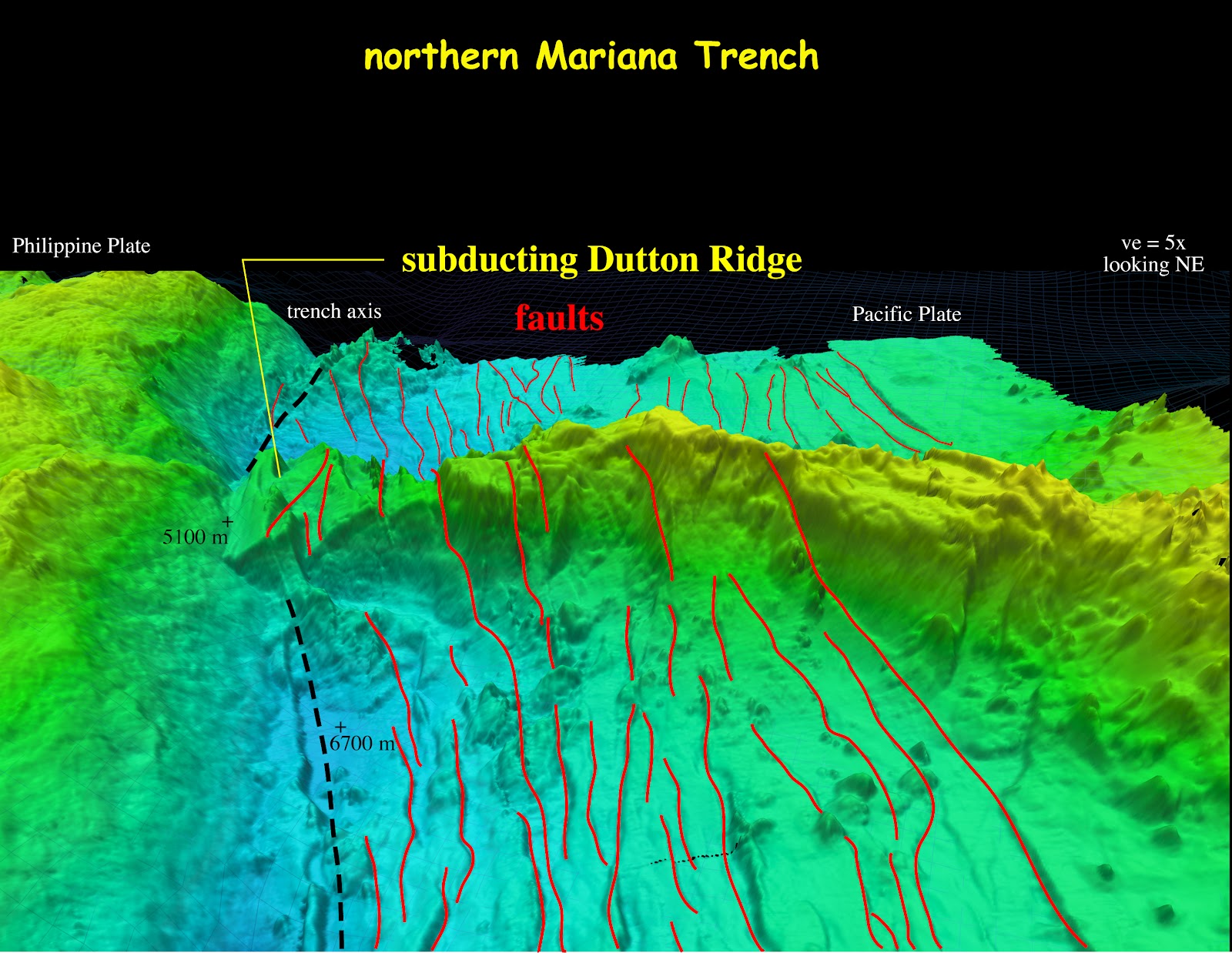
The main characteristics of the Mariana Trench are as follows:

  • It is considered to be the deepest area in the oceans.
  • It is located in the Pacific Ocean, east of the Mariana Islands.
  • They coincide with a subduction zone, a place where two tectonic plates collide.
  • It is approximately 2,550 kilometers long and 69 kilometers wide.
  • The deepest part of the pit is known as the Challenger Abyss.
  • They have an amount of water equivalent to 1000 times more than the earth has.
  • It lacks illumination.

Location

The Mariana Trench is located in the Pacific Ocean, east of the well-known Mariana Islands. It lies at the bottom of the Pacific Ocean, on the north western side, east and south of the islands. It has 11° 21´ north latitude and 142° 12´de east longitude, near Guam, a place located between the coast of Indonesia and China.

Fauna & Fauna

Image taken by James Cameron’s Odyssey

In 2016, the U.S. National Oceanic and Atmospheric Administration carried out an expedition with the aim of trying to gather information on the area. Some of the creatures they found are:

  • Bellota worms: it is a mollusk with a snail shell. It is considered as a new species, although there is no idea about its geology, habitat or origin.
  • Elf Shark: Its color is pink, and its consistency is very viscous. They are capable of growing several meters.
  • Dumbo Octopus: The most eye-catching thing are their jumped eyes and their furrowed mouth. It can swallow its prey whole.
  • Dragon Fish: Its teeth are large, and it is a hunter by nature. It has no scales and its skin is slippery, very similar to an eel.
  • Eel Shark: Its body is rounded, and its head flattened, it is very similar to a dinosaur. Apparently it has been living for 80 million years. It has 20 rows of teeth and gills in its body.

Challenger’s Abyss

At 10,994 meters deep, it is considered the deepest point in the ocean. Its name was given in 1872. Only one man has managed to reach 10,898 meters in the submarine Deepsea ChallengerJames Cameron. He described the trench as an environment very much like a lunar desert. The only thing he could see were blind worms that had adapted to the situation. In 2013, scientists discovered that the abyss was full of life. onar beams sent to the ocean floor are updated many times per second, and verified by Global Positioning Satellites. These maps clearly indicate the Mariana Trench as the deepest of its kind, and so far the Challenger Deep is its lowest measured point.
The Bermuda Triangle

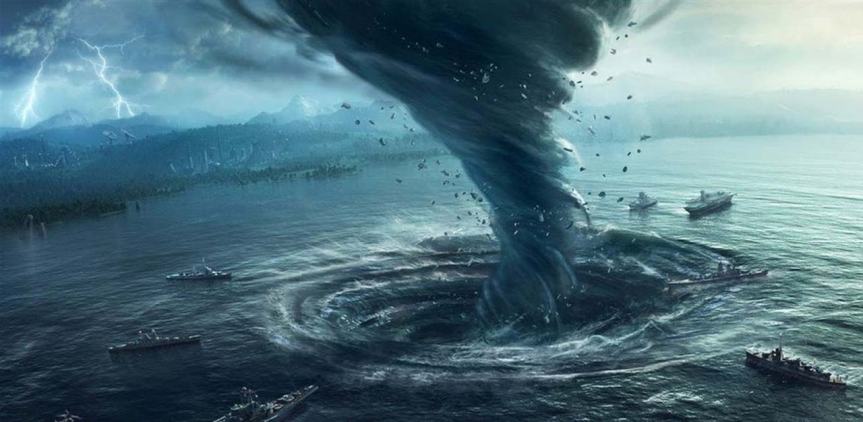
The Bermuda Triangle is a region in the north-western part of the Atlantic Ocean, near the USA. It is also called the ‘Devil’s Triangle’, because of all the disappearances and supernatural activity that is associated with it. Till date, around 50 ships and 20 airplanes have gone missing in the Bermuda triangle, never to be heard of again. Not even the wreckage or debris of any vessel has been found. One such case was in 1945, when a squadron of US Navy bombers became disoriented while flying over the area and thereafter disappeared, never to be found again. Even the rescue plane sent after them disappeared with no trace. No one knows what happens to the vessels, or the people inside them after entering the Bermuda triangle. Oftentimes the boats and planes have vanished without even sending out a distress call or signal, and planes have been known to go off the radar in this region of the ocean.

What are the possible explanations?

Many people like to suggest supernatural or other-worldly causes as possible explanations, like alien abductions or some mythical sea creature. However, it is more likely to have a scientific explanation, with geophysical and environmental factors at play. One such factor is that the agonic line (imaginary line connecting the earth’s north and south magnetic poles) passes through this area, which pilots may fail to account for. This may have caused discrepancies in interpreting the magnetic compass and thereby led to significant navigational error, resulting in catastrophe. Another scientific explanation is that the region often has massive rogue waves passing through it (reaching up to 100 feet) which are enough to carry away and engulf any evidence of a ship or airplane, which is why none has been found. Since multiple storms may converge in the Bermuda triangle, and hurricanes often sweep by in that area, it is possible to form massive waves and winds that destroy, carry away, and leave no sign of any vessels.

Furthermore, the National Oceanic and Atmospheric Administration of America has said that “There is no evidence that mysterious disappearances occur with any greater frequency in the Bermuda Triangle than in any other large, well-travelled area of the ocean,” This means that though there have been mysterious disappearances, a larger number of ships and airplanes have travelled through the region, and continue to do so today, without any incident. So, the few cases in which disappearances did occur might have been due to certain unfortunate circumstances and events.

Conclusion

There is a lot of mystery and fantasy involved when talking about the Bermuda triangle, but this is because human minds are drawn towards things that are bizarre and memorable, and we are more likely to remember things that seem exceptional in nature. In this process, however, we often disregard the ordinary things that offer a more realistic view. We prefer to think about a mysteriously disappearing ship rather than a ship that simply sank in a hurricane. This leads to something known as the ‘frequency illusion’ where once we’re introduced to something, we tend to notice it more often in our lives. This makes us believe that that thing is more common and frequent than it really is. Hence, the world may suffer from a frequency illusion that makes us want to think that the Bermuda triangle keeps swallowing up vessels very often, when in reality it has been a select few cases. In fact, mysterious disappearances happen in every part of the world, and not just the Bermuda triangle. The classic example of this being Malaysia Airlines flight 370.

Regardless, the Bermuda triangle has managed to capture human imagination with the unexplained disappearances in its area, and has also been referenced in may pop-culture pieces of media like the Gulliver’s Travels and Percy Jackson movies. This shows the impact that any strange phenomenon can have on human minds, and its ability to impress us. Today the Bermuda triangle is a safe destination that even tourists can visit to see for themselves, without any risk of disappearing.