Mary Wollstonecraft (1759-97)

Mary Wollstonecraft was born in 1759. She is sometimes called the Mother of Feminism. Her body of work largely is concerned with Women’s rights. In her 1791-92 book, A Vindication of the Rights of Woman, now considered a classic of feminist history and feminist theory, Wollstonecraft argued primarily for the rights of woman to be educated. Through education would come emancipation.

Mary Wollstonecraft was a participant in and observer of a significant range of social changes. Firstly, was the Enlightenment thought which regarded institutions as out-dated, and in need of review, along with changes in educational theory and domestic structure. Reason was of primary importance to the Enlightenment philosophers, a company to which Mary Wollstonecraft belongs.

Wollstonecraft wasn’t taken seriously by many people during her time because her ideas were so unique. Mary was a moral and political theorist as well as a women’s rights activist. She was a true French Revolution child, a new age of reason and benevolence. She wanted women to achieve a better life, not only for themselves but for their children and husbands too and to bring together what people already had and ‘ultimate perfection’. She argued that women’s education was “strictly training them to be incapable and frivolous” so they could only be wives and mothers, but she wanted to secure happiness for women and men so they could be looked at as equals. She wanted women to take a stand and fight for their educational rights, not to be weak and depend on men for their identity.

As aforementioned, she is sometimes called the Mother of Feminism. Her body of work is largely concerned with women’s rights. In her 1791-92 book, A Vindication of the Rights of Woman, Mary Wollstonecraft argued primarily for the rights of woman to be educated. Through education would come emancipation. A keen and vital concern with education, especially the education of girls and women, runs throughout Mary Wollstonecraft’s writing and remains a dominant theme to the abrupt end of her career. The title of her first book, Thoughts on the Education of Daughters, speaks for itself. Her single most important work, A Vindication of the Rights of Woman, begins as a plea for the equal education of women and includes an ambitious and farsighted proposal for a national school’s system. More directly, Wollstonecraft produced a book for children in the innovative, progressive mode of the day, edited an innovative reader specifically designed for the use of girls. Education was critically important to Wollstonecraft both as a liberal reformer and as a radical theorist and proponent of women’s rights.

Wollstonecraft accepts the definition of her time that women’s sphere is the home, but she does not isolate the home from public life as many others did and as many still do. For her, the public life and domestic life are not separate, but connected. The home is important to Wollstonecraft because it forms a foundation for the social life, the public life. The state, the public life, enhances and serves both individuals and the family. Men have duties in the family, too, and women have duties to the state.

Pandita Ramabai (1858-1922)

Pandita Ramabai trained for no profession in particular. Her learning was in an unconventional manner within the premises of her home.  Her background, life choices, her personality and career, her beliefs, captured her into the public gaze, making her the most “controversial” Indian woman of her times.

Ramabai argued that the caste-based difference coupled with gender-based difference deeply affected Indian women. The Arya Mahila Sabha was regarded as an institution set up to do away with the domination of men. Ramabai argued that according to social practices women had to obey men, or be treated like their slaves. It was believed that Ramabai only exhorted women to free themselves from the tyranny of men at these meetings in the Arya Mahila Sabhas, causing horror to the orthodox community, both men and women.

Ramabai understood that the patriarchal ideology of the society placed women in the domestic sphere restricting her to sexual reproductive and home-making roles. Her book, ‘The High caste Hindu Women’, previewed the treatment given to the Hindu women throughout life and is regarded as the first feminist manifesto with an agenda of women’s emancipation and women’s empowerment.

Women were not allowed to receive education and were completely dependent on their male supporters. Widow Remarriage was prohibited in society and women were forced to live a solitary life. While women were forced to commit for lifetime but the males were allowed to practice bigamy or polygamy. Furthermore, Huge age gaps between partners were a common norm and various types of physical and sexual violence was committed against women and were not even recognized by society.

She represents her views over religion which according to her had two distinct nature of law- the masculine and the feminine. Both had their own peculiar duties, privileges and honor. She criticized Manu severely and argued that the manu-smritis account of women’s nature and character depicted was largely responsible for their seclusion and suppression. It was Manu’s law which deprived women of all their freedom. She argued that the chief needs for Hindu women are self-reliance, education, and native women teachers and doctors. She gave the proposal for female inspectors for girls’ schools as she observed that male inspectors would intimidate the women.

Pandita Ramabai supported the concept of professional education to be imparted to women in the country. It was not only their right but also the need of the society. She was particularly focused for women to attain education in medicine. She demanded civic rights for women widows, deserted wives and sexually assaulted wives, after coming in contact with women like Lucy Stene, Elisabeth Standon, Suzanne Anthony and the women of US in general, Ramabai argued it’s important for women to realize their own worth and strength. Ramabai stressed on the need of a homogeneous society for any kind of successful movement. Her stay in America made her realize the importance of having a civil and educated society. For her, American model of liberal democracy was the real model that needed to be followed socially, practically and economically. Ramabai was indeed a champion of women’s rights.

Book Review-‘Bananas, Beaches and Bases’

Cynthia Enloe’s Book ‘Bananas, Beaches and Bases’ has been, and continues to be widely read by scholars and students of International Relations. What makes her work stand out from other works in the discipline, is her usage of a gendered lens to analyse the world of International Politics. Where are the women in International Politics? Who put them there? and who benefits from them being there? These, Enloe believes, are crucial to a thorough analysis of International Politics but have hitherto been ignored and overlooked. Another crucial question that Enloe wants us to ask is that what does the woman who is put in a particular position think about being there? How would she interpret her position? These questions would hint at what Enloe attempts to do and that is, to view International Politics from the vantage point of women.

An essential point that Enloe makes is that what’s more important is to ask questions of the existing system rather than having ready-made answers. The reason behind this is the very fact that the existing system does not put forth a wholesome picture as it doesn’t include the experiences of women.  Enloe believed that the absence of women in IR was far from natural, in fact, it is constructed. This is because the existing structure is marked by manipulation by and domination of masculine culture and politics. The position of women is constructed by men and thus, for women to feature in such a system, they have to become like men. This implies that in doing so, they devalue femininity and acknowledge that the masculine traits are superior.

Typically, when people wrote in IR their focus was on making links between political and international without accounting for gender. Enloe is assertive when she points out such an understanding is far from complete. The reason behind this, she highlights in the key phrase of ‘The personal is international, the international is personal’.

 For Enloe, feminist informed investigation of international politics yields valuable insights into the complex politics of masculinity. The international is much broader than mainstream experts assume and the political is well beyond the public square. In this book she focused on aspects that are not thought of as ‘consumer goods’ i.e. tropical beaches, women’s sexuality, the service of flight attendants to name a few. Enloe views women in third world countries as global political actors.

Enloe takes the case of The League of Nations to cite as an example. At the face of it, in conventional works of IR, one would think of it as a site for preventing war post the wreckage caused by the First World War. But thinking of it from the premise of women brings in a hitherto overlooked aspect of The League of Nations i.e. as a site for promoting social justice as some women emerged as international civil servants because of the same. It is important to applaud Enloe’s work for its positive impact. It has enabled an area for dialogue where many more women have now joined the conversation. These women add their experiences and findings to the conversation. The coming together of women enables a genuine exchange of ideas. Therefore, the doors to reinterpret international politics using a gendered prism has been thrown wide open to us.

“Bulbul” movie review

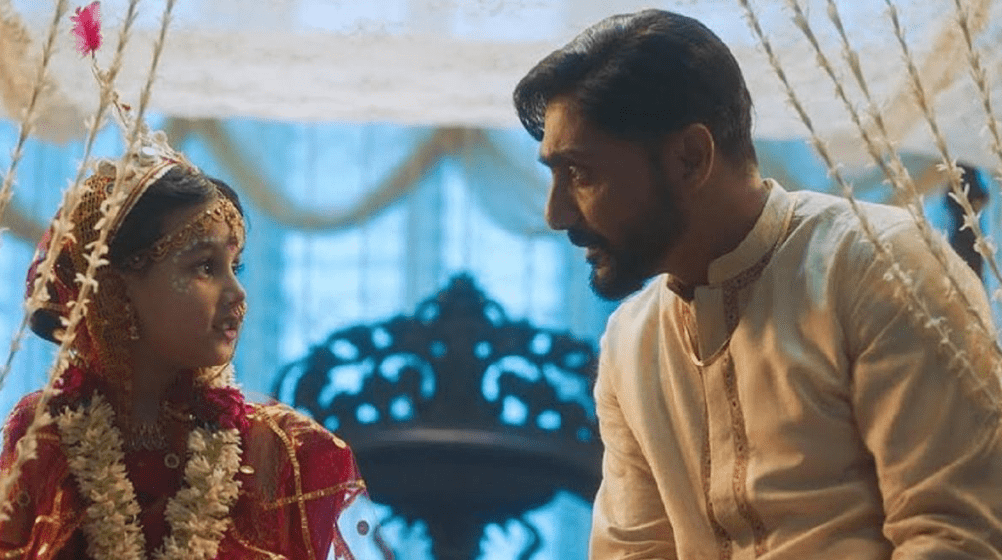
I saw this Hindi movie recently and I would like to give my opinion on it. “Bulbbul” was recently released on Netflix on 24 June, 2020 by the production company ‘Clean Slate Films’. A supernatural horror produced by Anushka Sharma and directed by Anvita Dutt Guptan. It is roughly based on Rabindranath Tagore’s “The Broken Nest” which is based on his own life incidents.


The movie is set in 18th or 19th century Bengal. It doesn’t have many characters. Our main characters are Bulbbul, a child who is barely five years old when she gets married to Indranil, also known as ‘Bado thakur’. Indranil has two brothers namely Mahendra, his mentally challenged identical twin and Satya, the youngest close to Bulbbul’s age which is the reason why they become close friends which becomes a matter of concern for her husband. Bulbbul grows up to be an enigmatic woman. We see how men in her village are brutally being killed by some witch or chudail.


Basically the film takes us on a journey of Bulbbul’s growth from an innocent child bride to a strong woman who runs her own household.
The character of Bulbbul is played by Tripti Dimri. In my opinion, I don’t think anyone could have done a better job playing the role. Though not from a Bengali background she does a pretty great job in giving us those typical Bengali vibes. Rahul Bose as Indranil (as well as Mahendra) does a pretty great job too. Handling two very different roles at the same time is not easy but he did it. Avinash Tiwary acts as Satya; another great work. Paoli Dam as Mahendra’s wife, Binodini. Parambrata Chatterjee as Sudip, the village doctor. I feel the cast was great. Each one of them did a wonderful work and I cannot imagine anyone else replacing them.
The music is exceptionally good, gives you goose bumps every time you listen to it not because it scares you but it feels like there’s a story behind everything screaming to be heard. Hats off to Amit Trivedi. It gives a special essence to the movie. Another thing I loved was the cinematography. Scenes where the witch or the chudail was to be, the screen would turn red telling us to hold on to our seats for something is about to happen. It has a feminist theme. It shows how women change themselves due to past abuse. Paoli Dam’s character had this dialogue “Badi havelion me bade raaz hote hai” translates to “big havelis have big secrets”. This explains a lot about the chudail. One would understand when they see the movie.
Lesson I learnt was innocence is a pure thing taking that away from someone is sinful.
The movie is family friendly except a couple of scenes but I think it’s high time little girls need to be made aware what the real world holds.
It has a 4.3/5 audience rating. I would totally give it a 4.5/5 just because there is this one thing that it becomes predictable midway. Apart from that it is a masterpiece and a change from regular Indian thriller.

Thank you for reading. Have a nice day!

Section 375

In our country like India women’s are worshipped like goddess but still are not respected. There are lot of crimes against women like acid attack , stalking, hacking their personal pictures, sexual abuse, and many more which they have to face. So, we are here to discuss one of the most serious crime that occurs in every minute of time.Section 375 of IPC define one of the most henious crime i.e. Rape

Since we have assumed women to be weaker section of society, so all these sections are introduce for them , for their protection. Our laws gives them right where they can raise their voice and fight for their justice.
There is one real incident of a boy Manav Singh 17 yrs. old who committed suicide due to being falsely accused of rape. The girl, Bhavleen Kaur confessed that she was raped by him but there was no evidence and immediately his story gets viral . She and her friends started giving threaten calls and messages to the boy. He under tremendous pressure decided to commit suicide. This happens because there is no men’s commission to raise voice for falsely accused mens. We live in a society where no matter whatsoever is wrong or right we only accept that our narrow mindset allows. It is evident that there are few provisions in IPC which are anti – feminist. These provisions violates Article 14 i.e. equality to all but in our society women’s are portrayed as victims and men as perpetrators. In some cases, Women in the name of feminism use their rights in order to exploit men. Some laws must be introduced that safeguards the dignity of men as well.

India is a country where both men and women needs to acknowledged their rights. However, our constitution provides equal platforms to raise their voice against inequality. Society thinks that men need to be strong and they are treated as perpetrators. But there should be ‘ MENTOO’ to give equal rights like women.
But, even now if we see the situation of our country, society is stuck between old customs and narrow mindset. They believes that giving more liberty to women is against Indian culture which is not right. This society believes that once a woman is married then her implied consent for sexual intercourse is always present.
Many women are sexually assaulted by their husbands. So it’s high time that we criminalized Martial Rape but before criminalizing it a lots of changes are needed to be brought up not just in law but in our society too, the mindsets of people needs to be changed or upgraded to a better level where the men understands the dignity of women as their own and vice versa.

Are you really a feminist?

It goes long back in time when women were treated inferior to man. It was in 1848 when the first feminism movement took place, where both men and women rallied for the rights of women. In its early stage such moments focused on bringing women equal to men. But now, as time has passed, feminists focus on justice and equality for all genders. There are feminists and then there are pseudo feminists. Pseudo feminist is a person who claims to be a feminist yet they ignore the whole point of it i.e. equality.  They talk about treating women better than man, which is not the point of feminism. There is a very thin line between a feminist and a pseudo feminist. A feminist will say, everyone can do whatever they want  but a pseudo feminist will say I am a women I won’t do this work. A feminist  talks about equality for all genders but a pseudo feminist will say women deserve more respect. Many people on social media don’t know the real meaning of feminism and in turn they end up being a pseudo feminist.  Respect can’t be gained on the basis of gender, it has to be earned. Because of pseudo feminists, the real feminists are called upon and are questioned. Also, because of this the real issues are sometimes  left unattended and unnoticed.

Internet plays an important role in all this. As we all know, information spreads faster on the web. People start believing what the majority of the people are saying but it’s not always true. This leads to the spread of wrong information and harmful outcomes.  Most of them think feminism is about choice of clothes and choice of whoever they want to talk to, but its more than that.  If a women likes to cook and take care of her house, it’s okay, this doesn’t mean that she is forced to do it or that she’s a slave. Also, if a man wants to do these same things, it’s okay, it’s what he wants to do. Job, work, tasks need not be gender based. People should be allowed to do whatever they want to. All this can be solved with a little bit of knowledge and sense.

The Rise of the Parallels – Feminism and Pseudo-Feminism

“The lesson here is you can’t expect users to learn. There’s too much fun going on out there on the Internet.”

Pete Lindstrom

The internet doesn’t spread misinformation, we the users do. We share anything and everything, without proofing it. We get our news from social media rather than the news media. We have everything at the touch of our fingertips, yet we are too torpid to go the extra mile. It’s that one action that spreads rumors. It all comes down to that one small action on this enormous space.

We are in the 20th year of the 21st Century yet we are too tied to convenience than authenticity. The internet gives us too much exposure but our minds take in very little knowledge. Even more rare is the initiative to catch sight of the truth. 

Being “woke” is the new ‘fad’. The internet is the medium through which you can let people know that you are part of (or against) each campaign. It’s more about proving your stand than supporting the cause. I wonder how many people blindly share posts showing their support to every social issue trending each week but hardly spend time educating themselves.

All these might very well be the reasons the difference between feminism and pseudo-feminism is foggy amongst many.

Feminism is a tale as old as time. Feminism might have gotten its name and recognition just a few hundred years ago but it started the day Patriarchy took charge. I would like to believe many were born way ahead of their time, fighting till their last breath trying to give the oppressed gender a voice.

Pseudo-Feminism, however, stems from the hatred and anger of those persecuted for the sex they were born as. Being born anything but a male in this heavily patriarchal world serves you a life-sentence of no freedom. Ironically, doesn’t the man’s sperm determine the sex of the offspring? I guess it’s the years of oppression and the eventual right to speech that have overwhelmed most to surpass feminism right into misandry. One such example is the Ruchika Girhotra Case. Nothing good ever comes out of these strong emotions though.

Whether you’ve accidentally stumbled on this or are here to get my two cents, I’d be happy to clear all misunderstandings and hopefully, by the end, I will have birthed a few feminists.

Pseudo-Feminism desires a world where women make the rules. Where men will be oppressed experiencing the same unjust women faced. A quick Google search will tell you that Misandry is, “dislike of, contempt for, or ingrained prejudice against men.”

While both seem to be the same, there’s a world of a difference. Misandrists dislike/despise men. Pseudo-Feminists believe that they are feminists who can quench their thirst equality by giving the tyrants a taste of their own vengeful medicine.

Feminism fights for equality. A world where both men, women, trans and queer people have every basic human right. It’s a misconception that Feminism fights only for women and their rights. While it may have started as a revolutionary movement just for women. (Real) Feminists all over now fight for every person exploited. Feminism doesn’t care for gender, sexual orientation, religion, or culture. It stands for equal opportunity to make a choice.

While it is easy to get wrapped up into the confusion and emerge out a Pseudo-Feminist, it is important to realize that patriarchy is a system. Men are human beings just like any other, and patriarchy has been instilled in each one of us. Most of us grew up in a patriarchal setting and are accustomed to it. As the oppressed, it was/is much easier for us to start questioning and fighting it. For men, the gender enjoying the comforts of monarchy, it would be a hard thing to lose control of.

Having said that, in this patriarchal world, if it weren’t for a few great men, we women would never have had a chance at education, knowledge and our fight to end this inequality. All we can do is educate ourselves and others properly and stand for what is right. Correct people when they are wrong, be kind, and take back control from men to make this world a safe place for all.

‘Not all men’ vicious – Pseudo Feminism

If you pick up a dictionary, the definition you’ll find for the word ‘feminism’. In simple terms, there shouldn’t be any injustice met out to either sex. They should be treated equally. But, off late, a new type of feminism is developing which is rightly called as pseudo feminism. Pseudo feminists hold a strong resolve to correct all the injustices done to women, mostly by lashing out at men and demeaning them. What they forget is the basic essence of feminism movement: equality. Another form of pseudo feminism, according to me, is the feminism of convenience. The biggest example being: men paying for dates. If we’re as equal as women proclaim to be, why can’t a restaurant bill be split between the two? The reason is simple-men are too egoistic to let a woman pay, and for a few women it miraculously becomes a man’s job to pay for the date. Where, I ask these feminists, does the feminism vanish then?

Feminism is now a muddied term. Difficult to say what it means today. We often don’t realise it, but pseudo feminism is all around us, hiding behind feminism in clandestine. We’re the women shouting for equal rights everywhere, but don’t waste a single minute asking a guy sitting on a Ladies Reserved seat to vacate it. Why do we need reservations in general coaches? Since we’re able bodied, strong, grown-up women of strength, can’t we stand in a general coach? Men doing 9-5 jobs, burning their hours toiling hard to earn, are as tired as we are. It is just a very preposterous notion. Like it’s correctly said, two wrongs don’t make a right.

Although they are in the minority, it’s a crystal clear truth there are men who too are subjected to sexual crimes. The numbers of cases reported to the police are on the lower side, because most of the men don’t report such crime for the fear of being ridiculed at, not being believed and instead facing the charges themselves. Men are mostly kidnapped and abducted for illegal sexual intercourse, forced marriages, prostitution, etc. The number of such victims is really low but it’s a fact we cannot ignore. When we are talking of rising violence against women, we shouldn’t neglect the fact that somewhere out there are men also being subjected to same brutalities.

Board results are a few months away, but a boy has passed with flying colors by refusing to be part of a plan to rape a girl, hatched by the girl herself, who was pretending to be a boy. The boy passed but, many say, feminism failed. They have been saying that for years now. They are not too off the mark though. While it may not have failed, it sure has taken a huge hit.

Fake accounts, false allegations and fraudulent charges have harmed men and their reputations. They are also building a case against women’s right to stay in the fight for justice.
Part of the problem is the fact that the odds are heavily stacked against women. But another part of the problem is the way women used social media to fight this battle.

Each true story helps build credibility. Each false story is turned into a weapon against the fight for gender justice. The girl, who faked herself as a boy, is not part of the Bois Locker Room chats, but the story is now all about this one girl who faked her identity.

So what should women do?

I will answer with what they should not.

One, do not shoot and scoot. Don’t get into it if you cannot stay in it. Weigh in before you jump in. This is for the long haul. There is a lot of mudslinging that happens. You can’t escape the splashes.

Two, do not use fake accounts to bring down men. It’s easy to prove. The consequences are for everyone – the man, the movement and also you. Take care of You. Take care of the fight that is for us to stand equal to men with no biases in workplaces, no casual sexism, no acid attacks, no rapes and no honor killings.

If true feminism was followed, then we would treat all the victims equally. Victims would cease to be women or men, but just victims of abuse. But sadly, that is not the case. Pseudo feminism shouts out loudly that men can’t be raped, men can’t be tormented, and men claiming to have been put under such atrocities are lying cheats. It’s most likely that I would be branded ‘anti-feminist’ by pseudo feminists all around, but I don’t mind. I don’t mind because I know how to stand up for my fellow sisters when they actually need it.

When a woman is put on fire, when she is raped, is brutalized, is stripped naked on the streets, forced to quit her studies to marry a man three times her senior in age, when she is blamed if she is raped, or teased, when a woman is beaten repeatedly for refusing to pressurize her parents into paying dowry, when she is considered inferior to her male counterparts, that is when I need to give voice to my anger and lash out at the people responsible for it. If I am a true feminist, I will do the same if it were a man being stoned on the streets, being raped, being accused of a fake rape, being doubted over just because he is a man. As Gloria Steinem rightly said, a feminist is anyone who recognizes the equality and full humanity of women and men.

Not all men do it, but all women suffer through it.

This is serious. Take it seriously.