5 feminist books to read.

A Vindication Of The Rights Of Women by Mary Wollstonecraft.
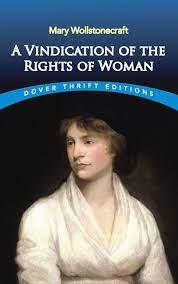
Mary Wollstonecraft’s feminist essay A Vindication of the Rights of Women was published in 1792 as a book-length feminist essay. A Vindication of Women’s Rights campaigned for female equality, especially in the field of education. Wollstonecraft criticised the cultivation of conventional feminine qualities like as submission and service, arguing that women who were not well-educated could not be excellent mothers, spouses, or household administrators. She said that women were supposed to devote too much time to maintaining their delicate look and soft attitude, forsaking brains for beauty and transforming themselves into flower-like playthings for males.

Wollstonecraft addressed themes such as the need of educating women equally, treating women with respect, and giving women with the appropriate training to be excellent spouses and mothers, as well as educated companions for their husbands, in thirteen chapters.Women spend many of their initial years of life accumulating a scattering of achievements, while body and mental strength are sacrificed to libertine ideas of beauty… Can they run a family with prudence or look after the babies they bring into the world?How could women educate, raise children, and maintain a household if they were only concerned with their personal looks and minor achievements such as speaking French fluently, playing the piano, and sketching, Wollstonecraft argued? Such achievements made a woman appealing to a man as a source of entertainment, but not as an equal partner.Although Wollstonecraft recognised that raising a family would be the primary responsibility of many women at the time, she insisted that a husband and wife whose relationship was founded on reason and equality would parent happier and more well-rounded children than families governed by strict discipline and parental inequality. To that aim, she suggested a national education system in which boys and girls would be taught together and all classes would have access to education. Wollstonecraft warned against false sensibility, while writing during the time of Romanticism, a movement renowned for emphasising sensibility/feeling above sense/rational reasoning.

A Room of One’s Own by Virginia Woolf.
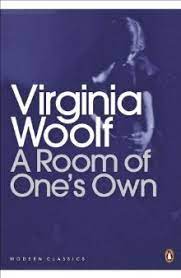
Virginia Woolf’s A Room of One’s Own is a long essay. The article, which was first published on October 24, 1929, was based on a series of lectures she gave in October 1928 at Newnham College and Girton College, two women’s institutions at Cambridge University. Despite the fact that this long essay uses a fictitious narrator and narrative to investigate women as authors and characters in fiction, the manuscript for the Women and Fiction lecture series, and therefore the essay, is deemed nonfiction. The essay is regarded as a feminist text, and it is notable for its argument for a literal and figurative place for women authors in a patriarchal literary world.

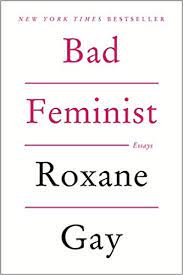
Bad Feminist – Roxane Gay.
How could women educate, raise children, and maintain a household if they were only concerned with their personal looks and minor achievements such as speaking French fluently, playing the piano, and sketching, Wollstonecraft argued? Such achievements made a woman appealing to a man as a source of entertainment, but not as an equal partner.

Sister Outsider by Audre Lorde
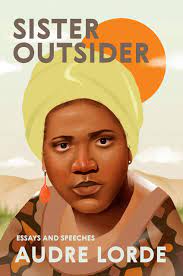
Audre Lorde’s literary and philosophical personae are brought to life in this collection of fifteen articles published between 1976 and 1984. These articles delve into and illustrate Lorde’s intellectual growth, as well as her long-standing worries about how to increase empowerment among minority women authors and the critical need to define difference—difference in terms of sex, ethnicity, and economic position. Sister Outsider is a title taken from her poetry book The Black Unicorn (1978). Sister Outsider’s poetry and articles emphasise Lorde’s recurring subject of continuity, notably the geographical and intellectual relationship.

The Handmaid’s Tale by Margaret Atwood
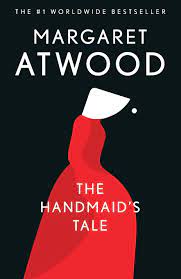
In the Republic of Gilead, Offred is a Handmaid. She is permitted to leave the Commander and his wife’s house once a day to stroll to the local grocery market, where the signs are now images rather than words because women are no longer allowed to read. Because, in an era of diminishing births, Offred and the other Handmaids are valued only if their ovaries are viable, she must lie on her back once a month and hope that the Commander gets her pregnant. Offred recalls the years when she lived with and made love to her husband, Luke; when she played with and protected her daughter; and when she had a career, her own money, and knowledge. But that’s all gone now.

Pandita Ramabai (1858-1922)

Pandita Ramabai trained for no profession in particular. Her learning was in an unconventional manner within the premises of her home.  Her background, life choices, her personality and career, her beliefs, captured her into the public gaze, making her the most “controversial” Indian woman of her times.

Ramabai argued that the caste-based difference coupled with gender-based difference deeply affected Indian women. The Arya Mahila Sabha was regarded as an institution set up to do away with the domination of men. Ramabai argued that according to social practices women had to obey men, or be treated like their slaves. It was believed that Ramabai only exhorted women to free themselves from the tyranny of men at these meetings in the Arya Mahila Sabhas, causing horror to the orthodox community, both men and women.

Ramabai understood that the patriarchal ideology of the society placed women in the domestic sphere restricting her to sexual reproductive and home-making roles. Her book, ‘The High caste Hindu Women’, previewed the treatment given to the Hindu women throughout life and is regarded as the first feminist manifesto with an agenda of women’s emancipation and women’s empowerment.

Women were not allowed to receive education and were completely dependent on their male supporters. Widow Remarriage was prohibited in society and women were forced to live a solitary life. While women were forced to commit for lifetime but the males were allowed to practice bigamy or polygamy. Furthermore, Huge age gaps between partners were a common norm and various types of physical and sexual violence was committed against women and were not even recognized by society.

She represents her views over religion which according to her had two distinct nature of law- the masculine and the feminine. Both had their own peculiar duties, privileges and honor. She criticized Manu severely and argued that the manu-smritis account of women’s nature and character depicted was largely responsible for their seclusion and suppression. It was Manu’s law which deprived women of all their freedom. She argued that the chief needs for Hindu women are self-reliance, education, and native women teachers and doctors. She gave the proposal for female inspectors for girls’ schools as she observed that male inspectors would intimidate the women.

Pandita Ramabai supported the concept of professional education to be imparted to women in the country. It was not only their right but also the need of the society. She was particularly focused for women to attain education in medicine. She demanded civic rights for women widows, deserted wives and sexually assaulted wives, after coming in contact with women like Lucy Stene, Elisabeth Standon, Suzanne Anthony and the women of US in general, Ramabai argued it’s important for women to realize their own worth and strength. Ramabai stressed on the need of a homogeneous society for any kind of successful movement. Her stay in America made her realize the importance of having a civil and educated society. For her, American model of liberal democracy was the real model that needed to be followed socially, practically and economically. Ramabai was indeed a champion of women’s rights.

“Bulbul” movie review

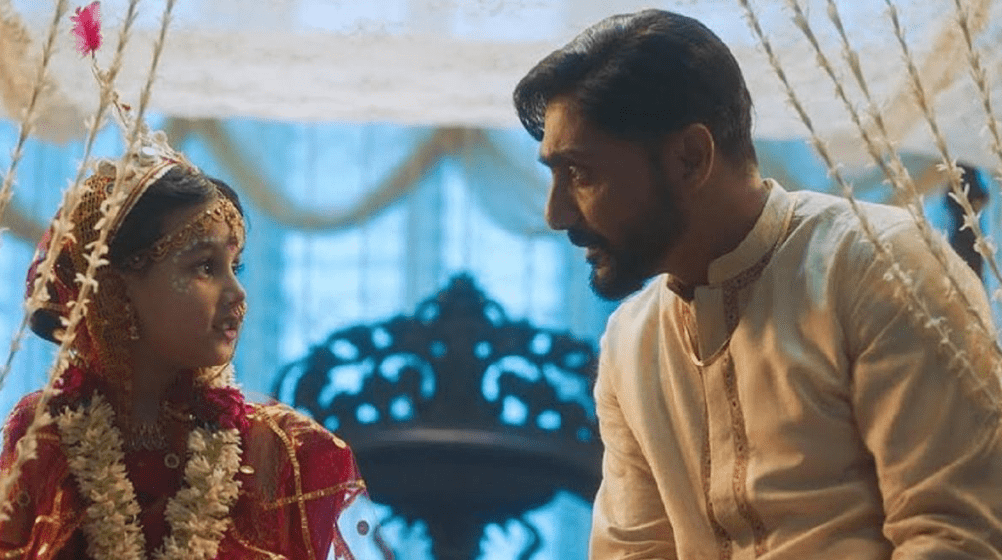
I saw this Hindi movie recently and I would like to give my opinion on it. “Bulbbul” was recently released on Netflix on 24 June, 2020 by the production company ‘Clean Slate Films’. A supernatural horror produced by Anushka Sharma and directed by Anvita Dutt Guptan. It is roughly based on Rabindranath Tagore’s “The Broken Nest” which is based on his own life incidents.


The movie is set in 18th or 19th century Bengal. It doesn’t have many characters. Our main characters are Bulbbul, a child who is barely five years old when she gets married to Indranil, also known as ‘Bado thakur’. Indranil has two brothers namely Mahendra, his mentally challenged identical twin and Satya, the youngest close to Bulbbul’s age which is the reason why they become close friends which becomes a matter of concern for her husband. Bulbbul grows up to be an enigmatic woman. We see how men in her village are brutally being killed by some witch or chudail.


Basically the film takes us on a journey of Bulbbul’s growth from an innocent child bride to a strong woman who runs her own household.
The character of Bulbbul is played by Tripti Dimri. In my opinion, I don’t think anyone could have done a better job playing the role. Though not from a Bengali background she does a pretty great job in giving us those typical Bengali vibes. Rahul Bose as Indranil (as well as Mahendra) does a pretty great job too. Handling two very different roles at the same time is not easy but he did it. Avinash Tiwary acts as Satya; another great work. Paoli Dam as Mahendra’s wife, Binodini. Parambrata Chatterjee as Sudip, the village doctor. I feel the cast was great. Each one of them did a wonderful work and I cannot imagine anyone else replacing them.
The music is exceptionally good, gives you goose bumps every time you listen to it not because it scares you but it feels like there’s a story behind everything screaming to be heard. Hats off to Amit Trivedi. It gives a special essence to the movie. Another thing I loved was the cinematography. Scenes where the witch or the chudail was to be, the screen would turn red telling us to hold on to our seats for something is about to happen. It has a feminist theme. It shows how women change themselves due to past abuse. Paoli Dam’s character had this dialogue “Badi havelion me bade raaz hote hai” translates to “big havelis have big secrets”. This explains a lot about the chudail. One would understand when they see the movie.
Lesson I learnt was innocence is a pure thing taking that away from someone is sinful.
The movie is family friendly except a couple of scenes but I think it’s high time little girls need to be made aware what the real world holds.
It has a 4.3/5 audience rating. I would totally give it a 4.5/5 just because there is this one thing that it becomes predictable midway. Apart from that it is a masterpiece and a change from regular Indian thriller.

Thank you for reading. Have a nice day!

Are you really a feminist?

It goes long back in time when women were treated inferior to man. It was in 1848 when the first feminism movement took place, where both men and women rallied for the rights of women. In its early stage such moments focused on bringing women equal to men. But now, as time has passed, feminists focus on justice and equality for all genders. There are feminists and then there are pseudo feminists. Pseudo feminist is a person who claims to be a feminist yet they ignore the whole point of it i.e. equality.  They talk about treating women better than man, which is not the point of feminism. There is a very thin line between a feminist and a pseudo feminist. A feminist will say, everyone can do whatever they want  but a pseudo feminist will say I am a women I won’t do this work. A feminist  talks about equality for all genders but a pseudo feminist will say women deserve more respect. Many people on social media don’t know the real meaning of feminism and in turn they end up being a pseudo feminist.  Respect can’t be gained on the basis of gender, it has to be earned. Because of pseudo feminists, the real feminists are called upon and are questioned. Also, because of this the real issues are sometimes  left unattended and unnoticed.

Internet plays an important role in all this. As we all know, information spreads faster on the web. People start believing what the majority of the people are saying but it’s not always true. This leads to the spread of wrong information and harmful outcomes.  Most of them think feminism is about choice of clothes and choice of whoever they want to talk to, but its more than that.  If a women likes to cook and take care of her house, it’s okay, this doesn’t mean that she is forced to do it or that she’s a slave. Also, if a man wants to do these same things, it’s okay, it’s what he wants to do. Job, work, tasks need not be gender based. People should be allowed to do whatever they want to. All this can be solved with a little bit of knowledge and sense.