
Gandhigiri With Munna Bhai: Valuable Lessons From The Film

Released in 2006, Lage Raho Munna Bhai is a movie directed by Rajkumar Hirani, screenplay by Vidhu Vinod Chopra, and starring talented actors like Sanjay Dutt, Arshad Warsi, Vidya Balan, Boman Irani, etc that proved to be a massive hit on the box office. The story begins with Munna Bhai being in love with the radio jockey Jhanvi. To win a chance to meet her, he cheats his way through the Mahatma Gandhi quiz and passes. When he finally meets Jhanvi, Jhanvi requests him to give a lecture on Mahatma Gandhi to the old people in her house. Munna who pretended to be a History professor and a Mahatma Gandhi fan has no choice left but to study all about Mahatma Gandhi for the remaining 3-4 days that he has left until the fixed date. This causes an extensive load on his brain due to which Munna Bhai starts hallucinating about Mahatma Gandhi’s persona.

The whole story moves forward with a battle against the corrupt Lucky Singh who deceives Munna and takes over the 2nd Innings House (of the old men) versus Munna Bhai who fights back using Gandhigiri. All along the movie Munna’s hallucinations of Gandhi continue to help him win and showcases Gandhi’s ethics that were long forgotten. Lage Raho Munna Bhai leaves its viewers with a deep sense of morality and Gandhigiri along with bouts of humor and comedy that keeps the audience engaged throughout the end, making it such a massive hit.!

The movie succeeds in reminding the long-forgotten ethics laid by Mahatma Gandhi for the country that he visioned. Below are the major matters that the movie tackles by implementing the concept of Gandhigiri. A neologism that refers to implementing and following the methods and guidelines laid and preached by Mahatma Gandhi. Throughout the movie, Munna acts as a spokesperson for Gandhiji’s values.

Here are some of the valuable lessons from the movie:

1. Truth – Truth is one of the fundamental teachings of Mahatma Gandhi. In this movie too, the value to always speak the truth no matter what is depicted firmly. There are 3 major instances when the characters are encouraged to speak the truth. The first instance is when Munna hides his real identity from Jhanvi and is later persuaded by Gandhi to tell Jhanvi the truth.

The second instance is when Munna and Jhanvi start their ‘Gandhigiri’ program to help people and a caller explains his desire to die as he doesn’t have the courage or way to return the hard-earned money of his father. To this Munna convinces the caller to tell his father the truth honestly and work hard to return the money. No matter how small the amount he earns or how long it takes to return the money Munna requests the caller to speak the truth.

The last instance is when Lucky’s daughter runs away from her wedding because she is upset about the lie that her father told her in-laws about her not being ‘Manglik’. Munna advocates her to face whatever it is and to tell the truth to her in-laws. Further, he comforts her by saying that if the boy loves her then he will not care about such stuff and will still marry her regardless of all this.

2. Non-Violence – This is the 2nd fundamental teaching of Mahatma Gandhi. Non-violence is also preached through the movie in a very subtle and effective way. The first example of non-violence in the movie is when Gandhi advocates Munna to turn to non-violence rather than hurting his enemy.

The second example is when another caller asks Munna for help to stop his fellow neighbour from spitting on his entrance wall. Munna suggests him to adopt the Non-Violent way and instead of beating or spewing bad words, he should clean up the spit every day with a smile on his face. This will reduce the hatred in the enemy’s heart and make him realize his mistake. And so, it happens!

3. Importance of values and respect for elders – At the start of the film, we see how children abandon their parents in their old age. This is a very heart-wrenching scene. Later Munna is seen remarking and rebuking the son of one of the old men. He scolds him saying that the parent who raised him with everything he got, is being abandoned today by his son when he needs him the most. This is a strong criticism towards people who, in their selfishness forgets the values and morals that one needs to follow in life.

4. Satyagraha and peaceful methods of protests – The very core theme of Lage Raho Munna Bhai movie explores the aspects of corruption and bribery. Gandhi Ji advocated the concept of Sarvodaya for everyone’s progress however, we know that the present world does not focus on equity but greed.

Corruption in the system is growing at a stark rate. By adopting the Gandhigiri way to fight against this, the peaceful methods of protests preached by Mahatma Gandhi are ignited again in this movie. First, Munna adopts the peaceful method of Satyagraha to fight against Lucky Singh’s corruption. In another instance, again through one of the callers, we are reminded about how to fight bribery and corruption in the system i.e. by making the other person feel ashamed in the most non-violent way.

5. Superstitious beliefs in India Lage Raho Munna Bhai smoothly tackles the superstitious problems that are still common in India. We see the plot of the movie revolve around Lucky Singh’s daughter being ‘Manglik’ and how Lucky Singh lies about it, which in the end is revealed to the in-laws by Lucky Singh’s daughter. It shows how most of the superstitions that Indians have is nothing but a way for the so-called ‘pandits’ and ‘Jyotish’ to extract money from people. Mahatma Gandhi never showed support for superstitious beliefs and always asked people to walk with reason, empathy, truth, and non-violence. Thus, this also remains an important point in Gandhian Philosophy.

The film succeeds in lining up with the expectations of people. Lage Raho Munna Bhai proves to be a great movie to convey the message of Gandhigiri to the audience in a serious yet humoristic way without being didactic. It not only shows Gandhi’s principles of thought but also shows a way to employ them in the present situations in India. The film is a great medium for anyone who wants to explore Gandhi Ji’s ideals without needing to have any prior knowledge about it.
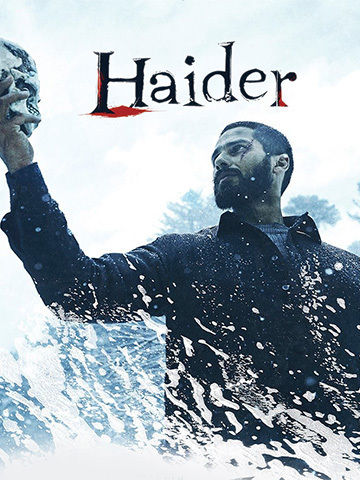
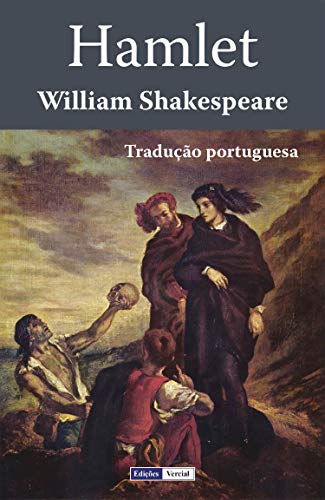
A Comparative Analysis on the Movie “Haider” and the Play “Hamlet”

An Introduction:

“Haider” is a movie based on the setting of the insurgency-torn Kashmir of 1995, where there was a massive dispute between India and Pakistan. This movie is an adaptation of one of the classic plays of Shakespeare’s “Hamlet”. Although the director Vishal Bhardwaj tried to portray the original play as it is with excellent cinematography but there are several incidents which contrast with the play, but many instances make this movie worth being called an adaption of the Shakespearean play.

The contrast in setting:

If we begin with the setting of Hamlet, we see it begins in the ancient fortress of Denmark in the late middle ages of the 14th and 15th centuries. Whereas in the Movie Haider, Set in Srinagar in 1995, during militancy and a brutal Indian counter-insurgency. The setting itself changes a lot of cultural and linguistic widegap that made the play and movie different.

The contrast in Cultural, linguistic, and Religion:

Since Haider is a Bollywood movie and the director tried to make this movie in favor of the Indian audience to make it more likable and hit it was essential to be relatable to the Indian context. When we investigate Hamlet, it has all those autocratic lives of kings and queens and has a lavish livelihood.

Linguistically also there is a widening between the 2 as one is in Hindi with a mixture of Urdu dialects, whereas Hamlet is in old English which also shows that the movie is culturally different in all terms.

Hamlet has been portrayed through the Reflection of Christianity, on the other hand, Haider portrays the political mishappen with Islamic reflection.

At certain times when there is a contrast in culture and norms the effects are often visible and here there are certain differences in the plot whereas the relationship is portrayed in both.

In context to Plot:

There are several events that have been edited in the movie from the play. Such as the major ones counted as: The play shows us the King of Denmark is already dead and the ghost of King Hamlet tells the truth to Prince Hamlet about his murder, as when we investigate the movie it is the character Roohdaar who tells Haider about the culprit of his father’s murder.

Also, the relationship between Gertrude and hamlet is not much affectionate as the way it is shown in the movie about Haider and Ghazala.

All Shakespearean Tragedy Plays has this element of all the characters die in the end. But in the movie, we see that some of the characters like Roohdaar, Khurram, and Haider himself were alive in the end.

If we compare the Themes then substantially all the themes like Revenge, Corruption, Religion, Politics, women, Madness Vs. Sanity is the major theme portrayed in the movie exactly like the play.

One of the most striking scenes is the equivalent of the “to be or not to be” scene in Shakespeare. Haider turns the “to be or not to be” soliloquy into a confessional and motivational speech in front of a crowd in the market square. It is decidedly more public and more political. He uses the hangman’s rope around his neck as an imaginary microphone. Haider also carries a boom box with a cassette player. The first question he poses points to an existentialist inquiry: “Hello, mike testing 1, 2, 3. Hello. Can you hear me?” Like Hamlet, Haider has longed to be heard. He urges the crowd to reflect on Kashmir’s political crisis: “Do we exist or do we not? Chutzpah is our problem.”

Haider Vs Hamlet – A contrast to the Characters:  

  1. Hamlet Vs. Haider: looking into the character analysis of the play Hamlet, prince hamlet is an idealistic knowledgeable person who is very Melancholy, cynical in nature and is having a huge amount of Hatred for his own uncle Claudius who has married his mother Gertrude and hamlet has a repulsion towards his mother’s sexuality.

                     A similar portrayal is in the movie where Haider is a student of “Revolutionary poets of British India” who studies at Aligarh University comes to find his Missing Father (Doctor Hilaal Meer), there he comes to know about his Mother Ghazala having illegitimate affair with his own uncle Khurram.

We can bring to a point that both Haider and Hamlet are closely similar in their character whereas due to some contrast in the context both the characters differ in some situations, but one thing is certain is about both characters becoming insane and the theme of sanity vs madness gives highlight due to the death of king hamlet/Dr.Hilaal Meer.

  • Ophelia Vs. Arshia: Since the play/movie is also about the tender love story of Haider- Arshia/hamlet- Ophelia, this portrays the role of love which leads to the death of people due to the brutal conspiracies done by Polonius and Claudius for taking an avenge from prince hamlet. Love is taken as a key to a dark plot of killing hamlet by making Ophelia as a medium/ messenger of hamlet.

The same plot goes into Haider too where Arshia was a journalist and was in love with Haider, but her love became a tragedy where her own father Parvez used her daughter to keep a track of her whereabouts of Haider when he was trying to find his father’s murderer.

Both Arshia/Ophelia can be a contrast because Arshia on the one side was a stern woman who took her own stand despite all the barriers of her being a woman in a patriarchal world, whereas Ophelia was very sensitive, and a woman suppressed by other men and did what her father told her to do.

In the end, both die out of the madness of losing their father and love at the same time and commits suicide.

  •  Claudius Vs. Khurram: The evil of the play who dies in the end, whereas in the movie he does not, as Haider changes his ideology for not killing his uncle due to his mother notions that “Intekaam se Intekaam Paida hoti Hai!” In the play and the movie Claudius/Khurram is the one with all sinister mind and political ambitions who wanted to kill his own Nephew and wanted to have full rights on Ghazala/Gertrude. His lust for women and power goes in the end when he was in the verge to die.
  •  Polonius Vs. Parvaze: Father of Ophelia/Arshia who was good close friend of Claudius/ Khurram and was giving a prominent contribution in the dark conspiracy made by Claudius, but later gets mistakenly killed by Hamlet when hamlet losses his sanity. Polonius had the greed of power and money and was as sinful as his friend Claudius.

Parvez in the movie was the police inspector which was helping Khurram with his own daughter Arshia who was in extreme love with Haider.

  • Gertrude Vs. Ghazala: Married to the new king of Denmark who was hamlet’s uncle. Often as a woman there where many questions raised on her married and love life as she remarried a man which was against the ethics and she had a very fragile relationship with her own son Hamlet, and they did not have an ideal mother son relationship.

In the movie, we see that Ghazala and Haider had an affectionate relationship despite all the hatred between them in the end Ghazala even sacrificed her life for Haider by killing herself with a bomb explosion.

  • Roohadaar: He was an ISI agent but considered to be the ghost of hamlet and in the play, we do not have any character related to Roohdaar as the ghost of king hamlet himself tells the truth to prince hamlet about his brutal murder, whereas in the movie Roohdaar and the militant group himself tells the murder of the doctor.

Indeed, he was a good friend of the doctor and was in the prison with the doctor and he was the messenger to stimulate an urge of hatred in Haider’s mind towards his own uncle.

  • Horatio (A good friend of Hamlet): This character is missing in the movie as he was a good friend and played a positive supportive role for hamlet. Also, a reason why the movie and play are somewhat out of context from each other due to some change in the character appearance.
  • Fortinas: A close acquaintance of hamlet who had faced the same pain of losing father just like hamlet, but we do not know which character will fit the best for this. so, we can consider that this character is not available in the movie as Haider in the movie was often a loner in the movie and beacme distant from his close ones in the later part of the movie.

Conclusion:

Though the tale is somewhat similar in the movie and play but also certain characters and stories are invisible as this makes the movie or the play incomplete. Since it is an adaption so we cannot expect to be the twin of each other.

From in critic’s point of view, this movie can be rated 7.5/10 as it has all those elements of Shakespearean plays and the cinematography of Vishal Bhardwaj which is perfectly splendid!

Taken all the consideration the story is well portrayed in the movie in spite of all the cultural and religious differences with all those political contexts.

Themes of Revenge, women, corruption, religion, politics, madness are common in both the movie and play.