
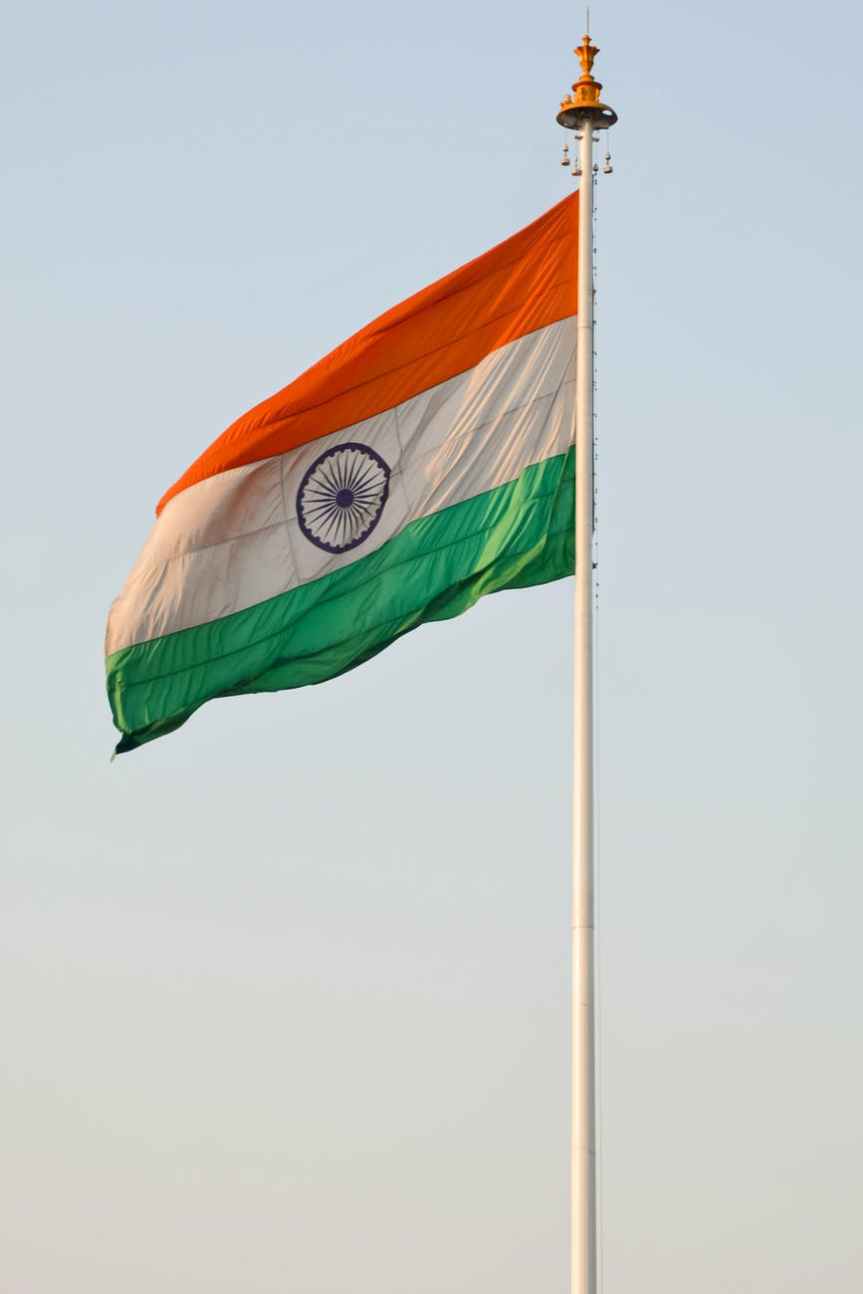
The Indian Tricolour Flag

On August 15, 2021, India will commemorate its 75th anniversary of independence. As we get closer to the big day, it’s only natural to look back at the history of the tricolour, or tiranga. Did you realise that our flag’s colours of saffron, green, and white have no communal significance? In this essay, we’ll look at the history of the tricolour, its evolution, and the meaning of the Chakra and the three colours of the flag to learn more about these facts.
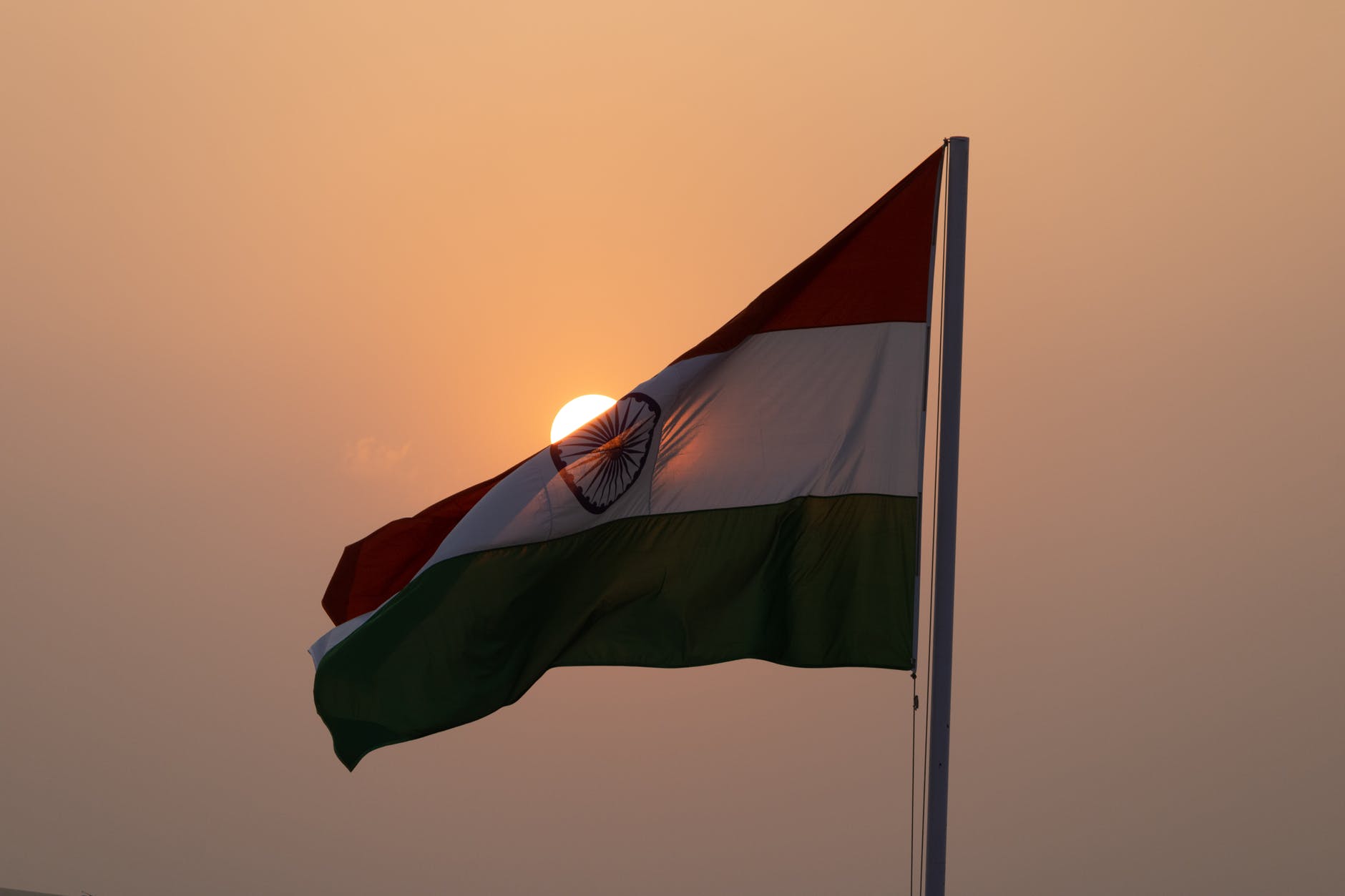
Photo by Still Pixels on Pexels.com

The flag of a country is a sign of its independence. The Indian National Flag in its current form was adopted just days before the country declared independence from British rule on August 15, 1947. The decision was made on July 22, 1947, during a meeting of the Constituent Assembly. Between August 15, 1947, and January 2, 1950, it was the national flag of the Dominion of India, and then the Republic of India.

India’s current tricolour flag was adopted after the country gained independence. The old flag’s colour and meaning were retained, but the Dharma Charkha of Emperor Asoka was replaced as the flag’s insignia in favour of the spinning wheel.

The colours of the Indian flag

India’s national flag is a horizontal tricolour with a deep saffron top, white in the middle, and dark green at the bottom. The chakra is represented by a navy blue wheel in the midst of the white ring.

The colour saffron represents the country’s power and bravery. The colour white represents peace and truth. Our land’s fertility, growth, and auspiciousness are symbolized by the green belt.

The “wheel of the law” is shown by Dharma Chakra at the Sarnath Lion Capital, which was built by Mauryan Emperor Ashoka in the 3rd century BC. It meant that life is found in movement and death is found in immobility.

Flag Code

The Indian flag code was changed on January 26, 2002, and inhabitants of India were now allowed to hoist the Indian flag above their homes, offices, and factories on any day, not only national holidays, as was previously the case. Indians can now proudly display the national flag anywhere and whenever they want, as long as the Flag Code is rigorously obeyed to avoid any disrespect to the tricolour. The Flag Code of India, 2002, has been broken into three parts for your convenience. The National Flag is described in general in Part I of the Code. The display of the National Flag by members of the public, private organisations, educational institutions, and other entities is addressed in Part II of the Code. The National Flag is displayed by the Central and State governments, as well as their organisations and agencies, according to Part III of the Code.

Based on law passed on January 26, 2002, there are some guidelines for flying the flag. The following are some of them:

Do’s:

– To promote respect for the Flag, the National Flag may be flown in educational institutions (schools, colleges, sports camps, scout camps, and so on). The flag flying in schools now includes an oath of allegiance.

– On all days and occasions, ceremonial or otherwise consistent with the dignity and honour of the National Flag, a member of the public, a private group, or an educational institution may hoist/display the National Flag.

– Section 2 of the new code recognises that all private persons have the right to fly the flag on their property.

Don’ts:

– The flag may not be used for communal purposes, draperies, or clothing. It should be flown as much as possible from sunrise to sunset, regardless of the weather.

– The flag cannot be permitted to contact the ground, the floor, or the water’s surface. Vehicles, trains, boats, and aircraft cannot have it draped over the hood, top, sides, or back.

– There can be no other flag or bunting higher than the flag. Also, no object can be placed on or above the flag, including flowers, garlands, or symbols. A tricolour festoon, rosette, or bunting cannot be used.
Independence Day of India: History, Significance, Facts and Celebration!

Happy Independence Day 2021: Wishes, Messages, Quotes, Images, Facebook &  Whatsapp status

It is the 75th Indian Independence Day this year which means India has achieved 74 years of freedom from the britishers. We as Indians pay respect to all the leaders who fought bravely for our nation’s freedom in the past. The Prime Minister of India hoisted our tricolour flag at the Red Fort, Old Delhi. He also delivered a speech to the nation as well. However, all cultural programs and school celebrations didn’t took place this year due to the COVID-19 pandemic. Independence day i.e. the 15th of August is declared as a national holiday which means every government office, post offices, banks and stores will remain shut.

History:-

India was ruled by the Britishers for many years. The East India Company ruled India for about 100 years. It was in 1757 when the East India Company won the battle of Plassey. It was after the win went the Company started exerting power over India. Our nation had its rebellion against the foreign rule for the first time in 1957. The entire country united against British power. It was an unfortunate event as India was defeated back then but after that time. Indian rule was then passed to the British who ruled our country till India got its independence.

Our nation faced a long campaign to gain independence. Britain then began to weaken after two world wars and India was finally free. India’s freedom struggle has always been an inspiration to the work as it was the most non-violent campaign in the world.

Significance of this Day:-

This day reminds us of all the sacrifices that were made by our freedom fighters in order to set India free from British rule. 15th August is a national holiday and the day is then celebrated with flag hoisting, parades and cultural events.

India’s Independence Day is significant as it stands as a reminder of the sacrifices that many freedom fighters made to get independence from the British rule. It is a national holiday and it is usually observed throughout the nation with the hoisting of the tricolour, parades and cultural events. India’s first prime minister Jawaharlal Nehru raised the Indian national flag above the Lahori Gate of Red Fort in Delhi on August 15, 1947. It is a tradition that has since been followed by the incumbent Prime Minister, followed by an address to the country.

Some Rare and Unique Facts:-

  1. The song ‘Bharoto Bhagyo Bidhata’ composed in 1911 by Nobel laureate Rabindranath Tagore was renamed as ‘Jana Gana Mana’ and adopted by the Constituent Assembly of India as the national anthem on January 24, 1950.
  2. The Indian national flag with three horizontal stripes of red, yellow and green was hoisted on August 7, 1906, at Parsee Bagan Square in Kolkata. The first variant of India’s current national flag was designed by freedom fighter Pingali Venkayya in 1921. The current flag with saffron, white and green colours and the Ashok Chakra in the middle was officially adopted on July 22, 1947, and hoisted on August 15, 1947.
  3.  Five other countries celebrate their independence on August 15 along with India. They are Bahrain, North Korea, South Korea and Liechtenstein.
  4. The Indian flag is manufactured and supplied from only one place in the nation. The Karnataka Khadi Gramodyoga Samyukta Sangha (KKGSS), located in Dharwad in Karnataka, has the authority to manufacture and supply the Indian national flag. According to the Bureau of Indian Standards (BIS), the flag is manufactured only with hand-spun and handwoven cotton khadi wafting.
  5.  Even after India’s independence, Goa was still a Portuguese colony. It was annexed to India by the Indian Army only in 1961. Thus, Goa was the last state to join the Indian territory.

Celebrations Throughout the Whole Country:

The national anthem is sung on this day, flag-rising ceremonies and drills are also conducted in every corner of the country. Indians make an effort to dress in a specific way to celebrate their nation and culture. Kite flying is another tradition that is followed on Independence Day with people of all age groups as participants. It represents the freedom that we achieved on this day.

The Prime Minister of our country hoists our flag at the Red Fort in Old Delhi. A parade with members of the army and police also takes place. A speech to the nation is delivered by the PM where he speaks on the country’s accomplishments in all these years. He even speaks about the goals for future developments to be taken place in the coming years.

JAI HIND JAI BHARAT!