
I am Football: Zlatan Ibrahimović

Zlatan Ibrahimovic is one of the most iconic names in football history. He is one of the most decorated active players in football. Zlatan has played for one of the biggest clubs in football history ( Ajax, Juventus, Inter Milan, Ac Milan, Barcelona, Paris Saint Germain, Manchester United). In this candid autobiography, one of the most enigmatic footballers of his generation shares his opinions on his great career and personal life. It has received numerous accolades for its candour and no-holds-barred attitude. It’s arrogant and aggressive, and it perfectly describes the guy, but it’s also evident that he’s self-aware, and has harnessed his inner qualities to become one of football’s most revered figures during the previous two decades.

I Am Football is extensively illustrated with photographs from Zlatan’s football career and concludes with over 50 pages of statistics from his career between 1999 and 2018, addressing queries such as how many minutes he played for Inter and how many goals he scored with his right foot. A compilation of all the facts for every club he has ever played for, as well as the Swedish national team.

It covers his football career from Malmö FF to Manchester United and the move to LA Galaxy, giving us a first-hand account of how he climbed from underdog to superstar, his move from Milan to Paris SG, and how he dealt with his devastating knee injury at Manchester United. On top of that, he tells us about his objectives, victories, and the constant sensation of needing to be better in order to be accepted. The book also includes interviews with players, managers, and friends who have been a part of his journey, such as José Mourinho, Paul Pogba, Patrick Vieria, Roland Andersson, Henrik Larsson, Thierry Henry, and Mino Raiola, to provide a more complete portrait of the man himself.
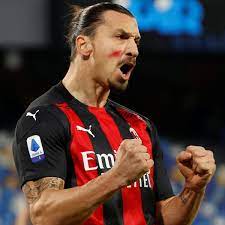
Much of the book has been serialised, with Arsenal requesting a trial and a slew of obscenities aimed at Pep Guardiola and Barcelona in general, but the story is far more interesting than any of the juicy sections picked ripe for press publication. There’s a lot to Zlatan; his family, particularly his father, were profoundly wounded by the Yugoslavia conflict, which had an impact on the footballer’s upbringing as a child. Zlatan goes out of his way to praise his father whenever there is a hint of criticism, but there is no escaping the stories about a young Zlatan frequently arriving home to find no food in the house while his father drank beer and listened to ‘Yugo’ music. His environment appears to have pushed Zlatan to seek out the guardian position that he had missed out on for much of his boyhood. The battles, disputes, and rebellion are all nicely chronicled and humourous as well as informative, but Zlatan looked to be looking for others to parent him for most of his early career without publicly asking for it.

The way he talks about Helena(his wife) makes it plain that he considers himself fortunate to have her; the two couldn’t be more dissimilar, and Helena was the stereotypical older lady in that she was classy, educated, and smart. Mino Raiola, who Zlatan worked with as an agent at Ajax, was the polar opposite. He was fat, sweary, pushy, and as impolite as he could get away with. None of that mattered since Mino got things done and really aided Zlatan.

While most will be left with the story of a man growing up and eventually fulfilling all of his aspirations, there is no getting away from the battles. Zalatan’s struggle with a petulant Rafael van der Vaart at Ajax is intriguing, and his AC Milan training ground brawl that left a teammate with a black eye reveals a lot about what manager Fabio Capello was willing to accept, and even promote. Capello is one of those men who commands Zlatan’s respect without question and has taught the player to accept it rather than earn it.

He’s arrogant, but it quickly becomes evident that much of this was developed as a protective strategy in childhood and increased when his anxieties about trusting people were validated. It would be difficult to read the book without warming to the player, and there is far more to learn from this than from any other football autobiography published in recent years.

With the revelations and insights, almost every page might launch a story on its own. As much as a look at Zlatan Ibrahimovic, this is a good view on how football truly works at the top level and will leave a football fan more informed on the dynamics of the game.

MARADONA: THE ARGENTINE BORN NEAPOLITAN

The world was in absolute shock and the Neapolitans couldn’t believe their senses when the world’s most expensive player moved to one of the world’s poorest cities and led the team which have never won a Serie A title to two Scudetti and a UEFA cup. The signing of Maradona itself was a huge reason for the people of Naples to celebrate but when he won them the titles they could’ve never imagined of, that’s the moment when the Argentine boy Diego Maradona became Santo Diego for them. With the streets of Naples painted in blue with flags and ribbons and chants hailing Diego pulsating everywhere, it took months for Neapolitans to fall back to their senses and accept that they have become the champions of Italy. And for one last time, Neapolitans were out on 25th November 2020, wearing the blue colour, carrying Diego’s photos and chanting his name through the streets of Naples, as their Saint, the greatest of all-time bid adieu to the mortal world.

Debates on Maradona’s might as a player and a person shall go on forever but for the city of Naples and its people, Maradona is so much more than just the greatest football player of all time. He will remain a godly figure, a ray of hope, an emotion that led them through their darkest times. He had the courage, conscience, and resilience to take football beyond the pitch and elevate it to a political act embarking millions of hearts with a sense of hope and feeling of redemption. 

From the slums of Buenos Aires to attaining the stature of a demigod for millions of Argentines and Neapolitans, Maradona was all a footballer could ever imagine of becoming. He has etched his name in golden scripts in the history of world football and the people of Naples, Argentina and football lovers across the globe through his charisma, leadership qualities and love for the game. Maradona might be flawed as a person but as a player, no one can ever reach the greatness he has achieved with a ball at his feet. He had qualities which no other footballing personalities can never boast about. He wasn’t a player but a politician who rebelled against the atrocities against the people. Football was just a medium for him. Diego’s might is beyond football and the politics of nations. Wherever he’s played, no one could ever own the player in Maradona. He was never a player for a particular club or country but the people, he represented them as one among them. That is the sole reason why the people of Napoli still celebrates Diego, decades after his departure, not as a person or a player but as Santo Diego, the Saint send by God to save them from all the atrocities. For Neapolitans, Maradona stays eternal, he’s the patron saint of Naples and champion of the people. And they celebrate him now and forever by singing,

‘OH, MAMMA, MAMMA, MAMMA, DO YOU KNOW WHY MY HEART BEATS?

‘I’VE SEEN MARADONA, I’VE SEEN MARADONA, AND MAMMA, I’M IN LOVE.’

FEARLESS BLASTERS WINS FIRST OF THE SEASON

After a continuous winless run of six games, Blasters tasted victory in their seventh game of the season against Hyderabad FC. In the fierce fight between two strong Indian contingents, Blasters came on top after the action-packed 90 minutes.

Kerala Blasters, one of the most followed football clubs in Asia were yet to taste their first victory in the 7th edition of Hero Indian Super League after completing six games. Today’s win was very important for the players and the coach as questions were raised from corners regarding the recruitment policy of Blasters management and the inability of Kibu Vicuna, the head coach of Kerala Blasters in finding out a perfect starting line up out of the squad.

Blasters started with five changes from their match against East Bengal FC as the Malayalee boys Sahal Abdul Samad and Abdul Hakku had their first start of the season along with Sandeep Singh, Jeakson Singh and the Australian Jordan Murray. The foreign centre back pair of Bakary Kone and Costa Nhamoinesu were dropped along with the English striker Gary Hooper and the Indians Seityasen Singh and Rohith Kumar to give way for some fresh legs.

Kerala started with not so lousy momentum and Kibu’s bold move was rewarded well when the local boy Abdul Hakku netted their first goal of the game in the 29th minute from Facundo Pereyra’s well-directed corner. The Argentine’s corner kick found the unmarked Kerala lad inside the box who brought joy to the Blaster’s camp with a stunning bullet header. On the other side, Hyderabad FC’s attempts to level the score went in vain as their strikers couldn’t find the back of the net with a disciplined Blasters defence at the back and vigilant Albino Gomez on the goal. 

It was 1-0 in favour of Blasters at half time and they started the second half with more intensity expecting high pressing from Hyderabad, and this move turned well as Hyderabad was forced back to their defensive duties with Murray and Rahul testing the opponent goalkeeper in regular intervals. The 34-year-old Hyderabad Goalkeeper Subrata Paul was kept on his toes all along the second half by Rahul and Murray. Hyderabad’s poor finishing and final third progression cost them the game as Jordan Murray netted the final nail on their coffin at the 88th minute to win the game for the Blasters 2-0. Sahal, Jeakson and Facundo were booked by the referee in their battle for the ball as the Blasters played and won as a team. This win should serve as a launchpad for the Blasters for the coming games. No one deserved this win more than the Blaster’s coach Kibu Vicuna who brushed aside his personal loss, stuck with the team and made personnel and philosophical changes to win with a clean sheet.