Gender Roles In The Indian Society .

The family is a significant foundation that assumes a focal part in the existences of most Indians. As a collectivistic culture, Indians frequently accentuate unwaveringness and association. The interests of the family normally take need over those of the individual, and choices influencing one’s very own life –, for example, marriage and profession ways – are by and large made in discussion with one’s family. Individuals will in general demonstration to the greatest advantage of their family’s standing, as the demonstration of an individual might affect the impression of the whole family by their local area.

Albeit most relatives are inside topographical nearness or part of the equivalent word related gatherings, the development of urbanization and relocation has seen more youthful ages testing these impression of family. Today, numerous individuals have broad family networks that are spread across a wide range of locales and hold various occupations. The connections an Indian individual keeps up with their more distant family abroad are regularly a lot nearer than those of a great many people in English-speaking Western social orders. Indians living abroad likewise keep up with close associations with their family staying in India through standard calls, sending settlements or visiting if conditions permit.

Family Structure

The idea of family stretches out past the normal atomic unit to include the more extensive family circle. These huge multigenerational families can likewise be fundamental to giving financial security to a person. They regularly give a wellspring of work in a family agrarian business or lead to promising circumstances in urban areas where connection ties and outsider presentations are critical for employment.

Individuals might be urged to have associations with their aunties and uncles that are similarly just about as solid as parental connections. In numerous pieces of India, it is entirely expected to discover three or four ages living respectively. The dad (or oldest child, if the dad is absent) is normally the patriarch while his better half might manage any girls or girls in-law that have moved into the family. More distant families will in general concede to the older and notice a reasonable pecking order among relatives. In more metropolitan regions, individuals will generally live in more modest family units yet keep up with solid connections to their more distant family.

Sexual orientation Roles

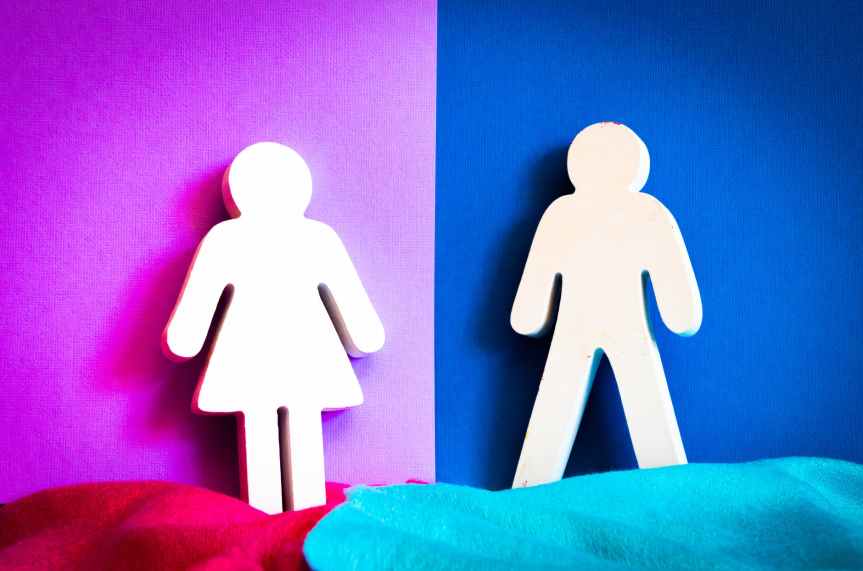
The disparity between the situation with men and women is very articulated in India. There are fluctuating traditions encompassing a training known as ‘pardah’ that requires the disengagement of women in specific circumstances. It is rehearsed generally in northern India and among traditionalist Hindu or Muslim families. As per pardah, females are by and large expected to leave the homegrown domain just when hidden and joined by a man. Subtleties in the custom fluctuate between identities, religions and social foundations. For instance, hitched Hindu women specifically parts of northern India might wear a ‘ghoonghat’ (a particular sort of shroud or headscarf) within the sight of more seasoned male family members on their significant other’s side.

How much sexual orientation imbalances endure is going through persistent change. For instance, a sibling and sister in India are presently liable to get equivalent tutoring and treatment in the instructive framework. Albeit still limited by many obliging cultural assumptions, instructed women in the public arena are turning out to be more engaged through employment openings and political portrayal. There are likewise governmental policy regarding minorities in society programs for women to assist with tending to underlying disparities.

Connections and Marriage

Organized relationships are normal all through India, however assumptions and practices of conjugal arrangements fluctuate contingent upon the district and religion. Relationships are commonly organized through a go between, two or three’s folks or some other confided in outsider. Dissimilar to in the past where people would not be educated about their future accomplice, it is presently more normal for the family to counsel the couple for assent before the wedding.

Organized relationships are almost consistently impacted by station contemplations. Along these lines, endogamous relationships stay a typical practice (restricted to individuals from a similar standing or, sometimes, religion). This is to some degree since organizing relationships is a family action that is helped out through prior organizations of a more extensive local area. Despite the fact that individuals will wed inside a similar rank, families keep away from marriage inside the equivalent subcaste. The establishments of masterminded marriage and position endogamy empower guardians to impact the fates of their children just as support the neighborhood and social design. Intercaste relationships are rarely orchestrated. Such relationships are known as ‘affection relationships’ and are turning out to be more normal. Notwithstanding how one discovers a companion, the family is almost consistently counseled in the marriage cycle.

Generally, weddings are directed in the towns of the families, whether or not the family dwells in their town or in a significant city. To be sure, it isn’t unexpected for families to keep their town home with the end goal of weddings or other significant family occasions. Weddings might length over various days and explicit practices change contingent upon the locale and the religion of the families.

The Transgender Rights.

Transsexual individuals come from varying backgrounds, and HRC Foundation has assessed that there are multiple million of us across the United States. We are guardians, kin, and children. We are your collaborators, your neighbors, and your companions. We are 7-year-old children and 70-year-old grandparents. We are a different local area, addressing all racial and ethnic foundations, just as all confidence customs.

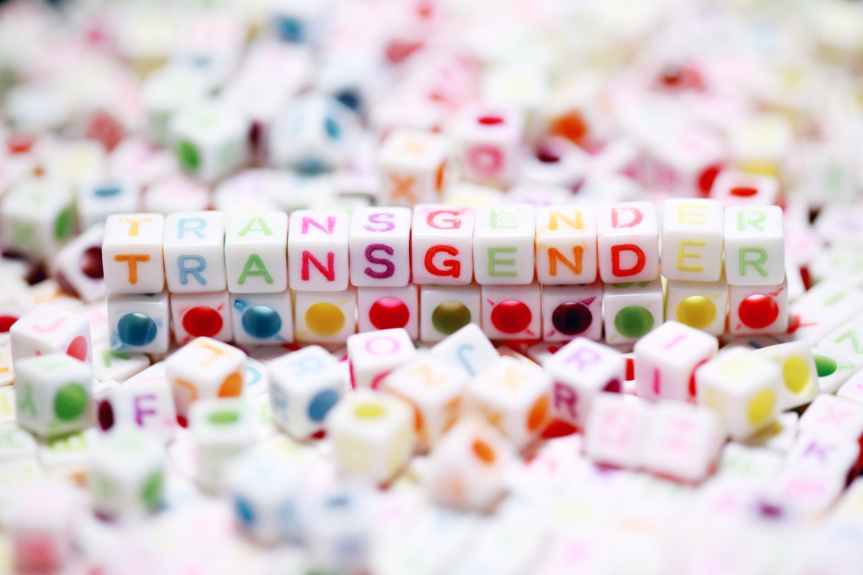
“Transsexual” – or trans – is an umbrella term for individuals whose sexual orientation character is not quite the same as the sex allocated to us upon entering the world. Albeit “transsexual” and our cutting edge meaning of it just came into utilization in the late twentieth century, individuals who might fit under this definition have existed in each culture all through written history.

Close by the expanded perceivability of trans big names like Laverne Cox, Jazz Jennings or the stars of the hit Netflix series “Posture,” three out of each ten grown-ups in the U.S. actually knows somebody who is trans. As trans individuals become more noticeable, we mean to expand comprehension of our local area among our companions, families, and society.

What’s the significance here to be trans?

The trans local area is staggeringly different. Some trans individuals distinguish as trans men or trans women, while others might depict themselves as non-twofold, genderqueer, sexual orientation non-adjusting, agender, bigender or different characters that mirror their own insight. A few of us take chemicals or have a medical procedure as a feature of our progress, while others might change our pronouns or appearance. About 3/4 of trans youth that reacted to a HRC Foundation and University of Connecticut overview related to terms other than stringently “kid” or “young lady.” This recommends that a bigger segment of this present age’s childhood are recognizing some place on the expansive trans range.

What difficulties do trans individuals confront?

While trans individuals are progressively apparent in both mainstream society and in every day life, we actually face serious segregation, shame and fundamental imbalance. A portion of the particular issues confronting the trans local area are:

Absence of lawful assurance Trans individuals face a general set of laws that regularly doesn’t shield us from separation dependent on our sexual orientation character. Regardless of a new U.S. High Court Decision that clarifies that trans individuals are lawfully shielded from segregation in the working environment, there is still no complete government non-separation law that incorporates sex character – which implies trans individuals might in any case need response on the off chance that we face separation when we’re looking for lodging or eating in an eatery. Besides, state assemblies the nation over are discussing – and sometimes passing – enactment explicitly intended to deny trans individuals from getting to public restrooms that compare with our sexual orientation personality, or making exclusions dependent on strict convictions that would permit oppression LGBTQ individuals.

Destitution Trans individuals live in neediness at raised rates, and for trans minorities, these rates are much higher. Around 29% of trans grown-ups live in destitution, also 39% of Black trans grown-ups, 48% of Latinx trans grown-ups and 35% of Alaska Native, Asian, Native Americans and Native Hawaiian or Pacific Islander trans grown-ups.

Shame, Harassment and Discrimination – About a large portion of 10 years prior, just one-fourth of individuals in the United States upheld trans rights, and backing expanded to 62% continuously 2019. Regardless of this advancement, the trans local area actually faces extensive shame due to over a hundred years of being described as mentally sick, socially degenerate and physically savage. While these bigoted perspectives have blurred lately for lesbians and gay men, trans individuals are regularly still criticized by a general public that doesn’t get us. This disgrace works out in an assortment of settings – from administrators who influence hostile to trans shame to score modest political focuses; to family, companions or associates who reject trans individuals after finding out about our trans characters; and to individuals who pester, menace and submit genuine brutality against trans individuals. This incorporates disgrace that keeps them from getting to fundamental administrations for their endurance and prosperity. Just 30% of women’s havens will house trans women. While ongoing lawful advancement has been made, 27% of trans individuals have been terminated, not recruited or denied an advancement because of their trans personality. Time after time, harassment has driven trans individuals to try not to practice their most essential rights to cast a ballot. HRC Foundation’s exploration shows that 49% of trans grown-ups, and 55% of trans grown-ups of shading said they couldn’t cast a ballot in something like one political decision in their life due to dread of or encountering separation at the surveys.

Savagery Against Trans People–Trans individuals experience viciousness at rates far more noteworthy than the normal individual. More than a larger part (54%) of trans individuals have encountered some type of cozy accomplice brutality, 47% have been physically attacked in the course of their life and almost one of every ten were actually attacked in the middle 2014 and 2015. This sort of viciousness can be lethal. No less than 27 trans and sexual orientation non-adjusting individuals have been viciously killed in 2020 hitherto, similar number of fatalities saw in 2019.

Gender Inequality in Education.

In the current presence, there have been plan of measures and projects that equivalent rights and openings ought to be made accessible to the young ladies. Previously, people had this perspective that male individuals from the family ought to be instructed. When the guys would gain schooling, they would deliver a huge commitment in advancing generosity and prosperity of their families through attainment of employment openings. However, in the current presence, in metropolitan just as in provincial networks, people and networks have achieved changes in their perspectives and viewpoints and are empowering young ladies also towards securing of training. Young ladies and women too can deliver a viable commitment in advancing government assistance of their families and networks. At the point when they acquire support from their folks, then, at that point they can achieve great quality training. Variables Causing Gender Inequality in EducationThere are presence of numerous and different associations between sexual orientation correspondence and fulfillment of the fundamental right to schooling. The women and young ladies are encountering refusal of common freedom to instruction in India, yet in different nations of the world also (Gender Discrimination in Education, 2012). The elements causing sex disparity in instruction have been expressed as follows: Conditions of Poverty When people are dwelling in the states of neediness, then, at that point they experience number of issues and difficulties in making a decent living. Now and again, they even experience issues in gathering their every day healthful requirements. The people and families, who are dwelling in the states of destitution have the essential goal of creating adequate pay to support their everyday environments agreeably. They generally don’t have monetary assets to meet the costs, engaged with the compatibility of training. In any event, when schooling is given liberated from cost, they actually need to meet different costs, involvedin instruction. These are, fixed things, books, sacks, outfits, transportation costs, etc. The destitution stricken people experience issues in gathering these costs. The destitution stricken people have this perspective that procurement of training is of most extreme importance in supporting one’s day to day environments. Consequently, they seek to get their

children joined up with schools. They have this perspective that instruction ought to be given to the children, so they can get occupied with great employment openings in future. Though, young ladies are prepared as far as execution of family duties and minor tasks to procure some pay to help their families. For example, when guardians are occupied with creation of things, then, at that point they empower their children, both young men and young ladies to help them underway and deals. The young men are needed to land occupied with this position after school hours. The young ladies are normally deterred from securing of instruction, because of restricted monetary resources.Their male kin show them, what they have realized in schools, principally to improve their essential proficiency abilities of perusing, composing and numeracy. Commonness of Traditional Viewpoints The people and networks generally had customary perspectives with respect to the schooling of young ladies. Especially, when they had restricted monetary assets, then, at that point theybelieved that these assets ought to be put something aside for marriage of their young ladies and ought not be spent on training. Another perspective was that in conjugal homes, young ladies would not have the option to use their instructive abilities and would fundamentally need to implement the family obligations. Thinking about this angle, from the underlying stage, they train their young ladies in regards to the implementation of family obligations. In the past period, young ladies and women were only kept to their homes and not permitted to take an interest in any friendly capacities or occasions. They were not permitted to communicate their perspectives and viewpoints in the dynamic issue. They basically supported their day to day environments on the pay procured by men and were intended to comply with the choices and rules detailed by them. Henceforth, because of the predominance of customary perspectives, they were oppressed and were denied of specific rights and openings. The procurement of training of young ladies, is generally influenced by conventional practices related with youthfulness. In some rustic networks, pervasiveness of certain customary practices end up being obstacles inside the course of obtaining of training with respect to the young ladies (Linda, 2014). Because of the pervasiveness of customary perspectives and viewpoints, girlsare denied from obtaining of instruction, yet in addition in accomplishing self-freedom. All in all, these are boundaries inside the course of attainment of empowerment openings. Accordingly, for achieving empowerment openings among women and young ladies, it is important to achieve changes in customary perspectives and offer equivalent rights and chances to women and young ladies.

GENDER INEQUALITY

Gender is one of the major sources of inequality in the world today. Girls are usually deprived of their rights and are likely to suffer from abuse and violence.

Discrimination based on gender gives rise to food insecurity, health risks, and exclusion from several opportunities. The United Nations (UN) estimates that 70% of the 1.3 billion people in poverty globally are women. According to World Food Program USA, more than 60% of the world’s hungry are women and girls, in nearly 2/3rd of countries, women are more likely than men to report food insecurity and one in three women with anemia are left untreated.

In a lot of countries women are not allowed to pursue higher education and they are married off early. In addition, domestic violence is a major problem in many countries including India. The women get beaten up by their husbands as men think they are superior to their wife and many women stay in abusive relationships and don’t speak up because of the fear of society.

Sometimes women face discrimation even at work, women who do actually work get paid less than their male counterparts and are disproportionately impacted by poverty. It is just unfair to pay someone less for the same work because of their sex. Therefore, we see how women empowerment is the need of the hour. We need women empowerment so that these women can speak up for their rights and never be a victim of injustice.

Women have suffered a lot at the hands of men. In earlier times, women were treated as non-existent and as if all the rights belonged to men. With the passage of time, women realised their power and began the revolution for women empowerment. Women’s empowerment can be defined as empowering the women to make their own choices, to instil a sense of self-worth and to influence social change for themselves and others.

Promoting women’s empowerment has emerged as a major global movement and has been continuously gaining momentum. While the western countries are still making progress, third world countries still fall behind in empowering the women.  While there has been progress with the passage of time, even then women continue to face discrimination and exploitation in every part of the world.

Women can be empowered through government schemes as well as on an individual basis. The people of the society and government must both come together to make it happen.  At the societal level, we should start respecting women and encourage them to take up jobs, higher education,etc. Women should get equal opportunity in every field, irrespective of their gender. Various programs or schemes must be made available for women so they can be learn skills to fend for themselves in case they face financial crisis.

Today, more than ever, women enjoy their rights. However, there are many women who are still fighting to come out of the cluthes of patriarchy and there is a long way to go.

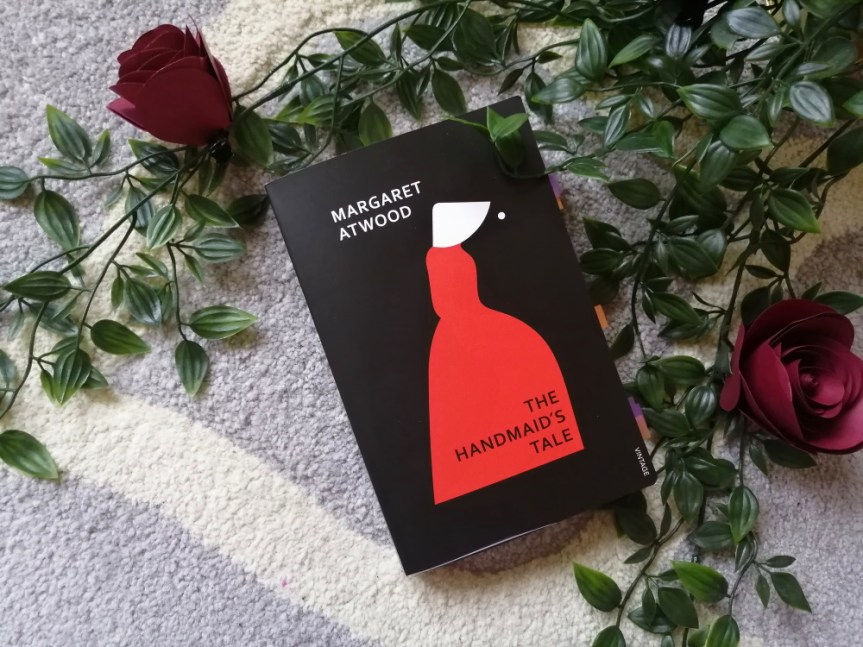
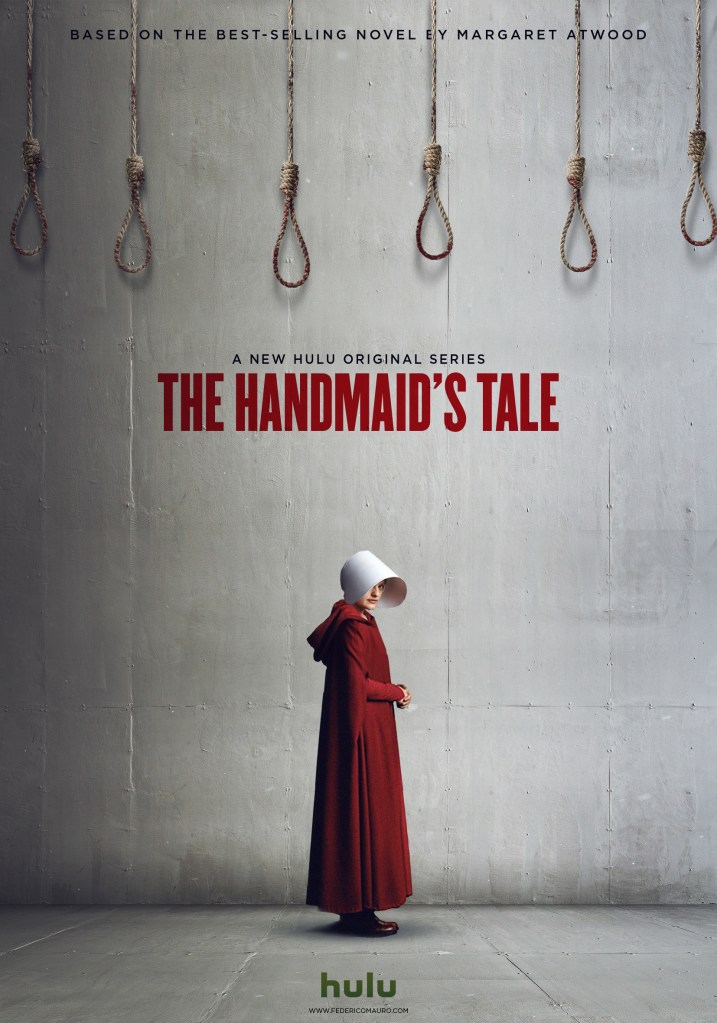
The Handmaid’s Tale – A Terrifying dystopian Novel

As readers, we travel through many stories and live in those unrealistic worlds that make us feel more realistic the way it is written, some stories imprint in readers’ minds, and some of these imprints in a writer’s mind. However “Handmaid’s Tale” is a novel that is a tormented dystopian story and a novel that kept the readers in an Appalling state throughout the story.

The Gileadean Era: A Foundation intended for the destruction of Humans.

This particular Novel is a dystopian novel that begins with the creation of the “Republic of Gilead” which is formed by a political group namely, the Sons of Jacob which tries to suppress the people of the USA by a strict but environment which is not less than a hell.

The Handmaid’s Tale is a perfect example of How hell would look like if it’s situated on earth. The Gilead Regime is a perfect example of how humans can be hazardous to each other and how they can create a place of agony by being inhuman towards each other and take all rights from the people who are less powerful than them.

This novel is not just about Marxist Feminism,  it is not even feminism, it is a  novel which talks about suppressing humans who are fragile and powerless and taking away the Right to Speak and Right to express themselves, but this novel is also about how religion is misused against the humans and haunt them in the name of Almighty.

“My Name isn’t Offred. I have another name, which nobody uses now because it’s forbidden. I tell myself it doesn’t matter, your name is like your telephone number useful only to others, but what I tell myself is wrong, it does matter. I kept the knowledge of this name like something hidden, some treasure I’ll come back to dig up, one day.”

– The Handmaid’s Tale

A very Important quote highlighting the crux of the novel in these lines is beautifully written by the author who explains to us about the protagonist of the story: June Osborne who was forcibly turned into Offred who was a mere Handmaid of a commander.

This quote draws us the image that how a person loses their identity when their name is taken away from them. It is the very weird fact that we as a human never use our word, but when someone takes our names from us ultimately, we even lose our identity and our real self-fades away with the spark of our name.

The very same situation happened with June and other women whose names were taken away from them and in return, they were made as Handmaids or we can say a sexual pleasure for their following commanders.

As mentioned in the “Historical Notes” of the novel where Dr. Piexoto explains to the readers that this novel is a transcript of a tape recording which portrays us that the whole novel is written with the perception of an imaginary Character named Offred/June.

Gilead has proved that even advanced technology fails in front of religion. This is a very controversial line that even can hurt people’s sentiments. Gilead abused the people by giving them physical, mental and emotional torcher and treated them as an object for satisfying their pleasure.

A Dystopian story that breaks all norms of society –

If you dig into the story, then “The Handmaid’s Tale” is a dystopian novel that is not one element centric novel, but a novel that has divergent themes and elements. The Protagonist of the story, Offred tells the novel with her viewpoint as a form of a tale where she talks about her sufferings in a form of nostalgia and this novel keeps the reader in curiosity through the suspense drawn in the novel. the story has a nostalgia within a nostalgia. Offred living in a hell called “The Republic of Gilead” makes her a fragile woman cause of the injustice she and other women goes through. The sufferings made her a different person as such she came to a state where she was accustomed to be living like a handmaid and for her freedom was never a word to be dreamt of.

She explains to us how not only women but people who belong to other genders were treated like slaves by the patriarchal society. The author shows us that the patriarch society crossed all the boundaries to break down humanity from the regime and The commander’s wives, the aunts, Martha’s, all were like puppets under this awful patriarch world.

When Humankind is lost, it’s the end of Humanity!

There are many segments of the novel which describe to us the real picture of  Gilead and how people in this place are humans but are apathetic towards each other. Gilead is a place where things like emotions, respect, pity don’t exist rather is invisible in this hell-like place.

These handmaids are not allowed to do anything of their own choice as such; going out alone, shopping, watching movies, reading magazines, roaming around the streets, and even having their real names are forbidden in this place. Offred reminiscent of her went days when she was an editor, wife, and a mother and lived a bustling life but in peace. Her freedom is taken away and her bustling life is turned into a life that is just a nightmare for every day.

However now she just has to be fruitful to bear fruits and complete the Procreation ceremony, which is a holy custom for the Gilead community but is merely a form of rape that all handmaids go through. “The Rachel and Leah center “also unofficially known as the “Red Centre” is a cell for those handmaids who disobeyed the law and are followed through the punishment which is a form of clearing mistakes of the young handmaids by making them perfect in the eyes of almighty to bear the seeds planted by the commanders according to the aunts.

In Gilead everything was uncanny, love was substituted with lust, Humans were like slaves, those genders who were not under the category of male and female were sent to “The Colonies” which was not less than a concentration camp that ultimately brings death towards them.

Yet offered never lost hope and always protected herself from the devastation and chose many paths to get over from this hell. Later in the story, we see that his beloved “Nick” who was assumed to be the part of “The eyes” helped him to get out of the regime but in the end, they failed to do so.

We can conclude that; this sci-fi dystopian novel was terrifying at all levels which can devastate human minds. It shows that a sinister human can reach any level of madness and destroy each other by being greedy and sinful.

“You see, Humans are always egoist and sometimes they destroy themselves in search of satisfying themselves with worldly pleasures.”