Home Voting for eligible voters extended pan India for the first time in General Elections 2024

 The Election Commission of India has taken massive strides in ensuring inclusivity and accessibility in the General Elections 2024 to ensure that no eligible voter is deprived of their right to vote on account of physical or other barriers. So far, after the conclusion of 6 phases of elections, immense enthusiasm was seen amongst voters of various sections such as Persons with Disabilities, Senior Citizens, Transgenders, PVTGs. Facility for voting from the comfort of home for senior citizens above 85 years of age and PwDs with 40% benchmark disability was extended for the first time on pan India basis in General Elections 2024.
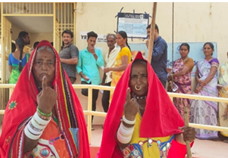
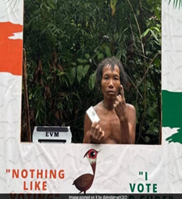
  

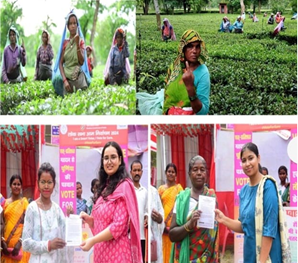
Lambada Tribe at Polling Station of Thiruvur Constituency, Shompen tribe of Great Nicobar voted for the first time in a General Election and Nishi Tribe in Arunachal Pradesh


The concerted efforts, throughout the country under the leadership of Chief Election Commissioner Shri Rajiv Kumar along with Election Commissioners Shri Gyanesh Kumar and Dr Sukhbir Singh Sandhu have seen many success stories from the States/UTs where election has been completed till the Phase 6 of the Lok Sabha Election – 2024. CEC Rajiv Kumar said “It has been the deep founded resolve of the Commission to strive for continuous improvement in the electoral processes setting new standards globally. ECI is determined to make the elections truly reflective of the spirit of plurality and diversity that is the pride of our country. ECI is dedicated to incorporating and deeply integrating the principles and practices of inclusivity and accessibility throughout the entire election process, setting an example before the society for replication everywhere.”
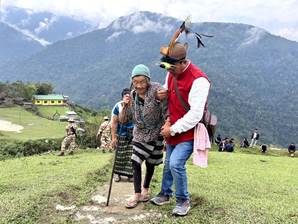
 

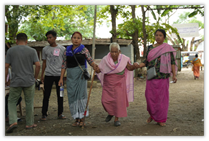
A senior citizen elector on the way to cast her vote in Arunachal Pradesh.


The preparations started two years back with concerted efforts of updation and registration of eligible citizens in the electoral rolls. This was achieved by conducting special registration drives, camps, targeting these categories of voters. ECI has adopted a multipronged strategy to enhance participation amongst communities which are prone to be deprived of their right to vote.

Optional home-voting facility: a first in India’s General Elections draws excellent response

The optional home voting facility marks a paradigm shift in the electoral process and has been made available for the first time in the history of India’s general elections. Any eligible citizen aged 85 and above or with 40% benchmarked disability, can avail the provision of home voting facility through postal ballot in these elections. This facility has received an enthusiastic response from voters. Gratifying scenes of smiling voters and their testimonials voting from the comfort of their homes have flooded social media from all parts of the country. Voting from home takes place with involvement of a full contingent of polling staff and security personnel with secrecy of voting diligently maintained. Agents of candidates are also allowed to accompany polling teams to witness the process.
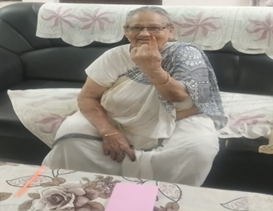
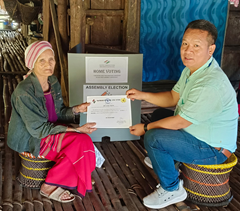
 

Smt. D. Padmavathi, 100 years of age, from Kovvuru Constituency and a Sr. Citizen elector from Arunachal Pradesh
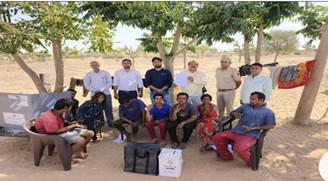
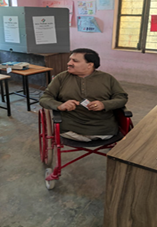
Eight PwD members of same family availing home facility in Churu, Rajasthan.

Bridging barriers: addressing infrastructural requirements for better participation

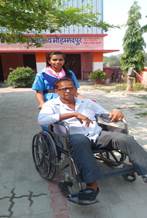
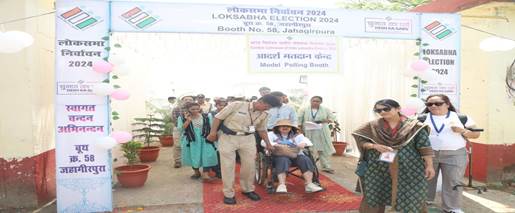
To bridge any infrastructural gaps, ECI ensured that every polling booth is on the ground floor, equipped with assured amenities including ramps, signages for voters, parking space, separate queues, and volunteers. Additionally, ECI’s SAKSHAM app has facilitated PwDs for availing various facilities at polling station like wheelchairs, pick-and-drop and volunteers services. There have been over 1.78 lakh downloads of the Saksham App since announcement of elections.

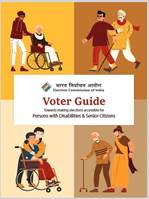
The Commission has also made provisions for Braille on EVMs, Braille enabled EPIC, and voter slips to assist visually impaired electors. Further, a Voter Guide for PwDs and Sr. Citizens, in English and Hindi, with information on the process of registration to poll day facilitation was made available.

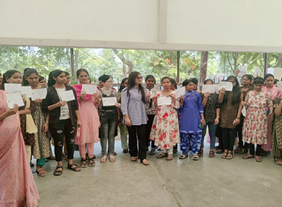
In Indore, Madhya Pradesh, 70 visually handicapped girls were assisted with free transportation to cast their vote.


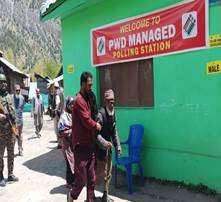
PwD managed PS in J&K


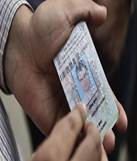
Photos: Braille-coded voter cards distributed to visually impaired electors  | Hindustan Times   

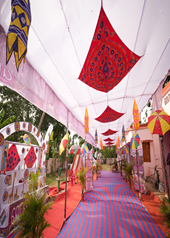
Braille enabled EPIC, Voter Guide, volunteer at a polling station in Bihar and provision of shamiyana at a polling station in Odisha


Inclusivity in spirit: removing psychological barriers to voting

Apart from eradicating physical barriers to voting, ECI also made efforts to address social barriers and stigma surrounding certain vulnerable populations like Transgenders, Sex workers, PVTGs to ensure their participation in election process. Special camps were arranged to enroll the third gender (TG) electors and other marginalized communities like sex workers and PVTGs by Thane District in collaboration with civil society. Over 48,260 TGs are enrolled all over the county, out of which Tamil Nadu has the highest number of third gender electors with 8467, followed by 6628 TGs in Uttar Pradesh and 5720 TGs in Maharashtra.

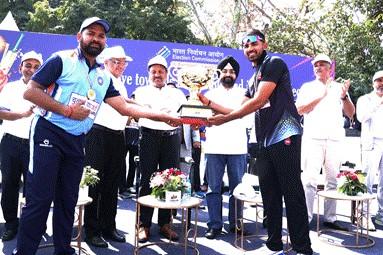
As part of SVEEP initiatives, Commission organized a T-20 Cricket Match on 16th March, 2024 between the IDCA (Indian Deaf Cricket Association) and DDCA (Delhi District Cricket Association) teams to create voter awareness among PwD electors and promote inclusive elections.
https://static.pib.gov.in/WriteReadData/userfiles/image/1BPQT.jpeg

Commission awarding the trophy to the winners at the T-20 Match


Efforts were made to the extent possible by the Commission, to set up at least one polling station in each AC, managed exclusively by PwD officials. For Lok Sabha Election -2024, approximately 2697 PwD managed Polling Stations have been set up across the country, with Uttar Pradesh setting up the highest PwD Manned Polling Stations i.e. 302.


Making registration and voting easy for vulnerable communities

The homeless and other nomadic groups are another critical demographic in achieving high electoral participation. Due to their unique circumstances, these individuals can experience unintentional electoral exclusion because of lack of proof of residency.  However, special efforts were made in the last two years for their enrolment as voters and also participation in the voting process. Location of new polling booths in previously inaccessible areas has led to the large-scale inclusion of PVTGs. In many States/UTs, where PVTGs reside in large numbers, free transportation facilities have been provided for enabling the PVTGs reach polling stations from remote areas. In a historic move, the Shompen tribe of Great Nicobar voted in the Lok Sabha Election -2024 for the first time.


Partnerships

To promote electoral awareness and instill a spirit of partnership and inclusion in the elections, ECI has designated eleven PwD individuals as “ECI Ambassadors” to involve the community further in the electoral process. Polling personnel were are also trained and sensitized regarding special needs of the PwDs to develop a sense of participation and ownership in the elections. State CEOs also collaborated with State Disability and health departments of the concerned states for providing better facilitation to PwDs and Senior Citizens.
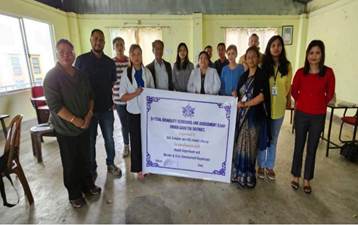
Camps organized in Gangtok by DEO in collaboration with Women & Child Development and Health Department

Also, a team of ECI officials visited Thane District and Kamathipura in Mumbai City to have an open dialogue with the Transgender and Female Sex workers, residing in these areas, to better understand the challenges faced by them in electoral participation, sensitizing the field machinery towards these electors and to encourage these voters to ensure their participation during the Lok Sabha Election-2024.
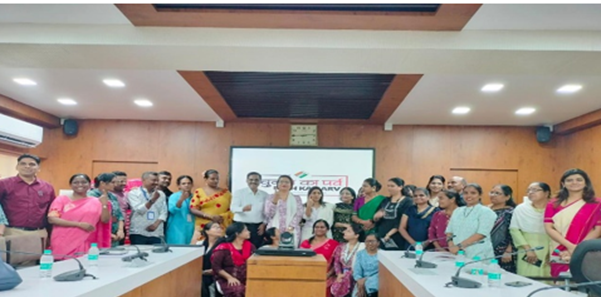
ECI team with NGOs/CSOs and TG community in Thane District and encouraging them to ensure 100% participation in the Lok Sabha Election.


The Commission also appointed Ms. Sheetal Devi, Arjuna Awardee and Para Archer, as the ECI National Icon, to motivate the PwD electors to exercise their franchise in the Lok Sabha Election-2024. Also, eleven prominent PwD personalities have been appointed as Ambassadors of ECI for taking part in various voter awareness initiatives of ECI and reaching out to PwD electors. Moreover, the Commission has also appointed State PwD Icons for the States/UTs.

https://www.newsonair.gov.in/wp-content/uploads/2024/03/para.jpg

Ms. Sheetal Devi, National PwD Icon, ECI


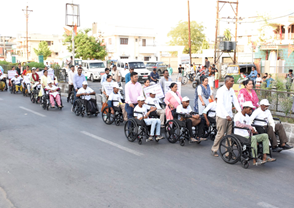
In Mehsana district in Gujarat, a wheelchair rally

was organized by PwD electors to create awareness

An extensive campaign including “Matdata appeal patra” was launched to enhance PVTG participation in the ongoing elections.

Reaching out to the last mile electors

The Commission is committed in ensuring that “no voter is left behind” and has taken special measures to reach out to the electors residing in the remotest corners of the county. For example, a polling station was set up in a shipping container in Aliabet in Gujarat to reach out to the tribal electors residing in this area. Similarly, voters from 102 villages in Bastar and Kanker PCs in Chhattisgarh cast their vote in a polling booth set up in their own village for the first time in a Lok Sabha Election.
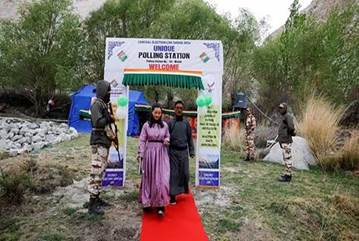
Polling station for just five members of a family in a remote village of Warshi in Leh district, Ladakh


Further, in a major decision to facilitate voting by Kashmiri migrants in the ongoing General Elections 2024, ECI abolished the cumbersome procedure of filling Form-M for the displaced people from the valley who are residing in Jammu and Udhampur. Additionally, for the migrants residing outside Jammu and Udhampur (who will continue to submit Form M), ECI has authorized the self-attestation of the certificate appended with Form-M, thus removing the hassle of getting this certificate attested by the Gazetted Officer. The Commission has enabled Kashmiri migrant voters residing at various relief camps in Delhi, Jammu, and Udhampur to also have the option of voting in person at designated special polling stations or using postal ballot. 21 Special Polling Stations were established at Jammu, 1 at Udhampur and 4 at Delhi.
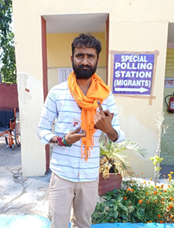
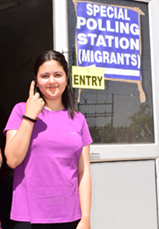
  

Kashmiri migrants casting their vote at Special Polling Stations


Similarly, to ensure voting rights for internally displaced persons (IDPs) in Manipur, 94 Special Polling Stations (SPS) were set up in 10 districts for (IDPs). One SPS was set up in Tengnoupal district for a single voter. Poll was conducted under webcasting/videography and displaced persons staying outside relief camps could also opt to vote at SPS.
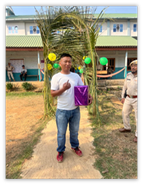
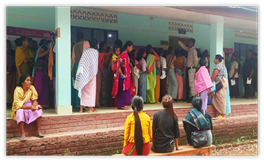


IDP in Manipur casting their vote at Special Polling Stations

******
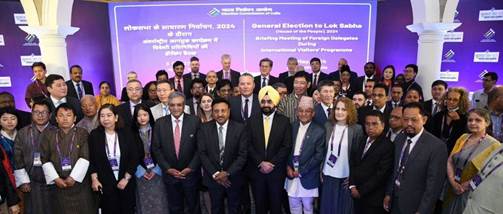
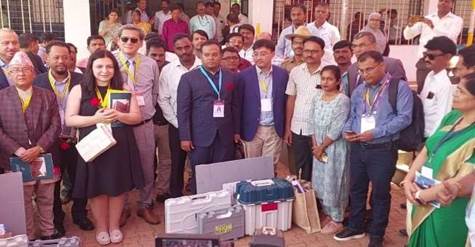
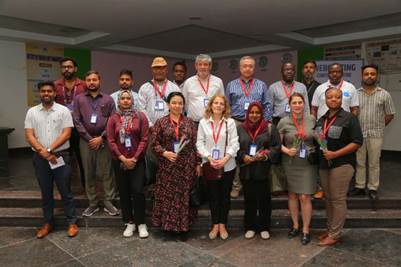
75 delegates from 23 countries witness the poll process first-hand in 6 States as part of IEVP

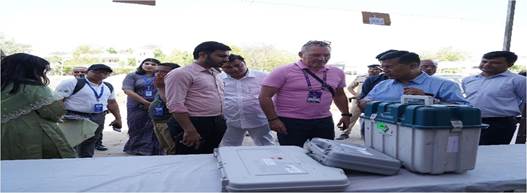
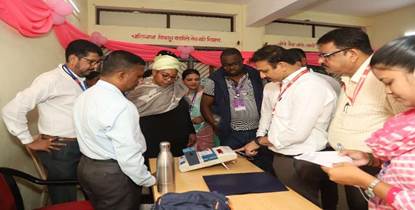
 International delegates have expressed their happiness at having witnessed the polling process first-hand in General Election 2024. While some of the delegates appreciated transparency others termed ECI’s initiatives such as Green Polling Stations as inspirational. Delegates also appreciated the use of technology at scale in the elections including during randomization of EVM-VVPATs. Some of the delegates also said that they were particularly struck by the unwavering faith and commitment of Indian voters towards strengthening democratic ideals. Overall, there was unanimity among the visiting members of the Election Management Bodies of these countries that the election process in India was a peaceful, inclusive and accessible and takes place in a festive mood.

These reactions came after largest ever contingent of international delegates experienced India’s General Elections first-hand in the recently concluded third phase of the elections as part of the International Election Visitors’ Programme (IEVP).

Polling was held in 93 Constituencies across 11 States/UTs in the third phase and the delegates watched the polling in 6 States/UTs including the preparatory work that goes into making what is arguably the largest logistical exercise involving movement of men and machinery in the world.

IEVP 2024 experiences from ground


Karnataka

Delegates from Cambodia, Tunisia, Moldova, Seychelles, and Nepal visited Belgaum Parliamentary constituency in Karnataka and interacted with polling officers and presiding officers inside the polling station, witnessed mock poll, visited command control center, media monitoring facilities. The delegates appreciated the transparency as underscored by mock poll, presence and involvement of candidates’ representative inside the polling station.


Goa

Delegates from Bhutan, Mongolia and a media team from Israel witnessed polling and related arrangements in both the constituencies in Goa. They were also exposed to mock poll, command control center, media monitoring facilities and dispatch centers. CEC Bhutan and Electoral officials of Bhutan & Mongolia appreciated transparency in involving political parties, media, candidates’ representative inside the polling station in conduct of elections. Admiration and surprise was expressed to see PwD managed Polling stations, and Pink Polling stations by the visiting delegates. Delegates appreciated the use of software for randomization of EVM-VVPATs.


Madhya Pradesh

A 11-member international team comprising delegates from Sri Lanka and Philippines visited polling stations across Bhopal, Vidisha, Sehore, and Raisen constituencies, gaining firsthand insights into the electoral process of the Lok Sabha elections. Interacting with voters, they observed the enthusiasm and active participation of Indian citizens in the democratic process. Reflecting on their experiences, the delegates expressed admiration for the vibrant democracy they witnessed in India. They were particularly struck by the unwavering faith and commitment of Indian voters towards strengthening democratic ideals.


Uttar Pradesh

Delegates from Chile, Georgia, Maldives, Namibia, Papua New Guinea and Uzbekistan witnessed the polling on 7th May, 2024 in Fatehpur Sikri and Agra Parliamentary constituency in Uttar Pradesh. Visiting dignitaries were taken to see architectural marvel of Taj Mahal and the Fatehpur Sikri falling in these two constituencies. They were exposed to the various arrangements/activities on the poll day and the day before the polling day. There was unanimity among the visiting members of the Election Management Bodies of these countries that the election process in India was a peaceful, inclusive and accessible.


Gujarat

Delegates from Fiji, Australia, Russia, Madagascar, Kyrgyz Republic witnessed pre- poll arrangements and polling process for the General Elections to the Lok Sabha, 2024 in Ahmedabad. The delegation was impressed with strong room(s) having double lock system and deployment of armed police personnel ensuring effective security for EVMs. Female managed polling stations in Assembly Constituency of Sanand in Ahmedabad East PC was also drew appreciation and invited comments that they boost confidence in women and increase their participation. Facility of ramp and wheelchairs in all places along with volunteers to help elderly voters was also highly appreciated. The concept of Braille ballot paper for blind voters was also liked as a good initiative to help blind people.


Maharashtra

Representatives from the Election Management Bodies of Bangladesh, Sri Lanka, Kazakhstan and Zimbabwe visited Raigad parliamentary constituency in Maharashtra and witnessed the pre-poll arrangements, dispersal of polling parties and other logistics. The group interacted with the District Election Officer, Returning Officer, Presiding Officers and other election related officials about the various facets of the Indian Elections. The delegates were impressed with the transparency measures at polling stations.


Background

Delegates from 23 countries namely Australia, Bangladesh. Bhutan, Cambodia, Chile, Fiji, Georgia, Kazakhstan, Kyrgyz Rep, Madagascar, Maldives, Mongolia, Moldova, Namibia, Nepal, New Guinea, Philippines, Russia, Seychelles, Sri Lanka, Tunisia, Uzbekistan, Zimbabwe arrived at New Delhi to witness the Elections in the third phase of polling on the 5th May 2024. They interacted with the Election Commission of India in the inaugural session presided over by the Chief Election Commissioner Sh. Rajiv Kumar along with Election Commissioners Shri Gyanesh Kumar and Dr. Sukhbir Singh Sandhu. Thereafter the delegates were divided into 6 smaller groups to visit different states viz. Karnataka, Maharashtra, Gujarat, Uttar Pradesh, Goa and Madhya Pradesh and visited polling stations in 13 constituencies for this purpose. The CEOs of the States organized the visit of the groups to see the poll preparedness, logistics and webcasting arrangements as well as engaging with polling officers and presiding officers on pre-poll day and to witness the mock poll, actual polling and to interact with voters on election day i.e.7th May 2024.

.

*****

Over 73,000 applications received on Suvidha Portal since the announcement of General Elections 2024

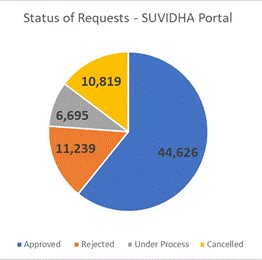
 In a span of just 20 days, since the announcement of elections and the Model Code of Conduct (MCC) becoming operational, the Suvidha platform received an impressive 73,379 permission requests from political parties and candidates, of which 44,626 requests (60%) had been approved. Nearly 11,200 requests had been rejected which is 15% of the total requests received and 10,819 applications cancelled as were invalid or duplicate. Rest of the applications are under process as per the details available till April 7, 2024.


Maximum requests were received from Tamil Nadu (23,239) followed by West Bengal (11,976) and Madhya Pradesh (10,636). Minimum requests received from Chandigarh (17), Lakshadweep (18) and Manipur (20). State wise applications received are placed at Annexure A.

The Suvidha portal is a technological solution developed by ECI to ensure a level playing-field upholding the democratic principles of free, fair and transparent elections. Demonstrating an impressive track record, the Suvidha Portal streamlined the process of obtaining and acting upon requests for permissions and facilities from political parties and candidates during the election period.

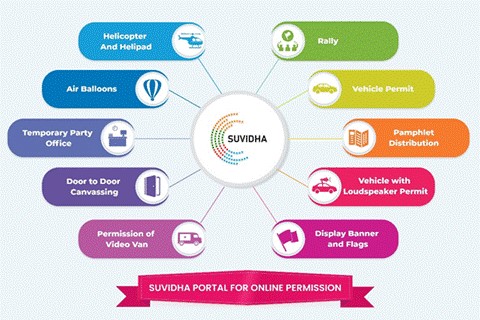
​​​​​​​Recognizing  the importance of the election campaign period, where parties and candidates engage in activities to reach out to voters, the Suvidha Portal caters to a diverse range of permission requests transparently on the First in First Out principle. It caters to permissions for organising rallies, opening temporary party offices, door-to-door canvassing, video vans, helicopters, obtaining vehicle permits, distributing pamphlets.

About SUVIDHA Portal- Critical Application to ECI IT Ecosystem

Accessible through the Suvidha Portal (https://suvidha.eci.gov.in ), political parties and candidates can seamlessly submit permission requests online from anywhere, at any time. Additionally, offline submission options are available to ensure inclusivity and equal opportunity for all stakeholders.

Supported by a robust IT platform, managed by nodal officers across various state departments, the Suvidha Portal facilitates efficient processing of permission requests. Suvidha also has a companion app that enables applicants to track the status of their requests in real time, adding further convenience and transparency to the process. The App is available on IoS and Android platforms.

The Suvidha Platform not only enhances the efficiency of the election process but also ensures transparency by providing real-time tracking of applications, status updates, timestamped submissions, and communication via SMS. Furthermore, the permission data available on the portal serves as a valuable resource for scrutinising election expenditures, contributing to greater accountability and integrity in the electoral process.

With the Suvidha Platform, the Election Commission of India reaffirms its commitment to facilitate a fair, efficient, and transparent electoral environment, where all political parties and candidates have equal access to the necessary permissions and clearances.

Annexure A:

S. No

State

Total Request

1

Andhra Pradesh

1153

2

Assam

2609

3

Bihar

861

4

Goa

28

5

Gujarat

648

6

Haryana

207

7

Himachal Pradesh

125

8

Karnataka

2689

9

Kerala

1411

10

Madhya Pradesh

10636

11

Maharashtra

2131

12

Manipur

20

13

Meghalaya

1046

14

Mizoram

194

15

Nagaland

46

16

Odisha

92

17

Punjab

696

18

Rajasthan

2052

19

Sikkim

44

20

Tamil Nadu

23239

21

Tripura

2844

22

Uttar Pradesh

3273

23

West Bengal

11976

24

Chhattisgarh

472

25

Jharkhand

270

26

Uttarakhand

1903

27

Telangana

836

28

Andaman & Nicobar Islands

468

29

Chandigarh

17

30

Dadra & Nagar Haveli and Daman & Diu

108

31

NCT OF Delhi

529

32

Lakshadweep

18

33

Puducherry

355

34

Jammu and Kashmir

383


Total

73,379


****