Indian Education System

Education plays an important role in the development of an individual and making him a knowledgeable citizen. It is the education that makes an individual self-reliant, helps to suppress the social evils and contribute towards the development of the society and nation as a whole. Education helps in unravelling the mystery of nature. It enables us to understand and improve the working of our society. It creates conditions for a better life. Education brings out the capabilities to fight injustice happening in society. Every individual has the right to education. 

Indian Education is one of the largest and complex education systems in the world along with China. India is committed to providing basic education to its citizens, the framework of which is defined in the National Policy of Education. Elementary education is now compulsory in India. At the time of Independence, only 14% of India’s population was literate. Now after so many decades since Independence, the number of literates has increased by fivefold.

History of Education System

The history of Indian education system comes from the times of Ramayana and Mahabharata. The historic Indian education system is also called the Gurukula system. There were gurus then who are now known as teachers and shishyas who are called students now. The gurus and the shishyas lived together under one roof in Gurukula until the completion of their education. The shishyas were expected to help the guru in all the daily chores as part of their learning. The children belonging to higher strata of the society were taught all the subjects from Sanskrit to Holy Scriptures and mathematics to metaphysics by the gurus. The Gurukulas during those times focused on the practical aspects of life. The students were taught in the open classroom in the surrounding area of nature. This early system of education in India continued for many years until the modern education system came into the picture in the nineteenth century.

In the early 19th century, during the British period, the modern education system was brought into our country by Lord Thomas Babington Macaulay. The basic strength of this modernized education system was the examinations and a well-defined curriculum, which gave importance to subjects like science and mathematics and subjects like philosophy, metaphysics were given a back seat. The brick and mortar classrooms replaced the open classrooms in the Gurukulas. The essence of the guru shishya bond was taken over by a more formal relationship between the teacher and the student. To understand the progress of any student, examinations were conducted at frequent intervals. The focus of the education system shifted from learning to memorizing of the concepts to score good marks in the examinations.

Problems of Indian Education System

Over a period of time, it has been observed that there are many loopholes in the system of education in India. Instead of understanding the concepts, students started cramming and memorizing the lessons. Knowledge is given a backseat and scoring in high rankings takes importance. The modern parents have tuned their mindsets accordingly and their goal is to ensure that their children score good marks instead of acquiring knowledge right from the primary level. 

Private schools and colleges have been rapidly increasing in the country but the results produced by them are far beyond satisfactory. It has also been observed that the quality of teachers deteriorated with the passing of time. Our examination system is responsible for the wide skill gap. India is producing lakhs of engineers and professionals every year but only a fraction of this number is actually getting employed. This is because the Indian examination system focuses more on scoring good percentages rather than the actual continuous comprehensive evaluation. 

Research and development, which should be the cornerstone of our system, are given the least importance. The private schools and colleges focus on the admission of more students and are least interested in the quality of their education. This is the major reason why the faculties and the teachers lack skills and specialization. This is quite evident from the fact that a single professor is assigned to teach multiple subjects. 

How Can We Improve the Indian Education System?

First and most importantly we should improve the grading system. Rote learning should be discouraged completely. Teachers and faculties should focus more on the analytical skills of the students and grade them accordingly. There should be more focus on comprehensive evaluation instead of scoring only good marks. Workshops must be organized for teachers on a regular basis to keep them updated about the latest developments in the sector of education. At the same time, the curriculum should be reframed according to the present needs of education in India. 

The payroll structure of the teachers and the faculties especially in the government institutions should be improved. This step will help in motivating the teachers to develop their skills and they will take a keen interest in grooming or shaping up a student’s life and career. The government and other entities who are associated with the education sector, need to understand the importance of quality of education. Education should be a holistic process that must focus on the overall development of the physical, emotional, social and cognitive skills of a child. It needs to be a slow and cyclic process and must take place gradually to help the child develop into an autonomous, independent and knowledgeable individual.

Conclusion

An educated individual is an individual who should be able to contribute towards the betterment of the economic and social development of the society as well as the country. The true goal of education must exceed awarding the degrees and certificates to the students. Education is not a tool to earn livelihood but it is a way to liberate the mind and soul of an individual. 
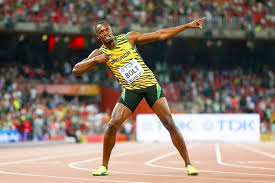
USAIN “The Lightning” BOLT.

Full name – Usain St Leo Bolt
Nickname(s)- Lightning Bolt
Nationality – Jamaican
Born – 21 August 1986 (age 34),Sherwood Content, Jamaica
Height – 1.95 m (6 ft 5 in)
Weight – 94 kg (207 lb)
Sport – Track and field
Event(s) – Sprints
Club – Racers Track Club
Coached by – Glen Mills
Retired – 2017
Awards And Honors: Olympic Games.

About Usain Bolt:

The world’s fastest man has adopted the world’s fastest animal. As part of an effort to help protect this ‘endangered species’ in Kenya, Bolt formally adopted a three-month-old cheetah cub in Nairobi. Bolt bestowed one of his own nicknames upon the cub, naming him ‘Lightning Bolt’. Symbolic indeed!

One cheetah at a Cincinnati Zoo ran the 100 metres in just over 6 seconds, about 3.5 seconds faster than Bolt’s human world record of 9.58 seconds. Some scientists are trying to apply the physics of a cheetah’s running style in order to maximize the ability of human runners. Well, do not be surprised if Bolt does land another ‘bolt from the blue’ by equalling the cheetah’s feat.

Sportsmen like Bolt are like the Halley’s Comet, they come once in 76 years, nay, a hundred years. Bolt, a three-time Olympic gold medalist, distinguished himself with a 200 metres gold medal at the 2002 World Junior Championships, making him the competition’s youngest ever gold medalist. In 2004, at the CARIFTA Games, he became the first junior sprinter to run the 200 metre in under 20 seconds with a time of 19.93 seconds, breaking Roy Martin’s world junior record by two-tenths of a second.

He turned professional in 2004, missing most of his first two seasons due to injuries. But he competed at the 2004 Summer Olympics.In his childhood, he loved to play Cricket and Football in the streets of Jamaica with his brother. In his school, he was the fastest runner in the 100-meter race. His primary coach, McNeil was sometimes got frustrated by his penchant jokes. At the 2001 IAAF World Youth Championships in Hungary, he made his first appearance at an international event. Bolt is one of only nine athletes in the world to win World Championships at the youth, junior, and senior levels.Bolt’s first sports choice was Cricket. He is a big fan of Football.

About his Life:

In 2007, he beat Don Quarrie’s 200 metres Jamaican national record with a run of 19.75 seconds. In May 2008, Bolt set his first 100 metres world record with a timing of 9.72 seconds. He set world records in both the 100 metres and 200 metres events at the Beijing Summer Olympics, recording 9.69 seconds in the former event. With a timing of 19.30 seconds in the 200 metres, he broke the previous record of 19.32 seconds by Michael Johnson at the 1996 Summer Olympics at Atlanta. A year after the Beijing Olympics, he lowered his 100 metres and 200 metres world records to 9.58 seconds and 19.19 seconds respectively at the 2009 World Championships. His record-breaking margin in the 100 metres is the highest since the start of digital time instruments. As a result of Bolt’s success in athletics, he was named the Laurens World Sportsman of the Year for 2009.

• He is an 11-time World Champion.– In Track and Field, he is considered the highest-paid athlete ever. – He has been with a number of honors and awards, including Track and Field Athlete of the Year, World Athlete of the Year, and Laureus World Sportsman of the Year (3 times). – He has collaborated with the Soul Electronics and has launched 2-types of Bolt edition in-ear headphones- Run-Free.

Bolt loves dancing and is a great admirer of Indian batsman Sachin Tendulkar, West Indian Opener Chris Gayle, and Australian opener Mathew Hayden. He is a football fan too, and supports Manchester United. What we can learn from a man like Bolt is the level to which one can reach if one works hard. Hours of hard and laborious training have gone into the making of this rare legend on the track, and countries with a billion strong population which cannot produce a single sensation on the track can do well to learn certain lessons from him.

General knowledge

General knowledge is very important in everyone’s life. The person without the knowledge is like the bird without the wings. It is very important to know what is happening across the world. So, it is very important to attain the general knowledge. To grab general knowlede, an individual must follow some of the techniques like reading books, articles, magazines, newspapers etc.

The newspaper consists of all the important things like the business purposes, sports, entertainment, some interesting puzzles, Hindi habits, food recipes, Current affairs etc.

Reading newspaper is an important thing because whenever an individual comes across a motivational thing, he or she will be motivated and focuses on the particular aspect. The individual will get to know the current affairs. The person will get a good grip on the general knowledge. solving puzzles improves the skills of the person. Reading about the healthy habits in the newspaper makes the individual to go for good and healthier meals.

Reading newspaper is very important because gives the chance to know what is happening around us. Early in the morning or evening whatever the time maybe, sparing at least 10 to 15 minutes of time on newspaper is a very good habit that an individual can develop.

The newspaper consists of all the important things like the business purposes, sports, entertainment, some interesting puzzles, Hindi habits, food recipes, Current affairs etc.

In one of the other way the individual develops good habits and focuses more on what they are trying to do.

Individual Differences :

Intelligence :

High scores on tests of general knowledge tend to also score highly on intelligence tests. IQ has been found to robustly predict general knowledge scores even after accounting for difference in age, and five factor model personality tarits. However, many general knowledge tests are designed to create a normal distribution of answers, creating a bell shaped curve.

General knowledge is also moderately associated with verbal ability, though only weakly or not at all with numerical and spatial ability. As with crystallized intelligence, general knowledge has been found to increase with age.

Long term semantic memory :

General knowledge is stored as semantic memory. Most semantic memory is preserved through old age, though there are deficts in retrieval of certain specific words correlated with aging. In addition, stress or various emotional levels can negatively affect semantic nemory retrieval.

Personality :

People high in general knowledge tend to highly open to new experiences and in typical intellectual engagement. The relationship between openness to experieñce and general knowledge remains robust even when IQ is taken into account. People high in openness may be more motivated to engage in intellectual pursuits that increase their knowledge. Relationships between general knowledge and other five factor model traits tend to be weak and inconsistent. Though one study found that extraversion and neutroticism were negatively correlated with general knowledge, others found that they were unrelated.

Predictor of achievement :

A number of studies have assesses whether performance on a general knowledge test can predict achievement in particular areas, namely in academics, proofreading and creativity.

Academic achievement :

General knowledge has been found to predict exam results in a study of Britush schoolchildren. The study examined congnitive ability and personality predictors of exam performance and found that general knowledge was positively correlated with GCSE english, mathematics, and overall exam results. General knowledge test scores presicted exam results, even after controlling for IQ, five factor model personality traits, and learning styles.

Proofreading :

General knowledge has been found to robustly predict proofreading skills in univeristy students. A study found that proofreading had a larger correlation with general knowledge than with general intelligence, verbal reasoning, or openness to experience. In a multiple regression analysis using general knowledge, general intelligence, verbal reasoning, five factor personality traits, amd learning styles as predictors, only general knowledge was a significant predictor.

Creativity

General knowledge has been found to have weak associations with measures of creativity. In a study examining contributions of personality and intelligence to creativity, general knowledge was positively correlated with tests of divergent thinking, but was unrelated to a bigraphical measure of creative achievemnet, self- rated creativity, or a composite measure of creativity. The realtionship between general knowledge and divergent thinking became non- significant when controlling for fluid intelleigence.

Game shows and Quizzes :

Many game shows use general knowledge questions for entertainment purpose. Game shows such as who wants to be a Millionarie? and fiteen to one centre their questions on general knowledge, while other shows focus questions more on specific subjects. Some show ask questions both on specific subjects and on general knowledge .