The Beauty of Tierra del Fuego

Tierra del Fuego, which stands for “Land of Fire” in Spanish, is an archipelago or a cluster of islands in the southern most tip of South America. It is located across the Strait of Magellan.  The archipelago consists of the main island, Isla Grande de Tierra del Fuego and a group of many islands, including Cape Horn and Diego Ramirez Islands. Tierra del Fuego is divided between Chile and Argentina and is located close to the perennially frozen continent of Antarctica. Tourism is a major component of the local economy.

Brief History

The History of Tierra del Fuego ranges from settlement of the region by the local Yaghan and the Selk’nam people to it’s discovery by the infamous Portuguese explorer Ferdinand Magellan on whom the strait of Magellan is named after, to Spanish European colonization and the genocide of the natives during the gold rushes in the region.

In recent history, both countries have explored the region for oil extraction and formulated their Antarctic claims. In the 1960’s and 70’s there was even a threat of military conflict looming between the two countries over a few islands which almost led to an Argentine invasion of Chile in 1978. Ths very threat of war caused the Chilean regime of Dictator Augusto Pinochet to give logistical support and information to the British during the Falklands War of 1982.

Geography

The archipelago consists of the main Isla Grande de Tierra del Fuego island. Its westernmost part belongs to Chile and the rest to Argentina. The Chilean part is the region named Magallanes y Antarctica Chilena whose capital is Punta Arenas. The village of Puerto Toro located here is probably the Southernmost village in the world.

The eastern part of the main island, and a few small islands in the Beagle Channel, belong to Argentina. They are part of the Tierra del Fuego, Antarctic territory and South Atlantic islands province. The capital is Ushuaia, whis claims the title of the southernmost city of the World.

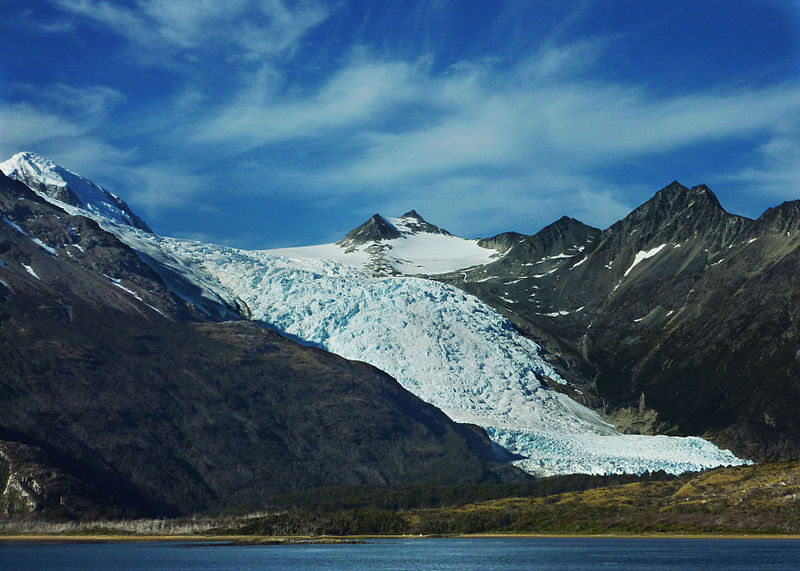
Flora & Fauna

Only few Islands here forests which are classified as Magellanic subpolar. Trees like winter’s bark, Lenga beech, Magellan’s beech, Northofagus Antarctica etc are found here.

The most notable animals found here are Sea Gulls, Guanacos, Foxes, Kingfishers, Condors, Penguins, Owls, Austral Parakeets, North American Beavers, Sea Lion, Leopard Seals etc.

https://www.adventure-life.com/patagonia/articles/tierra-del-fuego-culture

India’s Geographical Blessings

Introduction

The Current World powers have always had some sort of geographical shields protecting them. India is no exception and is blessed by many natural geographical factors which has effectively shielded the country from various external forces. The Himalayas, Indian Ocean and the Thar desert are some of the of regions which act as a shield for India.

The Himlayas

The Himalayas are largest and tallest mountain ranges in the world. Many of the world’s tallest peaks like Mt.Everest, K2, Kanchenjunga, Nanda Devi are situated in this majestic range. The Himalayas stretch from the edges of the Hindu Kush mountains of northeastern Afghanistan, through the Indian states of Jammu & Kashmir, Ladakh, Himachal Pradesh, Uttarakhand, Sikkim and Arunachal Pradesh and countries like China(Tibet), Nepal, Bhutan and Northern Myanmar. The Himalayas have historically acted as a buffer between India and China and was even considered as a factor which prevented Genghis Khan’s ferocious Mongol Armies from invading India. During the 1971 Bangladesh Liberation war, India chose to declare war on Pakistan in winter as it was almost impossible for China to mobilize their armies during the brutal Himalayan winter. India has fought many wars with it’s neighbor Pakistan in the region to maintain the status quo as both understand how vital control over this region is.

The Thar Desert

The Thar desert in Rajasthan acts as a natural border between India and Pakistan. The scorching desert and sand means it’ll be difficult for Pakistan to maintain supply lines and logistics incase of an invasion of India. This applies for India as well but it would be far easier to defend than to attack through this frontier.

The Seas

India is a peninsula, as it is surrounded by water on three sides. The Arabian sea to the west, Indian ocean to the south and the Bay of Bengal to it’s east. All these water bodies ensure India will be well protected by a natural barrier as it would require an external navy to invade, ensure naval supremacy so a land invasion is possible which is an almost impossible task given India’s naval strengths.

https://en.wikipedia.org/wiki/Himalayas

Geopolitics

Introduction

Geopolitics combines the the words Geo, referring Earth and Politics, is the study of the effects of Earth’s geography on politics and international relations. It can also be termed as the study of how political power is reinforced or undermined by geographical arrangements(boundaries, coalitions, spatial networks, natural resources etc.) At international relations level, geopolitics is a way of studying foreign policies, to understand, explain and predict the international political behaviours of the countries and their governments through various geographical variables. These variables include climate, topography, area studies, demographics and natural resources of the regions being evaluated.

Contents

Study of Geopolitics primarily focuses on political power linked to geographic space. Particularly, land territory and territorial waters in relation with diplomatic history. A branch of geopolitics, critical geopolitics, interprets different classical geopolitical theories by showing their political functions for the world’s great powers. There are even some works that follow the geopolitics of renewable energy. Finally, geopolitics clarifies the range of strategic choices, providing a guide for achieving strategic efficiency. While it places particular stress on geographic space as a critically important strategic factor and source of power, it recognizes that geography is only a part of the totality of global phenomena. There are many geopolitical case studies like the Kashmir conflict, Arctic Ocean disputes, China’s disputes in south China sea, US’s foreign policies, annexation of Crimea by Russia, ongoing conflicts in the Middle-East etc.

Future

In today’s world geopolitical studies are becoming more and more important in relations to international relations and diplomacy studies.

https://www.sciencedirect.com/topics/earth-and-planetary-sciences/geopolitics

https://en.wikipedia.org/wiki/Geopolitics