Past decade has handed over much benefit to human kind and the one to suffer is environment exposing environmental degradation that costs…….. per year worldwide.
“While the overall policy focus should be on meeting basic needs and expanding opportunities for growth, they should not be on the expense of unsustainable environmental degradation.”-muthukmara mani(senior environmental economist).
Using natural resources as fuel to the economic development many have curbed themselves over the poverty, it providing employability and many new opportunities to individuals. With excess greed and overuse of all these resources there has been excruciating effects on environment overall degrading forests, scarring natural resources these are overall affecting the economy in return.
Poverty remains cause of either of both consequence and cause of environmental degradation. Needless mining and overuse of resources that are on first hand limited to us which is quiet evident over degrading agriculture yields per hectare as livestock is overgrazed grassland and forest deplete for human settlements.
The question that arises is our economic benefit so crucial that it costs us worsened environmental quality, depleted resources, extinct habitats and other impacts?
Something that emerges out is environmental stability, low emission resource efficient greening of the economy should be possible at costs of terms less to that of GDP of each country, valuing the available natural resources and taking policy decision accordingly.
To avail this issue the natural environmental growth be necessary, affordable, desirable, and measurable.
If not now it’s going to be a challenge to turn the pages around to covert the damages done to nature with hefty economical costs in future and also proving deadly not only to the flora-fauna but eventually to humans too, hence it’s necessary to avail it at the very moment.
Policies such as environmental taxes can positively help minimize the cost and pressure over governments hence making it affordable to all.
With so many diversifies ecologies and habitat all over the globe the policies and laws needs to be designed such that it preserves and nourishes these natural gems.
What can be done?
Particulate emission reduction can effectively help decrease GDP modestly even reducing 10%.
Making more tractable efficient commitments and following them religiously, look through the environments vision and then make other end decision regarding the communities, societies, business and governments. Science can be at its most use when it’s accessible to every person who wishes to use it. Every person taking this as a personal responsibility the awareness would make it up to history pages. We need to turn around the current situation and consider it as a need of an hour if we wish out economy our trades our families to thrive in peace without draining our economies.
A group of cognitive psychologists, curriculum theorists and instructional researchers, and testing and assessment specialists published in 2001 a revision of Bloom’s Taxonomy with the title A Taxonomy for Teaching, Learning, and Assessment. This title draws attention away from the somewhat static notion of “educational objectives” (in Bloom’s original title) and points to a more dynamic conception of classification.
The authors of the revised taxonomy underscore this dynamism, using verbs and gerunds to label their categories and subcategories (rather than the nouns of the original taxonomy). These “action words” describe the cognitive processes by which thinkers encounter and work with knowledge.
A statement of a learning objective contains a verb (an action) and an object (usually a noun).
The verb generally refers to [actions associated with] the intended cognitive process.
The object generally describes the knowledge students are expected to acquire or construct. (Anderson and Krathwohl, 2001, pp. 4–5)
The cognitive process dimension represents a continuum of increasing cognitive complexity—from remember to create. Anderson and Krathwohl identify 19 specific cognitive processes that further clarify the bounds of the six categories.
The Cognitive Process Dimension – categories, cognitive processes (and alternative names)
The knowledge dimension represents a range from concrete (factual) to abstract (metacognitive) (Table 2). Representation of the knowledge dimension as a number of discrete steps can be a bit misleading. For example, all procedural knowledge may not be more abstract than all conceptual knowledge. And metacognitive knowledge is a special case. In this model, “metacognitive knowledge is knowledge of [one’s own] cognition and about oneself in relation to various subject matters . . . ” (Anderson and Krathwohl)
The Knowledge Dimension
Factual
knowledge of terminology
knowledge of specific details and elements
Conceptual
knowledge of classifications and categories
knowledge of principles and generalizations
knowledge of theories, models, and structures
Procedural
knowledge of subject-specific skills and algorithms
knowledge of subject-specific techniques and methods
knowledge of criteria for determining when to use appropriate procedures
Metacognitive
strategic knowledge
knowledge about cognitive tasks, including appropriate contextual and conditional knowledge
self-knowledge
Bloom’s Revised Taxonomy Model
Note: These are learning objectives – not learning activities. It may be useful to think of preceding each objective with something like, “students will be able to…:
The Knowledge Dimension
Factual
The basic elements a student must know to be acquainted with a discipline or solve problems in it.
The Knowledge Dimension
Conceptual
The interrelationships among the basic elements within a larger structure that enable them to function together.
The Knowledge Dimension
Procedural
How to do something, methods of inquiry, and criteria for using skills, algorithms, techniques, and methods.
The Knowledge Dimension
Metacognitive
Knowledge of cognition in general as well as awareness and knowledge of one’s own cognition
The Cognitive Process Dimension
Remember
Retrieve relevant knowledge from long-term memory.
Remember + Factual
List primary and secondary colors.
Remember + Conceptual
Recognize symptoms of exhaustion.
Remember + Procedural
Recall how to perform CPR.
Remember + Metacognitive
Identify strategies for retaining information.
The Cognitive Process Dimension
Understand
Construct meaning from instructional messages, including oral, written and graphic communication.
Understand + Factual
Summarize features of a new product.
Understand + Conceptual
Classify adhesives by toxicity.
Understand + Procedural
Clarify assembly instructions.
Understand + Metacognitive
Predict one’s response to culture shock.
The Cognitive Process Dimension
Apply
Carry out or use a procedure in a given situation.
Apply + Factual
Respond to frequently asked questions.
Apply + Conceptual
Provide advice to novices.
Apply + Procedural
Carry out pH tests of water samples.
Apply + Metacognitive
Use techniques that match one’s strengths.
The Cognitive Process Dimension
Analyze
Carry out or use a procedure in a given situation.
Analyze + Factual
Select the most complete list of activities.
Analyze + Conceptual
Differentiate high and low culture.
Analyze + Procedural
Integrate compliance with regulations.
Analyze + Metacognitive
Deconstruct one’s biases.
The Cognitive Process Dimension
Evaluate
Make judgments based on criteria and standards.
Evaluate + Factual
Select the most complete list of activities.
Evaluate + Conceptual
Determine relevance of results.
Evaluate + Procedural
Judge efficiency of sampling techniques.
Evaluate + Metacognitive
Reflect on one’s progress.
The Cognitive Process Dimension
Create
Put elements together to form a coherent whole; reorganize into a new pattern or structure.
The Power Of Your Subconscious Mind is a spiritual self-help book, which teaches you how to use visualization and other suggestion techniques to adapt your unconscious behavior in positive ways.
Understanding your subconscious mind as a photographic mechanism removes the emotion and struggle from changing your life, because if it is simply a matter of replacing existing mental images with new ones, you begin to see the ease with which you may change.
‘The law of your mind is the law of belief itself,’ Murphy says. What we believe makes us who we are. William James observed that whatever people expect to be true, will be so, irrespective of whether the object of their belief exists in fact. In the West we have made ‘the truth’ our highest value; this motivation, while important, is weak next to the actual power of belief in shaping our lives.
1. You Receive Answers To Prayer Because Of Mental Acceptance About What You Pray
Murphy proposes that your religious affiliation is not what makes prayer effective. Rather, it is based on your ability and willingness to accept what you pray.
It makes sense that whatever you can and do accept on a conscious level has to be accepted by your subconscious as well.
Another statement that expands on this idea is this one: “the subconscious mind is subject to the conscious mind.” What Murphy is saying is that you can train your subconscious mind to believe what you can accept on a conscious level.
2. Your Subconscious Mind Has The Answer To All Your Problems
This statement makes perfect sense if you don’t have any problems with the idea that your subconscious mind = God.
Even if not for that, though, it speaks to the power of the subconscious mind. You don’t need to go looking outside for the answers you seek – Murphy is saying – you can look inside, and pose questions to your subconscious.
The answers may not come immediately, but your mind is always working on problems you submit to it even when you’re doing other things, and it will eventually present to you a workable solution.
3. Faith Is The Only Universal Healing Principle Operating Through Everybody
I believe the implication here is that faith is created by accessing and harnessing the power of our subconscious minds. Illness, physical ailments, and even traumatic experiences can be healed by repeatedly submitting thoughts of healing to our subconscious minds.
Can we be healed by any other means? According to Murphy, no. Faith is the universal healing principle. Of course, I don’t think he would discount the importance of medicine and other orthodox cures, but I have to guess that in this case he is referring to instances of healing that have occurred in so-called “healing services”, churches, or religious gatherings.
4. If A Prayer Is Answered, It Is Answered Scientifically
What Murphy is suggesting is that there is a formula to prayers that are answered. He explains that “science” means knowledge that is coordinated, arranged and systematized, so the idea here is that we can cooperate with our subconscious minds to see more of our prayers answered.
If anything, the entire book sheds light on how little attention and thought we give to our subconscious minds, and what fantastic tools they are in helping us achieve ends that we desire to see in our lives.
5. Don’t Compel Your Subconscious Mind To Accept Your Idea By Willpower
Although Murphy does talk about presenting positive thoughts and images to our subconscious minds, he is also quick to caution us that we can’t force things. Our willpower is limited, and it continues to decrease and diminish throughout the day. Can you imagine how tiring it would be to force yourself to think the same things and visualize the same images all day long?
I think the idea is that we can plant seeds and nurture them, but we shouldn’t be constantly uncovering the soil to see how our seeds are doing. We must keep pulling the weeds and watering the seed, and while that may require a daily investment, it shouldn’t take more than a couple of minutes.
6. The World You Live In Is Determined By What Goes In Your Mind
Regardless of whether you subscribe to Murphy’s theology, I think this is something we can all agree on. What goes into your mind is hugely important. If you choose poorly, you’ll assimilate bad attitudes, behaviors, and thoughts. If you choose well, you’ll begin to see positive changes within yourself.
What world do you want to live in? Have you thought about it? If you aren’t sure what you want to achieve in your lifetime, it makes it much harder to select input that will assist you on your journey. If you are fully in alignment with your objectives, choosing the right input becomes much easier.
7. Man Punishes Himself With His False Concepts Of God
We create our own misery. No one else does it for us. I think I know exactly what Murphy was saying here. I can attest to the fact that my false concepts of God led me down a path of misery.
In 2014, I went through a period of depression. Up until that point, I had felt that there was a clear path laid out ahead of me. Suddenly, that path disappeared and I could no longer see what was ahead. I cried out to God, but to no avail. My prayers kept hitting the ceiling. And, in retrospect, I feel it was my false ideas of the divine that were responsible for my bouts of depression.
Mysticism is the belief that something outside you controls your life. Recognizing that you are in control and you can rely upon your subconscious mind for the answers you seek is empowering. Right or wrong is not something you can check against a book. Right or wrong is embedded deep within you already, and to try to fit yourself into someone else’s ideas is to try to put a square peg in a round hole.
Be willing to see the unchangeable change.
Give yourself permission to be successful.
Don’t allow other people’s fears to cast shadows of doubt.
Surround yourself with positive reinforcement.
Speak your success as a present fact, not a future plan.
There are different forms of violence on women, which act as threats to women’s independent identity and dignity. Forms of violence are: 1) Female foeticide & infanticide- According to a survey by British medical journal, Lancet, nearly 10 million female abortions have taken place in India in the last 20 years, which is rampant amongst the educated Indian middle class as well. There are organizations like Swanchetan, which are working towards educating & bringing awareness in people against the ghastly act.
2) Rape, sexual harassment & abuse- It acts as a deterrent to women’s freedom & perpetuates the notion that women are the weaker sex. Every 2 hours, a rape occurs somewhere in India! The recent Dec. 16 Delhi Gang rape case, shook the entire country and led to protests all across the country, setting up of Justice Verma panel & helped in the fast track judgment of the case. However rampant cases of rape of Dalit women, acid attacks, eve teasing go unnoticed. 3) Domestic violence and dowry deaths- Violence on women in the family were considered family problems and were never acknowledged as “crimes against women” until recently. It is prevalent in all classes of society. 4) Prostitution- A large number of women destitute or victims of rape who are disowned by family fall prey to prostitution forcibly. There are no governmental programs to alleviate the problem of prostitution. 5) Objectification of women- Indecent Representation of Women(Prohibition) Act, 1986 prohibits indecent representation of women through advertisements or in publications, writings, paintings etc. However a whole lot of indecent representation of women is done through literature, media, paintings etc upholding the “right to freedom of expression”.
As per World economic forum survey, India’s Global Gender Gap Index 2011 ranking is 113 out of 134 countries with neighbors like Bangladesh at 69 & China at 60. 1) Sex Ratio –Sex ratio is used to describe the number of females per 1000 of males. As per census 2011 sex ratio for India is 940 females per 1000 of males, i.e. females form a meager 47% of the total population. The State of Haryana has the lowest sex ratio in India and the figure shows a number of 877 of females to that of 1000 males while Kerala has the highest of 1084 females per 1000 males 2) Health – Studies on hospital admissions and records have shown that males get more medical care compared to girls. 2% of the female population is absolute anaemic. 12% of the female population of the country suffers from repeated pregnancy (80% of their productive life is spent in pregnancy) & lack of nutrition.
3) Literacy – The female literacy levels according to the Literacy Rate 2011 census are 65.46% where the male literacy rate is over 80%. While Kerala has the highest female literacy rate of 100% , Bihar is at the lowest with only 46.40% 4) Employment – Of the total female population 21.9% are a part of Indian workforce. Majority of women are employed in the rural areas and in agriculture. Amongst rural women workers 87% are employed in agriculture as laborers, cultivators, self employed like hawkers etc i.e in the unorganized sector which almost always remains invisible. Despite the equal remuneration Act 1976, women are paid lower wages, occupy lower skilled jobs, have less access to skill training and promotion. 5) Political status – Though India had a women Prime Minister Late Ms Indira Gandhi, women are not fairly represented in the Parliament & other State & Local bodies. With only around 9 per cent women in upper house and around 11 per cent in the lower house of parliament, India ranks 99th in the world in terms of female representation among MPs. However 73rd & 74th amendments to the constitution have ensured the participation of women in PRIs with a reservation of 1/3rd for women. Today more than 30 million women are actively participating in the political decision making process at the grass root.
“Without economic freedom other aspects of women equality would not be realized” -Jawaharlal Nehru Women’s work participation rate in general has been declining over the decades. The decline has occurred due to several factors: 1) Absence of comprehensive and rational policy for women’s emancipation through education, training and access to resources such as land, credit and technology etc. 2) The perception of male as the breadwinner of the family despite the fact that in low income households women’s income is crucial for sustenance. This perception adversely affects women’s education & training. Employers also visualize women workers as supplementary workers & also cash in on this perception to achieve their capitalistic motives by keeping the wage low for women. 3) Structural changes in the economy e.g decline in traditional rural industries or industrialization. 4) Lack of assets (land, house) in their own name in order to have access to credit and self employment opportunities 5) Huge demand
of time and energy of women for various tasks at home like child bearing and rearing etc in addition to participation in labour force leave them with little time for education, training and self development 6) Division of labour based on the gender between men and women & technological advancements work against women. They are the last to be hired and first to be sacked. 7) Govt. programs to increase employment and productivity are focused more on men & women are seen as beneficiaries rather than active participants
When a decision is made that fear, terror and violence are justified to achieve ideological, political or social change, radicalization to violent extremism occurs’ Terrorism, radicalization and extremism are subjective concepts that have different meanings for different people. Furthermore, their meanings are constantly evolving as they manifest themselves in different ways in different parts of the world, exploiting new vulnerabilities, technologies and approaches. 1.1. Terrorism ‘Terrorism is a complex and contested issue, as are the associated labels of extremism, violent extremism and radicalization’ There is no single universally accepted definition for terrorism because the concept is invariably political and cannot be framed in a manner that excludes the state. Most acceptable words to understand terrorism are ‘acts committed with the objective of seriously intimidating a population, destabilizing or destroying structures of a country or international organization or making a government abstain from performing actions’. 1.2. Extremism ‘Violent extremist ideologies have found fertile ground in fragile communities characterized by little access to development’ Extremism is generally understood as constituting views that are far from those of the majority of the population. Accordingly, one definition describes extremism as ‘activities (beliefs, attitudes, feelings, actions, strategies) of a character far removed from the ordinary’. Though this is clearly a relative term which invites disagreement regarding benchmarks, it is broadly agreed that extremist views are not necessarily illegal and do not automatically lead to violence or harm. Indeed those with extremist views, who may also choose to observe extreme practices with no impact on the civil liberties of fellow citizens, are rightly protected under fundamental freedoms and human rights norms. Extremism becomes a concern when those views threaten democratic and tolerant societal ideas, or promote the use of violence to coerce their followers or to achieve their objectives. This form of extremism is described as violent extremism, a term which remains contested, but which generally refers to the creation of ideologically motivated or justified violence, as well as support for such acts. 1.3. Radicalization ‘Radicalizer’s work by pointing to social, political and economic injustice around their followers.’ Like terrorism and violent extremism, radicalization is a contested term with various definitions. It is commonly understood, however, as the social and psychological process of incrementally experienced commitment to extremist political and religious ideologies. It does not necessarily mean that those affected will become violent. However, when a decision is made that fear, terror and violence are justified to achieve ideological, political or social change, radicalization to violent extremism occurs.
Any communication channel through which any kind of information, news, entertainment, education, data, promotional messages etc. can be disseminated is called media. Mass media refers to communication devices, which can be used to communicate and interact with a large number of audiences in different languages. Be it the pictorial messages of the early ages, or the high-technology media that are available today, mass media has become an inseparable part of our lives. Media can be broadly classified as: • Print Media (newspapers, magazines, books and Brochures, Billboards, etc.) • Electronic Media (news websites, social networking sites, mass SMS schemes, television, internet, radio, cinema etc.) • New Age Media (Mobile Phones, Computers, Internet, Electronic Books)
Where Media is Misleading? – Threat to Internal Security • Indian media does not have a wider perspective of India’s national security issues. • Indian media is in no mood to apply brakes or observe self-restraint on its wayward and insensitive treatment of national security issues. • Indian media’s (especially electronic media) analysis and over-analysis of national security issues by groups of former diplomats, generals and academia’s arm chair strategists distort national security perspectives. All these gentlemen can only draw on their outdated experience and none of them are privy to latest inputs. Also in many cases, reticence is their first casualty after retirement. • Indian TV anchors discussing national security issues do not have the political and strategic maturity to discuss national security issues as their Western counter-parts do. • Indian TV debates on national security issues tend to cut out development of contrary views and perspectives by imposing commercial breaks, or go hectoring themselves.
For a country like India, the backbone of its democracy and the propagator of its national interests remains the access to information and expression. It helps citizens to make responsible and objective choices, to promote accountability by its officials, to provide solutions to conflict resolution, and also to encourage diverse views of its diverse people. This access of information has allowed the Indian media to play the role of watchdog that holds the Government accountable in all its activities, and also functions as the only mode of expression for its people.
The role of media in a democracy like India, therefore, can be summed up as to: • Inform and educate people objectively, impartially and in an unbiased manner about security threats and challenges • Unbiased reporting with the restraints of self regulations • Promotion of the principles of healthy democracy • Respect for the Constitutional Provisions • To build a bridge between people and governments at the national level • Uphold fairness, justice, national unity and international cooperation • Inform, educate, entertain, publicize and most importantly correct the excesses in any society. • Highlight the trouble spots in the society and press the government and public to devise suitable mechanisms to eliminate them • Shape the perceptions of government, influence public opinion, promote democracy, good governance as well as influence peoples’ behavior and support people- oriented policies Following the globalization, the responsibilities of media have also widened. It has to play a role for preserving and pursuing the national interests of the state and highlighting its perspective along with the global issues. It has to examine the conduct of international relations and again to highlight the trouble spot at global level in lieu of global security.
“The internet is the largest experiment involving anarchy in history. (…) It is a source for tremendous good and potentially dreadful evil, and we are only just beginning to witness its impact on the world stage.”
Eric Schmidt, Executive Chairman, Google and Jared Cohen, Director, Google Ideas
As per Information Technology Act, 2000, “Cyber security means protecting information, equipment, devices computer, computer resource, communication device and information stored therein from unauthorized access, use, disclosure, disruption, modification or destruction.”
1.1. Cyberspace India’s Cyber Security Policy 2013 defines cyberspace as a complex environment comprising interaction between people, software and services, supported by worldwide distribution of information and communication technology devices and networks.
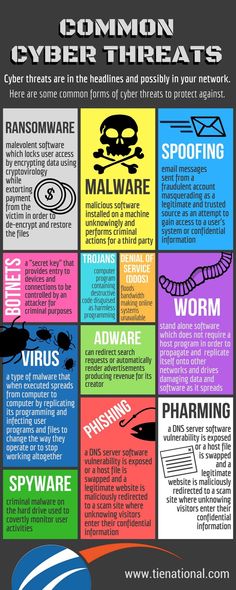
1.2. Cyber threats Cyber threats can be disaggregated into four baskets based on the perpetrators and their motives – Cyber Espionage, Cyber Crime, Cyber Terrorism, Cyber Warfare. 1.2.1. Cyber Crime/ Cyber Attacks Cyber-attack is “any type of offensive maneuver employed by individuals or whole organizations that targets computer information systems, infrastructures, computer networks with an intention to damage or destroy targeted computer network or system.” These attacks can be labeled either as Cyber-campaign, Cyber-warfare or Cyber-terrorism depending upon the context, scale and severity of attacks. Cyber-attacks can range from installing spyware on a PC to attempts to destroy the critical infrastructure of entire nations. 1.2.2. Cyber terrorism Acts of Terrorism related to cyber space or act of terrorism executed using Cyber technologies is popularly known as ‘cyber terrorism’. “Cyber terrorism is the convergence of terrorism and cyber space. It is generally understood to mean unlawful attacks and threats of attacks against computers, networks, and information stored therein when done to intimidate or coerce a government or its people in furtherance of political or social objectives, Further, to qualify as cyber terrorism, an attack should result in violence against persons or property or at least cause enough harm to generate fear, Serious attacks against critical infrastructures could be acts of cyber terrorism depending upon their impact.” It should be noted here that if they create panic by attacking critical systems/infrastructure, there is no need for it to lead to violence. In fact such attacks can be more dangerous. Besides, terrorists also use cyberspace for purposes like planning terrorist attacks, recruiting sympathizers, communication purposes, command and control, spreading propaganda in form of malicious content online to brain wash, funding purposes etc. It is also used as a new arena for attacks in pursuit of the terrorists’ political and social objectives.
Cyber Security has assumed strategic and critical importance because of following reasons: • Cyberspace has become key component in the formulation and execution of public policies. • It is used by government to process and store sensitive and critical data which if compromised can have devastating impact. • Taking down cyberspace will result into disruption of many critical public services like railways, defense systems, communication system, banking and other financial system etc. • Several states are developing the capabilities in the area of cyber attacks which can alter outcomes in the battlefield. • Individuals are using internet based services at a growing pace making them vulnerable to cybercrimes, such as- online bank frauds, surveillance, profiling, violation of privacy etc.
Government has taken a number of steps to acquire and increase capacity in the field of cyber security. Some of which are discussed below.
National Cybersecurity Policy 2013
Information Technology Act 2000 (As Amended in 2008)





 Eduindex