


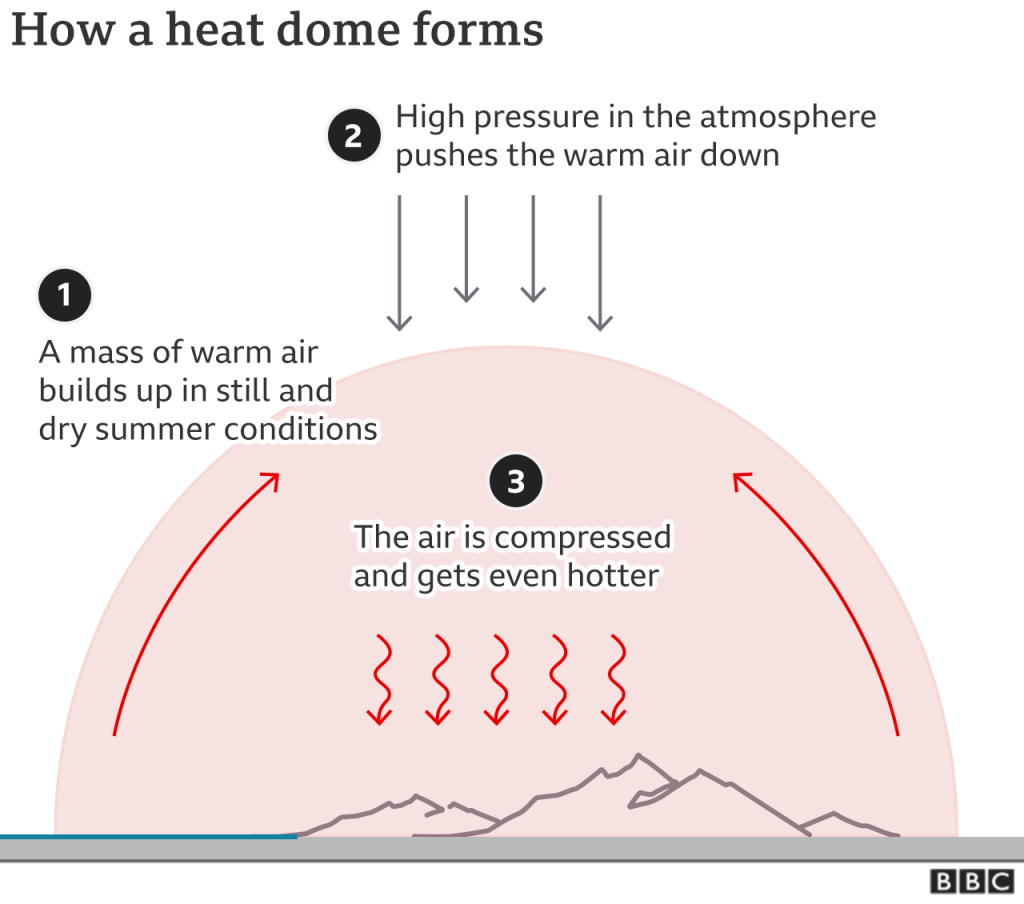
Heat waves begin when high pressure in the atmosphere moves in and pushes warm air toward the ground. That air warms up further as it is compressed, and begins to get hotter. The high pressure forcing the warm air down onto the ground expands vertically, changing the surrounding weather. It minimizes wind and cloud cover. The humidity in the atmosphere is high, thereby making the air more stifling. Heat waves over an area lasts for several days or longer.
The heat over western parts of Canada and the US caused by high pressure of hot air has lead to formation of a heat dome stretching from California to the Arctic territories. Temperature records have been shattered across western Canada and the US Pacific Northwest. Canada broke its country temperature record for a third straight day on Tuesday, 49.6 C, in Lytton, British Columbia. At least 486 sudden deaths were reported over five days in British Columbia. The new death tally of British Columbia, announced on Wednesday, sees a 195% increase in death rate over normal years. Typically, 165 sudden deaths would occur in the province over that period.
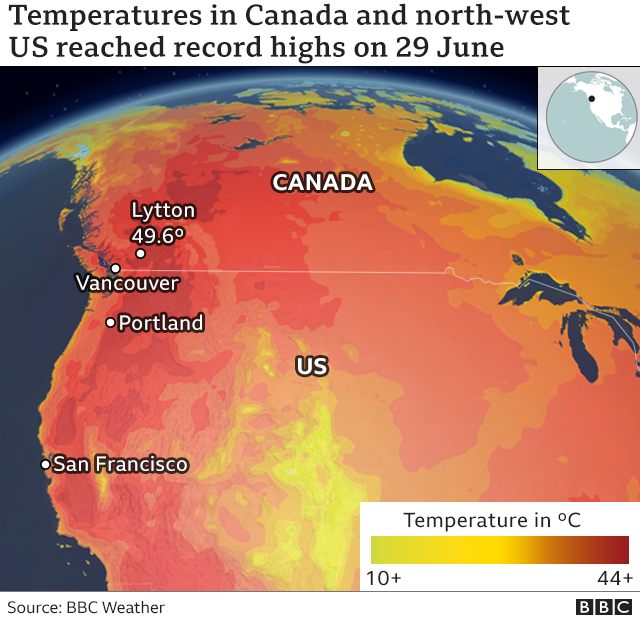
The US north-west has also seen record highs- in temperature and a number of fatalities. The temperature at Portland International Airport peaked at 46.1C on Monday, going above the previous day’s high of 44.4C. At least a dozen deaths in Washington and Oregon are believed to be linked to the heatwave. US President Joe Biden said the heatwave was tied to climate change in a speech on Tuesday.
Many homes in British Columba do not have air conditioning as temperatures are usually far milder during the summer months. Residents of the province, state that the condition is intolerable and hope it never becomes like that again.
Many people have been forced to take refuge in cooling centres – air-conditioned building, such as stadiums, where residents can work and sleep. People and infrastructure in urban spaces, absorbing more heat than rural areas, have been particularly affected.The intense heat has melted power cables and cracked up the roads. Some places have been sold out of portable air conditioners, fans and ice and water.
There are also fears of an increased risk of wildfires, with the town of Lytton, British columbia, already forced to evacuate because of a blaze – a day after it recorded Canada’s highest ever temperature.
The wave is now moving eastwards over Canada’s provinces – Alberta and Saskatchewan and parts of Manitoba have been placed under heat warnings. As for the US, the heat is starting to ease near US western coastal regions, and in Seattle and Portland, but is expected to last all week in the interior areas of the Pacific Northwest.
 Eduindex
You must be logged in to post a comment.