Save a ‘GEOLOGICAL HERITAGE’ Part-2.

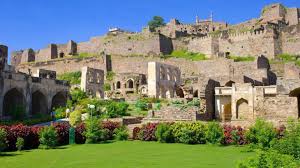
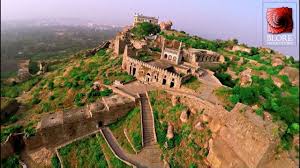
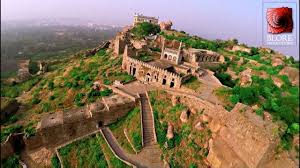
Golconda fort.

Development at the cost of nature. Part-2 :

Growth and development are inevitable and necessary to absorb the growing needs of the economy. But the problem lies in the truth that none of this growth is monitored. Giant machines dig the earth out and transport mud to all corners of the city. Ratty trucks with the broken remains of gigantic rocks can be seen ferrying the roads primarily during dusk or night. Most of this quarrying is illegal. Contractors excavate mud and destroy rocks in remote spots often under the dark cover of night for a paltry sum.

Mass destruction of rocks has exacerbated the depletion of green cover. Precious fauna and flora has been destroyed. Loss of these rocks has meant ground water depletion which has further compounded the city’s water woes. Years ago tiny lakes dotted the entire city including the famous Jubilee and Banjara hills localities. Today lakes are found only on the city outskirts in places like Shamirpet. Lakes closer to the city are shrinking every passing year.
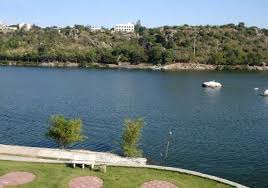
Durgam Cheruvu.

Fighting For Conservation :

Though Hyderabad has seen the gradual depletion of rock cover, ecological conservation is an issue that has not found much voice with the population. Most citizens, especially those new to the city, are too busy focusing on seeing a snazzy Hyderabad finding its spot on the global map. But even in this bleak scenario there is a ray of hope for the rocks.

Since 1996, a group of concerned citizens have come together to prevent indiscriminate destruction of the rocks and protect the rocky landscapes. Their organization ‘Society to Save Rocks’ (STSR) has since then been working hard to preserve the rocky ecosystem in the city and state.

Due to their dedicated campaigning, the Government of Andhra Pradesh has added nine rock formations in Regulation No. 13 of the Hyderabad Urban Development Authority (HUDA) for the protection of Heritage Buildings and Precincts. This act of the governments was hailed by conservationists across the country as a great step in recognising the importance of the rocks and the need to protect them. Today Hyderabad is the only city in India where rocks are protected as a natural heritage. Encouraging the government to preserve these rocks by promoting them as tourist attractions i5 an alternative that the Society is pushing for.
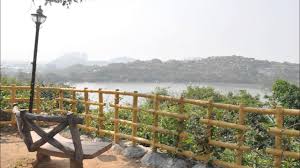
Image Source -google.

But despite STSR’s dedicated efforts, the city faces a challenge as much land in and around the city has already been sold off. Durgam Cheruvu, one of the designated heritage sites is the best place where the government’s attempt at conservation and apathy towards rocks, are both visible. Years ago the lake lay hidden between rocky cliffs and was inaccessible. A few years ago it was converted to a model tourist spot with boating and other leisure facilities. But entire stretches of hills on one bank of this protected area have been destroyed in the past decade to accommodate the fast-growing Hi-tech city. Durgam Cheruvu thus epitomises the ongoing conflict between development and protection in the city.

However some individuals have successfully managed to integrate rocks that abut their house into the structure of their homes. The rock forms as much a part of their home’s interior as does their sofa or any other furniture. Some builders and companies too have taken the initiative to include rocks in their building complexes. While they have included a natural rock structure within their building premise, their focus remains on decorative appeal rather than ecological consideration for the rocks.

Over the years, due to the efforts of organizations like the STSR, the rocks of Hyderabad have found a voice. But the din of the construction industry and growing needs of an expanding city are far louder than the voice of these few individuals. What the rocks require are greater public support and a deeper appreciation of their existence. Locals, tourists and governments need to take a pro-active approach to ensure that growth includes preservation of rocks and their eco-systems. After all if a booming economy overtakes billions of years nature, the consequences and blame will have to be borne by none other than the citizens themselves for the only people who stand to gain will in reality be the ones of who lose.
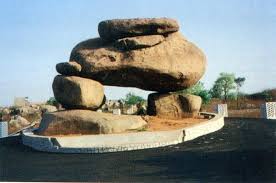
Save a ‘GEOLOGICAL HERITAGE’ – Part 1.

Look at the photograph given here. This is The Three Stooges, a bizarre rock formation that can be found in Goblin Valley. There are some exceptionally unique rock formations all over the world.

Vanishing Rocks of Hyderabad:

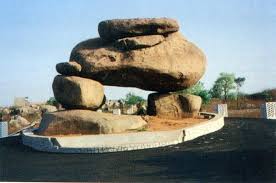
One of the most interesting facets of Hyderabad is the mammoth granite rocks in bewitching poses that capture one’s eye and imagination. Rocks large and small precariously balance on one another to form shapes that mesmerise the mind.These rocks, among the oldest in the world, are Hyderabad’s true heritage. Even the mighty Himalayas at 40-60 million years old are younger than these rocks!

Nature’s Sculptures:

The gigantic boulders inspire creativity and reverence in people, forcing them to look beyond the obvious shapes to create imaginary forms. These rocks seem to strike poses and imitate life-a puppy seated on its hind legs with its front legs raised in the air, a car-shaped formation, flying saucer resting on rocks, four chambers of the heart, and a woman standing with her face to the a woman standing with her face to the breeze; these are just a few shapes that tickle your imagination. It is no wonder then that people have taken to naming certain rocks after the shape they think they resemble or the idea they think they epitomise.

Some of these names have stuck on and the rocks have thus become landmarks in the city. And in some other places, rocks with their symbolic shapes have inspired the devout. Natural openings and cave like structures formed by the rocks have been used as temples by locals. Many people even consider them as symbols of the divine and worship these silent sentinels.

Tortoise Rock

Maintaining ecological balance:

Apart from being a visual treat for viewers, these rocks play an integral role in preserving and nurturing the ecological balance of the region. Lakes and ponds have always formed on adjoining rocky patches. This is a as rocks help natural occurrence create the natural drainage system of the area. Subterranean passages created by these rocks result in the natural flow of rain water to that area, aiding the formation of ponds and lakes and recharging ground water levels.

And where there is green, there are birds and bees. Rocky hills often act as the biodiversity hub for the area. Prickly thick shrubs and dry deciduous forests ensconce the rocks. Along the lakebeds, tall grass grows in wild abandon. Often even medicinal plants and aromatic herbs are found in the area. And hidden in this medley of plants are insects, birds and reptiles. So don’t be surprised if a Baya weaver flies by or a snake wiggles past you, when you are trekking about the rocks. Fauna and flora of varied kinds thrive in rocky eco-systems. Nature is at its best in these spots and here is where people can go to for a whiff of the wild, But today, such spots are disappearing with alarming alacrity. Rocks are being destroyed indiscriminately; the price the city is paying for growth.

Image Source -google. Golconda fort of hyderabad.

Development at the cost of nature Part1:

It is easy to wonder why someone would destroy rocks that are billions of old. For centuries now these rocks have been the building material for the city. Even the famous Golconda fort of Hyderabad which sits atop a granite hill is made of the very same granite rock. The problem however lies at the speed and magnitude with which these rocks are now disappearing. Just consider the following statistics. The official 2001 census stated the Hyderabad population was around 3.7 million. But today the overflowing buses, traffic jammed streets, and expanding city borders tell a very different story. Today, this natural legacy is giving way to tall residential high-rises and software parks. Hills are being replaced with malls and buildings.

As the massive inflow of population continues, rocks are being quarried round- the-clock to cater to the exponential boom in the construction industry. Large tracts of land have been approved for residential or commercial use, without taking into consideration what actually lies on the land. The rocks are blown down, land is cleared and the hard crystalline rocks are used as construction material. In the past four years itself, vast stretches of hills around the city’s fringes have been turned to rubble or have completely disappeared. If you visit the places where the development is taking place your heart will bleed at the sight of the half quarried, half-eaten mountains…..

to be continued ……….,……..

World Heritage

World heritages consist of all the heritage sites that were discovered around the world and the process of exploring and discovering never stops. Heritage is not only about discovering the monuments, civilizations etc but, it holds a special place from three perspective that is past, present, and future. Build in the past, heritage sites are of high value to study the history how people used to live, speciality of a civilization, discovery of unknown facts and so much more. At present research is done, the technology that we have today is advance that the scientist can easily study and preserve the rich heritage for many more years. In future, all the research and evidences the historic sites will turn ten times more valuable.


World heritage day

which is observed every year on 18th April , also known as world monuments and sites day, the purpose is to celebrate the rich heritage from around the world and create awareness about the same. As it is observed that many monuments and sites are need to be preserved from deterioration, we should not loose the heritage in the ongoing development process. Every year a theme is decided for World heritage day this year it was “Complex pasts: Diverse Future” .


ICOMOS
International Council on Monuments and sites is the main body who is also behind all the work that takes place. Pierro Gazallo is the founder of ICOMOS, he is known for working to restore and preserve heritage sites and monuments it was established in the year 1979. ICOMOS gave the suggestion to UNESCO (United National Education, Scientific and Cultural Organisation) which was approved in the 22nd general conference in 1983.
India
Some of the world heritage sites are Ajanta and Elora caves, western Ghats, Sundarbans national park, Nanda Devi, and valley of flowers, Chola temples etc.
World
Komodo national park (Indonesia), Lut desert (Iran), Meteora (Greece), town of Bamberg (Germany), Levuka Port town (Fiji), Angkor (Cambodia), Brasilia (Brazil), Rainforest of Atsinanana (Madagascar), Chitwan National Park (Nepal) etc.


Recently in news Liverpool lost its status of world heritage site, the reason was the massive construction that occurred around the place despite several warnings issued by UNESCO, the construction includes building complex, Moore Dock Stadium, and offices. The act of removal of a world heritage site is very rare and disgraceful for the country as they failed to protect a heritage site.
The heritage sites and monuments are chosen after the recommendation of ICOMOS and IUCN (International Union of Conservation of Nature) for natural sites.
However, UNESCO has laid down some criteria to declare a monument or site heritage which includes:
• a place represents genius human creativity
• A place that shows human interaction with nature and showcase culture.
• A place that illustrates significant stages of human history.
• A place that showcases earth’s history in any geographical form.
• A place with an exceptional cultural feature or tradition.
• A place that displays biological diversity and is valuable for conservation of nature or any species.
• A place of human settlement that shows use of natural resources to study the life of people.

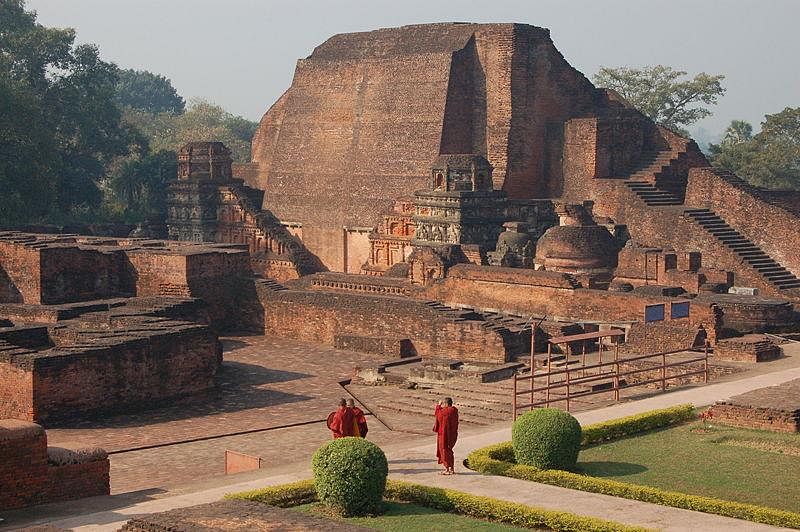
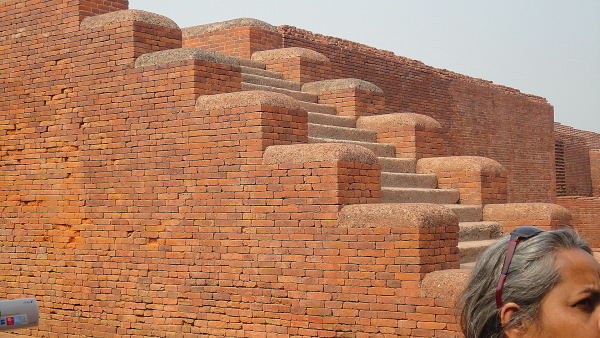
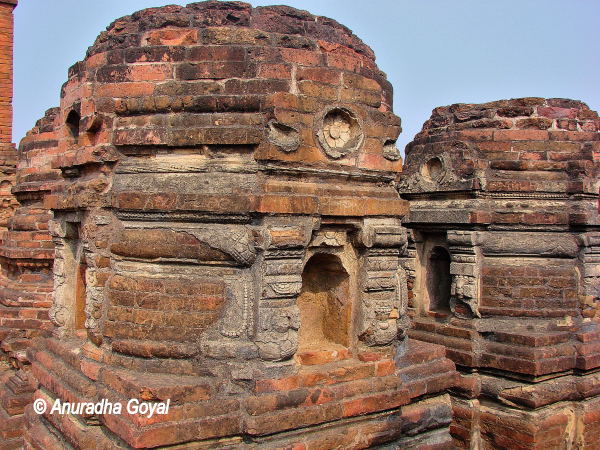
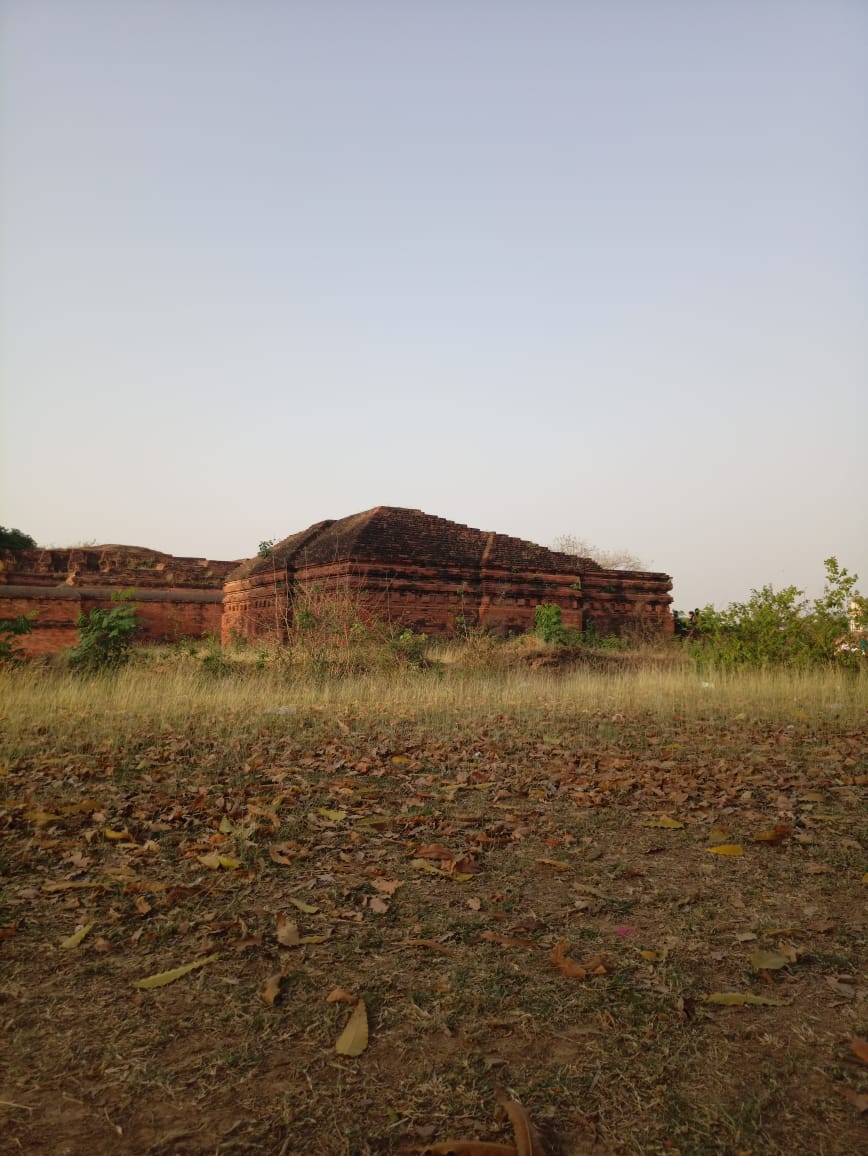
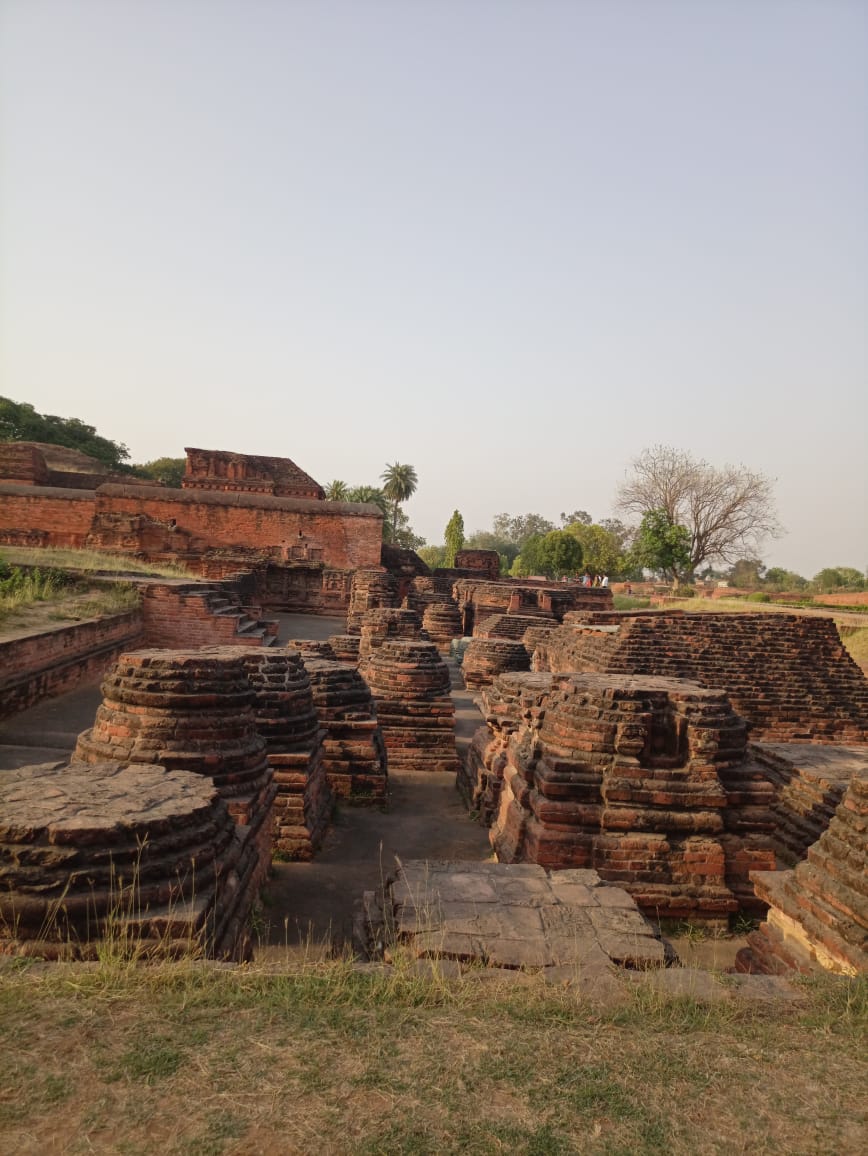
Nalanda University – An Ancient Seat of Learning

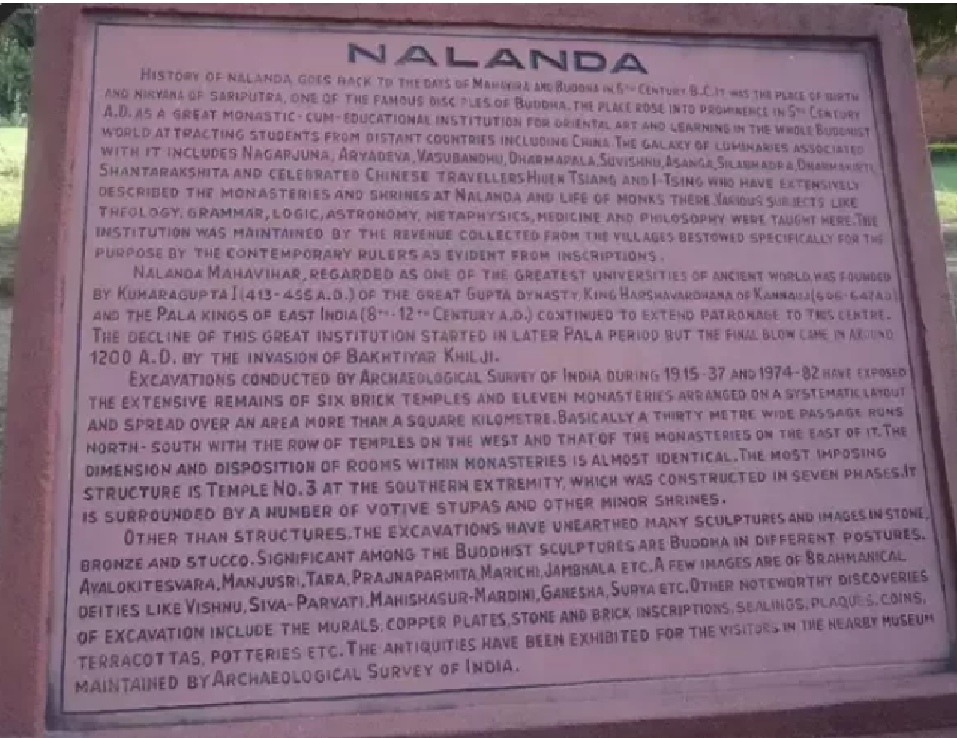
Nalanda was one of the earliest and finest universities in India.

It is located in Nalanda District, Bihar, India.

ORIGIN OF NALANDA

The origins of this scholastic institution in 5th century CE. It served for an uninterrupted duration of 800 years

The university thrived under the patronage of the rulers of the Gupta dynasty during the 5th and 6th centuries.

 It continued to flourish under Emperor Harshavardhan of Kannauj in the 7th century as well. 

The growth and the popularity of the university continued until the 9th century.

The declination of Nalanda University was primarily due to the establishment of four other seats of Buddhist learning in the same region under the Pala Empire from the 9th century to the 12th century

FACTS

  • Oldest university with hostel facilities in India.
  • The massive library of Nalanda was called Dharma Gunj, meaning the Treasury of Truth or the Mountain of Truth.
    • It contained hundreds of thousands of books.
  • The subjects taught at Nalanda covered in every field of learning, and it attracted pupils and scholars from Korea, Japan, China, Tibet, Indonesia, Persia and Turkey
  • It is believed that the library of Nalanda was so huge that it burned for months after the university was ransacked by Bakhtiyar Khilji and the library was set on fire.
  • Nalanda was attacked three times by the invaders –
    1. The Huns
    2. The Gaudas
    3. Bhaktiyar Khilji – who brought about its complete destruction.
  • Archeologists and historians are of the opinion that just 10% of the Nalanda campus has been excavated till date. Around 90% remain to be excavated.
  • The ruins of Nalanda were the location for the shooting of the popular song “O Mere Raja” from the Bollywood movie Johny Mera Naam starring Hema Malini and Dev Anand.
By Kirti kumari

DECLINATION

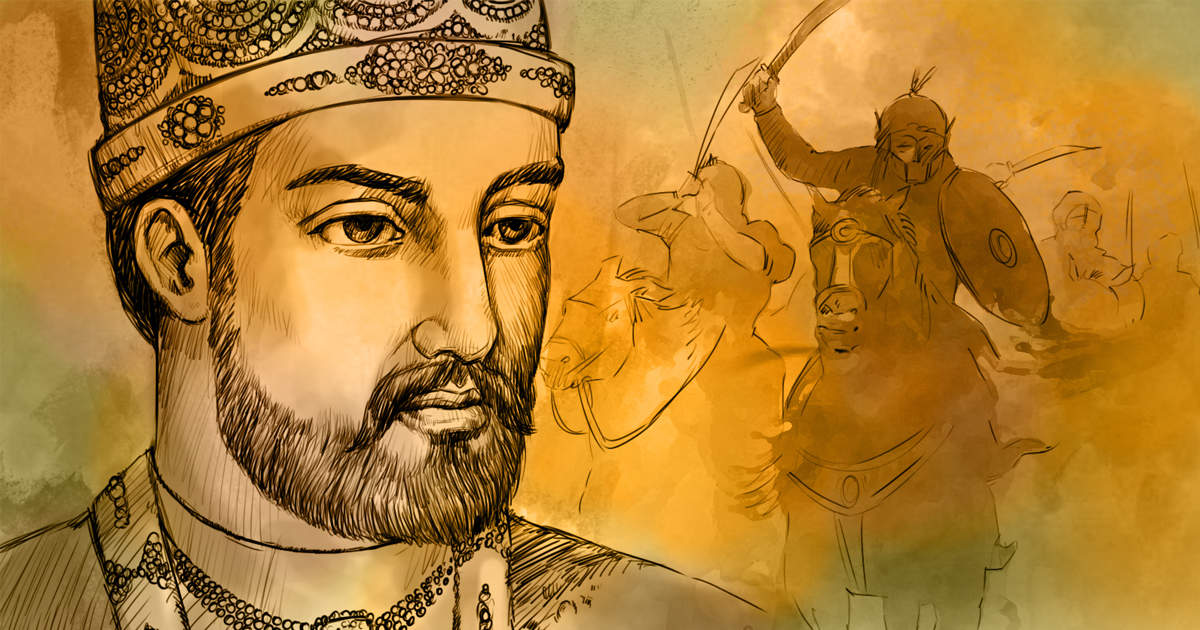
  Muḥammad Bakhtiyar Khalji, a Turkic invader destroyed the Nalanda University in 1202 AD.

At that time Bakhtiyar Khilji had captured some areas ruled by Buddhists in North India and once he became quite ill. He got enough treatment from his princes but he could not recover and reached a moribund condition.

Then someone advised him to take the treatment from Acharya Rahul Sribhadra, who was head of Ayurveda department of Nalanda University. But Khilji was not ready for this. He had more faith in his princes. He was not willing to believe that Indian physicians have more knowledge than his wife and their masters.

But to save his life he had to call Acharya Rahul Sribhadra, head of Ayurveda department of Nalanda University. Then Bakhtiar Khilji put a strange condition in front of Vaidyaraj that I will not eat any kind of medicine given by him. They had to fix it without medication. After thinking of this, Vaidyaraj accepted his condition and after a few days, he came to Khilji with a Quran and said that he had to read the page of the Quran. And after reading these pages you will free from illness.

Bakhtiar Khilji read the Quran as Vaidyaraj said he was cured.

“It is said that Rahul Shribhadra applied for medicine on some pages of the Quran. and as he started reading those pages of the Quran he kept on recovering.”

After recovering khilji was shocked by the fact that an Indian scholar and teacher had more knowledge than his princes and countryman.

After this, he decided to destroy the roots of Buddhism and Ayurveda. As a result, Khilji set fire to the great library of Nalanda and burned around 9 million manuscripts.